

France Roasted Coffee Market Size & Forecast:
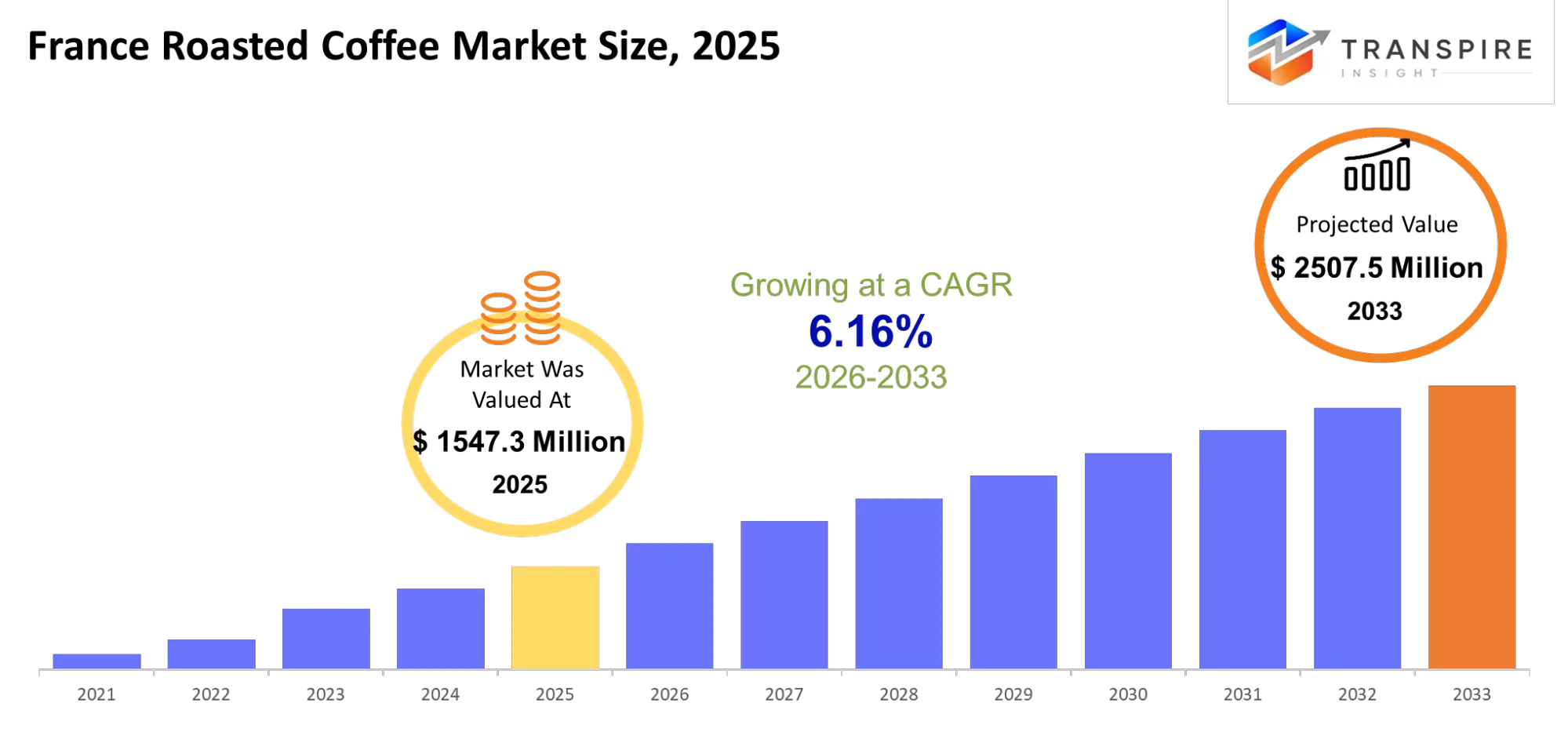
- France Roasted Coffee Market Size 2025: USD 1547.3 Million
- France Roasted Coffee Market Size 2033: USD 2507.5 Million
- France Roasted Coffee Market CAGR: 6.16%
- France Roasted Coffee Market Segments: By Type (Arabica, Robusta, Blended, Others); By Application (Beverages, Ready-to-drink Coffee, Desserts, Others); By End-User (Consumers, Cafes, Restaurants, Offices, Others); By Distribution (Online, Supermarkets, Specialty Stores, Others)
To learn more about this report,  Download Free Sample Report
France Roasted Coffee Market Summary
The France Roasted Coffee Market was valued at USD 1547.3 Million in 2025. It is forecast to reach USD 2507.5 Million by 2033. That is a CAGR of 6.16% over the period.
The French roasted coffee market serves as the main component which connects all three sectors of foodservice and retail and hospitality. The market enables the creation of unique consumer products because roasters process imported green coffee beans through different methods to create products which meet specific taste and freshness and convenience requirements. Roasters create value through their operations because they determine the flavor profiles and packaging formats and sourcing standards which supermarkets and cafés and restaurants and specialty retailers use. The market has changed during the past five years because consumers now prefer premium products which they can trace and roasted blends which work with capsule systems. The transition process gained speed because the pandemic created new consumption patterns for home coffee and customers wanted to experience barista-quality coffee at their homes.
Procurement methods and pricing systems throughout France experienced changes because supply chains became unstable due to climate changes which affected both Brazil and Vietnam. Manufacturers used their current raw bean costs to develop automation systems and direct trade methods and premium product strategies which helped them maintain their profit margins. The business has created new income streams through its specialty roasting and organic blend and single-origin product offerings which it sells through retail and online shopping platforms.
Key Market Insights
- The France Roasted Coffee Market experienced substantial growth in specialty coffee adoption during 2024 when urban retail chains started to sell premium roasted blends which achieved significant market presence.
- Northern France leads the industry because it possesses 38% of market share through its extensive café network and supermarket access and its established roasting capacity.
- Western France shows the highest regional growth rate which will continue until 2033 because of its independent cafés and artisanal roasters and coffee consumption from tourism.
- The product demand for whole bean roasted coffee exceeds 34% because home espresso machines and café-style brewing methods have become popular.
- The second-largest market segment consists of ground roasted coffee because supermarkets in France continue to increase their private-label and value-focused product offerings.
- The product category of organic and single-origin roasted coffee experienced the fastest growth after 2022 because consumers developed a preference for products which included traceability and high-quality attributes.
- The foodservice industry maintains its position as the largest market share holder with 46% because cafés and bakeries and hospitality operators expand their beverage menus to draw in and retain customers.
- The period from 2021 to 2025 saw marked growth in e-commerce coffee subscriptions which enabled specialty roasters to increase their direct-to-consumer business while generating steady revenue streams.
- The hybrid work model has led to higher at-home coffee preparation among metropolitan consumers which makes household consumers the fastest-growing user group.
- Companies now base their competitive advantage on their ability to implement roasting automation and develop recyclable capsule technology and maintain sustainable sourcing partnerships.
What are the Key Drivers, Restraints, and Opportunities in the France Roasted Coffee Market?
The rapid premiumization of household coffee consumption after home brewing system and capsule machine development drives the France roasted coffee market expansion. After 2020 French consumers started spending more money on café-quality drinks which they could make at home. This led retailers and roasters to offer more premium roasted blends and artisanal products and specialty coffee blends. The shift in consumer behavior enabled manufacturers to raise product prices through their unique packaging and their various roasting techniques and their online subscription service. Premium roasted products now generate stronger per-unit revenue than conventional blends especially in urban areas where consumers choose between different flavors and their origins.
The most significant restraint remains structural volatility in global coffee bean supply chains. The climate-related events that disrupt Brazilian and Vietnamese and Colombian agricultural areas continue to reduce both crop yields and shipping expenses and the availability of coffee beans. France's heavy reliance on imported green coffee forces domestic roasters to deal with constant price changes and delivery issues of green coffee beans. The coffee industry faces extended pressure because it needs several years to recover crops and develop new systems for coffee farming. Smaller roasters experience margin compression while the entire industry sees growth delays because of these issues.
Data-driven specialty roasting together with sustainable sourcing implementation will generate significant upcoming business opportunities. French roasters are now investing in artificial intelligence roasting systems and blockchain traceability and low-emission production facilities to create product distinctions for their premium retail offerings.
What Has the Impact of Artificial Intelligence Been on the France Roasted Coffee Market?
Artificial intelligence together with advanced digital systems currently transforms operational efficiency throughout the France roasted coffee industry by enhancing roasting consistency and inventory control and demand projection methods. Roasters now operate large-scale AI-driven roasting systems which analyze real-time bean moisture levels and bean density and temperature changes to determine optimal roasting parameters and minimize batch variation. The systems enable manufacturers to produce consistent flavor profiles during their high-volume manufacturing processes while they reduce energy use in their roasting operations.
Machine learning models are also improving procurement and inventory planning. Roasters increasingly use predictive analytics tools which assess commodity pricing trends and seasonal demand patterns and retail sales data to create better purchasing plans that will decrease supply interruptions. Several French coffee manufacturers now use automated quality-control systems equipped with computer vision to detect roasting defects and packaging irregularities before distribution. The process has resulted in reduced product waste combined with enhanced operational productivity within industrial roasting facilities.
Digital commerce technologies have also strengthened direct-to-consumer sales through AI-driven recommendation engines that personalize coffee subscriptions based on flavor preferences and purchase history. AI adoption encounters challenges because smaller roasting businesses face both high implementation expenses and scattered operational data throughout their operations. The independent and artisanal roasters cannot establish precise predictive models because they lack essential digital systems and historical data connections which prevents their technology from spreading throughout the entire marketplace.
Key Market Trends
- French consumers started to buy more specialty coffee and single-origin coffee after 2021 which resulted in increased supermarket and café sales of premium coffee blends.
- The home espresso machine market experienced substantial growth from 2020 to 2025 which resulted in increased adoption of capsule-compatible roasted coffee among French metropolitan households.
- Pandemic restrictions ended which allowed independent artisanal roasters to reach more customers through e-commerce subscription services and direct-to-consumer delivery.
- European packaging regulations and waste management regulations became stricter which prompted major producers to develop recyclable and aluminum-free capsule solutions.
- The Brazilian and Vietnamese climate-related supply disruptions forced French roasters to establish new sourcing partnerships with African and Central American suppliers starting in 2022.
- Retail chains allocated more shelf space to organic roasted coffee products because consumers began using traceability and ethical sourcing as essential factors for making purchase decisions.
- The industrial coffee manufacturing sector adopted AI-powered roasting systems to achieve better roast consistency while decreasing production waste and saving energy.
- Urban foodservice operators enhanced their premium beverage selections to attract city customers who wanted café-quality coffee during inflation times.
- European coffee companies pursued strategic acquisitions and partnerships to enhance their specialty roasting capabilities and expand their regional distribution systems.
- The hypermarket sector saw private-label roasted coffee brands become more popular as inflation drove customers to purchase value-oriented premium products.
France Roasted Coffee Market Segmentation
By Type
Arabica coffee maintains its dominant market position because premium cafés and specialty roasters and retail consumers demonstrate an ongoing preference for coffee with smoother flavor profiles and reduced bitterness levels. Urban areas with high premium coffee consumption see high-end supermarkets and hospitality chains increasing their product displays of single-origin Arabica blends. The increasing popularity of capsule-based coffee systems which primarily use high-quality Arabica beans for espresso production and flavor distinction drives the demand for coffee products.
Robusta coffee serves as an essential secondary coffee option because it delivers stronger caffeine content while its production costs remain lower and its plants can withstand extreme weather conditions. Robusta coffee serves as the primary choice for commercial foodservice operators and value-oriented coffee producers who create mass-market blends which help them sustain pricing stability during times when green coffee prices increase. Roasters use blended coffee products to create a steady market growth rate which enables them to achieve cost savings while maintaining their desired flavor profile through their retail and café distribution networks. The market for specialty coffee products which include organic coffee and low-acidity roasted coffee shows potential growth according to forecasts because of increasing commercial demand for traceable coffee sourcing and functional coffee products.
By Application
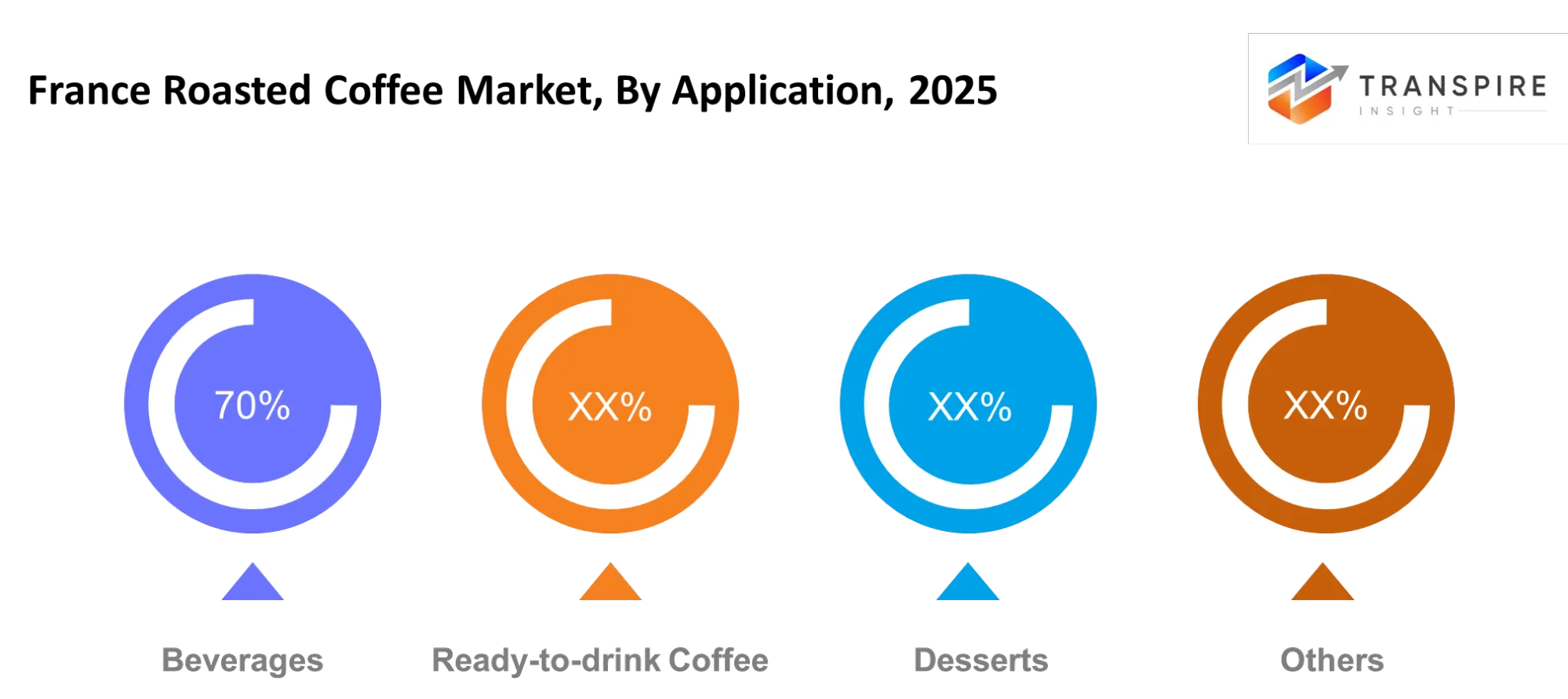
The largest application segment of beverages exists because roasted coffee serves as an essential component for café operations and hospitality services and workplace coffee systems and household brewing practices. The French market shows constant commercial demand for espresso-based drinks and filter coffee and premium café beverages. This segment experiences growth through two main factors which include increased café culture and higher adoption rates of premium home brewing equipment and more people using personalized coffee formats which they obtain through subscription-based retail platforms.
Younger consumers drive market expansion for ready-to-drink coffee products because they choose premium beverages which match their active lifestyles and hybrid work arrangements. Urban supermarkets and convenience stores are increasing their cold coffee selection because customers demand beverages that they can drink while on the move. The growing demand for ready-to-drink coffee products among young consumers who seek convenient premium beverages has created market expansion opportunities for the industry. Supermarkets and convenience retailers are expanding their cold coffee product offerings in urban areas that experience high demand for beverages that people can consume while traveling. Pastries, tiramisu products and ice cream formulations and café dessert menus all use dessert applications which maintain stable market relevance. The "others" category which includes protein beverages and functional nutrition products is expanding because food manufacturers are testing coffee-infused health-oriented formulations and low-sugar beverage innovations.
To learn more about this report, Download Free Sample Report
By End-User
Consumers represent the main segment of roasted coffee consumption because they now prepare coffee at home using advanced equipment which focuses on brewing high-quality coffee. The retail market for roasted coffee products maintains strong growth because customers purchase whole bean and ground coffee through home espresso systems and capsule machines and specialty brewing techniques. The combination of e-commerce subscriptions with direct-to-consumer coffee delivery services has increased coffee purchasing rates and brand trialing by households throughout urban areas.
Cafés and restaurants maintain their position as vital commercial customers because beverage quality has become a key factor which affects customer loyalty and menu development for restaurants. Independent cafés continue investing in artisanal roasting partnerships and specialty coffee sourcing to strengthen premium positioning. Employers now treat offices as an emerging user group because they install upgraded workplace beverage systems which enhance employee satisfaction and hospitality standards within hybrid work settings. The expansion of premium beverage service and automated coffee dispensing systems will lead hotels and transport operators to become stronger institutional buyers in the future.
By Distribution
Supermarkets hold the dominant distribution position because large retail chains provide extensive product visibility, competitive pricing structures, and nationwide accessibility for roasted coffee brands. Private-label expansion and premium shelf segmentation continue supporting strong sales volumes across both value-focused and specialty coffee categories. Hypermarkets experience advantages from high-frequency household purchasing patterns which occur especially with customers buying capsule-compatible and ground roasted coffee products.
Consumers are moving towards online distribution which keeps growing because they increasingly choose subscription-based coffee purchasing and direct-to-consumer specialty roasting services. Digital platforms enable smaller artisanal roasters to access national markets without needing extensive physical retail presence. Specialty stores continue maintaining importance among premium buyers who want curated blends and fresh roasting cycles and traceable sourcing information. The "others" segment which includes convenience stores and vending channels will gain from increasing demand for ready-to-drink coffee products and compact urban retail formats during the forecast period.
What are the Key Use Cases Driving the France Roasted Coffee Market?
The largest use case for roasted coffee in France remains café and foodservice consumption, particularly across bakeries, coffee chains, hotels and quick-service restaurants. The establishments need consistent roast quality and premium flavor profiles for their espresso beverages and specialty drinks which generate high profits.
Urban café culture and the expansion of premium coffee menus continue generating strong demand for whole bean and freshly ground roasted coffee. Retail and workplace consumption channels are currently experiencing rapid growth for adjacent applications. Supermarkets and e-commerce platforms are seeing stronger sales of capsule-compatible roasted blends designed for home espresso systems, especially among hybrid workers. Corporate offices and co-working spaces are also upgrading automated coffee solutions to improve employee experience and hospitality standards.
The new use case involves functional coffee blends which include adaptogens and protein and low-acidity formulations for health-conscious consumers. Younger premium buyers who want transparent sourcing and customized roasting profiles are showing interest in AI-assisted coffee subscription services and blockchain-based traceability platforms.
|
Report Metrics |
Details |
|
Market size value in 2025 |
USD 1547.3 Million |
|
Market size value in 2026 |
USD 1650.6 Million |
|
Revenue forecast in 2033 |
USD 2507.5 Million |
|
Growth rate |
CAGR of 6.16% from 2026 to 2033 |
|
Base year |
2025 |
|
Historical data |
2021 - 2024 |
|
Forecast period |
2026 - 2033 |
|
Report coverage |
Revenue forecast, competitive landscape, growth factors, and trends |
|
Regional scope |
France |
|
Key company profiled |
Nestlé, Starbucks, Lavazza, Illy, JDE Peet’s, Tata Coffee, Dunkin, Segafredo, Strauss Coffee, Tim Hortons, Costa Coffee, Blue Tokai, Nescafe, Peet’s Coffee, Keurig |
|
Customization scope |
Free report customization (country, regional & segment scope). Avail customized purchase options to meet your exact research needs. |
|
Report Segmentation |
By Type (Arabica, Robusta, Blended, Others); By Application (Beverages, Ready-to-drink Coffee, Desserts, Others); By End-User (Consumers, Cafes, Restaurants, Offices, Others); By Distribution (Online, Supermarkets, Specialty Stores, Others) |
Which Regions are Driving the France Roasted Coffee Market Growth?
The northern part of France serves as the main market center for this region because it has many cities and a strong café tradition and its retail system is well established. The Paris metropolitan area shows high consumption patterns for cafés and hospitality chains and premium foodservice operators. The system operates through advanced logistics networks which enable major roasters and distributors to distribute their products to supermarkets and specialty retailers with high efficiency. The network of coffee chains and artisanal roasters and e-commerce fulfillment hubs together with their combined operations continue to establish internal market dominance.
The Eastern France region generates consistent market revenue because it engages in cross-border trade and maintains a strong industrial base for food processing. The region depends on retail and institutional customer requirements instead of tourism for its coffee sales which differ from Northern France. The established partnerships between regional distributors and supermarkets and hospitality operators lead to predictable purchasing patterns for roasted coffee products. The regional market maintains its sales momentum thanks to consumer demand for premium European-style espresso blends which include Italian and Swiss roasting products.
Western France has become the fastest growing market because independent cafés and specialty coffee shops start to spread into smaller cities that exist outside the main urban areas. Since 2023, the growth of tourism together with changing consumer habits has led to increased investment in artisanal roasting facilities and premium café concepts. Young consumers in coastal cities are showing increased interest in organic single-origin and cold brew coffee formats. The regional growth creates valuable business opportunities for specialty brands and digital subscription platforms and sustainable roasting companies that plan to grow during the 2026 to 2033 period.
Who are the Key Players in the France Roasted Coffee Market and How Do They Compete?
The France roasted coffee market shows moderate competition which multinational beverage companies control through their extensive retail and foodservice operations while specialty roasters create disruptions in high-end market segments. The market competition now requires businesses to compete through their roasting quality and traceable sourcing and product convenience and brand experience. Established companies protect their market share through their capsule product development and direct-to-consumer business models and environmental partnership initiatives while new market players establish their identity through traditional roasting techniques and authentic regional practices.
Nestlé uses its operational size and distribution network and product range of soluble coffee and coffee capsules and roasted coffee to establish its market position. The Nescafé and Nespresso product lines of the company achieve strong market presence through their supermarket network while the business continues to develop ready-to-drink beverages and iced coffee products. JDE Peet's maintains high household market share in France through its extensive retail partnerships and affordable product range which customers find at supermarkets and convenience stores. Lavazza establishes its market position through its authentic Italian espresso heritage and specialty coffee blends and hospitality partnerships which elevate brand presence in cafés and airlines and sports arenas.
Illy competes in the luxury hospitality and premium foodservice markets through its high-quality Arabica coffee beans and consistent espresso production standards. Starbucks increases its distribution of packaged roasted coffee by establishing retail partnerships and developing single-serve coffee systems which allow customers to brew coffee at home while they visit cafés. Companies are increasingly investing in recyclable packaging.
Company List
- Nestlé
- Starbucks
- Lavazza
- Illy
- JDE Peet’s
- Tata Coffee
- Dunkin
- Segafredo
- Strauss Coffee
- Tim Hortons
- Costa Coffee
- Blue Tokai
- Nescafe
- Peet’s Coffee
- Keurig
Recent Development News
- In April 2026, Nestlé launched NESCAFÉ Espresso Concentrate in France. The launch targeted the fast-growing iced coffee segment and expanded Nestlé’s premium at-home coffee portfolio aimed at younger consumers.http://www.nestle.fr
- In January 2026, Nestlé and Carrefour entered a sustainability-linked business partnership focused on the coffee category in France. The agreement supports packaging reduction initiatives and strengthens sustainable sourcing commitments across Nestlé coffee brands sold through Carrefour’s retail network.http://www.nestle.fr/
What Strategic Insights Define the Future of the France Roasted Coffee Market?
The France roasted coffee market is moving towards premium products which use advanced technology and provide complete product traceability over the next ten years. The current customer demand for convenient products which deliver café-quality taste and allow product origin verification drives this market shift. The companies which combine their premium roasting capabilities with online sales channels and sustainable product certification will achieve greater profits in the future.
Coffee production areas throughout the world face a hidden danger because of their dependence on specific raw materials and their vulnerability to climate impacts. Brazilian and Vietnamese crop inconsistency will result in extended pricing fluctuations which will harm mid-sized roasters that do not have direct purchasing power or risk management options. The regulatory investigation of sustainability declarations which includes both packaging and carbon emission tracking methods represents an additional hidden danger for businesses.
AI-driven personalized coffee ecosystems which include subscription platforms that modify their roast profile and user recommendation system based on user activity create an emerging business opportunity. Traceability systems and smart roasting systems and direct-to-consumer analytics systems should receive early investments from market players to build their resilience while obtaining premium market positions before competition rises.
France Roasted Coffee Market Report Segmentation
By Type
Arabica
Robusta
Blended
Others
By Application
Beverages
Ready-to-drink Coffee
Desserts
Others
By End-User
Consumers
Cafes
Restaurants
Offices
Others
By Distribution
Online
Supermarkets
Specialty Stores
Others
Frequently Asked Questions
Find quick answers to common questions.
The confirmed 2033 market size figure in USD 2507.5 Million.
Key segments for the France Roasted Coffee Market are By Type (Arabica, Robusta, Blended, Others); By Application (Beverages, Ready-to-drink Coffee, Desserts, Others); By End-User (Consumers, Cafes, Restaurants, Offices, Others); By Distribution (Online, Supermarkets, Specialty Stores, Others).
Major France Roasted Coffee Market players are Nestlé, Starbucks, Lavazza, Illy, JDE Peet’s, Tata Coffee, Dunkin, Segafredo, Strauss Coffee, Tim Hortons, Costa Coffee, Blue Tokai, Nescafe, Peet’s Coffee, Keurig.
The France Roasted Coffee Market size is USD 1547.3 Million in 2025.
The France Roasted Coffee Market CAGR is 6.16% from 2026 to 2033.
- Nestlé
- Starbucks
- Lavazza
- Illy
- JDE Peet’s
- Tata Coffee
- Dunkin
- Segafredo
- Strauss Coffee
- Tim Hortons
- Costa Coffee
- Blue Tokai
- Nescafe
- Peet’s Coffee
- Keurig
Recently Published Reports
-
Apr 2026
Baby Infant Formula Market
Baby Infant Formula Market Size, Share & Analysis Report By ype (Infant Milk, Follow On Milk, Specialty Baby Milk, Growing-Up Milk), By Ingredient (Carbohydrate, Fat, Protein, Minerals, Vitamins, and Others), By Product Form (Powder, Liquid, and Ready-to-feed), By Distribution Channels (Supermarket/Hypermarket, Specialty Store, Pharmacies, Online Retail, and Others), and Geography (North America, Europe, Asia-Pacific, Middle East and Africa, South and Central America), 2021 - 2031
-
Apr 2026
Edible Insects for Animal Feed Market
Edible Insects for Animal Feed Market Size, Share & Analysis Report By Type (Insect Powder, Insect Meal, Insect Bar, Insect Paste, Insect Oil, and Others), By Insect Type (Beetles, Cricket, Caterpillar, Hymenoptera, Orthoptera, Tree Bugs, and Others), By Application (Livestock, Pet Food, and Aquaculture), By Livestock Type (Poultry, Swine, and Others), and Geography (North America, Europe, Asia-Pacific, Middle East and Africa, South and Central America), 2021 - 2031
-
Apr 2026
Food Industry Disinfection and Bacterial Control Market
Food Industry Disinfection and Bacterial Control Market Size, Share & Analysis Report By Type (Chemical Disinfectants, Physical Disinfectants, and Biocides and Antimicrobials), By Application (Food Processing Equipment Surface Disinfection, Food Preparation Areas Surface Disinfection, Storage Areas Surface Disinfection, Anti-microbial Coatings Food Preservation, and Preservative Solutions Food Preservation), By End User (Meat and Poultry Processing, Dairy Processing, Seafood Processing, Bakery and Confectionery, Restaurants and Commercial Kitchens, and Food Service Providers), By Sales Channel (Online, Offline), and Geography (North America, Europe, Asia-Pacific, Middle East and Africa, South and Central America), 2021 - 2031
-
Apr 2026
Freeze Dried Food Market
Freeze Dried Food Market Size, Share & Analysis Report By Product Type (Fruits, Vegetables, Freeze-Dried Dairy Products, Freeze-Dried Meat and Seafood, Freeze-Dried Pet Food, and Prepared Meal), By Nature (Organic, and Conventional), By Form (Powdered, Granules, and Diced), By End Use (Breakfast Cereals, Dairy Products, Bakery & Confectionery, Nutritional Bars & Supplements, Powdered Beverages, Snacks, and Retail (Household)), and Geography (North America, Europe, Asia-Pacific, Middle East and Africa, South and Central America), 2021 - 2031