France PET Scanners Market Size & Forecast:
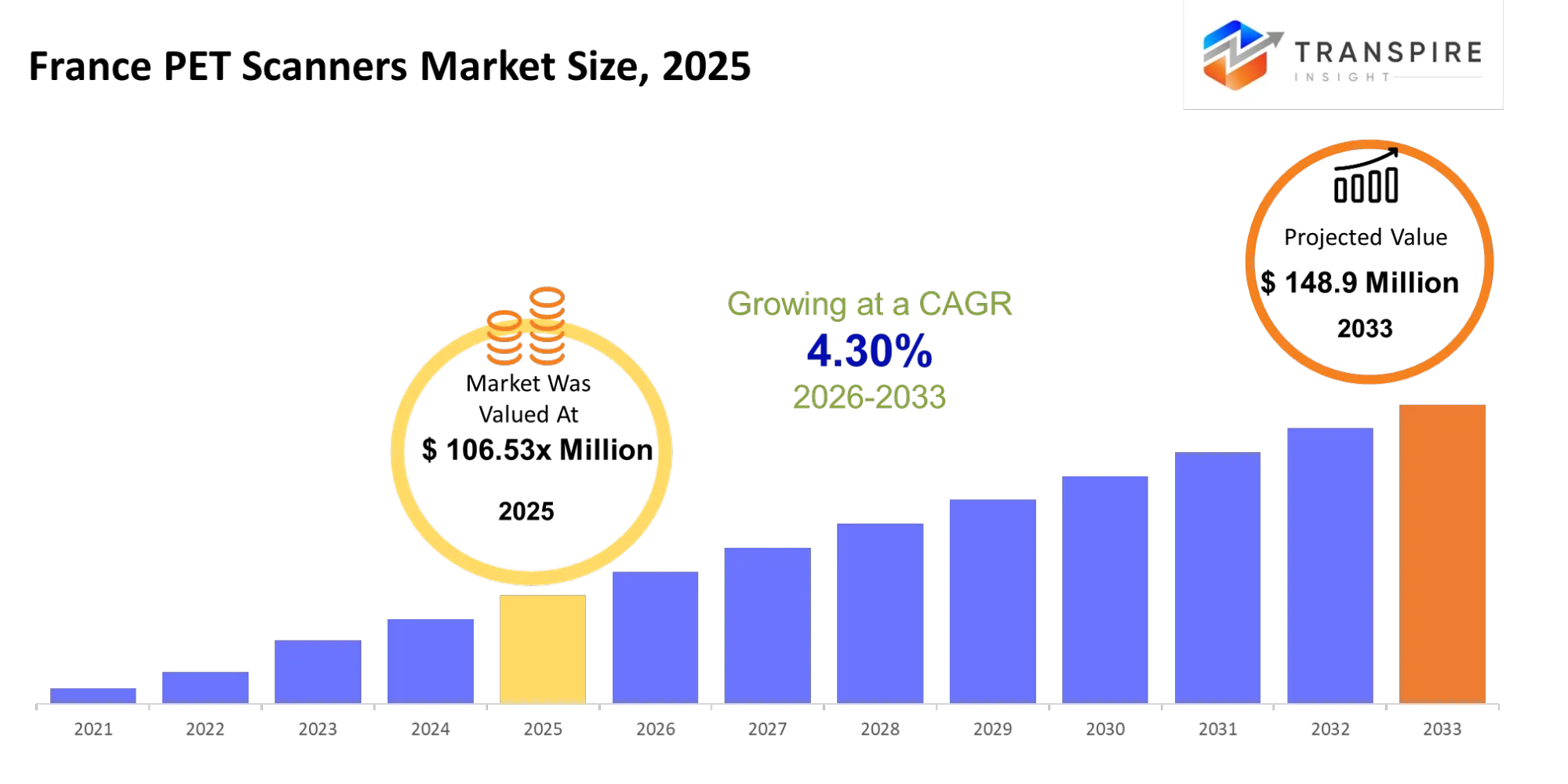
- France PET Scanners Market Size 2025: USD 106.53 Million
- France PET Scanners Market Size 2033: USD 148.9 Million
- France PET Scanners Market CAGR: 4.30%
- France PET Scanners Market Segments: By Type (Standalone PET, PET/CT, PET/MRI, Others); By Application (Oncology, Cardiology, Neurology, Others); By End-User (Hospitals, Diagnostic Centers, Research Institutes, Others); By Technology (Time-of-Flight PET, Digital PET, Others)
To learn more about this report,  Download Free Sample Report
France PET Scanners Market Summary
The France PET Scanners Market was valued at USD 106.53 Million in 2025. It is forecast to reach USD 148.9 Million by 2033. That is a CAGR of 4.30% over the period.
The France PET scanner market functions as an essential medical tool which enables doctors to observe metabolic changes that exist before patients develop visible structural abnormalities which standard imaging techniques can show. Hospitals and diagnostic centers use PET systems to identify cancer spread, monitor treatment response, and support precision medicine decisions, particularly in complex oncology cases. The market has shifted during the past five years because users now prefer hybrid PET/CT and PET/MRI systems which provide quicker imaging processes and improved diagnostic results.
After France increased funding for advanced diagnostic technology development the country experienced COVID-19 healthcare delays which made cancer screening and chronic disease identification difficult. The combination of molecular imaging reimbursement support and rising radiotracer use in personalized medicine has resulted in increased scanner usage throughout the industry. Healthcare facilities now need to establish early detection systems which enhance work processes, so imaging centers are renewing their outdated equipment, which generates continuous system upgrades and boosts service revenue throughout the French diagnostic imaging industry.
Key Market Insights
- The healthcare networks of Northern France and the Paris region together controlled 38 percent of France PET Scanners Market revenue during 2025 because their cancer treatment facilities were located in one area.
- The Southern France market will become the most rapidly developing market until 2033 because private companies invest in diagnostic imaging and cancer treatment facilities.
- The hospital sector selected PET/CT systems as their most suitable choice in 2025 because they needed systems which would enable them to perform integrated imaging processes while reducing patient examination durations.
- The PET/MRI technology segment became the fastest expanding segment after 2023 because there was a rising need for high-resolution imaging solutions which doctors required to examine neurological and pediatric cases.
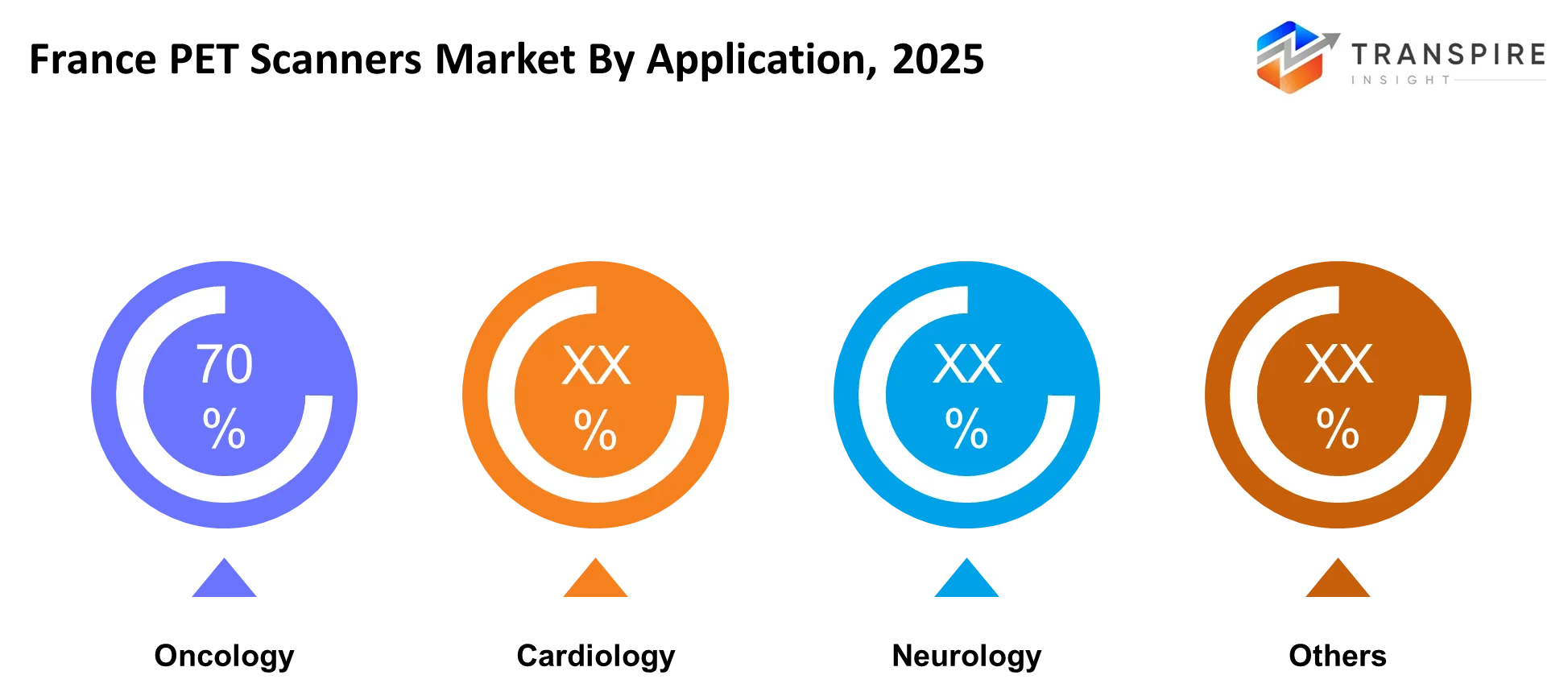
- The France PET Scanners Market faced its highest demand from oncology applications which accounted for more than 65 percent of market needs because doctors used molecular imaging to track patient progress.
- The field of neurology imaging experienced its most rapid application development since 2024 because research programs for Alzheimer's disease and neurodegenerative disorders expanded their study efforts.
- Hospitals remained the leading end-user segment with more than 55% market share because large institutions possess radiotracer handling infrastructure and reimbursement access.
- Independent diagnostic imaging centers expanded rapidly after 2022 as outpatient imaging demand increased and patient waiting-time reduction became a national healthcare priority.
- The period from 2023 to 2026 saw manufacturers form more partnerships with French hospitals to implement low-radiation imaging systems along with solutions which enable advanced compatibility of radiopharmaceuticals.
What are the Key Drivers, Restraints, and Opportunities in the France PET Scanners Market?
The main factor that drives growth in the France PET scanners market operates through the expansion of precision oncology and molecular diagnostics which the national healthcare system implements. French hospitals and cancer institutes increasingly use PET imaging to track tumor growth, monitor metastasis development, and design individualized treatment plans. The healthcare system underwent this transformation because authorities needed to solve two problems which existed before the pandemic: they required quicker cancer diagnosis and they needed to decrease existing imaging delays. The hospitals increased their budget for advanced PET/CT systems which provide operational capacity and superior imaging performance. The need for molecular imaging in clinical settings drives the demand for equipment upgrades and service agreements and radiotracer usage results in additional income.
The primary challenge for PET imaging facilities stems from their expensive equipment and operating expenses which create financial barriers. PET scanners need three things: special shielding spaces and radiotracer delivery systems that connect to cyclotron facilities and staff members who possess advanced nuclear medicine expertise. The existing infrastructure creates three barriers which prevent smaller regional hospitals and independent diagnostic facilities from implementing the system. The nuclear medicine workforce shortage creates two problems: it decreases scanner usage and it hinders nationwide deployment of the system.
AI-integrated imaging platforms and next-generation radiopharmaceutical development represent two major opportunities for development. France has established new research partnerships to study neurological disorders and prostate cancer imaging and theranostics. New PET tracers which target Alzheimer’s disease and neuroendocrine tumors are developing clinical uses that extend beyond traditional oncology practices. Companies that invest in digital imaging ecosystems and cloud-based diagnostics and compact PET technologies have been established.
What Has the Impact of Artificial Intelligence Been on the France PET Scanners Market?
The France PET scanners market experiences major transformations from artificial intelligence and advanced digital technologies which enhance imaging accuracy and workflow efficiency and equipment usage. AI-powered reconstruction software enables radiologists to create superior quality PET images while using less radiotracer material and completing scans in shorter times. The system enables hospitals to treat more patients each day while decreasing radiation exposure to patients who require oncology and pediatric medical imaging services. Imaging vendors are integrating deep learning algorithms into their PET/CT platforms to enable automatic detection of lesions and organ segmentation and measurement of image data which leads to decreased differences in diagnostic center results.
The use of machine learning models has increased for both predictive maintenance purposes and optimization of scanner performance. The systems track detector operations and temperature changes and calibration patterns to detect technical problems before the equipment breaks down. Imaging centers achieve better scanner availability while decreasing expenses for unexpected equipment repairs. The use of AI-enabled workflow management tools assists in optimizing both appointment scheduling and radiotracer distribution which results in decreased operational inefficiencies throughout nuclear medicine departments.
Digital imaging systems provide advanced support for both regulatory compliance requirements and specialized remote collaboration between medical professionals. The high costs of system integration combined with divided hospital information technology systems create a major obstacle for AI implementation in France. The majority of regional healthcare facilities still depend on outdated imaging systems which lack the capability to handle cloud-based data analysis and immediate artificial intelligence processing, which results in slowed progress toward implementing intelligent molecular imaging technology.
Key Market Trends
- French hospitals began to use integrated diagnostic imaging systems because they needed to replace their outdated PET/CT scanner facilities which operated from 2022 until now.
- The implementation of AI-assisted image reconstruction technology enabled oncology imaging centers to complete their scanning procedures 30% faster between 2023 and 2026.
- French diagnostic providers adopted low-dose PET technologies to enhance their ability to monitor pediatric patients and assess long-term cancer cases.
- The need for neurological PET imaging grew steadily after public healthcare institutions in France increased their funding for Alzheimer’s research.
- Research laboratories and imaging vendors formed radiopharmaceutical partnerships which enabled them to develop next-generation tracers for commercial sale after 2024.
- Private imaging networks established outpatient PET services because they wanted to decrease diagnostic waiting times for patients who lived in crowded urban areas.
- The implementation of cloud-connected workflow systems by manufacturers enables them to provide remote diagnostic services and predictive maintenance and centralized imaging data management.
- Regional hospitals adopted compact PET scanner designs which required less energy because they needed to operate within their limited budget and infrastructure.
- Siemens Healthineers and GE HealthCare developed AI-based molecular imaging systems to enhance their market competitiveness in France.
- Medical professionals began to use PET/MRI systems for soft-tissue imaging because these systems provided better diagnostic results for neurological and pediatric patients.
France PET Scanners Market Segmentation
By Type
The market now identifies PET/CT systems as the leading solution because hospitals and cancer treatment centers choose hybrid imaging systems that provide both anatomical and metabolic imaging capabilities in a unified operational workflow. Healthcare institutions of large size select PET/CT systems because these systems offer quicker scanning abilities and they can be used in many medical situations while effectively supporting cancer treatment development. The adoption of precision diagnostics continues to grow because public and private imaging centers require higher patient intake capacity through their diagnostic services.
Standalone PET systems continue serving selected research environments and smaller diagnostic facilities where budget limitations restrict investment in advanced hybrid platforms. Integrated imaging systems provide better diagnostic capabilities and more effective operational processes which give them an advantage over the market development of standalone systems. Neurology and pediatric imaging departments are adopting PET/MRI systems because this technology enables better soft-tissue visualization while decreasing radiation exposure. Mobile PET imaging units and compact hybrid systems which make up the "others" category are expanding because healthcare providers need adaptable imaging options for their outpatient and regional healthcare networks. Manufacturers will increasingly develop AI features and low radiation imaging systems and quick image reconstruction capabilities for all scanner types during the upcoming forecast period.
By Application
Your training data extends until October of the year 2023. The oncology field holds its most powerful market position because PET imaging serves essential functions for cancer staging and metastasis detection and treatment response monitoring in main French medical facilities. Cancer treatment centers increasingly depend on molecular imaging to support personalized therapy decisions and radiopharmaceutical-guided treatment pathways. The rising incidence of breast and lung and colorectal and prostate cancers leads to increased scanner usage in both university hospitals and specialized oncology facilities.
Healthcare providers use PET imaging to assess myocardial viability and coronary artery disease in their high-risk patient populations which explains the continuous growth of cardiology applications. Clinical research has increased its interest in neurology imaging because of its ability to detect Alzheimer's disease and epilepsy and various neurodegenerative disorders. The "others" category which includes infectious disease imaging and inflammatory disorder assessment exists as a niche area yet shows new possibilities for research-driven healthcare settings. The application development process will move toward theranostics and early disease detection and multi-organ molecular imaging during the forecast period which radiotracers.
To learn more about this report, Download Free Sample Report
By End-User
The majority of advanced oncology and neurology and cardiology imaging procedures in France operate under the control of large healthcare organizations which make hospitals their primary business model. The university hospitals and regional cancer centers are making substantial investments in their PET systems to achieve better diagnostic results while handling their patient load requirements. The combination of strong reimbursement access and dedicated nuclear medicine departments and complete radiopharmaceutical management systems enables hospitals to maintain their market dominance.
The growing need for outpatient imaging services in city healthcare systems has created a new end-user segment which diagnostic centers now serve. Private imaging providers increasingly adopt advanced PET systems to reduce patient waiting times and improve access to specialized molecular diagnostics outside large hospital environments. Research institutions experience stable demand because of their active clinical trials and radiotracer development projects and neuroimaging investigations. The healthcare system now sees more healthcare facilities which provide ambulatory imaging services and specialty clinics move toward adoption of the "others" category. The market will experience growth for end-users who can implement AI-powered diagnostic systems and cloud imaging solutions and precision medicine systems into their daily medical practices.
By Technology
The market dominance of Time-of-Flight PET technology stems from its ability to deliver better image quality and detect lesions more effectively and perform scans at faster speeds than traditional PET systems. Time-of-Flight systems have become the preferred choice for large hospitals and oncology imaging centers because these systems provide better diagnostic accuracy during complex cancer detection and treatment monitoring processes. Healthcare providers in high-volume nuclear medicine departments gain operational efficiency and patient throughput benefits from improved sensitivity and shorter acquisition times. Digital PET technology has become the fastest-growing segment because digital detectors enable higher spatial resolution and lower noise levels and better quantitative imaging results.
Research institutions and advanced cancer centers increasingly invest in digital PET platforms to support theranostics total-body imaging and AI-assisted diagnostics. The other category which includes analog PET systems and transitional detector technologies continues to serve facilities that operate at lower imaging volumes and face strict budget constraints. The forecast period will see technology competition focus on three main aspects: ultra-fast imaging capabilities and reduced radiation exposure and AI-powered image reconstruction systems for accurate molecular diagnostics.
What are the Key Use Cases Driving the France PET Scanners Market?
The France PET scanner market primarily serves oncology imaging needs which focus on diagnosing lung breast colorectal and prostate cancers. PET/CT systems serve as essential tools for large hospitals and cancer institutes which use them to identify metastatic disease, assess tumor metabolism and track patient treatment results. French oncology pathways now rely on molecular imaging to plan therapies which results in increased scanner usage for this application.
Academic hospitals and specialized diagnostic centers are beginning to use cardiology and neurology applications which show increasing popularity. PET imaging has developed into a vital tool for medical professionals who use it to measure coronary artery disease patients' heart muscle viability and to identify neurodegenerative diseases including Alzheimer's disease at their initial stages. Research institutions and university hospitals are expanding these applications through advanced radiotracer programs and precision medicine initiatives.
New use cases have developed to include theranostics and total-body PET imaging. French healthcare providers are investigating the use of PET-based therapies to treat neuroendocrine tumors and advanced prostate cancer through targeted radionuclide therapies. Total-body PET systems demonstrate strong long-term viability because they enable rapid scanning procedures which decrease radiation exposure and provide dynamic multi-organ imaging capabilities for clinical research and pediatric examination purposes.
|
Report Metrics |
Details |
|
Market size value in 2025 |
USD 106.53 Million |
|
Market size value in 2026 |
USD 110.9 Million |
|
Revenue forecast in 2033 |
USD 148.9 Million |
|
Growth rate |
CAGR of 4.30% from 2026 to 2033 |
|
Base year |
2025 |
|
Historical data |
2021 - 2024 |
|
Forecast period |
2026 - 2033 |
|
Report coverage |
Revenue forecast, competitive landscape, growth factors, and trends |
|
Regional scope |
France |
|
Key company profiled |
Siemens Healthineers, GE Healthcare, Philips, Canon Medical, Hitachi, United Imaging, Mediso, Shimadzu, Neusoft, Positron, Carestream, Toshiba, Bruker, Spectrum Dynamics, Sofie Biosciences |
|
Customization scope |
Free report customization (country, regional & segment scope). Avail customized purchase options to meet your exact research needs. |
|
Report Segmentation |
By Type (Standalone PET, PET/CT, PET/MRI, Others); By Application (Oncology, Cardiology, Neurology, Others); By End-User (Hospitals, Diagnostic Centers, Research Institutes, Others); By Technology (Time-of-Flight PET, Digital PET, Others) |
Which Regions are Driving the France PET Scanners Market Growth?
The France PET scanners market operates under the Île-de-France region because this area contains multiple university hospitals together with cancer research institutes and advanced imaging facilities. The healthcare networks based in Paris receive advantages from public funding together with their capacity to treat many patients and their prompt implementation of molecular imaging methods. The region hosts important nuclear medicine research partnerships which lead to faster implementation of advanced radiotracers and AI-based imaging systems. The system enables hospitals to achieve their scanner utilization targets while they conduct clinical research and precision oncology projects.
The Auvergne-Rhône-Alpes region functions as the second largest regional market with its growth patterns different from those of the Paris area. The research market here depends more on stable healthcare funding and active hospital modernization initiatives than it does on research output. The demand for PET imaging remains constant in Lyon and Grenoble because these cities develop new cardiology and chronic disease management programs. The healthcare sector in the region establishes a requirement for hybrid PET/CT systems which develops a continuous need for these systems in mid-sized hospitals.
The region of Provence-Alpes-Côte d'Azur will become the fastest growing market until the year 2033. The recent increase in private diagnostic imaging facilities and the rise in healthcare system development funding have resulted in more PET scanner installations throughout southern France. Providers in the region have implemented better outpatient cancer diagnostic solutions which enable them to decrease imaging waiting times while detecting early-stage illnesses.
Who are the Key Players in the France PET Scanners Market and How Do They Compete?
The France PET scanners market maintains its moderate consolidation because companies compete through their imaging capabilities and their ability to implement AI technology and their operational systems and their extended support packages. Established imaging manufacturers continue to defend their market share by implementing technological advancements and forming partnerships with hospitals while emerging Asian companies use cost-efficient solutions and adaptable installation methods to compete. The primary basis of competition has shifted from hardware alone toward integrated digital imaging ecosystems that combine scanner technology AI-assisted diagnostics predictive maintenance and radiopharmaceutical compatibility.
Siemens Healthineers uses advanced hybrid imaging platforms and its PETNET and Advanced Accelerator Applications radiopharmaceutical solutions to create distinct market advantages. The company has strengthened its position in France through nuclear medicine collaborations and conference-led engagement with clinical institutions. Siemens Healthineers France Nuclear Medicine Activities
GE HealthCare competes through AI-enabled molecular imaging systems and total-body PET/CT innovation. The Omni PET/CT platform from the company provides hospitals with ultra-fast imaging capabilities and reduced radiation exposure and support for theranostics research which improves workflow efficiency and enables precision oncology expansion. GE HealthCare Omni PET/CT System
Philips develops digital workflow integration and image reconstruction solutions which help hospitals achieve faster diagnosis in their high-volume medical facilities. Canon Medical expands its hybrid PET/CT capabilities through its strong CT imaging expertise to provide regional diagnostic facilities with scalable imaging solutions. United Imaging creates expansion through its affordable total-body imaging systems which maintain cost advantages over its competitors.
Company List
- Siemens Healthineers
- GE Healthcare
- Philips
- Canon Medical
- Hitachi
- United Imaging
- Mediso
- Shimadzu
- Neusoft
- Positron
- Carestream
- Toshiba
- Bruker
- Spectrum Dynamics
- Sofie Biosciences
Recent Development News
In November 2025, GE HealthCare announced CE Mark approval for its Omni 128cm total-body PET/CT system. The platform supports head-to-thigh imaging in a single bed position, improving workflow efficiency and enabling lower-dose precision imaging applications across oncology and theranostics.http://investor.gehealthcare.com
In June 2025, GE HealthCare renewed its research collaboration with Stanford Medicine to advance total-body PET/CT clinical pathways. The partnership strengthens development of precision imaging technologies designed for personalized medicine and next-generation molecular diagnostics.http://gehealthcare.gcs-web.com
What Strategic Insights Define the Future of the France PET Scanners Market?
The France PET scanners market is experiencing a fundamental shift toward creating complete molecular imaging systems which focus on precision oncology and theranostics and AI-powered diagnostic systems. Over the next five to seven years hospitals will increasingly prioritize total-body PET systems and advanced radiotracer compatibility and cloud-connected imaging workflows which will enhance both diagnostic speed and operational performance. The personalized cancer treatment expansion and the increasing value of quantitative imaging for treatment planning purposes are driving this transformation.
One underrecognized risk involves radiopharmaceutical supply chain dependence. The growth of PET imaging depends on two critical elements which include stable isotope production and the network of radiotracer distribution which only has few suppliers. Any disruption in isotope availability will lead to reduced scanner usage and extended delays in revenue generation for imaging companies.
A major emerging opportunity exists in neurological PET imaging which connects to Alzheimer’s diagnostics and neurodegenerative disease research. The combination of France’s aging population and its increasing dementia research funding will drive PET adoption in areas beyond oncology. Market participants should invest early in AI-enabled workflow platforms and radiopharmaceutical partnerships because future competitive advantage will depend less on scanner hardware and more on integrated diagnostic ecosystems and long-term clinical collaboration models.
France PET Scanners Market Report Segmentation
By Type
- Standalone PET
- PET/CT
- PET/MRI
- Others
By Application
- Oncology
- Cardiology
- Neurology
- Others
By End-User
- Hospitals
- Diagnostic Centers
- Research Institutes
- Others
By Technology
- Time-of-Flight PET
- Digital PET
- Others
Frequently Asked Questions
Find quick answers to common questions.
[Insert confirmed 2033 market size figure in USD 148.9 Million.
Key segments for the France PET Scanners Market are By Type (Standalone PET, PET/CT, PET/MRI, Others); By Application (Oncology, Cardiology, Neurology, Others); By End-User (Hospitals, Diagnostic Centers, Research Institutes, Others); By Technology (Time-of-Flight PET, Digital PET, Others).
Major France PET Scanners Market players are Siemens Healthineers, GE Healthcare, Philips, Canon Medical, Hitachi, United Imaging, Mediso, Shimadzu, Neusoft, Positron, Carestream, Toshiba, Bruker, Spectrum Dynamics, Sofie Biosciences .
The France PET Scanners Market size is USD 106.53 Million in 2025.
The France PET Scanners Market CAGR is 4.30% from 2026 to 2033.
- Siemens Healthineers
- GE Healthcare
- Philips
- Canon Medical
- Hitachi
- United Imaging
- Mediso
- Shimadzu
- Neusoft
- Positron
- Carestream
- Toshiba
- Bruker
- Spectrum Dynamics
- Sofie Biosciences
Recently Published Reports
-
Apr 2026
AI in Diabetic Retinopathy Market
AI in Diabetic Retinopathy Market Size, Share & Analysis Report By Type (Screening AI Systems, Diagnostic AI Systems, and Predictive AI Models), By Application Segment (Hospitals, Ophthalmology Clinics, Diagnostic Centers, and Research and Development), and Geography (North America, Europe, Asia-Pacific, Middle East and Africa, South and Central America), 2021 - 2031
-
Apr 2026
Psychometric Tests Market
Psychometric Tests Market Size, Share & Analysis Report By Type (Personality Tests, Ability/Aptitude Tests, Skill/Knowledge Tests, and Others), By Application (Talent Acquisition and Talent Management), and Geography (North America, Europe, Asia-Pacific, Middle East and Africa, South and Central America), 2021 – 2031
-
Apr 2026
Rare Biological Sample Collection Market
Rare Biological Sample Collection Market Size, Share & Analysis Report By Type (Isolation Kits & Reagent, Blood Collection Tubes, and Others), By Application (Oncology, Transcriptomics, Pharmacogenomics, and Others), and Geography (North America, Europe, Asia-Pacific, Middle East and Africa, South and Central America), 2021 – 2031
-
Apr 2026
Patient Lift Pendant Market
Patient Lift Pendant Market By Product Type (Wired Pendants, Wireless, Programmable), By Operation Type(Manual, Electric), By End-Users (Healthcare Professionals, Patients), By Application (Hospitals, Homecare, Rehabilitation Centers, Others), By Industry Analysis, Size, Share, Growth, Trends, and Forecasts 2021-2033
Our Clients
.jpg)