
France Flexible Foam Market Size & Forecast:
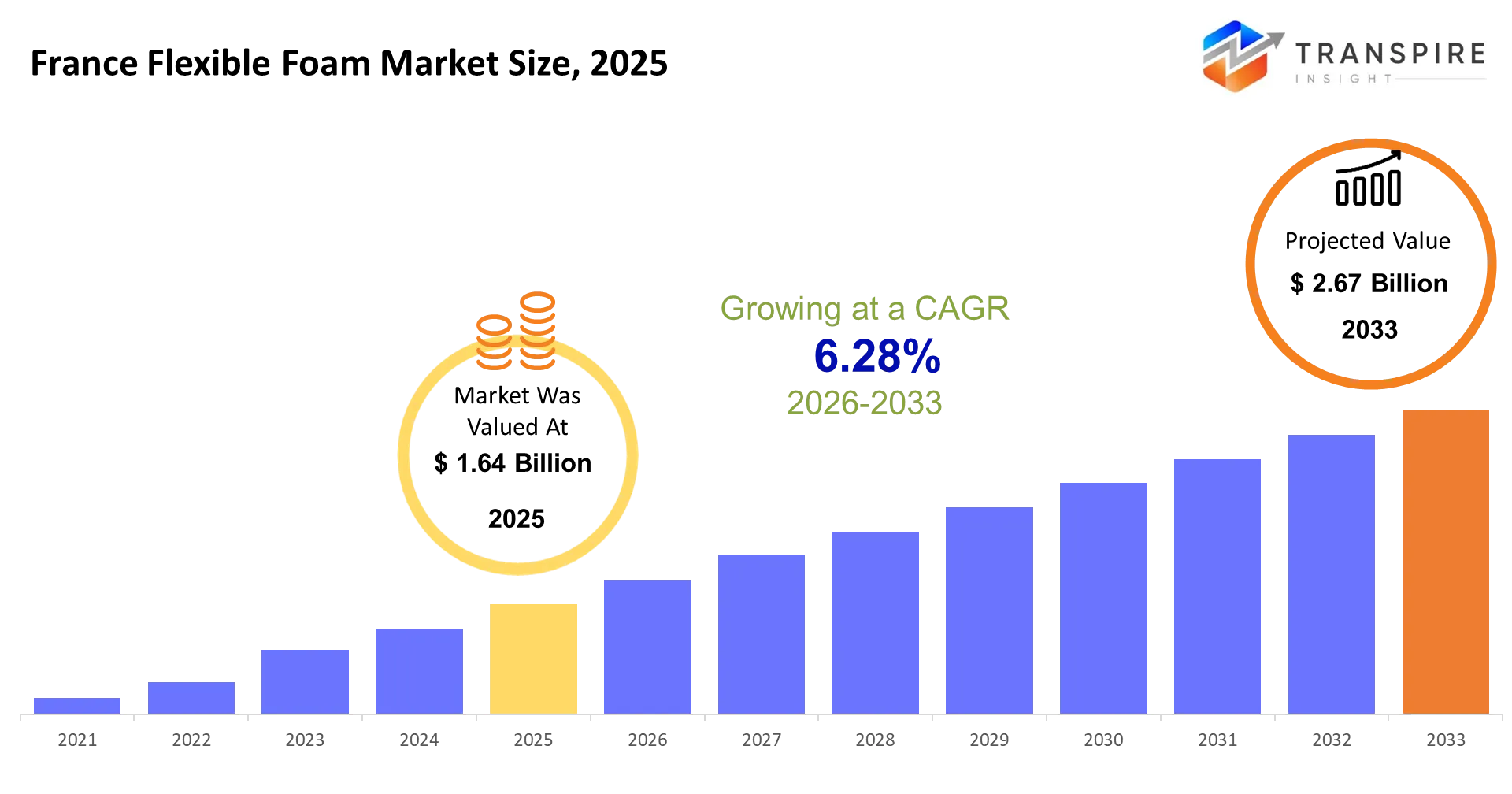
- France Flexible Foam Market Size 2025: USD 1.64 Billion
- France Flexible Foam Market Size 2033: USD 2.67 Billion
- France Flexible Foam Market CAGR: 6.28%
- France Flexible Foam Market Segments: By Type (Polyurethane Foam, Polyethylene Foam, Polypropylene Foam, Others); By Application (Furniture, Bedding, Automotive, Packaging, Others); By End-User (Furniture Industry, Automotive Industry, Packaging Sector, Construction Sector, Others); By Density (Low Density, Medium Density, High Density, Others)
To learn more about this report,  Download Free Sample Report
France Flexible Foam Market Summary
The France Flexible Foam Market was valued at USD 1.64 Billion in 2025. It is forecast to reach USD 2.67 Billion by 2033. That is a CAGR of 6.28% over the period.
The France flexible foam market serves essential functions throughout the furniture industry and the automotive sector and the bedding sector and the packaging industry and the insulation market by providing enhancements which increase user comfort and enable vibration management and create lightweight products and deliver thermal performance benefits in all industrial and consumer use cases. Vehicle seating and mattresses and office furniture and protective packaging all use flexible polyurethane foam because it enables manufacturers to create lightweight products which maintain their protective and cushioning features. The market has undergone a transformation during the past five years because manufacturers now prefer to use low-emission recyclable foam technologies in response to increasing European chemical laws and circular economy requirements.
The Russia-Ukraine conflict created an energy price shock and caused raw material disruptions which forced French manufacturers to change their procurement methods by establishing local supply chains and developing bio-based polyol production capabilities. This transition has enabled innovative breakthroughs in developing advanced foam materials. Foam manufacturers have increased their contract values while building industrial applications which create permanent income streams for the entire French manufacturing sector because automotive makers need lighter materials and hospitality companies need better bedding systems.
Key Market Insights
- The France Flexible Foam Market witnessed accelerated adoption of bio-based polyols after 2022 amid European carbon reduction mandates and volatile petrochemical pricing.
- Northern France dominates regional production with nearly 38% market share in 2025 due to automotive manufacturing concentration and industrial foam processing facilities.
- Western France represents the fastest-growing regional cluster as furniture and bedding manufacturers expand domestic sourcing partnerships through the forecast period.
- Polyurethane flexible foam maintains over 60% industry share because of superior resilience, lightweight performance, and broad compatibility with automotive seating applications.
- Memory foam emerged as the second-largest segment after premium mattress sales increased across urban French households between 2021 and 2025.
- Rebonded foam applications are expanding rapidly as manufacturers integrate recycled foam waste into flooring underlays and acoustic insulation products.
- Furniture and bedding applications account for approximately 42% of France Flexible Foam Market revenue due to replacement demand and hospitality renovation projects.
- Automotive interior applications are the fastest-growing category as French OEMs prioritize lightweight cabin materials to improve electric vehicle energy efficiency.
- Residential consumers remain the leading end-user segment, while healthcare and eldercare facilities show the fastest procurement expansion since 2023.
- Manufacturers are gaining competitive advantage through automated foam cutting systems, strategic partnerships with mattress brands.
What are the Key Drivers, Restraints, and Opportunities in the France Flexible Foam Market?
The rapid shift of the automotive and furniture sectors toward lightweight materials with enhanced performance characteristics drives the France flexible foam market according to research. French automotive manufacturers use flexible polyurethane foam to decrease vehicle weight while enhancing passenger comfort. French automotive manufacturers use flexible polyurethane foam because it helps them reduce vehicle weight and improve passenger comfort. The practice holds particular significance for electric vehicles because their operational range depends on vehicle weight which affects battery performance.Domestic suppliers have gained revenue visibility through the increased specialized foam grade procurement which resulted from the market changes.
The most significant restraint remains structural dependence on petrochemical feedstocks such as toluene diisocyanate and polyols. The market for raw materials faces high vulnerability because of three main factors which include international energy shifts and dependency on imports and interruptions in refinery operations. Small-scale manufacturers find it difficult to handle unexpected price hikes because the foam production process requires them to work with restricted financial resources. Price-sensitive end users will not use the product because its price instability prevents them from accessing it.
Foam technologies which are recyclable and bio-based provide a significant opportunity for development. Investment in circular polyurethane systems which recover and reuse foam waste receives support from French and EU sustainability frameworks. Companies developing chemically recycled foam inputs and renewable polyol formulations will receive long-term contracts from automotive and furniture manufacturers who want to establish lower-carbon supply chains.
What Has the Impact of Artificial Intelligence Been on the France Flexible Foam Market?
The France flexible foam market currently uses artificial intelligence together with advanced manufacturing technologies to enhance production accuracy and quality assessment and supply network performance. The foam manufacturing industry uses AI-based monitoring systems to control temperature and density and pressure and chemical mixing during polyurethane production. The systems create better product formulation results while reducing material waste that occurs during high-resilience foam and memory foam production processes. The continuous foaming systems now use machine learning models to forecast equipment failures which enables factories to decrease unexpected downtime while boosting their operational availability.
Manufacturers use digital twins together with predictive analytics platforms to enhance their foam curing processes and energy efficiency and raw material usage. European producers who adopted automated production analytics systems achieved both reduced scrap production and decreased energy expenditure according to their reported results. AI-driven material simulations in automotive applications enable suppliers to assess foam performance in terms of durability and vibration absorption and lightweight capabilities before initiating commercial production thereby shortening product development timeframes.
AI adoption encounters real world challenges that prevent organizations from implementing the technology. The production facilities of medium-sized foam converters face prohibitive costs for system implementation which applies particularly to companies that use outdated manufacturing equipment. The existing production equipment of manufacturing facilities generates inconsistent data patterns which leads to predictive model errors that prevent smaller plants from implementing their production forecasts.
Key Market Trends
- The French foam manufacturers have been investing in bio-based polyols since 2022 because they want to decrease their risk of volatile petrochemical feedstock prices.
- The automotive suppliers started to use lightweight flexible foam structures because electric vehicle manufacturers needed interior components which would save energy after 2021.
- The mattress manufacturers developed new premium memory foam products because French customers wanted bedding products which provided orthopedic support and pressure relief.
- Manufacturers increased their use of automation technology between 2021 and 2025 because they needed to decrease their reliance on human workers and their need for materials.
- Suppliers developed flexible foam products with reduced VOC emissions for residential and furniture applications because EU indoor air quality regulations required them to do so.
- French construction companies began using recycled foam in their flooring and acoustic insulation products because circular economy targets became more important.
- The Russian-Ukrainian supply chain disruptions made multiple French converters eliminate their dependence on imported chemical feedstock by moving their raw material procurement to local sources.
- The companies Covestro and BASF established more sustainable polyurethane research partnerships with European manufacturing clients after 2023.
- Large foam processors adopted smart manufacturing systems which use AI-based quality inspection methods to enhance production consistency during their high-volume manufacturing operation.
- The healthcare and eldercare industries increased their purchasing of antimicrobial and pressure-distribution foam materials because they needed to support their post-pandemic infrastructure development projects.
France Flexible Foam Market Segmentation
By Type
The market remains dominated by polyurethane foam because furniture makers and automotive manufacturers and mattress companies need lightweight yet strong and flexible mattress foam material. Manufacturers of automotive seating systems and manufacturers of high-end mattresses continue to use polyurethane materials because these materials provide comfortable seating and effective vibration damping and durable performance. The market segment shows growth because companies adopt recyclable polyurethane technologies and bio-based chemical formulations that meet European sustainability requirements. Sustainable material innovation at suppliers will receive development incentives through investments in low-emission foam chemistry and circular production systems and advanced comfort applications.
The industrial packaging and insulation market maintains stable demand for polyethylene foam because this material delivers shock absorption and moisture protection and easy handling features. E-commerce logistics and industrial transportation systems continue supporting demand for reusable protective packaging solutions. The electric vehicle industry and industrial markets are increasingly adopting polypropylene foam because it delivers both high thermal resistance and structural strength. The other segment of the business which includes specialty and hybrid foams is growing its market presence in healthcare and acoustic insulation and sports equipment industries because those sectors need specific performance characteristics to create unique products that will last through time.
By Application
The largest market share belongs to furniture applications because upholstered seating and office interiors and modular furniture products need durable cushioning materials which last for extended periods. The bedding market keeps growing because premium mattress manufacturers now use memory foam and pressure relief technologies in their residential and hospitality products. The automotive sector experiences rapid expansion because electric vehicle manufacturers need lightweight materials for seating and insulation which enhance energy efficiency and passenger comfort. The packaging industry shows consistent demand because industrial exporters and e-commerce companies start using protective foam systems which decrease transportation damage and enhance logistics operations.
The furniture industry remains the leading end-user because residential renovation activity and hospitality refurbishment projects continue driving large-scale procurement of cushioning materials. Through its lightweight interior development for electric mobility the automotive industry strengthens its market position throughout Europe. Construction companies increasingly adopt flexible foam products for thermal insulation, acoustic control, and vibration reduction applications in energy-efficient buildings. Medium-density foam remains the most popular choice across various density categories because it provides comfort with durable structural support while high-density foam gains popularity for use in orthopedic bedding products, industrial insulation materials and advanced automotive seating solutions.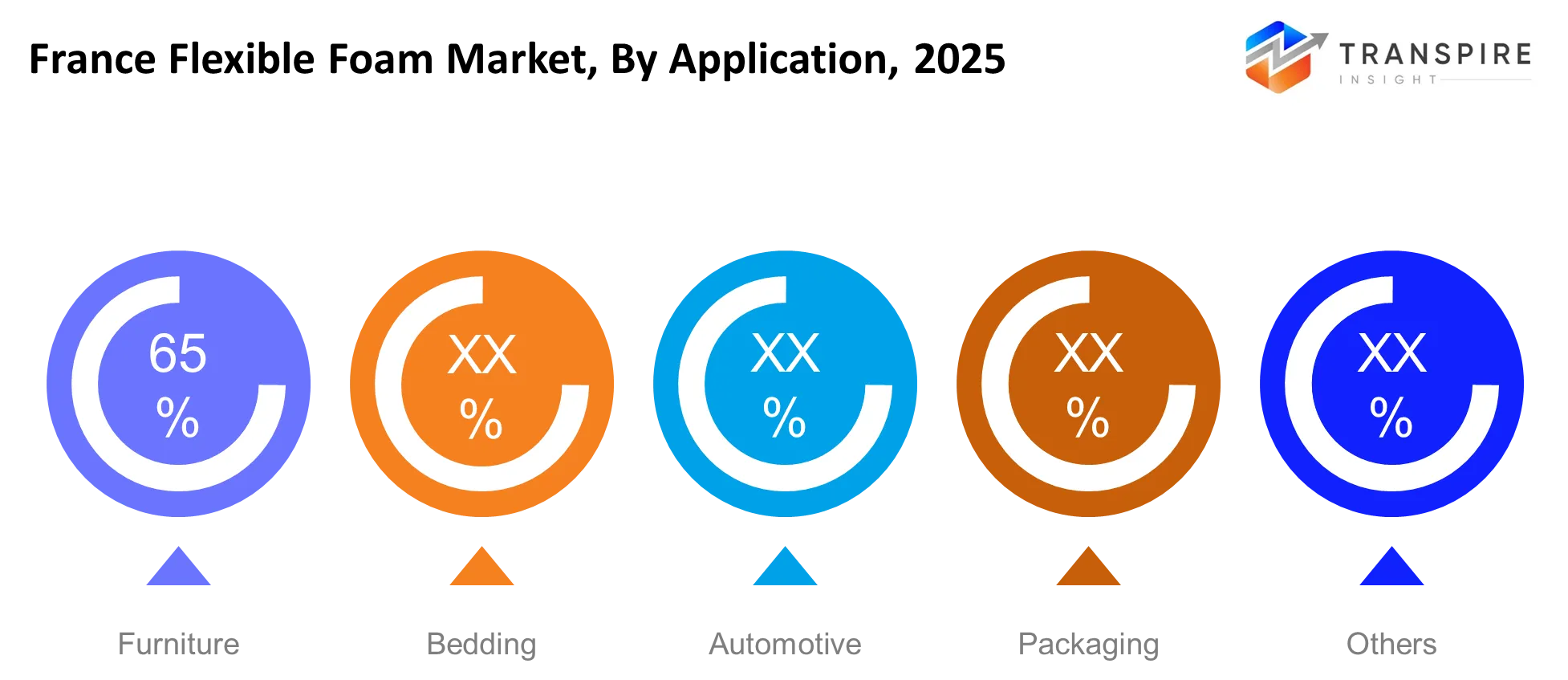
To learn more about this report, Download Free Sample Report
By End-User
The furniture industry maintains its top market status because it needs substantial amounts of cushioning and upholstery materials to meet the seating needs of homes and the design requirements of office spaces and the renovation demands of hotels.Manufacturers discover that using advanced foam technologies enables them to produce furniture which delivers improved ergonomic comfort and extended durability and lightweight performance. The automotive sector expands its market presence through electric vehicle manufacturers who implement lightweight interior materials to boost passenger comfort and achieve energy-efficient results. The packaging sector maintains stable demand because industrial exporters and e-commerce operators need protective foam systems which minimize transportation damage while enhancing handling efficiency throughout their logistics networks.
Foam-based insulation and acoustic control systems find increasing adoption in energy-efficient commercial and residential spaces which drive growth for the construction industry. European building efficiency regulations continue promoting advanced thermal insulation materials which combine lightweight design and extended operational lifespan. The other segment which includes healthcare and sports equipment and industrial applications shows steady growth because specialized industries need customized foam solutions for their pressure management and vibration control and technical cushioning needs. End-user industries will drive future growth which will lead to increased investments in recyclable foam technologies and low-emission production systems and advanced material engineering capabilities.
By Density
The market for low-density foam products maintains its strong position because manufacturers use the material for packaging and temporary protective materials and budget-friendly furniture items. The market exists because medium-density foam delivers furniture and bedding and automotive products balanced comfort and durability and essential structural support. Medium-density foam serves as the primary material for automotive seating systems and premium mattresses because it provides customers with both durability and long-lasting performance. High-density foam demand continues to grow because it provides essential support and resistance to wear in orthopedic bedding products and industrial insulation solutions and vehicle interior applications.
The density segment experiences growth because customers seek customized comfort systems and companies need advanced materials for their industrial operations. Healthcare providers and automotive manufacturers will increase their use of high-density foam because they need materials that combine durability with pressure management and lightweight structural performance. The other segment supports niche applications through hybrid and specialty density materials which include acoustic insulation and rehabilitation equipment and vibration management systems. The market will develop further because suppliers will create recyclable density-specific formulations and engineered foam systems which they will design for high-performance industrial and consumer applications.
What are the Key Use Cases Driving the France Flexible Foam Market?
Manufacturers in the furniture and bedding industry depend on polyurethane foam, which they use to create their mattresses and sofas and recliners and ergonomic seating systems. The French market shows growing demand for high-end comfort products that combine pressure relief with long-lasting durability, which has led mattress and upholstered furniture companies to use high-resilience and memory foam materials.
The automotive industry is experiencing rapid growth in interior design, which electric vehicles contribute to through their use of lightweight seating materials that enhance energy efficiency while providing passenger comfort. France has begun to upgrade its long-term care facilities, which has led healthcare and eldercare centers to increase their purchasing of antimicrobial foam products that hospitals use for bedding and mobility aids and rehabilitation equipment.
Emerging applications include flexible foam integration in acoustic insulation panels and recyclable packaging systems. Manufacturers are developing bio-based foam materials, which they will use to create sustainable construction interiors and next-generation mobility solutions, with the aim of establishing new business possibilities throughout the upcoming forecast period
|
Report Metrics |
Details |
|
Market size value in 2025 |
USD 1.64 Billion |
|
Market size value in 2026 |
USD 1.743 Billion |
|
Revenue forecast in 2033 |
USD 2.67 Billion |
|
Growth rate |
CAGR of 6.28% from 2026 to 2033 |
|
Base year |
2025 |
|
Historical data |
2021 - 2024 |
|
Forecast period |
2026 - 2033 |
|
Report coverage |
Revenue forecast, competitive landscape, growth factors, and trends |
|
Regional scope |
France |
|
Key company profiled |
BASF, Dow, Huntsman, Recticel, Covestro, Carpenter, Rogers Corporation, Sealed Air, Armacell, UFP Technologies, Zotefoams, FXI, Woodbridge Foam, Vita Group, Sekisui Chemical |
|
Customization scope |
Free report customization (country, regional & segment scope). Avail customized purchase options to meet your exact research needs. |
|
Report Segmentation |
By Type (Polyurethane Foam, Polyethylene Foam, Polypropylene Foam, Others); By Application (Furniture, Bedding, Automotive, Packaging, Others); By End-User (Furniture Industry, Automotive Industry, Packaging Sector, Construction Sector, Others); By Density (Low Density, Medium Density, High Density, Others) |
Which Regions are Driving the France Flexible Foam Market Growth?
The market for Northern France serves as the primary regional market because it connects active automotive manufacturing with established industrial chemical production facilities. Flexible polyurethane foam exhibits constant demand because major vehicle production centers and furniture manufacturing operations require it for their seating and interior design components. The region maintains its operational capacity through advanced logistics systems which connect Belgium and Germany while enabling efficient raw material acquisition and product delivery. The established supplier networks together with their close distance to European automotive original equipment manufacturers maintain Northern France's status as a leading automotive manufacturing center.
The Île-de-France region generates consistent market revenue through its sales of commercial furniture and healthcare products and premium bedding products which serve as its primary revenue sources. The local economy here expands through urban consumer spending and institutional procurement which supports both hospitality and medical sectors. The region maintains its strength because various industries operate within it and these industries conduct regular equipment replacements at constant intervals which continue even when production rates drop. The commercial construction industry boosts flexible foam product demand because developers increasingly choose sustainable interior materials for their projects.
Western France has become the fastest-growing market because its furniture manufacturing sector expands together with its commitment to green production methods. Multiple mid-sized foam processing companies and bedding manufacturers have developed new domestic sourcing capabilities to minimize their need for imported chemical feedstocks. Local governments promote industrial projects which produce low carbon emissions and match France's goals for a circular economy.
Who are the Key Players in the France Flexible Foam Market and How Do They Compete?
The France flexible foam market shows moderate consolidation because multinational chemical companies compete with specialized foam manufacturers and engineered material businesses. Manufacturing companies now compete based on their ability to develop sustainable solutions and produce lightweight materials and develop customized foam products instead of their manufacturing capacity. Established companies maintain their market presence through investments in circular polyurethane technologies while niche operators develop solutions for medical and acoustic insulation and high-grade industrial markets.
BASF distinguishes itself from competitors by creating bio-based polyurethane systems which include certified low-carbon foam technologies used in furniture and automotive manufacturing. The company has expanded its biomass balance product portfolio to help manufacturers lower product carbon footprints while maintaining existing processing systems. Covestro develops digital sustainability tools which help customers understand their product lifecycle emissions and track their use of recycled materials together with their polyurethane recycling technologies. The company has developed smart pyrolysis recycling facilities which will boost its ability to produce circular foam products for the long term.
Recticel establishes its market presence through its unique insulation and bedding products which it distributes through its extensive European distribution network. Huntsman Corporation develops cutting-edge polyurethane chemistry solutions which enhance the durability of automotive seating systems and industrial comfort systems while enabling lightweight design. Rogers Corporation dominates the market for engineered foam solutions which deliver precise cushioning effects and vibration damping capabilities and thermal management solutions for electronics and industrial equipment producers.
Company List
- BASF
- Dow
- Huntsman
- Recticel
- Covestro
- Carpenter
- Rogers Corporation
- Sealed Air
- Armacell
- UFP Technologies
- Zotefoams
- FXI
- Woodbridge Foam
- Vita Group
- Sekisui Chemical
Recent Development News
In March 2026, Covestro entered a partnership with Fraunhofer UMSICHT to develop a smart pyrolysis recycling pilot plant for polyurethane foam waste. The collaboration strengthened circular foam recycling capabilities and supported sustainable raw material recovery for polyurethane manufacturing.https://www.covestro.com
What Strategic Insights Define the Future of the France Flexible Foam Market?
The France flexible foam market is showing a movement towards circular product design and performance-based material development which results from European Union sustainability requirements and automotive lightweighting standards and the need to decrease chemical dependency on petroleum products. The next five to seven years will enable manufacturers who adopt recyclable polyurethane solutions together with bio-based materials for their production processes to establish better market positions through their partnerships with automotive and bedding and construction clients who want eco-friendly supply chain solutions. The production process of raw materials introduces hidden dangers because of its dependence on specific materials and its recycling system costs. Manufacturing companies will experience margin decline when their supply of recycled polyol becomes restricted or when its chemical composition shows variability.
The developing market for chemically recycled polyurethane systems presents a valuable opportunity because of their integration with AI-based production efficiency improvements and digital tracking of product lifecycles. European original equipment manufacturers and furniture companies will prefer to work with businesses that develop workable closed-loop recycling systems for their waste. Market participants should build strategic alliances with recyclers and automotive suppliers and sustainable chemical technology providers instead of competing through production capacity and pricing methods.
France Flexible Foam Market Report Segmentation
By Type
Polyurethane Foam
Polyethylene Foam
Polypropylene Foam
Others
By Application
Furniture
Bedding
Automotive
Packaging
Others
By End-User
Furniture Industry
Automotive Industry
Packaging Sector
Construction Sector
Others
By Density
Low Density
Medium Density
High Density
Others
Frequently Asked Questions
Find quick answers to common questions.
The Confirmed 2033 Market size figure in USD 1.64 Billion.
Key Segments for the France Flexible Foam Market are By Type (Polyurethane Foam, Polyethylene Foam, Polypropylene Foam, Others); By Application (Furniture, Bedding, Automotive, Packaging, Others); By End-User (Furniture Industry, Automotive Industry, Packaging Sector, Construction Sector, Others); By Density (Low Density, Medium Density, High Density, Others).
Major France Flexible Foam Market Players are BASF, Dow, Huntsman, Recticel, Covestro, Carpenter, Rogers Corporation, Sealed Air, Armacell, UFP Technologies, Zotefoams, FXI, Woodbridge Foam, Vita Group, Sekisui Chemical.
The current France Flexible Foam Market size is USD 2.67 Billion in 2025.
The France Flexible Foam Market CAGR is 6.28% from 2026 to 2033.
- BASF
- Dow
- Huntsman
- Recticel
- Covestro
- Carpenter
- Rogers Corporation
- Sealed Air
- Armacell
- UFP Technologies
- Zotefoams
- FXI
- Woodbridge Foam
- Vita Group
- Sekisui Chemical
Recently Published Reports
-
Apr 2026
Healthcare Polymer Packaging Market
Healthcare Polymer Packaging Market Size, Share & Analysis Report By Packaging Type (Syringes, IV Bottles and Pouches, Clamshells, Blisters, Bottles & Jars, Containers, Tubes, IV Parental Packaging, Others), By Type (Regulated, Non-regulated), By Polymer Type (LDPE (Low-Density Polyethylene), HDPE (High-Density Polyethylene), Homo-polymer (Homo), Random Copolymer (Random), Block Copolymer (Block), PET, Polystyrene, Polyvinyl Chloride, Polyamide/EVOH, Others), and Geography (North America, Europe, Asia-Pacific, Middle East and Africa, South and Central America), 2021 - 2031
-
Apr 2026
Hydrophilic Tape (Waterstop) Market
Hydrophilic Tape (Waterstop) Market Size, Share & Analysis Report By Type (Bentonite-Based Hydrophilic Tape, Rubber-Based Hydrophilic Tape), By Application (Residential Buildings, Commercial Buildings, Infrastructure Projects), and Geography (North America, Europe, Asia-Pacific, Middle East and Africa, South and Central America), 2021 - 2031
-
Apr 2026
Metalens Market
Metalens Market Size, Share & Analysis Report By Type (Visible Light Metalens, and Infrared Metalens), By Application (Consumer Electronics, Automotive Electronics, Industrial, Medical, and Others), and Geography (North America, Europe, Asia-Pacific, Middle East and Africa, South and Central America), 2021 - 2031
-
Apr 2026
PBT Resin Market
PBT Resin Market Size, Share & Analysis Report By Type (Reinforced PBT Resin, Unreinforced PBT Resin), By Processing Method (Injection Molding, Extrusion, Blow Molding, Others), By End-User (Automotive, Electrical & Electronics, Consumer Appliances, Industrial Machinery, Medical Devices, Packaging, Others), and Geography (North America, Europe, Asia-Pacific, Middle East and Africa, South and Central America), 2021 - 2031