
Europe Upcycled Fashion Market Size & Forecast:
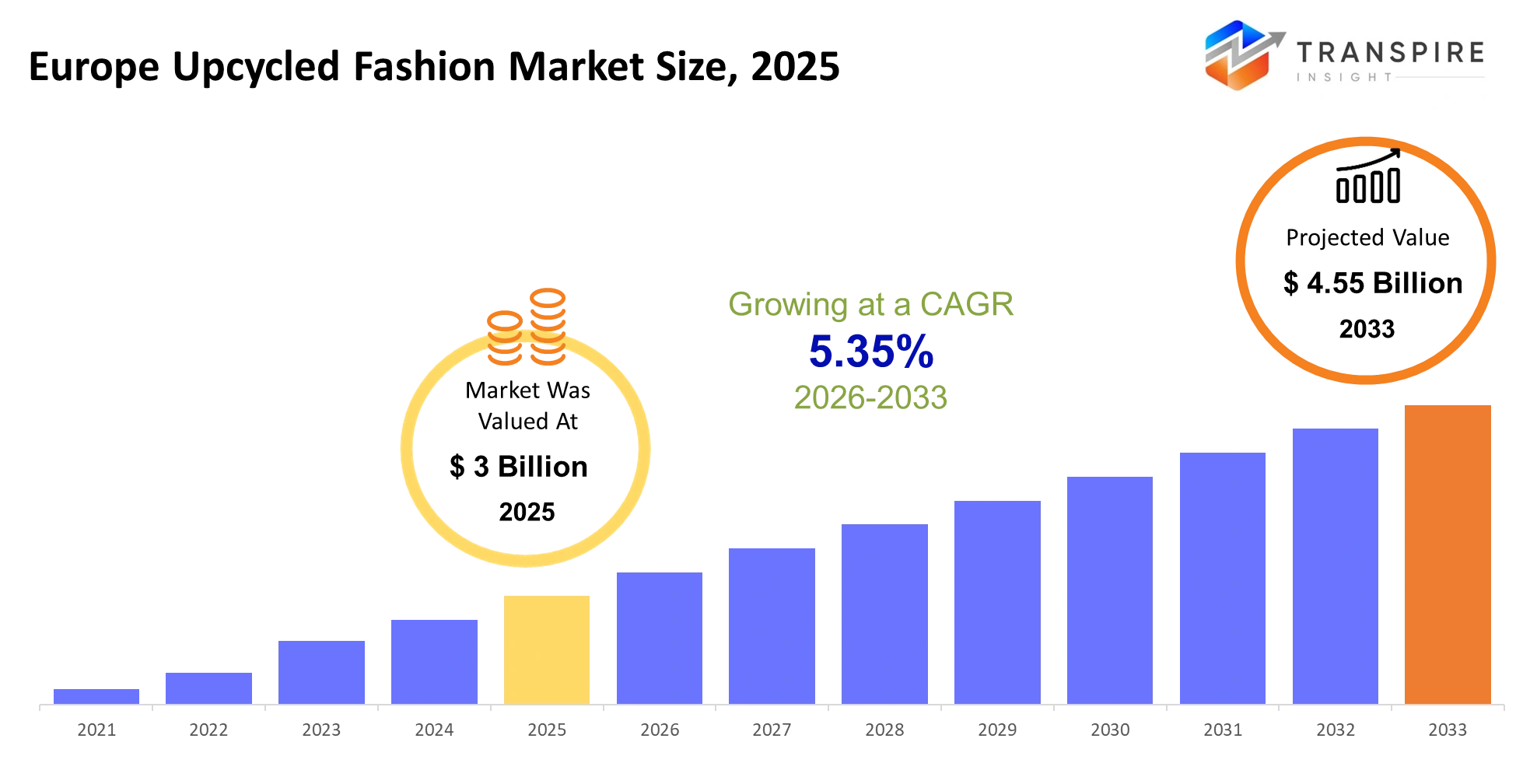
- Europe Upcycled Fashion Market Size 2025: USD 3 Billion
- Europe Upcycled Fashion Market Size 2033: USD 4.55 Billion
- Europe Upcycled Fashion Market CAGR: 5.35%
- Europe Upcycled Fashion Market Segments: By Type (Clothing, Accessories, Footwear, Others), By Application (Casual Wear, Luxury Fashion, Sustainable Fashion, Others), By End-User (Men, Women, Unisex, Others), By Distribution (Online, Retail, Boutiques, Others).
To learn more about this report,  Download Free Sample Report
Europe Upcycled Fashion Market Summary:
The Europe Upcycled Fashion Market size is estimated at USD 3 Billion in 2025 and is anticipated to reach USD 4.55 Billion by 2033, growing at a CAGR of 5.35% from 2026 to 2033. The Europe upcycled fashion market addresses a practical problem facing apparel brands and retailers because companies need to develop methods for reducing textile waste while decreasing their dependence on raw materials and extending the lifespan of their products without harming their unique market identity. The market transforms abandoned textiles and excess stock and used clothing into marketable fashion items which help businesses achieve their environmental goals while maintaining their financial stability in a retail space with budget constraints.
The market has evolved from designer-led niche markets into established commercial systems which now operate through traditional retail distribution networks during the past three to five years. The European Union circular economy regulations together with its new textile waste management rules forced companies to develop new sourcing and production methods which focus on reusable materials and loss traceability.
The pandemic supply chain breakdowns revealed the financial dangers of excessive dependence on new textile imports which led to increased funding for domestic recycling operations. Fashion retail has experienced a change in customer purchasing patterns because brands now use recycled product lines to control their material expenses while satisfying environmental sustainability requirements and attracting customers who value long-lasting products and limited-time exclusive items instead of mass-produced fast fashion items.
Key Market Insights
- The Europe Upcycled Fashion Market at 2025 The market share from Western Europe reached 48 percent because of its strong circular fashion system and its effective enforcement of regulations.
- Germany generates its highest regional revenue through its extensive textile recycling networks and high-end fashion market and its retail sustainability programs.
- The French market is expected to grow the fastest in Europe until 2030 because of producer responsibility regulations and investments in sustainable luxury fashion.
- People in Nordic countries are starting to demand upcycled clothing because they practice low-waste consumption and their governments support circular economy initiatives.
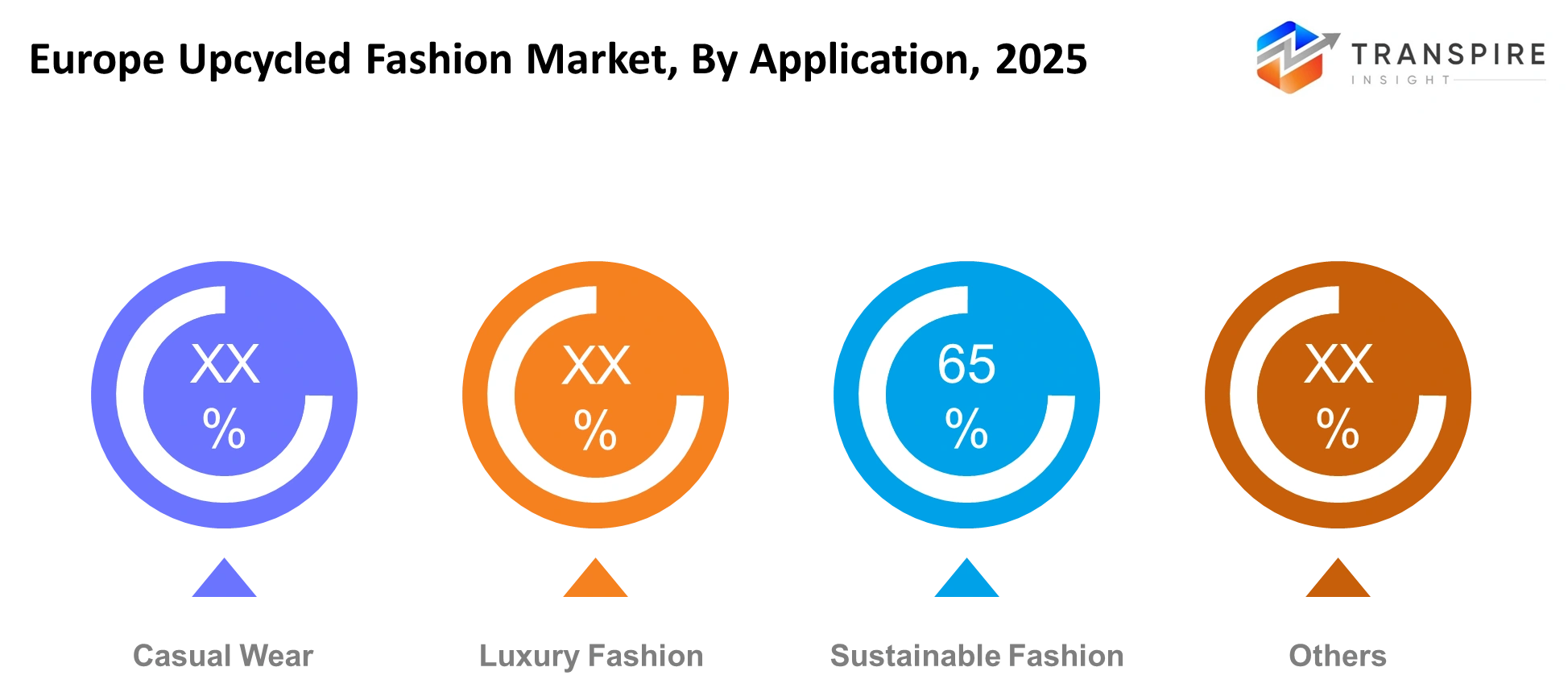
- The Europe Upcycled Fashion Market saw its highest share through 55 percent because customers preferred to resell their products and redesign them.
- Fashion brands developed premium upcycled collections to expand their second major segment, which includes accessories and footwear targeting urban consumers who follow fashion trends.
- The segment of luxury upcycled fashion will grow most rapidly during the forecast period because special edition products create exclusive items that enhance brand value.
- Denim upcycling saw major expansion as manufacturers created new products by reusing post-consumer fabrics which helped them decrease their need for cotton and water resources.
- The retail fashion sector held almost 60 percent of the market share in 2025 because leading brands adopted circular product lines into their regular product ranges.
- The direct-to-consumer resale market and customized sustainable fashion solutions made e-commerce platforms the most rapidly expanding application channel.
- Companies use upcycled product collections in their sustainability initiatives to enhance their ESG reporting and decrease the amount of textile waste which they send to landfills.
What are the Key Drivers, Restraints, and Opportunities in the Europe Upcycled Fashion Market?
The European upcycled fashion market experiences its strongest growth because new regulations now require producers to handle textile waste materials. The European Union established its circular economy action plans together with its extended producer responsibility regulations which required apparel companies to develop new waste management systems. The manufacturing industry faced increased sourcing challenges because cotton and synthetic fiber prices kept changing as they required materials from outside sources. Organizations now use upcycling as their primary method to control expenses while meeting regulatory compliance requirements. The main retailers established upcycled product lines which helped them generate additional revenue from their high-margin limited edition products and their resale partnerships and their local production systems which minimized waste creation.
The European fashion market which depends on textile collection systems experiences its most significant structural challenge through its existing fragmented collection and sorting systems. Upcycled production depends on consistent access to reusable materials, yet post-consumer textile waste streams remain highly unstandardized between countries. Manual sorting processes together with fiber separation methods and inconsistent material quality create production challenges which result in higher costs and reduced ability to expand operations. Upcycling processes need special systems to produce their products at industrial scale because their production requirements differ from traditional apparel manufacturing methods. Retailers face challenges which delay their ability to adopt new products while they wait for market prices to become competitive and this situation prevents fashion brands from growing their sales in the mid-tier fashion market.
The most promising growth opportunity for the textile industry arises from automated textile sorting and fiber-recognition technology development. The implementation of AI-enabled sorting systems in Germany and the Nordic region results in better material traceability together with enhanced processing efficiency. The maturation of these technologies will provide brands with scalable solutions that deliver better-quality recovered textiles for their everyday clothing needs, which will enable them to secure larger business contracts while implementing fashion retail value systems.
What Has the Impact of Artificial Intelligence Been on the Europe Upcycled Fashion Market?
The European upcycled fashion market experiences transformation through artificial intelligence and advanced digital technologies which enhance material sourcing capabilities and production tracking systems and inventory management systems throughout circular apparel supply chains. The AI-powered image recognition systems enable automated textile sorting through their ability to detect fabric composition and color grading and material quality at industrial scale. The system enables recyclers and fashion brands to handle greater waste quantities because it decreases manual sorting requirements while boosting reusable textile retrieval efficiency. Multiple European facilities have started to implement robotic cutting systems which create efficient pattern placement solutions for non-standard reclaimed fabrics, which help manufacturers decrease their production material waste.
Business operations increasingly depend on machine learning models which help forecast resale demand and predict fabric durability and manage inventory for limited-edition upcycled collections. Brands use predictive analytics to reduce overproduction and align product releases with regional purchasing behavior, which leads to better sell-through results and reduced unsold stock. Digital product passports and blockchain-enabled traceability systems provide regulatory compliance support through their ability to record textile origin information and reuse cycle data and environmental impact assessment metrics.
The use of these technologies boosts operational efficiency because they enable enterprises to complete tasks more quickly while spending less on raw materials and achieving better supply chain visibility. The organization faces two main challenges about adopting new systems because they need high integration expenses and the textile data shows inconsistent quality. The absence of standardized fiber labeling for post-consumer garments results in AI systems losing accuracy during real-world sorting operations, which hampers complete automation efforts across the fragmented European recycling system.
Key Market Trends
- European fashion retailers started using upcycled capsule collections in 2022 to combat higher cotton expenses while decreasing their need for fresh textile materials from abroad.
- After 2021 France established stricter textile waste disposal rules which required companies to develop production systems that enable product reuse and waste tracking and fulfillment of extended producer responsibility regulations.
- The adoption of AI-powered textile sorting systems spread throughout Germany and Scandinavia because they decreased the amount of manual work needed and helped recover 30 percent more reusable fabrics.
- Stella McCartney and Patagonia shifted their sustainability efforts from seasonal programs to develop ongoing circular fashion product lines which they now offer as permanent collections.
- Retailers established resale partnerships with digital marketplaces since 2020 to create new revenue opportunities through post-consumer garment recovery programs.
- European consumers increasingly preferred limited-edition upcycled apparel after the pandemic made fast-fashion products available in excess which damaged their faith in mass production methods.
- Digital product passports will become available in the premium fashion industry between 2023 and 2025 to enhance textile traceability and help businesses meet upcoming EU sustainability reporting requirements.
- Mid-tier apparel manufacturers started moving their textile recycling facilities to Western European retail centers which helped them reduce material sourcing times while securing reliable access to materials.
- Italian and Spanish upcycled denim production operations expanded their activities because rising environmental compliance costs made water-intensive cotton processing more expensive.
- Fashion startups started using blockchain technology for supply chain tracking purposes because investors demanded both measurable circularity results and clear material sourcing information.
Europe Upcycled Fashion Market Segmentation
By Type
The clothing category dominates the product kinds because apparel items generate the highest amount of reusable textile output which can be commercially expanded to the greatest extent. European retail markets experience constant demand for T-shirts and denim and jackets and outerwear because fashion trends change more frequently and customers replace their items more often. The second most significant category after accessories contains handbags and scarves and small leather goods which need fewer materials and offer better pricing options.
Footwear exists as a minor market segment which is gaining more significance because brands test recycled rubber and reclaimed leather and modular shoe design. The different growth patterns among categories exist because clothing production needs effective textile sorting but accessories use design elements to achieve premium market status. Manufacturers who can integrate automated material recovery systems with adaptable batch manufacturing processes will experience better growth prospects in the future. Investors now focus their attention on businesses which can establish permanent waste textile supply chains and produce upcycled products for sale in mainstream retail markets.
By Application
The application field sees common use of casual clothing because people now choose to wear sustainable clothes which they can use multiple times and which come at affordable prices. Brands in everyday fashion categories use upcycled materials to create products which stay functional while consumers purchase them. The fashion industry now embraces sustainable practices because retailers develop their collections according to European circular economy rules and new reporting requirements. The luxury fashion industry develops as its fastest expanding segment through exclusive upcycled products which create limited availability to meet sustainability objectives.
Designers at high-end fashion houses increasingly adopt deadstock materials and reclaimed textiles to create distinct brand identities which support their high-end price strategies. Different application areas show different demand patterns with casual wear showing strong demand when products cost less and provide higher volume but luxury collections succeed through their storytelling approach and genuine material content. The fashion industry will develop toward hybrid collections which use sustainable elements and functional design to create products which help manufacturers maintain product quality while lowering costs across their different fashion lines.
To learn more about this report, Download Free Sample Report
By End-User
Women continue to be the main customer group because female shoppers purchase more fashion items and show greater interest in sustainable clothing trends throughout Europe. The various products available in women's fashion enable designers to bring their upcycled collections to market more quickly across different fashion segments which include casual wear and luxury items and designer products. The men's fashion industry has experienced steady growth during the past few years because urban consumers have started to adopt minimalist wardrobe systems and premium denim recycling and functional outerwear products.
Unisex apparel is becoming the fastest-growing fashion category because consumers now prefer gender-neutral clothing designs which also make it easier for retailers to manage their stock. The different demographic groups drive unique growth patterns because women's collections contain multiple style options that reflect current trends while men' collections concentrate on creating items that last through extended use. The end-user segment development process will create situations where brands must create standard modular designs which will lead to better size management and more efficient production through their adaptable garment construction methods.
By Distribution
The physical shopping environments of retail stores provide consumers with the opportunity to examine garment quality and fabric texture and material reuse indicators before making their purchases. Premium and designer upcycled collections maintain strong distribution through boutique channels which operate particularly well in fashion markets of France and Italy. The digital resale platforms together with social commerce integration and direct-to-consumer business models of emerging circular fashion brands have made online distribution the fastest-growing channel in the market. The growth of e-commerce began to accelerate after the pandemic disrupted retail operations which created new shopping patterns and led to greater acceptance of second-life apparel products.
Retail outlets enable trust development and premium brand positioning while online channels facilitate better inventory management and wider product distribution. The future market development will probably favor distribution systems that integrate digital customization and resale systems and local fulfillment networks. The balance between operational efficiency and customer engagement through personalized experiences across different retail channels has become the main focus for manufacturers and investors who develop omnichannel strategies.
What are the Key Use Cases Driving the Europe Upcycled Fashion Market?
Mainstream retailers use upcycled textiles to handle unsold inventory while maintaining stable sourcing costs which leads to casual apparel becoming the main adoption driver for their use. The fashion industry creates its most profitable products through denim and outerwear and everyday fashion collections which achieve both product turnover and consumer acceptance.
High-income urban consumers show increasing interest in luxury fashion and premium accessories which designers use to create new fashion trends. Designer brands increasingly launch limited-edition collections using deadstock fabrics and reclaimed leather to strengthen exclusivity while meeting European circular economy compliance requirements. Sustainable businesses have adopted corporate merchandise together with branded uniforms as their preferred business practice.
Digital traceability-based fashion collections create new applications which combine blockchain product passports with AI-powered textile recovery systems. Rental fashion platforms and subscription-based circular wardrobe services also show strong long-term potential, particularly in Western European metropolitan markets with mature resale infrastructure.
|
Report Metrics |
Details |
|
Market size value in 2025 |
USD 3 Billion |
|
Market size value in 2026 |
USD 3.16 Billion |
|
Revenue forecast in 2033 |
USD 4.55 Billion |
|
Growth rate |
CAGR of 5.35% from 2026 to 2033 |
|
Base year |
2025 |
|
Historical data |
2021 - 2024 |
|
Forecast period |
2026 - 2033 |
|
Report coverage |
Revenue forecast, competitive landscape, growth factors, and trends |
|
Regional scope |
Europe (Germany, United Kingdom, France, Italy, Spain and Rest of Europe) |
|
Key company profiled |
Patagonia, Eileen Fisher, Adidas, Nike, Levi Strauss, H&M, Zara, Stella McCartney, Reformation, Pangaia, Ecoalf, Rothy’s, Veja, Tentree, Nudie Jeans. |
|
Customization scope |
Free report customization (country, regional & segment scope). Avail customized purchase options to meet your exact research needs. |
|
Report Segmentation |
By Type (Clothing, Accessories, Footwear, Others), By Application (Casual Wear, Luxury Fashion, Sustainable Fashion, Others), By End-User (Men, Women, Unisex, Others), By Distribution (Online, Retail, Boutiques, Others). |
Which Regions are Driving the Europe Upcycled Fashion Market Growth?
The market is dominated by Western Europe because it possesses a developed circular economy system, strict laws that operate effectively and multiple international fashion companies. The countries of Germany and France and the Netherlands developed modern textile collection systems while they allocated substantial funds toward building automated sorting and recycling facilities. The region's retail businesses added upcycled product lines to their regular offerings because of European Union waste reduction requirements and ESG disclosure regulations. The area possesses existing resale networks which enable high-end consumers to shop while recycling companies and technology developers and clothing manufacturers maintain close partnerships.
The region of Northern Europe ranks as the second most important area but its development patterns differ from those of Western Europe. Scandinavian countries operate on their own through their current consumer behavior which follows sustainable practices and waste reduction methods that depend on environmental standards. The government provides funding for innovation projects which enables the development of textile recovery systems that create a stable support network for fashion enterprises which reuse their materials. The presence of advanced digital systems together with high consumer acceptance of resale markets enables businesses to earn consistent income even though population growth has slowed down and their apparel market size remains small.
Southern and Eastern European regions experience their highest growth rates because textile production centers enhance their manufacturing systems while they seek funding for sustainable fashion initiatives. The countries of Italy and Spain and Poland increased their investments to build textile recovery plants and develop local sourcing networks after the pandemic revealed their supply chain weaknesses.
Who are the Key Players in the Europe Upcycled Fashion Market and How Do They Compete?
The market remains moderately divided because global apparel companies luxury fashion brands and independent sustainable fashion startups compete through various pricing strategies and sourcing methods. The main focus of competition now revolves around supply chain management and textile tracking abilities and the capacity to obtain recycled materials in commercial quantities. Large fashion retailers concentrate on distributing upcycled products through their current distribution networks while smaller brands establish their market presence by offering exclusive products and specialized design styles. The implementation of automated sorting together with digital product passports and AI-based inventory management systems became a crucial competitive element because these technologies enhance operational productivity and help businesses meet compliance standards.
Adidas improved its market position by incorporating recycled and reclaimed materials into its regular sportswear lines instead of reserving circular products for special projects. The company gains advantages from extensive sourcing agreements and superior material engineering capabilities which enable them to achieve uniform production results. H&M Group operates circular fashion operations through volume-based programs which include garment collection initiatives and investments in resale platforms throughout major European markets. The company establishes its unique identity through its comprehensive retail network and its ability to control all aspects of supply chain operations which enables faster recovery and distribution of textiles.
Stella McCartney competes through premium sustainability positioning and strong transparency standards which attract luxury fashion consumers. The brand uses deadstock fabrics and regenerative materials together with traceability-focused partnerships to create exclusive products which help achieve environmental performance standards. Patagonia developed additional repair and resale and garment take-back services to extend product lifespans while increasing customer loyalty for their outdoor clothing products. PANGAIA establishes its uniqueness through material science research which includes developing bio-based dyes and establishing fiber research partnerships that enable faster product testing and better attraction to digital-first young customers.
Company List
- Patagonia
- Eileen Fisher
- Adidas
- Nike
- Levi Strauss
- H&M
- Zara
- Stella McCartney
- Reformation
- Pangaia
- Ecoalf
- Rothy’s
- Veja
- Tentree
- Nudie Jeans
Recent Development News
In April 2026, European Textile Recyclers Regain Momentum Amid New EU Circular Fashion Rules: A 2026 report by Business of Fashion highlighted renewed momentum among European textile recycling firms as stricter EU sustainability regulations begin reshaping apparel sourcing. The article noted that recycling companies are attracting new commercial partnerships and investment interest from fashion brands seeking compliant circular supply chains and upcycled textile inputs.
Source: https://www.businessoffashion.com
In April 2026, Arket Launches Milan Design Week Fashion Collaboration Focused on Reuse-Led Creativity: Swedish fashion retailer Arket introduced a 27-piece fashion collaboration with artist and chef Laila Gohar during Milan Design Week 2026. The launch emphasized playful reuse-led design aesthetics and sustainable production concepts, reflecting broader European demand for creatively repurposed and circular fashion collections within premium retail.
Source: https://www.wallpaper.com
What Strategic Insights Define the Future of the Europe Upcycled Fashion Market?
The European upcycled fashion market is developing industrial-scale circular production systems because of two things which include increasing textile waste regulations and digital traceability requirements and the economic advantages of using local materials. In the next five to seven years, organizations that control their operations for textile recovery and automated sorting and material verification systems will gain competitive advantages over organizations that only depend on their brand sustainability messages. Companies that create recycling systems as part of their apparel production network will gain better business advantages than those who depend on third-party recycling services.
The company faces untapped danger because it must deal with raw material supply problems. The growing number of global brands which compete for post-consumer textiles and deadstock fabrics will create a shortage of reusable materials especially for premium cotton and denim products. The expanding industry will raise procurement expenses while making it harder for small businesses to enter the market.
AI-enabled fiber identification and digital product passport systems create a valuable business opportunity which the textile manufacturing industry should use in Southern and Eastern Europe because those regions already have existing manufacturing capabilities. Market participants should establish long-term partnerships with regional textile recovery operators while making early investments in traceability technology to create supply chain resilience which will help them meet future European apparel market requirements.
Europe Upcycled Fashion Market Report Segmentation
By Type
- Clothing
- Accessories
- Footwear
- Others
By Application
- Casual Wear
- Luxury Fashion
- Sustainable Fashion
- Others
By End-User
- Men
- Women
- Unisex
- Others
By Distribution
- Online
- Retail
- Boutiques
- Others
Frequently Asked Questions
Find quick answers to common questions.
The approximate Europe Upcycled Fashion Market size for the market will be USD 4.55 Billion in 2033.
The key segments of the Europe Upcycled Fashion Market are By Type (Clothing, Accessories, Footwear, Others), By Application (Casual Wear, Luxury Fashion, Sustainable Fashion, Others), By End-User (Men, Women, Unisex, Others), By Distribution (Online, Retail, Boutiques, Others).
Major players in the Europe Upcycled Fashion Market are Patagonia, Eileen Fisher, Adidas, Nike, Levi Strauss, H&M, Zara, Stella McCartney, Reformation, Pangaia, Ecoalf, Rothy’s, Veja, Tentree, Nudie Jeans.
The current market size of the Europe Upcycled Fashion Market is USD 3 Billion in 2025.
The Europe Upcycled Fashion Market CAGR is 5.35%.
- Patagonia
- Eileen Fisher
- Adidas
- Nike
- Levi Strauss
- H&M
- Zara
- Stella McCartney
- Reformation
- Pangaia
- Ecoalf
- Rothy’s
- Veja
- Tentree
- Nudie Jeans
Recently Published Reports
-
Apr 2026
Bottled Water Market
Bottled Water Market Size, Share & Analysis Report By Product Type (Still Bottled Water, Carbonated Bottled Water, Functional Bottled Water, and Others), By Packaging (PET, Cans, and Others), By Sales Channel (Supermarkets/Hypermarkets, Convenience Stores/Drug Stores, Grocery Stores/Club Stores, Foodservice, and Others) and Geography (North America, Europe, Asia-Pacific, Middle East and Africa, South and Central America), 2021 - 2032
-
Apr 2026
Color Cosmetic Packaging Market
Color Cosmetic Packaging Market Size, Share & Analysis Report By Application (Mascara Packaging, Liquid Packaging, and Liquid Face), By Type (Tubes & Bottles, Pens & Markers, Compacts & Containers, and Droppers & Pumps), and Geography (North America, Europe, Asia-Pacific, Middle East and Africa, South and Central America), 2021 - 2031
-
Apr 2026
External Microphone For Camera Market
External Microphone For Camera Market Size, Share & Analysis Report By Type (Shotgun Microphone, Lavalier Microphone, and Others), By Application (Digital Camera, Professional Video Camera, and Others), and Geography (North America, Europe, Asia-Pacific, Middle East and Africa, South and Central America), 2021 - 2031
-
Apr 2026
Foot Orthotic Insoles Market
Foot Orthotic Insoles Market Size, Share & Analysis Report By Type (Pre-fabricated, and Custom-made), By Material (Thermoplastic, Composite Carbon Fiber, and Others), By Distribution Channel (Drug Stores, Hospitals & Clinics, and Others), and Geography (North America, Europe, Asia-Pacific, Middle East and Africa, South and Central America), 2021 - 2031