
Europe Sacral Nerve Stimulation Market Summary
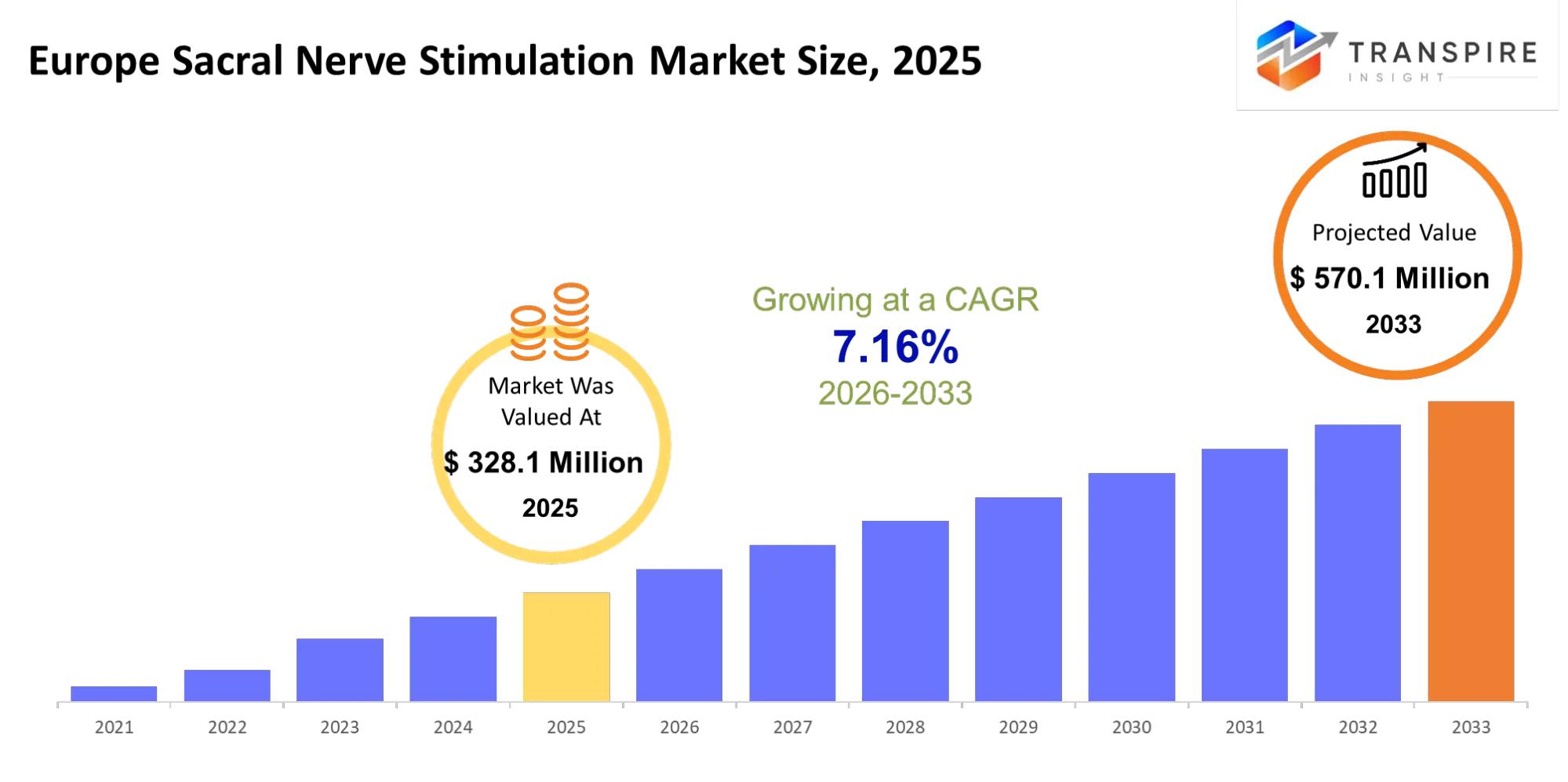
As per Transpire Insight Analysis the Europe Sacral Nerve Stimulation Market size is estimated at USD 328.1 Million in 2025 and is anticipated to reach USD 570.1 Million by 2033, growing at a CAGR of 7.16% from 2026 to 2033.
The Europe Sacral Nerve Stimulation Market is basically about persistent bladder and bowel dysfunction and how people try to fix it when the usual approaches don’t really hold up. It does that by offering implantable neuromodulation systems, that kind of re-enable nerve signaling, so the body can respond in a more controlled way. Hospitals and specialty clinics then use these devices not only to improve long term symptom control but also to cut down medication reliance. That can lower the need for repeated surgical interventions, and in turn make the whole treatment pathway more cost effective over time, even if the start-up isn't cheap.
Over the last three to five years, the market has moved, toward less invasive implantation methods, rechargeable device options, and remote programming capabilities. TThose things help patient management, and also let clinical workflows run with more efficiency , which is like a real difference in day to day practice. During COVID-19 the elective procedures were paused, or sometimes just slowed down, so a few treatment backlogs built up over time. Then later, when health systems resumed normal operations, procedural volumes picked up faster than expected, sort of quickly. At the same time, stronger clinical evidence was showing consistent results, and that plus broader physician confidence helped adoption grow across Europe.
So overall it looks like technological progress, better patient outcomes, and expanding reimbursement support are pushing a greater level of procedural activity, improving device utilization, and supporting stronger long term market revenue.
Europe Sacral Nerve Stimulation Market Size & Forecast:
- Europe Sacral Nerve Stimulation Market Size 2025: USD 328.1 Million
- Expected Market Value 2033: USD 570.1 Million
- Forecast CAGR: 7.16%
- Leading region in 2025: Germany
- Fastest Growing region: Czech Republic, and Romania
- Key Profile: Medtronic, Axonics, Boston Scientific, Abbott, NeuroPace, Synapse Biomedical, Nevro, LivaNova, B. Braun, Integer Holdings, Nuvectra, Aleva Neurotherapeutics, Soterix Medical, BIOTRONIK, Inspire Medical Systems
Key Market Insights
- Western Europe kind of dominates the Europe Sacral Nerve Stimulation Market with something like 68% market share in 2025, and this is mostly backed by Germany, France, Italy and the United Kingdom.
- Central and Eastern Europe should stay the fastest-growing regional market during 2025–2033, with Poland, the Czech Republic, and Romania pushing the momentum, mostly via healthcare infrastructure investments.
- Implantable sacral nerve stimulation systems lead the product segment, with almost 72% market share, largely because long-term efficacy sounds good and physicians seem to prefer them for chronic condition management.
- External sacral nerve stimulation systems take the second spot since clinicians are using temporary assessment devices more often, before they decide on permanent implantation.
- Rechargeable implantable systems are expected to be the fastest growing segment all the way through 2033, backed by longer device life and fewer replacement procedures over time.
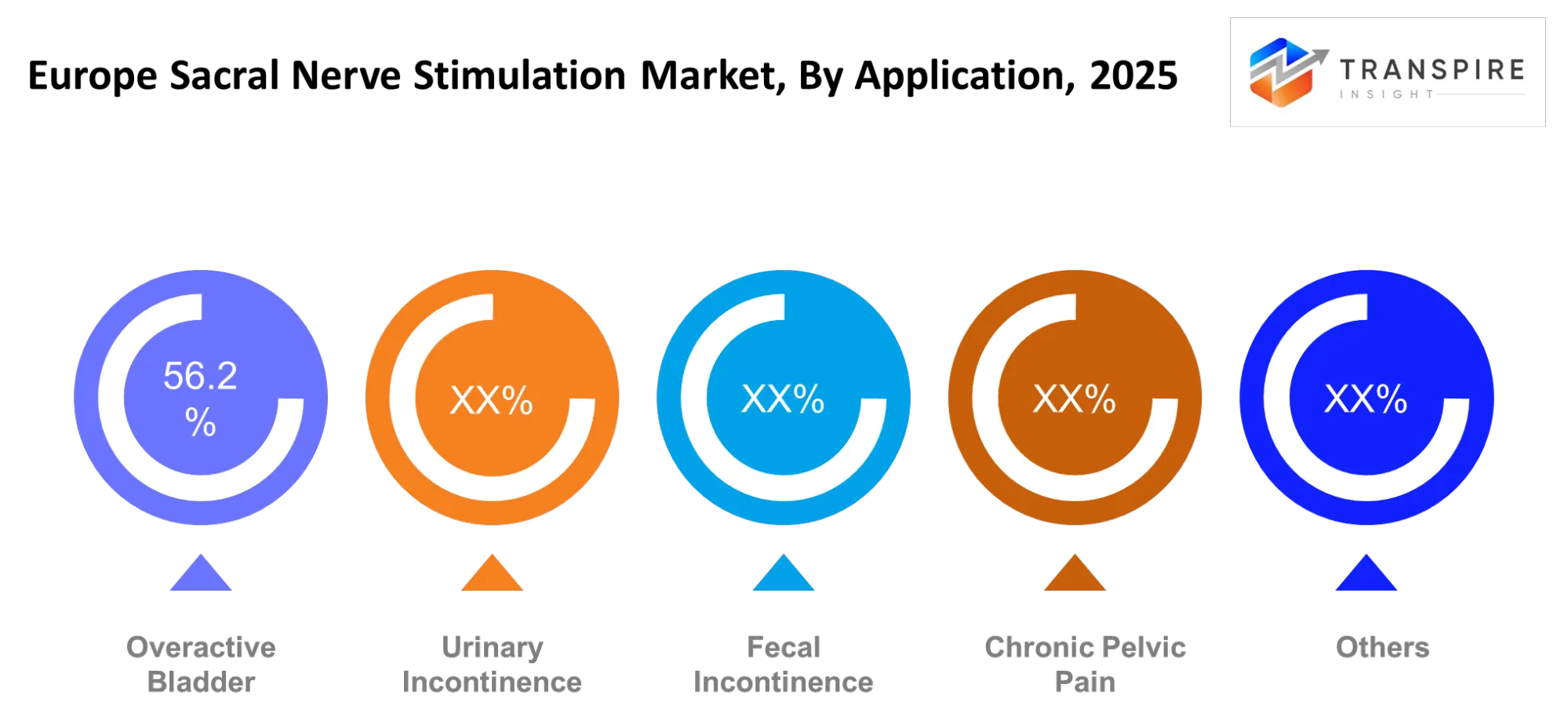
- Urinary incontinence still sits as the main application, holding around 46% of market share, which is tied up with higher diagnosis rates and broader reimbursement eligibility, for a lot of patients.
- Fecal incontinence is likely to turn into the fastest growing application through 2033, supported by expanding clinical evidence, and by pathway decisions that follow existing guidelines.
- Hospitals make up roughly 58% of the end user revenue, and they get a little boost from specialized neurology and urology departments, where implantation procedures are carried out.
- Ambulatory surgical centers are set to grow the fastest because minimally invasive procedures tend to lower hospitalization needs across Europe, overall.
What are the Key Drivers, Restraints, and Opportunities in the Europe Sacral Nerve Stimulation Market?
Minimally invasive neuromodulation tech still feels like the strongest growth driver, even if the pace varies by region. In multiple European countries expanded reimbursement policies, plus refreshed clinical guidelines, pushed many physicians to suggest sacral nerve stimulation earlier in those treatment pathways . Rechargeable implantable devices then cut down on replacement surgeries and also helped lower the long haul treatment costs. As results for patients improved, urology and colorectal specialists were more likely to refer, which is sort of a quiet feedback loop. Put together this sequence lifted implantation volumes, and it supported more recurring revenue too, from devices, programming, and follow up care .
On the other side, the biggest restraint is still uneven reimbursement policies along with limited specialist availability across Europe. Approval pathways, honestly differ between national healthcare systems , and that inconsistency can slow momentum. Training qualified implanting physicians takes years rather than months, and that part is harder to rush. Also hospital budget constraints tend to delay procurement decisions for advanced neuromodulation platforms , so market penetration beyond major metropolitan centers can lag, and commercial expansion gets postponed. Based on Transpire Insight review of regional procurement announcements and launch timetables, supply chain concentration stays the main execution risk . Component sourcing constraints can add more friction , delaying product availability and shrinking near term revenue windows .
The best chance seems to be sitting in AI-enabled neuromodulation platforms, paired with remote patient management. With connected programming systems, therapy optimization can get better, and at the same time, there will be less need for unnecessary clinic visits. Central and Eastern Europe looks especially promising for expansion since healthcare modernization programs keep speeding up, and new investment in advanced medical technologies is showing up faster. Firms that set up physician training networks and build regional distribution partnerships are likely to be in a strong spot, for capturing the next phase of market growth.
What Has the Impact of Artificial Intelligence Been on the Europe Sacral Nerve Stimulation Market?
Artificial intelligence and digital health tools are kinda reshaping neuromodulation therapy, mostly by boosting clinical decision-making plus helping with device management. AI-assisted software analyzes patient symptom patterns, stimulation settings, and treatment responses , then it helps physicians fine-tune programming with fewer hands-on tweaks. Digital platforms also end up automating follow up scheduling , therapy monitoring, and compliance documentation, which cuts down a lot of the administrative work for hospitals and specialty clinics.
Meanwhile, machine learning models are increasingly used for predictive therapy optimization, sort of by spotting stimulation parameters that are tied to better clinical outcomes. At the same time manufacturers apply predictive analytics to inventory planning and demand forecasting, improving component availability and reducing those procurement delays that pop up out of nowhere. Remote monitoring systems let clinicians notice therapy deviations earlier , so they can cut unnecessary appointments while keeping treatment continuity steadier. Altogether, these functions support higher operational efficiency, shorter programming sessions, and lower long-term service costs across the European neuromodulation industry.
Still, even with all that , broad AI rollout has important problems. Connection with existing hospital information systems usually means substantial investment and specialized technical know-how. Also, clinical datasets are still quite fragmented between countries because healthcare standards differ and privacy regulations are not aligned , which limits algorithm performance in diverse patient groups. Until wider data interoperability is achieved , AI will work as a complement, not a substitute, for physician-led decisions in sacral nerve stimulation therapy.
Key Market Trends
- Since 2022 , rechargeable implantable systems have seen a bit stronger clinical preference, mostly because they reduce replacement surgeries, and also help the device service life last longer—so fewer returns, you know.
- After 2021 remote programming capabilities started spreading more across Europe , which lets clinicians fine tune therapy with fewer face to face checkups. In practice it feels smoother, less arranged travel, more constant adjustments.
- Germany , France and the United Kingdom strengthened neuromodulation adoption during 2022 to 2025, helped by broader reimbursement coverage and updated treatment pathways, that kind of nudge for clinics.
- Manufacturers have also been pushing investment into digital health platforms, where mobile applications meet clinician dashboards , so therapy monitoring stays continuous instead of being “on schedule only”.
- Medtronic and Axonics in recent product cycles, accelerated technology competition using advanced rechargeable platforms and by expanding patient programming features, that gives staff and patients more control.
- Hospitals increasingly moved selected implantation procedures toward outpatient settings since 2023, which improved resource use and lowered procedural costs , even if workflows still vary by region.
- Clinical research also moved indications beyond urinary disorders , and that supported more widespread adoption for bowel dysfunction management across many European treatment centers.
- Supply chain diversification became a strategic priority after pandemic disruptions, which exposed how dependent the market was on specialized electronic component suppliers, so risk control matters.
- Healthcare providers are increasingly combining remote patient monitoring with electronic health records, and that supports more personalized therapy optimization plus longer-term outcome tracking too.
Europe Sacral Nerve Stimulation Market Segmentation
By Product Type :
Implantable neurostimulators take the biggest chunk, in large part because long term symptom control and pretty durable clinical performance help clinics feel more confident, kind of, with wider acceptance. Hospitals and specialty centers keep choosing the newer implantable systems for people who need ongoing therapy after a successful workup. Rechargeable devices also seem to be winning more ground over time, since the longer battery life cuts down on replacement visits and it can reduce the overall treatment spend. Ongoing product upgrades also keep pushing outcomes forward and, in turn, support higher procedural volumes.
External neurostimulators are still a big deal too, mostly for temporary assessment before permanent implantation, and they help clinicians judge how well the therapy is actually working. Leads and accessories support basically every implantation procedure and they keep generating recurring revenue through both replacements and upgrades. MRI-compatible options, plus rechargeable technologies keep nudging purchasing decisions, especially as providers think more about patient convenience and long term value. Product development is likely to stay centered on smaller devices, better programming features, and improved real world clinical performance.
By Application :
Urinary incontinence is still kind of the main application, since successful clinical outcomes and the treatment guidelines already in place, back up a wide adoption across healthcare systems. Overactive bladder also adds a notable amount of procedure volume, because many patients look for another option after medication therapy did n’t work. Better diagnosis rates, plus earlier specialist referrals, keep widening the range of treatment opportunities across most big European countries. And the clinical evidence keeps getting stronger, which boosts confidence in neuromodulation therapy for managing symptoms over the long run.
Fecal incontinence has strong momentum ahead too, especially as physicians start using more advanced treatment options for people who really do not have many alternatives. Chronic pelvic pain creates fresh opportunities as research keeps expanding how sacral nerve stimulation technology can be used therapeutically, even if some pathways vary. Wider clinical studies and updated treatment pathways should help with slow but steady adoption across more medical specialties. Ongoing innovation will refine patient selection and, in the end, support longer lasting treatment success.
By End User :
Hospitals are considered the biggest end-user segment because advanced surgical facilities plus experienced multi disciplinary teams perform most of the implantation procedures. Big healthcare institutions also handle patient assessment, implantation, and long term follow up through integrated care routes or whatever you want to call them. Strong reimbursement backing and reliable access to specialized equipment further bolster hospital leadership across the bigger European healthcare markets. And, with high procedural capacity, revenue generation should stay fairly steady even while other things shift.
Ambulatory surgical centers keep growing too, since minimally invasive procedures reduce the recovery window and also lift operational efficiency a bit more than before. Specialty clinics strengthen their footprint by offering focused neurology urology, and colorectal care, with more individualized treatment planning. Quicker patient flow, plus reduced procedural costs make wider adoption more realistic outside the classic hospital setting. Ongoing investment in outpatient care infrastructure will likely support future segment growth, right.
By Technology :
Rechargeable systems tend to push technology adoption along because longer battery life means fewer replacement surgeries , and overall patient convenience goes up a bit too. Also, medical providers see the lower lifetime treatment costs as a big plus, plus fewer surgical interventions , so it’s not just about convenience, it’s also a clinical thing. At the same time , technology upgrades keep showing up with better programming flexibility, and dependable long-run performance. Product innovation is expected to add more momentum, helping adoption spread across already established healthcare markets.
Non-rechargeable systems still work well for selected patient groups, mostly when clinical needs prefer simpler device handling. MRI-compatible systems get more notice , since diagnostic imaging stays important for long-term patient management. Manufacturers keep investing in enhanced compatibility features, which support more treatment flexibility, while not hurting device performance. Looking ahead , technology development will likely lean toward smarter programming options and tighter patient safety measures.
By Distribution Channel :
Direct sales still seem to be the preferred route, mostly because manufacturers keep up close ties with hospitals and, you know, specialist clinicians while products are being evaluated and then actually put into practice. This direct engagement also helps with physician education, hands on technical assistance, and longer term service agreements. When manufacturers stay involved in a meaningful way it tends to boost product uptake and it really makes customers feel more certain all along the purchasing road. In other words, long lasting partnerships are likely to keep supporting steady commercial results.
Medical device distributors, meanwhile, push outward into wider reach across regional healthcare networks, especially when direct coverage is sort of limited. Hospital procurement teams then steer the decision making, using centralized contracts as well as value oriented evaluation criteria. Outcomes across Europe keep being influenced by competitive pricing, dependable product availability, and post sale support. Going forward, distribution strategies will more and more mix direct contact with regional partner networks, to make market access easier in practice.
What are the Key Use Cases Driving the Europe Sacral Nerve Stimulation Market?
The biggest use case is kind of like treating urinary incontinence using implantable sacral nerve stimulation systems, in practice. Hospitals and urology specialist centers buy these devices, because long term symptom control cuts down on repeat procedures, and usually helps patient results, too. Also some favorable reimbursement rules in a few European countries make it easier for eligible patients, so adoption gets encouraged more and more.
Fecal incontinence care is broadening across colorectal units, while overactive bladder management is getting more accepted in specialty clinics and in ambulatory surgical centers. In these areas, the work benefits from better clinical evidence, more physician familiarization, and a wider role for minimally invasive techniques. Those approaches shorten recovery time and, in general, make treatment more efficient.
Newer use cases show up in chronic pelvic pain management, plus more customized neuromodulation aided by connected programming technologies. Academic medical centers, along with innovation driven hospitals, are looking at these methods via clinical studies and pilot programs. Going forward, continued spending on digital health platforms and improved device capabilities should support a slower but steady rollout during the forecast period, even if it is not instant.
|
Report Metrics |
Details |
|
Market size value in 2025 |
USD 328.1 Million |
|
Market size value in 2026 |
USD 351.4 Million |
|
Revenue forecast in 2033 |
USD 570.1 Million |
|
Growth rate |
CAGR of 7.16% from 2026 to 2033 |
|
Base year |
2025 |
|
Historical data |
2021 - 2024 |
|
Forecast period |
2026 - 2033 |
|
Report coverage |
Revenue forecast, competitive landscape, growth factors, and trends |
|
Country scope |
Europe (Germany, United Kingdom, France, Italy, Spain and Rest of Europe) |
|
Key company profiled |
Medtronic, Axonics, Boston Scientific, Abbott, NeuroPace, Synapse Biomedical, Nevro, LivaNova, B. Braun, Integer Holdings, Nuvectra, Aleva Neurotherapeutics, Soterix Medical, BIOTRONIK, Inspire Medical Systems . |
|
Customization scope |
Free report customization (country, regional & segment scope). Avail customized purchase options to meet your exact research needs. |
|
Report Segmentation |
By Product Type (Implantable Neurostimulators, External Neurostimulators, Leads, Accessories, Rechargeable Devices, Others); By Application (Urinary Incontinence, Fecal Incontinence, Overactive Bladder, Chronic Pelvic Pain, Others); By End User (Hospitals, Ambulatory Surgical Centers, Specialty Clinics, Others); By Technology (Rechargeable Systems, Non-Rechargeable Systems, MRI-Compatible Systems, Others); By Distribution Channel (Direct Sales, Medical Device Distributors, Hospital Procurement, Others) |
Which Regions are Driving the Europe Sacral Nerve Stimulation Market Growth?
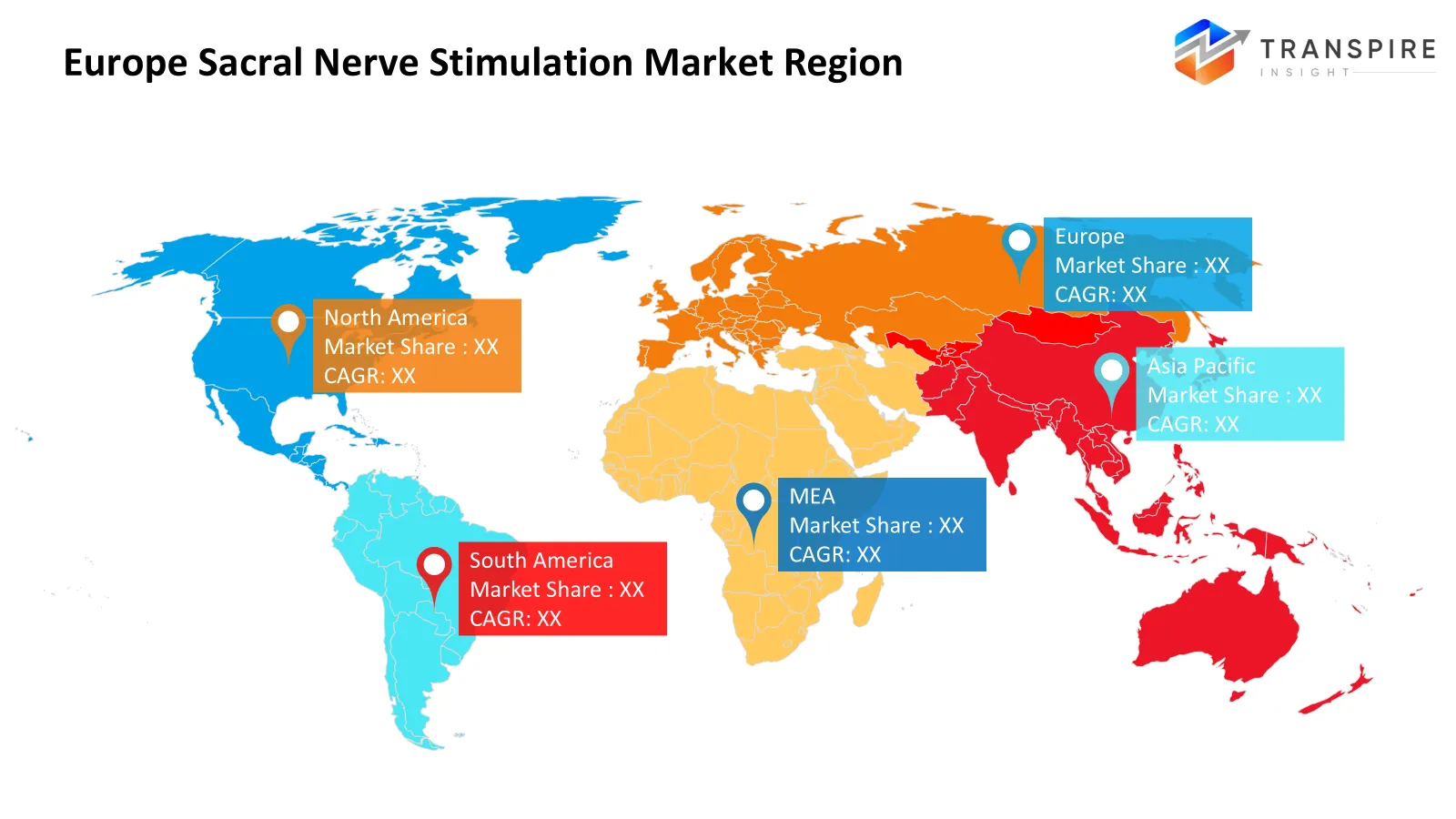
Western Europe keeps the lead, roughly around 68% of the regional revenue, with Germany, France, the United Kingdom, Italy, and Spain showing up as the key supporters. There’s broad reimbursement coverage , plus established neuromodulation treatment pathways, and fairly advanced hospital infrastructure, all of which makes adoption look pretty steady in the bigger healthcare systems. Add strong clinical research networks, experienced implanting specialists, and the regional presence of global medical device manufacturers, and you end up with a dependable supply-and-innovation ecosystem. If the region continues funding digital healthcare, ongoing physician training, and next-generation neuromodulation technologies , the leadership should stay intact over the forecast period.
Northern Europe looks different in how it grows, more like a structurally calm profile, since healthcare systems tend to value long-term clinical benefit and standardized procurement over quick procedure expansion. Sweden , Denmark, Finland, and Norway all keep relatively consistent reimbursement policies that back predictable buying behavior for advanced neuromodulation devices. With stable public healthcare funding and evidence-based technology evaluation in place, the market doesn’t swing around much, while replacement demand keeps moving. That kind of measured setup builds reliable revenue flows for manufacturers who prefer durable, long-term healthcare partnerships rather than rapid scaling.
Central and Eastern Europe will record the quickest growth between 2026 and 2033, but it’s not just one thing because Poland, the Czech Republic, Romania, and Hungary keep expanding their healthcare infrastructure, and also the specialist treatment ability. Lately, investments focused on hospital modernization, the procurement of medical technology, and ongoing physician training, have basically made access better for advanced neuromodulation procedures, across the region. There’s also a stronger alignment with European healthcare standards which has pushed wider adoption of innovative implantable therapies, not quietly either. So in practice, this push will likely form appealing opportunities for manufacturers, and investors that want to expand beyond mature Western European markets.
Who are the Key Players in the Europe Sacral Nerve Stimulation Market and How Do They Compete?
Competition stays sort of moderately consolidated , since only a limited set of global medical technology companies deliver most implantable sacral nerve stimulation systems across Europe. Beyond just the cost factor, competitive positioning is really influenced by technology innovation , clinical evidence, physician training, and those long-term service support arrangements. The well-known manufacturers keep pushing product line ups forward with advanced rechargeable systems and digital programming abilities, but they also defend their market share via deep hospital relationships and solid regulatory know-how.
Medtronic comes through with rechargeable neuromodulation platforms, a large body of clinical evidence and wide-ranging physician training initiatives, which help adoption happen across the main European healthcare systems. Axonics leans toward compact rechargeable devices, longer battery stamina, and pretty straightforward programming interfaces, and it strengthens its market presence through regional commercial expansion plus ongoing product innovation. Boston Scientific puts more emphasis on digital neuromodulation technologies and clinician support programs, because that can improve therapy tuning and long-range patient management.
Abbott puts the spotlight on intuitive programming software and connected device capabilities, which makes follow up care easier, while also pushing partnerships further with healthcare providers across Europe—kinda like a smoother road from clinic to clinic. LivaNova, meanwhile, boosts competitiveness via focused research investments and specialized neuromodulation know-how, helping enable more distinct clinical use cases and technology development. Looking ahead, continued spend on next generation devices, broader clinical evidence, and strategic collaborations with hospitals, will still be key to staying competitive during the whole forecast period.
Company List
- Medtronic
- Axonics
- Boston Scientific
- Abbott
- NeuroPace
- Synapse Biomedical
- Nevro
- LivaNova
- Braun
- Integer Holdings
- Nuvectra
- Aleva Neurotherapeutics
- Soterix Medical
- BIOTRONIK
- Inspire Medical Systems
Recent Development News
In March 2026, Neuspera Medical released 12-month pivotal clinical data for its battery-free sacral neuromodulation system. The results demonstrated sustained therapy performance and reinforced competition in implantable neuromodulation technologies that influence future European commercialization strategies.
Source https://theneurotechnewsletter.substack.com/
In January 2025, Boston Scientific highlighted the integration of Axonics, Inc. following the completed acquisition, expanding its sacral neuromodulation portfolio for urinary and bowel dysfunction across Europe. Source https://news.bostonscientific.com/
What Strategic Insights Define the Future of the Europe Sacral Nerve Stimulation Market?
The Europe Sacral Nerve Stimulation market is heading, kind of, toward broader integration of connected neuromodulation platforms , where implantable therapy is bundled with digital monitoring and a sort of personalized programming. This move is likely supported by healthcare systems that are looking for durable treatments, and to help cut down on repeat procedures, while also improving longer-term patient outcomes , all while still keeping an eye on clinical costs.
One not so obvious risk is that the market leans on a limited group of suppliers for specialized electronics components and implant materials. If that supply chain gets interrupted, production schedules can slip and the release of new products might get delayed even if demand stays strong.
At the same time, an opportunity is slowly building in Central and Eastern Europe. Hospital modernization programs, along with expanded reimbursement frameworks, should open up new access to advanced neuromodulation therapies. Companies that build regional physician training partnerships, diversify their component sourcing, and invest in AI-enabled programming capabilities will likely be in a better position to capture steady growth. They can also lower their operational and regulatory exposure, over the next few years, more or less.
Europe Sacral Nerve Stimulation Market Report Segmentation
By Product Type
- Implantable Neurostimulators
- External Neurostimulators
- Leads
- Accessories
- Rechargeable Devices
By Application
- Urinary Incontinence
- Fecal Incontinence
- Overactive Bladder
- Chronic Pelvic Pain
By End User
- Hospitals
- Ambulatory Surgical Centers
- Specialty Clinics
By Technology
- Rechargeable Systems
- Non-Rechargeable Systems
- MRI-Compatible Systems
By Distribution Channel
- Direct Sales
- Medical Device Distributors
- Hospital Procurement
Frequently Asked Questions
Find quick answers to common questions.
The expected Europe Sacral Nerve Stimulation Market size for the market will be USD 570.1 Million in 2033.
Key segments for the Europe Sacral Nerve Stimulation Market are By Product Type (Implantable Neurostimulators, External Neurostimulators, Leads, Accessories, Rechargeable Devices, Others); By Application (Urinary Incontinence, Fecal Incontinence, Overactive Bladder, Chronic Pelvic Pain, Others); By End User (Hospitals, Ambulatory Surgical Centers, Specialty Clinics, Others); By Technology (Rechargeable Systems, Non-Rechargeable Systems, MRI-Compatible Systems, Others); By Distribution Channel (Direct Sales, Medical Device Distributors, Hospital Procurement, Others).
Major Europe Sacral Nerve Stimulation Market players are Medtronic, Axonics, Boston Scientific, Abbott, NeuroPace, Synapse Biomedical, Nevro, LivaNova, B. Braun, Integer Holdings, Nuvectra, Aleva Neurotherapeutics, Soterix Medical, BIOTRONIK, Inspire Medical Systems.
The Europe Sacral Nerve Stimulation Market size is USD 328.1 Million in 2025.
The Europe Sacral Nerve Stimulation Market CAGR is 7.16% from 2026 to 2033.
- Medtronic
- Axonics
- Boston Scientific
- Abbott
- NeuroPace
- Synapse Biomedical
- Nevro
- LivaNova
- Braun
- Integer Holdings
- Nuvectra
- Aleva Neurotherapeutics
- Soterix Medical
- BIOTRONIK
- Inspire Medical Systems
About the Authors

Pankaj Ghogare Patil
I am Pankaj Ghogare Patil, a Senior Research Analyst at Transpire Insight, specializing in the Pharmaceutical, Chemicals & Materials, Healthcare IT, and Biotechnology industry. My expertise lies in conducting comprehensive market research, analyzing industry trends, evaluating competitive landscapes, and translating complex data into actionable insights. At Transpire Insight, I closely follow emerging technologies, regulatory developments, and market innovations to create accurate, well-researched, and informative content that helps businesses and professionals make informed decisions. I am committed to producing credible, evidence-based articles that reflect industry best practices while making technical topics accessible and valuable for a broad audience.

Chakradhar Khansole
Chakradhar serves as the Research Director at Transpire Insight, bringing over 8 years of experience in technology, innovation, and strategic market intelligence. He specializes in transforming complex market data into actionable business insights that enable organizations to make informed, growth-oriented decisions. Recognized for his strategic vision and analytical expertise, Chakradhar leads high-impact research initiatives, delivering comprehensive market assessments, competitive intelligence, and forward-looking industry analysis.
Recently Published Reports
-
Apr 2026
AI in Diabetic Retinopathy Market
AI in Diabetic Retinopathy Market Size, Share & Analysis Report By Type (Screening AI Systems, Diagnostic AI Systems, and Predictive AI Models), By Application Segment (Hospitals, Ophthalmology Clinics, Diagnostic Centers, and Research and Development), and Geography (North America, Europe, Asia-Pacific, Middle East and Africa, South and Central America), 2021 - 2031
-
Apr 2026
Psychometric Tests Market
Psychometric Tests Market Size, Share & Analysis Report By Type (Personality Tests, Ability/Aptitude Tests, Skill/Knowledge Tests, and Others), By Application (Talent Acquisition and Talent Management), and Geography (North America, Europe, Asia-Pacific, Middle East and Africa, South and Central America), 2021 – 2031
-
Apr 2026
Rare Biological Sample Collection Market
Rare Biological Sample Collection Market Size, Share & Analysis Report By Type (Isolation Kits & Reagent, Blood Collection Tubes, and Others), By Application (Oncology, Transcriptomics, Pharmacogenomics, and Others), and Geography (North America, Europe, Asia-Pacific, Middle East and Africa, South and Central America), 2021 – 2031
-
Jul 2026
Diabetic Retinopathy Market
Diabetic Retinopathy Market Size, Share & Analysis Report By Type (Proliferative Diabetic Retinopathy, and Diabetic Macular Edema (DME)), By Treatment Type (Anti VEGF Drug, Steroid Implants, Laser Surgeries, and Vitrectomy), and Geography (North America, Europe, Asia-Pacific, Middle East and Africa, South and Central America), 2021 – 2031
Our Clients







