
Europe Neobanking Market Size & Forecast:
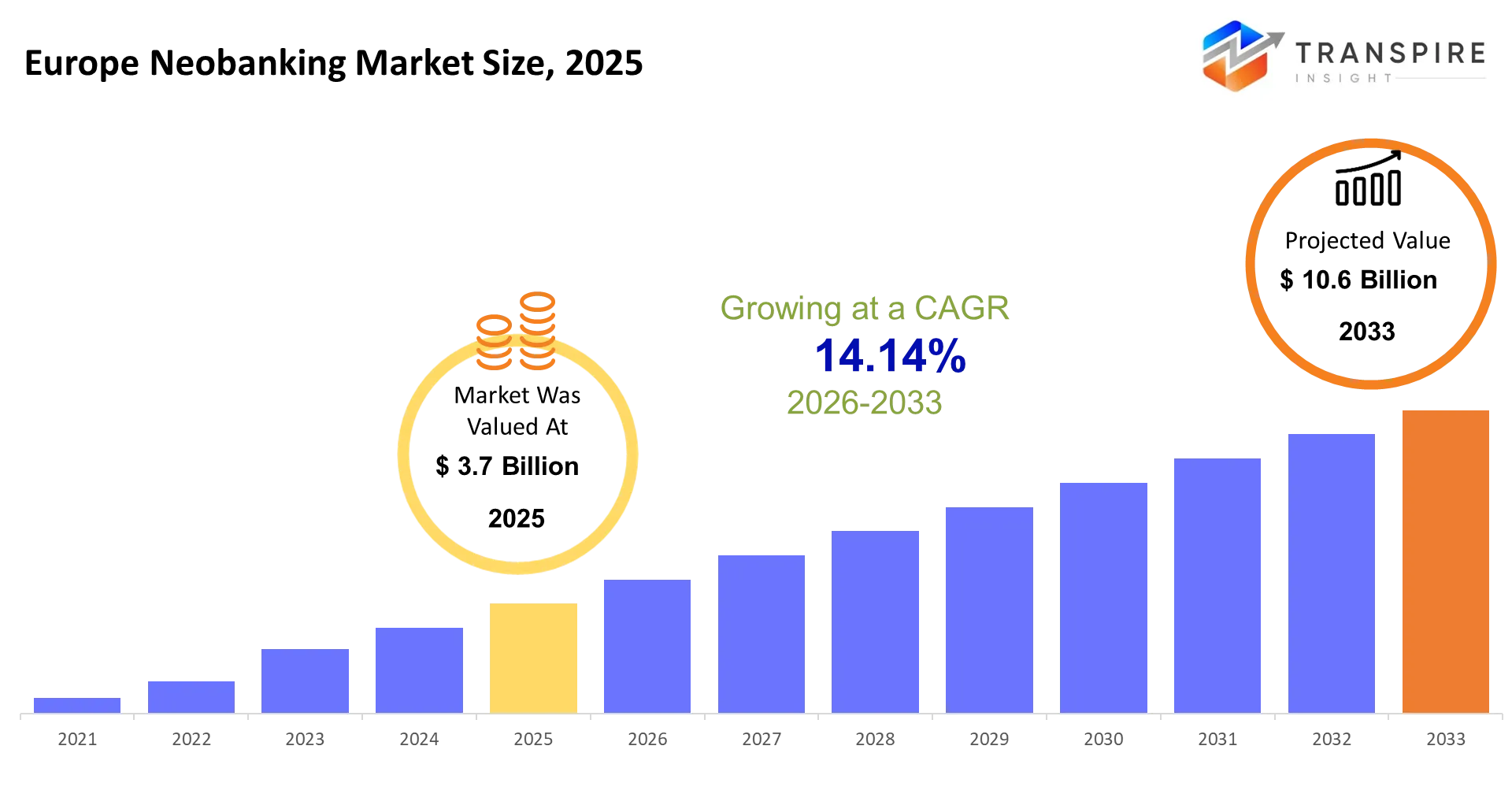
- Europe Neobanking Market Size 2025: USD 3.7 Billion
- Europe Neobanking Market Size 2033: USD 10.6 Billion
- Europe Neobanking Market CAGR: 14.14%
- Europe Neobanking Market Segments: By Type (Retail Neobanks, Business Neobanks, Digital-only Banks, Others); By Application (Payments, Lending, Savings, Wealth Management, Crypto Services, Others); By End-User (Individuals, SMEs, Enterprises, Freelancers, Startups, Others); By Platform (Mobile Banking, Web Banking, API Banking, Others)
To learn more about this report,  Download Free Sample Report
Europe Neobanking Market Summary:
The Europe Neobanking Market size is estimated at USD 3.7 Billion in 2025 and is anticipated to reach USD 10.6 Billion by 2033, growing at a CAGR of 14.14% from 2026 to 2033.
The digital banking industry in Europe develops through two main forces which include changing customer needs and the rising usage of financial technologies throughout Europe. Customers are moving toward mobile-first banking experiences that reduce dependency on traditional banking branches. The europe neobanking market will continue to evolve as digital platforms integrate advanced security systems and real-time transaction services. Neobanks face operational constraints which European regulatory frameworks impose on them for customer data protection and financial compliance requirements.
What Has the Impact of Artificial Intelligence Been on the Europe Neobanking Market?
Artificial intelligence is reshaping digital finance at a rapid pace, and its influence on the europeneobanking market shows increasing importance for modern banking platform operations. In the europe neobanking market, AI-driven systems now support real-time data analysis that helps banks understand customer behavior patterns with higher accuracy. The implementation of artificial intelligence in europe neobanking market platforms enables better decision-making through its ability to process extensive financial transaction data which delivers vital insights that were previously hard to find.
European neobanks implement artificial intelligence solutions to improve their predictive analytics operations which enable them to forecast customer spending behaviors and credit risks and liquidity needs with higher precision. The prediction process uses machine learning models which enhance accuracy through ongoing development, which improves market analysis and enables businesses to respond quicker to changes in customer demand. The europe neobanking market benefits from smart automation systems that reduce manual workload in compliance checks, fraud detection, and customer onboarding, which enables faster operations and more reliable performance.
Artificial intelligence systems used in European neobanking market ecosystems create personalized banking experiences through their capacity to offer users customized financial advice, budgeting tools, and product recommendations that change based on user behavior.The customer engagement process now requires more active participation from customers, which creates a competitive advantage for digital-first banks that use data-driven methods to enhance their operations. The european neobanking market will experience enhanced adoption of intelligent systems that improve operational efficiency and decrease expenses while making financial services accessible to various user groups as artificial intelligence capabilities become more advanced.
Key Market Trends & Insights:
- Western Europe leads the European neobanking market with 48% market share in 2025 because German and French and UK fintech ecosystems create strong market conditions.
- Eastern Europe experiences the fastest growth rate because digital payment systems and banking services become more accessible between 2024 and 2030 at a rate above 12%.
- European neobanking market distribution shows mobile banking services as the most popular option with 55% market share because smartphone users increasingly adopt mobile banking apps.
- Instant credit approval systems combined with AI-powered risk assessment technology drive digital lending services to become the second-largest market segment.
- The demand for customized investment solutions drives AI-based wealth management systems to become the fastest-expanding market sector until 2030.
- European neobanking market distribution shows retail banking applications as the leading segment with 60% market share because customers frequently use digital banking accounts.
- The application of digital banking for SMEs experiences its fastest growth because it provides businesses with different financing options and automatic bookkeeping solutions.
- The European neobanking market shows common European user patterns because individual users conduct mobile payments through digital wallets.
- Small and medium enterprises experience the fastest growth as they demand affordable banking solutions that can grow with their business needs.
- European neobanking market players achieve competitive advantages through their ability to create smooth user experiences which provide users with immediate access to financial information.
Europe Neobanking Market Segmentation
By Type:
The retail neobanking sector maintains a strong market position because customers increasingly prefer mobile banking services that provide simple account management options. The Europe Neobanking Market continues to expand in this category as users shift away from traditional banking models. Digital-only banks provide customers with complete online banking options which they can access from any location because they operate without physical branches.
Business neobanks provide financial services to SMEs and startups through their specialized financial software which includes expense tracking and automated accounting features. Companies need to complete their financial tasks more quickly therefore this sector of the market is growing. The European Neobanking Market now includes new niche banking services which provide specific financial solutions to meet various customer requirements.
By Application:
The most popular application in Europe is payments because it allows users to make instant money transfers while using digital wallet systems. The Europe Neobanking Market continues to grow strongly in this area as cashless transactions increase. Digital credit scoring technology enables lending services to provide faster loan approvals through its online system which requires minimal documentation.
Users of savings and wealth management applications because they want better control of their personal finances through automated tools which these applications provide. The crypto services market is rapidly expanding because more people are choosing to use digital assets. The European Neobanking Market requires new fintech solutions which improve user experience for its existing financial applications.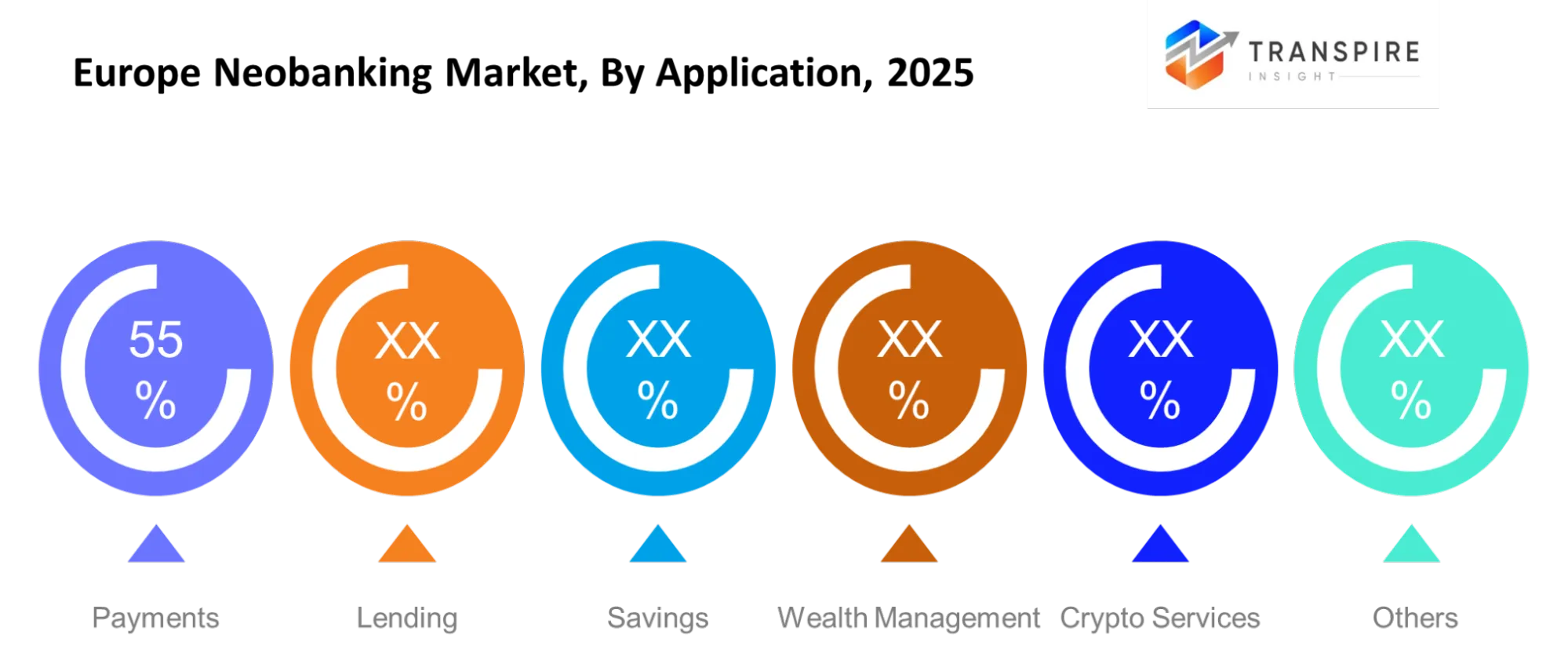
To learn more about this report, Download Free Sample Report
By End-User:
End-User defines six user groups for banking services. Mobile banking applications are used by individuals who form the largest end-user group because they make daily transactions and save money. This European Neobanking Market sector benefits from a strong consumer base which prefers banking options that offer both convenience and affordable services. Digital tools are helping SMEs grow their businesses because digital tools make their financial processes simpler.
Freelancers and startups show strong growth due to flexible banking features and real-time financial tracking. Enterprises use neobanking solutions to manage their cash flow and operate their digital payment systems. Financial technology adoption progresses through different user segments which shows gradual growth for all end-user categories.
By Platform:
The banking system through its mobile banking web banking and API banking services and other systems. Mobile banking markets use smartphones because users prefer to access their financial services through mobile applications. The Europe Neobanking Market relies heavily on mobile platforms for customer engagement and service delivery. Web banking continues to support users who prefer browser-based access for financial management.
API banking is growing as businesses integrate banking services directly into their systems for automation and real-time data exchange. This system enhances productivity while decreasing the need for human-operated tasks. The Europe Neobanking Market ecosystem receives additional digital transformation support through different platforms which enable users to access systems and obtain better network capabilities.
What are the Main Challenges for the Europe Neobanking Market Growth?
The European neobanking sector encounters operational and technical difficulties because digital banking systems require dependable infrastructure and continuous operational capabilities. The system experiences performance restrictions which result from service interruptions and security threats and problems with system connectivity, thus reducing user confidence. The European neobanking industry experiences scalability challenges because its user base grows rapidly, which needs better cloud resources and quicker transaction processing that works without interruptions.
The European neobanking sector faces dual market creation obstacles which arise from strict financial compliance requirements that exist across European nations. The combination of complex licensing requirements and data protection regulations and anti-money laundering compliance standards results in higher operational expenses which delay product introduction. The Europe neobanking market faces product development delays because each geographic area needs its own regulatory approval process together with active regulatory surveillance.
Europe neobanking market experiences two major challenges which emerge from adoption difficulties and infrastructure shortcomings that affect regions with lower digital development. Financial literacy levels are low while internet access remains inconsistent and there is a lack of experts who possess fintech skills which together prevent faster adoption. The funding gaps that exist for neobanks in their early development stages create obstacles that prevent smaller companies from growing their business in competitive markets.
European neobanking market competition develops through two main channels which include traditional banks expanding their digital services and fintech startups delivering low-cost solutions. Businesses need to overcome two major challenges which include intense competition and continuous technological progress in order to achieve profitability.The european neobanking market will experience strategic decision changes because of two main obstacles which block growth and two main obstacles which prevent customer adoption.
Regional Insights
The European Neobanking Market experiences strong expansion because digital-only banking services become more appealing to both consumers and small enterprises. Financial institutions adopt mobile-first platforms because they provide better operational cost savings and faster customer onboarding capabilities.Urban areas experience rising digital banking adoption because people gain better internet access and smartphone technology becomes more common. The number of competing fintech companies continues to increase throughout the industry.
The European Union provides regulatory support which enables digital banking services to develop innovative solutions while protecting customer security and financial system integrity. Neobanks offer new product options which include payment services and savings accounts and lending products that meet the needs of users who prefer advanced technology. Financial institutions establish partnerships which boost their credibility and market access to different types of customers in various regions.
Western European countries lead digital banking adoption because their infrastructure enables online banking access for customers who trust digital financial services. The United Kingdom, Germany, and France have developed strong fintech ecosystems which create favorable conditions for Neobanking business growth. Urban centers show higher usage compared to rural areas because of better connectivity and financial awareness growth trend.
Eastern and Southern European regions show increasing adoption driven by mobile-first banking solutions and growing fintech investments. Government initiatives support digital financial inclusion and encourage competition among new banking platforms. The internet penetration rate and smartphone adoption rate improvements enable customers in various countries to access neobanking services which leads to predictable market growth.
Recent Development News
In April 2026, Revolut announced a major regulatory expansion push in Europe as the company worked toward securing a French banking licence alongside its broader global licensing strategy. The fintech stated that obtaining a French licence would allow it to offer more localized services such as mortgages and regulated savings products, strengthening its position in Western Europe. The company also highlighted a planned investment of $1.1 billion in France to support its growth strategy. https://www.reuters.com
|
Report Metrics |
Details |
|
Market size value in 2025 |
USD 3.7 Billion |
|
Market size value in 2026 |
USD 4.2 Billion |
|
Revenue forecast in 2033 |
USD 10.6 Billion |
|
Growth rate |
CAGR of 14.14% from 2026 to 2033 |
|
Base year |
2025 |
|
Historical data |
2021 - 2024 |
|
Forecast period |
2026 - 2033 |
|
Report coverage |
Revenue forecast, competitive landscape, growth factors, and trends |
|
Regional scope |
Europe (Germany, United Kingdom, France, Italy, Spain, Rest of Europe) |
|
Key company profiled |
Revolut, N26, Monzo, Starling Bank, Wise, Chime, Varo Bank, Bunq, Atom Bank, Tandem Bank, Payoneer, Stripe, PayPal, Square, Adyen |
|
Customization scope |
Free report customization (country, regional & segment scope). Avail customized purchase options to meet your exact research needs. |
|
Report Segmentation |
By Type (Retail Neobanks, Business Neobanks, Digital-only Banks, Others); By Application (Payments, Lending, Savings, Wealth Management, Crypto Services, Others); By End-User (Individuals, SMEs, Enterprises, Freelancers, Startups, Others); By Platform (Mobile Banking, Web Banking, API Banking, Others) |
How Can New Companies Establish a Strong Foothold in the Europe Neobanking Market?
Establishing a strong position in the europe neobanking market requires clear focus on niche customer needs rather than broad, generic banking services. The europe neobanking market offers new entrants an opportunity to gain initial market presence by serving freelancer and cross-border worker and small exporter customers who require affordable international payment solutions and expedited account opening processes. The emerging players in the market can establish customer trust through their straightforward onboarding process and their clear pricing system and their design which prioritizes mobile users.
European neobanking customers expect technological differentiation because standard business operations require both automation and AI-generated insights and real-time transaction control. Startups like Monese and N26 have shown how digital-first models can scale rapidly by focusing on seamless user experience and instant financial access. New companies entering the europe neobanking market can go further by integrating embedded finance solutions for sectors like healthcare billing systems, manufacturing payroll automation, and smart city mobility payments which solve real operational pain points.
The european neobanking market benefits from strategic partnerships which create better market positioning for companies that operate in this industry. New market entrants can accelerate their service development process by partnering with banks and payment processors and fintech infrastructure providers who assist them in meeting compliance demands. Companies that align innovation strategies with local regulatory frameworks and regional financial behavior trends will improve adoption rates. The european neobanking market will depend on product development and regional financial solutions for its long-term sustainable growth.
Key Europe Neobanking Market Company Insights
New companies entering digital banking in Europe must focus on clear value creation rather than broad offerings. The european neobanking market requires banks to provide solutions that address actual financial needs which include enabling cross-border payments and creating quick account opening procedures and offering affordable transaction services to both freelancers and small businesses. Users who expect immediate and clear services without concealed fees will develop initial trust through an excellent user experience combined with straightforward mobile interface design.
Competitive insights: New entrants must track pricing models, customer acquisition strategies, and product speed of established digital banks. N26 and Monese established usability and scaling benchmarks which serve as strong performance standards for user experience. New companies will achieve market differentiation through their embedded finance solutions and their dedicated healthcare payroll systems and their manufacturing payment automation tools and their smart city transport solutions. European neobanking companies can establish a competitive advantage through their superior customer service, their adaptable application programming interfaces, and their capability to monitor financial activities in real time.
Strategic partnerships with banks, payment networks, and fintech infrastructure providers will support compliance and faster expansion. Localized product design based on regional financial behavior will increase retention and user trust. Continuous security enhancements together with automation progress and real-time analytics development will create a robust foundation for sustainable business growth. Companies that focus on practical financial solutions instead of broad claims will build stronger customer loyalty and stable presence in the europe neobanking market over time.
Company List
- Revolut
- N26
- Monzo
- Starling Bank
- Wise
- Chime
- Varo Bank
- Bunq
- Atom Bank
- Tandem Bank
- Payoneer
- Stripe
- PayPal
- Square
- Adyen
What are the Key Use-Cases Driving the Growth of the Europe Neobanking Market?
The europe neobanking market is growing because personal and business users demand faster digital payment solutions which work more efficiently than existing methods. One key use-case is cross-border transactions, where freelancers, remote workers, and small exporters rely on low-cost international transfers with real-time exchange rates. The european neobanking market experiences growth because users abandon traditional banking systems which impose lengthy waiting times and expensive charges in favor of mobile-first financial platforms that provide immediate money transfers and clear pricing information.
The primary financial management system for businesses develops through enterprise and sector-specific applications. In healthcare, clinics and independent providers use digital banking tools for payroll automation and billing efficiency. Manufacturing companies utilize integrated accounts to oversee their supplier payment processes and cash flow monitoring activities. The european neobanking market develops through practical applications which establish financial services as essential components of everyday business activities that enhance speed and decrease human mistake possibilities.
The combination of budgeting tools and savings automation and subscription tracking features drives increased consumer adoption. The europe neobanking market is expanding as users prefer apps that provide full control over spending habits and financial planning in one place. The implementation of embedded finance in mobility services and smart city payments will establish neobanks as essential components of digital financial ecosystems which will expand their presence throughout Europe.
Europe Neobanking Market Report Segmentation
By Type
- Retail Neobanks
- Business Neobanks
- Digital-only Banks
- Others
By Application
- Payments
- Lending
- Savings
- Wealth Management
- Crypto Services
- Others
By End-User
- Individuals
- SMEs
- Enterprises
- Freelancers
- Startups
- Others
By Platform
- Mobile Banking
- Web Banking
- API Banking
- Others
Frequently Asked Questions
Find quick answers to common questions.
The Approximate Europe Neobanking Market size for the Market will be USD 10.6 Billion in 2033.
Key Segments for the Europe Neobanking Market are By Type (Retail Neobanks, Business Neobanks, Digital-only Banks, Others); By Application (Payments, Lending, Savings, Wealth Management, Crypto Services, Others); By End-User (Individuals, SMEs, Enterprises, Freelancers, Startups, Others); By Platform (Mobile Banking, Web Banking, API Banking, Others).
Major Europe Neobanking Market Players are Revolut, N26, Monzo, Starling Bank, Wise, Chime, Varo Bank, Bunq, Atom Bank, Tandem Bank, Payoneer, Stripe, PayPal, Square, Adyen.
The Current Europe Neobanking Market size is USD 3.7 Billion in 2025.
The Europe Neobanking Market CAGR is 14.14%.
- Revolut
- N26
- Monzo
- Starling Bank
- Wise
- Chime
- Varo Bank
- Bunq
- Atom Bank
- Tandem Bank
- Payoneer
- Stripe
- PayPal
- Square
- Adyen
Recently Published Reports
-
Apr 2026
3D Optical Profiler Market
3D Optical Profiler Market Size, Share & Analysis Report By Type (Desktop 3D Optical Profiler, and Portable 3D Optical Profiler), By Technology (Confocal Technology, and White Light Interference), By End-Use Industry (Manufacturing, Research Institutions, Automotive, Aerospace and Defense, Medical Devices, and Other), and Geography (North America, Europe, Asia-Pacific, Middle East and Africa, South and Central America), 2021 - 2031
-
Apr 2026
Depth Sensor Market
Depth Sensor Market Size, Share & Analysis Report By Type (Infrared Depth Sensors, Time-of-Flight (ToF) Sensors, Stereo Vision Sensors, Structured Light Sensors, Ultrasonic Depth Sensors), By Application (Automotive, Robotics, Gaming, Consumer Electronics, Industrial Automation, Healthcare, Security & Surveillance, Others), By End Users (Automotive Manufacturers, Consumer Electronics Companies, Healthcare Providers, Industrial Companies, Security Agencies, Gaming Companies, Robotics Companies, Others), and Geography (North America, Europe, Asia-Pacific, Middle East and Africa, South and Central America), 2021 – 2031
-
Apr 2026
Digital Manufacturing Market
Digital Manufacturing Market Size, Share & Analysis Report By Component (Hardware, Software, and Services), By Technology (Robotics, 3D Printing, Internet of Things (IoT), and Others), By Application (Automotive and Transportation, Aerospace and Defense, Consumer Electronics, Industrial Machinery, and Others), By Process Type (Computer-Based Designing, Computer-Based Simulation, Computer 3D Visualization, Analytics, and Others), and Geography (North America, Europe, Asia-Pacific, Middle East and Africa, South and Central America), 2021 – 2031
-
Apr 2026
Digital Visa Services Market
Digital Visa Services Market Size, Share & Analysis Report By Type (Individual Travelers, Group Travelers), By Application (Tourism, Business Travel, Others), and Geography (North America, Europe, Asia-Pacific, Middle East and Africa, South and Central America), 2021 – 2031