
Europe Lawn and Garden Consumables Market Size & Forecast:
- Europe Lawn and Garden Consumables Market Size 2025: USD 5446.5 Million
- Europe Lawn and Garden Consumables Market Size 2033: USD 7587.1 Million
- Europe Lawn and Garden Consumables Market CAGR: 4.31%
- Europe Lawn and Garden Consumables Market Segments: By Type (Fertilizers, Seeds, Pesticides, Soil Conditioners, Plant Growth Regulators, Others); By Application (Residential Gardening, Commercial Landscaping, Sports Turf, Greenhouses, Others); By End-User (Households, Landscaping Firms, Government, Agricultural Users, Others); By Distribution (Online, Retail, Garden Centers, Wholesale, Others)
To learn more about this report,  Download Free Sample Report
Europe Lawn and Garden Consumables Market Summary
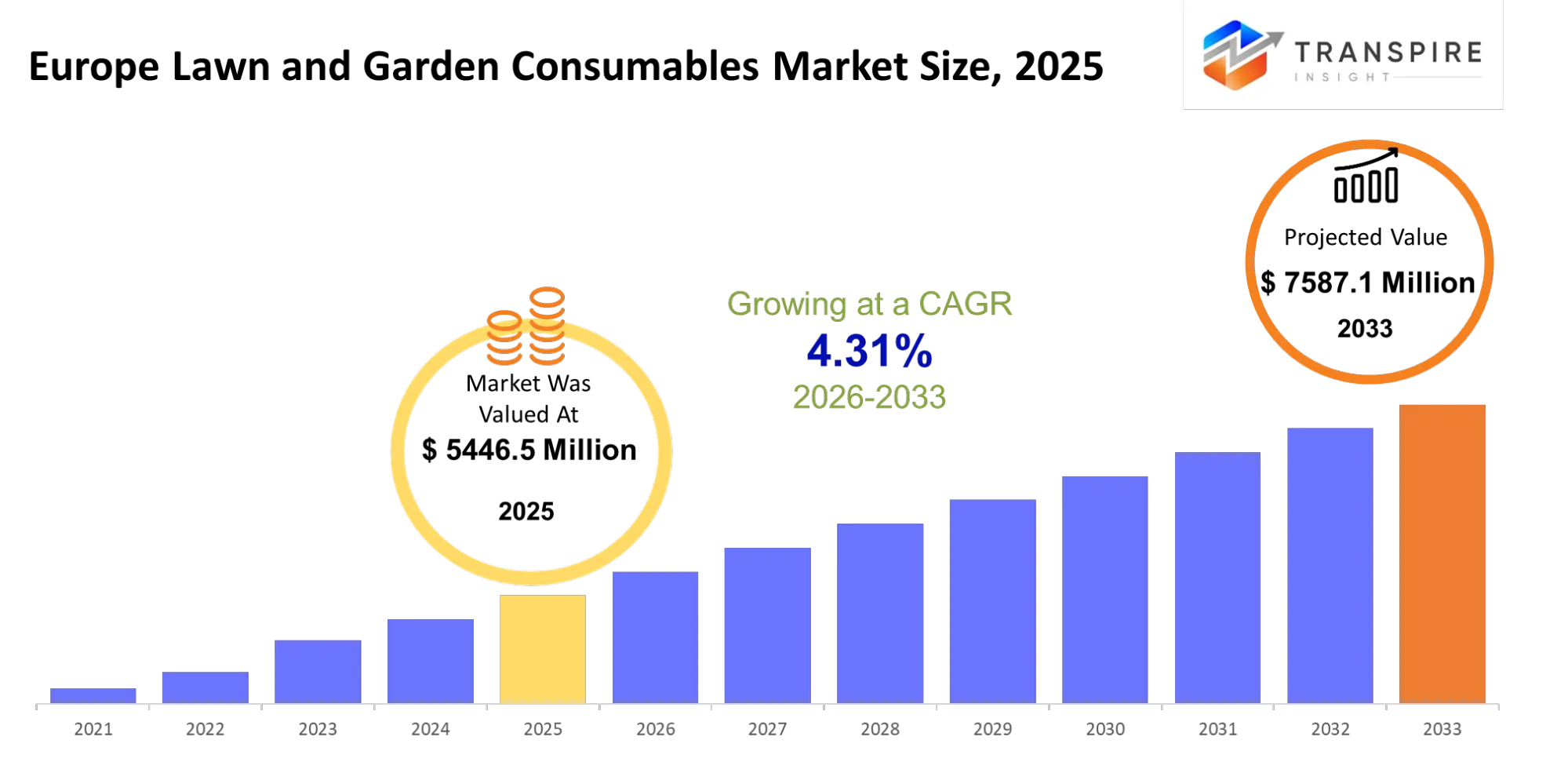
The Europe Lawn and Garden Consumables Market was valued at USD 5446.5 Million in 2025. It is forecast to reach USD 7587.1 Million by 2033. That is a CAGR of 4.31% over the period.
The Europe Lawn and Garden Consumables Market provides all necessary materials which ensure that people can maintain their home gardens and public parks and commercial green areas through fertilizers and seeds and mulch and plant protection products. The market enables municipalities and landscaping contractors and homeowners to control soil health and manage seasonal planting and track pest control results in climate-stressed areas.
The last 3 to 5 years have seen product portfolios evolve because retailers and professional users now prefer sustainable and bio-based formulations over synthetic chemicals and organic fertilizers and peat-free growing media. The European Green Deal has accelerated this transition by tightening environmental compliance standards for agrochemical inputs. The Russia-Ukraine conflict caused supply chain disruptions which raised input costs for potash and fuel and forced manufacturers to change their product formulas and localize their material sourcing.
The changes have increased the demand for high-quality consumable products which provide more value through their effective use because these products produce better results with each application. The business achieves revenue growth through this revenue stream while European markets for Western Europe have reached their peak consumption level.
Key Market Insights
- The Europe Lawn and Garden Consumables Market will reach its growth peak in 2025 because Western Europe controls 48% of the market while urban landscaping expenditures and established retail systems continue to drive market growth.
- The Northern Europe region will experience its most rapid development until 2030 because people there increasingly adopt organic gardening methods which their governments support through sustainability initiatives.
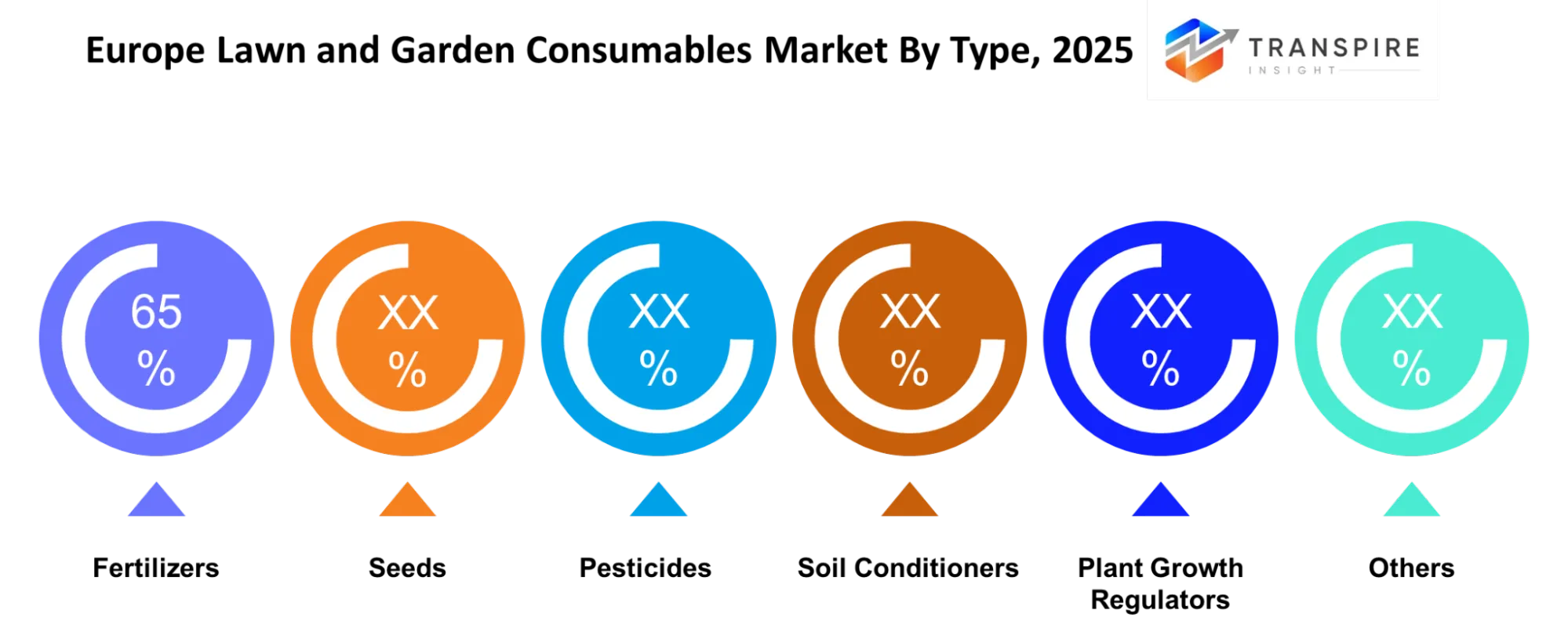
- The Europe Lawn and Garden Consumables Market names fertilizers as its leading product category which maintains a market share of 36% because agricultural and horticultural industries consistently require fertilizers.
- The second-largest segment of the market consists of seeds which manufacturers produce according to seasonal planting cycles and home gardening trends.
- The segment of organic soil enhancers experiences its highest growth rate between 2024 and 2030 because regulations require manufacturers to use peat-free and bio-based products.
- The Europe Lawn and Garden Consumables Market shows residential gardening as its main usage area because DIY landscaping activities account for 55% of market share.
- The application of commercial landscaping services experiences its most rapid expansion because cities allocate funds toward creating green spaces and developing climate-adaptive urban design.
- Homeowners make up the largest user group because they maintain over 50% of their personal gardens.
- The landscaping service providers market segment experiences its most rapid growth because large organizations now delegate their green space operations to external firms.
- Companies are prioritizing bio-based product innovation to align with EU environmental compliance standards.
What are the Key Drivers, Restraints, and Opportunities in the Europe Lawn and Garden Consumables Market?
Driver:
The most powerful element driving the Europe Lawn and Garden Consumables Market forward stems from the European Green Deal and Farm to Fork Strategy which establish new regulations for sustainable landscaping materials. The industry has shifted its product development process because manufacturers and retailers now create their product lines using organic nutrients and biological pest control agents and peat-free growing media according to new laws which restrict synthetic pesticides and peat-based products and high-emission fertilizers. The new trend has led to increased sales of premium products which both residential and commercial landscaping businesses now adopt for their operations thus enabling suppliers to generate higher profits from their premium consumable products. Municipal governments have dedicated funds to develop urban green spaces and create climate-resilient public areas which have resulted in consistent demand for professional-grade products that municipalities use for their ongoing purchases.
Restraint:
The market faces its most difficult obstacle through raw material price fluctuations which particularly affect fertilizers and soil conditioners that require imported potash and nitrogen compounds and energy-intensive manufacturing processes. The Russia–Ukraine conflict revealed supply chain concentration dangers which European countries cannot overcome because they lack sufficient domestic production capacity and their manufacturing processes need expensive energy resources. Higher retail prices which result from these market pressures create dual effects because they prevent price-sensitive customers from buying more products while they decrease the purchasing power of small landscaping companies.
Opportunity:
Precision lawn and garden care technologies which use smart irrigation systems and soil monitoring systems present themselves as major future market opportunities. Northern European markets, particularly the Netherlands and Denmark, are rapidly adopting sensor-based garden management platforms that optimize fertilizer and water application rates.This creates new revenue potential for consumable manufacturers who can create data-compatible products which work with automated residential and commercial landscaping systems.
What Has the Impact of Artificial Intelligence Been on the Europe Lawn and Garden Consumables Market?
The European Lawn and Garden Consumables Market undergoes transformation through artificial intelligence and advanced digital technologies, which change the methods used to apply and monitor fertilizers and irrigation inputs and plant health products. The AI-powered smart gardening systems for automatic irrigation operations now control irrigation schedules and determine nutrient application rates and soil condition assessment through their networked sensors and cloud control systems. The operators of landscaping businesses and municipal green spaces now implement automated application systems, which adjust their fertilizer and water distribution methods according to real-time soil moisture and temperature data together with weather forecast information, to achieve better resource management and expense reduction.
The field of lawn and garden management, which uses machine learning models, improves its predictive capabilities. The systems use seasonal climate information together with plant growth patterns and soil nutrient changes to predict disease outbreaks while developing optimized fertilizer application plans and turf performance enhancement strategies. The commercial landscaping sector achieves reduced water usage and decreased fertilizer waste through the use of precision application technologies, which also enable smart irrigation systems to meet the stricter water conservation regulations that European countries implement.
The adoption of artificial intelligence technology faces limitations because businesses must deal with expensive system integration costs that result from incomplete compatibility between their hardware devices and sensors and their consumable inventory. The smaller landscaping businesses together with residential customers face challenges because they do not possess the necessary infrastructure to operate connected garden management systems, which leads to delays in adopting this technology throughout markets that pay attention to pricing.
Key Market Trends
- The adoption of Peat-free growing media reached its peak after 2021 because EU environmental policies required retailers to stop using traditional peat-based soil products.
- The sales of organic fertilizers experienced significant growth between 2022 and 2025 because municipalities enforced stricter regulations that controlled synthetic nutrient runoff in urban areas.
- The implementation of smart irrigation systems which function as consumable products resulted in a 25% decrease of residential water consumption throughout drought-affected regions of Southern Europe.
- Landscaping contractors increasingly adopted slow-release fertilizer technologies because these solutions reduced their operational expenses while enhancing their project implementation process.
- The Russia-Ukraine conflict caused supply chain disturbances which led to increased fertilizer input expenses for manufacturers who had to obtain local materials while developing new product formulations.
- The retail sector after 2023 requested decreased-emission lawn care products which led BASF and Syngenta to increase their biological product range.
- The DIY gardening market returned to its normal state after the pandemic ended, but Western Europe experienced increased demand for ongoing landscaping service contracts from professional services.
- Northern European markets adopted sensor-linked nutrient management platforms faster than Southern Europe due to stricter water conservation policies and digital infrastructure readiness.
- Garden centers increasingly replaced chemical-heavy pest control inventories with bio-based alternatives following tighter EU pesticide residue regulations introduced after 2022.
Europe Lawn and Garden Consumables Market Segmentation
By Type:
The Europe Lawn and Garden Consumables Market designates fertilizers as its primary product category because residential gardeners and landscaping contractors and municipal authorities use nutrient management products throughout the year. The segment maintains its market leadership because customers use the product for their lawns and ornamental plants and public green spaces. The second-largest product category in the market consists of seeds which customers use for their seasonal requirements during lawn restoration and urban gardening and decorative landscaping.
The market for soil conditioners and plant growth regulators shows faster growth compared to traditional pesticides because European environmental regulations continue to tighten. Municipalities and commercial landscapers now prefer bio-based formulations and peat-free products which provide reduced emissions for their maintenance needs. The pesticide market experiences growth limitations because regulations restrict synthetic chemical usage and retailers increasingly choose biological products.
The forecast period will see product development progress toward multifunctional products which deliver nutrients and retain water and provide protection against pests. The market will experience long-term growth from manufacturers who develop environmentally compliant and precision-compatible products for their business operations.
To learn more about this report, Download Free Sample Report
By Application:
The residential gardening application segment dominates the market because Europe contains numerous home gardens and balcony planting areas and private outdoor spaces. People buy fertilizers and seeds and soil treatment products because they continue to participate in lawn maintenance and ornamental planting during different times of the year.Sustained investment in public parks and hospitality properties and corporate green spaces drives the growth of commercial landscaping services.
The demand for performance-oriented growing materials which operators use in their controlled environmental systems and their active maintenance procedures has resulted in faster development of sports turf and greenhouse applications. Sports facilities require turf management products which can withstand both heavy foot traffic and changing climate conditions. Greenhouse operators sustain their commitment to precision nutrient systems because these systems boost crop consistency while minimizing water consumption.
The future market demand will shift towards climate-adaptive application-specific consumables which automated landscaping systems utilize. Product developers who create water-efficient inputs with sensor compatibility will gain business advantages from this industry shift.
By End-User:
Home gardening and lawn care activities which are deeply rooted in Western and Northern Europe enable households to become the main market segment. Seasonal consumables are purchased repeatedly which establishes consistent retail sales channels together with high product turnover rates. The commercial property sector drives landscaping services growth because property owners are selecting contractors to manage their outdoor areas.
Government procurement channels provide essential support through their funding of urban greening projects and climate resilience initiatives which seek to increase public greenery. Agricultural users participate selectively, mainly through crossover demand for turf management and soil enhancement products. The landscaping industry shifts towards premium consumables which deliver labor savings and enhanced maintenance results to organizations handling extensive projects.
Over the coming years, professional end-users are expected to influence product development more strongly than residential buyers. Suppliers capable of delivering performance-certified and environmentally compliant consumables will likely secure long-term institutional contracts.
By Distribution:
Retail stores and garden centers continue to dominate distribution because consumers prefer in-person product selection for seasonal lawn care and gardening purchases. Garden centers maintain strong positioning through specialized advisory services and premium product portfolios tailored to local climate conditions. Wholesale distribution supports large commercial landscaping projects which depend on volume purchasing as their critical requirement.
Online channels are expanding their reach because digital retail platforms now enhance product access through their subscription-based replenishment systems. Consumers use e-commerce platforms to compare product formulas and sustainability certifications and usage instructions before making a purchase decision. Manufacturers are developing direct-to-consumer strategies which include branded online storefronts and digital marketing campaigns.
Businesses will achieve future growth through their adoption of omnichannel distribution systems which connect their physical stores with online shopping capabilities. Companies that focus their resources on improving logistics operations and implementing subscription-based delivery systems and developing customer engagement through data analysis will achieve a stronger competitive edge throughout the upcoming period.
What are the Key Use Cases Driving the Europe Lawn and Garden Consumables Market?
The primary purpose of consumable products in Europe is to support residential lawn upkeep which serves as their main application. Western European suburban residential areas observe consistent fertilizer and grass seed and soil conditioner sales as homeowners need these products to sustain their decorative lawns and temporary flower gardens and personal gardens.
The demand for commercial landscaping services continues to grow across hospitality establishments and municipal parks and corporate campuses which professional landscaping companies operate. The sports turf management field is experiencing increased need for precision nutrient solutions and drought-tolerant seed mixtures because stadium operators need to meet rising water conservation and turf performance standards.
The introduction of climate-resilient urban greening projects and smart greenhouse systems with sensor-based nutrient management functions represents new development areas. Northern European municipal governments choose peat-free growing media and water-saving soil improvement products to help their cities reduce carbon emissions and develop sustainable urban environments.
|
Report Metrics |
Details |
|
Market size value in 2025 |
USD 5446.5 Million |
|
Market size value in 2026 |
USD 5648.1 Million |
|
Revenue forecast in 2033 |
USD 7587.1 Million |
|
Growth rate |
CAGR of 4.31% from 2026 to 2033 |
|
Base year |
2025 |
|
Historical data |
2021 - 2024 |
|
Forecast period |
2026 - 2033 |
|
Report coverage |
Revenue forecast, competitive landscape, growth factors, and trends |
|
Regional scope |
Europe (Germany, United Kingdom, France, Italy, Spain, Rest of Europe) |
|
Key company profiled |
Scotts Miracle-Gro, Bayer, Syngenta, BASF, Nutrien, Yara, FMC, Corteva, ICL Group, Haifa Group, Bonide, Espoma, Neudorff, COMPO, DLF Seeds |
|
Customization scope |
Free report customization (country, regional & segment scope). Avail customized purchase options to meet your exact research needs. |
|
Report Segmentation |
By Type (Fertilizers, Seeds, Pesticides, Soil Conditioners, Plant Growth Regulators, Others); By Application (Residential Gardening, Commercial Landscaping, Sports Turf, Greenhouses, Others); By End-User (Households, Landscaping Firms, Government, Agricultural Users, Others); By Distribution (Online, Retail, Garden Centers, Wholesale, Others) |
Which Regions are Driving the Europe Lawn and Garden Consumables Market Growth?
The Europe Lawn and Garden Consumables Market in Western Europe because consumers spend money on home landscaping and because retail distribution networks for the market operate throughout the region. The three countries of Germany, France, and the United Kingdom operate premium fertilizer systems which include peat-free soil products and biological plant treatments because they adhere to strict environmental regulations. The municipal budget for climate adaptation projects and urban greening projects creates a continuous need for commercial landscaping services throughout the entire region. The established garden center chains together with their advanced logistics system and their strong brand presence create an environment which helps manufacturers and distributors to operate their businesses in a secure manner.
The second-largest portion of the market belongs to Northern Europe which shows its strength from sustainable purchasing patterns instead of market production volume. The countries of Sweden, Denmark, and Finland use their permanent environmental regulations to establish landscaping practices that minimize emissions and develop gardening methods which conserve water. The region maintains constant demand for soil enhancers and controlled-environment cultivation products because its climate conditions produce cooler weather. The region establishes itself as a trustworthy source for sustained market revenue because its income levels stay constant and its regulatory framework follows predictable patterns.
The fastest-growing area in Eastern Europe has emerged after 2021 because residential construction activity increased and urban public spaces underwent modernization. The municipalities of Poland, Romania, and Hungary increased their landscaping budgets while retailers enhanced access to branded gardening products which created new distribution channels for suppliers. The growth of professional landscaping services has led to an increase in premium fertilizer and turf management product usage among commercial properties.This momentum creates strong opportunities for market entrants and investors targeting cost-sensitive but underpenetrated markets between 2026 and 2033.
Who are the Key Players in the Europe Lawn and Garden Consumables Market and How Do They Compete?
The Europe Lawn and Garden Consumables Market maintains a state of moderate fragmentation because multinational agrochemical companies compete with regional gardening specialists and private-label retailers in the market. Companies now compete based on their sustainability standards and product development capabilities together with their market distribution power rather than they compete through their pricing strategies. Established manufacturers maintain their market share through new product development and peat-free product offerings, while smaller companies focus on specific markets which include biological pest management and regenerative soil treatment. Now businesses require retail partnerships together with regulatory compliance abilities to maintain their market presence throughout Europe.
BASF competes through advanced biological formulations and controlled-release nutrient technologies designed for professional landscaping and turf management applications. The company's extensive research facilities together with its comprehensive regulatory knowledge enable it to bring environmentally compliant products to market at a faster rate than its smaller rivals. Bayer provides business customers with integrated lawn care solutions which combine plant protection products with digital tools for crop and garden management, thus enhancing customer loyalty within commercial landscaping operations.
Syngenta markets its premium turf management products for use in sports facilities and municipal green spaces because these products deliver consistent performance which customers trust. ScottsMiracle-Gro expands through direct-to-consumer retail strategies and smart gardening partnerships linked to connected irrigation systems. Compo GmbH uses its strong Central European distribution network to invest in peat-free growing media, which enables the company to comply with increasing EU environmental regulations and help retailers meet their sustainability objectives.
Company List
- Scotts Miracle-Gro
- Bayer
- Syngenta
- BASF
- Nutrien
- Yara
- FMC
- Corteva
- ICL Group
- Haifa Group
- Bonide
- Espoma
- Neudorff
- COMPO
- DLF Seeds
Recent Development News
“In November 2025, Syngenta entered a partnership with Amoéba SA to develop and commercialize biological crop protection solutions for EU and UK markets. The agreement accelerated expansion of bio-based fungicide technologies aligned with Europe’s tightening environmental regulations for lawn, garden, and field crop consumables.https://www.syngenta.com
“In 2025, Compo GmbH expanded its peat-free product portfolio through the commercial rollout of COMPO BIO Universal Potting Soil across European gardening markets. The launch strengthened the company’s position in sustainable lawn and garden consumables as retailers accelerated transition away from peat-based growing media.https://www.compo.com
What Strategic Insights Define the Future of the Europe Lawn and Garden Consumables Market?
The Europe Lawn and Garden Consumables Market is moving toward performance-driven and sustainability-regulated product ecosystems which require all products to include biological inputs and precision nutrient delivery and climate-adaptive formulations as basic elements. Product development priorities will experience ongoing changes during the next 5 to 7 years because of regulatory requirements which mandate peat reduction and pesticide restrictions and urban water conservation efforts. Companies that successfully combine consumables with smart irrigation and sensor-based garden management systems will achieve better profit margins from commercial and municipal contracts.
A major danger exists because fertilizer production and bio-based formulations increasingly require imported raw materials which the industry needs to sustain its operations. Smaller regional suppliers face heightened supply constraints and pricing uncertainty because ongoing geopolitical tensions and energy price disruptions will limit their ability to source materials.
European municipal sustainability programs provide funding for urban climate-resilience projects which represent a major emerging opportunity in developing cities. Northern and Western Europe will experience increased specialized demand because green roof systems and drought-resistant public landscaping and carbon-sequestering soil technologies create new market opportunities. Organizations should develop their long-term market position by creating locally sourced products which meet industry standards while providing digital format compatibility.
Europe Lawn and Garden Consumables Market Report Segmentation
By Type
- Fertilizers
- Seeds
- Pesticides
- Soil Conditioners
- Plant Growth Regulators
- Others
By Application
- Residential Gardening
- Commercial Landscaping
- Sports Turf
- Greenhouses
- Others
By End-User
- Households
- Landscaping Firms
- Government
- Agricultural Users
- Others
By Distribution
- Online
- Retail
- Garden Centers
- Wholesale
- Others
Frequently Asked Questions
Find quick answers to common questions.
The Europe Lawn and Garden Consumables Market size is USD 7587.1 Million in 2033.
Key segments for the Europe Lawn and Garden Consumables Market are By Type (Fertilizers, Seeds, Pesticides, Soil Conditioners, Plant Growth Regulators, Others); By Application (Residential Gardening, Commercial Landscaping, Sports Turf, Greenhouses, Others); By End-User (Households, Landscaping Firms, Government, Agricultural Users, Others); By Distribution (Online, Retail, Garden Centers, Wholesale, Others).
Major Europe Lawn and Garden Consumables Market players are Scotts Miracle-Gro, Bayer, Syngenta, BASF, Nutrien, Yara, FMC, Corteva, ICL Group, Haifa Group, Bonide, Espoma, Neudorff, COMPO, DLF Seeds.
The Europe Lawn and Garden Consumables Market size is USD 5446.5 Million in 2025.
The Europe Lawn and Garden Consumables Market CAGR is 4.31% from 2026 to 2033.
- Scotts Miracle-Gro
- Bayer
- Syngenta
- BASF
- Nutrien
- Yara
- FMC
- Corteva
- ICL Group
- Haifa Group
- Bonide
- Espoma
- Neudorff
- COMPO
- DLF Seeds
Recently Published Reports
-
Apr 2026
Bottled Water Market
Bottled Water Market Size, Share & Analysis Report By Product Type (Still Bottled Water, Carbonated Bottled Water, Functional Bottled Water, and Others), By Packaging (PET, Cans, and Others), By Sales Channel (Supermarkets/Hypermarkets, Convenience Stores/Drug Stores, Grocery Stores/Club Stores, Foodservice, and Others) and Geography (North America, Europe, Asia-Pacific, Middle East and Africa, South and Central America), 2021 - 2032
-
Apr 2026
Color Cosmetic Packaging Market
Color Cosmetic Packaging Market Size, Share & Analysis Report By Application (Mascara Packaging, Liquid Packaging, and Liquid Face), By Type (Tubes & Bottles, Pens & Markers, Compacts & Containers, and Droppers & Pumps), and Geography (North America, Europe, Asia-Pacific, Middle East and Africa, South and Central America), 2021 - 2031
-
Apr 2026
External Microphone For Camera Market
External Microphone For Camera Market Size, Share & Analysis Report By Type (Shotgun Microphone, Lavalier Microphone, and Others), By Application (Digital Camera, Professional Video Camera, and Others), and Geography (North America, Europe, Asia-Pacific, Middle East and Africa, South and Central America), 2021 - 2031
-
Apr 2026
Foot Orthotic Insoles Market
Foot Orthotic Insoles Market Size, Share & Analysis Report By Type (Pre-fabricated, and Custom-made), By Material (Thermoplastic, Composite Carbon Fiber, and Others), By Distribution Channel (Drug Stores, Hospitals & Clinics, and Others), and Geography (North America, Europe, Asia-Pacific, Middle East and Africa, South and Central America), 2021 - 2031