
Keyword Size & Forecast:
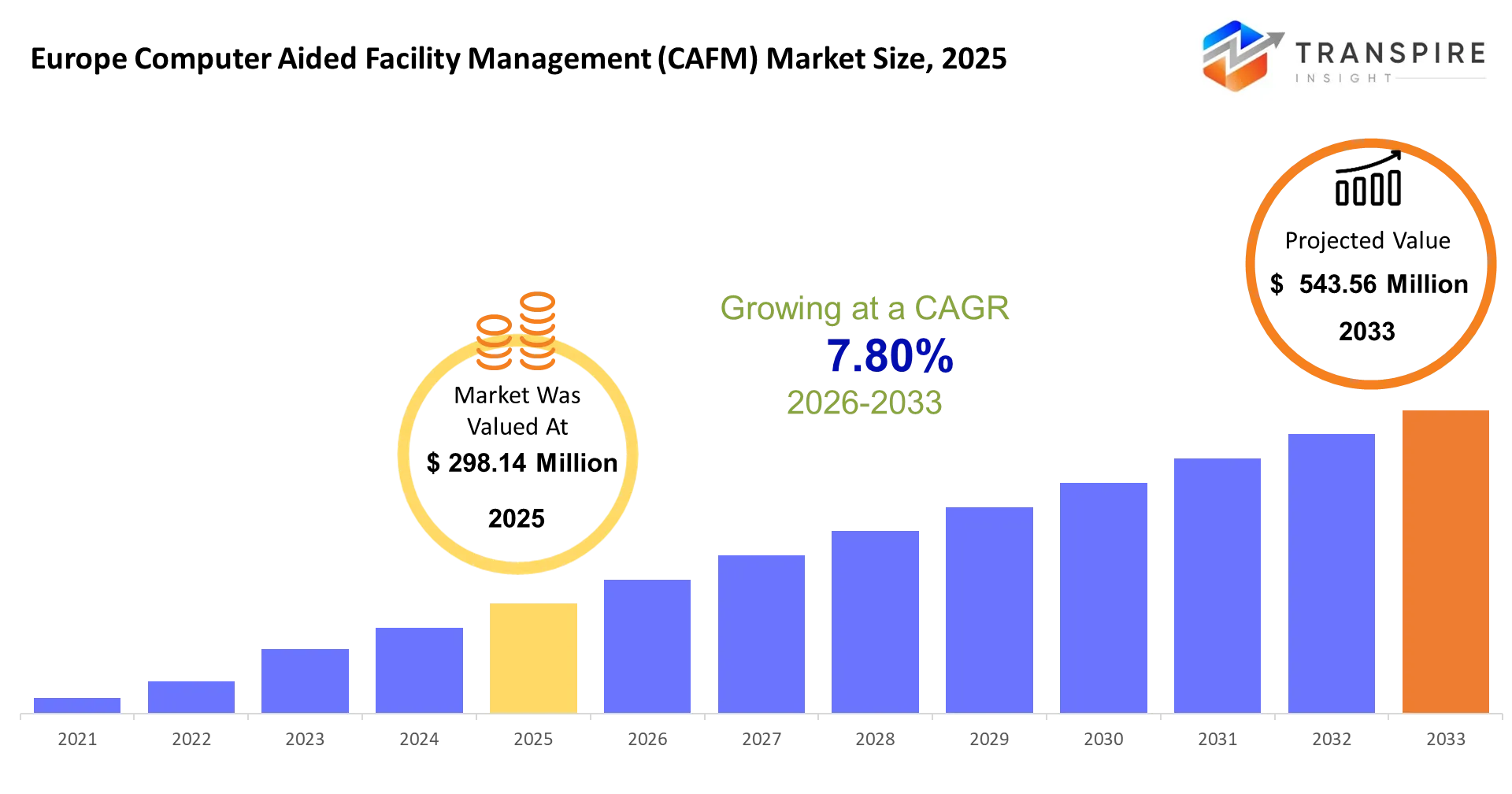
- Europe Computer Aided Facility Management (CAFM) Market Size 2025: USD 298.14 Million
- Europe Computer Aided Facility Management (CAFM) Market Size 2033: USD 543.56 Million
- Europe Computer Aided Facility Management (CAFM) Market CAGR: 7.80%
- Europe Computer Aided Facility Management (CAFM) Market Segments: By Type (Cloud-based CAFM, On-premise CAFM, Integrated CAFM, Others); By Application (Space Management, Asset Management, Maintenance Management, Energy Management, Facility Operations, Others); By End-User (Enterprises, SMEs, Facility Managers, Real Estate Firms, Government Organizations, Others); By Deployment (SaaS, Private Cloud, Public Cloud, Hybrid, Others)
To learn more about this report,  Download Free Sample Report
Keyword Summary
The Europe Computer Aided Facility Management (CAFM) Market was valued at USD 298.14 Million in 2025. It is forecast to reach USD 543.56 Million by 2033. That is a CAGR of 7.80% over the period.
The marine scrubber systems market addresses a practical challenge for shipowners by allowing vessels to continue using high-sulfur fuel while meeting strict emission limits. The systems extract sulfur oxides from exhaust gases which they eliminate into the atmosphere, enabling operators to manage their fuel expenses while staying within environmental protection standards. Scrubbers serve as a cost-compliance solution for large vessels which operate on extended international routes.
The market underwent a structural transformation during the last three to five years because hybrid systems with digital monitoring became the dominant technology. The transition gained momentum after the International Maritime Organization enforced IMO 2020 sulfur caps which forced immediate compliance decisions across global fleets. The growing price difference between low-sulfur and high-sulfur fuel drove companies to use scrubbers as a way to cut costs instead of meeting regulatory requirements. The installation rates among high-consumption vessels increased because operators wanted to support revenue growth through performance optimization technology investments.
Key Market Insights
- Europe will hold more than 35% of the marine scrubber systems market in 2025 because International Maritime Organization emission standards get enforced through advanced port infrastructure.
- Asia Pacific will become the fastest-growing region until 2030 because China and South Korea both build more fleets and shipyards while they implement exhaust gas cleaning systems.
- Shipowners currently operate hybrid scrubber systems as their main product choice because these systems enable them to comply with both open-loop and closed-loop requirements.
- Open-loop systems maintain their status as the second largest market segment because they require cheaper installation costs but their use in emission-controlled zones has decreased since 2024 because of increased regulatory monitoring.
- Closed-loop scrubbers show the fastest growth through 2030 because companies need to meet stricter discharge regulations while they search for marine emission control systems that meet environmental standards.
- Bulk carriers and container vessels dominate application demand with over 50% share because scrubbers become financially practical for installation on long-haul routes which create high fuel usage.
- The application of cruise ships and LNG carriers will experience the fastest growth because stricter environmental regulations and more funding for sustainable maritime operations have developed since 2025.
- Large shipping companies lead end-user adoption as they control more than 60% of the market in 2025 because their size allows them to fund expensive scrubber performance systems.
- Fleet operators who run mid-sized fleets have emerged as a fast expanding market because they began using modular exhaust gas cleaning technology when financing options became better between 2024 and 2026.
- Wärtsilä, Alfa Laval, Siemens, Kongsberg Maritime, and Mitsubishi Heavy Industries use three main strategies which include AI-based optimization and partnerships with other companies and digital system integration to improve their market competitiveness.
What are the Key Drivers, Restraints, and Opportunities in the Europe Computer Aided Facility Management (CAFM) Market?
The primary driver arises from stricter enforcement of sulfur emission regulations which international maritime organization imo 2020 standards established. The policy change required shipowners to choose between two options which involved switching to low-sulfur fuel or purchasing exhaust gas cleaning technology to fulfill their obligations. The fuel price spread increase after 2023 made scrubber adoption a cost-saving option instead of a compliance requirement. The economic trigger enables revenue growth to continue especially for operators who operate high-consumption vessels on their long-haul routes.
The high capital expenditure and complex retrofitting process together create a major restraint for scrubber installation on existing ships. The retrofitting process needs dry-docking and structural changes and legacy engine system integration which results in operational downtime and high initial expenditures. Small shipowners face financing challenges and uncertain return periods which cause them to postpone technology adoption. The structural barrier prevents older fleets from entering the market while regulatory pressure keeps pushing for market growth.
Digital integration of scrubber performance systems with fleet-wide analytics platforms provides a key opportunity which currently exists. Wärtsilä develops connected solutions which merge emissions control with real-time performance enhancement capabilities. The increasing investment in smart shipping corridors throughout Asia and the Middle East creates a positive environment for these technologies. The shift establishes new revenue streams through software development and monitoring services and optimization of product lifecycle management.
What Has the Impact of Artificial Intelligence Been on the Europe Computer Aided Facility Management (CAFM) Market?
The development of artificial intelligence has enabled ships to establish automated systems which monitor scrubber operations and ensure their compliance with emission control requirements. The advanced control platforms enable automatic adjustment of exhaust gas cleaning settings during engine operation according to current engine load and fuel sulfur levels and ocean conditions. The companies Wärtsilä and Kongsberg Maritime utilize artificial intelligence to develop onboard systems which continuously monitor emissions and generate alerts for any performance deviations that exceed established regulatory limits. The systemwide automation process establishes stable processes while decreasing the chances of organizations facing noncompliance fines.
The machine learning models enable predictive maintenance through their capability to examine past sensor records from pumps and sensors and washwater systems, which help them detect early failure indicators. The systems enable operators to plan maintenance activities, which helps them prevent equipment failures while increasing vessel operational availability and decreasing maintenance expenses. AI-driven optimization tools enhance fuel efficiency by matching scrubber operation to engine performance, which results in measurable decreases of both fuel use and emission rates. The operators experience better equipment availability and more efficient compliance reporting processes because of these improvements.
The maritime industry faces a significant challenge because of two main problems which include fluctuating data quality and insufficient sea-based connectivity, which affects both immediate data analysis capabilities and the accuracy of predictive models used in changing ocean conditions.
Key Market Trends
- Enterprise buyers now prefer integrated CAFM platforms which provide unified dashboards for maintenance functions and energy management and space management control since they abandoned standalone tools.
- Between 2024 and 2026, IBM and Siemens introduced AI-driven predictive maintenance solutions which shifted their competitive focus from cost efficiency to analytical capabilities.
- Small to medium enterprises adopted SaaS-based CAFM solutions because subscription pricing models required smaller initial investments than pre-2022 systems.
- After 2025 sustainability mandates increased regulatory pressure, organizations started to implement energy management modules which monitored emissions and enabled compliance reporting across their facilities.
- Since 2024, enterprises have adopted hybrid deployment models because they wanted to combine their existing infrastructure with cloud capabilities, which allowed them to implement gradual digital transformation while minimizing system replacement expenses.
- The competitive landscape changed when Schneider Electric and Planon formed stronger partnerships, which demonstrated their commitment to developing ecosystem-based solutions instead of competing through individual products.
- Facilities in the healthcare and manufacturing sectors showed increased demand after 2023 because they wanted to maintain operational uptime while complying with regulations, which made them implement predictive and preventive maintenance procedures.
- After 2025, technology development shifted toward open APIs, which enabled easier integration with IoT sensors and third-party platforms to improve interoperability in building environments.
- By 2026, real estate firms changed their buying behavior to prefer platforms which enable hybrid work through dynamic space utilization and occupancy analytics instead of using static planning tools.
Europe Computer Aided Facility Management (CAFM) Market Segmentation
By Type:
The market for cloud-based CAFM solutions maintains its dominant position because users require systems that can scale and operate from remote locations to manage their distributed assets. Enterprises select cloud solutions because they enable immediate access to operational data while decreasing their initial technology expenses. Organizations which want to integrate their maintenance operations with space management and energy management systems choose integrated CAFM as their preferred solution. The use of on-premise CAFM systems remains stable in organizations which operate under strict data protection standards used by government agencies and defense contractors.
The growth of cloud-based CAFM systems occurs because organizations undergo digital transformation while needing to maintain operational systems through their continuous updates. Large enterprises with complex asset management needs drive the demand for Integrated CAFM systems which provide interoperability with other systems. The market will see a shift towards cloud and integrated systems during the forecast period which will require vendors to create platforms that operate through modular systems and application programming interfaces. This development will motivate developers and investors to invest in system designs which enable businesses to grow their operations while creating personalized solutions.
By Application:
The process of asset management directly contributes to cost reduction and asset management through its system implementation which drives application usage across various sectors. Organizations which want to maintain their equipment through predictive maintenance and preventive maintenance programs choose maintenance management as their main area of focus. The implementation of energy management systems is increasing because companies need to comply with sustainability regulations which require them to measure their energy usage.
The development of maintenance and energy solutions occurs because organizations must meet regulations while their operational expenses increase in the healthcare and manufacturing industries. The demand for facility operations and space management services keeps growing because hybrid work practices require organizations to use their facilities effectively. Application usage will eventually shift toward predictive analytics and automation while developers will create AI functions as integral parts of their main system operations.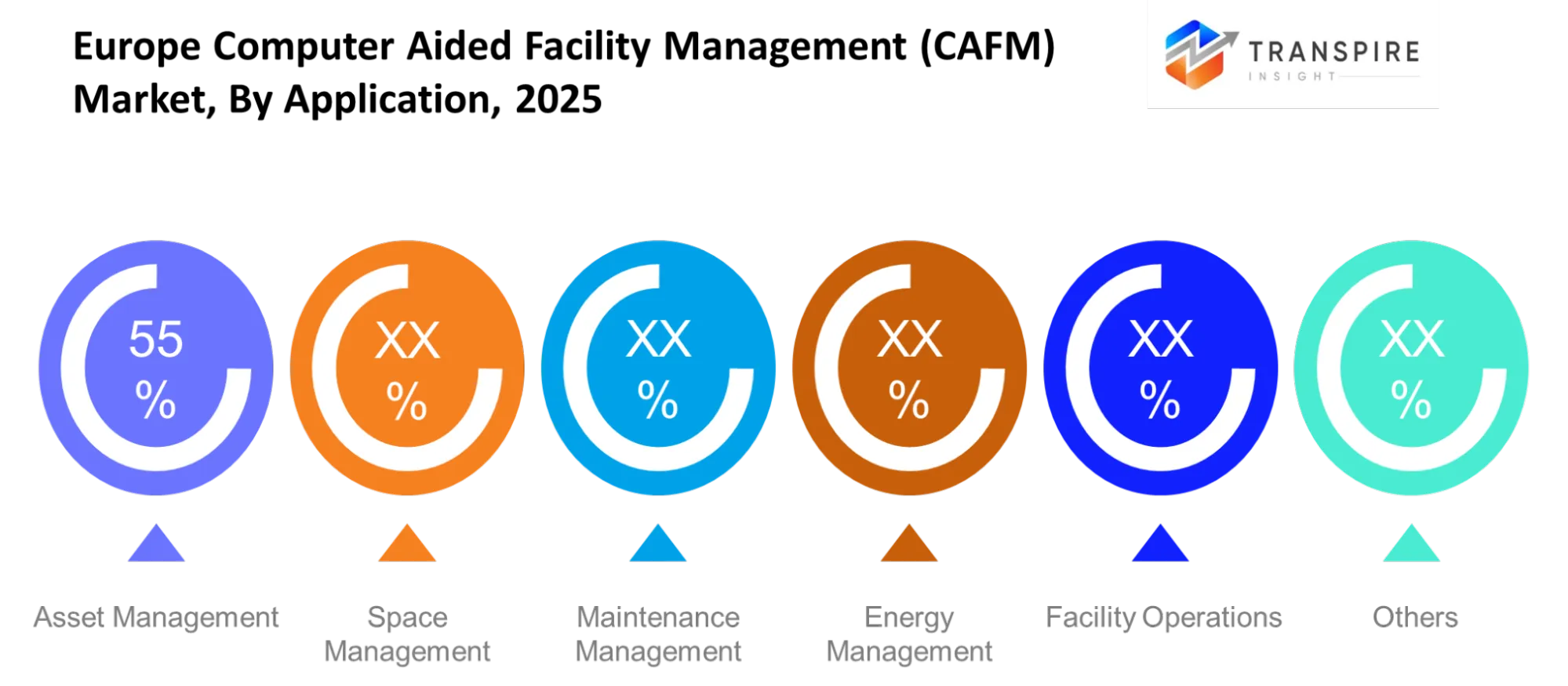
To learn more about this report, Download Free Sample Report
By End-User:
Enterprises dominate end-user adoption because they operate extensive asset networks which require them to manage multiple sites from a single location. Real estate companies and facility managers require services because they need to optimize their property portfolios while maintaining efficient operations. The gradual adoption of SMEs occurs because they receive support from subscription models which charge lower fees and offer easier installation methods.
The availability of modular solutions which streamline operations and decrease expenses has become more accessible for SMEs, which has resulted in their increased adoption. Government organizations maintain steady demand because they need to comply with regulations and manage their infrastructure systems. The period of forecast development will see vendors create specific products for mid-sized customers, which will give investors a chance to support solutions that offer both scalability and cost-effective operations.
By Deployment:
SaaS deployment leads the market as organizations prioritize flexibility, lower upfront costs, and automatic updates. Public cloud adoption follows, which better security standards and worldwide access. Organizations that need data control but want to use cloud resources are turning to hybrid deployment models.
Private cloud remains relevant in sectors that need strict data governance, but its growth rate lags behind that of SaaS and hybrid models. Hybrid deployment exists because organizations need to connect their existing systems with modern cloud solutions. The upcoming years will see an increase in hybrid and SaaS deployment strategies, which will drive solution providers to improve their security and interoperability capabilities.
What are the Key Use Cases Driving the Europe Computer Aided Facility Management (CAFM) Market?
The main purpose of the system focuses on managing facilities and assets in large commercial real estate property networks. Organizations utilize these systems to track building operations, coordinate repair activities, and verify adherence to energy and safety standards. The application generates maximum user interest because it provides direct cost savings which help prolong the operational lifespan of assets in complex property networks.
The healthcare and manufacturing sectors are showing increased interest in expanding their application usage. Hospitals use these systems to ensure their essential systems stay operational while safeguarding public health through hygienic practices and safety measures, and industrial facilities employ them to plan their equipment maintenance procedures and decrease operational downtime. Both market segments require dependable operation together with compliance to regulations.
New applications are emerging in smart campuses and data centers. These sites use real-time monitoring together with predictive analytics to manage their energy-intensive operations which require high operational capacity. The applications demonstrate significant potential because digital infrastructure continues to grow and sustainability requirements become more demanding.
|
Report Metrics |
Details |
|
Market size value in 2025 |
USD 298.14 Million |
|
Market size value in 2026 |
USD 321.39 Million |
|
Revenue forecast in 2033 |
USD 543.56 Million |
|
Growth rate |
CAGR of 7.80% from 2026 to 2033 |
|
Base year |
2025 |
|
Historical data |
2021 - 2024 |
|
Forecast period |
2026 - 2033 |
|
Report coverage |
Revenue forecast, competitive landscape, growth factors, and trends |
|
Regional scope |
Europe (Germany, United Kingdom, France, Italy, Spain, Rest of Europe) |
|
Key company profiled |
IBM, Oracle, SAP, Trimble, Archibus, Planon, FM Systems, Accruent, ServiceNow, Nemetschek, Autodesk, Microsoft, Honeywell, Siemens, Schneider Electric |
|
Customization scope |
Free report customization (country, regional & segment scope). Avail customized purchase options to meet your exact research needs. |
|
Report Segmentation |
By Type (Cloud-based CAFM, On-premise CAFM, Integrated CAFM, Others); By Application (Space Management, Asset Management, Maintenance Management, Energy Management, Facility Operations, Others); By End-User (Enterprises, SMEs, Facility Managers, Real Estate Firms, Government Organizations, Others); By Deployment (SaaS, Private Cloud, Public Cloud, Hybrid, Others) |
Which Regions are Driving the Europe Computer Aided Facility Management (CAFM) Market Growth?
The European market maintains its leadership position because there exists an effective regulatory system along with policies that protect the environment and ensure business operations remain open to public view. The regional governments combine their enforcement activities with maritime standards to compel shipowners into spending money on advanced technologies and building fleets that meet legal requirements. The area contains numerous port facilities which include important terminals that combine digital technologies with effective cargo operations. The combination of this ecosystem and the partnership between regulators and port authorities and shipping companies enables Europe to maintain its leadership status in the industry.
The Asia Pacific region provides stable contributions to the market because its economic strength relies on its ability to maintain growth through its existing business operations instead of relying on strict regulatory requirements. The area contains some of the most active maritime routes which receive support from its industrial production facilities and its economy which depends on exports. The shipping companies in this area expand their fleets through ongoing investment activities to meet the demands of international trade, which establishes a reliable income stream that supports market growth. The European Union maintains more rapid regulatory changes than European regulations, yet the existing trade patterns and infrastructure projects ensure operational sustainability throughout multiple future decades.
The Middle East and Africa region experiences its fastest expansion, which results from recent funding in port upgrades and the development of vital logistics facilities. Governments have introduced new maritime initiatives to transform key ports into global transshipment hubs, attracting international shipping lines. The country has accelerated fleet improvements and digital technology implementation as part of its national strategy to establish economic diversification. The period between 2026 and 2033 will present businesses and investors with exceptional growth possibilities because the region transitions from a transit corridor to a hub for maritime research and development.
Who are the Key Players in the Europe Computer Aided Facility Management (CAFM) Market and How Do They Compete?
The market competition shows moderate fragmentation as global companies and regional specialized firms compete to control market share. Companies that existed before the current market period use their operational size and established agreements to retain customers while digital solution providers and new market entrants introduce flexible service packages to customers. The competition uses technology as its main competitive factor for emissions monitoring and fleet optimization as well as data-driven compliance solutions. The ability to reach multiple locations and manage valuable shipping routes remains essential for companies that want to win major shipping contracts.
Wärtsilä develops its technology-based competitive advantage through its smart marine systems which provide real-time analytics and energy-efficient propulsion systems. The company excels in providing complete solutions which enable operators to monitor fuel usage and compliance through their onboard equipment and shore monitoring systems. Kongsberg Maritime develops advanced vessel control systems which use automation and digital navigation to decrease human errors and enhance operational accuracy. The company expands through partnerships with shipbuilders and retrofitting programs that upgrade existing fleets.
The company competes through its specialized environmental solutions which focus on emission control and ballast water management as customers search for regulatory-compliant solutions. The product engineering system enables shipowners to achieve strict regulatory requirements while maintaining their normal business activities. Mitsubishi Heavy Industries uses its shipbuilding knowledge to embed regulatory-compliant technologies within new ship designs which enhance construction efficiency. The company expands its operations through Asian and Middle Eastern strategic partnerships which help it develop markets in regions that allocate resources to their development.
Company List
- IBM
- Oracle
- SAP
- Trimble
- Archibus
- Planon
- FM Systems
- Accruent
- ServiceNow
- Nemetschek
- Autodesk
- Microsoft
- Honeywell
- Siemens
- Schneider Electric
Recent Development News
In March 2026, IBM launched enhancements to its TRIRIGA platform integrating AI-driven predictive maintenance capabilities. This update strengthens IBM’s position in data-led facility management by enabling real-time asset optimization and reducing operational downtime. https://newsroom.ibm.com
In January 2026, Siemens expanded its smart infrastructure portfolio through new integrations between its building management systems and digital twin technology. This move improves lifecycle visibility for facility operators and reinforces Siemens’ differentiation in intelligent infrastructure solutions. https://press.siemens.com
What Strategic Insights Define the Future of the Europe Computer Aided Facility Management (CAFM) Market ?
The market is currently progressing toward cloud-based facility management systems which rely on data integration and automated processes to generate lasting value. The present shift occurs because AI technologies and IoT devices and new sustainability reporting laws compel organizations to select integrated software systems instead of outdated separate applications. Organizations will gain competitive advantages during the next five to seven years by utilizing their operational data to create predictive models which will help them decrease expenses while achieving regulatory standards.
Integration fatigue represents a hidden danger because organizations face challenges when they attempt to connect their old systems with new digital solutions which creates delays and increases their implementation costs. Mid-sized companies now have a new business opportunity because they start to implement modular subscription-based solutions which meet their distinct facility management needs. The market participants need to establish open architecture systems while developing interoperability standards because these capabilities will enable them to win big enterprise deals and capture market share from mid-sized companies.
Europe Computer Aided Facility Management (CAFM) Market Report Segmentation
By Type
- Cloud-based CAFM
- On-premise CAFM
- Integrated CAFM
- Others
By Application
- Space Management
- Asset Management
- Maintenance Management
- Energy Management
- Facility Operations
- Others
By End-User
- Enterprises
- SMEs
- Facility Managers
- Real Estate Firms
- Government Organizations
- Others
By Deployment
- SaaS
- Private Cloud
- Public Cloud
- Hybrid
- Others
Frequently Asked Questions
Find quick answers to common questions.
The Europe Computer Aided Facility Management (CAFM) Market size is USD 543.56 Million in 2033.
Key segments for the Europe Computer Aided Facility Management (CAFM) Market are By Type (Cloud-based CAFM, On-premise CAFM, Integrated CAFM, Others); By Application (Space Management, Asset Management, Maintenance Management, Energy Management, Facility Operations, Others); By End-User (Enterprises, SMEs, Facility Managers, Real Estate Firms, Government Organizations, Others); By Deployment (SaaS, Private Cloud, Public Cloud, Hybrid, Others).
Major Europe Computer Aided Facility Management (CAFM) Market players are IBM, Oracle, SAP, Trimble, Archibus, Planon, FM Systems, Accruent, ServiceNow, Nemetschek, Autodesk, Microsoft, Honeywell, Siemens, Schneider Electric.
The Current Europe Computer Aided Facility Management (CAFM) Market size is USD 298.14 Million in 2025.
The Europe Computer Aided Facility Management (CAFM) Market CAGR is 7.80% from 2026 to 2033.
- IBM
- Oracle
- SAP
- Trimble
- Archibus
- Planon
- FM Systems
- Accruent
- ServiceNow
- Nemetschek
- Autodesk
- Microsoft
- Honeywell
- Siemens
- Schneider Electric
Recently Published Reports
-
Apr 2026
3D Optical Profiler Market
3D Optical Profiler Market Size, Share & Analysis Report By Type (Desktop 3D Optical Profiler, and Portable 3D Optical Profiler), By Technology (Confocal Technology, and White Light Interference), By End-Use Industry (Manufacturing, Research Institutions, Automotive, Aerospace and Defense, Medical Devices, and Other), and Geography (North America, Europe, Asia-Pacific, Middle East and Africa, South and Central America), 2021 - 2031
-
Apr 2026
Depth Sensor Market
Depth Sensor Market Size, Share & Analysis Report By Type (Infrared Depth Sensors, Time-of-Flight (ToF) Sensors, Stereo Vision Sensors, Structured Light Sensors, Ultrasonic Depth Sensors), By Application (Automotive, Robotics, Gaming, Consumer Electronics, Industrial Automation, Healthcare, Security & Surveillance, Others), By End Users (Automotive Manufacturers, Consumer Electronics Companies, Healthcare Providers, Industrial Companies, Security Agencies, Gaming Companies, Robotics Companies, Others), and Geography (North America, Europe, Asia-Pacific, Middle East and Africa, South and Central America), 2021 – 2031
-
Apr 2026
Digital Manufacturing Market
Digital Manufacturing Market Size, Share & Analysis Report By Component (Hardware, Software, and Services), By Technology (Robotics, 3D Printing, Internet of Things (IoT), and Others), By Application (Automotive and Transportation, Aerospace and Defense, Consumer Electronics, Industrial Machinery, and Others), By Process Type (Computer-Based Designing, Computer-Based Simulation, Computer 3D Visualization, Analytics, and Others), and Geography (North America, Europe, Asia-Pacific, Middle East and Africa, South and Central America), 2021 – 2031
-
Apr 2026
Digital Visa Services Market
Digital Visa Services Market Size, Share & Analysis Report By Type (Individual Travelers, Group Travelers), By Application (Tourism, Business Travel, Others), and Geography (North America, Europe, Asia-Pacific, Middle East and Africa, South and Central America), 2021 – 2031