Market Summary
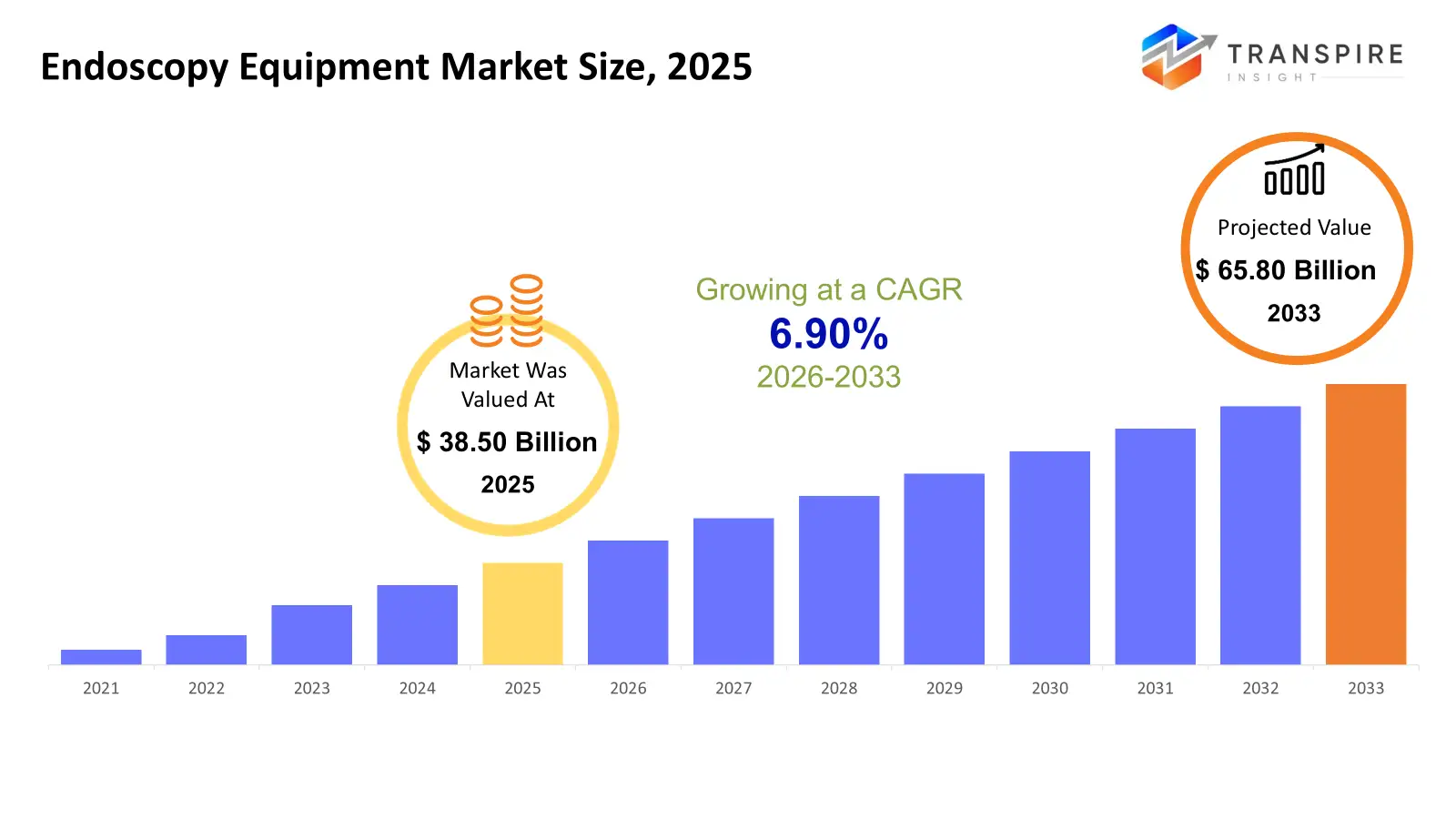
The global Endoscopy Equipment market size was valued at USD 38.50 billion in 2025 and is projected to reach USD 65.80 billion by 2033, growing at a CAGR of 6.90% from 2026 to 2033. The endoscopy equipment market is growing steadily due to the increasing preference for minimally invasive procedures, which reduce the time spent in the hospital, surgical risks, and recovery periods. Increasingly prevalent gastrointestinal, respiratory, and urological diseases are causing an increase in diagnostic and therapeutic procedures all over the world.
Market Size & Forecast
- 2025 Market Size: USD 38.50 Billion
- 2033 Projected Market Size: USD 65.80 Billion
- CAGR (2026-2033): 6.90%
- North America: Largest Market in 2026
- Asia Pacific: Fastest Growing Market
To learn more about this report,  Download Free Sample Report
Key Market Trends Analysis
- North America, as mentioned, is an endoscopy equipment market that has already reached maturity with high adoption rates for minimally invasive surgical procedures, well-developed and strong infrastructural support for healthcare services, and early adoption of high-tech equipment for imaging purposes
- In terms of geographical regions, United States maintains its position as the largest contributor due to its advanced diagnostic capabilities, robust payment systems, and presence of key manufacturers, while hospitals and clinics lead the high-definition endoscopy systems and visualization solutions market
- Asia Pacific presently accounted for the fastest growth rate due to higher access to healthcare services, emphasis on preventive healthcare, and surge in the number of procedures performed, along with the development of infrastructure within hospitals, with countries such as Japan, China, and South Korea showing the highest adoption rates for endoscopy innovations
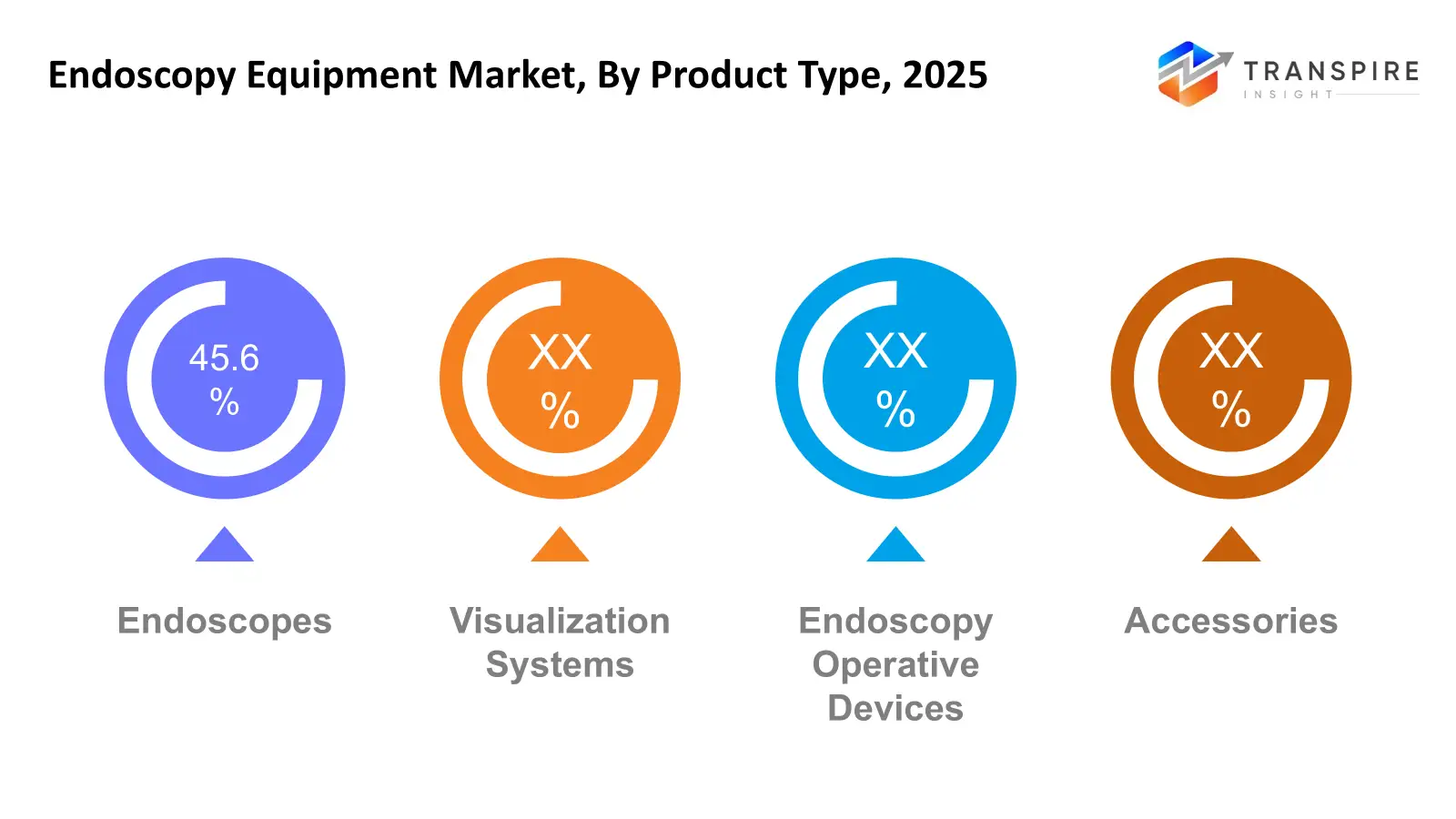
- Endoscopes are the leading product type due to the role they play both in diagnostics and in therapy, and their growth is fueled by innovation, the increasing use of disposable equipment to prevent infections, and the expanding uses for endoscopes.
- Diagnostic endoscopy continues to be the most preferred procedure type due to increasing instances of screening programs and initiatives for early detection of diseases and conditions within a healthcare framework where preventive measures are being encouraged to lower treatment costs in the long run.
- The gastrointestinal endoscopy segment commands the largest market share of the application segment, attributed to the higher rate of digestive disorders and colorectal cancer screening campaigns and technological advancements in endoscopic equipment, as well as increased consumer demand for minimally invasive diagnostic and treatment procedures.
- Hospitals continue to be the major drivers within the end-user segment as a result of their advanced infrastructure, availability of skilled professionals, as well as the capability for complex medical procedures to be carried out.
So, It can be noted that the endoscope equipment market refers to the equipment and devices utilized for the visualization of human internal organs for the purpose of carrying out diagnostic and therapeutic activities in the field of medicine. It can be added that the market for endoscope equipment has seen a considerable evolution with the developments in image technology and the integration of digital equipment. The growing health burden of chronic illnesses, such as gastrointestinal, cancer, and respiratory diseases, has driven the demand for endoscopic procedures in the early detection, diagnosis, and treatment of the condition. The need for minimally invasive treatments in healthcare facilities is being met by healthcare providers, thus encouraging the demand for advanced endoscopes.
In addition, technological innovation is another major factor influencing the market, with technologies such as high definition imaging, use of singe-use endoscopes, and visualization technologies continually improving efficiency and procedural safety. The increase in the number of surgical out patient facilities and healthcare investments within the robust growth economies will continue to boost the market growth potential.
Endoscopy Equipment Market Segmentation
By Product Type
- Endoscopes
Endoscopes constitute the key segment driving the revenues. This can be associated with the increased rate of adoption of minimally invasive procedures and rising diagnostic screenings. Advances in technology pertaining to endoscopy, including the use of high-definition technology and the development of disposable products, are factors supporting the rising need for replacements.
- Visualization Systems
Visualization systems consist of cameras, processors, lights, and monitors, which enable surgeons to achieve high-quality imaging necessary for procedures. The demand arises from the shift towards HD, 4K, and 3D technology, which aims at enhancing precision and success rates with procedures. Hospitals and sophisticated surgical centers are focusing on upgrading integrated visualization systems, which improve workflow and performance.
- Endoscopy Operative Devices
Operative devices include instruments used in diagnostic and therapeutic interventions, such as tissue biopsy and resection instruments. The segment benefits from rising therapeutic endoscopies and the trend towards minimally invasive interventions instead of open surgery. Innovation in instruments and disposable medical products secures recurring revenue models.
- Accessories
Accessories involve supportive items such as the cleaning systems, valves, cables, and the overtubes that are essential to the completion of a process successfully. Demand is generally volume-driven and tends to vary with the number of procedures carried out worldwide. There is positive growth resulting from the increasing focus on reprocessing and infection control.
To learn more about this report, Download Free Sample Report
By Procedure Type
- Diagnostic Endoscopy
Diagnostic endoscopy holds the largest share, which can be attributed to its widespread application in the screening of diseases, early detection, and routine checkup. The increasing prevalence of gastrointestinal, respiratory, and urological disorders supports consistent procedure volumes. The demand is further sustained by preventive healthcare initiatives and cancer screening programs.
- Therapeutic endoscopy
Therapeutic endoscopy is a fast-growing segment as most of the interventional procedures are now performed endoscopically instead of through open surgery. Advances in endoscopic tools allow for complex treatments such as the removal of polyps, bleeding control, and placing stents. Therefore, this segment has the added advantages of shorter recovery times and reduced hospitalization costs.
By Application
- Gastrointestinal Endoscopy
The gastrointestinal endoscopy segment leads the market in terms of share due to the high incidence rate of gastrointestinal disorders and the implementation of colorectal cancer screenings. The adoption rate of minimal invasive gastrointestinal procedures is on the increase, and awareness of the early detection of gastrointestinal disorders is growing.
- Bronchoscopy
The demand for bronchoscopy is further influenced by the increase in respiratory diseases, the prevalence of lung cancer, and the diagnostic evaluation of airway-related diseases. The use of advanced technologies in image guidance and navigation is enhancing diagnostic accuracy. Additionally, the expansion of pulmonary care facilities is driving the market.
- ENT Endoscopy
ENT endoscopy is used for sinus, nasal, and throat investigations and surgeries. Chronic sinusitis and minimally invasive surgeries performed in the field of ENT are growing, which fuels the persisting need for it. It has improved through better visualization and smaller endoscopes.
- Urology Endoscopy
The rationale behind the development of urology endoscopy techniques is the rising incidence of kidney stones, bladder problems, and prostate issues. Technological developments in cystoscopy and ureteroscopy systems are supporting the success of the treatment techniques. The aging population and the rising burden of urological diseases are key contributors to segment growth.
- Laparoscopy
The field of laparoscopy is a significant segment of the market because of tremendous adoption in general and bariatric surgeries. The trend of minimally invasive procedures and the short recovery time of patients favors this segment. Hospitals are increasingly adopting sophisticated laparoscopic imaging equipment.
- Obstetrics & Gynecology Endoscopy
This segment includes hysteroscopy as well as other minimally invasive gynecology treatments. The rising prevalence of treatments that are fertility-related as well as gynecology disorders fuels growth in this particular market. As a result, a rising preference for outpatient treatments contributes to steady adoption within medical facilities.
- Others
Areas of application can include arthroscopy, neuroendoscopy, and other specific diagnostic tests. The growth can be driven by advancements in technology, as well as an increase in clinical uses. The use rate will depend on the use of the technology within the specialty in relation to the availability of infrastructure.
By End User
- Hospitals
The largest market segment, hospitals, can be explained by the high inflow of patients, infrastructure facilities, and the ability to perform complex procedures. The capital investment in integrated endoscopy facilities helps in maintaining market dominance. Hospital segment stimulates the demand for high-end visualization/therapy equipment.
- Ambulatory Surgical Centers (ASCs)
ASCs are seeing growing acceptance with the cost efficiency and shorter patient turnaround times. This growth is also complemented by the increasing migration of minimal invasive procedures from the hospital setting to the outpatient setting. Reimbursement structures in the developed regions continue to drive growth.
- Specialty Clinics
Specialty clinics operate along specific therapeutic needs, which may include gastroenterology, pulmonology, and urology. These facilities contribute to the stable market for diagnostic and general endoscopic services. Healthcare specialty movements have resulted in growth for this segment.
- Diagnostic Centers
The diagnostic centers mainly specialize in screening and detection methods. The demand is driven by increased awareness of preventive healthcare services and increased volumes of diagnostic testing. The segment benefits from increased demand for cost-effective and quick testing services.
Regional Insights
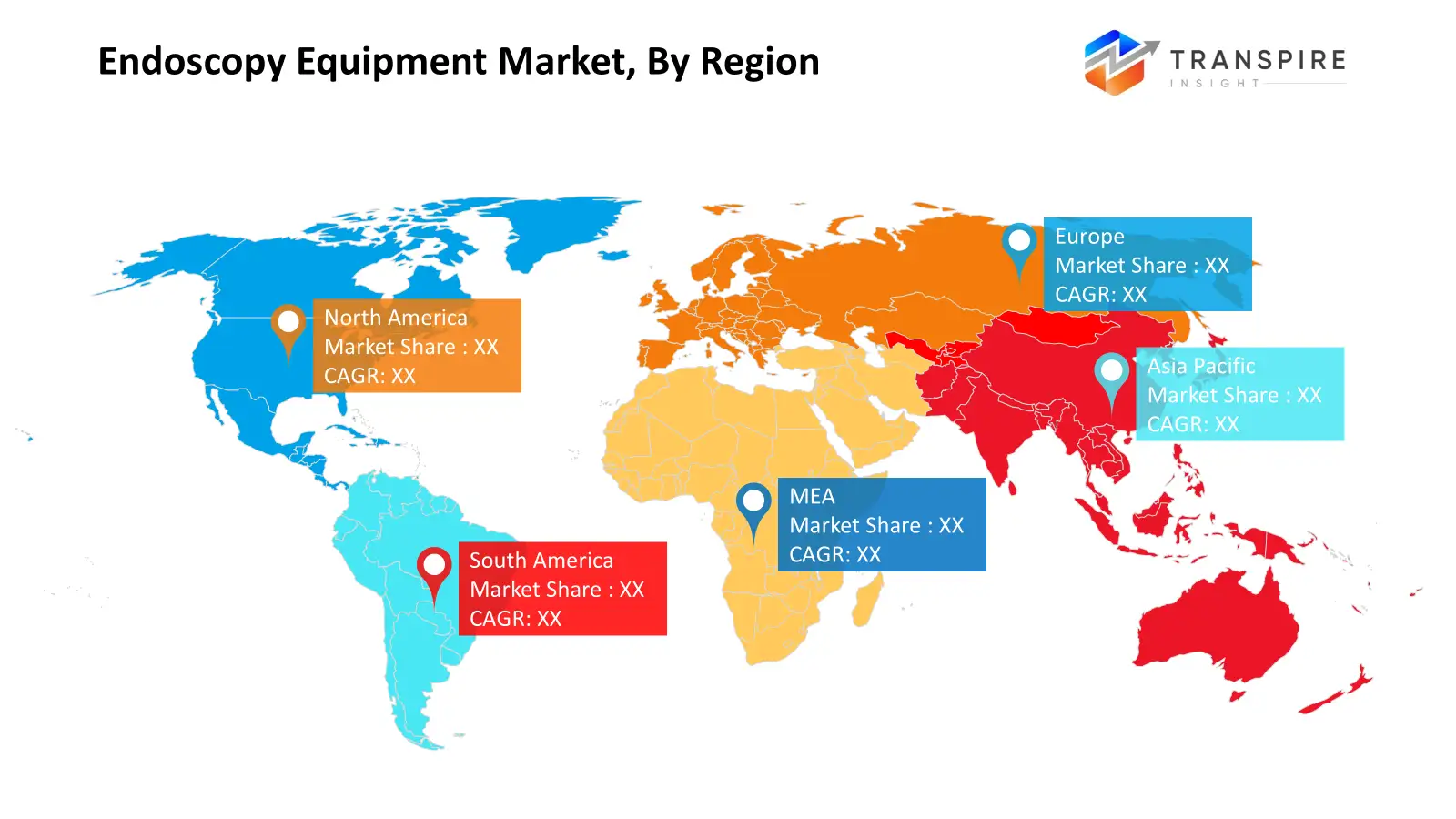
The North American market consists of the United States, Mexico, and Canada, which cite a highly mature and technologically developed environment characterized by high procedure volumes and early adoption of sophisticated equipment. The demand for imaging equipment is dominated by the United States due to high expenditure on health and well-established screening programs, with Canada and Mexico indicating slow growth due to modernization programs. Europe, including Germany, the United Kingdom, France, Spain, Italy, and the Rest of Europe, refers to stable performance attributed to the growing population as well as robust regulatory standards emphasizing patient safety and infection control. Advanced endoscopy technology use in Western Europe is high, while the Eastern European market reports gradual growth with improved health care infrastructure.
The fastest-growing region, Asia Pacific (including Japan, China, Australia & New Zealand, South Korea, India, and the Rest of Asia Pacific), has large patient populations and is investing more and more in healthcare. Japan and South Korea are leading with respect to technological adoption, while China and India drive volume growth due to expanding hospital infrastructure and rising awareness about early diagnosis. South America, comprising Brazil, Argentina, and the Rest of South America, demonstrates a degree of reasonable growth, helped by growing access to healthcare facilities and a budding private healthcare sector. The Middle East & Africa, which includes regions such as Saudi Arabia, the United Arab Emirates, South Africa, and the Rest of the Middle East & Africa, is seeing incremental adoption with variable investment in healthcare infrastructure and a growing demand for newer medical technologies at urban health centers.
To learn more about this report, Download Free Sample Report
Recent Development News
- October 2025, Olympus has announced the upcoming launch of its newly developed EVIS X1 endoscopy system, which is intended to provide better visibility and increase detection capabilities through the application of technological imaging capabilities like Extended Depth of Field and Red Dichromatic Imaging.
(Source:https://www.olympus-global.com/news/2025/nr02923.html)
- In February 2024, Fujifilm has obtained clearance from the FDA for its SCALE EYE, which is an innovative endoscopic imaging method part of the ELUXEO system, designed for real-time measurements of colorectal lesions.
(Source:https://www.fujifilm.com/us/en/news/fujifilm-receives-510k-clearance-for-scale-eye)
|
Report Metrics |
Details |
|
Market size value in 2025 |
USD 38.50 Billion |
|
Market size value in 2026 |
USD 41.00 Billion |
|
Revenue forecast in 2033 |
USD 65.80 Billion |
|
Growth rate |
CAGR of 6.90% from 2026 to 2033 |
|
Base year |
2025 |
|
Historical data |
2021 – 2024 |
|
Forecast period |
2026 – 2033 |
|
Report coverage |
Revenue forecast, competitive landscape, growth factors, and trends |
|
Regional scope |
North America; Europe; Asia Pacific; Latin America; Middle East & Africa |
|
Country scope |
United States; Canada; Mexico; United Kingdom; Germany; France; Italy; Spain; Denmark; Sweden; Norway; China; Japan; India; Australia; South Korea; Thailand; Brazil; Argentina; South Africa; Saudi Arabia; United Arab Emirates |
|
Key company profiled |
Olympus Corporation, Stryker Corporation, Karl Storz SE & Co. KG, Fujifilm Holdings Corporation, HOYA Corporation (PENTAX Medical), Medtronic plc, Boston Scientific Corporation, Johnson & Johnson (Ethicon Endo-Surgery, Inc.), Smith & Nephew plc, B. Braun Melsungen AG, Conmed Corporation, Richard Wolf GmbH, Cook Medical LLC, Ambu A/S, and Nihon Kohden Corporation |
|
Customization scope |
Free report customization (country, regional & segment scope). Avail customized purchase options to meet your exact research needs. |
|
Report Segmentation |
By Product Type (Endoscopes, Visualization Systems, Endoscopy Operative Devices, Accessories), By Procedure Type (Diagnostic Endoscopy, Therapeutic Endoscopy), By Application (Gastrointestinal Endoscopy, Bronchoscopy, ENT Endoscopy, Urology Endoscopy, Laparoscopy, Obstetrics & Gynecology Endoscopy, Others) and By End User (Hospitals, Ambulatory Surgical Centers (ASCs), Specialty Clinics, Diagnostic Centers) |
Key Endoscopy Equipment Company Insights
Olympus Corporation is a major player in the global endoscopy equipment market, holding a robust leadership position based on its wide product range, which includes gastrointestinal, surgical, and medical endoscopy equipment. The company possesses a wide brand presence along with superior technology in imaging and constant innovation in medical endoscopes. The firm has an ample distribution network worldwide, particularly in the Asia-Pacific countries, Europe, and North America. Olympus Corporation receives significant attention through its focus on high-definition visualization, artificial intelligence-based diagnostics, and comprehensive endoscopy solutions. The firm partners with hospitals and upgrades its products regularly to sustain its market share despite growing competition from Fujifilm, Stryker and Karl Storz in visualization and surgical endoscopes.
Key Endoscopy Equipment Companies:
- Olympus Corporation
- Stryker Corporation
- Karl Storz SE & Co. KG
- Fujifilm Holdings Corporation
- HOYA Corporation (PENTAX Medical)
- Medtronic plc
- Boston Scientific Corporation
- Johnson & Johnson (Ethicon Endo-Surgery, Inc.)
- Smith & Nephew plc
- Braun Melsungen AG
- Conmed Corporation
- Richard Wolf GmbH
- Cook Medical LLC
- Ambu A/S
- Nihon Kohden Corporation
Global Endoscopy Equipment Market Report Segmentation
By Product Type
- Endoscopes
- Visualization Systems
- Endoscopy Operative Devices
- Accessories
By Procedure Type
- Diagnostic Endoscopy
- Therapeutic Endoscopy
By Application
- Gastrointestinal Endoscopy
- Bronchoscopy
- ENT Endoscopy
- Urology Endoscopy
- Laparoscopy
- Obstetrics & Gynecology Endoscopy
- Others
By End User
- Hospitals
- Ambulatory Surgical Centers (ASCs)
- Specialty Clinics
- Diagnostic Centers
Regional Outlook
- North America
- United States
- Canada
- Mexico
- Europe
- Germany
- United Kingdom
- France
- Spain
- Italy
- Rest of Europe
- Asia Pacific
- Japan
- China
- Australia & New Zealand
- South Korea
- India
- Rest of Asia Pacific
- South America
- Brazil
- Argentina
- Rest of South America
- Middle East & Africa
- Saudi Arabia
- United Arab Emirates
- South Africa
- Rest of the Middle East & Africa
Frequently Asked Questions
Find quick answers to common questions.
The approximate Endoscopy Equipment Market size for the market will be USD 65.80 billion in 2033.
Key segments for the Endoscopy Equipment Market By Product Type (Endoscopes, Visualization Systems, Endoscopy Operative Devices, Accessories), By Procedure Type (Diagnostic Endoscopy, Therapeutic Endoscopy), By Application (Gastrointestinal Endoscopy, Bronchoscopy, ENT Endoscopy, Urology Endoscopy, Laparoscopy, Obstetrics & Gynecology Endoscopy, Others) and By End User (Hospitals, Ambulatory Surgical Centers (ASCs), Specialty Clinics, Diagnostic Centers).
Major Endoscopy Equipment Market players are Olympus Corporation, Stryker Corporation, Karl Storz SE & Co. KG, Fujifilm Holdings Corporation, HOYA Corporation (PENTAX Medical).
The North America region is leading the Endoscopy Equipment Market.
The CAGR of the Endoscopy Equipment Market is 6.90%.
- Olympus Corporation
- Stryker Corporation
- Karl Storz SE & Co. KG
- Fujifilm Holdings Corporation
- HOYA Corporation (PENTAX Medical)
- Medtronic plc
- Boston Scientific Corporation
- Johnson & Johnson (Ethicon Endo-Surgery, Inc.)
- Smith & Nephew plc
- Braun Melsungen AG
- Conmed Corporation
- Richard Wolf GmbH
- Cook Medical LLC
- Ambu A/S
- Nihon Kohden Corporation
Recently Published Reports
-
Apr 2026
AI in Diabetic Retinopathy Market
AI in Diabetic Retinopathy Market Size, Share & Analysis Report By Type (Screening AI Systems, Diagnostic AI Systems, and Predictive AI Models), By Application Segment (Hospitals, Ophthalmology Clinics, Diagnostic Centers, and Research and Development), and Geography (North America, Europe, Asia-Pacific, Middle East and Africa, South and Central America), 2021 - 2031
-
Apr 2026
Psychometric Tests Market
Psychometric Tests Market Size, Share & Analysis Report By Type (Personality Tests, Ability/Aptitude Tests, Skill/Knowledge Tests, and Others), By Application (Talent Acquisition and Talent Management), and Geography (North America, Europe, Asia-Pacific, Middle East and Africa, South and Central America), 2021 – 2031
-
Apr 2026
Rare Biological Sample Collection Market
Rare Biological Sample Collection Market Size, Share & Analysis Report By Type (Isolation Kits & Reagent, Blood Collection Tubes, and Others), By Application (Oncology, Transcriptomics, Pharmacogenomics, and Others), and Geography (North America, Europe, Asia-Pacific, Middle East and Africa, South and Central America), 2021 – 2031
-
Apr 2026
Patient Lift Pendant Market
Patient Lift Pendant Market By Product Type (Wired Pendants, Wireless, Programmable), By Operation Type(Manual, Electric), By End-Users (Healthcare Professionals, Patients), By Application (Hospitals, Homecare, Rehabilitation Centers, Others), By Industry Analysis, Size, Share, Growth, Trends, and Forecasts 2021-2033
Our Clients
.jpg)