

Market Summary
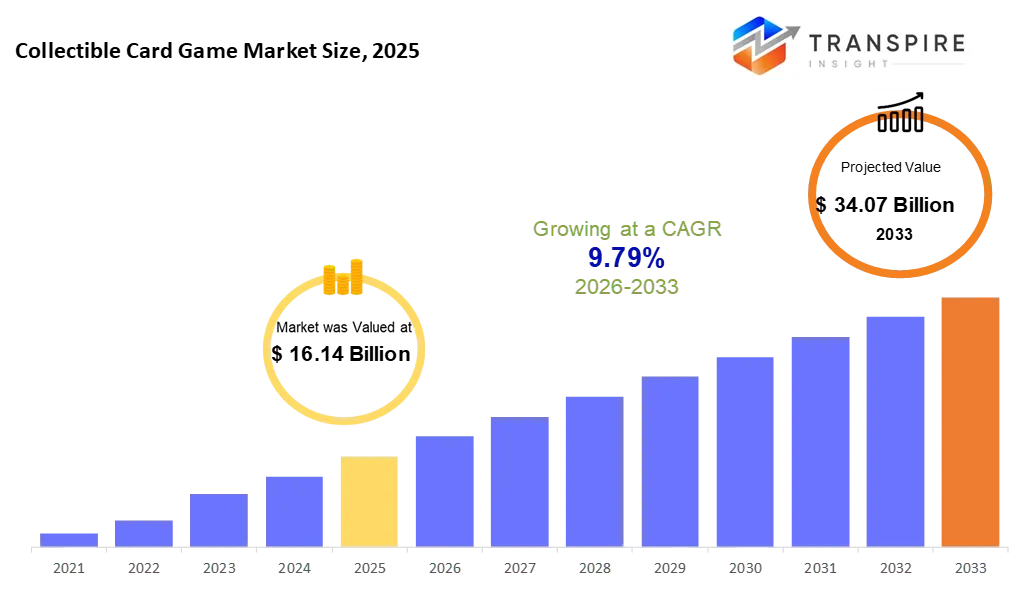
The global Collectible Card Game market size was valued at USD 16.14 billion in 2025 and is projected to reach USD 34.07 billion by 2033, growing at a CAGR of 9.79% from 2026 to 2033. The market’s growth is driven by the rising popularity of trading card games among younger and adult collectors, supported by strong community engagement, esports events, and organized tournaments. Additionally, increasing digital integration, licensed franchises, and growing collector and resale value are accelerating sustained demand worldwide.
Market Size & Forecast
- 2025 Market Size: USD 16.14 Billion
- 2033 Projected Market Size: USD 34.07 Billion
- CAGR (2026-2033): 9.79%
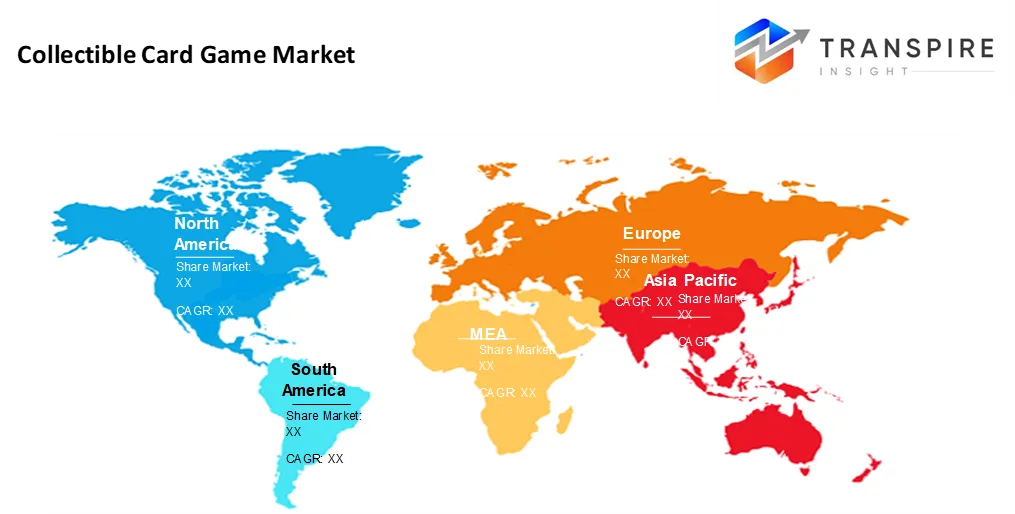
- North America: Largest Market in 2026
- Asia Pacific: Fastest Growing Market
To learn more about this report,  Download Free Sample Report
Key Market Trends Analysis
- North America market share estimated to be approximately 46% in 2026. Fueled by loyal followers, structured competitions light up gameplay across both everyday and serious gamers in North America. Digital tools keep spreading fast through the scene, pushing momentum forward.
- Spending big on games keeps the United States market strong. Expansions move fast here, while competitive card communities thrive across states.
- Young players in the Asia Pacific region are fueling growth through a rising interest in mobile games. Gaming tournaments draw big crowds, shaping how people engage with digital play. Collectors, often teens and young adults, add momentum to market movement. Popularity of handheld devices pushes new trends across cities and rural areas alike.
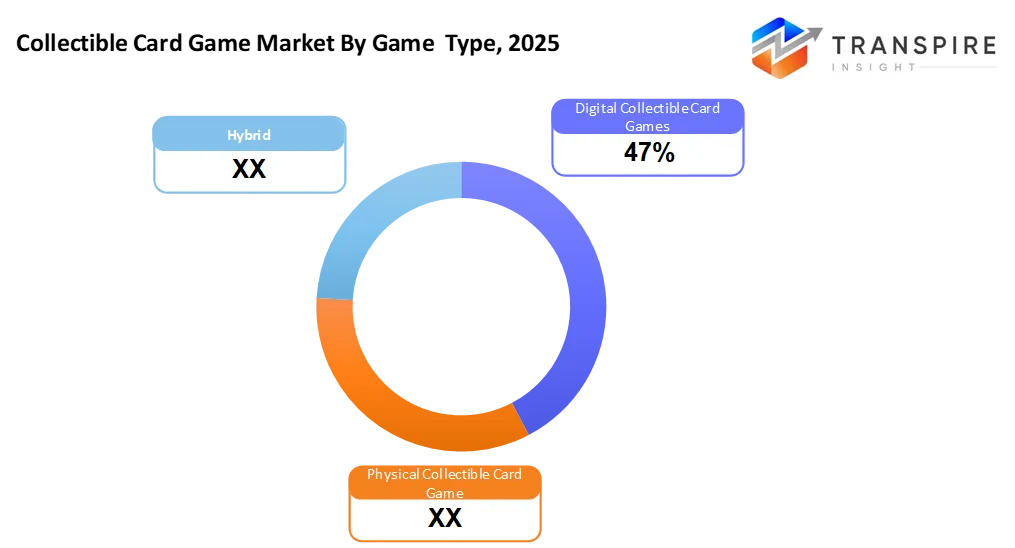
- Digital Collectible Card Games share approximately 50% in 2026. Digital collectible card games. Phones help spread them fast. Buying items inside the game pushes growth, too. Players connect worldwide through live networks. Mobile reach gives these games a strong boost.
- A shift toward shared play experiences pulls people in. Live challenges hook users more than isolated matches ever did. Esports action keeps audiences coming back week after week. Multiplayer dynamics shape how games evolve now. Growth sticks where interaction thrives.
- Collectors hunt down rare prints, limited runs, big-ticket cards that could sell for more later. Their interest shapes what's worth something. Demand rises when they target specific pieces. Value follows where collectors look.
- Retail stands out because it makes shopping easier. Reaching customers worldwide gives it an edge over traditional methods. Another factor active resale platforms add momentum behind the scenes.
Not many see it coming, but trading card games keep growing faster than most expect. Physical decks share space now with apps and online play. Big names in movies, cartoons, and TV shows draw fans into deck building. Fans stick around because the rules reward smart choices over time. Belonging to a group that trades and plays matters just as much as winning. New sets drop regularly, often tied to stories people already love. Kids get hooked early, adults stay for the challenge. What started on tabletops spreads through phones and screens everywhere.
Phones everywhere mean more folks play digital card games online now. Still, real-life cards hold strong because some people chase rare prints or need them for official events. Money inside apps helps keep virtual versions popular, too. That mix is catching on fast. Together, these pieces push interest higher without slowing down.
Games played in front of crowds help grow the industry more than expected. Because fans show up, companies now spend more on real-world gatherings, leaderboards that reset often, one update after another. Buying online matters too, especially when anyone anywhere can join, trade cards freely, and pass them along later. These habits stick because access stays wide, people keep swapping, reselling what they no longer need.
Even with solid gains, hurdles pop up, too much content, fierce rivalry, and uneven digital play rules. Yet new openings appear via blockchain trinkets, games that work across devices, reaching untapped regions. Fresh twists in how games function, online spaces they live on, and player-led networks should keep global momentum going.
Collectible Card Game Market Segmentation
By Game Type
- Physical Collection Card Games
Folks gather around tables, drawn by cards they can hold. These games thrive when players trade with one another. Tournaments pop up in halls and cafes, giving structure to friendly rivalry. What sticks is the feel of paper between fingers, real items that move from hand to hand.
- Digital Collectible Card Games
Card games go digital, spreading fast through phones and internet play. As more people connect worldwide, these games reach further than ever before. Mobile access opens doors where traditional formats could not go.
- Hybrid
Fueled by real-world items that plug into virtual play, this setup pulls players deeper through connected experiences. What stands out is how screens and tangible pieces feed off each other, building a loop that keeps interest alive across spaces.
To learn more about this report, Download Free Sample Report
By Platform
- Online
Mobile games power this digital space. Its rise comes from linking play with competition. Live events happen daily here. Growth speeds up through real-time contests online.
- Offline
Still alive in back rooms where players gather. Town shops stock cards behind glass cases. Tournaments draw crowds on weekends. People meet up just to battle in person. Paper decks shuffle under flickering store lights.
- PC
Hardcore gamers often pick PCs for sharper visuals and smoother performance. Those who play seriously tend to favor desktops when chasing high-end experiences. Serious competitors lean toward computers that handle intense action without slowing down.
By End-Users
- Casual Players
Casual players make up the biggest group. Their numbers come from how simple it is to start playing. Fun, light games keep them involved. Most find these experiences through friends or quick downloads. Enjoyment matters more than skill here. Time spent isn’t long per session. Still, they return often. Accessibility pulls them in each time.
- Competitive Players
Those who chase leaderboards often find themselves in front of crowds, lights bright, hands steady. Success here means long hours, split-second choices, pressure building with every match. Tournaments shape their routine, goals set around standings and invites. Performance matters most when the clock runs down, and silence fills the room.
- Collectors
Those who gather cards often chase ones that are hard to find, made in small batches, or officially approved items likely to grow more valuable over time.
By Distribution Channel
- Specialty Game Stores
Starting, specialty game stores stand out because they host events that bring people together. These spots often get games before anywhere else, making them a go-to for fresh drops. Community thrives here thanks to regular meetups and local tournaments. What sets them apart is how they mix shopping with shared passion. Not just shelves of products, but hubs where players connect naturally.
- Mass Retail Stores
Folks find these products easily because they sit on shelves everywhere. Reaching lots of people starts with being where shoppers already go. Availability drives growth without needing extra effort.
- Online Retail
Shopping online grows the fastest. Because it is easy to do. People reach stores across the world. Extra cards show up on resale sites, too.
- Direct-to-Consumers
Fans now grab special book versions straight from creators. Publishers reach them without middlemen. These unique releases build closer connections. Some titles appear only through these channels. Exclusives pop up more often this way.
Regional Insights
Across different regions, the collectible card game scene shifts noticeably, with culture around games, how fast people adopt digital versions, and what they spend shaping each area uniquely. In North America, especially the United States, demand runs deep because many play both real-world decks and virtual ones; competitive scenes thrive here, too. Online stores reach nearly everyone, helping keep momentum going year after year. Big companies that make cards are based there, events happen often, and fans trade, discuss, and build collections - it all adds up to a well-rooted system.
Over in Europe, plenty of folks are into card games, both physical decks and ones played on screens. Nations like Germany, the United Kingdom, France, and Italy help drive that trend hard. Active player networks, shops focused only on games, and a growing taste for cards tied to popular stories or imaginary worlds. More people turning to digital platforms has helped, too. Buying these items online now happens way more often than before, pushing growth throughout both western and eastern parts of the continent.
Young players flood across Asia Pacific, pushing it ahead fast. Mobile games thrive there, especially those tied to anime stories loved in Japan, China, South Korea, and nearby areas. Not far behind, fresh interest sparks in Latin America. Internet access spreads wider each year in these regions, along with online shopping. Card games, once rare, now find more hands in Africa and the Middle East too. Gaming curiosity grows quietly, helping digital habits take root slowly.
To learn more about this report, Download Free Sample Report
Recent Development News
- December 12, 2025 – Lucasfilm Games has partnered with Zero36 Studio and CCG Lab to develop a new Star Wars digital collectible card game.
|
Report Metrics |
Details |
|
Market size value in 2025 |
USD 16.14 Billion |
|
Market size value in 2026 |
USD 17.72 Billion |
|
Revenue forecast in 2033 |
USD 34.07 Billion |
|
Growth rate |
CAGR of 9.79% from 2026 to 2033 |
|
Base year |
2025 |
|
Historical data |
2021 – 2024 |
|
Forecast period |
2026 – 2033 |
|
Report coverage |
Revenue forecast, competitive landscape, growth factors, and trends |
|
Regional scope |
North America; Europe; Asia Pacific; Latin America; Middle East & Africa |
|
Country scope |
United States; Canada; Mexico; United Kingdom; Germany; France; Italy; Spain; Denmark; Sweden; Norway; China; Japan; India; Australia; South Korea; Thailand; Brazil; Argentina; South Africa; Saudi Arabia; United Arab Emirates |
|
Key company profiled |
The Pokémon Company, Wizards of the Coast, Konami Card Game Network, Bandai Namco, Bushiroad, Riftboud, Riot Games, Square Enix, Cartamundi, Herotime, Upper Deck, Chaos Cards, CGC Card Grading, Panini Group, and Fantasy Flight Games |
|
Customization scope |
Free report customization (country, regional & segment scope). Avail customized purchase options to meet your exact research needs. |
|
Report Segmentation |
By Game Type (Physical Collectible Card Game, Digital Collectible Card Game, Hybrid) By Platform(Online, Offline, PC) By End-Users (Casual Players, Competitive Players, Collectors) By Distribution Channel (Specialty Game Stores, Mass Retail Stores, Online Retail, Direct-to-Consumer) |
Key Collectible Card Game Company Insights
Over at Wizards of the Coast, success comes from one big name in magic. The Gathering. That game did not just start a trend; it kept growing for decades. Instead of sticking to paper cards, they moved into apps and online play. Tournaments pop up everywhere, drawing crowds who show up ready to compete. With new packs released often, players always have something fresh to try. Digital versions like MTG Arena keep eyes on screens and fingers shuffling virtual decks. Fans stick around, not because they are told to, but because the experience holds up. Reach spans continents thanks to smart shipping and local partners. Leadership here isn’t claimed; it is shown through presence, product flow, and staying power.
Key Collectible Card Game Companies:
- The Pokémon Company
- Wizards of the Coast
- Konami Card Game Network
- Bandai Namco
- Bushiroad
- Riftboud
- Riot Games
- Square Enix
- Cartamundi
- Herotime
- Upper Deck
- Chaos Cards
- CGC Card Grading
- Panini Group
- Fantasy Flight Games
- Others
Global Collectible Card Game Market Report Segmentation
By Game Type
- Physical Collectible Card Game
- Digital Collectible Card Game
- Hybrid
By Platform
- Online
- Offline
- PC
By End-Users
- Casual Players
- Competitive Players
- Collectors
By Distribution Channel
- Specialty Game Stores
- Mass Retail Stores
- Online Retail
- Direct-to-Consumer
Regional Outlook
- North America
- United States
- Canada
- Europe
- Germany
- United Kingdom
- France
- Spain
- Italy
- Rest of Europe
- Asia Pacific
- Japan
- China
- Australia & New Zealand
- South Korea
- India
- Rest of Asia Pacific
- Latin America
- Brazil
- Mexico
- Rest of Latin America
- Middle East & Africa
- GCC
- South Africa
- Rest of the Middle East & Africa
Frequently Asked Questions
Find quick answers to common questions.
The approximate Collectible Card Game Market size for the market will be USD 34.07 billion in 2033.
Key segments for the Collectible Card Game Market are By Game Type (Physical Collectible Card Game, Digital Collectible Card Game, Hybrid), By Platform(Online, Offline, PC), By End-Users (Casual Players, Competitive Players, Collectors), and by distribution channel (Specialty Game Stores, Mass Retail Stores, Online Retail, Direct-to-Consumer).
Major Collectible Card Game Market players are The Pokémon Company, Wizards of the Coast, Konami Card Game Network, Bandai Namco.
The North America region is leading the Collectible Card Game Market.
The Collectible Card Game Market CAGR is 9.79%.
- The Pokémon Company
- Wizards of the Coast
- Konami Card Game Network
- Bandai Namco
- Bushiroad
- Riftboud
- Riot Games
- Square Enix
- Cartamundi
- Herotime
- Upper Deck
- Chaos Cards
- CGC Card Grading
- Panini Group
- Fantasy Flight Games
- Others
Recently Published Reports
-
Apr 2026
Bottled Water Market
Bottled Water Market Size, Share & Analysis Report By Product Type (Still Bottled Water, Carbonated Bottled Water, Functional Bottled Water, and Others), By Packaging (PET, Cans, and Others), By Sales Channel (Supermarkets/Hypermarkets, Convenience Stores/Drug Stores, Grocery Stores/Club Stores, Foodservice, and Others) and Geography (North America, Europe, Asia-Pacific, Middle East and Africa, South and Central America), 2021 - 2032
-
Apr 2026
Color Cosmetic Packaging Market
Color Cosmetic Packaging Market Size, Share & Analysis Report By Application (Mascara Packaging, Liquid Packaging, and Liquid Face), By Type (Tubes & Bottles, Pens & Markers, Compacts & Containers, and Droppers & Pumps), and Geography (North America, Europe, Asia-Pacific, Middle East and Africa, South and Central America), 2021 - 2031
-
Apr 2026
External Microphone For Camera Market
External Microphone For Camera Market Size, Share & Analysis Report By Type (Shotgun Microphone, Lavalier Microphone, and Others), By Application (Digital Camera, Professional Video Camera, and Others), and Geography (North America, Europe, Asia-Pacific, Middle East and Africa, South and Central America), 2021 - 2031
-
Apr 2026
Foot Orthotic Insoles Market
Foot Orthotic Insoles Market Size, Share & Analysis Report By Type (Pre-fabricated, and Custom-made), By Material (Thermoplastic, Composite Carbon Fiber, and Others), By Distribution Channel (Drug Stores, Hospitals & Clinics, and Others), and Geography (North America, Europe, Asia-Pacific, Middle East and Africa, South and Central America), 2021 - 2031