

Coconut Oil Market Summary:
According to Transpire Insights, a detailed research report on the market reflects that the Food & Beverages application segment dominates the Coconut Oil Market, accounting for approximately 40% of the total share worldwide. Cargill, Incorporated leads the market with approximately USD 165 billion in annual revenue, making it a leading contributor to market development, innovation, advanced coconut oil processing, expanding manufacturing capabilities, and overall market growth dynamics.
Market Snapshot
- Market Value (2025): USD 14.34 Billion.
- Expected Market Value (2026): USD 15.52 Billion.
- Estimated Market Value (2033): USD 27.01 Billion.
- Forecast CAGR (2026–2033): 8.24%.
- Leading Region in 2025: Asia Pacific
- Second-largest Region: North America
- Fastest Growing Region: Europe
Introduction
The term "coconut oil market" refers to the worldwide production, processing, distribution, and trading of crude, refined (RBD) and virgin/organic coconut oils derived from the kernel or meat of the fully matured coconut (Cocos nucifera). It includes all retail and industrial sectors such as food and beverages, personal care products, and applications related to oleo chemicals. RBD coconut oil is the processed, bleached, and deodorized oil mainly obtained from dried coconut meat (copra) which has a neutral odor and taste, making it suitable for cooking, food processing, and cosmetics. Virgin coconut oil (VCO) is obtained from fresh meat or milk and via mechanical processes such as cold pressing or wet milling, enabling it to keep its unique odor and the properties of its ingredients. Lauric acid, the main medium-chain fatty acid in coconut oil, provides a platform for the food, personal care, cosmetic, and oleo chemical niches. Copra is an essential raw material for the production of refined coconut oil. Coconut oil has numerous advantages that promise an increase in its popularity in the food industry, personal care product manufacturing, and other industrial applications. High oxidative stability and high level of resistance to oxidation makes coconut oil storage stable and therefore usable in long-term food formulations. Rich in Lauric Acid a high level of lauric acid determines coconut oil functionality and attractiveness for personal care and food industry needs. Benefits for skin and hair care coconut oil serves as an effective emollient and conditioner useful for moisturizing, scalp care, and skin barriers. Clean label versatility coconut oil being a plant-based and non-hydrogenated fat finds extensive usage in bakery and eating industries.
For instance: The growing demand for natural and plant-based cosmetic ingredients is driving the growth of the coconut oil market. Despite more general logistical changes, Russia is essentially an import-driven market that sources hundreds of shipments annually, mostly from Indonesia, offering specialized trading and supply chain investment opportunities.

Market Highlights: -
- Asia Pacific is anticipated to hold around 40% share of the Coconut Oil Market over the predicted timeframe.
- North America is expected to grow at a rapid CAGR in the Coconut Oil Market by holding roughly 20% of the share during the forecast period.
- Europe is anticipated to hold roughly 15% share of the Coconut Oil Market over the predicted timeframe.
- By product type, the Refined Coconut Oil segment dominated the market and holds nearly 46% share in 2025 and is projected to grow at a substantial CAGR during the forecast period.
- By nature, the Conventional segment dominated the market and holds nearly 80% share in 2025 and is projected to grow at a substantial CAGR during the forecast period.
- By end user, the Food & Beverages segment dominated the market and holds nearly 40% share in 2025 and is projected to grow at a substantial CAGR during the forecast period.
- The Coconut Promotion Scheme of India aims to enhance the productivity and production of coconuts by replacing non-productive or old coconut trees with hybrid saplings and effective varieties in the most productive coconut states. This initiative will also help in strengthening the domestic cultivation and production capacities of coconut and contribute to enhancing the coconut oil market.
How is Technology Driving Growth in the Coconut Oil Market?
By improving the integrity of the product and the efficiency of processing activities, advanced extraction, processing, and supply chain technologies improve the Coconut Oil Market. The cold pressing process helps to minimize exposure to heat, thus preserving the bioactive substances present in virgin coconut oil. Meanwhile, separation using centrifugal devices speeds up the production of virgin coconut oil. Applying enzymes in the process leads to better recovery and more efficient processing. Moreover, the application of fractionation technologies allows the creation of specialized forms of coconut oil, while the extraction of MCT makes it possible to apply the oil in the food and wellness industries. With the help of advanced manufacturing facilities and digital monitoring systems, the industry can enhance such features as traceability, raw material management, and processing efficiency. Overall, the progress mentioned benefits the Coconut Oil Market.
|
Report Metrics |
Details |
|
Market size value in 2025 |
USD 14.34 Billion |
|
Market size value in 2026 |
USD 15.52 Billion |
|
Revenue forecast in 2033 |
USD 27.01 Billion |
|
Growth rate |
CAGR of 8.24% from 2026 to 2033 |
|
Base year |
2025 |
|
Historical data |
2021 - 2024 |
|
Forecast period |
2026 - 2033 |
|
Report coverage |
Revenue forecast, competitive landscape, growth factors, and trends |
|
Regional scope |
United States; Canada; Mexico; United Kingdom; Germany; France; Italy; Spain; Denmark; Sweden; Norway; China; Japan; India; Australia; South Korea; Thailand; Brazil; Argentina; South Africa; Saudi Arabia; United Arab Emirates |
|
Key company profiled |
Archer-Daniels-Midland, Cargill, Bunge , Marico, Nutiva, Dr. Bronner's, Greenville Agro, Royce Food Corporation, Tantuco Enterprises, Celebes Coconut Corporation, HanCole Group, KPL Oil Mills, Sakthi Exports, Nature's Oil, Jedwards International |
|
Customization scope |
Free report customization (country, regional & segment scope). Avail customized purchase options to meet your exact research needs. |
|
Report Segmentation |
By Product Type (Refined Coconut Oil, Virgin Coconut Oil, Crude Coconut Oil, Fractionated Coconut Oil, Organic Coconut Oil, Hydrogenated Coconut Oil, Cold-Pressed Coconut Oil, Others); By Nature (Conventional, Organic, Non-GMO, Fair Trade, Sustainable, Certified Organic, Specialty, Others); By Source (Wet Coconut, Dry Coconut, Copra, Fresh Coconut, Organic Coconut, Conventional Coconut, Hybrid Sources, Others); By Application (Food & Beverages, Cosmetics & Personal Care, Pharmaceuticals, Nutraceuticals, Animal Feed, Industrial Applications, Biofuel, Others); By Distribution Channel (Supermarkets & Hypermarkets, Specialty Stores, Online Retail, Pharmacies, Foodservice, Direct Sales, Distributors, Others) |
Market Drivers
The Coconut Oil Market's growth is due to the high demand from the food and beverage industry, as well as from industrial and personal care sectors. Rise in health and wellness awareness the new trend is towards organic coconut oils, which supports the need for formulations high in nutrients. Increased clean label food consumption, the growing utilization of Refined, Bleached, and Deodorized coconut oil in the baking industry, confectioneries, processed foods, and in the expansion of plant-based products is supporting the needs. Adequate availability of coconut oil for the cosmetics and personal care sector The coconut oil has gained popularity in the sector because of its emollient nature for skin and hair care products. Required Support from the agricultural sector and the government all initiatives to boost sustainable coconut cultivation and development of export infrastructure help improve regional production. Growth of industrial applications of coconut oil is due to its increasing use in the oleo chemical, pharma, and other bio-based products sectors. There are numerous functional benefits of coconut oil contributing to the rise in popularity of coconut oil in the market. The high content of lauric acid in coconut oil makes it ideal for use in products related to food, personal care, and antimicrobial formulations. Another important factor is that medium-chain triglycerides present in coconut oil make it suitable for the development of nutrition and wellbeing products. In addition, refined coconut oil can withstand the high temperature during different processes including frying, cooking, and commercial food preparation. The emollient characteristics of coconut oil render it highly advantageous for skin and hair care preparations. Furthermore, the clean label and plant origin features of coconut oil make it a good alternative to traditional fats in the production of bakery products, sweets, and processed food.
For Instance: -
- The production of virgin coconut oil, organic certifications, cold-chain infrastructure, and clean-label personal care purchases in the US are the main areas of investment in the worldwide coconut oil business.
- The adoption of clean-label UK retail, ethical supply chain traceability, and virgin/organic processing are major investment priorities in the worldwide coconut oil sector.
Restrain
The Coconut Oil Market encounters numerous obstacles such as supply chain vulnerability due to varying climate conditions, pest infestations, and elderly coconut farms. Fluctuations in the prices of raw materials can elevate the cost of production and can directly impact the returns received. The emergence of substitutes act as a constraint on the growth of the industry while concerns surrounding the use of saturated fats can influence the sales of coconut oil. Moreover, sustainability issues, the threat of deforestation, and inconsistent organic certifications are further impediments.
Analysis of Prices and Consumer Behaviour
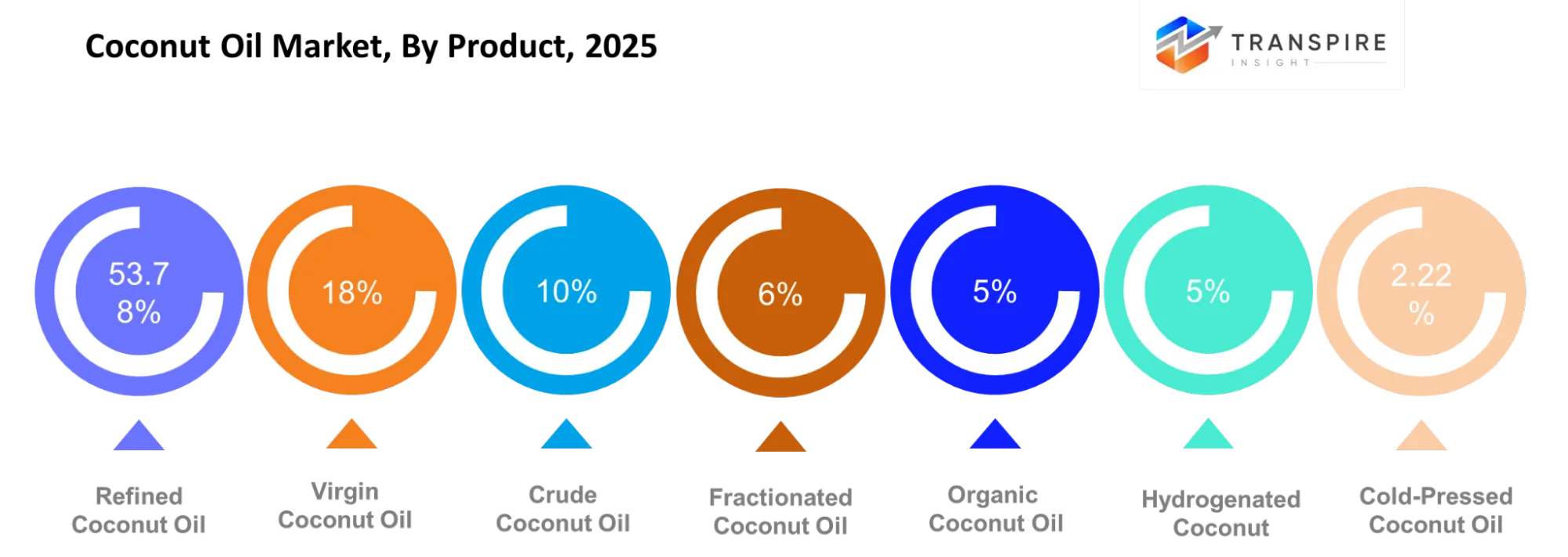
In the coconut oil sector, refined coconut oil claims the highest market share accounting for 53.78% of total revenue due to its higher demand from different industries including food and beverages, foodservice, bakeries, confectionaries, and food processing. The price of premium unrefined coconut oil is higher by 20–25% compared to the price of refined products due to the fact that this product retains its natural compounds and is targeted to high-end food and wellness consumers. The share of demand coming from the food and beverage industry equals 63.62% due to its wide application as cooking oils, bakery shortening, coatings in confectionery production, dairy alternatives, etc. The share of conventional coconut oil is 74.16% of the total coconut oil market, which is attributed to availability of supply chain and low price of production in addition to broad usage in different industries. Consumer buying behavior demonstrates that the attributes of clean-label and natural products have become key factors in the decision-making process regarding coconut oil purchases. Moreover, the expanding interest in dependable bulk supply contracts and long-term supplier relationships, especially among food producers, cosmetics companies, and industrial manufacturers looking for stable quality and supplies has become another major factor.
Who are the Key Players in the Coconut Oil Market and how do they compete?
Competitiveness in the worldwide coconut oil market is reliant on the manufacturers who are involved in the quality of the product, the processing technology, application-specific solutions, and the development of distribution networks. The competition in this form takes place not only in price but also in terms of such components as purity of the product, the ability to perform refining, and also organic certifications and sustainable sources.
Due to the wide variety of refined, virgin, organic, and specialty coconut oils, Cargill improves its position in the market. By developing quality coconut oil products for use in food, personal care, and industrial solutions, companies manage to stand out in comparison with other market players. Wilmar International enhances its position in the market of coconut oil, as it offers comprehensive solutions regarding the processing, refining, and distribution of refined coconut oil.
Top Companies in the Coconut Oil Market
- Archer-Daniels-Midland
- Cargill
- Bunge
- Marico
- Nutiva
- Dr. Bronner's
- Greenville Agro
- Royce Food Corporation
- Tantuco Enterprises
- Celebes Coconut Corporation
- HanCole Group
- KPL Oil Mills
- Sakthi Exports
- Nature's Oil
- Jedwards International
Market Segmentation
The Coconut Oil Market share is divided into five categories: By product type, nature, source, application and distribution channel.
The Refined Coconut Oil dominated the market, accounting for nearly 46% in 2025 and is expected to rise at a significant CAGR during the forecast period.
The Coconut Oil Market is segmented by product type into Refined Coconut Oil, Virgin Coconut Oil, Crude Coconut Oil, Fractionated Coconut Oil, Organic Coconut Oil, Hydrogenated Coconut Oil, Cold-Pressed Coconut Oil, Others. Among these, the Refined Coconut Oil segment dominated the market, accounting for nearly 46% in 2025 and expected to increase at a significant CAGR during the forecast period. The major reason the Refined Coconut Oil segment is leading in the market is because of its very widespread use. This includes its use in food processing, cooking, personal care, and industrial applications. Refined Coconut Oil has a neutral taste, longer than average shelf life, consistent quality and versatility which explain its strong demand among consumers and industries. The growing trend of health conscious consumption coupled with food and cosmetics industry expansion is boosting the Refined Coconut Oil Market growth.
The Conventional dominated the market, accounting for nearly 80% in 2025, and is expected to rise at a significant CAGR during the forecast period.
The Coconut Oil Market is segmented by nature into Conventional, Organic, Non-GMO, Fair Trade, Sustainable, Certified Organic, Specialty, Others), By Source (Wet Coconut, Dry Coconut, Copra, Fresh Coconut, Organic Coconut, Conventional Coconut, Hybrid Sources, Others. Among these, the Conventional segment dominated the market, accounting for nearly 80% in 2025 and expected to increase at a significant CAGR during the forecast period. The Traditional segment had the highest share in dominating the International Coconut Oil Market in 2025. This phenomenon could be attributed to the easy access to conventional coconut oil, proven supply chains, viable price points, and high consumer recognition. Conventional coconut oil is gaining ground in various applications including the food sector, cosmetics, personal care products, and in natural industries followed by its favorable manufacturing processes and production capacity keeping the price down.
The Food & Beverages dominated the market, accounting for nearly 40% in 2025 and is expected to rise at a significant CAGR during the forecast period.
The Coconut Oil Market is segmented by application into Food & Beverages, Cosmetics & Personal Care, Pharmaceuticals, Nutraceuticals, Animal Feed, Industrial Applications, Biofuel, Others. Among these, the Food & Beverages segment dominated the market, accounting for nearly 40% in 2025 and expected to increase at a significant CAGR during the forecast period. The sector of food and beverages ruled the market in 2025 due to rising demand for coconut oil from cooking, food processing, baking, confectionery, as well as in functional food applications. The scope of use, nutritional traits of coconut oil, its widespread acceptance among consumers, as well as its increasing usage in food packaging form important arguments in favor of the coconut oil market development in the forecast period.
Regional Segment Analysis of the Coconut Oil Market:
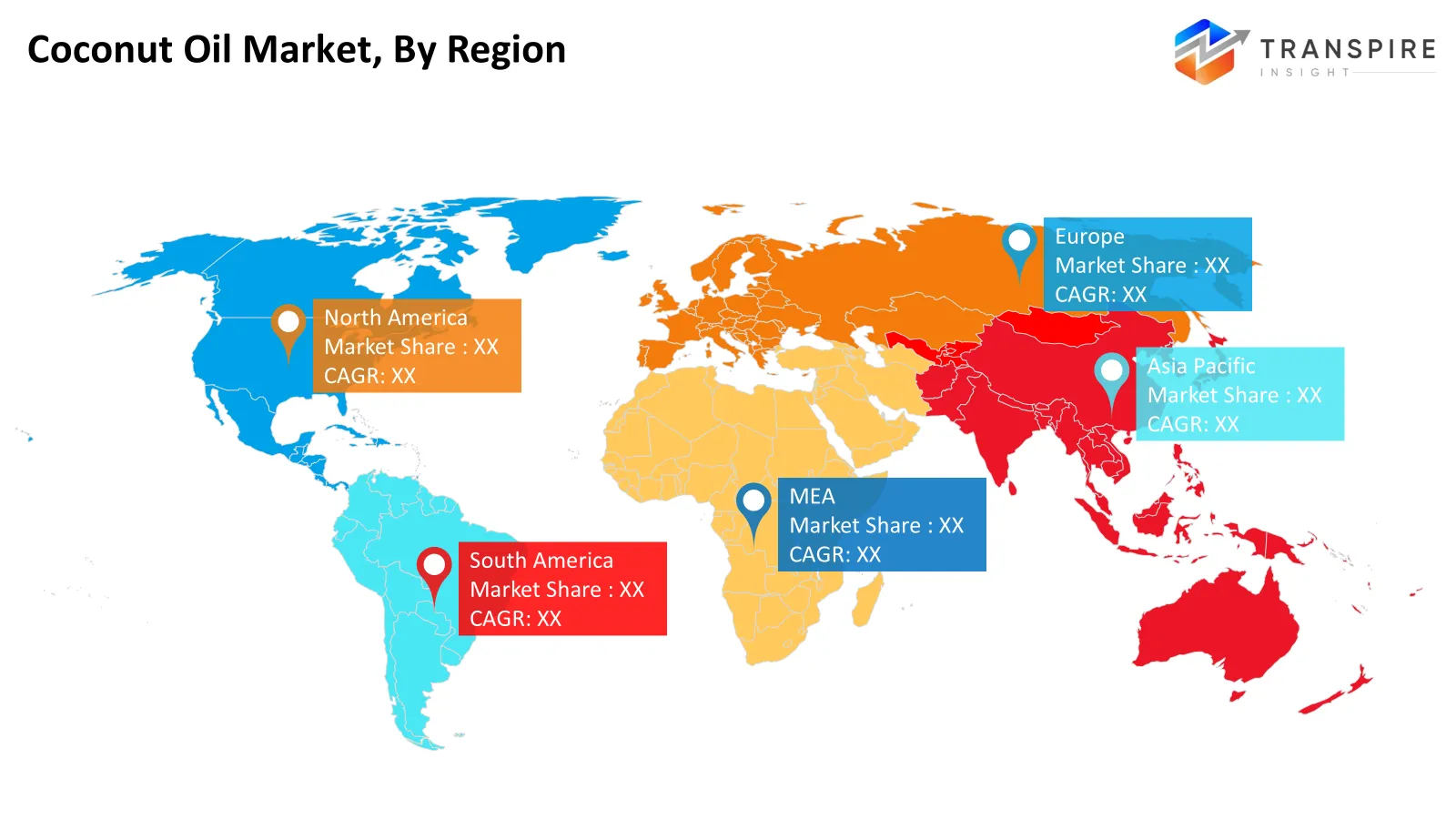
- North America (U.S., Canada, Mexico)
- Europe (Germany, France, U.K., Italy, Spain, Rest of Europe)
- Asia-Pacific (China, Japan, India, Rest of APAC)
- South America (Brazil and the Rest of South America)
- The Middle East and Africa (UAE, South Africa, Rest of MEA)
Asia Pacific is the fastest-growing region in the Coconut Oil Market during the period, holding around 40% share.
Asia Pacific is the fastest-growing region in the Coconut Oil Market during the forecast period, holding around 40% share during the forecast period. During the period, the most rapidly growing area in the Coconut Oil Market is Asia Pacific which holds about 40% share in the market. The growth in this region is attributed to the enormous production of coconuts, growth in food and beverage industries in the region, the requirement for natural and plant-based oils, increasing use of coconut oils in personal care products, high volume of exports, as well as increasing investment into operations such as coconut processing, refining, and production of value-added products.
North America is the fastest-growing region in the Coconut Oil Market during the period, holding roughly 20% share.
North America is expected to grow at a rapid CAGR in the Coconut Oil Market holding roughly 20% share during the forecast period. During the analyzed timeframe, North America emerged as the fastest-growing region in the Coconut Oil Market, accounting for around 20% of the total share. The growth of this region is attributed to several factors including the increase in popularity of natural as well as plant-based oils among consumers, the growing need for clean-label food items, the increasing demand for personal care applications, rising awareness about health and wellness, and the effective distribution networks supporting the adoption of coconut oil across several industries.
Europe is expected to grow at a rapid CAGR in theCoconut Oil Market, holding roughly 15% of the share during the forecast period.
Europe is expected to grow at a rapid CAGR in the Coconut Oil Market holding roughly 15% share during the forecast period. In the Coconut Oil Market, Europe is likely to achieve a high Compound Annual Growth Rate of growth with around 15% market share during the period in consideration. This growth can be attributed to the increasing utilization of natural and organic oils, extensive application of clean label food products, rise in personal care products usage, increased awareness of health and wellness, and growing demand for sustainable and plant-based ingredients in the European market.
Strategies for Market Growth in Non-Leading Regions:
The advancement of technologically advanced and broadly applicable coconut oil production and processing technologies will help medium and small processors. Policy makers will need to encourage coconut farming, processing of copra, and starting local coconut oil factories to decrease dependence on imports and cut down on production expenses. Building partnerships with local coconut farmers, food production companies, personal care brands and suppliers will make the penetration of coconut oil products into the market easier for producers. Educational training and skills enhancement are necessary to elevate coconut farming and production expertise among the processors. Additionally, flexible financing, long-term supply contracts, and co-packing will increase interest in coconut oil products and make them available in food, personal care and industrial segments. The implementation of joint projects of government and agricultural, food processing, and export programs as well as promoting online sales channels will help reach coconut oil products to customers.
Future Market Trends for the Coconut Oil Market: -
- Preference for Virgin and Organic Uses: Demand for unrefined and organic oils exceeds that for conventional ones.
- Photo Normalization: Supply shocks caused by climatic conditions cease and exports from Indonesia and the Philippines begin stabilizing.
- Price Competition: Closing price gaps with palm kernel oil enables active substitution and effective procurement practices.
- Supply Normalization: The end of restrictions in supply and high prices have resulted in stabilization of export supplies from major oil producing countries such as Indonesia and the Philippines.
Recent Development
- In May 2026: The release of Tastit Coconut Oil was announced by Tastit, showcasing product quality, taste and consumer attraction in popular cooking oil. The launch is an important event for the coconut oil market as it has implications for competition among local players who want to compete better in the market.
- In March 2026: Jay Parivartan India launched its Virgin Coconut Oil (200mL) SKU with an MRP of ₹225, which added to its portfolio and catered for the rising demand for virgin coconut oil in the Coconut Oil Market.
- In March 2026: The Indian Government announced more information about the Coconut Promotion Scheme, which is introduced in order to enable higher productivity and production of coconuts through better planting materials, rejuvenation of old trees, improved processing activities, and value addition, thereby promoting development of India's coconut sector and enhancing supply and processing capacities within the world coconut oil industry.
This study forecasts revenue at , regional and country levels from 2020 to 2033. Transpire Insights has segmented the Coconut Oil Market based on the below-mentioned segments:
Coconut Oil Market, By Product Type
- Refined Coconut Oil
- Virgin Coconut Oil
- Crude Coconut Oil
- Fractionated Coconut Oil
- Organic Coconut Oil
- Hydrogenated Coconut Oil
- Cold-Pressed Coconut Oil
- Others
Coconut Oil Market, By Nature
- Conventional
- Organic
- Non-GMO
- Fair Trade
- Sustainable
- Certified Organic
- Specialty
- Others
Coconut Oil Market, By Source
- Wet Coconut
- Dry Coconut
- Copra
- Fresh Coconut
- Organic Coconut
- Conventional Coconut
- Hybrid Sources
- Others
Coconut Oil Market, By Application
- Food & Beverages
- Cosmetics & Personal Care
- Pharmaceuticals
- Nutraceuticals
- Animal Feed
- Industrial Applications
- Biofuel
- Others
Coconut Oil Market, By Distribution Channel
- Supermarkets & Hypermarkets
- Specialty Stores
- Online Retail
- Pharmacies
- Foodservice
- Direct Sales
- Distributors
- Others
Coconut Oil Market, By Regional Analysis
North America
- US
- Canada
- Mexico
Europe
- Germany
- UK
- France
- Italy
- Spain
- Russia
- Rest of Europe
Asia Pacific
- China
- Japan
- India
- South Korea
- Australia
- Rest of Asia Pacific
South America
- Brazil
- Argentina
- Rest of South America
Middle East & Africa
- UAE
- Saudi Arabia
- Qatar
- South Africa
- Rest of the Middle East & Africa
Frequently Asked Questions
Find quick answers to common questions.
Rising demand for natural, clean-label, plant-based oil across food, cosmetics, nutraceuticals, and personal care applications is driving market growth.
Refined Coconut Oil dominates due to its versatility, consistent quality, neutral taste, extended shelf life, and widespread industrial applications.
Asia Pacific leads, supported by abundant coconut production, processing infrastructure, exports, growing consumption, and expanding value-added coconut oil applications.
Food and Beverages leads due to extensive coconut oil usage in cooking, baking, confectionery, food processing, and functional food products.
Key trends include virgin and organic oil demand, clean-label products, sustainable sourcing, advanced processing, digital traceability, and value-added derivatives.
- Archer-Daniels-Midland
- Cargill
- Bunge
- Marico
- Nutiva
- Dr. Bronner's
- Greenville Agro
- Royce Food Corporation
- Tantuco Enterprises
- Celebes Coconut Corporation
- HanCole Group
- KPL Oil Mills
- Sakthi Exports
- Nature's Oil
- Jedwards International
About the Authors

Chetan Dhatrak
I’m Chetan Dhatrak, a Senior Research Analyst at Transpire Insight, specializing in the Consumer Goods, Foods and Beverages industry. I focus on analyzing market trends, consumer behavior, competitive landscapes, and industry developments to deliver accurate, data-driven insights. My research at Transpire Insight is built on credible sources and in-depth analysis, helping businesses and readers better understand market dynamics, emerging opportunities, and evolving consumer preferences. I’m committed to creating reliable, well-researched content that supports informed decision-making and reflects the latest developments in the consumer goods and food & beverage sectors.

Chakradhar Khansole
Chakradhar serves as the Research Director at Transpire Insight, bringing over 8 years of experience in technology, innovation, and strategic market intelligence. He specializes in transforming complex market data into actionable business insights that enable organizations to make informed, growth-oriented decisions. Recognized for his strategic vision and analytical expertise, Chakradhar leads high-impact research initiatives, delivering comprehensive market assessments, competitive intelligence, and forward-looking industry analysis.
Recently Published Reports
-
Apr 2026
Baby Infant Formula Market
Baby Infant Formula Market Size, Share & Analysis Report By ype (Infant Milk, Follow On Milk, Specialty Baby Milk, Growing-Up Milk), By Ingredient (Carbohydrate, Fat, Protein, Minerals, Vitamins, and Others), By Product Form (Powder, Liquid, and Ready-to-feed), By Distribution Channels (Supermarket/Hypermarket, Specialty Store, Pharmacies, Online Retail, and Others), and Geography (North America, Europe, Asia-Pacific, Middle East and Africa, South and Central America), 2021 - 2031
-
Apr 2026
Edible Insects for Animal Feed Market
Edible Insects for Animal Feed Market Size, Share & Analysis Report By Type (Insect Powder, Insect Meal, Insect Bar, Insect Paste, Insect Oil, and Others), By Insect Type (Beetles, Cricket, Caterpillar, Hymenoptera, Orthoptera, Tree Bugs, and Others), By Application (Livestock, Pet Food, and Aquaculture), By Livestock Type (Poultry, Swine, and Others), and Geography (North America, Europe, Asia-Pacific, Middle East and Africa, South and Central America), 2021 - 2031
-
Apr 2026
Food Industry Disinfection and Bacterial Control Market
Food Industry Disinfection and Bacterial Control Market Size, Share & Analysis Report By Type (Chemical Disinfectants, Physical Disinfectants, and Biocides and Antimicrobials), By Application (Food Processing Equipment Surface Disinfection, Food Preparation Areas Surface Disinfection, Storage Areas Surface Disinfection, Anti-microbial Coatings Food Preservation, and Preservative Solutions Food Preservation), By End User (Meat and Poultry Processing, Dairy Processing, Seafood Processing, Bakery and Confectionery, Restaurants and Commercial Kitchens, and Food Service Providers), By Sales Channel (Online, Offline), and Geography (North America, Europe, Asia-Pacific, Middle East and Africa, South and Central America), 2021 - 2031
-
May 2026
Freeze Dried Food Market
Freeze Dried Food Market Size, Share & Analysis Report By Product Type (Fruits, Vegetables, Freeze-Dried Dairy Products, Freeze-Dried Meat and Seafood, Freeze-Dried Pet Food, and Prepared Meal), By Nature (Organic, and Conventional), By Form (Powdered, Granules, and Diced), By End Use (Breakfast Cereals, Dairy Products, Bakery & Confectionery, Nutritional Bars & Supplements, Powdered Beverages, Snacks, and Retail (Household)), and Geography (North America, Europe, Asia-Pacific, Middle East and Africa, South and Central America), 2021 - 2031