
Market Summary
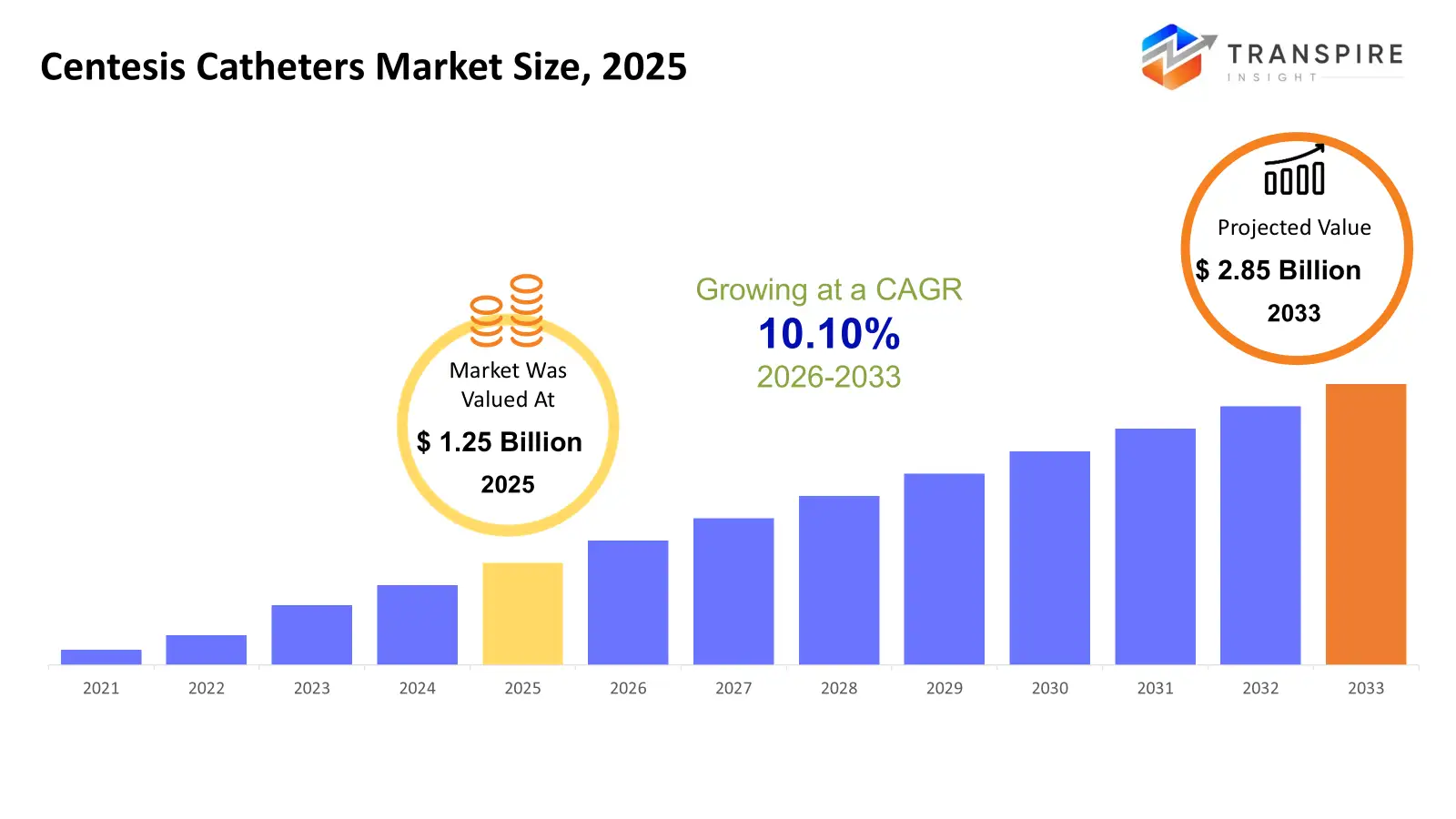
The global Centesis Catheters market size was valued at USD 1.25 billion in 2025 and is projected to reach USD 2.85 billion by 2033, growing at a CAGR of 10.10% from 2026 to 2033. The Centesis Catheters market is growing steadily due to an increase in diseases such as liver cirrhosis, cancer, and heart failure that need repeated draining of fluids from the body. The market growth is also attributable to the rise in minimally invasive medical procedures, increased use of outpatient facilities for providing medical care, and increased use of ultrasound-guided centesis to provide maximum safety to patients during such medical procedures.
Market Size & Forecast
- 2025 Market Size: USD 1.25 Billion
- 2033 Projected Market Size: USD 2.85 Billion
- CAGR (2026-2033): 10.10%
- North America: Largest Market in 2026
- Asia Pacific: Fastest Growing Market
To learn more about this report,  Download Free Sample Report
Key Market Trends Analysis
- Growth in the region of North America reflects a healthy and consistent pattern, enabled by large volumes of medical procedure usage, robust medical reimbursement mechanisms, and the large and increasing utilization of minimally invasive drainage technologies in both inpatient and outpatient settings.
- The United States continues to dominate as the single biggest contributor due to high incidence rates of chronic liver diseases and oncology-related effusions, as well as access to advanced imaging and preferences from its physicians for safety-engineered centesis catheters.
- Asia Pacific represents the fastest-growing geography due to the expansion of healthcare infrastructure in the Asia Pacific, the progress of health awareness regarding the need for interventions, and the burgeoning incidence of chronic diseases in large population bases of China and India.
- On the other hand, small-bore centesis catheters are seen to be emerging as the most prominent product in the segment, as there is a growing preference for minimally invasive options alongside a reduction in complications, recovery time, as well as a rise in demand for more outpatient services that align closely to the value-based healthcare model
- Paracentesis continues to be the major procedural service for this PSA due to the global increase in the prevalence of ascites related to liver cirrhosis and oncology procedures, ranking as a high frequency service for both hospital and ambulatory settings.
- Therapeutic applications make up the largest proportion as centesis catheters are considered an essential medical device to provide relief from symptoms of chronic as well as acute fluid accumulation, with repeat use also posing a potential to maintain constant consumption levels.
- Hospitals maintain their position in end-user uptake because of increased case complexity, availability of advanced imaging solutions, and their high concentration of critical care and oncology patients with increased need to perform frequency-based centesis procedures.
So, the market for Centesis Catheters is a group of medical devices designed to remove body fluids from a particular body area for purposes of diagnosis, treatment, and palliation. This type of catheter is a critical component of many clinical activities aimed at draining body fluids, including paracentesis, thoracentesis, arthrocentesis, among others. As a result, the market comprises a variety of catheters, ranging from large and small catheters. Market factors have an important association with epidemiological trends and factors, especially rising trends in patients suffering from various diseases, i.e., liver diseases, cardiovascular diseases, cancer, and inflammation-related conditions affecting joints. Advances in technological capabilities have assisted in ensuring safety and increased precision, thus allowing for increased confidence among practitioners to use these devices. Further, as more procedures become available through outpatient services, settings have increased beyond hospital environments. From a commercial point of view, the market sees recurring demand as many conditions require repeated fluid drainage over variable time frames. While developed regions contribute significant revenue to the market due to high rates of procedure and premium-priced devices, the emerging markets are becoming very influential with time, considering improving healthcare access and rising procedural awareness. Together, these aspects would substantially support the continuous moderate growth prospects for the global Centesis Catheters market.
Centesis Catheters Market Segmentation
By Product Type
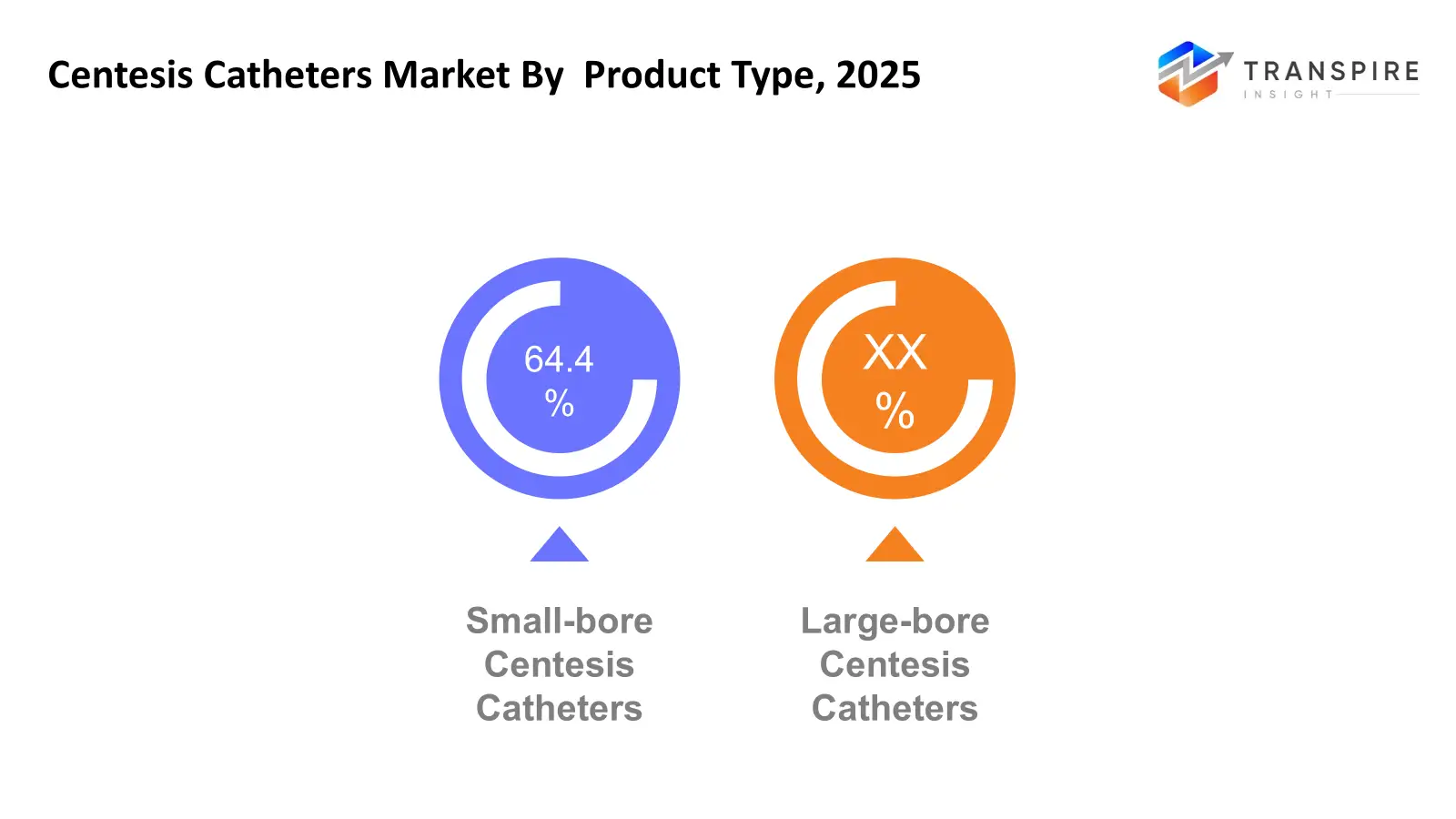
- Small-bore Centesis Catheters
Such a segment is gaining momentum due to the rise in the popularity of minimally invasive treatments as it reduces patient discomfort to a great degree. Devices with small-bore equipment tend to gain prominence in interventional radiology as the application demands precision. Furthermore, the infection control rates for such devices would be lower. Their adoption would be greater in the future as opposed to large-bore devices.
- Large-bore Centesis Catheters
Large-bore catheters continue to remain a substantial market contributor due to their efficacy in the rapid evacuation of fluids in patients with large volumes of ascites or pleural effusions. Large-bore catheters are essential in acute care and emergency medicine within intensive care units and oncology departments in hospitals.
To learn more about this report, Download Free Sample Report
By Procedure
- Paracentesis
This model creates a dominant pattern as a result of the large prevalence of diseases such as liver cirrhosis and ascites necessitating fluid tapping for ascites. Paracentesis is the most commonly used centesis technique worldwide.
- Thoracentesis
This method, which involves the pleural fluid aspiration procedure, necessitates a demand for smaller- as well as large-bore catheters in patient populations suffering from significant rates of pulmonary disease or cancer.
- Arthrocentesis
The procedure is typically used in joint fluid aspiration, analysis, and therapeutic relief. It helps in the adoption of image guidance in small-bore cath use, particularly in orthopedic management.
- Amniocentesis
Despite its greater specialization, this section of amniocentesis remains a niche with demand relating to utilization of obstetric care services.
- Other
This bucket also encompasses less common yet clinically relevant procedures (like pericardiocentesis); these will provide depth to the market because of the relevance of the procedure.
By Application
- Diagnostic Applications:
Diagnostic use is another key driver as more clinicians recognize the potential provided by using centesis catheters to accurately sample various physiological fluids. Strong growth is also witnessed due to the expanded scope in the field of diagnostic imaging as well as the capabilities in the realm of Point-of-Care Ultrasound.
- Therapeutic Applications
Therapeutic fluid drainage still lies within the core area of interest, especially in the treatment of effusion that leads to manifestations of certain associated symptoms such as dyspnea and abdominal distress. It is an area of interest with the increased incidence of an aging population and a rise in incidence of chronic diseases.
- Palliative Care Application
Palliative is smaller but growing as a category, and fluid management is seen as a critical component of improving quality of life for patients in advanced disease stages, such as in cancer and liver disease.
By End User
- Hospitals
The hospital segment is the largest end user and accounts for most of these revenues through its demand for centesis procedures and its capabilities in performing procedures and using imaging facility and sterile environment.
- Ambulatory Surgical Centers (ASCs)
ASCs are increasing their market shares as more fluid draining is performed as an outpatient procedure. Cost is the factor that is helping increase the procedure within the ASC market.
- Other End Users
This category includes specialty clinics and diagnostic centers where centesis catheters are used to facilitate specific procedures on patients, and their contribution is on an increase as decentralized healthcare models become more prominent.
Regional Insights
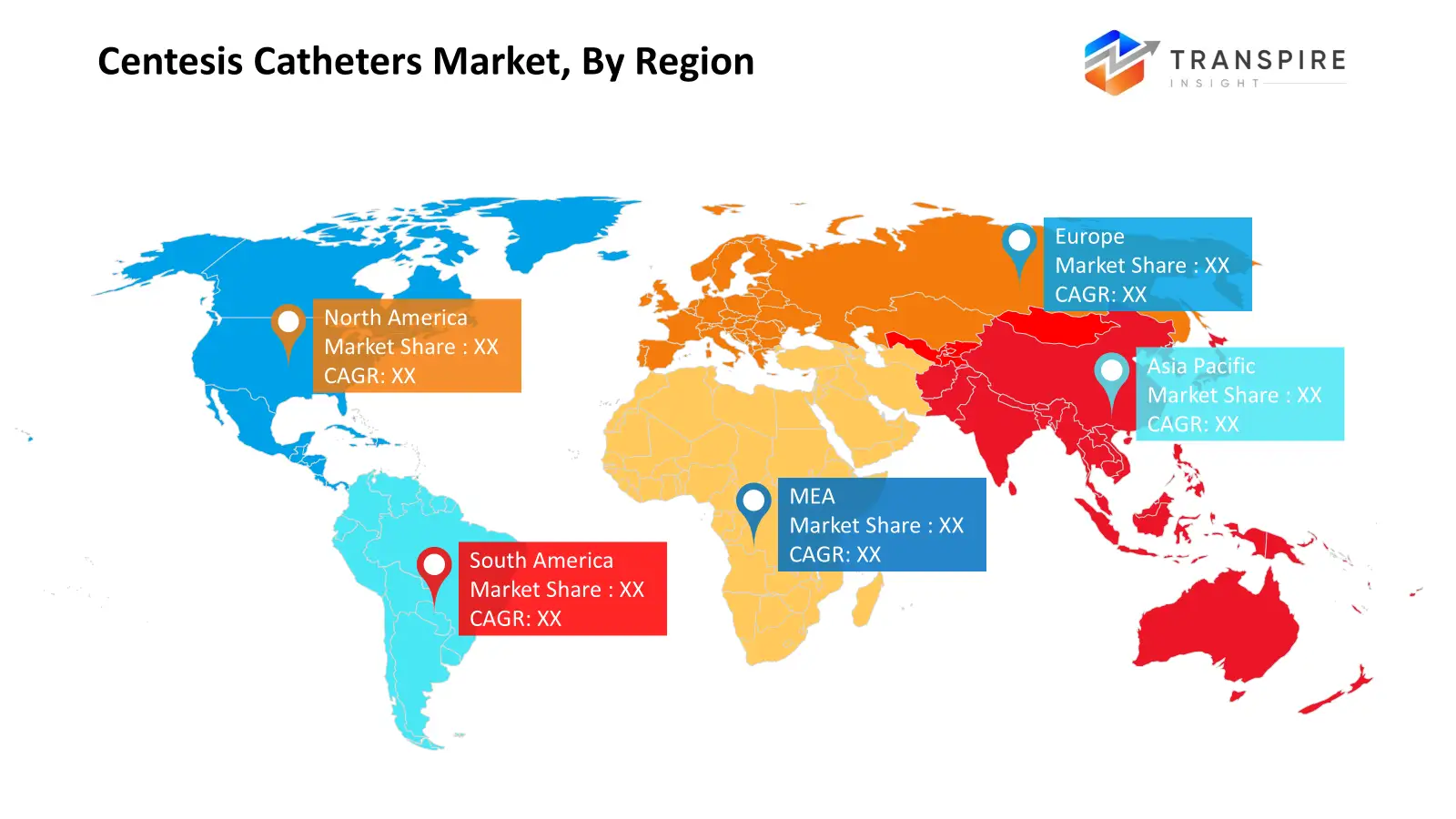
The North American region, that is the United States, Canada, and Mexico, constitutes a premium geographical segment that boasts advanced healthcare infrastructure, strong mechanisms of reimbursement, and significant procedure volumes. The drug will have strong demand in the United States, followed by Canada, while Mexico will be growing gradually through its modernization process. Europe, covering Germany, the United Kingdom, France, Spain, Italy, and Rest of Europe, refers to a matured regional drug market that has witnessed universal healthcare infrastructure along with the trend of conducting procedures in an outpatient manner. Asia Pacific, incorporating Japan, China, Australia & New Zealand, South Korea, India, and the Rest of Asia Pacific, represents the highest growth market. Hospitals in the region experience healthy growth in terms of chronic diseases afflicting the patients. Moreover, the interventional procedures have become more affordable. Altogether, the region presents promising growth. Japan and Australia exhibit outstanding procedural quality. South America, incorporating Brazil and Argentina, amongst other countries in the region, depicts moderate growth owing to advancements in diagnosing capabilities along with the gradual adoption of advanced cath lab technologies.
As mentioned above, the market segment for the region including Saudi Arabia, the United Arab Emirates, South Africa, and Rest of the Middle East & Africa is smaller in market size while revealing robust market growth trends. Investments in healthcare, increase in private hospital penetration, and procedure awareness, especially in Tier 1 and Tier 2 countries, are boosting the market scenario positively.
To learn more about this report, Download Free Sample Report
Recent Development News
- July 2025, Teleflex Incorporated finalized its acquisition of substantially all of Biotronik's Vascular Intervention business in July 2025, adding a broad portfolio of peripheral and coronary catheter products to strengthen its global interventional access offering and enhance its presence in cath labs globally. This strategic move reinforces the expanded product reach across catheterization procedures and supports the growth strategy of Teleflex in vascular and interventional segments.
- In January 2025, Teleflex announced the signing of a major contract with Vizient for its portfolio of vascular access catheters, including central venous or arterial catheters. This contract will seek to extend access to Teleflex’s line of catheter-based equipment to more than 65% of the US acute care provider base.
|
Report Metrics |
Details |
|
Market size value in 2025 |
USD 1.25 Billion |
|
Market size value in 2026 |
USD 1.45 Billion |
|
Revenue forecast in 2033 |
USD 2.85 Billion |
|
Growth rate |
CAGR of 10.10% from 2026 to 2033 |
|
Base year |
2025 |
|
Historical data |
2021 – 2024 |
|
Forecast period |
2026 – 2033 |
|
Report coverage |
Revenue forecast, competitive landscape, growth factors, and trends |
|
Regional scope |
North America; Europe; Asia Pacific; Latin America; Middle East & Africa |
|
Country scope |
United States; Canada; Mexico; United Kingdom; Germany; France; Italy; Spain; Denmark; Sweden; Norway; China; Japan; India; Australia; South Korea; Thailand; Brazil; Argentina; South Africa; Saudi Arabia; United Arab Emirates |
|
Key company profiled |
AngioDynamics, Inc., Teleflex Incorporated, Merit Medical Systems, Becton, Dickinson and Company, Cook Medical, Medtronic plc, Avanos Medical Devices, Cardinal Health, Inc., B. Braun Melsungen AG, Argon Medical Devices, Boston Scientific Corporation, Medical Components, Inc., Redax S.p.A., Galt Medical Corp., Blue Neem Medical Devices Pvt. Ltd. |
|
Customization scope |
Free report customization (country, regional & segment scope). Avail customized purchase options to meet your exact research needs. |
|
Report Segmentation |
By Product Type (Small-bore Centesis Catheters, Large-bore Centesis Catheters), By Procedure (Paracentesis, Thoracentesis, Arthrocentesis, Amniocentesis, Other), By Application (Diagnostic Applications, Therapeutic Applications, Palliative Care Applications) and By End User (Hospitals, Ambulatory Surgical Centers (ASCs), Other End Users) |
Key Centesis Catheters Company Insights
AngioDynamics, Inc., company has been able to emerge as an industry leader in the Centesis Catheters industry through its commitment to innovative technology while leveraging its strong portfolio of minimally invasive drainage products that can be used in therapeutic and/or diagnostic procedures. It has gained significant trust in the acute or outpatient settings with the strong performance characteristics and safety attributes that satisfy clinician preferences. The firm has been successful in consolidating new geographic opportunities, particularly in North America and new Europe, through targeted investment in research, development, and/or new business relationships that have contributed significantly to the establishment of their strong position in the Centesis Catheters industry.
Key Centesis Catheters Companies:
- AngioDynamics, Inc.
- Teleflex Incorporated
- Merit Medical Systems
- Becton, Dickinson and Company
- Cook Medical
- Medtronic plc
- Avanos Medical Devices
- Cardinal Health, Inc.
- Braun Melsungen AG
- Argon Medical Devices
- Boston Scientific Corporation
- Medical Components, Inc.
- Redax S.p.A.
- Galt Medical Corp.
- Blue Neem Medical Devices Pvt. Ltd.
Global Centesis Catheters Market Report Segmentation
By Product Type
- Small-bore Centesis Catheters
- Large-bore Centesis Catheters
By Procedure
- Paracentesis
- Thoracentesis
- Arthrocentesis
- Amniocentesis
- Other
By Application
- Diagnostic Applications
- Therapeutic Applications
- Palliative Care Applications
By End User
- Hospitals
- Ambulatory Surgical Centers (ASCs)
- Other End Users
Regional Outlook
- North America
- United States
- Canada
- Mexico
- Europe
- Germany
- United Kingdom
- France
- Spain
- Italy
- Rest of Europe
- Asia Pacific
- Japan
- China
- Australia & New Zealand
- South Korea
- India
- Rest of Asia Pacific
- South America
- Brazil
- Argentina
- Rest of South America
- Middle East & Africa
- Saudi Arabia
- United Arab Emirates
- South Africa
- Rest of the Middle East & Africa
Frequently Asked Questions
Find quick answers to common questions.
The approximate Centesis Catheters Market size for the market will be USD 2.85 billion in 2033.
Key segments for the Centesis Catheters Market are By Product Type (Small-bore Centesis Catheters, Large-bore Centesis Catheters), By Procedure (Paracentesis, Thoracentesis, Arthrocentesis, Amniocentesis, Other), By Application (Diagnostic Applications, Therapeutic Applications, Palliative Care Applications) and By End User (Hospitals, Ambulatory Surgical Centers (ASCs), Other End Users).
Major Centesis Catheters Market players are AngioDynamics, Inc., Teleflex Incorporated, Merit Medical Systems, Becton, Dickinson and Company, Cook Medical.
The North America region is leading the Centesis Catheters Market.
The CAGR of the Centesis Catheters Market is 10.10%.
- AngioDynamics, Inc.
- Teleflex Incorporated
- Merit Medical Systems
- Becton, Dickinson and Company
- Cook Medical
- Medtronic plc
- Avanos Medical Devices
- Cardinal Health, Inc.
- Braun Melsungen AG
- Argon Medical Devices
- Boston Scientific Corporation
- Medical Components, Inc.
- Redax S.p.A.
- Galt Medical Corp.
- Blue Neem Medical Devices Pvt. Ltd.
Recently Published Reports
-
Apr 2026
Biosimilars Market
Biosimilars Market By Product Type (Monoclonal Antibodies, Recombinant Hormones, Erythropoietin, G-CSF, Others), By Indication (Oncology, Autoimmune Diseases, Blood Disorders, Diabetes, Others), By Manufacturing Type (In-House Manufacturing, Contract Manufacturing), By Distribution Channel (Hospital Pharmacies, Retail Pharmacies, Online Pharmacies), By Industry Analysis, Size, Share, Growth, Trends, and Forecasts 2021-2033
-
Apr 2026
Gastrointestinal Endoscopy Market
Gastrointestinal Endoscopy Market By Type (Rigid Gastrointestinal Endoscope, Flexible Gastrointestinal Endoscopes, Disposable Gastrointestinal Endoscope), By Procedure Type (Colonoscopy, Gastroscopy, Duodenoscopy, Enteroscopy, Flexible Sigmoidoscopy, Others), By Application (Diagnosis, Treatment), By End-Users (Hospitals, Ambulatory Surgical Centers, Specialty Clinics, Laboratories, Others), By Industry Analysis, Size, Share, Growth, Trends, and Forecasts 2021-2033
-
Apr 2026
Rare Inherited Metabolic Disorder Drug Market
Rare Inherited Metabolic Disorder Drug Market By Drug Class (Enzyme Replacement Drugs, Gene Therapy Drugs, Substrate Reduction Drugs, Small Module Drugs, Protein Drugs), By Route of Administration(Parenteral, Oral, Intrathecal), By Clinical Development (Marketed Drugs, Late Stage Clinical Phase III, Early Stage Clinical Phase I-II, Preclinical Candidates), By Indication (Lysosomal Storage Disorders, Urea Cycle Disorders, Amino Acid Metabolic Disorders, organic Acidemias, Peroximal Disorders), By Industry Analysis, Size, Share, Growth, Trends, and Forecasts 2021-2033
-
Jan 2026
Pharmaceutical Cleanroom Technology Market
Pharmaceutical Cleanroom Technology Market By Product (Equipment, Consumables, Services); By Cleanroom Type (Standard Cleanrooms, Modular Cleanrooms); By End Use (Pharmaceutical Companies, Biotechnology Companies), By Industry Analysis, Size, Share, Growth, Trends, and Forecasts 2021-2033