

Market Summary
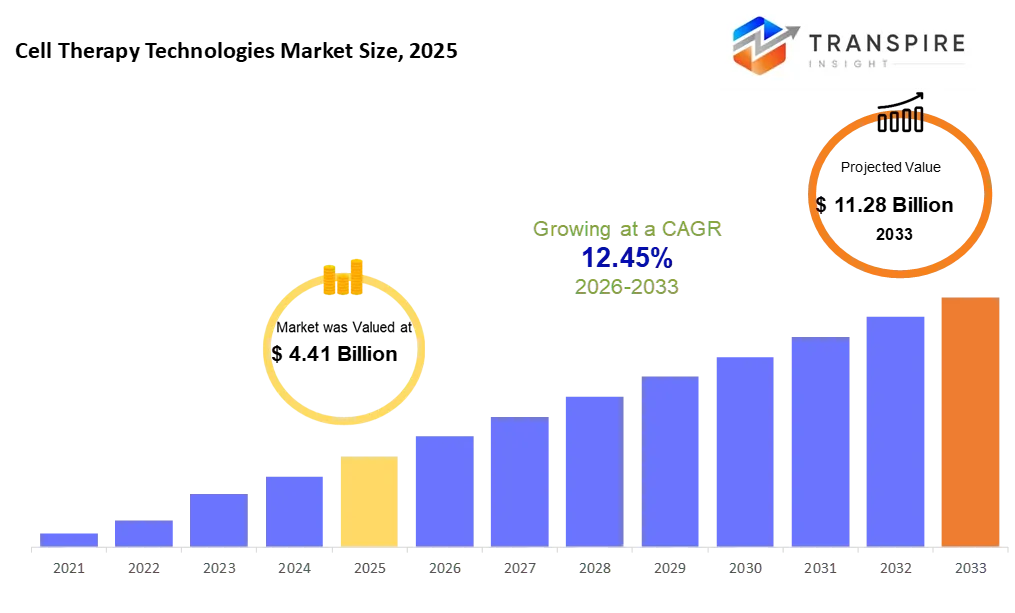
The global Cell Therapy Technologies market size was valued at USD 4.41 billion in 2025 and is projected to reach USD 11.28 billion by 2033, growing at a CAGR of 12.45% from 2026 to 2033. This robust growth is driven by the rapid expansion of cell-based therapies in oncology and regenerative medicine, along with increasing clinical trial activity worldwide. In addition, rising investments in advanced cell processing, expansion, and preservation technologies, coupled with the shift toward automated and closed-system manufacturing, are accelerating adoption across research institutions, biopharmaceutical companies, and CDMOs.
Market Size & Forecast
- 2025 Market Size: USD 4.41 Billion
- 2033 Projected Market Size: USD 11.28 Billion
- CAGR (2026-2033): 12.45%
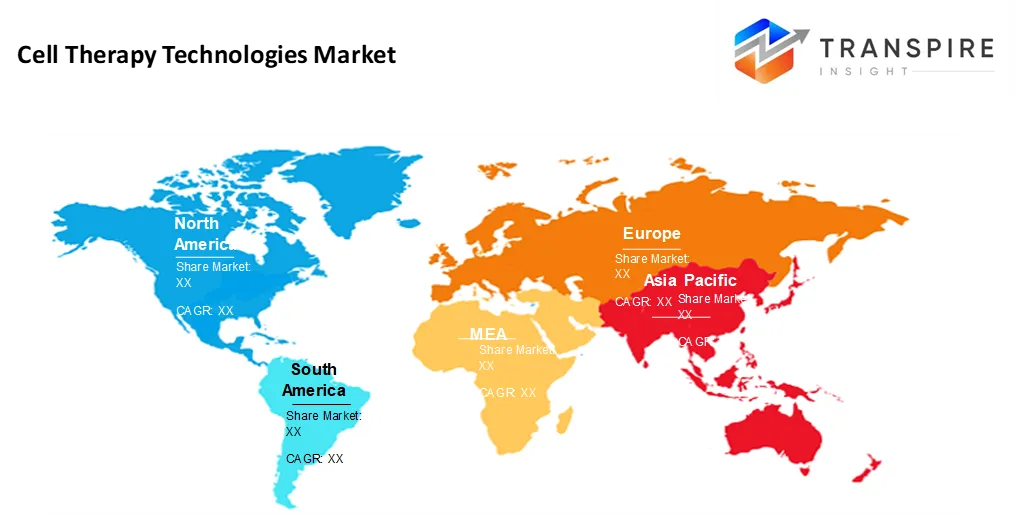
- North America: Largest Market in 2026
- Asia Pacific: Fastest Growing Market
To learn more about this report,  Download Free Sample Report
Key Market Trends Analysis
- The North American market share is estimated to be approximately 39% in 2026. Ahead of others, North America holds the top position in cell therapy tech due to solid medical systems. Supportive rules help shape progress across the region. Research funding flows heavily there, pushing treatments from labs into real use. Growth thrives where institutions and policies align closely.
- In the United States, chronic illness rates create a steady demand, while strong venture capital support fuels progress. Clinical trials move fast across the region, pushing innovation ahead. Growth gains momentum as medical research expands its reach.
- Healthcare budgets are climbing across the Asia Pacific, fueling momentum. Government backing gives biotech room to stretch. Labs and production sites multiply as trials grow more common. This region now leads in the pace of advancement
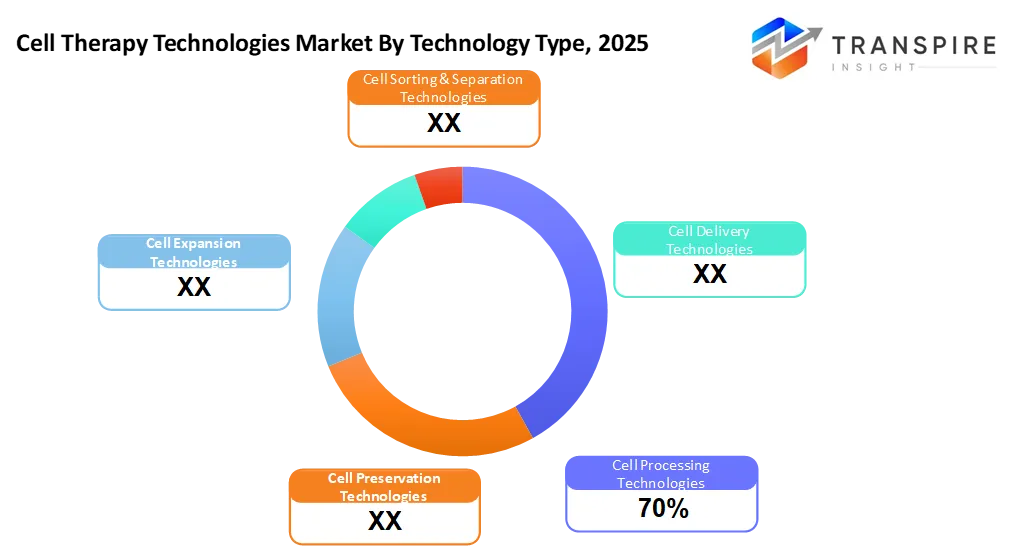
- Cell Processing Technologies share approximately 72% in 2026. Fresh advances in cell handling rely more on sealed units that run with little human touch. These setups follow strict rules while cutting down errors during medical procedures.
- Stem cell kinds drive fast progress, simply because they offer wide healing uses. Their role in fixing body tissues keeps drawing strong research interest. Trials happen often, showing how deeply scientists are exploring their effects. Progress moves quickly when fresh methods meet real medical needs.
- Even though newer methods are emerging, autologous cell therapy still leads because it uses a person's own cells. This cuts down on immune reactions that can cause complications. Doctors prefer it when tailoring care to individual patients. Its reliability keeps it widely used across clinics today.
- Cancer treatment drives need now, due to growing study support plus a steady flow of new cell-based options in trials.
From gathering cells to delivering treatments, tools that handle cell growth, storage, separation, and transfer play a central role in making cell therapies possible. Processing methods evolve as more therapies move into large-scale production. Quality control tightens when regulations become tougher. Instead of just one step, each phase relies on precise equipment to keep results consistent. As demand rises, systems must adapt without losing accuracy or safety.
Fueled by a surge in cell-focused therapies for cancer, tissue repair, and immune disorders, market needs keep climbing. More clinical studies are underway, wider acceptance of cutting-edge treatments like CAR-T and stem cells, along with a stronger push for tailored medical approaches, these factors together increase the need for better tools to grow and handle cells. On top of that, drug makers now place greater weight on methods delivering steady results and healthier living cells.
New tech tools play a big role. Closed systems now handle production without open exposure, cutting down on errors. Machines guided by smart algorithms keep close watch during processes, spotting issues before they grow. Better ways to freeze cells mean samples stay stable longer than before. Fewer contaminants show up because of these shifts. Results become more consistent across different batches. Scaling up becomes easier when machines work together seamlessly. Labs focused on discovery are shifting toward these setups. Drug developers see value in smoother workflows. Outsourced manufacturers follow similar paths. Integration is not forced; it just makes daily operations less messy.
More money flowing in, companies teaming up, along with bigger labs for making cell therapies, push the market forward. Backed by government funds and private cash, efforts in healing through regeneration grow, whereas contract developers boost their output to handle larger orders. With rules getting stricter and more products rolling out, the need remains high for smart, rule-following tech across the years ahead.
Cell Therapy Technologies Market Segmentation
By Technology Type
- Cell Processing Technologies
Working with cells means pulling them out, adjusting them carefully, then getting them ready in a clean setup so they can help treat illness.
- Cell Preservation Technologies
Keeping cells alive over time happens by freezing them carefully. Moving them safely relies on staying very cold the whole way. Freezing methods lock in cell health. Temperature-controlled shipping keeps things stable. These approaches help preserve living cells for later use.
- Cell Expansion Technologies
Growing cells in big numbers gets easier with these tools. Still, keeping them healthy matters just as much. Quality stays high even when production ramps up. Effectiveness for treatment does not drop off. Methods improve how fast they multiply without cutting corners.
- Cell Sorting & Separation Technologies
Sorting cells happens by spotting specific traits, either physical or biological. One way uses tiny features that make certain cells stand out. Methods differ but aim to pull just the right ones. Some approaches rely on surface markers, others on size or weight. Each technique filters cells based on distinct signals. Isolation becomes possible through these identifying clues. Target groups emerge after running such processes.
- Cell Delivery & Separation Technologies
Getting cells where they need to go relies on smart delivery methods. Hitting the right spot matters just as much as the treatment itself. Precision helps avoid damage along the way. These tools guide cells safely through the body.
To learn more about this report, Download Free Sample Report
By Cell Type
- Stem Cell
Stem cells pop up a lot in healing treatments because they can renew themselves while turning into different cell types.
- Non-Stem Cell
Immunotherapies often rely on non-stem cells, especially those using T-cells or NK cells. These approaches tap into specific immune responses without involving stem cell sources.
By Therapy Type
- Autologous Cell Therapy
From their body, one kind of therapy takes cells. This method lowers the chances that the immune system will react badly. Matching well with treatments is easier when using what already belongs inside.
- Allogenic Cell Therapy
Someone else’s cells go into allogenic therapy. These come from a donor, not the patient. Ready-made treatments become possible this way. Manufacturing can reach more people at once. The supply works like a shelf-stocked product. Availability improves with this approach.
By Application
- Oncology
Cancer care leads the way because more people now use cell-focused immune therapies like CAR-T. These treatments are changing how we fight disease.
- Cardiovascular Diseases
Heart conditions involving damage to muscle tissue might benefit from treatments aimed at healing those areas. Ways exist to support better performance of the organ after injury. Some methods focus on restoring cells that are no longer working properly.
- Neurological Disorders
When nerves need repair, it helps them grow back. For issues that break down brain or spine tissue over time, it plays a role in care.
- Musculoskeletal Disorders
That therapy applies here. Cartilage healing takes place, too. Soft tissues respond well to this treatment approach.
- Autoimmune Disease
When the body attacks itself, this helps calm the reaction. It slows down how fast things get worse by easing swelling and discomfort. The way it works focuses on balance, not blocking everything outright.
- Others
Skin conditions, issues with metabolism, and also uncommon illnesses are used too.
Regional Insights
Ahead of others, North America stands in the Cell Therapy Technologies field because labs thrive there. Medical systems are built to handle new treatments fast. Trials happen often across hospitals and clinics. Automation in handling cells is already a common practice. Closed systems keep processes safe and repeatable every time. Approval paths from regulators help speed up launches. Drug makers work closely with scientists on real-world solutions. Equipment suppliers join these efforts smoothly. Progress moves quickly when teams align like this.
What stands out in Europe is its large piece of the market, fueled by stronger public spending on regenerative treatments, expanding university-led studies, and rules that back cutting-edge medical therapies gaining ground. Germany, along with the United Kingdom and France, now uses cell growth, storage, and transfer methods more widely seen in labs and hospitals alike. Another shift unfolding: money flowing into building homegrown factories capable of making cell-based medicines at scale.
Growth here outpaces elsewhere during the coming years, due to stronger medical systems, more money flowing into biotech ventures, and fewer delays in launching studies on cell treatments. Backing from authorities in places like China, Japan, and South Korea pushes regenerative science forward. Clear rules plus steady grants make progress possible. On top of that, local contract developers joining trials means therapies move faster from lab to clinic, especially where production stays lean and affordable.
To learn more about this report, Download Free Sample Report
Recent Development News
- October 27, 2025 – KFSHRC launched the first facility for Gene and Cell Therapy manufacturing in Saudi Arabia.
- March 17, 2025 – AstraZeneca Acquired EsoBiotech to advance cell therapy.
(Source: https://www.astrazeneca.com/media-centre/press-releases/2025/astrazeneca-to-acquire-esobiotec.html
|
Report Metrics |
Details |
|
Market size value in 2025 |
USD 4.41 Billion |
|
Market size value in 2026 |
USD 4.96 Billion |
|
Revenue forecast in 2033 |
USD 11.28 Billion |
|
Growth rate |
CAGR of 12.45% from 2026 to 2033 |
|
Base year |
2025 |
|
Historical data |
2021 – 2024 |
|
Forecast period |
2026 – 2033 |
|
Report coverage |
Revenue forecast, competitive landscape, growth factors, and trends |
|
Regional scope |
North America; Europe; Asia Pacific; Latin America; Middle East & Africa |
|
Country scope |
United States; Canada; Mexico; United Kingdom; Germany; France; Italy; Spain; Denmark; Sweden; Norway; China; Japan; India; Australia; South Korea; Thailand; Brazil; Argentina; South Africa; Saudi Arabia; United Arab Emirates |
|
Key company profiled |
Danaher Corporation, Thermo Fisher Scientific, Merck KGaA, Lonza Group, Sartorius AG, Agilent Technologies, Bio-Techne Corporation, Avantor Inc., BD, Corning Inc., Terumo Corporation, MaxCyte, Stemcell Technologies, RoosterBio Inc, Sirion Biotech GmbH, and CellGenix GmbH. |
|
Customization scope |
Free report customization (country, regional & segment scope). Avail customized purchase options to meet your exact research needs. |
|
Report Segmentation |
By Technology Type (Cell Processing Technologies, Cell Preservation Technologies, Cell Expansion Technologies, Cell Sorting & Separation Technologies, Cell Delivery Technologies) By Cell Type(Stem Cell, Non-Stem Cell) By Therapy Type (Autologous Cell Therapy, Allogenic Cell Therapy) By Application (Oncology, Cardiovascular Diseases, Neurological Disorders, Musculoskeletal Disorders, Autoimmune Diseases, Others |
Key Cell Therapy Technologies Company Insights
One name stands out when it comes to tools for making cell therapies: Thermo Fisher Scientific Inc. Their gear handles everything from growing cells to checking their quality. Instead of just lab work, they back full production runs too. Machines, chemicals, and automated systems come together under one roof here. Because they have built labs around the world, reaching customers gets easier every year. Scientists at drug firms rely on them, so do university teams and contract developers. New upgrades keep appearing in sealed workflows, freezing methods, and ways to profile cells. That steady push helps them stay ahead without shouting about it.
Key Cell Therapy Technologies Companies:
- Danaher Corporation
- Thermo Fisher Scientific
- Merck KGaA
- Lonza Group
- Sartorius AG
- Agilent Technologies
- Bio-Techne Corporation
- Avantor Inc
- BD
- Corning Inc.
- Terumo Corporation
- MaxCyte
- Stemcell Technologies
- RoosterBio Inc
- Sirion Biotech GmbH
- CellGenix GmbH.
Global Cell Therapy Technologies Market Report Segmentation
By Technology Type
- Cell Processing Technologies
- Cell Preservation Technologies
- Cell Expansion Technologies
- Cell Sorting & Separation Technologies
- Cell Delivery Technologies
By Cell Type
- Stem Cell
- Non-Stem Cell
By Therapy Type
- Autologous Cell Therapy
- Allogenic Cell Therapy
By Application
- Oncology
- Cardiovascular Diseases
- Neurological Disorders
- Musculoskeletal Disorders
- Autoimmune Diseases
- Others
Regional Outlook
- North America
- United States
- Canada
- Europe
- Germany
- United Kingdom
- France
- Spain
- Italy
- Rest of Europe
- Asia Pacific
- Japan
- China
- Australia & New Zealand
- South Korea
- India
- Rest of Asia Pacific
- Latin America
- Brazil
- Mexico
- Rest of Latin America
- Middle East & Africa
- GCC
- South Africa
- Rest of the Middle East & Africa
Frequently Asked Questions
Find quick answers to common questions.
The approximate Cell Therapy Technologies Market size for the market will be USD 11.28 billion in 2033.
Key segments for the Cell Therapy Technologies Market are By Technology Type (Cell Processing Technologies, Cell Preservation Technologies, Cell Expansion Technologies, Cell Sorting & Separation Technologies, Cell Delivery Technologies), By Cell Type(Stem Cell, Non-Stem Cell), By Therapy Type (Autologous Cell Therapy, Allogenic Cell Therapy), By Application (Oncology, Cardiovascular Diseases, Neurological Disorders, Musculoskeletal Disorders, Autoimmune Diseases, Others).
Major Cell Therapy Technologies Market players are Danaher Corporation, Thermo Fisher Scientific, Merck KGaA, Lonza Group, and Sartorius AG.
The North America region is leading the Cell Therapy Technologies Market.
The growth of the Cell Therapy Technologies Market CAGR is 12.45%.
- Danaher Corporation
- Thermo Fisher Scientific
- Merck KGaA
- Lonza Group
- Sartorius AG
- Agilent Technologies
- Bio-Techne Corporation
- Avantor Inc
- BD
- Corning Inc.
- Terumo Corporation
- MaxCyte
- Stemcell Technologies
- RoosterBio Inc
- Sirion Biotech GmbH
- CellGenix GmbH.
Recently Published Reports
-
Apr 2026
Cord Blood Banking Services Market
Cord Blood Banking Services Market Size, Share & Analysis Report By Type of Service (Collection, Processing, Storage), By Bank Type (Private Banks, Public Banks, and Hybrid Banks), By Component (Cord Blood, and Cord Tissue), By End User (Hospitals, Research Institutions, Biotechnology Companies, and Others) and Geography (North America, Europe, Asia-Pacific, Middle East and Africa, South and Central America), 2021 - 2031
-
Apr 2026
ELISA Processors Market
ELISA Processors Market Size, Share & Analysis Report By Type (Optical Filter ELISA Analyzer, and Optical Grating ELISA Analyzers), By Mode (Automated ELISA Analyzers, and Semi-Automated ELISA Analyzers), By Applications (Immunology, Vaccine development, Drug Monitoring, and Others), By End Users (Biotechnology Companies, Pharmaceutical Companies, Contract Research Organization, and Diagnostic Laboratories) and Geography (North America, Europe, Asia-Pacific, Middle East and Africa, South and Central America), 2021 - 2031
-
May 2026
Microscope Slide Scanner Market
Microscope Slide Scanner Market Size, Share & Analysis Report By Type (Portable Microscope Slide Scanner, and Desktop Microscope Slide Scanner), By Application (Biological Research, Medicine, Veterinary, and Other) and Geography (North America, Europe, Asia-Pacific, Middle East and Africa, South and Central America), 2021 - 2031
-
Apr 2026
Microwave Cookware Market
Microwave Cookware Market Size, Share & Analysis Report By Material Type (Plastic, Glass, Ceramic, Silicone, and Metal), By Application (Cooking, Reheating, and Defrosting), By End User (Household, Commercial (Restaurants, Hotels, and Cafes), and Food Service Industry), By Sales Channel (Online Retail, Offline Retail (Supermarkets, Hypermarkets, Specialty Stores), and Direct Sales (Company Outlets)) and Geography (North America, Europe, Asia-Pacific, Middle East and Africa, South and Central America), 2021 - 2031