
Market Summary
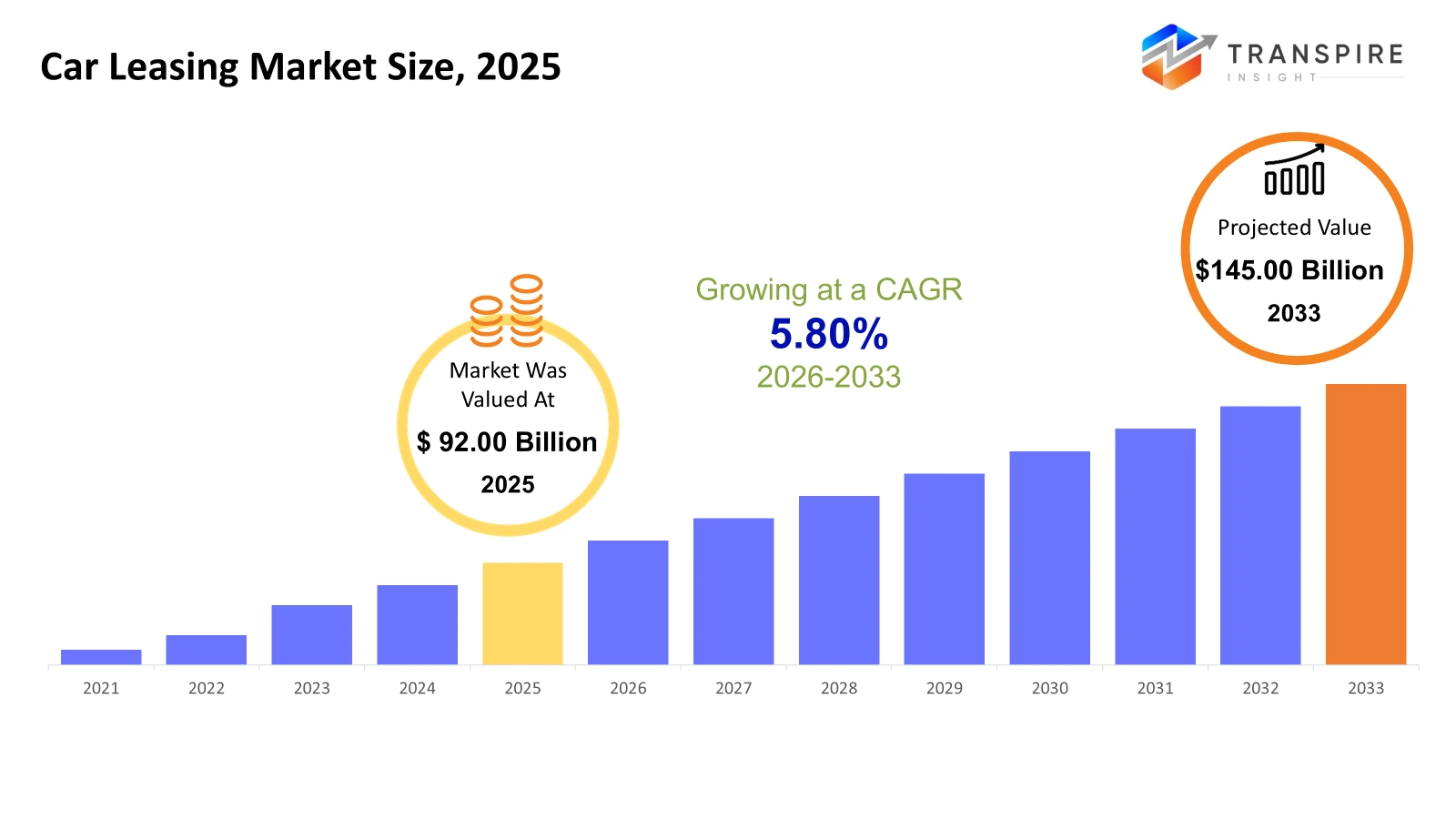
The global Car Leasing market size was valued at USD 92.00 billion in 2025 and is projected to reach USD 145.00 billion by 2033, growing at a CAGR of 5.80% from 2026 to 2033. More people now choose car leasing instead of buying, because it fits how they live today. Paying less at the start makes it easier to get a vehicle. Monthly bills stay steady, which helps plan expenses without surprises. Newer cars come with better tech, and safety leasing keeps those within reach. Companies also find value in rotating their fleets regularly. Flexibility matters more than ever when needs change fast. Owning is not always practical if circumstances shift often.
Market Size & Forecast
- 2025 Market Size: USD 92.00 Billion
- 2033 Projected Market Size: USD 145.00 Billion
- CAGR (2026-2033): 5.80%
- North America: Largest Market in 2026
- Asia Pacific: Fastest Growing Market
To learn more about this report,  Download Free Sample Report
Key Market Trends Analysis
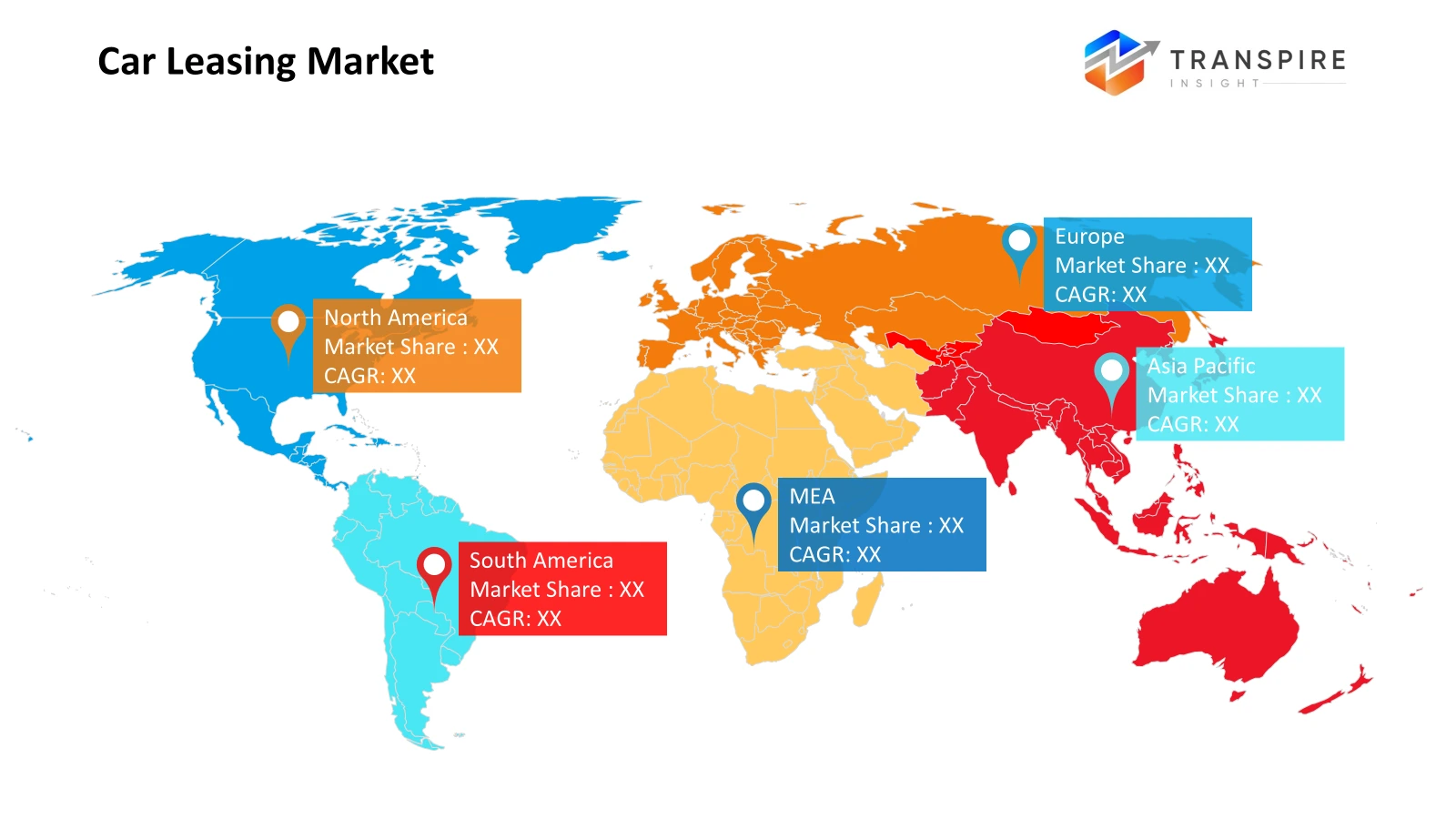
- The North American market share is estimated to be approximately 37% in 2026. Big companies here often lease vehicles instead of buying them. Many customers like choosing short-term deals over ownership. Banks and lenders make these options easy to access. What keeps it running smoothly is a network built over the years. Flexibility matters more than long-term commitments. Services adapt quickly because systems are already in place.
- Fueled by widespread leasing habits - particularly in cars and EVs the United States sees steady market gains, helped through smart use of online tools that simplify how leases are handled day to day.
- Out of nowhere, cities in the Asia-Pacific region keep expanding fast. With more money left after expenses, people start looking at different ways to get vehicles. Leasing begins gaining ground - not just for individuals, but also for businesses needing transport. Awareness spreads slowly, yet steadily, changing how folks approach ownership. This shift feeds into stronger interest across both private and company-based needs.
- Closed-End Lease share approximately 63% in 2026. With a closed-end lease, people often pick this route. These agreements bring less worry about leftover car value. Terms at the finish line tend to be clear. That predictability makes them popular among regular buyers.
- Fleet choices lean heavily toward passenger models. That trend holds because people and companies keep needing flexible ways to get around. Leasing fits well when movement matters day to day.
- With longer leases becoming more popular, people now prefer predictable costs and consistent access to vehicles over time. A growing number choose extended agreements when they want smaller payments each month.
- Leasing more vehicles instead of buying. Operations run more smoothly when fleets are managed flexibly. Spending less upfront matters too. Agreements shaped around budgets help control costs. Businesses find value in predictable payments. Ownership shifts later, if at all. Cash stays available for core needs. Long-term planning improves without large initial outlays.
Nowadays, more people choose leasing instead of buying cars outright, driving steady growth in the car leasing market as consumers look for flexible, cost-effective mobility options. A set timeframe allows usage while paying regularly each month. Often, these deals cover repairs and servicing too. Drivers enjoy newer models without heavy initial expenses. Companies find it practical to manage fleets over time. Commitments stay limited compared to full ownership paths. Monthly amounts tend to remain steady throughout the term. Flexibility becomes possible when needs shift quickly. Ownership stays with the provider until a potential purchase later. Shorter cycles match how fast technology changes today.
Businesses leaning on rented vehicle fleets help push market growth forward. With leasing, firms keep cash reserves intact while sidestepping losses tied to aging assets. Shifting priorities around expenses and agility have led organizations, big, mid-sized, or modest, to fold rental models into how they move people and goods.
Out here, tech upgrades keep changing how leases work. Online spots now let people pick cars, get credit checks cleared, handle paperwork, even tap into pay-per-use rides, all without stepping inside an office. On top of that, tools like driving behavior trackers and number-crunching software sharpen oversight of vehicle groups and danger spotting. Folks renting wheels find things smoother. Companies gain better use of what they own and sharper service timing.
Fresh energy moves things forward, yet hurdles pop up, such as shaky economies, shifting interest rates, and rules tied to leases like strict mile caps. Still, people now lean more toward pay-per-use rides, while leased electric and hybrid cars show up everywhere, fueling what comes next for car subscriptions down the road.
Car Leasing Market Segmentation
By Lease Type
- Closed-End Lease
A fixed-term rental lets users hand back the car once finished, limiting exposure to leftover wear that appeals to many people. The setup shifts uncertainty away from the driver by locking in an endpoint value ahead of time. Fewer surprises later, keep this option common for private buyers who want clear outcomes.
- Open-End Lease
A business might pick this kind of lease. It puts the risk on them when it ends - what the car is worth then becomes their concern. The final amount owed is not fixed up front. Instead, they cover any gap if the resale doesn’t match expectations. This setup shifts uncertainty onto the user. Value later matters more than promises early.
To learn more about this report, Download Free Sample Report
By Vehicle Type
- Passenger Vehicles
A single rider car holds the biggest share because people buy them a lot, and companies pick these for their top staff rides. What stands out is how often they appear on roads compared to others. Ownership trends show a clear lean toward personal models, especially when businesses equip managers with wheels. Most choices point here first, even when budgets shift. Daily commutes plus long drives keep this type in front. Even with new options rising, older habits stick around.
- Light Commercial Vehicles
Small trucks often go to local businesses that need them for city routes. Delivery firms grab these models when moving goods for the final stretch. Fleets grow quietly through rental deals meant for tight streets.
- Heavy Commercial Vehicles
Big trucks move goods across long distances, often used by companies handling heavy cargo. These vehicles support industry tasks where reaching far places matters most. Hauling materials over highways becomes possible because of their design and strength. Businesses rely on them when regular transport options fall short.
By Lease Duration
- Short-Term Leasing
Leases that last a short while give room to shift plans easily. When work ties to a specific task, these rentals fit well. Some people move often; this option keeps up. Projects with clear end dates pair naturally here.
- Medium-Term Leasing
A few months at a time works well when needs shift, but stability matters. Sometimes longer than short-term hires, yet not fixed long-term either. Flexibility stays within reach while saving more than quick rentals would allow.
- Long-Term Leasing
Sticking with a vehicle for years often makes sense when routines stay steady. Monthly costs tend to ease up the longer you go. Predictability matters most if your travel needs rarely shift. Lengthy agreements spread expenses out, which helps balance budgets. Committing to long-term means fewer changes down the road.
By End-Users
- Individual
Starting fresh each time, one person leans toward smaller initial payments. That choice opens doors to driving newer car versions sooner rather than later.
- Corporate
Fleet performance matters most when budgets stay tight. Efficiency shows up in how deals are built, not just driven. Leases shape spending, steering outcomes behind the scenes. Control comes from design, not reaction. Structure guides behavior more than policy ever could.
Regional Insights
Driving habits shift, more people here choose leasing instead of buying. Cities are filled with workers who like changing cars without long commitments. Companies keep their teams moving through deals that include fresh vehicles every few years. Money flows more easily when payments stay fixed month after month. Big car brands team up with lenders to offer terms that fit different needs. These options spread fast because trust exists in the system. New models arrive regularly, pulling interest away from outright purchases.
Cars are everywhere, plus rules around renting them make it attractive whether you drive solo or run a company. Take Germany, the United Kingdom, or France, people there lean into leasing because taxes work in their favor, agreements feel clear, and they want greener ways to get around. Electric cars stir things up, too; folks often choose rental deals just to skip worries about how batteries will hold up or what happens when selling later.
City life spreads fast across Asia Pacific, pushing more people toward renting cars instead of buying. Rising paychecks help too, especially where new middle classes grow in nations such as India, China, or parts of Southeast Asia. More drivers now know about loan options when getting vehicles, which opens doors wider. Firms offering lease deals multiply, reaching corners they once missed. Down south, Latin American markets creep upward as car demand returns slowly. Flexible ways to use autos gain ground even there, despite hiccups in roads or lending systems. The same goes for patches across Africa and the Middle East, where progress drags but still moves. Not every place has smooth access, yet some spots lack the support networks needed. Still, shifts in how folks move around spark interest beyond traditional purchases.
To learn more about this report, Download Free Sample Report
Recent Development News
- October 21, 2025 – Turo launched a new alternative to leasing and financing a vehicle that reimagines car ownership.
- February 17, 2022 – Maruti joins hands with Quiklyz to provide leasing services to customers.
|
Report Metrics |
Details |
|
Market size value in 2025 |
USD 92.00 Billion |
|
Market size value in 2026 |
USD 98.00 Billion |
|
Revenue forecast in 2033 |
USD 145.00 Billion |
|
Growth rate |
CAGR of 5.80% from 2026 to 2033 |
|
Base year |
2025 |
|
Historical data |
2021 – 2024 |
|
Forecast period |
2026 – 2033 |
|
Report coverage |
Revenue forecast, competitive landscape, growth factors, and trends |
|
Regional scope |
North America; Europe; Asia Pacific; Latin America; Middle East & Africa |
|
Country scope |
United States; Canada; Mexico; United Kingdom; Germany; France; Italy; Spain; Denmark; Sweden; Norway; China; Japan; India; Australia; South Korea; Thailand; Brazil; Argentina; South Africa; Saudi Arabia; United Arab Emirates |
|
Key company profiled |
LeasePlan Corporation, Arval (BNP Paribas Group), ALD Automotive (Société Générale Group), Avis Budget Group, Hertz Global Holdings, Enterprise Holdings, Sixt SE, Element Fleet Management, Emkay, Wheels, Inc., Union Leasing Company, AL-FA Finance & Leasing, Hitachi Capital Vehicle Solutions, Toyota Financial Services, Volkswagen Financial Services, Ford Credit, and BMW Financial Services. |
|
Customization scope |
Free report customization (country, regional & segment scope). Avail customized purchase options to meet your exact research needs. |
|
Report Segmentation |
By Lease Type (Closed-End Lease, Open-End Lease), By Vehicle Type (Passenger Vehicles, Light Commercial Vehicles, Heavy Commercial Vehicles), By Lease Duration (Short-Term Leasing, Medium-Term Leasing, Long-Term Leasing), By End-Users (Individual, Corporate) |
Key Car Leasing Company Insights
Starting with cars on long hire, LeasePlan stands large in the worldwide scene. Instead of just renting, it wraps upkeep, coverage, and tracking into one flow. Clients from different areas tap into these setups, whether they drive alone or manage many vehicles. Digital tools shape much of what happens now. Dashboards show updates live, thanks to smart links between machines. Rather than sticking to old models, the business leans into tech that follows every mile. Partnerships with big car builders plus finance names keep its reach wide. Even as movement habits shift, the firm holds ground by adapting quietly but steadily.
Key Car Leasing Companies:
- LeasePlan Corporation
- Arval (BNP Paribas Group)
- ALD Automotive (Société Générale Group)
- Avis Budget Group
- Hertz Global Holdings
- Enterprise Holdings
- Sixt SE
- Element Fleet Management
- Emkay, Wheels, Inc.
- Union Leasing Company
- AL-FA Finance & Leasing
- Hitachi Capital Vehicle Solutions
- Toyota Financial Services
- Volkswagen Financial Services
- Ford Credit
- BMW Financial Services.
Global Car Leasing Market Report Segmentation
By Lease Type
- Closed-End Lease
- Open-End Lease
By Vehicle Type
- Passenger Vehicles
- Light Commercial Vehicles
- Heavy Commercial Vehicles
By Lease Duration
- Short-Term Leasing
- Medium-Term Leasing
- Long-Term Leasing
By End-Users
- Individual
- Corporate
Regional Outlook
- North America
- United States
- Canada
- Mexico
- Europe
- Germany
- United Kingdom
- France
- Spain
- Italy
- Rest of Europe
- Asia Pacific
- Japan
- China
- Australia & New Zealand
- South Korea
- India
- Rest of Asia Pacific
- South America
- Brazil
- Argentina
- Rest of South America
- Middle East & Africa
- Saudi Arabia
- United Arab Emirates
- South Africa
- Rest of the Middle East & Africa
Frequently Asked Questions
Find quick answers to common questions.
The approximate Car Leasing Market size for the market will be USD 145.00 billion in 2033.
Key segments for the Car Leasing Market are By Lease Type (Closed-End Lease, Open-End Lease), By Vehicle Type (Passenger Vehicles, Light Commercial Vehicles, Heavy Commercial Vehicles), By Lease Duration (Short-Term Leasing, Medium-Term Leasing, Long-Term Leasing), By End-Users (Individual, Corporate).
Major Car Leasing Market players are LeasePlan Corporation, Arval (BNP Paribas Group), ALD Automotive (Société Générale Group), and Avis Budget Group.
The North America region is leading the Car Leasing Market
The Car Leasing Market CAGR is 5.80%.
- LeasePlan Corporation
- Arval (BNP Paribas Group)
- ALD Automotive (Société Générale Group)
- Avis Budget Group
- Hertz Global Holdings
- Enterprise Holdings
- Sixt SE
- Element Fleet Management
- Emkay, Wheels, Inc.
- Union Leasing Company
- AL-FA Finance & Leasing
- Hitachi Capital Vehicle Solutions
- Toyota Financial Services
- Volkswagen Financial Services
- Ford Credit
- BMW Financial Services.
Recently Published Reports
-
Apr 2026
ATV & UTV Market
ATV & UTV Market Size, Share & Analysis Report By Type (ATV, and UTV), By Variants (Less Than 400 CC, 400 CC To 800 CC, and More Than 800 CC), and Geography (North America, Europe, Asia-Pacific, Middle East and Africa, South and Central America), 2021 - 2031
-
Apr 2026
Automotive Central Gateway Module Market
Automotive Central Gateway Module Market Size, Share & Analysis Report By Type (Ethernet Central Gateway Module, CAN Central Gateway Module, LIN Central Gateway Module, and FlexRay), By Application (Powertrain Control, Body Control, Infotainment System, Advanced Driver Assistance Systems (ADAS), and Others), By End User (Passenger Vehicles, and Commercial Vehicles), and Geography (North America, Europe, Asia-Pacific, Middle East and Africa, South and Central America), 2021 - 2031
-
Apr 2026
Automotive Engine Oil Filter Market
Automotive Engine Oil Filter Market Size, Share & Analysis Report By Filter Type (Fuel Filter, Engine Oil Filter, Hydraulic Oil Filter, and Others), By Filter Media (Cellulose, Synthetic, and Micro), By Sales Channel (OEMs, and Aftermarket), By Vehicle Type (Passenger Cars, Light Commercial Vehicles, Heavy Duty Trucks, Buses and Coaches, and Off-road Vehicles), and Geography (North America, Europe, Asia-Pacific, Middle East and Africa, South and Central America), 2021 - 2031
-
Apr 2026
Automotive Parts Aluminium Die Casting Market
Automotive Parts Aluminium Die Casting Market Size, Share & Analysis Report By Production Process (Pressure Die Casting, Vacuum Die Casting, Squeeze Die Casting, Gravity Die Casting), By Application (Body Parts, Engine Parts, Transmission Parts, Battery And Related Components, Other Application Types), and Geography (North America, Europe, Asia-Pacific, Middle East and Africa, South and Central America), 2021 - 2031
Our Clients