

Bio-pharma Logistics Summery:
According to Transpire Insights, a detailed research report on the market reflects that the temperature-controlled pharmaceutical transportation application segment dominates the Bio-pharma Logistics Market, accounting for approximately 71% of the total share worldwide. DHL Group leads the market with approximately (around USD 95.3 billion) in annual revenue and an estimated 17–21% market share, making it the leading contributor to market development, innovation, advanced bio-pharma logistics solutions, expanding cold chain and healthcare supply chain capabilities, and growth dynamics.
Market Snapshot
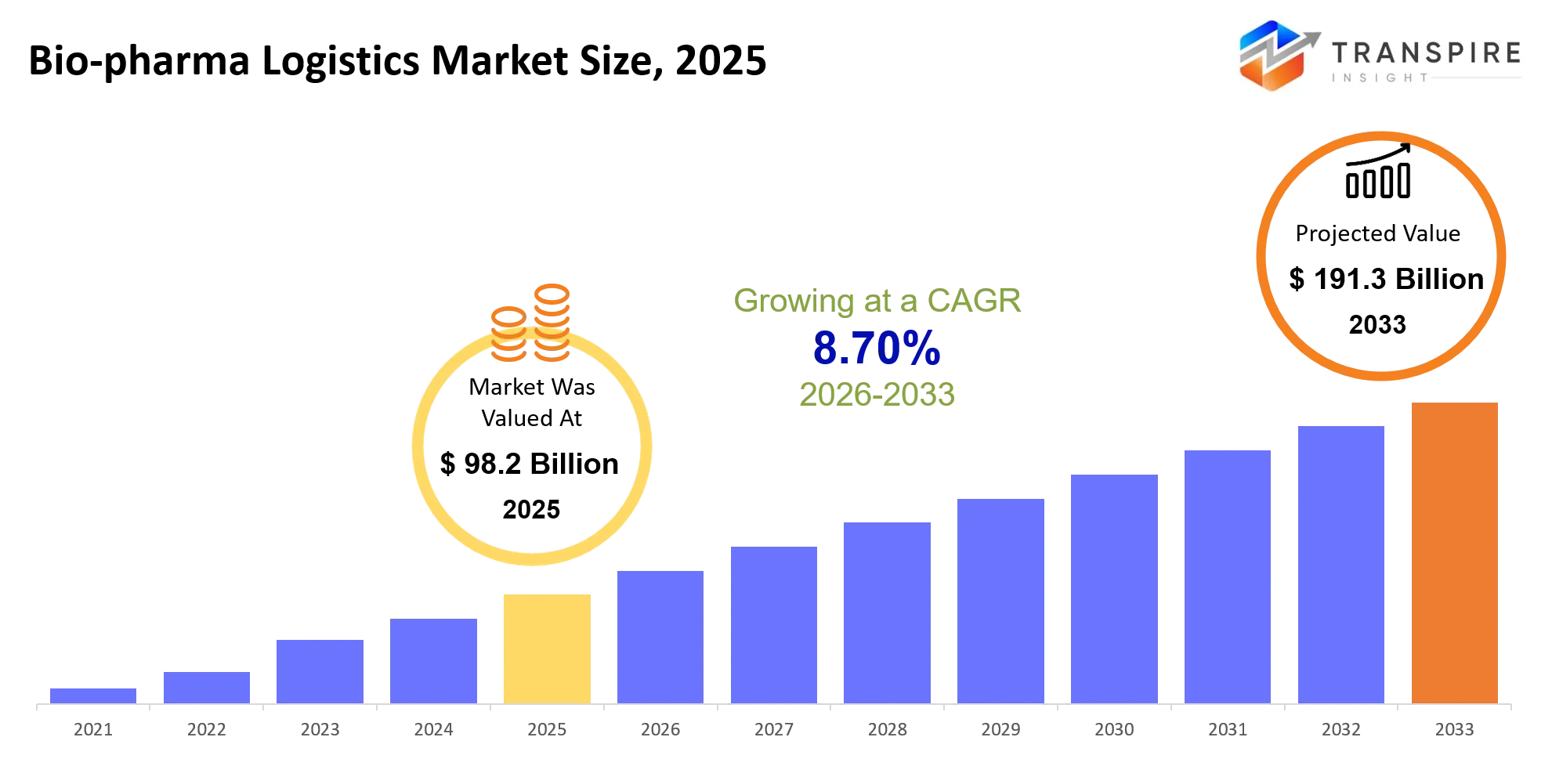
- Market Value (2025): USD 98.2 Billion.
- Expected Market Value (2026): USD 106.7Billion.
- Estimated Market Value (2033): USD 191.3 Billion.
- Forecast CAGR (2026–2033): 8.70%.
- Leading Region in 2025: Asia-Pacific.
- Second-largest Region: Europe.
- Fastest Growing Region: North America.
Introduction
Bio-pharma Logistics refers to the specialized transportation, storage, packaging, handling, and distribution of biopharmaceutical products, including vaccines, biologics, cell and gene therapies, blood products, clinical trial materials, and temperature-sensitive pharmaceuticals. These logistics solutions require strict temperature control, regulatory compliance, real-time monitoring, and secure supply chain management to maintain product integrity and efficacy throughout transit. The Bio-pharma Logistics Market is driven by the growing demand for biologics and specialty medicines, expanding pharmaceutical manufacturing, increasing vaccine distribution, rising clinical trial activities, stringent GDP (Good Distribution Practice) regulations, and continuous advancements in cold chain logistics technologies.
- For Instance: North America, Market Outlook: North America is expected to remain one of the largest markets for bio-pharma logistics, supported by a strong biopharmaceutical manufacturing base, increasing biologics production, advanced cold chain infrastructure, and rising demand for specialty pharmaceuticals. The regional market is projected to surpass USD 36.5 billion during the forecast period.
- For Instance: United States, Digital Transformation: Leading bio-pharma logistics providers are investing in AI-powered supply chain analytics, IoT-enabled temperature monitoring, blockchain-based product traceability, cloud logistics platforms, and automated warehouse management systems to improve shipment visibility, regulatory compliance, reduce product loss, and enhance supply chain efficiency.
Market Highlights:
- Asia Pacific is expected to register the fastest CAGR, accounting for approximately 30% market share during the forecast period due to expanding pharmaceutical manufacturing, increasing biologics production, and rising healthcare investments.
- Europe is projected to hold approximately 27% share of the Bio-pharma Logistics Market over the forecast period.
- North America dominates the Bio-pharma Logistics Market and is anticipated to hold approximately 39% of the market share during the forecast period.
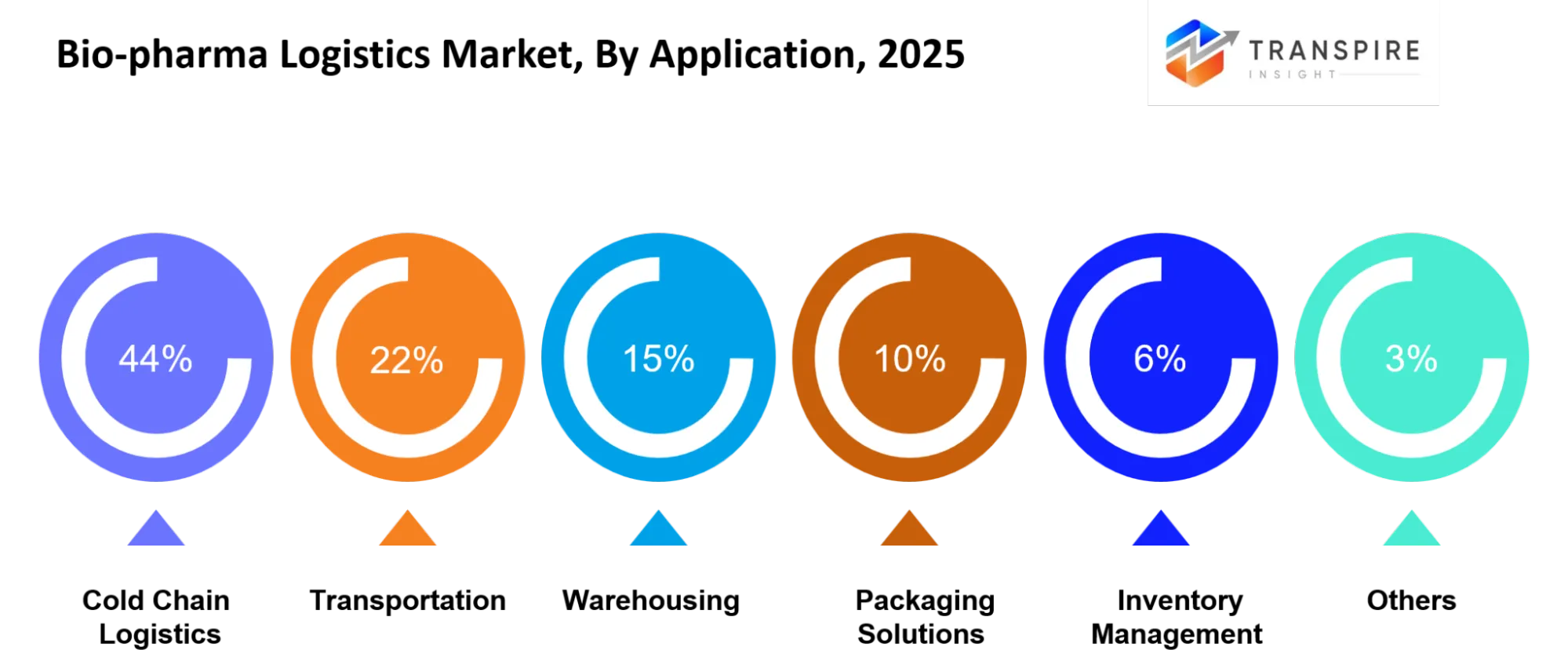
- By Service Type, the Cold Chain Logistics segment dominated the market, accounting for approximately 49% share in 2025, and is projected to grow at a substantial CAGR during the forecast period.
- By Application, the Biopharmaceutical Products segment dominated the market, holding approximately 58% share in 2025, and is expected to maintain strong growth during the forecast period.
- By End User, the Pharmaceutical & Biotechnology Companies segment dominated the market with approximately 55% share in 2025 and is projected to witness robust growth over the forecast period.
- Increasing investments in pharmaceutical cold chain infrastructure, regulatory compliance programs, vaccine distribution networks, and advanced temperature-controlled transportation continue to strengthen demand for bio-pharma logistics services globally.
How is Technology Driving Growth in the Bio-pharma Logistics Market?
The Bio-pharma Logistics Market is undergoing rapid transformation through advanced digital technologies. Artificial intelligence (AI), Internet of Things (IoT), blockchain, cloud-based logistics management systems, predictive analytics, robotic warehouse automation, and GPS-enabled shipment tracking are significantly improving operational efficiency and product safety. Real-time temperature monitoring sensors ensure continuous compliance for temperature-sensitive biologics, vaccines, and specialty pharmaceuticals throughout transportation. AI-driven route optimization minimizes delivery delays, while blockchain technology enhances traceability and prevents counterfeit pharmaceutical products. Automated warehouse systems, digital documentation, and smart packaging solutions further improve inventory management, regulatory compliance, and overall supply chain visibility, supporting sustained market growth worldwide.
Market Drivers
Growing Demand for Biologics & Expansion of Cold Chain InfrastructureThe increasing demand for biologics, biosimilars, vaccines, cell and gene therapies, and personalized medicines continues to drive the Bio-pharma Logistics Market. Pharmaceutical companies require highly specialized logistics services capable of maintaining strict temperature ranges throughout storage and transportation. Rising investments in cold chain infrastructure, expanding pharmaceutical exports, increasing clinical research activities, and stricter GDP and GMP regulations further support market expansion. Additionally, growing outsourcing of pharmaceutical logistics to specialized third-party logistics (3PL) providers enables manufacturers to improve operational efficiency while ensuring regulatory compliance.
- For Instance: United States: Continued investments by pharmaceutical manufacturers and logistics providers in ultra-low-temperature storage facilities, automated distribution centers, and advanced cold chain transportation networks are strengthening biologics and vaccine distribution across domestic and international markets.
Restrain
One of the major restraints affecting the Bio-pharma Logistics Market is the high operational cost of maintaining temperature-controlled logistics networks. Cold chain transportation requires specialized packaging, refrigerated vehicles, qualified storage facilities, continuous temperature monitoring, and strict regulatory compliance, resulting in significant operational expenses.
Analysis of Prices and Consumer Behaviour
The Cold Chain Logistics segment dominates the Bio-pharma Logistics Market, contributing approximately 66% of total market revenue due to the increasing transportation of temperature-sensitive biologics, vaccines, and specialty pharmaceuticals. Premium logistics services featuring real-time monitoring, validated packaging, and ultra-low-temperature transportation typically command 18–25% higher pricing compared to conventional pharmaceutical logistics services because of their enhanced reliability, regulatory compliance, and product protection. Biopharmaceutical products account for nearly 52% of total logistics demand globally, while approximately 72% of overall market demand originates from pharmaceutical and biotechnology manufacturers. Customer preferences indicate that nearly 70% of clients prioritize regulatory compliance, real-time shipment visibility, temperature integrity, secure transportation, and on-time delivery when selecting logistics partners. The increasing adoption of digital cold chain technologies, expanding biologics production, and growing investments in pharmaceutical supply chain infrastructure continue to support long-term growth in the Bio-pharma Logistics Market.
Top Companies in the Bio-pharma Logistics
- Travelers
- Liberty Mutual
- Zurich Insurance Group
- Chubb, CNA Financial
- The Hartford
- Tokio Marine HCC
- Old Republic Surety
- Nationwide
- RLI Corp
- Crum & Forste
- Arch Insurance
- Allianz Trade
- Markel
- IFIC Surety Group
Market Segmentation
The Bio-pharma Logistics share is divided into five categories: serviceType, Application, End User, Packaging Type, and Distribution Channel.
The Cold Chain Logistics Segment Dominated the Market, Accounting for Approximately 49% in 2025, and is Expected to Grow at a Significant CAGR During the Forecast Period.
The Bio-pharma Logistics Market is segmented by Service TypeTransportation, Warehousing, Packaging Solutions, Cold Chain Logistics, Inventory Management, Value-added Services, Others. Among these, the Cold Chain Logistics segment dominated the market, accounting for approximately 49% of the total market share in 2025, and is expected to expand at a substantial CAGR throughout the forecast period. Cold chain logistics remains the leading segment because biologics, vaccines, cell and gene therapies, insulin, plasma products, and specialty pharmaceuticals require strict temperature-controlled transportation and storage to maintain product efficacy, safety, and regulatory compliance.
The Biopharmaceutical Products Segment Held the Largest Share of Approximately 58% in 2025 and is Expected to Grow at a Significant CAGR During the Forecast Period.
The Bio-pharma Logistics Market is segmented by Application into Biopharmaceutical Products, Vaccines, Clinical Trial Logistics, Cell & Gene Therapy, Blood Products, and Others. Among these, the Biopharmaceutical Products segment accounted for approximately 58% of the market share in 2025 and is expected to witness robust growth throughout the forecast period. This segment dominates because of the increasing production of biologics, monoclonal antibodies, biosimilars, recombinant proteins, and specialty therapeutics that require highly specialized cold chain logistics and regulatory-compliant transportation solutions.
The Pharmaceutical & Biotechnology Companies Segment Held the Largest Share of Approximately 55% in 2025 and is Expected to Grow at a Strong CAGR During the Forecast Period.
The Bio-pharma Logistics Market is segmented by End User intoBiopharmaceutical Companies, CMOs/CDMOs, CROs, Hospitals, Research Institutes, Others. Among these, the Pharmaceutical & Biotechnology Companies segment dominated the market, accounting for approximately 55% of the total share in 2025, and is projected to expand at a significant CAGR during the forecast period. The segment leads the market due to increasing biologics production, expanding vaccine manufacturing, growing investments in precision medicine, and rising outsourcing of temperature-controlled logistics to specialized third-party logistics providers.
Regional Segment Analysis of the Bio-pharma Logistics Market
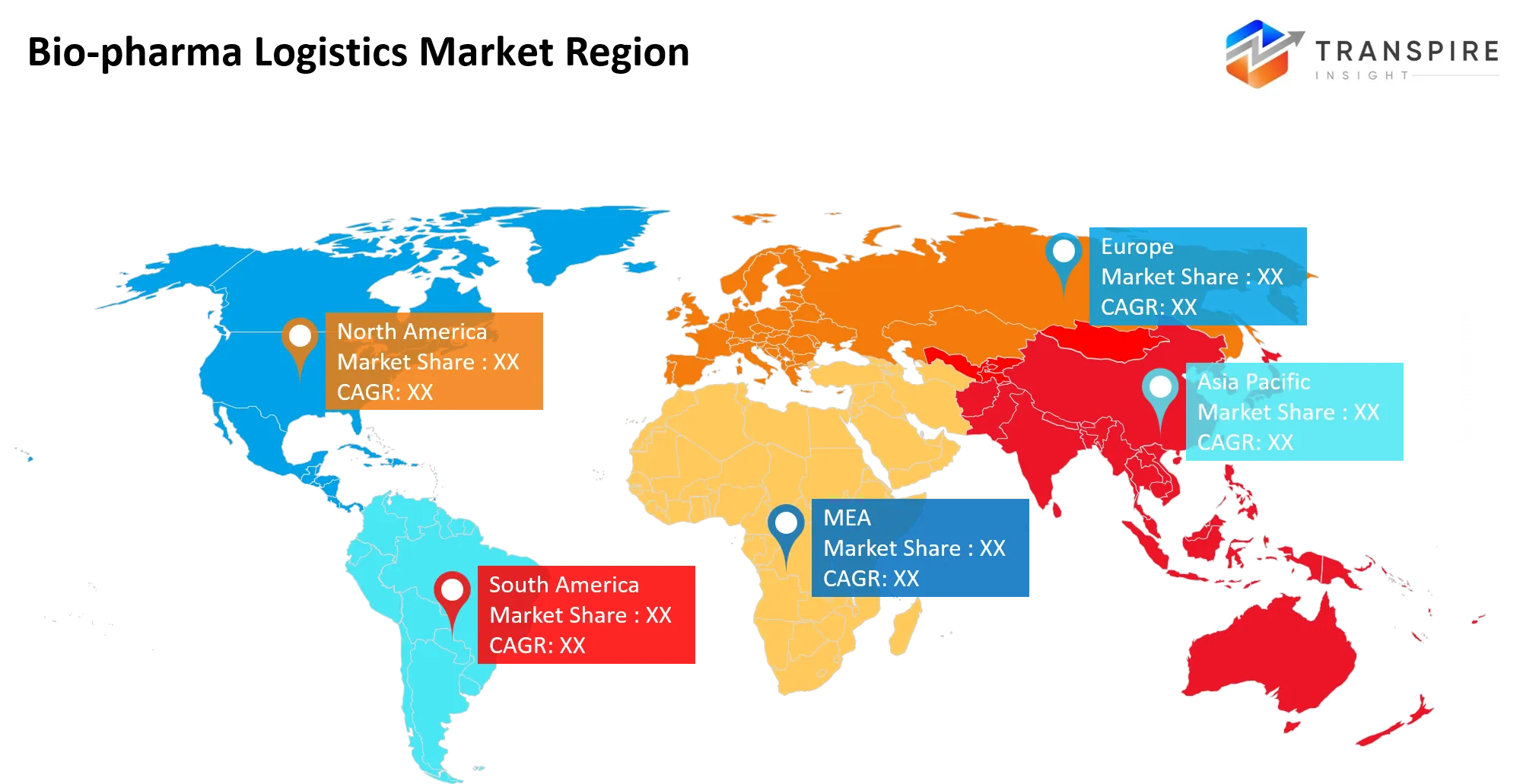
- North America (U.S., Canada, Mexico)
- Europe (Germany, France, U.K., Italy, Spain, Rest of Europe)
- Asia-Pacific (China, Japan, India, South Korea, Rest of APAC)
- South America (Brazil, Argentina, Rest of South America)
- Middle East & Africa (UAE, Saudi Arabia, South Africa, Rest of MEA)
Asia Pacific is Expected to Register the Fastest CAGR in the Bio-pharma Logistics Market, Holding Approximately 30% Market Share During the Forecast Period.
Asia Pacific is projected to witness the fastest growth in the Bio-pharma Logistics Market owing to expanding pharmaceutical manufacturing, increasing biologics production, rising vaccine exports, growing healthcare expenditure, and continuous investments in cold chain infrastructure. Countries including China, India, Japan, South Korea, Singapore, and Australia are strengthening pharmaceutical manufacturing capabilities while increasing investments in biotechnology research and clinical trials. Government initiatives supporting domestic pharmaceutical production, rising biologics demand, and rapid adoption of advanced logistics technologies are further accelerating regional market growth. The expansion of pharmaceutical exports and contract manufacturing organizations (CMOs) also contributes significantly to the region's growing market position.
Europe Holds Approximately 27% Share of the Bio-pharma Logistics Market During the Forecast Period.
Europe remains a significant market for bio-pharma logistics due to its well-established pharmaceutical manufacturing industry, stringent GDP regulations, advanced cold chain infrastructure, and growing production of biologics and biosimilars. Countries including Germany, Switzerland, France, the United Kingdom, Belgium, and the Netherlands serve as major pharmaceutical manufacturing and distribution hubs. Continuous investments in temperature-controlled logistics facilities, digital supply chain technologies, sustainable transportation, and pharmaceutical exports continue to strengthen Europe's competitive position in the market
North America Dominates the Bio-pharma Logistics Market, Holding Approximately 39% Market Share During the Forecast Period.
North America continues to dominate the Bio-pharma Logistics Market due to the presence of leading pharmaceutical and biotechnology companies, advanced healthcare infrastructure, extensive biologics manufacturing, and highly developed cold chain logistics networks. The United States accounts for the largest regional market owing to strong investments in biologics, vaccines, gene therapies, and specialty pharmaceuticals. Increasing clinical research activities, rising pharmaceutical exports, growing adoption of IoT-enabled cold chain monitoring systems, and strict FDA regulatory requirements further strengthen regional market leadership.
Strategies for Market Growth in Non-Leading Regions
Emerging economies can strengthen their position in the Bio-pharma Logistics Market by expanding temperature-controlled warehousing facilities, investing in modern refrigerated transportation infrastructure, and improving regulatory compliance with Good Distribution Practice (GDP) standards. Strategic partnerships among pharmaceutical manufacturers, biotechnology companies, logistics providers, airlines, and healthcare organizations can improve supply chain efficiency and market accessibility. Governments can accelerate market growth through investments in healthcare infrastructure, pharmaceutical manufacturing clusters, digital logistics platforms, and customs modernization. Furthermore, the adoption of IoT-enabled monitoring systems, AI-powered route optimization, blockchain-based product traceability, and sustainable cold chain technologies will enhance supply chain visibility, minimize product losses, and improve operational efficiency.
Future Market Trends for the Bio-pharma Logistics Market
1. Expansion of Advanced Cold Chain Infrastructure
The growing demand for biologics, vaccines, cell therapies, and personalized medicines is accelerating investments in ultra-low temperature storage, smart refrigerated transportation, and validated pharmaceutical packaging solutions to ensure product integrity throughout the supply chain.
2. AI, IoT, and Blockchain Integration
Artificial intelligence, Internet of Things (IoT), blockchain technology, predictive analytics, and cloud-based logistics platforms are enabling real-time shipment monitoring, automated inventory management, enhanced product traceability, and improved regulatory compliance across pharmaceutical supply chains.
3. Growth of Cell & Gene Therapy Logistics
The rapid commercialization of cell and gene therapies is creating significant demand for highly specialized cryogenic logistics, ultra-low-temperature transportation, customized packaging solutions, and precision delivery services capable of maintaining strict temperature requirements.
Recent Developments
- May 2026 – DHL Group expanded its pharmaceutical logistics capabilities by investing in advanced GDP-compliant cold chain facilities, AI-powered shipment monitoring technologies, and temperature-controlled transportation networks to support the growing demand for biologics, vaccines, and specialty pharmaceuticals.
- December 2025 – UPS Healthcare strengthened its healthcare logistics network by expanding temperature-controlled warehousing capacity, enhancing ultra-cold storage infrastructure, and integrating digital supply chain visibility solutions to improve the transportation of biologics, clinical trial materials, and cell & gene therapies worldwide.
Market Segment
This study forecasts revenue at global, regional, and country levels from 2020 to 2033. Transpire Insights has segmented the Bio-pharma Logistics based on the below-mentioned segments:
Bio-pharma Logistics, By service
- Transportation
- Warehousing
- Packaging Solutions
- Cold Chain Logistics
- Inventory Management
- Value-added Services
- Others
Bio-pharma Logistics, By product
- Vaccines
- Biologics
- Cell & Gene Therapies
- APIs
- Clinical Trial Materials
- Biosimilars
- Others
Bio-pharma Logistics, Temperature Range
- Ambient
- Refrigerated (2–8°C)
- Frozen (-20°C)
- Ultra-Low Temperature,
- Cryogenic
- Others
Bio-pharma Logistics, By Mode of Transport
- Air Freight
- Road Freight
- Sea Freight
- Rail Freight
- Multimodal Transport
- Others
Bio-pharma Logistics, End User
- Biopharmaceutical Companies
- CMOs/CDMOs
- CROs
- Hospitals
- Research Institutes
- Others
Bio-pharma Logistics, By Regional Analysis
North America
- US
- Canada
- Mexico
Europe
- Germany
- UK
- France
- Italy
- Spain
- Russia
- Rest of Europe
Asia Pacific
- China
- Japan
- India
- South Korea
- Australia
- Rest of Asia Pacific
South America
- Brazil
- Argentina
- Rest of South America
Middle East & Africa
- UAE
- Saudi Arabia
- Qatar
- South Africa
- Rest of the Middle East & Africa
Frequently Asked Questions
Find quick answers to common questions.
Rising demand for biologics, vaccines, cell and gene therapies, expanding pharmaceutical manufacturing, increasing clinical trial activities, stringent GDP regulations, and advancements in cold chain logistics technologies are driving the growth of the Bio-pharma Logistics Market.
North America dominates the Bio-pharma Logistics Market due to its strong biopharmaceutical manufacturing base, advanced cold chain infrastructure, presence of leading pharmaceutical companies, and increasing investments in temperature-controlled logistics
Bio-pharma logistics ensures the safe, temperature-controlled transportation and storage of biologics, vaccines, specialty pharmaceuticals, and clinical trial materials, maintaining product integrity, regulatory compliance, and patient safety throughout the supply chain
The Biopharmaceutical Products segment leads the Bio-pharma Logistics Market, driven by the increasing production of biologics, biosimilars, monoclonal antibodies, and specialty medicines requiring specialized cold chain transportation and storage.
Major companies operating in the Bio-pharma Logistics Market include DHL Group, UPS Healthcare, FedEx Corporation, Kuehne+Nagel, DB Schenker, CEVA Logistics, SF Express, DSV A/S, Marken (UPS Healthcare), and World Courier (Cencora).
- Travelers
- Liberty Mutual
- Zurich Insurance Group
- Chubb, CNA Financial
- The Hartford
- Tokio Marine HCC
- Old Republic Surety
- Nationwide
- RLI Corp
- Crum & Forste
- Arch Insurance
- Allianz Trade
- Markel
- IFIC Surety Group
About the Authors

Pankaj Ghogare Patil
I am Pankaj Ghogare Patil, a Senior Research Analyst at Transpire Insight, specializing in the Pharmaceutical, Chemicals & Materials, Healthcare IT, and Biotechnology industry. My expertise lies in conducting comprehensive market research, analyzing industry trends, evaluating competitive landscapes, and translating complex data into actionable insights. At Transpire Insight, I closely follow emerging technologies, regulatory developments, and market innovations to create accurate, well-researched, and informative content that helps businesses and professionals make informed decisions. I am committed to producing credible, evidence-based articles that reflect industry best practices while making technical topics accessible and valuable for a broad audience.

Chakradhar Khansole
Chakradhar serves as the Research Director at Transpire Insight, bringing over 8 years of experience in technology, innovation, and strategic market intelligence. He specializes in transforming complex market data into actionable business insights that enable organizations to make informed, growth-oriented decisions. Recognized for his strategic vision and analytical expertise, Chakradhar leads high-impact research initiatives, delivering comprehensive market assessments, competitive intelligence, and forward-looking industry analysis.
Recently Published Reports
-
Jul 2026
Alopecia Treatment Market
Alopecia Treatment Market Size, Share & Analysis Report By Disease Type (Alopecia Areata, Cicatricial Alopecia, Traction Alopecia, Alopecia Totalis, Androgenetic Alopecia, Alopecia Universalis, and Other Disease Types), By Treatment Type (Topical Treatments, Oral Medications, Injectable Therapies, and Hair Transplantation), By Gender (Male, and Female), By Distribution Channel (Hospitals and Clinics, Retail Pharmacies, and Online Retailers), and Geography (North America, Europe, Asia-Pacific, Middle East and Africa, South and Central America), 2021 - 2031
-
Jul 2026
Medical Ultrasound Probe Market
Medical Ultrasound Probe Market Size, Share & Analysis Report By Type (Linear Type, Convex Type, Endocavitary Probe, Phased Array/Cardiac Probe, Transesophageal (TEE) Probe, and Others), By Application (Ophthalmology, Cardiology, Musculoskeletal, Oncology, Obstetrics & Gynecology, General Imaging, and Others), By End User (Hospitals & Clinics, Diagnostic Centers, Ambulatory Surgical Centers, and Others), and Geography (North America, Europe, Asia-Pacific, Middle East and Africa, South and Central America), 2021 – 2031
-
May 2026
Biosimilars Market
Biosimilars Market By Product Type (Monoclonal Antibodies, Recombinant Hormones, Erythropoietin, G-CSF, Others), By Indication (Oncology, Autoimmune Diseases, Blood Disorders, Diabetes, Others), By Manufacturing Type (In-House Manufacturing, Contract Manufacturing), By Distribution Channel (Hospital Pharmacies, Retail Pharmacies, Online Pharmacies), By Industry Analysis, Size, Share, Growth, Trends, and Forecasts 2021-2033
-
Apr 2026
Gastrointestinal Endoscopy Market
Gastrointestinal Endoscopy Market By Type (Rigid Gastrointestinal Endoscope, Flexible Gastrointestinal Endoscopes, Disposable Gastrointestinal Endoscope), By Procedure Type (Colonoscopy, Gastroscopy, Duodenoscopy, Enteroscopy, Flexible Sigmoidoscopy, Others), By Application (Diagnosis, Treatment), By End-Users (Hospitals, Ambulatory Surgical Centers, Specialty Clinics, Laboratories, Others), By Industry Analysis, Size, Share, Growth, Trends, and Forecasts 2021-2033