

Baldosas Cerámicas Market Summary:
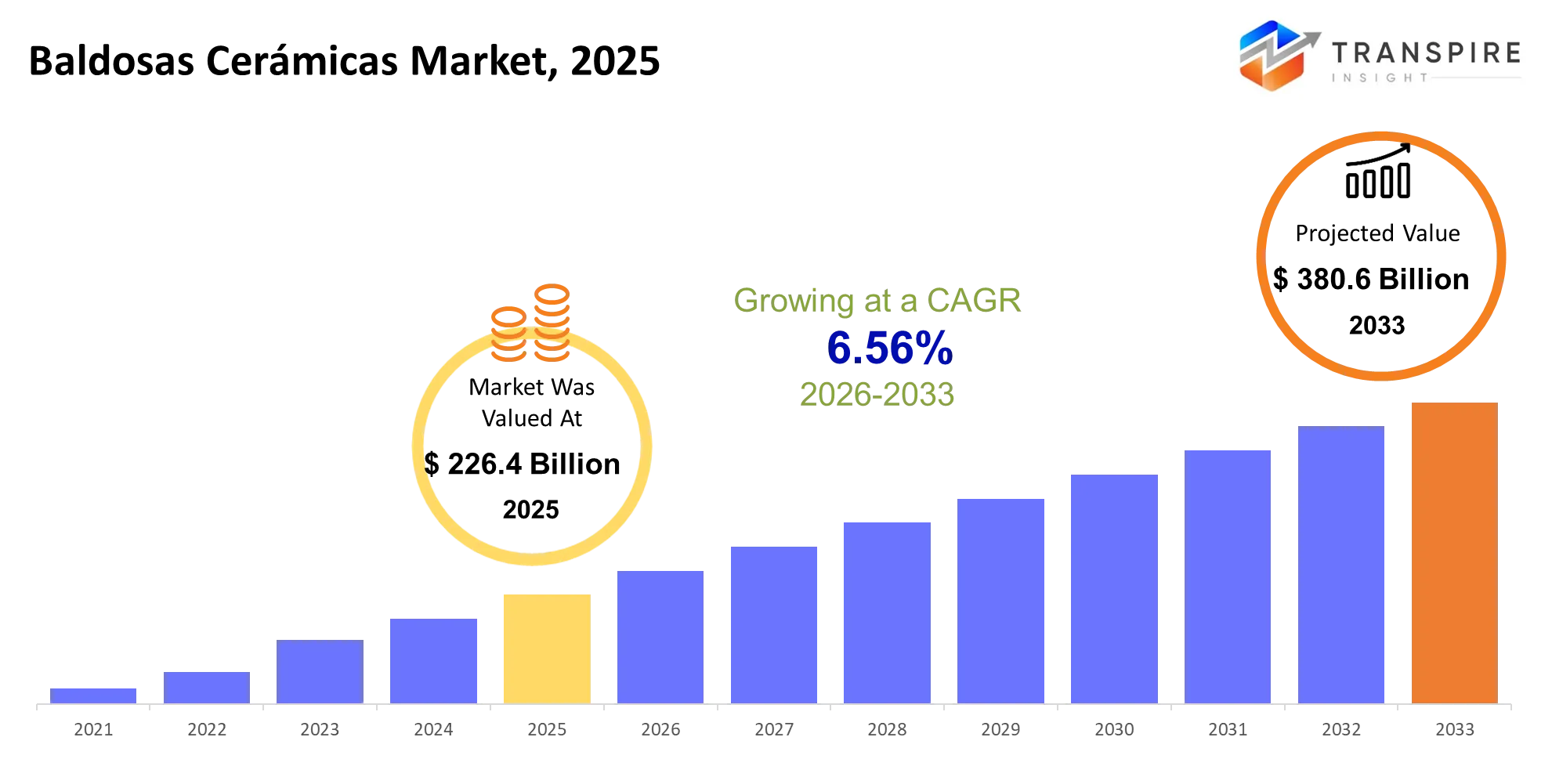
As per the Transpire Insight, The Baldosas Cerámicas Market size is estimated at USD 226.4 billion in 2025 and is anticipated to reach USD 380.6 billion by 2033, growing at a CAGR of 6.56% from 2026 to 2033.
The market for Baldosas Cermicas is shifting from commodity tiles to advanced surfaces used in upgrades for residential, commercial, hospitality, and architecture projects. Over the last three to five years, suppliers have broadened their offer of large-format porcelain, digital decoration, functional finishes, and automated production to offer more design flexibility and better control over material and energy costs. Structural shifts are occurring towards lower-carbon production and verifiable product sustainability, with the new European environmental declaration regulations for ceramic tiles effective in 2026. A real macro driver of change is the European Union's new life-cycle global-warming methodology for buildings, which will increase on-site environmental disclosures in new builds. Therefore, growth is coming from a mix of renovation, high-end design builds, larger-format markets, and manufacturers' ability to leverage design, performance, and sustainability advancements into higher-value products.
Baldosas Cerámicas Market Size & Forecast:
- Market Size 2025: USD 226.4 Billion
- Expected Market Value (2033): USD 380.6 Billion
- Forecast CAGR (2026-2033): 6.56%
- Leading Region in 2025: Asia Pacific
- Fastest Growing Region: Middle East and Africa
- Key Company Profiles: Mohawk Industries, Grupo Lamosa, RAK Ceramics, Kajaria Ceramics, Somany Ceramics, SCG Ceramics, Pamesa, Porcelanosa, Iris Ceramica, Marazzi, Florim, NITCO, Asian Granito, Johnson Tiles, China Ceramics.
Key Baldosas Cerámicas Market Insights:
The market is transitioning from undifferentiated tile volumes to high-performance porcelain, digitally differentiated designs, and lower-carbon production. Sustainability compliance and installation convenience are becoming premium specifications throughout the housing, hospitality, retail, and public sectors.
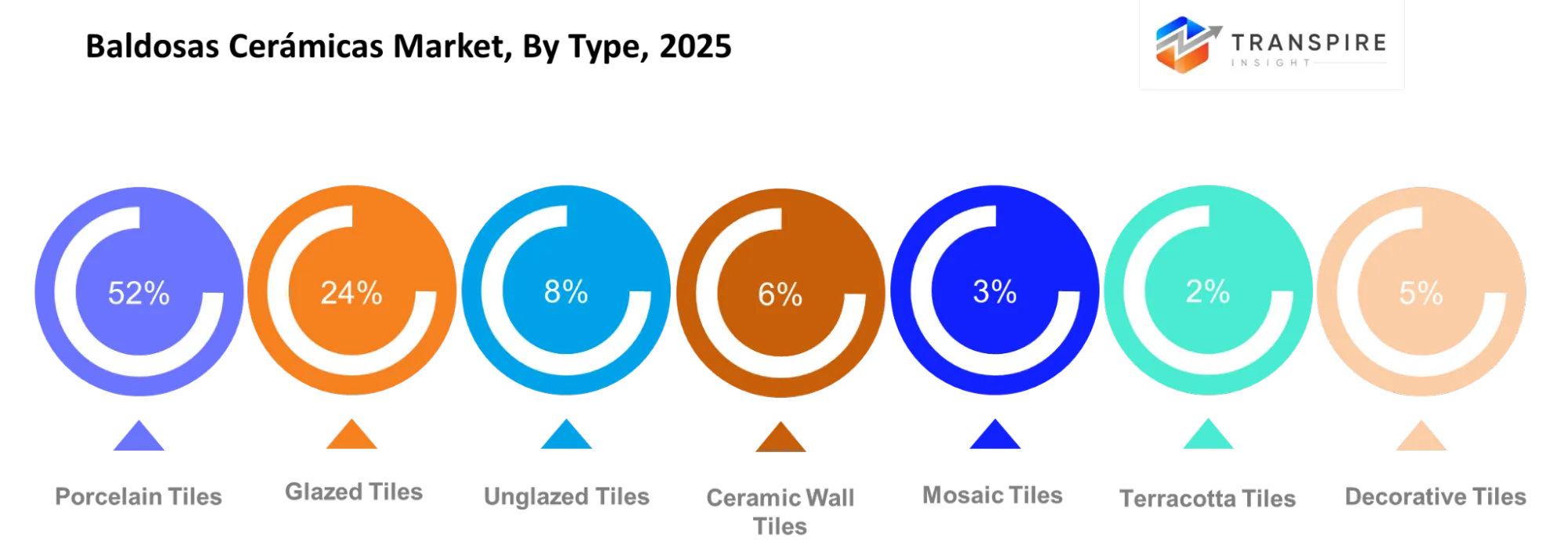
- Advanced digital printing enables realistic slab designs and high-end slab renovations, while 52.4% of Mohawk's expansion of Marazzi USA was made possible by a USD 45 million investment.
- Glazed tiles, up 24%, as Grupo Lamosa is widening cost-efficient glazed ranges; consumers increasingly select easy-clean, colour-stable kitchen and bathroom surfaces.
- Unglazed tiles, which are up 8% as RAK Ceramics' Continua+ slab technology enhances durable surface production, are gaining ground as demand for slip-resistant outdoor and high-traffic finishes grows.
- 6% as Morbi, a Morbi-based INR 200 crore ceramic wall tile manufacturing unit, added energy-efficient kilns to its manufacturing unit; Design-conscious homeowners are upgrading walls, backsplashes, and wet areas.
- Mosaic tiles, 3%, as Porcelanosa enters the decorative collections; mosaics are used more and more in the hospitality sector to design unique wellness and pool areas.
- Buyers are drawn to natural textures, which are 2.5% more life cycle friendly than the material focus of Terracotta tiles, which support heritage style demand.
- Decorative tiles, 2% as Iris Ceramica, feature high-definition surface designs; personalised designs are replacing standard interiors in boutique shops and hotels.
- Others, 2.1%, as Somany and Johnson Tiles expand niche portfolios, anti-bacterial and anti-slip features are becoming popular in healthcare and institutional projects.
What are the Key Drivers, Restraints, and Opportunities in the Baldosas Cerámicas Market?
Driver:
Growth is driven by rapid urbanisation and renovation activity, particularly in Asia-Pacific and North America, where buyers prioritise durable, low-maintenance surfaces. More recently, tighter slip-resistance requirements in wet commercial areas, green-building preferences for low-VOC materials, and rising investment in healthcare and hospitality refurbishments have accelerated product upgrades. Manufacturers benefit as these specifications shift demand toward premium porcelain and glazed tiles, including large-format, anti-slip, antimicrobial, and solar-reflective products, raising average selling prices and widening adoption across retail, hospitals, transport facilities, and residential interiors.
Restraint:
High costs of premium porcelain tiles and heavy weight-related logistics/installation challenges limit adoption in price-sensitive markets. This persists due to structural issues: fragmented distribution, skilled-labour shortages for large-format installations, and volatile raw material/energy prices that compress manufacturer margins.
Opportunity:
Environmental product transparency creates a new value pool for manufacturers able to document lower-impact production. EN establishes updated product-category rules for ceramic-tile environmental declarations, covering life-cycle stages, data quality, and impact assessment. Producers can therefore differentiate through recycled inputs, heat recovery, renewable electricity, efficient kilns, and verified environmental data. Italy’s ceramic industry, for example, has combined heat recovery, cogeneration, photovoltaics, and intelligent process management to improve energy efficiency.
What Has the Impact of Artificial Intelligence Been on the Baldosas Cerámicas Market?
Machine learning and artificial intelligence are also being used in tile manufacturing to help reduce process variation and improve quality control. Computer vision can be used to detect cracks and colour variation across the surface of the tiles, as well as edge defects, printing variation, and dimensional discrepancies, allowing manufacturers to proactively spot defects rather than waiting until visually inspecting each tile by hand. AI-based process monitoring can include kiln temperature, moisture, pressure, and line conditions to detect abnormal operating conditions or enable predictive maintenance.
Digital printing, automated process controls, and colour variation monitoring can enable manufacturers to produce more complex and customised designs more consistently. These solutions are particularly relevant for growing production of premium porcelain, large-format slabs, and decorative surfaces, where variation in dimensions and visual quality directly impacts value. AI can be used for heat recovery and optimisation, as it can correlate process parameters, such as moisture content, with fuel consumption; however, adoption is limited by the costs for sensors, equipment, and data infrastructure, as well as the lack of enough data to reliably train models for smaller producers.
In January 2026, System Ceramics integrated advanced artificial intelligence capabilities into its Qualitron vision inspection system to expand defect recognition via large image databases. This allows the platform to move beyond standard flaw detection by actively predicting potential production anomalies and feeding real-time data back into the facility for comprehensive plant optimization.
Key Baldosas Cerámicas Market Trends:
The market is shifting from volume-based tile production to differentiation of design, functional performance, digital manufacturing, and measurable sustainability. In addition to defect reduction, manufacturers are increasingly leveraging technology to enhance product mix and premiumisation.
- As architects demand seamless, minimal-grout looks in residential and commercial projects, move to large porcelain tiles (600×600 mm to 1200×2400 mm).
- Increase the proportion of high recycled content and eco-certified floor tiles to comply with sustainability standards and corporate green building initiatives.
- Growth in anti-slip, germ-resistant, and easy-to-clean coatings due to health-conscious consumers and hospital/hostility requirements.
- Incorporation of AI-driven digital design tools for mass customization of patterns and textures, reducing design-to-production lead times.
- Computer-Vision inspection on glazing/Kiln lines to reduce defects and waste, and to ensure consistency of export quality.
- Renovation and replacement work becoming the preferred option over new construction in mature markets, with premium low-maintenance tiles gaining traction.
- Retailers will scale their online and omnichannel distribution, driven by analytics to align stock with local building and seasonal demand.
- Premiumisation trend with value-added products (realistic stone/wood replicas) fetching better margins in the residential and commercial segments.
Baldosas Cerámicas Market Segmentation
By Type:
Porcelain tiles have the largest share with 52.4%, due to their resistance to low water absorption, high strength, and growing use in large-format applications for both commercial and residential sectors. What's more, the glazed tiles account for 24% based on the decorative properties and deeper surface designs, whereas the unglazed tiles make up 8% on the technical edge. Ceramic wall tiles make up 6%, followed by mosaic tiles with 3%, terracotta tiles with 2.5%, decorative tiles with 2%, and all other ceramic types with 2.1%. Glazed tile has the highest compound annual growth rate of 7.87%, on account of the rapid adoption of visually custom-made and digitally decorated ceramic surfaces in projects.
By Construction Type:
New Construction remains a major demand base, supported by residential development, commercial buildings, and planned urban projects. Renovation and replacement are gaining importance as ageing properties enter refurbishment cycles and owners upgrade floors, walls, kitchens, and bathrooms. Commercial construction requires durable and design-oriented surfaces, while infrastructure and industrial projects favour technically robust products. This mix is encouraging manufacturers to develop broader portfolios that address both high-volume construction requirements and specialised refurbishment applications across established and developing urban markets.
By Application:
Floor Tiles remain the core application because they require durability, wear resistance, and easier maintenance across residential and commercial environments. Wall Tiles and backsplashes support decorative and functional interior design, particularly in kitchens and bathrooms. Exterior and roofing applications are expanding the role of ceramic surfaces in weather-exposed environments, while pool, outdoor, and façade applications benefit from specialised finishes and technical performance. This diversification allows manufacturers to address architectural projects beyond conventional indoor flooring and capture higher-value applications.
By End User:
Residential applications provide the broadest consumption base, supported by new housing, renovation, replacement, and interior upgrades. Hospitality projects increasingly specify premium surfaces with coordinated designs, while healthcare facilities favour hygienic and easy-to-maintain materials. Retail and commercial spaces use ceramic tiles to create durable, visually consistent environments capable of handling heavy foot traffic. Industrial and government projects generally prioritise technical performance, safety, and lifecycle durability, creating opportunities for specialised products with anti-slip, resistant, and functional surface characteristics.
By Size:
Large and extra-large formats are gaining strategic importance as architects and developers seek seamless visual continuity with fewer grout lines. These formats are particularly relevant for premium residential interiors, hospitality spaces, commercial projects, façades, countertops, and feature walls. Small and medium formats continue to support conventional flooring, bathrooms, and renovation projects because they offer installation flexibility. Mosaic and plank formats serve decorative and specialised designs, while custom sizing enables manufacturers to address architectural specifications and differentiated project requirements more precisely.
By Finish:
Glossy and polished finishes remain relevant for decorative interiors because they enhance light reflection and create refined visual effects. Matte and textured finishes are expanding in applications where subdued aesthetics, surface grip, and practical maintenance are priorities. Satin and rustic finishes support natural-material-inspired interiors, while anti-slip surfaces are increasingly important in bathrooms, outdoor areas, hospitality, healthcare, and commercial environments. This widening finish portfolio allows manufacturers to combine visual differentiation with functional performance, supporting premium positioning across diverse architectural and construction applications.
By Distribution:
Speciality stores and dealers remain important because customers often need physical product inspection, design consultation, installation guidance, and project-specific recommendations before purchase. Home-improvement stores and distributors support broader geographic availability, while direct sales remain relevant for large construction and commercial projects. Online channels are increasingly influencing product discovery through digital catalogues, visualisation tools, specifications, and customer reviews, allowing buyers to shortlist products before visiting physical outlets. This hybrid model is encouraging manufacturers to integrate digital engagement with established offline distribution networks.
What are the Key Use Cases Driving the Baldosas Cerámicas Market?
Flooring remains the major category and is a traditional target for the ubiquitous porcelain segment for its low porosity, long wear, and high durability, making it well-suited for residential, commercial, hospitality, and high-traffic installations. Large-format porcelain is particularly well-suited for premium projects seeking fewer grout lines and a seamless look.
In addition, wall applications, backsplashes, exterior facades, bathrooms, kitchens, retail spaces and hospitality applications are expanding the use of ceramic surfaces beyond standard flooring as brands innovate decorative printing and special finishes to meet aesthetics and function.
Other emerging opportunities include large architectural slabs, outdoor applications, anti-slip requirements, healthcare applications, and even sustainability projects where building teams use building product declarations for life-cycle carbon information for projects.
|
Report Metrics |
Details |
|
Market size value in 2025 |
USD 226.4 Billion |
|
Market size value in 2026 |
USD 243.9 Billion |
|
Revenue forecast in 2033 |
USD 380.6 Billion |
|
Growth rate |
CAGR of 6.56% from 2026 to 2033 |
|
Base year |
2025 |
|
Historical data |
2021 - 2024 |
|
Forecast period |
2026 - 2033 |
|
Report coverage |
Revenue forecast, competitive landscape, growth factors, and trends |
|
Regional scope |
United States; Canada; Mexico; United Kingdom; Germany; France; Italy; Spain; Denmark; Sweden; Norway; China; Japan; India; Australia; South Korea; Thailand; Brazil; Argentina; South Africa; Saudi Arabia; United Arab Emirates |
|
Key companies profiled |
Mohawk Industries, Grupo Lamosa, RAK Ceramics, Kajaria Ceramics, Somany Ceramics, SCG Ceramics, Pamesa, Porcelanosa, Iris Ceramica, Marazzi, Florim, NITCO, Asian Granito, Johnson Tiles, China Ceramics. |
|
Customization scope |
Free report customization (country, regional & segment scope). Available customised purchase options to meet your exact research needs. |
|
Report Segmentation |
By Type (Porcelain Tiles, Glazed Tiles, Unglazed Tiles, Ceramic Wall Tiles, Mosaic Tiles, Terracotta Tiles, Decorative Tiles, Others); By Construction Type (New Construction, Renovation & Replacement, Remodeling, Commercial Construction, Residential Construction, Infrastructure, Industrial Construction, Others); By Application (Floor Tiles, Wall Tiles, Backsplash, Exterior, Roofing, Decorative, Pool & Outdoor, Others); By End User (Residential, Commercial, Hospitality, Healthcare, Retail, Industrial, Government, Others); By Size (Small Format, Medium Format, Large Format, Extra-large Format, Mosaic, Plank, Custom, Others); By Finish (Glossy, Matte, Polished, Textured, Satin, Rustic, Anti-slip, Others); By Distribution (Specialty Stores, Distributors, Home Improvement Stores, Online, Hypermarkets, Direct Sales, Dealers, Others). |
Which Regions are Driving the Baldosas Cerámicas Market Growth?
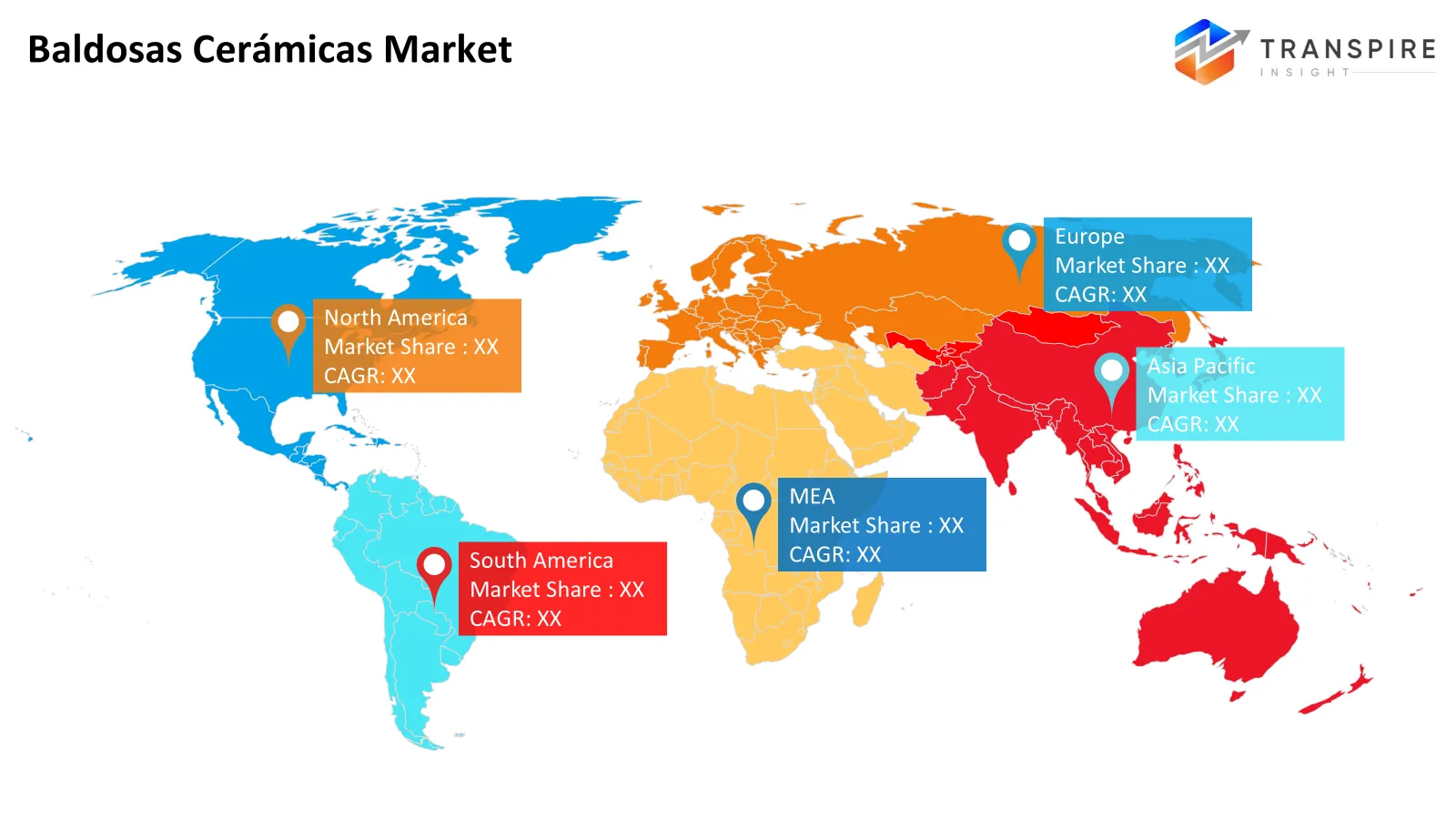
Asia Pacific is the largest at 68.9% of sales, led by China and India, the globe's largest exporters and consumers of ceramic tiles. Asia's dominance stems from fast urban growth, large housing projects, export-oriented manufacturing, low-cost raw material supplies, and cheap power. Regulatory benefits include infrastructure investment and housing-for-all programs that protect new-build and replacement demand, while a widespread manufacturing network in China, Ceramics, Kajaria, and Somany enables scale, variety of design, and fierce competition for both homebuyers and buyers overseas.
In July 2026, Somany Ceramics approved a ₹75.80 crore strategic investment package, which includes acquiring a 49% stake in Siravit Ceramics Private Limited. This strategic move expands the company’s capacity to set up large-scale glazed vitrified tile production lines in South India, directly boosting its regional supply chain efficiency.
Europe 14% share and is a premium, regulation-led market, not a volume market like Asia Pacific. European stability comes from mature renovation cycles, a strong hospitality and tourism sector, and government support for the EU Renovation Wave to push buildings to be energy efficient. New emissions and recycling standards across the European Union have already forced tile giants like Florim, Marazzi and Iris Ceramica to take 'greener' production routes, integrate recycled content and seek out low-carbon processes. Result: a resilient, high-value market that is more immune to commodity cycle movements and highly resilient to sustainability compliance.
In May 2026, FLORIM Stone announced a distribution partnership with International Stones UK. This action expands the manufacturer's footprint in the premium European renovation sector by supplying high-end, large-format porcelain slabs directly to specialized fabricators.
Middle East and Africa still hold a smaller share at 3.1%, yet are the fastest-growing region, at 8.2% CAGR, driven by recent shifts in Gulf construction pipelines. Giga-projects in the Kingdom of Saudi Arabia and the UAE, as well as announced economic diversification plans, have increased the requirement for residential, commercial, and infrastructure construction requiring long-lasting, heat-resistant tile. Local production in the Kingdom of Saudi Arabia, the UAE and Egypt reduces import reliance and project-specific lead times for stock-keeping units. Outdoor, pool, and anti-slip opportunities, which also cater to climate and growing hospitality industries, hold future potential for regional entities such as RAK Ceramics to gain premium contractor contracts.
In May 2026, RAK Ceramics won two Red Dot Product Design awards for its sustainable RE-USE tile series, reinforcing its material innovation capabilities for climate-tailored applications.
Who are the Key Players in the Baldosas Cerámicas Market, and how do they compete?
The baldosas cerámicas market is partly consolidated at the top level but is fiercely competitive in general. Multinational leaders and strong regional players compete on product innovation, product differentiation, and cost efficiency. The key competitive areas are portfolio premiumization, compliance with sustainability standards, and wide distribution to commercial, residential, and project channels.
Mohawk Industries and Porcelanosa are investing in premium quality and innovative manufacturing capabilities. They leverage high-tech digital printing and large-format porcelain and leverage retail distribution channels to obtain high-margin residential and hotel contracts. By contrast, Grupo Lamosa and Pamesa leverage cost-effective scale with broad distribution and a broad product range of glazed and porcelain tiles for the high-volume residential and retail markets in the Americas and Europe. RAK Ceramics and SCG Ceramics leverage cost-plus regional customisation, adjusting their anti-slip and heat-resistant tiles to warmer climates in the Middle East and Southeast Asia, while expanding tile manufacturing capacity near the major customer markets. Across India, the focus is now on local growth. Kajaria, Somany and Asian tiles focus on the large domestic market with a wide range of decors, prices and a spread of dealer networks catering to both residential and commercial markets. Conversely, Iris Ceramica, Marazzi and Florim focus on innovation and design differentiation, investing in recycled formulations and low-carbon production to address EU regulations and specifiers. NITCO, Johnson and China Ceramics focus on balancing niche decorative and project-focused offerings with cost competitiveness, covering a narrowly defined group of end users in hospitality, retail and infrastructure.
Key Players are:
- Mohawk Industries
- Grupo Lamosa
- RAK Ceramics
- Kajaria Ceramics
- Somany Ceramics
- SCG Ceramics
- Pamesa
- Porcelanosa
- Iris Ceramica
- Marazzi
- Florim
- NITCO
- Asian Granito
- Johnson Tiles
- China Ceramics
Recent Development News
- In September 2026, RAK Ceramics launched a premium surface collection at the Cersaie 2026 trade show through its multi-year partnership with Maison Roberto Cavalli. This design-led launch integrates luxury textiles, stones, and high-definition three-dimensional textures into large-format porcelain tiles, accelerating the brand's premiumization strategy. https://www.rakceramics.com/italy/en/media/press/corporate/rak-ceramics-at-cersaie-2026-one-step-ahead/
- In May 2026, Dekiln partnered with Johnson Tiles to establish a pilot manufacturing project for kiln-free recycled tiles in Stoke-on-Trent. The technology uses recycled plaster and plant-based binders, with tiles cured at about 35°C, supporting lower-energy ceramic production and greater use of recycled materials. https://uk.finance.yahoo.com/news/frontier-ip-investee-company-dekiln-060100571.html
- In April 2026, Mohawk Industries acquired building materials firm Hero Flooring. This transaction expands Mohawk’s operational footprint within the commercial surfaces sector and adds to its consolidation strategy in the building products space. https://mergr.com/transaction/mohawk-industries-acquires-hero-flooring
What Strategic Insights Define the Future of the Baldosas Cerámicas Market?
The market is moving towards high-value ceramic surfaces in large format, realistic stone designs, performance finishes, recycled content and digitally enabled manufacturing, all of which increasingly shape product differentiation. There is a 'capital-light' risk that the compression of margins from an energy-hungry firing process, rising fuel costs and the 'carbon labelling' of the supply chain could significantly impact results as impacts from manufacturing processes become clearer to consumers. This will favour producers that are able to optimise kiln processes, waste recovery, renewable energy and track process data to deliver measurable cost and carbon savings. A new 'white space' category of digitally enhanced, large-format porcelain combined with sustainable materials makes tiles a truly compelling alternative to natural stone and other surfaces while alleviating material and cleaning loads, exemplified by RAK's Continua+ and RE-USE offerings. When it comes to producers' overall strategic approach, large formats and firing should not be a primary consideration, but the intelligent deployment of technology and circular resources, together with careful distribution, should be.
Key Segmentations are:
By Type
- Porcelain Tile
- Glazed Tiles
- Unglazed Tiles
- Ceramic Wall Tiles
- Mosaic Tiles
- Terracotta Tiles
- Decorative Tiles
- Others
By Construction Type
- New Construction
- Renovation & Replacement
- Remodelling
- Commercial Construction
- Residential Construction
- Infrastructure
- Industrial Construction
- Others
By Application
- Floor Tiles
- Wall Tiles
- Backsplash
- Exterior
- Roofing
- Decorative
- Pool & Outdoor
- Others
By End User
- Residential
- Commercial
- Hospitality
- Healthcare
- Retail
- Industrial
- Government
- Others
By Size
- Small Format
- Medium Format
- Large Format
- Extra-large Format
- Mosaic
- Plank
- Custom
- Others
By Finish
- Glossy
- Matte
- Polished
- Textured
- Satin
- Rustic
- Anti-slip
- Others
By Distribution
- Speciality Stores
- Distributors
- Home Improvement Stores
- Online
- Hypermarkets
- Direct Sales
- Dealers
- Others
By Regional Analysis
North America
- US
- Canada
- Mexico
Europe
- Germany
- UK
- France
- Italy
- Spain
- Russia
- Rest of Europe
Asia Pacific
- China
- Japan
- India
- South Korea
- Australia
- Rest of Asia Pacific
South America
- Brazil
- Argentina
- Rest of South America
Middle East & Africa
- UAE
- Saudi Arabia
- Qatar
- South Africa
- Rest of the Middle East & Africa
Frequently Asked Questions
Find quick answers to common questions.
The baldosas cerámicas market size was valued at USD 226.4 billion in 2025 and is poised to reach USD 380.6 billion by 2033, expanding at a 6.56% CAGR.
Key segments for the baldosas cerámicas market are By Type (Porcelain Tiles, Glazed Tiles, Unglazed Tiles, Ceramic Wall Tiles, Mosaic Tiles, Terracotta Tiles, Decorative Tiles, Others); By Construction Type (New Construction, Renovation & Replacement, Remodeling, Commercial Construction, Residential Construction, Infrastructure, Industrial Construction, Others); By Application (Floor Tiles, Wall Tiles, Backsplash, Exterior, Roofing, Decorative, Pool & Outdoor, Others); By End User (Residential, Commercial, Hospitality, Healthcare, Retail, Industrial, Government, Others); By Size (Small Format, Medium Format, Large Format, Extra-large Format, Mosaic, Plank, Custom, Others); By Finish (Glossy, Matte, Polished, Textured, Satin, Rustic, Anti-slip, Others); By Distribution (Specialty Stores, Distributors, Home Improvement Stores, Online, Hypermarkets, Direct Sales, Dealers, Others).
Growth is primarily driven by residential renovation, new construction, large-format porcelain adoption, digital surface technologies, premium architectural designs, and demand for durable, hygienic, and sustainable ceramic surfaces.
The baldosas cerámicas market is led by major manufacturers, including Mohawk Industries, Grupo Lamosa, RAK Ceramics, Kajaria Ceramics, Somany Ceramics, SCG Ceramics, Pamesa, Porcelanosa, Iris Ceramica, Marazzi, Florim, NITCO, Asian Granito, Johnson Tiles, and China Ceramics.
Asia Pacific holds 68.9%, supported by extensive manufacturing capacity, established raw-material and supplier networks, strong construction activity, and rapid adoption of automated and digital ceramic production technologies.
Key opportunities include large-format porcelain, recycled-material tiles, AI-enabled manufacturing, premium architectural surfaces, sustainable production, and expanding demand across Middle East & Africa construction projects.
- Mohawk Industries
- Grupo Lamosa
- RAK Ceramics
- Kajaria Ceramics
- Somany Ceramics
- SCG Ceramics
- Pamesa
- Porcelanosa
- Iris Ceramica
- Marazzi
- Florim
- NITCO
- Asian Granito
- Johnson Tiles
- China Ceramics
About the Authors

Kartik bhong
I am Kartik Bhong, a Senior Research Analyst at Transpire Insight, specializing in the Packaging, Manufacturing, and Construction industry. My work focuses on analyzing market trends, emerging technologies, industry regulations, and competitive landscapes to deliver accurate, data-driven insights. I am passionate about transforming complex industry information into clear, practical content that helps businesses, professionals, and decision-makers stay informed and make confident strategic decisions. Through continuous research and a strong commitment to accuracy, I strive to create reliable, well-researched content that reflects the latest developments across these dynamic industries and supports the vision of Transpire Insight in delivering valuable market intelligence.

Chakradhar Khansole
Chakradhar serves as the Research Director at Transpire Insight, bringing over 8 years of experience in technology, innovation, and strategic market intelligence. He specializes in transforming complex market data into actionable business insights that enable organizations to make informed, growth-oriented decisions. Recognized for his strategic vision and analytical expertise, Chakradhar leads high-impact research initiatives, delivering comprehensive market assessments, competitive intelligence, and forward-looking industry analysis.
Recently Published Reports
-
Apr 2026
Handling and Lifting Equipment Market
Handling and Lifting Equipment Market Size, Share & Analysis Report By Product (Cranes and Hoists, Forklifts, Conveyor Systems, Aerial Work Platforms, Others), By Application (E-Commerce, Automotive and Railway, Food and Beverages, Aviation, Others), and Geography (North America, Europe, Asia-Pacific, Middle East and Africa, South and Central America), 2021 - 2031
-
Apr 2026
HVAC Equipment Market
HVAC Equipment Market Size, Share & Analysis Report By Heating Equipment Type (Boilers and Furnaces, Heat Pumps, and Unitary Heaters), By Ventilation Equipment (Air Handling Units, Humidifiers and Dehumidifiers, Air Filters, and Fan Coiling Units), By Air Conditioning Equipment (Unitary Air Conditioners, Room Air Conditioners, Packaged Terminal Air Conditioners, and Chillers), By End User (Commercial, Residential, Industrial, and others), and Geography (North America, Europe, Asia-Pacific, Middle East and Africa, South and Central America), 2021 – 2031
-
Apr 2026
Refrigeration Valves Market
Refrigeration Valves Market Size, Share & Analysis Report By Type (Solenoid Valves, Expansion Valves, Check Valves, Service Valves, Others), By Application (Commercial Refrigeration, Industrial Refrigeration, Transport Refrigeration, Residential Refrigeration, Air Conditioning Systems), By End User (Food and Beverage Industry, Pharmaceutical Industry, HVAC Industry, Chemical Industry, Others), and Geography (North America, Europe, Asia-Pacific, Middle East and Africa, South and Central America), 2021 – 2031
-
Apr 2026
E-Commerce Packaging Materials Market
E-Commerce Packaging Materials Market By Material Type (Corrugated Boxes, Paper & Paperboard, Foam & Cushioning Materials, Plastic Packaging, Flexible Packaging, Protective Packaging, Others), By Product(Primary Packaging, Secondary Packaging, Tertiary Packaging), By Packaging Function (Protective Packaging, Branding & Presentation Packaging, Transit & Logistic Packaging, Sustainable Packaging, Tamper Evidence Packaging), By End-User (Retail & Consumer Goods, Electronic Appliances, Food & Beverages, Healthcare & Pharmaceutical, Fashion & Apparel, Home & Furnishing, Others); By Industry Analysis, Size, Share, Growth, Trends, and Forecasts 2021-2033