Market Summary
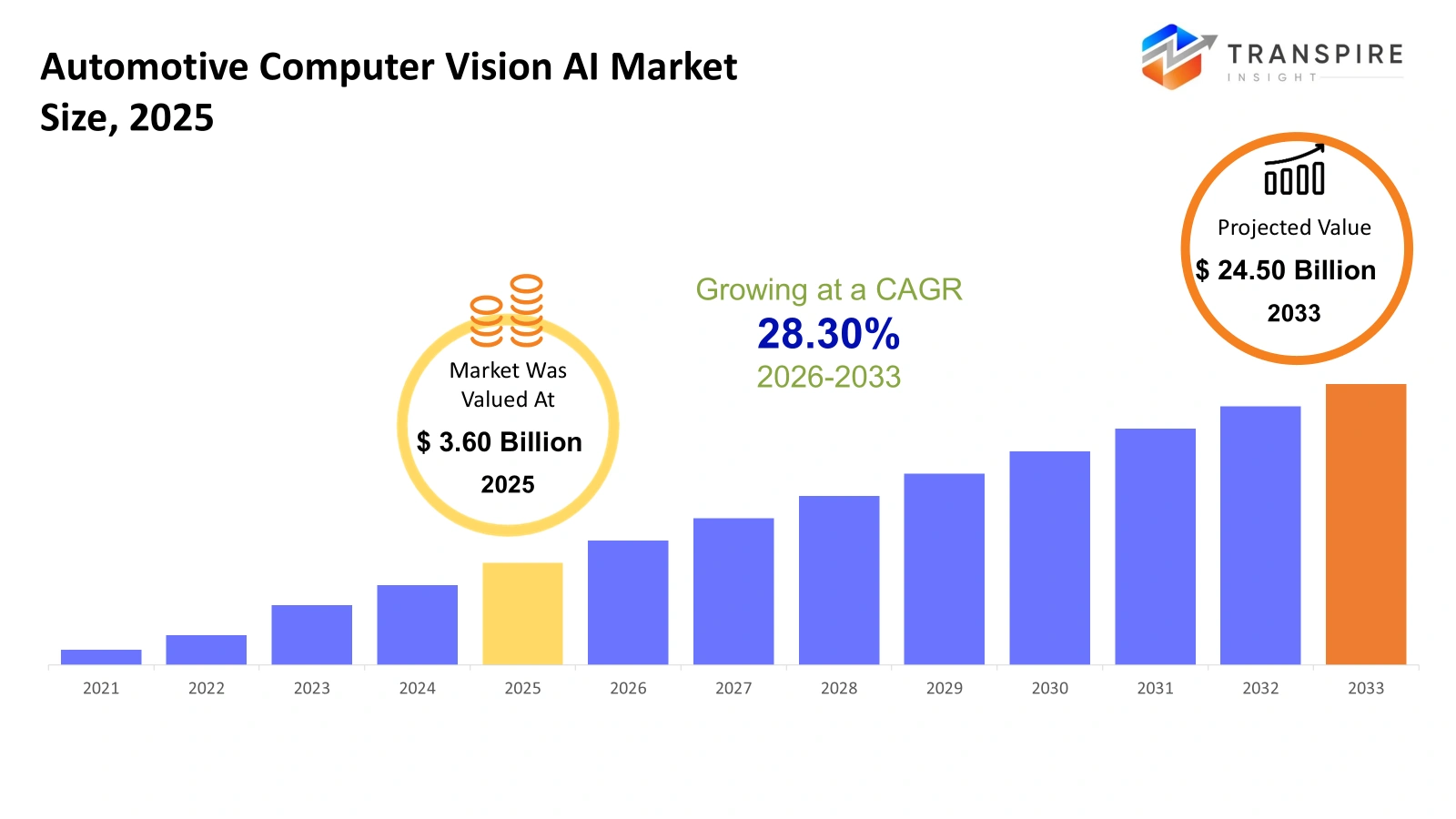
The global Automotive Computer Vision AI market size was valued at USD 3.60 billion in 2025 and is projected to reach USD 24.50 billion by 2033, growing at a CAGR of 28.30% from 2026 to 2033. Computer vision AI sees a rising need because ADAS keeps expanding alongside self-driving cars. These technologies depend on spotting objects instantly, thanks to smart image processing. Lane tracking runs constantly during operation, powered by visual data streams. Traffic patterns are studied live through cameras instead of the old methods.
Market Size & Forecast
- 2025 Market Size: USD 3.60 Billion
- 2033 Projected Market Size: USD 24.50 Billion
- CAGR (2026-2033): 28.30%
- North America: Largest Market in 2026
- Asia Pacific: Fastest Growing Market
 To learn more about this report,
  Download Free Sample Report
Key Market Trends Analysis
- The North American market share is estimated to be approximately 48% in 2026. Heavy spending on self-driving car tech puts North America ahead in vehicle vision AI. Home to top names in both autos and artificial intelligence, the area moves fast to embrace smart safety features. Roads here run on modern frameworks that help these systems thrive. Rules from authorities back innovation, giving room to grow. Lots of cars now come packed with assistant tools powered by machine thinking.
- Out front in the region, the United States holds its lead because big names in self-driving cars are based there. A lively scene for AI progress helps keep ideas moving fast. Computer vision is showing up more and more inside everyday vehicles. Automakers now weave advanced driver aids into new models at a quicker pace. That shift pushes the market forward without needing flashy promises or bold claims. Growth just follows where tech goes next.
- China, Japan, and India push change through heavy spending on self-driving tech and smart transport systems. Machine-driven safety tools spread quickly here, helped by massive car output across the area. Growth surges as factories multiply and drivers want smarter cars. This part of the world moves fastest, lifted by scale and innovation in motion.
- Hardware Segment will have a share upto 45% in 2026. Cameras, sensors, and AI chips pile into vehicles, pushing hardware ahead. As machines need faster sight and self-driving smarts, physical components take the lead. With every added feature, gears shift toward tangible tech instead of software alone.
- Deep learning takes the lead, making instant choices possible by spotting objects and recognizing patterns on the fly. This ability shapes how self-driving cars and safety systems respond without delay.
- Most cars on the road today come packed with tech like automatic braking, help when parking, and systems that watch the driver. These features spread fast because millions of such vehicles roll out every year across the world.
- It's the growing need for safety tools like emergency stops, staying centered in lanes, plus systems that spot crashes before they happen, now common in high-end and everyday cars alike.
Growth in automotive computer vision AI market comes from smarter cars using artificial intelligence to see better, stay safer, avoid crashes, and move on their own. Cameras feed images to systems that pick out people, lights, and road markings by learning patterns over time. Instead of just reacting, these tools anticipate what might happen next while watching how drivers act behind the wheel. Progress here means machines handle more tasks once done only by humans during travel. What used to be science fiction now rolls down highways every day without fanfare. Intelligence built into today’s vehicles reshapes how they interact with their surroundings silently. Real change happens when software reads complex scenes faster than the eyes can follow. Machines notice small details like a child near a curb - that older tech missed entirely.
More cars now come with smart tools that help drivers stay safe. Because of this shift, the business around these technologies keeps getting bigger. Car makers add things like alerts for drifting between lanes or warnings if a crash might happen ahead. When danger appears, some vehicles can even stop themselves quickly. Watching how alert the person behind the wheel stays has also become common. All these pieces depend heavily on software that lets machines see and understand their surroundings. Safety goes up when such aids work well. Fewer crashes occur thanks to early signals and quick reactions built into today's automobiles. Efficiency during daily drives improves, too. That is why most new models include several of these functions as standard parts.
Computers see better now because smarter software helps them understand images. Cameras capture details more quickly thanks to improved parts inside them. Instead of waiting, decisions happen on the spot using nearby processing power. Seeing objects gets easier when visuals mix with signals from radar or laser scans. Machines driving themselves rely on these combined inputs to move safely through complex spaces. What once took seconds now happens almost instantly, making responses sharper and reactions smoother.
Spurred by fresh funding, progress in smart transport links up with advances in self-driving tech. Car makers team up with tech firms, aiming their efforts at smarter camera-driven tools that boost how cars drive themselves. Safety for those inside gets sharper when these visual systems learn more. With autos leaning harder into code and less into mechanics, eyes made of algorithms stay central to what comes next. Down the road, machines that see will shape how vehicles move without help.
Segmentation
By Component
- Hardware
Cameras snap images while sensors gather surroundings processors then piece it together. What you get is a system that sees like eyes but runs on circuits. Built into cars, these parts work as one nervous network. Vision starts here, where metal meets machine thinking. Each component plays its role without needing commands.
- Software
Running behind the scenes, software handles how machines see and identify things using artificial intelligence. It decides what actions follow based on the visual data it processes. What makes vehicles act smart lies largely in this hidden layer of code. Without it, automated responses would not happen nearly as fast or accurately.
- Services
Running smoothly takes more than just code. Keeping things working means constant check-ins and upgrades happen along the way. Systems talk to each other because connections are built on purpose. Updates roll through steadily, so nothing falls behind. Performance stays sharp when changes come regularly. Improvement never stops since adjustments fit new needs. Maintenance is not occasional; it is part of the rhythm.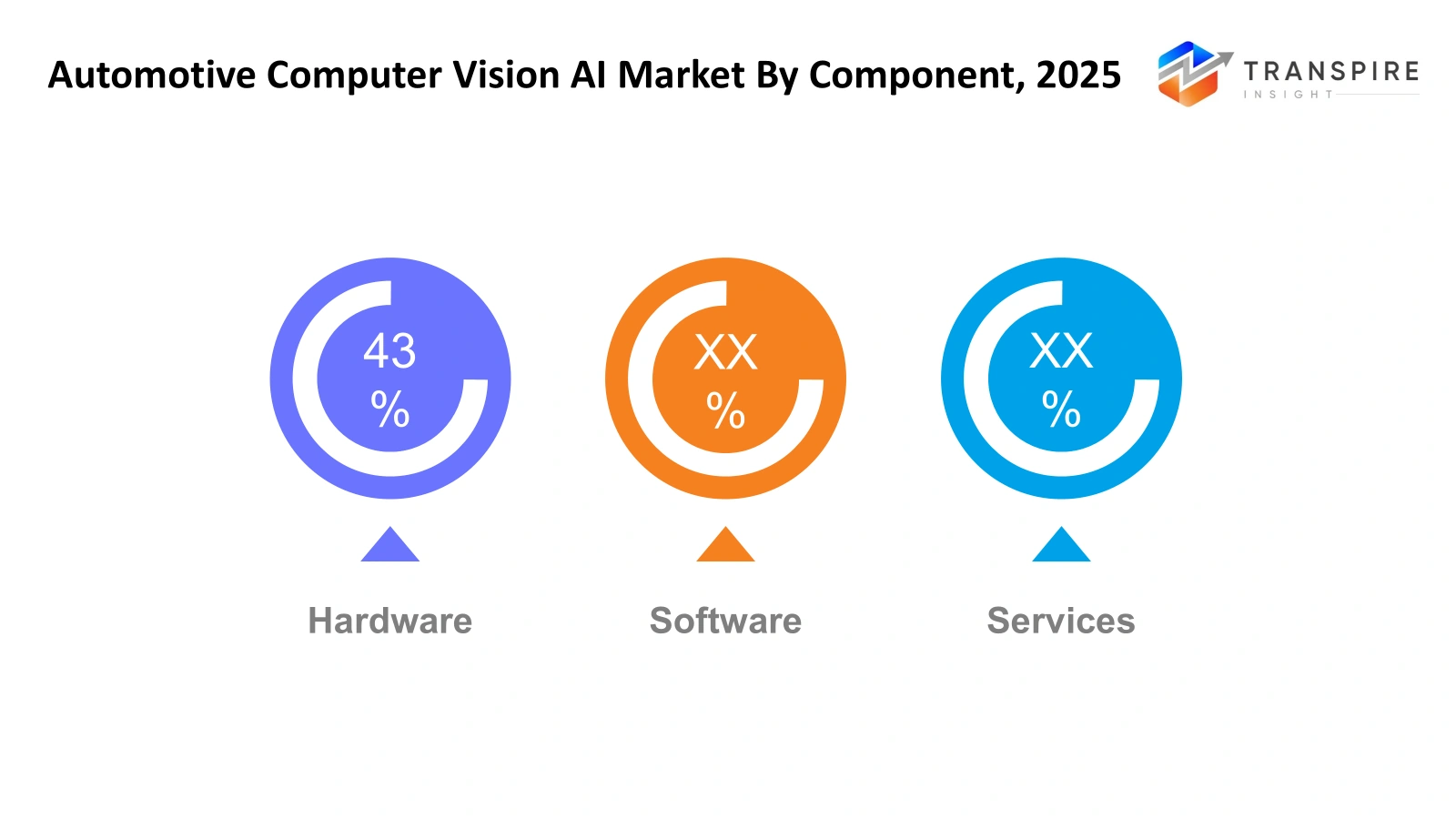 To learn more about this report, Download Free Sample Report
By Technology
- Image Recognition
Seeing clearly matters when machines drive. A car watches the world like eyes do, spotting stop signs because it must know what they mean. Lines on pavement guide its path since staying centered keeps things steady. Objects ahead appear in view, so distance can be judged right away. This vision works quietly while wheels turn down streets under sun or rain.
- Object Detection and Tracking
Starting with what cars can now do, spotting things around them becomes possible through object detection and tracking. Moving or still, items get recognized by systems that follow their motion across space. Awareness grows when machines identify a pedestrian here, a parked truck there. Safety rises because the vehicle sees more than before. What used to be invisible gets noticed early.
- Deep Learning
When machines learn deeply, they spot patterns better. Real-time choices become quicker because of how these systems adapt. Accuracy grows as the process runs without constant oversight. Efficiency rises when tasks evolve through layered thinking.
- Computer Vision Processing
A sudden shift happens when cameras feed live images into a vehicle’s brain. As details stream in, shapes and movements get recognized on the fly. When something crosses the path, decisions form without delay. Because space and motion are tracked constantly, reactions align with what lies ahead. With every frame analyzed, awareness grows sharper. Though it seems instant, layers of pattern work behind the scenes. After spotting changes, adjustments happen in silence.
By Vehicle Type
- Passenger Vehicles
Most cars on the road today pack smart safety tech. Because drivers want better protection, vehicle makers add more ADAS tools. These systems rely heavily on artificial intelligence. As demand grows, so does the number of models with built-in assistance features. Technology once seen only in luxury models now appears across everyday vehicles.
- Commercial Vehicles
Fleet safety gets a boost when commercial trucks use smart cameras that learn from what they see. Instead of just recording, these systems watch how drivers act behind the wheel. Some vans now track attention levels to reduce risky moments on long routes. Efficiency climbs once machines spot patterns humans miss during daily runs.
By Application
- Advanced Driver Assistance Systems
Computer vision helps cars stay safe by spotting lanes plus warning drivers before crashes happen. These smart tools come alive inside systems built to assist behind the wheel. Safety gets a boost when machines watch the road alongside people. Vision-based tech acts fast, seeing what humans might miss in heavy traffic. Machines track lines on pavement while judging nearby vehicles’ positions constantly. Alerts pop up if danger draws near without response. Driving changes when software joins the task of staying aware.
- Autonomous Driving
That tech leans on smart cameras watching the road nonstop. Machines see what’s ahead using artificial brains trained to spot things. Moving safely comes down to how well those systems track changes around them. Without someone at the wheel, decisions must come fast, guided by constant image analysis. Watching, reacting, and adjusting all happen while rolling forward.
- Driver Monitoring Systems
A camera watches the driver closely, spotting signs of drowsiness or wandering attention. When eyes blink too long or gaze shifts away, alerts can sound. Some setups notice head position tilting downward. Others catch hands, leaving the wheel too often. Awareness slips are common late in journeys. Technology steps in when reflexes lag behind danger. Small warnings might nudge focus back on the road ahead. Real-time feedback supports sharper reactions before trouble unfolds.
- Parking Assistance
Parked cars become easier to handle when cameras watch nearby objects. A digital eye spots walls or poles during tight turns instead of guessing distances. This tech helps avoid bumps by showing risks on screen while sliding into spaces slowly.
- Traffic Sign Recognition
Seeing street signs clearly makes driving safer. When cars detect these markers, they help drivers follow posted rules without guesswork. Spotting a speed limit or stop sign becomes easier when systems highlight them. This kind of tech pays attention so people can stay focused on the road ahead.
- Pedestrian Detection
When someone walks near traffic, cars can now spot them instantly. This ability helps avoid collisions by reacting quickly to movement on foot. Instead of relying only on drivers, sensors do part of the work too. Staying alert gets easier when machines help watch the surroundings. Safety goes up because responses happen faster than before.
Regional Insights
Big car makers, tech firms, and self-driving startups pack North America, making it lead the auto vision AI field. The United States stands out, thanks to heavy R&D spending, quick uptake of automated driving tools, while ADAS spreads through everyday cars. Rules that back safer, smarter vehicles also help push growth forward across the area.
Germany, France, and the United Kingdom help Europe stay central in the market thanks to tough car safety rules and active auto production zones. Instead of waiting, many already use smart cameras that watch drivers, along with tools spotting people near roads. High-end car makers live here, which pulls more cash into self-driving and battery-powered models. Because of that, systems letting cars see their surroundings get stronger attention across the industry.
Fastest gains should come from Asia-Pacific, driven by booming car manufacturing alongside wider use of artificial intelligence across China, Japan, South Korea, and India. With more people wanting safer vehicles, support grows from policies pushing smarter transport systems. On another front, Latin America, along with parts of the Middle East and Africa, sees steady momentum, helped by better roads and factories slowly catching up. Adoption of tech that prevents crashes rises there too, fed by fresh funding into networks linking cars and cities.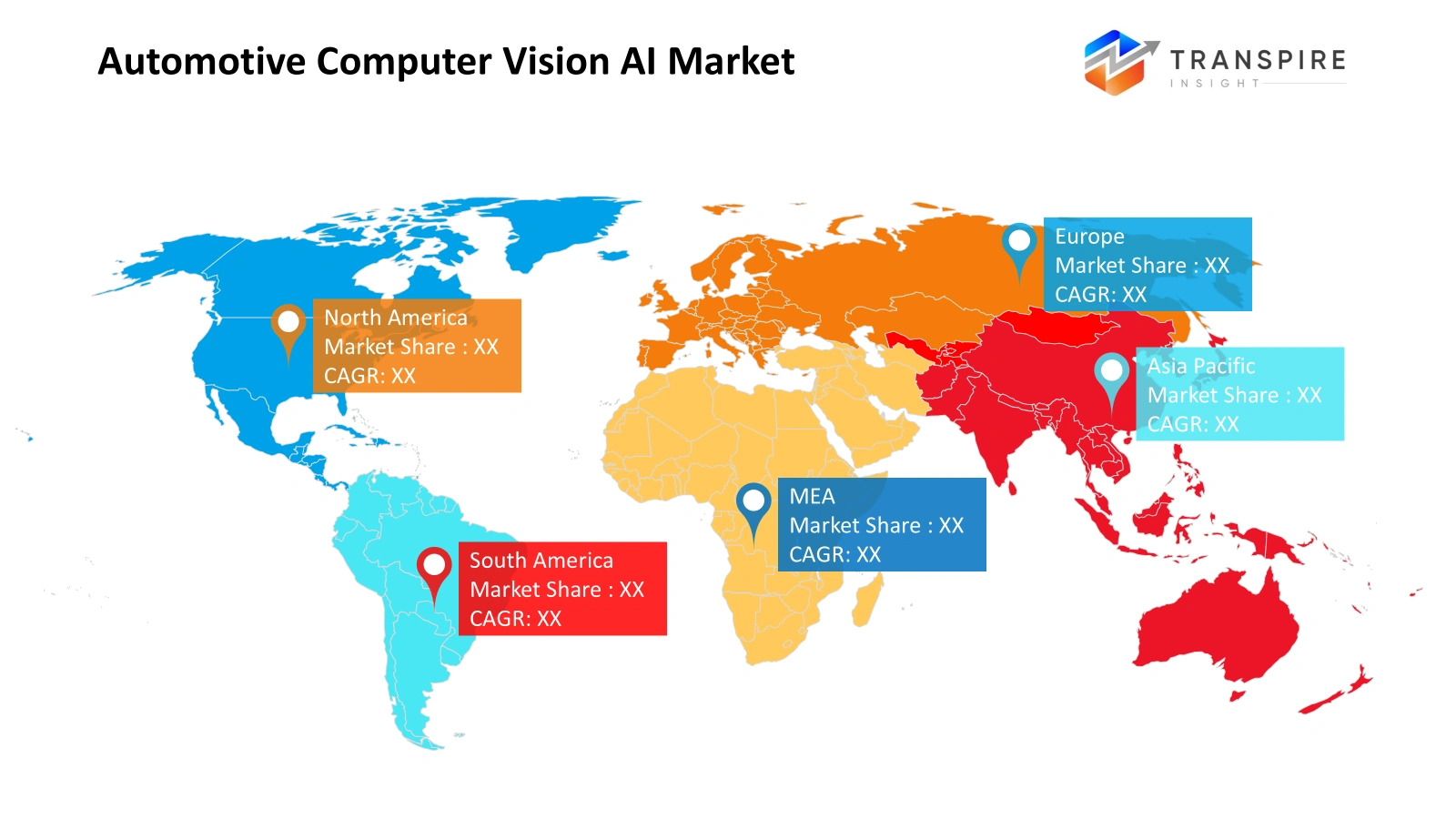
To learn more about this report, Download Free Sample Report
Recent Development News
- February 23, 2026 – Assert AI launched a privacy-first computer vision platform to transform automotive showroom intelligence.
- January 14, 2026 – Wisedrive AI-powered car inspection ecosystem launched
(Source:https://www.carz.com.my/2026/01/wisedrive-ai-powered-used-car-inspection-ecosystem-launched)
|
Report Metrics |
Details |
|
Market size value in 2025 |
USD 3.60 Billion |
|
Market size value in 2026 |
USD 4.40 Billion |
|
Revenue forecast in 2033 |
USD 24.50 Billion |
|
Growth rate |
CAGR of 28.30% from 2026 to 2033 |
|
Base year |
2025 |
|
Historical data |
2021 – 2024 |
|
Forecast period |
2026 – 2033 |
|
Report coverage |
Revenue forecast, competitive landscape, growth factors, and trends |
|
Regional scope |
North America; Europe; Asia Pacific; Latin America; Middle East & Africa |
|
Country scope |
United States; Canada; Mexico; United Kingdom; Germany; France; Italy; Spain; Denmark; Sweden; Norway; China; Japan; India; Australia; South Korea; Thailand; Brazil; Argentina; South Africa; Saudi Arabia; United Arab Emirates |
|
Key company profiled |
NVIDIA Corporation, Intel Corporation, Mobileye, Qualcomm Incorporated, Robert Bosch GmbH, Continental AG, Valeo, Aptiv PLC, Magna International Inc., Texas Instruments Incorporated, NXP Semiconductors, Ambarella Inc., Samsung Electronics, OmniVision Technologies, Sony Group Corporation, ZF Friedrichshafen AG, and Denso Corporation. |
|
Customization scope |
Free report customization (country, regional & segment scope). Avail customized purchase options to meet your exact research needs. |
|
Report Segmentation |
By Component (Hardware, Software, Services), By Technology (Image Recognition, Object Detection and Tracking, Deep Learning, Computer Vision Processing), By Vehicle Type (Passenger Vehicles, Commercial Vehicles), By Application (Advanced Driver Assistance Systems, Autonomous Driving, Driver Monitoring System, Parking Assistance, Traffic Sign Recognition, Pedestrian Detection) |
Key Company Insights
One name stands out in car-based AI vision - NVIDIA. Built on powerful chips, their tech helps cars see and react instantly. Instead of just selling parts, they offer full systems that learn and adapt. Real-time decisions come alive through fast graphics processors paired with smart code. Car makers lean on this setup for safer roads and self-driving features. Working alongside giants in auto manufacturing keeps progress moving forward. From spotting pedestrians to watching driver alertness, it handles many tasks at once. Learning happens quickly thanks to specialized math engines under the hood. Safety upgrades emerge naturally when machines interpret scenes as humans do. Speed meets precision where data flows without delay across onboard networks. Their role is not flashy - it simply enables smarter vehicles from within. Big steps happen quietly through constant refinement behind the scenes. Vision systems grow sharper by training on endless streams of road footage. Efficiency comes not from shortcuts but from raw computational muscle. Autonomous functions rely heavily on split-second analysis made possible here.
Key Companies:
- NVIDIA Corporation
- Intel Corporation
- Mobileye
- Qualcomm Incorporated
- Robert Bosch GmbH
- Continental AG
- Valeo
- Aptiv PLC
- Magna International Inc.
- Texas Instruments Incorporated
- NXP Semiconductors
- Ambarella Inc.
- Samsung Electronics
- OmniVision Technologies
- Sony Group Corporation
- ZF Friedrichshafen AG
- Denso Corporation.
Global Automotive Computer Vision AI Market Report Segmentation
By Component
- Hardware
- Software
- Services
By Technology
- Image Recognition
- Object Detection and Tracking
- Deep Learning
- Computer Vision Processing
By Vehicle Type
- Passenger Vehicles
- Commercial Vehicles
By Application
- Advanced Driver Assistance Systems
- Autonomous Driving
- Driver Monitoring System
- Parking Assistance
- Traffic Sign Recognition
- Pedestrian Detection
Regional Outlook
- North America
- United States
- Canada
- Mexico
- Europe
- Germany
- United Kingdom
- France
- Spain
- Italy
- Rest of Europe
- Asia Pacific
- Japan
- China
- Australia & New Zealand
- South Korea
- India
- Rest of Asia Pacific
- South America
- Brazil
- Argentina
- Rest of South America
- Middle East & Africa
- Saudi Arabia
- United Arab Emirates
- South Africa
- Rest of the Middle East & Africa
Frequently Asked Questions
Find quick answers to common questions.
The approximate Automotive Computer Vision AI Market size for the market will be USD 24.50 billion in 2033.
Key segments for the Automotive Computer Vision AI Market are By Component (Hardware, Software, Services), By Technology (Image Recognition, Object Detection and Tracking, Deep Learning, Computer Vision Processing), By Vehicle Type (Passenger Vehicles, Commercial Vehicles), By Application (Advanced Drivers Assistance Systems, Autonomous Driving, Driver Monitoring System, Parking Assistance, Traffic Sign Recognition, Pedestrian Detection).
Major Automotive Computer Vision AI Market players are NVIDIA Corporation, Intel Corporation, Mobileye, Qualcomm Incorporated, Robert Bosch GmbH, and Continental AG.
The North America region is leading the Automotive Computer Vision AI Market
The Automotive Computer Vision AI Market CAGR is 28.30%.
- NVIDIA Corporation
- Intel Corporation
- Mobileye
- Qualcomm Incorporated
- Robert Bosch GmbH
- Continental AG
- Valeo
- Aptiv PLC
- Magna International Inc.
- Texas Instruments Incorporated
- NXP Semiconductors
- Ambarella Inc.
- Samsung Electronics
- OmniVision Technologies
- Sony Group Corporation
- ZF Friedrichshafen AG
- Denso Corporation.
Recently Published Reports
-
Apr 2026
ATV & UTV Market
ATV & UTV Market Size, Share & Analysis Report By Type (ATV, and UTV), By Variants (Less Than 400 CC, 400 CC To 800 CC, and More Than 800 CC), and Geography (North America, Europe, Asia-Pacific, Middle East and Africa, South and Central America), 2021 - 2031
-
Apr 2026
Automotive Central Gateway Module Market
Automotive Central Gateway Module Market Size, Share & Analysis Report By Type (Ethernet Central Gateway Module, CAN Central Gateway Module, LIN Central Gateway Module, and FlexRay), By Application (Powertrain Control, Body Control, Infotainment System, Advanced Driver Assistance Systems (ADAS), and Others), By End User (Passenger Vehicles, and Commercial Vehicles), and Geography (North America, Europe, Asia-Pacific, Middle East and Africa, South and Central America), 2021 - 2031
-
Apr 2026
Automotive Engine Oil Filter Market
Automotive Engine Oil Filter Market Size, Share & Analysis Report By Filter Type (Fuel Filter, Engine Oil Filter, Hydraulic Oil Filter, and Others), By Filter Media (Cellulose, Synthetic, and Micro), By Sales Channel (OEMs, and Aftermarket), By Vehicle Type (Passenger Cars, Light Commercial Vehicles, Heavy Duty Trucks, Buses and Coaches, and Off-road Vehicles), and Geography (North America, Europe, Asia-Pacific, Middle East and Africa, South and Central America), 2021 - 2031
-
Apr 2026
Automotive Parts Aluminium Die Casting Market
Automotive Parts Aluminium Die Casting Market Size, Share & Analysis Report By Production Process (Pressure Die Casting, Vacuum Die Casting, Squeeze Die Casting, Gravity Die Casting), By Application (Body Parts, Engine Parts, Transmission Parts, Battery And Related Components, Other Application Types), and Geography (North America, Europe, Asia-Pacific, Middle East and Africa, South and Central America), 2021 - 2031
Our Clients