

Asia Pacific Carbapenem Market Size & Forecast:
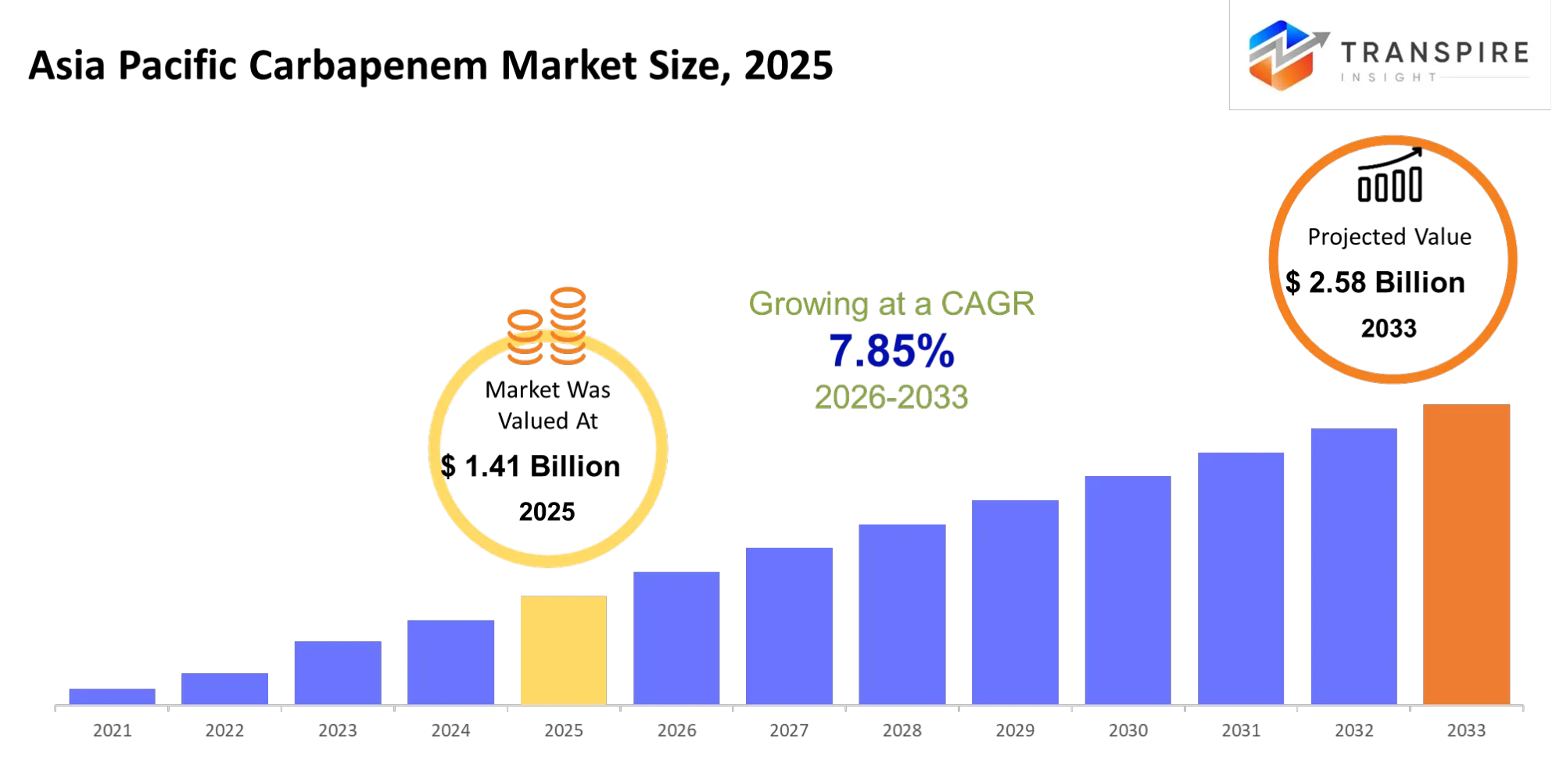
- Asia Pacific Carbapenem Market Size 2025: USD 1.41 Billion
- Asia Pacific Carbapenem Market Size 2033: USD 2.58 Billion
- Asia Pacific Carbapenem Market CAGR: 7.85%
- Asia Pacific Carbapenem Market Segments: By Drug Type (Meropenem, Imipenem, Ertapenem, Doripenem, Biapenem, Panipenem, Others); By Application (Hospital Acquired Infections, Respiratory Infections, Urinary Tract Infections, Sepsis, Intra-Abdominal Infections, Others); By Distribution Channel (Hospital Pharmacies, Retail Pharmacies, Online Pharmacies, Government Supply, Others); By End User (Hospitals, Clinics, Ambulatory Centers, Specialty Centers, Others)
Asia Pacific Carbapenem Market Summary
The Asia Pacific Carbapenem Market was valued at USD 1.41 billion in 2025. It is forecast to reach USD 2.58 billion by 2033. That is a CAGR of 7.85% over the period.
The Asia Pacific Carbapenem Market is of vital importance for treating life-threatening bacterial infections in situations where initial courses of antibiotics have proven to be ineffective, which is more common in hospital settings with prevalent multidrug resistant organisms, those on the ventilator or within the ICU, and patients in the operating room with difficult to manage complications. These drugs can prevent health systems from losing their ability to treat life-threatening infections with their associated longer lengths of stay, higher mortality rates and increased costs.
Over the past three to five years, there has been a structural shift in the market toward increased antimicobial stewardship and more targeted administration of these agents-especially against multidrug resistant strains-and combining with diagnostic tests that speed up treatment determination while decreasing unnecessary administration of agents. A significant trigger event that we've observed to increase the uptake and usage of these agents in the real-world has been the increase in hospital acquired infections (HAIs) and antibiotic resistant infections post-COVID-19 pandemic and increasing awareness around infection control. There has been a growing allocation of resources toward modern anti-infectives in the face of resistant organisms' increasing dissemination among health systems, and this increased resource allocation has further solidified demand for existing and novel carbapenem preparations and fueled investment toward expanding regional presence, regulatory approvals and clinical development.
Key Market Insights
- East Asia is the leading region in the Asia Pacific Carbapenem Market. It makes up around 38 to 42 percent of the market share in 2025. This is because East Asia has healthcare systems and many patients.
- South Asia will grow the fastest in the Carbapenem Market by 2032. This is due to improvements in healthcare and more people getting care services.
- In countries like China, India, Japan, South Korea and Southeast Asia national programs to monitor resistance are helping to increase the use of Carbapenem.
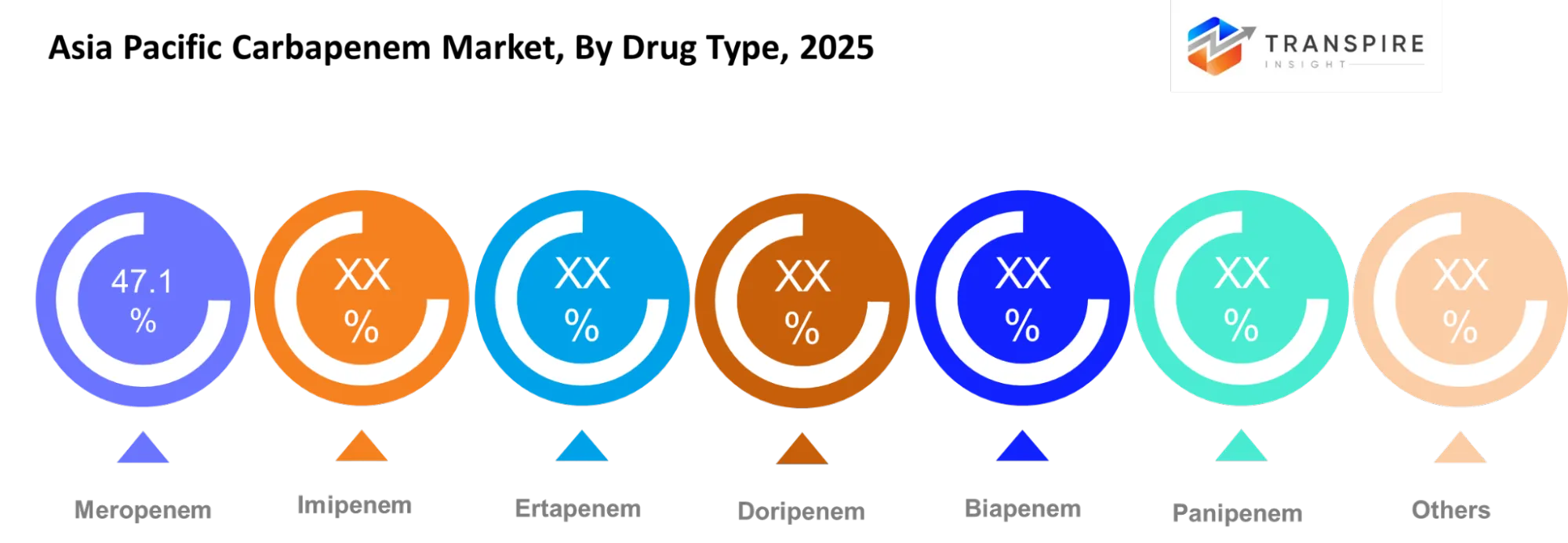
- Meropenem is the selling Carbapenem. It has around 35 to 40 percent of the market share in 2025. This is because it works well on a range of infections and many hospitals use it.
- Imipenem is the most used Carbapenem. It has been used for a time to treat complicated infections.
- Ertapenem will grow the fastest between 2025 and 2032. This is because it has a dosing schedule and is used to treat more types of infections.
- Hospital-acquired infections make up around 40 to 45 percent of the market demand in 2025. This makes them the biggest application segment.
- Respiratory infections are growing fast. This is because hospitals want treatments for patients in intensive care.
- The spread of pathogens is changing how doctors prescribe antibiotics. This is leading to use of advanced antibiotic therapies like Carbapenem.
- Hospitals have, around 70 to 75 percent of the market share in 2025. This is because they are the places that treat severe and drug-resistant infections.
What are the Key Drivers, Restraints, and Opportunities in the Asia Pacific Carbapenem Market?
The largest driver behind the acceleration of the Asia Pacific Carbapenem Market is the alarming increase of AMR across hospitals and critical care units. It has been increasingly difficult for healthcare systems to treat multidrug resistant G-negative bacterial infections with traditional antibiotics due to the development of high resistance rates to these agents. In addition to this rise, after the COVID-19 crisis healthcare settings have observed high rates of hospital acquired infections and challenging bacterial comorbidities. This phenomenon has caused for more physicians to rely on the carbapenems as a safe last-line of treatment. This ultimately increases consumption of carbapenems in ICU units, surgical departments and tertiary hospitals therefore increasing sales and profits.
The largest restriction facing the market are that of the widespread implementation of antimicrobial stewardship programs. These limitations are structural in nature as they are incorporated into nation-specific healthcare policies, hospital prescribing pathways and guidelines issued by infectious disease societies. Carbapenem prescription is carefully regulated to decrease the incidence of developing resistant pathogens. However, even though these limitations are essential clinically they inherently reduce physicians' propensity to over prescribe their patients and limits how frequently carbapenems can be prescribed on an empiric basis. In many established markets growth will likely be severely limited despite the necessity of carbapenems as they significantly limit the profit that may be gained.
Another big opportunity is through the implementation of rapid molecular diagnostic systems throughout the healthcare sector in Asia Pacific. While it may take days for certain resistant organisms to be detected through conventional methods, more advanced diagnostic systems will be able to detect them within hours, hence allowing for a shorter time to prescription for targeted carbapenem treatment. With the growing efforts by countries like China and India to invest in the upgrades of their hospital laboratories, market uptake will become even easier, as further improvements in diagnostics should lead to more effective carbapenem usage.
What Has the Impact of Artificial Intelligence Been on the Asia Pacific Carbapenem Market?
There is an evolution of the carbapenem market due to the effects of artificial intelligence and advanced digital technology in various areas. Asia-Pacific health care institutions are incorporating artificial intelligence in clinical decision making by using clinical data, test results, and pathogen profiles for help in choosing appropriate antibiotics and reducing time taken for antibiotic reviews.
AI is thus improving compliance with antimicrobial stewardship policies. Additionally, AI and machine learning algorithms are further advancing prediction capabilities within infection management; practitioners now utilize predictive analytics to accurately pinpoint patients prone to multidrug-resistant infections, allowing prompt intervention and optimal carbapenem use. In manufacturing, AI-enhanced quality control systems can promptly identify deviations during production, ensuring higher batch uniformity and minimal waste, whilst sophisticated analytics provide deeper supply chain visibility and prediction capabilities, enhancing ability to anticipate and mitigate potential stock outs at hospital level.
These tools can help ensure timely and evidence-based therapy, better management of antibiotics, less waste from purchase and finally, more regulatory adherence. Many health networks have shown increased inappropriate prescribing, decreased inappropriate antibiotics usage and better use of resources thanks to data-driven stewardship programs.
Key Market Trends
- Since 2020 hospitals have changed how they give medicine to patients. They used to give medicine to everyone. Now they try to figure out whats making the patient sick and give them medicine that targets that specific thing. They can do tests now.
- Antimicrobial stewardship programs have become more popular in countries like China, Japan, Australia and South Korea from 2021 to 2025. These programs help make sure patients are not given antibiotics that they do not need.
- After the pandemic hospitals started spending money on ways to fight infections in big hospitals that deal with bacteria that are resistant to many medicines.
- Some big companies like Merck, Pfizer and Viatris have made their supply chains stronger. This happened after the pandemic showed that they were not ready for disruptions.
- Some healthcare systems have changed how they buy antibiotics. They used to buy a lot of antibiotics and hope they would work. Now they try to buy antibiotics that they know will work for their patients. This also helps stop the bacteria from becoming resistant.
- Doctors can now use machines to figure out whats making a patient sick in a hours instead of a few days. This has been happening often since 2021.
- In India local companies that make medicines have started making more of a kind of antibiotic called carbapenem between 2022 and 2025. This means India does not have to rely on countries for these medicines.
- The people in charge of making sure medicines are safe are watching closely to see if bacteria are becoming resistant to antibiotics. This means doctors have to be more careful about what medicines they give to patients. Hospitals have to keep track of what medicines they're using.
- Companies that make medicines are trying to make their medicines better. They also want to get them approved in countries.
- Doctors and hospitals are using computer programs. These programs help them choose the medicines for their patients and make sure they are not giving them the wrong medicines. This is helping to reduce the number of times patients are given antibiotics that they do not need.
- Hospitals are doing a job of managing antibiotic use. This is helping to stop bacteria from becoming resistant, to antibiotics. Antibiotic stewardship programs are a part of this. These programs help hospitals use antibiotics in a way thats safe and effective.
Asia Pacific Carbapenem Market Segmentation
By Drug Type:
Meropenem continues to be quite effective within health care organizations due to its broad-spectrum efficacy and reliable history in treating severe bacterial infections. The medication is used extensively in intensive care units and tertiary hospitals; thus, the consistent demand remains stable. The increased concerns over the emergence of multidrug-resistant pathogens drive medical professionals' preferences towards such medications. Moreover, the presence of treatment protocols facilitates the adoption of meropenem into clinical practice in major international markets.
Imipenem keeps showing up as a key option for complicated infections and it stays relatively stable on hospital formularies. Ertapenem gets a bit more notice because of convenient dosing rhythms, which helps with efficient treatment management. Doripenem, Biapenem and Panipenem, they each fit certain clinical requirements in specific healthcare environments. Meanwhile, other carbapenem products keep covering the narrower, less common needs, so healthcare providers can handle a broader assortment of resistant bacterial infections.
By Application:
Hospital acquired infections make up a pretty meaningful share of treatment volumes, mostly because healthcare facilities keep running into difficulties with resistant pathogens. Intensive care units often need advanced antibiotic therapies, not just because , but for more complex infection management in general. Stronger infection control measures have also pushed people to pay more attention to timely and effective treatment approaches. Clinical demand still seems closely tied to how severe bacterial complications are handled day to day.
Respiratory infections are a major use case, especially since hospitalization rates are rising among vulnerable patient groups. Urinary tract infections, along with intra abdominal infections, also contribute a lot to prescription volumes across many hospitals. Skin and soft tissue infections offer additional treatment opportunities, since resistance concerns can reduce how well first line antibiotic options work. Beyond that, other applications keep supporting market expansion by requiring specialized infection management needs.
By Distribution Channel:
Distribution will be mainly carried out through hospital pharmacies owing to the need for controlled use of carbapenem drugs within healthcare institutions. The significance of distribution through such outlets is heightened by the strict controls on prescription of the products. Big purchase deals and centralized buying processes also promote this trend. Consistent flow of patients within big hospitals helps sustain this trend.
Retail pharmacies maintain a smaller but relevant position in regions where approved treatment protocols allow broader access. Online pharmacies continue to expand digital healthcare participation, although regulatory oversight remains important for antibiotic distribution. Other distribution channels support specialized healthcare networks and regional supply requirements. Supply chain improvements and inventory management systems continue to enhance product availability across multiple channels.
By End User:
The hospital is considered the major end-user segment since patients suffering from infections and resistant to drugs would need high-end clinical support and monitoring. Intensive care units, surgeries, and centers for infections provide a major source of treatment. The growing healthcare industry in the region boosts demand from hospitals. The investments being made towards the improvement of diagnostics are driving clinical application in this segment.
Specialty clinics are involved in treatment delivery by providing specialized services for infections, among other diseases. The ambulatory surgery centers are slowly becoming engaged in treatment as the processes become more organized. There are other end-users who focus on particular conditions and patient populations for which they provide their expertise. Improvements in access and quality of services will facilitate this trend.
What are the Key Use Cases Driving the Asia Pacific Carbapenem Market?
A significant part of carbapenem consumption comes from usage in severe hospital-acquired infections, especially intensive care units, and tertiary hospitals. Hospital-acquired infections caused by multi-drug resistance bacteria often require an effective antibiotic intervention to cure a patient. The use of carbapenem in such circumstances makes up a vast proportion of demand in the examined area.
Usage of carbapenems in respiratory infections and complicated intra-abdominal infections is increasing consistently. Advanced medical facilities are implementing the use of carbapenem-based treatment in clinics treating patients with complex forms of bacterial infections. The increased rate of hospitalizations of older patients with chronic conditions continues to fuel the use of carbapenems in this area.
Rapid diagnostics are driving opportunities in precision antimicrobial therapy. Health care institutions start using sophisticated diagnostic tools to identify pathogens and determine whether they need treatment with carbapenem. Infection control programs have emerged as another growing application. Such programs include treatment of infections in order to control the emergence of resistance among pathogens.
|
Report Metrics |
Details |
|
Market size value in 2025 |
USD 1.41 Billion |
|
Market size value in 2026 |
USD 1.52 Billion |
|
Revenue forecast in 2033 |
USD 2.58 Billion |
|
Growth rate |
CAGR of 7.85% from 2026 to 2033 |
|
Base year |
2025 |
|
Historical data |
2021 - 2024 |
|
Forecast period |
2026 - 2033 |
|
Report coverage |
Revenue forecast, competitive landscape, growth factors, and trends |
|
Regional scope |
Asia Pacific (India, China, Japan, Australia, South Korea, Rest of Asia Pacific) |
|
Key company profiled |
Merck, Pfizer, AstraZeneca, GSK, Hikma, Sandoz, Teva, Viatris, Sun Pharma, Aurobindo Pharma, Dr. Reddy's, Lupin, Cipla, Fresenius Kabi, CSPC Pharma |
|
Customization scope |
Free report customization (country, regional & segment scope). Avail customized purchase options to meet your exact research needs. |
|
Report Segmentation |
By Drug Type (Meropenem, Imipenem, Ertapenem, Doripenem, Biapenem, Panipenem, Others); By Application (Hospital Acquired Infections, Respiratory Infections, Urinary Tract Infections, Sepsis, Intra-Abdominal Infections, Others); By Distribution Channel (Hospital Pharmacies, Retail Pharmacies, Online Pharmacies, Government Supply, Others); By End User (Hospitals, Clinics, Ambulatory Centers, Specialty Centers, Others) |
Which Regions are Driving the Asia Pacific Carbapenem Market Growth?
The most dominant player in the market is East Asia on account of its robust healthcare system, high patient base, and huge investments in infectious diseases management. Nations like China, Japan, and South Korea have highly advanced hospital infrastructures which can treat complicated cases of bacteria infections, requiring last resort antibiotics. Antimicrobial resistance surveillance programs initiated by governments and guidelines make the clinical usage of medicines more uniform and predictable. Having a highly developed production base for pharmaceuticals and wide availability of tertiary hospitals, the area enjoys favorable market dynamics.
The second largest player in the market is Oceania, but the market dynamics there differs significantly from the market dynamics in East Asia. Australia and New Zealand are known for their stable funding of healthcare, well-developed regulation policies, and antimicrobial stewardship which promotes proper use of medicines. In such an environment, the company revenues can be easily predicted since the growth comes from continuous funding instead of patient volumes.
South Asia is projected to experience the highest rates of growth during the forecast period. Large investments made in building healthcare facilities, critical care units, and diagnostics infrastructure have resulted in an increase in the availability of advanced infection treatment options. In India, there has been a substantial rise in the manufacturing of pharmaceuticals along with improving healthcare delivery channels in the recent past. This will offer promising prospects for businesses looking at growth prospects from 2026 to 2033.
Who are the Key Players in the Asia Pacific Carbapenem Market and How Do They Compete?
The competition in the Asia Pacific Carbapenem Market is fairly consolidated as multinationals compete with generic producers from the region. Competition occurs mainly based on the product portfolio, manufacturing capacity, regulatory clearance, reliable supply, and hospital connections. Companies continue to maintain their market share by virtue of their widespread reach and clinical expertise. Meanwhile, regional competitors continue to make their presence felt by delivering products at cost-effective prices. Having the ability to deliver consistently, in terms of quality and supply, along with hospital contacts becomes a critical differentiator in the market.
Merck continues to capitalize on its broad-based product range consisting of well-known brands for carbapenem treatments which have ample clinical backing. The reputation built around the efficacy of the drug makes sure that the usage is sustained even in the third tier hospitals because the results are closely watched by physicians. Meanwhile, Pfizer concentrates on increasing its reach through its large-scale commercial network.
Large scale production and strong footing in the Indian and other emerging markets of Asia Pacific are used by Sun Pharma and Dr. Reddy's as means of competing against one another. Cost efficient manufacturing and distribution in this region makes it possible for the two companies to provide healthcare providers with an alternative source of reliable supply at affordable prices. Cipla distinguishes itself through its focus on hospitals and growing healthcare facilities in emerging markets.
Company List
- Merck
- Pfizer
- AstraZeneca
- GSK
- Hikma
- Sandoz
- Teva
- Viatris
- Sun Pharma
- Aurobindo Pharma
- Dr. Reddy's Laboratories
- Lupin
- Cipla
- Fresenius Kabi
- CSPC Pharma
Recent Development News
- "In April 2026, Antabio presented new data on meropenem-pilabactam at the 36th Congress of the European Society of Clinical Microbiology and Infectious Diseases. The data highlighted continued development of a novel β-lactam/β-lactamase inhibitor combination targeting drug-resistant Gram-negative infections, supporting future innovation within advanced carbapenem-based therapies.https://antabio.com
- "In March 2026, the World Health Organization released new Target Product Profiles for urgently needed antibiotics addressing carbapenem-resistant Enterobacterales, Acinetobacter baumannii, and Pseudomonas aeruginosa. The initiative reinforces global R&D priorities and may encourage future investment in next-generation carbapenem and anti-resistance therapies.https://www.who.int/news/item
- "In April 2026, the European Commission announced a €30 Billion investment to strengthen the global response to antimicrobial resistance. Although not limited to carbapenems, the funding supports development and access initiatives for antibiotics targeting resistant pathogens that drive demand for advanced carbapenem therapies.https://health.ec.europa.
What Strategic Insights Define the Future of the Asia Pacific Carbapenem Market?
In the coming five to seven years, the market of carbapenems in the Asia Pacific region is expected to shift towards a smarter usage-based approach and away from straightforward volume expansion. The key driver behind the anticipated changes in market development includes increasing integration of antimicrobial stewardship programs along with rapid diagnostics, which allows healthcare practitioners to detect resistance pathogens quicker and utilize effective antimicrobials. Thus, further development will be dependent on efficacy of therapy and its optimization rather than general prescription rates.
An equally important yet less evident threat is the tightening of regulatory frameworks related to stewardship practices. Even though such measures help achieve public health objectives, they might lead to volume decrease and loss of sales opportunities for existing solutions. In addition, another problem facing the market relates to high market concentration that could jeopardize the availability of certain drugs due to limited facilities responsible for production.
A growing opportunity exists in the area of AI-based management of infectious diseases and molecular diagnostics, especially in India and Southeast Asia, where investments into healthcare infrastructure are rapidly increasing. It is important for market players to focus on collaborations with diagnostic companies and healthcare organizations to create an effective ecosystem in this sphere.
Asia Pacific Carbapenem Market Report Segmentation
By Drug Type
- Meropenem
- Imipenem
- Ertapenem
- Doripenem
- Biapenem
- Panipenem
- Others
By Application
- Hospital Acquired Infections
- Respiratory Infections
- Urinary Tract Infections
- Sepsis
- Intra-Abdominal Infections
- Others
By Distribution Channel
- Hospital Pharmacies
- Retail Pharmacies
- Online Pharmacies
- Government Supply
- Others
By End User
- Hospitals
- Clinics
- Ambulatory Centers
- Specialty Centers
- Others
Frequently Asked Questions
Find quick answers to common questions.
The expected Asia Pacific Carbapenem Market size for the market will be USD 2.58 Billion in 2033.
Key segments for the Asia Pacific Carbapenem Market are By Drug Type (Meropenem, Imipenem, Ertapenem, Doripenem, Biapenem, Panipenem, Others); By Application (Hospital Acquired Infections, Respiratory Infections, Urinary Tract Infections, Sepsis, Intra-Abdominal Infections, Others); By Distribution Channel (Hospital Pharmacies, Retail Pharmacies, Online Pharmacies, Government Supply, Others); By End User (Hospitals, Clinics, Ambulatory Centers, Specialty Centers, Others).
Major Asia Pacific Carbapenem Market players are Merck, Pfizer, AstraZeneca, GSK, Hikma, Sandoz, Teva, Viatris, Sun Pharma, Aurobindo Pharma, Dr. Reddy's, Lupin, Cipla, Fresenius Kabi, CSPC Pharma.
The Asia Pacific Carbapenem Market size is USD 1.41 Billion in 2025.
The Asia Pacific Carbapenem Market CAGR is 7.85% from 2026 to 2033.
- Merck
- Pfizer
- AstraZeneca
- GSK
- Hikma
- Sandoz
- Teva
- Viatris
- Sun Pharma
- Aurobindo Pharma
- Dr. Reddy's Laboratories
- Lupin
- Cipla
- Fresenius Kabi
- CSPC Pharma
About the Authors

Pankaj Ghogare Patil
I am Pankaj Ghogare Patil, a Senior Research Analyst at Transpire Insight, specializing in the Pharmaceutical, Chemicals & Materials, Healthcare IT, and Biotechnology industry. My expertise lies in conducting comprehensive market research, analyzing industry trends, evaluating competitive landscapes, and translating complex data into actionable insights. At Transpire Insight, I closely follow emerging technologies, regulatory developments, and market innovations to create accurate, well-researched, and informative content that helps businesses and professionals make informed decisions. I am committed to producing credible, evidence-based articles that reflect industry best practices while making technical topics accessible and valuable for a broad audience.

Chakradhar Khansole
Chakradhar serves as the Research Director at Transpire Insight, bringing over 8 years of experience in technology, innovation, and strategic market intelligence. He specializes in transforming complex market data into actionable business insights that enable organizations to make informed, growth-oriented decisions. Recognized for his strategic vision and analytical expertise, Chakradhar leads high-impact research initiatives, delivering comprehensive market assessments, competitive intelligence, and forward-looking industry analysis.
Recently Published Reports
-
Jul 2026
Alopecia Treatment Market
Alopecia Treatment Market Size, Share & Analysis Report By Disease Type (Alopecia Areata, Cicatricial Alopecia, Traction Alopecia, Alopecia Totalis, Androgenetic Alopecia, Alopecia Universalis, and Other Disease Types), By Treatment Type (Topical Treatments, Oral Medications, Injectable Therapies, and Hair Transplantation), By Gender (Male, and Female), By Distribution Channel (Hospitals and Clinics, Retail Pharmacies, and Online Retailers), and Geography (North America, Europe, Asia-Pacific, Middle East and Africa, South and Central America), 2021 - 2031
-
Jul 2026
Medical Ultrasound Probe Market
Medical Ultrasound Probe Market Size, Share & Analysis Report By Type (Linear Type, Convex Type, Endocavitary Probe, Phased Array/Cardiac Probe, Transesophageal (TEE) Probe, and Others), By Application (Ophthalmology, Cardiology, Musculoskeletal, Oncology, Obstetrics & Gynecology, General Imaging, and Others), By End User (Hospitals & Clinics, Diagnostic Centers, Ambulatory Surgical Centers, and Others), and Geography (North America, Europe, Asia-Pacific, Middle East and Africa, South and Central America), 2021 – 2031
-
May 2026
Biosimilars Market
Biosimilars Market By Product Type (Monoclonal Antibodies, Recombinant Hormones, Erythropoietin, G-CSF, Others), By Indication (Oncology, Autoimmune Diseases, Blood Disorders, Diabetes, Others), By Manufacturing Type (In-House Manufacturing, Contract Manufacturing), By Distribution Channel (Hospital Pharmacies, Retail Pharmacies, Online Pharmacies), By Industry Analysis, Size, Share, Growth, Trends, and Forecasts 2021-2033
-
Apr 2026
Gastrointestinal Endoscopy Market
Gastrointestinal Endoscopy Market By Type (Rigid Gastrointestinal Endoscope, Flexible Gastrointestinal Endoscopes, Disposable Gastrointestinal Endoscope), By Procedure Type (Colonoscopy, Gastroscopy, Duodenoscopy, Enteroscopy, Flexible Sigmoidoscopy, Others), By Application (Diagnosis, Treatment), By End-Users (Hospitals, Ambulatory Surgical Centers, Specialty Clinics, Laboratories, Others), By Industry Analysis, Size, Share, Growth, Trends, and Forecasts 2021-2033