

Asia Pacific Adventure Tourism Market Size & Forecast:
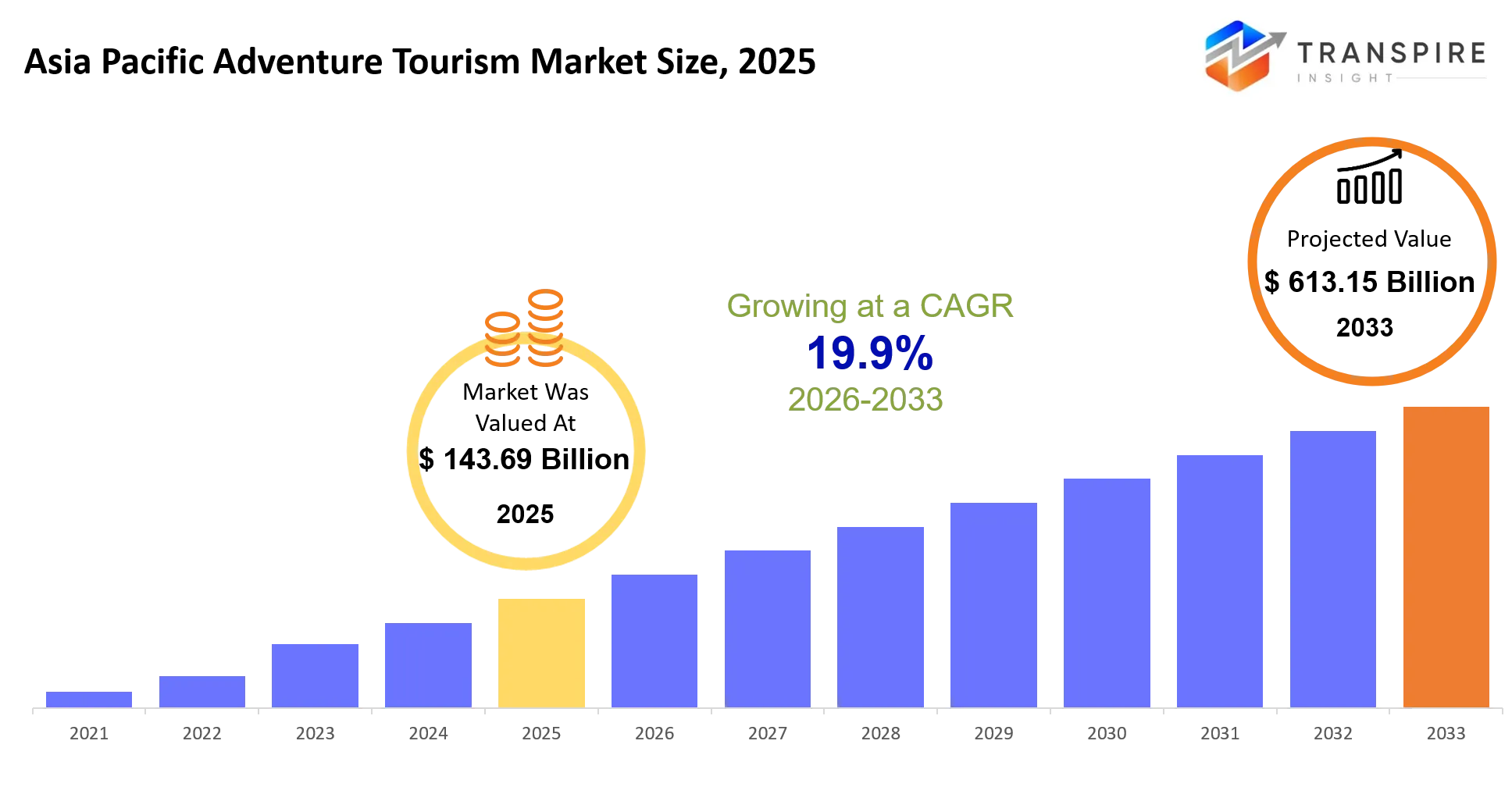
- Asia Pacific Adventure Tourism Market Size 2025: USD 143.69 Billion
- Asia Pacific Adventure Tourism Market Size 2033: USD 613.15 Billion
- Asia Pacific Adventure Tourism Market CAGR: 19.9%
- Asia Pacific Adventure Tourism Market Segments: By Tourism Type (Soft, Hard, Eco, Wildlife, Water, Mountain, Desert, Others) By Activity Type (Trekking, Hiking, Mountaineering, Scuba Diving, Rafting, Paragliding, Skiing, Others) By Traveler Type (Solo, Couples, Families, Groups, Students, Corporate, Senior, Others) By Booking Channel (OTA, Tour Operators, Direct Booking, Agents, Apps, Clubs, Resorts, Others)
To learn more about this report,  Download Free Sample Report
Asia Pacific Adventure Tourism Market Summary
The Asia Pacific Adventure Tourism Market was valued at USD 143.69 billion in 2025. It is forecast to reach USD 613.15 billion by 2033. That is a CAGR of 19.9% over the period.
The Asia Pacific Adventure Tourism Market links people who want to travel with organized , hands on outdoor experiences like trekking, diving, wildlife watching, climbing, rafting, and cultural journeys. But it is not only about vacation vibes. It also lets tourism operators, local communities, transport providers, and hotels and lodges make use of natural , geographic, and scenic value, while visitor spending ends up more often in far off and newer destinations, not just the usual hotspots.
Over the last five years , the whole scene kind of moved away from the classic group tour model, and more toward tailored, activity focused adventures that are managed digitally. Travelers are booking via mobile apps more and more, they compare what’s available in real time, and they seem to prefer smaller, purpose guided itineraries instead of fixed, one size fits all packages. One big cause was the COVID-19 pandemic, which pushed preferences toward open air places and lower crowd locations. Because of that, money started flowing away from the usual city tourism , and more into nature centered getaways. And as regional transport connections keep improving, with governments putting effort into eco tourism facilities and support, operators are widening what they offer, stretching the calendar across more months, and generating extra income. That also makes it easier for the market to grow for both domestic travelers and international explorers.
Key Market Insights
- The Asia Pacific Adventure Tourism Market is doing well because people want to do fun things like going to nature and making their own travel plans.
- This market will keep growing because more people are traveling and there are ways to book trips
- Australia and New Zealand are the places for adventure tourism in the Asia Pacific region and they will have around 28 to 32 percent of the Asia Pacific Adventure Tourism Market by 2025.
- These countries have roads, hotels and safety rules which makes them great for adventure travel.
- The Southeast Asia region is growing the fastest from 2025 to 2032 because countries are investing in tourism and making it easier for people to travel there.
- Countries like Thailand, Indonesia, Vietnam and the Philippines are getting more popular for nature travel and water activities.
- Most people like to do adventure tourism, which means doing fun things that're not too hard and this type of Asia Pacific Adventure Tourism will have around 60 percent of the Asia Pacific Adventure Tourism Market in 2025.
- The Asia Pacific Adventure Tourism Market also has something called eco-adventure tourism, which's the second most popular type of travel and people like it because they can help the environment and be in nature.
- Water activities like swimming, snorkeling and diving will become more popular as more beaches and coastal areas are developed.
- The Asia Pacific Adventure Tourism Market will keep making money from activities, like hiking and exploring wildlife and, from rafting and scuba diving.
What are the Key Drivers, Restraints, and Opportunities in the Asia Pacific Adventure Tourism Market?
The most driving force pushing the Asia Pacific Adventure Tourism Market ahead feels like a bit of both, faster air connectivity across the region and the way digital travel ecosystems kind of mesh together now. Over the last few years, airlines have brought back, then kept expanding, more routes across Southeast Asia, Australia, and South Asia, and meanwhile online travel platforms made it easier to locate, and then reserve, even more niche adventure options. When you put all that together, it basically lowers the access barriers for places that used to feel really far off, plus it lets operators connect with travelers more directly, without too much friction, or that whole slow back and forth. As a result, adventure tourism providers don’t only earn more from the journey itself. They also get better returns from customized timetables, flexible rates, and extra add ons like gear rental, local guides, and bundled activity packages.
Still, the biggest hurdle is that tourism infrastructure quality and safety oversight are kinda uneven across a lot of up and coming adventure destinations. It’s sort of structural , because it requires longer term commitments—like transport networks, emergency response capacity, environmental protection controls, and workforce upskilling. Governments, and even some operators, can not just close these gaps overnight, or like, magically fix it fast. The knock on effects show up as slower uptake in areas with high potential, less traveler confidence, and basically missed revenue opportunities too, since international tourists usually lean toward places where safety and service expectations are already established, not just promised.
There is a big growth opening in the push toward eco adventure tourism, especially in up and coming destinations across Southeast Asia and South Asia. Places like Vietnam Indonesia, and Nepal are putting money into sustainable tourism infrastructure, conservation efforts and community-led tourism models. These kinds of investments let tour operators design upscale adventure experiences, where outdoor activities blend with environmental care and cultural immersion . In the end this helps unlock new revenue channels and brings in more valuable international travelers, not just the casual ones.
What Has the Impact of Artificial Intelligence Been on the Asia Pacific Adventure Tourism Market?
Artificial intelligence plus advanced digital technologies are kinda reshaping the Asia Pacific Adventure Tourism Market, not only by improving trip planning but also trip execution , and the traveler safety part too. In practice adventure tour operators are leaning more and more on AI-powered booking systems to automate a lot of things, like itinerary building, pricing readjustments, customer support handling, and even capacity management. What these setups do is to look into traveler preferences, seasonal demand rhythms, and real time availability, so they can tweak package offerings and usually raise booking conversion rates, in a smoother way.
Then there’s machine learning, which is strengthening predictive capabilities across the whole tourism ecosystem, operators use predictive analytics to guess visitor numbers, catch the busiest activity windows and foresee weather related troubles that could mess up trekking, diving, rafting, and also wildlife excursions. Once weather info is plugged in, together with old booking records and traveler behavior signals, companies can fine-tune staffing levels, shift the gear distribution, and coordinate transportation timing more effectively.
Operationally, digital platforms kinda help reduce the admin load, make better use of resources, and push up occupancy levels for tours and accommodations. With real-time tracking apps, geolocation tools, and AI based risk evaluation systems in place, people can get safer adventure moments, while also keeping cancellations lower and avoiding too much operational disruption. In the end, these upgrades tend to boost customer loyalty and improve revenue growth, not just in theory but in practice too.
That said, AI adoption still runs into limits. Lots of adventure tourism spots are out in remote places where the internet is spotty, and data gathering feels fragmented. So the predictive models don’t stay as accurate as expected, and the integration cost climbs, especially for small to mid sized operators who do not have the advanced digital setup.
Key Market Trends
- Since 2020 adventure operators have changed the way they do things. They used to take groups on tours but now they focus on small groups and customized trips. This makes the trip more fun for the travelers. They spend more money.
- Digital booking platforms like Expedia, Booking Holdings and Trip.com are now used a lot more for booking adventure travel. They are used more than they were before the pandemic.
- From 2021 to 2025 people started to like domestic adventure travel more. They liked going on trips that were closer to home and involved nature.
- The governments of Indonesia, Vietnam and Nepal started to invest in eco-tourism. They wanted to link tourism with helping the environment and the local community.
- Adventure operators are now using computers to help plan trips. They use programs that can suggest things based on what the traveler likes. This is different from the packages they used to offer.
- Now people want to do things on one trip. They want to go trekking see wildlife learn about the culture and relax.
- After the pandemic adventure operators had to make sure their trips were safe. They started to use tracking and emergency response systems.
- More places are now offering adventure travel so people have choices. They do not have to go to the old places anymore.
- After 2022 people started to care more, about the environment when they traveled. They looked for trips that were sustainable and responsible.
- Big adventure operators are now working with guides. This helps travelers have an authentic experience and it helps the local community.
Asia Pacific Adventure Tourism Market Segmentation
By Tourism Type:
Soft adventure tourism takes up a notable chunk of the market because outdoor experiences that are more reachable pull in a wide mix of travelers. Things like guided nature walks, easy trekking, wildlife watching, and cultural discovery open the door for people to join in without any specialized training. A real pull toward travel experiences that feel balanced has made many operators push harder into soft adventure packages across well-known spots, and also into newer, emerging destinations.
Hard adventure tourism still brings in travelers who want activities that are physically tough, and also require more serious know-how. Mountaineering, demanding treks, rock climbing, and faraway expeditions keep being key items in places that have the right kind of terrain, plus infrastructure to support them. Eco tourism has even strengthened its role, since conservation minded travel keeps gaining attention across several Asia Pacific countries.
Wildlife , water , mountain and desert tourism categories keep spreading out too, sort of diversifying overall tourism portfolios. Money goes toward protected areas, marine highlights, and visitor facilities that are meant to be sustainable , which backs wider product development. Having more destination variety helps operators fit different traveler preferences, and it also brings fresh revenue chances in along the way.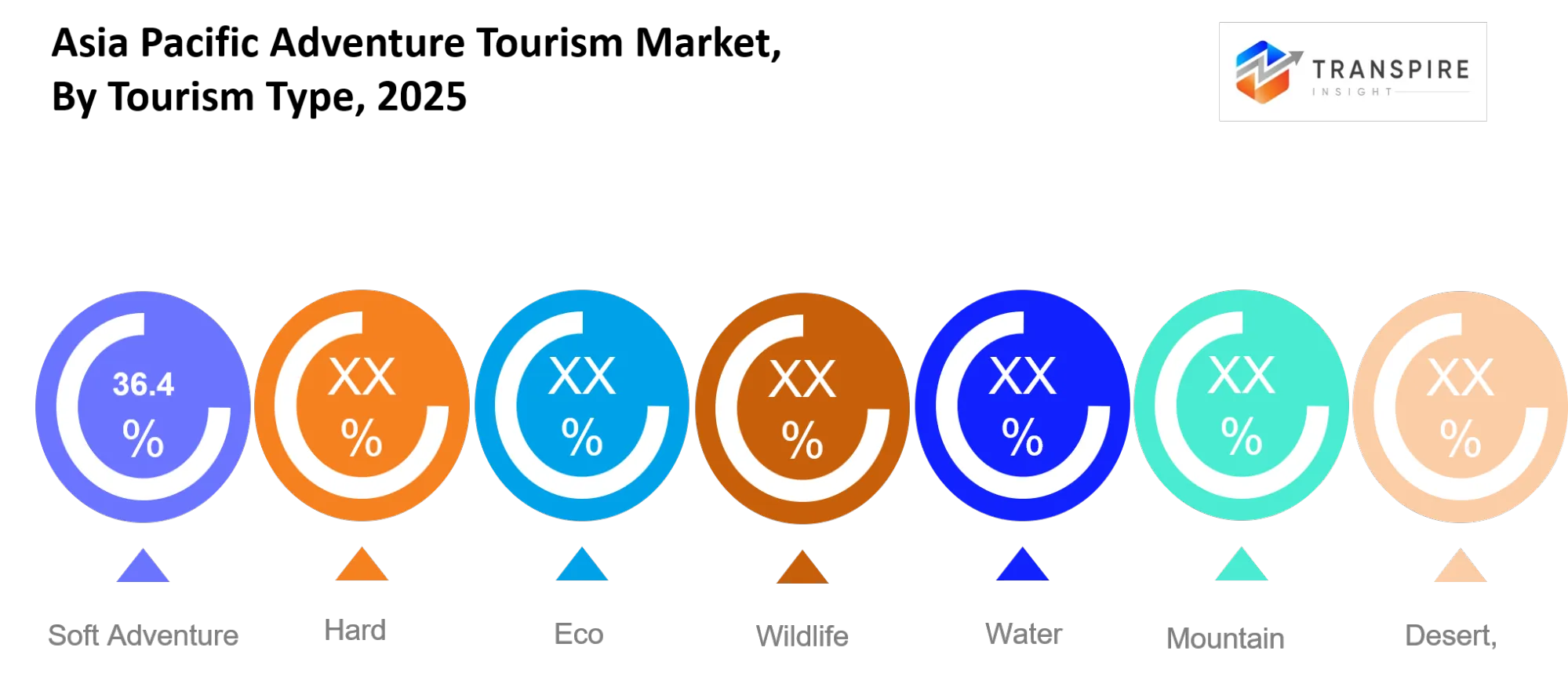
To learn more about this report, Download Free Sample Report
By Activity Type:
Trekking and hiking are still up there as some of the most common adventure things, mainly because it’s easy to get into and there are so many different kinds of scenery around the region. National parks , mountain routes and protected natural zones keep pulling in both local people and visitors from abroad. Also, when trail oversight and visitor help have gotten better, the whole trip feels smoother, more pleasant , overall.
Scuba diving , rafting and paragliding have seen even more involvement lately, because adventure travelers are more and more after plans that focus on doing activities rather than just sightseeing. Coastal spots and river tourism corridors seem to do especially well, helped by investments in safety systems and by professional guide services. On top of that, the growth of organized activity packages makes it easier for more participants, from younger groups to older ones, to join in.
Skiing , mountaineering, and other specialized adventure activities continue to bring in smaller but meaningful groups of travelers. There are premium moments, guided climbs, and equipment rental services that add to spending in these areas. Plus, when operators move toward less familiar destinations they can roll out fresh experiences, without piling too much pressure onto the well known tourism hubs, all at once .
By Traveler Type:
Solo travelers are a pretty key customer group, because being able to plan in a flexible way, plus digital booking tools that make it easier to set up an independent trip, helps people follow through. More people seem interested in personalized schedules, and some also want rather unique outdoor activities , so operators have been crafting their offerings around one person at a time. On top of that, small group experiences work well for travelers who still want social contact, but without getting stuck in the big tour style.
Then, couples and families do a lot for overall market movement, mainly via multi day adventure packages, or those nature focused holidays. Destinations that mix recreation , cultural moments, and outdoor exploration keep pulling visitors in at a steady rate. At the same time, family oriented adventure programs have grown, as operators try to expand the crowd they can reach not just a narrow demographic.
Meanwhile, group travelers keep showing up as a meaningful source of reservations, especially for organized expeditions and corporate travel arrangements. Educational institutions, plus special interest groups also keep supporting the demand for structured, guided adventure formats. Since traveler types are so diverse, operators tend to keep a broad menu of services, and a wider spread of pricing options , so they can match more preferences across the board.
By Booking Channel:
Online booking channels kind of changed travel planning, in a pretty smooth way, giving people easy access to places, activities and even lodging options. With digital platforms travelers can compare different experiences, scan itineraries, and then finish the reservation using just one interface. And because it feels more transparent, and honestly more convenient , more people have started using online booking methods .
Mobile apps plus travel marketplaces keep pushing digital distribution deeper into the whole industry. You get real-time availability updates, secure payment options , and recommendations that are tailored, all of it keeps customers involved during the booking steps. Bigger travel platforms have also been widening partnerships with local operators, so the products show up more often and feel more visible.
Still, offline booking channels hang around, especially when someone wants a customized itinerary, premium adventure packages, or complicated travel arrangements. Travel agencies , along with specialist tour consultants , continue to help travelers who want detailed planning support rather than a quick click. In the end, using both digital and traditional sales routes seems to help operators tap a wider set of customers while also making the market feel more accessible overall.
What are the Key Use Cases Driving the Asia Pacific Adventure Tourism Market?
Most of the market activity actually comes from nature based leisure trips, where people join guided trekking, hiking, wildlife exploration and general outdoor recreation, and yeah that’s the bit that draws the most interest. This particular use case tends to generate the highest demand because it fits a wide customer base, it doesn’t demand a lot of expert know how, and it’s backed by pretty solid tourism infrastructure across the main destinations.
Adventure travel is also being pulled into wellness retreats and hands on group programs more and more lately. Corporate teams, educational institutions, and organized travel parties are starting to weave outdoor activities into leadership development , team building, and learning oriented routes. In practice this means participation is moving beyond the usual leisure crowd, sort of gradually.
Newer use cases are also showing up, like conservation driven travel and community led adventure experiences especially in developing areas. Operators are putting together formats that mix outdoor activities with habitat restoration, biodiversity projects, and local cultural involvement. These offerings still feel pretty niche , but they do show promising long term potential as destination management keeps shifting toward sustainability and more community participation.
|
Report Metrics |
Details |
|
Market size value in 2025 |
USD 143.69 Billion |
|
Market size value in 2026 |
USD 172.15 Billion |
|
Revenue forecast in 2033 |
USD 613.15 Billion |
|
Growth rate |
CAGR of 19.9% from 2026 to 2033 |
|
Base year |
2025 |
|
Historical data |
2021 - 2024 |
|
Forecast period |
2026 - 2033 |
|
Report coverage |
Revenue forecast, competitive landscape, growth factors, and trends |
|
Regional scope |
Asia Pacific |
|
Key company profiled |
Intrepid Travel, G Adventures, TUI, Expedia, Booking Holdings, Trip.com, MakeMyTrip, Thomas Cook, REI Adventures, Abercrombie & Kent, Backroads, Exodus, Trafalgar, World Expeditions, Adventure Tours |
|
Customization scope |
Free report customization (country, regional & segment scope). Avail customized purchase options to meet your exact research needs. |
|
Report Segmentation |
By Tourism Type (Soft, Hard, Eco, Wildlife, Water, Mountain, Desert, Others) By Activity Type (Trekking, Hiking, Mountaineering, Scuba Diving, Rafting, Paragliding, Skiing, Others) By Traveler Type (Solo, Couples, Families, Groups, Students, Corporate, Senior, Others) By Booking Channel (OTA, Tour Operators, Direct Booking, Agents, Apps, Clubs, Resorts, Others) |
Which Regions are Driving the Asia Pacific Adventure Tourism Market Growth?
Australia plus New Zealand basically sit right at the front of the Asia Pacific Adventure Tourism Market, like the main region. There’s strong government backing for tourism, and the transportation routes are pretty well formed, plus safety norms that are accepted internationally help adventure travel operators. You also get a lot of places to work with , meaning big national parks, sea side sights , and hill or mountain areas. So, across the whole year travelers can keep finding different kinds of outdoors activities. On top of that, there’s a mature set up of tour operators, lodging and hospitality services, conservation groups and even digital travel platforms, and all of this together keeps the regional lead fairly steady.
East Asia comes next, as the second biggest contributor, though the way it grows is not the same as Australia and New Zealand. Countries like Japan, South Korea, and China have large numbers of people traveling inside their own borders. That gives a stable base for adventure tourism happening regularly. Also there’s ongoing funding going into visitor facilities, transit systems, and destination coordination, which supports long term participation in the market. The economic picture stays solid and people tend to spend more on higher end trips and premium experiences , so the region keeps being a dependable engine for industry revenue.
Southeast Asia seems like its the quickest-growing region, mostly because a bunch of tourism efforts got put in place over the last few years. In many places, governments teamed up with private backers, and they’ve been pushing for bigger airport capacity, smoother access to smaller or secondary towns, and more funding for eco-tourism infrastructure. Nations like Vietnam, Indonesia, the Philippines, and Thailand are drawing even more attention thanks to experience driven by nature, plus marine adventures that feel more like immersive explorations than simple sightseeing. If that momentum keeps going across these markets , it should keep opening up solid opportunities for tour operators, investors, and travel technology providers during the 2026–2033 period.
Who are the Key Players in the Asia Pacific Adventure Tourism Market and How Do They Compete?
Competition in the Asia Pacific Adventure Tourism Market is still kind of moderately fragmented, where big global travel companies go head to head with regional specialists, plus destination heavy operators, who all try to stand out a bit more. In many cases, what matters now isn’t just who’s cheapest, but service quality, how well they can tailor an itinerary, how easily they can reach the destination, whether the sustainability credentials feel real or not, and also how strong their digital booking capabilities are. The more established players keep trying to protect their market share, mostly through recognizable brands and very deep local partnerships, while the newer entrants tend to zero in on specialized experiences and places that still feel underserved. Basically, geographic reach, plus the capacity to deliver authentic, activity based travel experiences, stays as the real differentiator throughout the industry.
Intrepid Travel has built its presence using small-group travel programs that put emphasis on local involvement and responsible tourism practices. Their solid relationships with community based operators help them deliver experiences that larger mass tourism providers, honestly, can struggle to copy. G Adventures is going in a similar direction but they put extra attention on social impact initiatives and tourism projects that are managed locally, so travelers who want purpose driven trips have something clearer to choose from. Both firms keep pushing forward through partnerships with regional operators and by rolling out new itineraries in up and coming destinations across Southeast Asia.
TUI Group kind of leverages these connected travel services, where transportation, lodging , and kind of adventure experiences end up together in one booking ecosystem . Expedia Group and Booking Holdings meanwhile set themselves apart with advanced digital platforms, huge distribution networks, and more data driven personalization tools, so travelers can find and actually book those specialized activities more easily. Trip.com Group pushes forward mainly with regional know how and strong, wide connectivity across Asian travel networks. And then of course , keeping up continued investment in mobile booking technologies, localized content, and destination partnerships helps them reach even more customers and lift conversion rates across different types of traveler segments, which is pretty important.
Key Market Players
- Intrepid Travel
- G Adventures
- TUI
- Expedia
- Booking Holdings
- Trip.com
- MakeMyTrip
- Thomas Cook
- REI Adventures
- Abercrombie & Kent
- Backroads
- Exodus
- Trafalgar
- World Expeditions
- Adventure Tours
Recent Development News
"In April 2026, Intrepid Travel acquired French adventure tour operator Altai. The acquisition is expected to add more than A$100 Billion in revenue and approximately 35,000 customers annually, strengthening Intrepid’s presence in non-English-speaking markets and expanding its global adventure travel network. Source:https://www.theaustralian.com.
"In April 2026, Intrepid Travel acquired Ooraminna Station near Alice Springs, Australia. The company announced plans to expand accommodation capacity and enhance nature-based tourism infrastructure, supporting growth in low-impact adventure travel and regional tourism development. Source:https://www.couriermail.com
"In May 2025, Trip.com Group unveiled new collaborations with national tourism boards during its Envision 2025 Global Partner Conference. The partnerships were designed to strengthen destination promotion, improve tourism connectivity, and expand travel product offerings across Asia Pacific markets, supporting broader tourism ecosystem growth. Source:https://www.linkedin.com
What Strategic Insights Define the Future of the Asia Pacific Adventure Tourism Market?
Over the next five to seven years, the Asia Pacific Adventure Tourism Market probably won’t just keep growing by pushing more people through the door, it’s more likely to move toward value-led momentum, where “winning” means delivering specialized, experience heavy travel rather than chasing the biggest visitor numbers. What’s really driving the shift is a wider appetite for customized routes, nature centered activities, and trip planning that’s digitally enabled, so tour operators can home in on higher spending traveler groups, more precisely.
There’s also a quieter risk that doesn’t get talked about much, destination concentration. A lot of operators still lean hard on a small set of well known adventure hotspots. But if environmental pressures rise, if visitor caps tighten, or if local regulations change, access to those places can shrink quickly. In that scenario, revenue growth might end up swinging around more than the current market outlooks imply.
At the same time, a newer opening is showing up, community-led adventure tourism in secondary places across Southeast Asia and South Asia. Better regional connectivity, plus more sustainable tourism funding, are basically making room for fresh travel corridors that sit outside the usual tourism centers. Market participants should focus on collaborations with local communities, and put money into digital personalization tools , because those things will matter more and more for standing out, commanding stronger pricing, and keeping long term profitability steady.
Asia Pacific Adventure Tourism Market Report Segmentation
By Tourism Type
- Soft Adventure Tourism
- Hard Adventure Tourism
- Eco Tourism
- Wildlife Tourism
- Water Adventure Tourism
- Mountain Adventure Tourism
- Desert Adventure Tourism
- Others
By Activity Type
- Trekking
- Hiking
- Mountaineering
- Scuba Diving
- Rafting
- Paragliding
- Skiing
- Others
By Traveler Type
- Solo Travelers
- Couples
- Families
- Groups
- Students
- Corporate Travelers
- Senior Travelers
- Others
By Booking Channel
- Online Travel Agencies (OTA)
- Tour Operators
- Direct Booking
- Travel Agents
- Mobile Apps
- Adventure Clubs
- Resorts
- Others
Frequently Asked Questions
Find quick answers to common questions.
The Expected Asia Pacific Adventure Tourism Market size for the Market will be USD 613.15 Billion in 2033.
Key Segments for the Asia Pacific Adventure Tourism Market are By Tourism Type (Soft, Hard, Eco, Wildlife, Water, Mountain, Desert, Others) By Activity Type (Trekking, Hiking, Mountaineering, Scuba Diving, Rafting, Paragliding, Skiing, Others) By Traveler Type (Solo, Couples, Families, Groups, Students, Corporate, Senior, Others) By Booking Channel (OTA, Tour Operators, Direct Booking, Agents, Apps, Clubs, Resorts, Others).
Major Asia Pacific Adventure Tourism Market Players are Intrepid Travel, G Adventures, TUI, Expedia, Booking Holdings, Trip.com, MakeMyTrip, Thomas Cook, REI Adventures, Abercrombie & Kent, Backroads, Exodus, Trafalgar, World Expeditions, Adventure Tours.
The Current Asia Pacific Adventure Tourism Market size is USD 143.69 Billion in 2025.
The Asia Pacific Adventure Tourism Market CAGR is 19.9% from 2026 to 2033.
- Intrepid Travel
- G Adventures
- TUI
- Expedia
- Booking Holdings
- Trip.com
- MakeMyTrip
- Thomas Cook
- REI Adventures
- Abercrombie & Kent
- Backroads
- Exodus
- Trafalgar
- World Expeditions
- Adventure Tours
About the Authors

Chetan Dhatrak
I’m Chetan Dhatrak, a Senior Research Analyst at Transpire Insight, specializing in the Consumer Goods, Foods and Beverages industry. I focus on analyzing market trends, consumer behavior, competitive landscapes, and industry developments to deliver accurate, data-driven insights. My research at Transpire Insight is built on credible sources and in-depth analysis, helping businesses and readers better understand market dynamics, emerging opportunities, and evolving consumer preferences. I’m committed to creating reliable, well-researched content that supports informed decision-making and reflects the latest developments in the consumer goods and food & beverage sectors.

Chakradhar Khansole
Chakradhar serves as the Research Director at Transpire Insight, bringing over 8 years of experience in technology, innovation, and strategic market intelligence. He specializes in transforming complex market data into actionable business insights that enable organizations to make informed, growth-oriented decisions. Recognized for his strategic vision and analytical expertise, Chakradhar leads high-impact research initiatives, delivering comprehensive market assessments, competitive intelligence, and forward-looking industry analysis.
Recently Published Reports
-
Apr 2026
Bottled Water Market
Bottled Water Market Size, Share & Analysis Report By Product Type (Still Bottled Water, Carbonated Bottled Water, Functional Bottled Water, and Others), By Packaging (PET, Cans, and Others), By Sales Channel (Supermarkets/Hypermarkets, Convenience Stores/Drug Stores, Grocery Stores/Club Stores, Foodservice, and Others) and Geography (North America, Europe, Asia-Pacific, Middle East and Africa, South and Central America), 2021 - 2032
-
Apr 2026
Color Cosmetic Packaging Market
Color Cosmetic Packaging Market Size, Share & Analysis Report By Application (Mascara Packaging, Liquid Packaging, and Liquid Face), By Type (Tubes & Bottles, Pens & Markers, Compacts & Containers, and Droppers & Pumps), and Geography (North America, Europe, Asia-Pacific, Middle East and Africa, South and Central America), 2021 - 2031
-
Apr 2026
External Microphone For Camera Market
External Microphone For Camera Market Size, Share & Analysis Report By Type (Shotgun Microphone, Lavalier Microphone, and Others), By Application (Digital Camera, Professional Video Camera, and Others), and Geography (North America, Europe, Asia-Pacific, Middle East and Africa, South and Central America), 2021 - 2031
-
Apr 2026
Foot Orthotic Insoles Market
Foot Orthotic Insoles Market Size, Share & Analysis Report By Type (Pre-fabricated, and Custom-made), By Material (Thermoplastic, Composite Carbon Fiber, and Others), By Distribution Channel (Drug Stores, Hospitals & Clinics, and Others), and Geography (North America, Europe, Asia-Pacific, Middle East and Africa, South and Central America), 2021 - 2031