
Aluminum Ingots Market Summary:
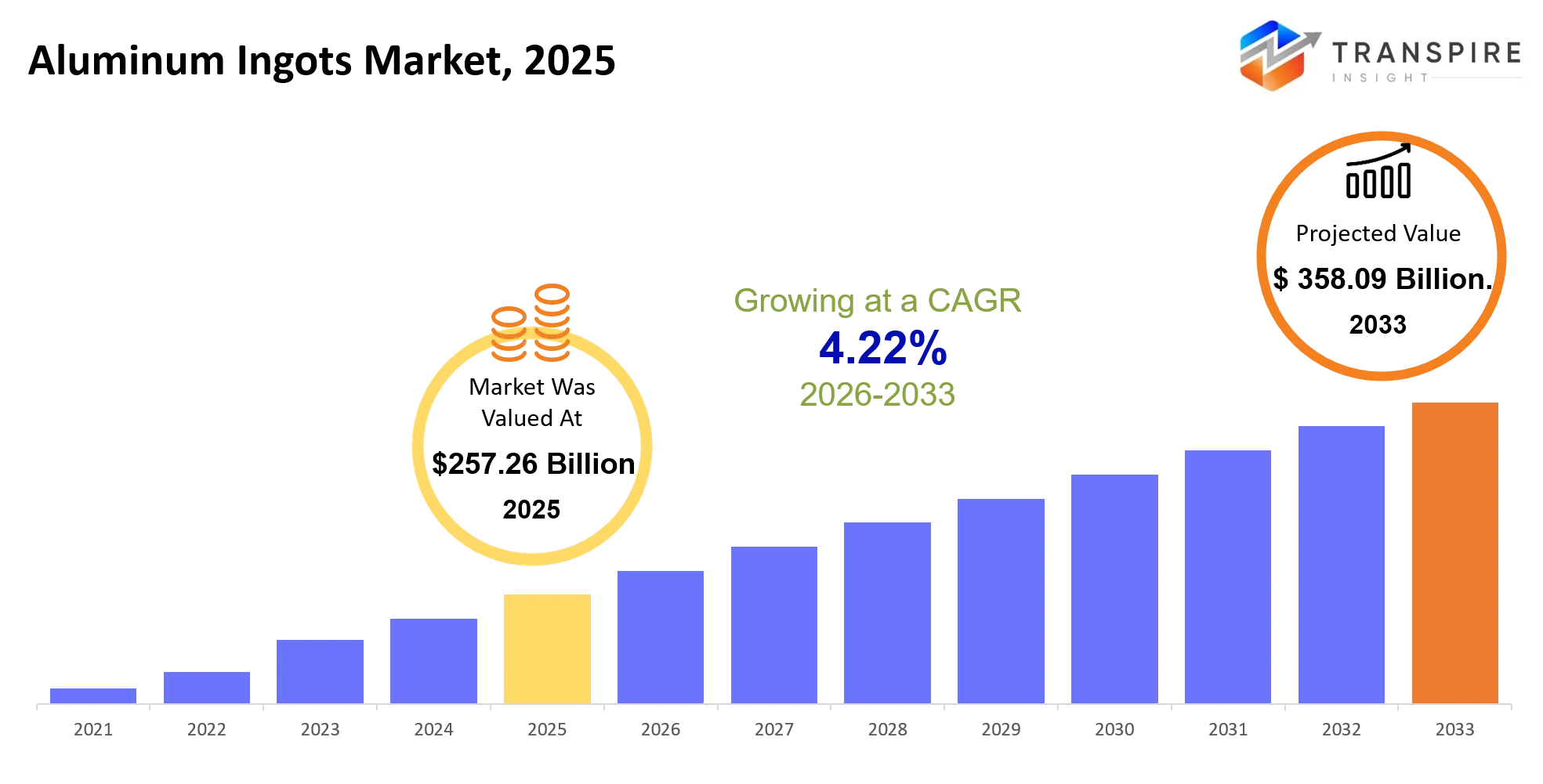
As per the Transpire Insight analysis, TheAluminium Ingots Marketsize is estimated at USD 257.26 billion in 2025 and is anticipated to reach USD 358.09 billion by 2033, growing at a CAGR of 4.22% from 2026 to 2033.
The market foringots is the convertible metal feedstock used by foundries, extruders, rolling mills, and component manufacturers to make automotive parts, building and construction systems, packaging, electrical conductors, and industrial equipment. A key trend in the market has been the transition over the past three to five years from volume-led supply to carbon-disclosed and traceable metal as buyers specify emissions intensity along with alloy grade. A structural trend is the rise of low-carbon and recycled ingots on the back of smelting from renewable energy, inert-anode pilot trials, and OEM closed-loop scrap models. The EU CBAM has proved an effective catalyst, forcing importers to declare embedded emissions and creating a commercial premium for hydropower-based and certified low-carbon supply. Manufacturers are doing this to limit Scope 3 and reduce regulatory risk, so recyclers, low-carbon smelters and alloy sellers are enjoying more order flow and stronger pricing power.
Global Aluminum Ingots Market Size & Forecast:
- Global Market Size 2025: USD 257.26 Billion
- Expected Market Value (2033): USD 358.09 Billion
- Forecast CAGR (2026–2033): 4.22%
- Leading Region in 2025: Asia Pacific
- Fastest Growing Region: Middle East and Africa
- Key Company Profiles: Rusal, Rio Tinto, Alcoa, EmiratesAluminium, Norsk Hydro, China Hongqiao Group, Chalco, Vedanta, South32, Alba, Century Aluminum, Hindalco, Novelis, Emirates National Aluminum, East Hope Group.
KeyAluminium Ingots Market Insights:
The market is shifting from a commodity business to a more diversified supply chain, with energy costs, recycled content, and emissions transparency being factors in the purchasing decision. Reliable metal supply, along with quality consistency of the alloys and verified carbon data, will provide the producers a better chance to win long-term industrial contracts.
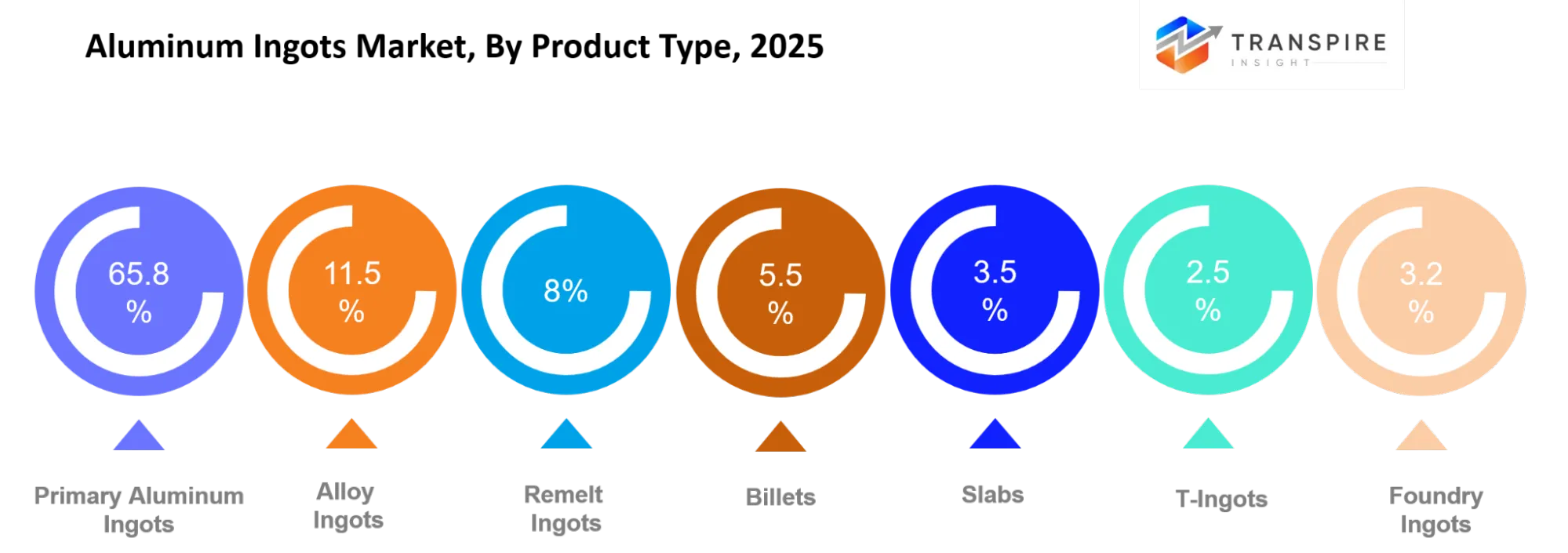
- Primary aluminium ingots account for 65.8% of the product-type, and recycled aluminium ingots are the fastest-growing segment with 7.6% CAGR.
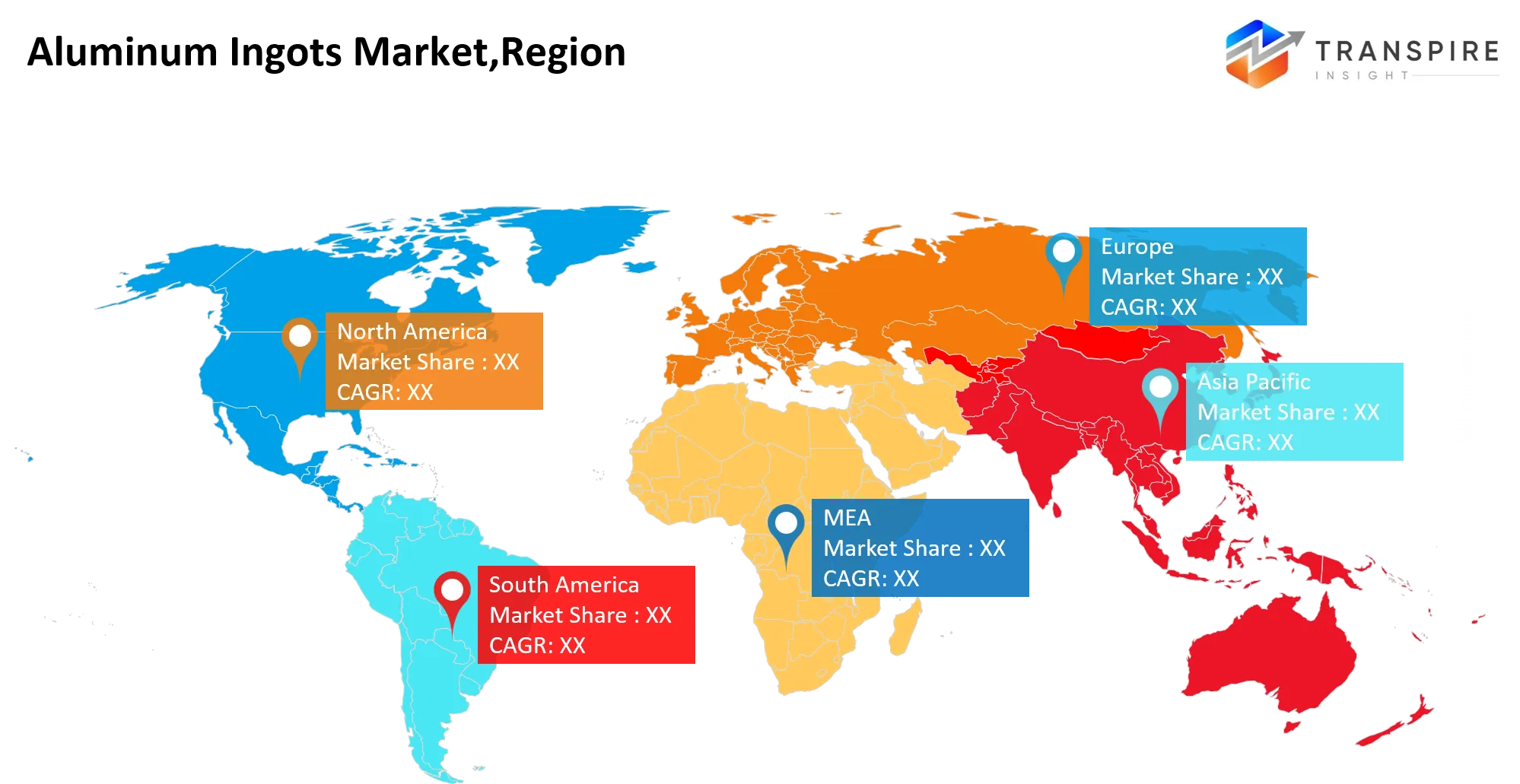
- Asia Pacific is expected to drive regional demand, which is 70.2% of the total and is backed by the integrated smelting-recycling base of China and the growing automotive and construction industry in India.
- Europe accounts for 12.8% of the market and is turning carbon-border rules into demand for certified low-carbon and renewable-powered ingots.
- North America accounts for 9.8%, buoyed by Canadian supply based on hydroelectric and recycled content contracts that give it a premium position.
- Norsk Hydro is aiming for a 30% reduction in its own emissions by 2030, and is growing its product lines based on hydro-powered, recycled, and low-carbon products.
- In March 2026, Rio Tinto and Prysmian delivered an industrial-scale low-carbon aluminium cable batch, while the company is progressing its ELYSIS inert-anode technology.
- EmiratesAluminium is looking to take its energy cost advantage to India by expanding its recycling business and licensing smelting technology.
- Hydro signed an agreement to sell NKT up to 274,000 tonnes of aluminium wire rod, marking a shift towards long-term electrical-infrastructure contracts.
- Low-cost energy and new capacity in the Gulf are driving greenfield investment in the Middle East & Africa, which is expected to reach a 4.1% share by 2017 at a 6.9% CAGR.
What are the Key Drivers, Restraints, and Opportunities in theAluminium Ingots Market?
Driver:
Automotive lightweighting, electricity-grid upgrades, and renewable-energy installations are creating specific requirements for aluminium ingots and downstream alloys. Automakers use aluminium to reduce vehicle mass, while solar mounting systems, transmission infrastructure, and electrical equipment require durable, conductive materials. Supply disruptions in 2026, including Middle Eastern production constraints, have reinforced concerns about primary metal availability and increased interest in scrap substitution. These pressures can support ingot prices and encourage investment in domestic recycling and supply diversification.
Restraint:
Primary aluminium production remains highly exposed to electricity prices because smelting requires continuous, substantial power input. High capital requirements, long construction timelines, and dependence on stable electricity contracts limit new capacity additions. Scrap availability also remains constrained by collection inefficiencies, contamination, and inconsistent alloy composition, preventing recyclers from replacing primary metal across every application.
Opportunity:
Recycled ingots offer a practical route to reduce energy consumption and meet lower-carbon procurement requirements. The US Aluminium Association estimates that recycling uses approximately 95% less energy than primary production. Investments in automated scrap sorting, alloy separation, and secondary smelting can improve recovery rates and material consistency. India's manufacturing expansion and solar infrastructure development also offer opportunities for regional ingot producers that can supply certified, application-specific material. Meanwhile, the EU's definitive Carbon Border Adjustment Mechanism, effective from January 2026, strengthens incentives for emissions measurement and lower-carbon supply chains.
Driver Impact Analysis –Aluminium Ingots Market
|
Driver |
Relative Impact on Growth (%) |
Geographic Relevance |
Impact Timeline |
Demand Strength |
Growth Mechanism |
Key Beneficiaries |
Major Constraint |
|
Electric vehicle adoption and automotive lightweighting |
28% |
China, North America, Europe |
Medium-term (2–4 years) |
High |
Increases ingot consumption for lightweight vehicle structures and battery housings |
Primary aluminium smelters, automotive alloy suppliers, EV manufacturers |
EV production volatility and cost-sensitive material substitution |
|
Construction and infrastructure expansion |
24% |
Asia-Pacific, Middle East, North America |
Medium-term (2–4 years) |
High |
Expands demand for aluminium ingots used in building profiles, façades, and infrastructure components |
Aluminium producers, construction material suppliers, extrusion manufacturers |
High interest rates and prolonged real estate slowdowns |
|
Renewable energy and electrical grid investment |
20% |
China, India, Europe, North America |
Long-term (≥4 years) |
High |
Supports ingot demand for solar frames, wind systems, cables, and grid equipment |
Aluminium smelters, cable manufacturers, renewable energy equipment suppliers |
Grid investment delays and renewable project financing constraints |
|
Packaging, consumer goods, and industrial manufacturing |
16% |
Asia-Pacific, Europe, North America |
Short-term (≤2 years) |
High |
Sustains ingot demand for beverage cans, foil, machinery, and durable goods |
Ingot producers, rolling mills, packaging manufacturers, industrial fabricators |
Substitution by plastics and weaker discretionary consumption |
|
Low-carbon aluminium production and recycling ecosystem development |
12% |
Europe, China, India, North America |
Long-term (≥4 years) |
Medium |
Strengthens demand for certified low-carbon metal and recycled-content aluminium feedstock |
Low-carbon smelters, recyclers, alloy producers, sustainability-focused buyers |
High decarbonisation costs and limited high-quality scrap availability |
|
Total |
100% |
— |
— |
— |
— |
— |
— |
What Has the Impact of Artificial Intelligence Been on theAluminium Ingots Market?
AI is increasingly helping in the production of aluminium ingots by moving away from reactive control of the plant to data-driven process control. In electrolytic smelting, machine learning models use live pot data to predict anode effects even before they occur. Hindalco's Renukoot smelter has built and validated an in-house model that predicts up to 1 hour in advance, helping operators to intervene early to minimise cell failures.
AI is also helping in predictive maintenance, energy optimisation, and digital-twin simulation. Vedanta Aluminium has deployed machine-learning-based solutions with Infinite Uptime to improve maintenance planning, energy efficiency, and plant dependability. In a published example in a smelter, the use of explainable artificial intelligence and digital twins achieved a diagnostic accuracy of 94.2%, cut anode effects by 32.5%, and delivered sustained energy savings of 137 kWh per tonne. Greater yield, lower unplanned downtime, lower specific power consumption, and improved carbon reporting accuracy all reinforce the margin benefit of energy-cost-sensitive industry. The biggest challenge is integration, since many plants still run disparate legacy control systems. AI models need dependable sensor data, technical people, and model validation to be trusted for high-value smelting decisions.
In August 2026, Qingdao Qingfa Holding Group and Zhongtan Holding Group jointly launched the Zhongtan Aladdin AI Smart Industrial Park featuring a dedicated, aluminium-focused vertical AI model named ALD Shen Deng. This deployment shifts the sector from standard industry data tracking to advanced industrial AI, significantly optimising energy management.
https://www.aluminiumchina.com/en-gb/news-center/industry-news/2026/9/2.html
Key Aluminum Ingots Market Trends:
The market is moving toward lower-carbon metal and higher-purity recycled metal, as well as better quality control of metal. Supply reliability, alloy consistency, energy efficiency, and verifiable emissions performance are becoming the competitive factors for producers.
- Automakers are moving from generic ingot purchases to alloy-specific deals based on EV lightweighting and Scope 3 targets.
- Closed-loop scrap programs and OEM take-backs are increasing the supply of feedstocks, which is driving recycled-ingot capacity growth.
- As a result of the European border-carbon rules, the price of low-carbon aluminium is increasing.
- Smelting using renewable energy, particularly hydropower, is gaining ground as a competitive differentiator and not just a niche product.
- The inert-anode pilots are progressing, indicating a long-term step towards the reduction of carbon-intensive conventional electrolysis.
- Consumers are increasingly asking for digital traceability to prove origin, energy source, and emissions intensity.
- Alloy design is changing to allow for increased recycled content without compromising strength, corrosion resistance, or anodizing properties.
- Using AI for pot control and predictive maintenance helps save energy and enhance smelter reliability.
- Chains are going regional as buyers look to reduce exposure to logistics costs and gain access to certified metal.
Aluminum Ingots Market Segmentation
Product Type:
Primary aluminium ingots lead in theAluminium Ingots Market, capturing 65.8% of the market share as they guarantee a uniform standard quality and steady quantity in bulk to meet great industrial demands. Alloy ingots with 11.5% and remelt ingots with 8.0% of the market share followed by billets with 5.5%, Slabs with 3.5%, T-ingots with 2.5%, Foundry Ingots with 2.0% and other ingots with 1.2% respectively of thealuminum ingots market share and recycled aluminium ingots which is estimated at a CAGR of 7.6% percent as the companies are opting for the recycled aluminium by improving the scrap collection and reducing the usage of high energy aluminium production from the ore.
Alloy Type:
Pure aluminium serves as electrical conductors, packaging, and general fabrication because of its conductivity, corrosion resistance, and formability. Aluminium-silicon alloys support automotive castings and complex industrial components, while aluminium-magnesium grades offer corrosion resistance for transport and marine applications. Aluminium-copper and aluminium-zinc alloys provide strength for demanding engineering uses. Aluminium-manganese supports formability in sheet products, whereas aluminium-lithium targets lightweight aerospace structures. Future alloy development will focus on balancing strength, weight, recyclability, and consistent performance across specialised manufacturing applications.
Application:
Automotive manufacturing uses aluminium ingots to produce cast components, structural parts, and lightweight vehicle systems, helping manufacturers reduce vehicle mass. Construction applications include window frames, façades, roofing, and structural systems, supported by aluminium's durability and corrosion resistance. Aerospace manufacturers require carefully controlled alloys to meet stringent strength and weight specifications. Packaging producers rely on aluminium's formability and barrier properties, while electrical equipment, machinery, consumer goods, and other industries use it for conductive components, engineered parts, and durable products. Electrification and lightweight design will further diversify applications.
Production Process:
Electrolytic smelting remains essential for producing primary aluminium, although its substantial electricity requirements make power efficiency a key competitive factor. Secondary recycling and remelting recover metal from manufacturing scrap and end-of-life products, reducing reliance on energy-intensive primary production. Casting converts molten aluminium into usable ingot forms, while continuous casting supports consistent, high-volume output. Direct-chill casting enables controlled solidification for demanding downstream applications, and gravity casting serves specialised production requirements. Improved temperature monitoring, automation, and process controls can reduce defects, material losses, and operating costs.
End User:
Automotive OEMs purchase aluminium ingots and alloys for lightweight vehicle components, structural applications, and electrification-related manufacturing. Metal fabricators convert ingots into products through casting, extrusion, and rolling supply chains, while construction companies depend on processed aluminium for building systems and infrastructure. Packaging producers prioritise material consistency and formability, whereas aerospace manufacturers require strict composition control and traceability. Electrical manufacturers value conductivity, and foundries need predictable melting and casting performance. Supplier selection increasingly depends on technical specifications, delivery reliability, cost efficiency, and documented environmental performance.
Source:
Primary aluminium remains essential for applications requiring dependable volumes and tightly controlled material properties. Recycled aluminium offers manufacturers an alternative with substantially lower energy requirements, while scrap-based sourcing supports circular production when collection and sorting systems maintain feedstock quality. Secondary alloys enable recovered metal to serve specific casting applications. Low-carbon aluminium and renewable-powered aluminium appeal to buyers seeking to reduce product-related emissions, while certified aluminium supports traceability and responsible procurement. These sourcing options are encouraging producers to strengthen recycling partnerships, improve emissions reporting, and differentiate ingot supplies through verified environmental attributes.
What are the Key Use Cases Driving theAluminium Ingots Market?
The main application is automotive manufacturing, where primary and alloy ingots are cast, extruded, and rolled into EV bodies, battery enclosures, wheels, heat exchangers, and structural components. This is in line with the 65.8% share of primary ingots and helps to meet the demand for high-strength, formable, and lower-carbon alloys.
Other applications include electrical conductors, packaging stock, industrial machinery, and expanding uses in construction façade applications and window systems, which are solar mounting structures. These segments are preferred for billets, slabs and remelt ingots, which are conducive to efficient downstream extrusion, rolling and fabrication.
The use cases that are coming to the fore include certified low-carbon aluminium for closed-loop automotive supply chain, renewable-energy infrastructure and circular packaging. The 7.6% CAGR of recycled ingots is attributed to the increasing interest of OEMs in scrap-based feedstock, which provides a reduction in the embodied emissions while ensuring the alloy performance.
|
Report Metrics |
Details |
|
Market size value in 2025 |
USD 257.26 Billion |
|
Market size value in 2026 |
USD 268.12 Billion |
|
Revenue forecast in 2033 |
USD 358.09 Billion |
|
Growth rate |
CAGR of 4.22% from 2026 to 2033 |
|
Base year |
2025 |
|
Historical data |
2021 - 2024 |
|
Forecast period |
2026 - 2033 |
|
Report coverage |
Revenue forecast, competitive landscape, growth factors, and trends |
|
Regional scope |
United States; Canada; Mexico; United Kingdom; Germany; France; Italy; Spain; Denmark; Sweden; Norway; China; Japan; India; Australia; South Korea; Thailand; Brazil; Argentina; South Africa; Saudi Arabia; United Arab Emirates |
|
Key companies profiled |
Rusal, Rio Tinto, Alcoa, EmiratesAluminium, Norsk Hydro, China Hongqiao Group, Chalco, Vedanta, South32, Alba, Century Aluminium, Hindalco, Novelis, Emirates National Aluminium, East Hope Group |
|
Customization scope |
Free report customization (country, regional & segment scope). Avail customized purchase options to meet your exact research needs. |
|
Report Segmentation |
Product Type (Primary Aluminum Ingots, Alloy Ingots, Remelt Ingots, Billets, Slabs, T-Ingots, Foundry Ingots, Others)Alloy Type (Pure Aluminum, Aluminum-Silicon, Aluminum-Magnesium, Aluminum-Copper, Aluminum-Zinc, Aluminum-Manganese, Aluminum-Lithium, Others)Application (Automotive, Construction, Aerospace, Packaging, Electrical, Machinery, Consumer Goods, Others)Production Process (Electrolytic Smelting, Secondary Recycling, Remelting, Casting, Continuous Casting, Direct-Chill Casting, Gravity Casting, Others)End User (Automotive OEMs, Metal Fabricators, Construction Companies, Packaging Producers, Aerospace Manufacturers, Electrical Manufacturers, Foundries, Others)Source (Primary Aluminum, Recycled Aluminum, Scrap-Based, Low-Carbon Aluminum, Renewable-Powered Aluminum, Certified Aluminum, Secondary Alloy, Others). |
Which Regions are Driving theAluminium Ingots Market Growth?
Asia Pacific will lead with a 70.2% regional share with the combination of the world's largest smelting capacity, large alumina and coal or hydropower resources, as well as globally significant downstream manufacturing capacity. China maintains its leadership with the lowest production cost through vertically integrated producers like Chalco, China Hongqiao and East Hope, with India adding further momentum through producers such as Hindalco and Vedanta as well as ramps in automotive and construction demand. Large fabrication clusters, export-based supply chains, and demand for electric vehicles, solar projects, grid infrastructure and packaging will continue to support Asia Pacific, so producers can carve high-grade ingots into billets, sheets, extrusions and components.
In September 2026, Hindalco Industries Limited entered into a strategic digital sales partnership with Metalshub (a London Metal Exchange digital partner). This collaboration introduced a first-of-its-kind digital tendering platform for selling metallurgical-grade alumina to enhance pricing transparency and boost transaction liquidity in thespot market.
Europe, with a 12.8% share, competes less on low cost-volume and more on carbon performance, recycling, and demanding high-specification industrial markets. Europe's stability comes from hydropower-linked production in Norway, scrap collection, and regulation that puts a price on lower-emission metal. Solar industry supplier Norsk Hydro has platforms to market low-carbon and recycled products that showcase ways European suppliers are capturing value from traceability and circularity instead of fighting on price. Automobile, aerospace, packaging and electrical demand remain reasonably stable for certified, value-added aluminium ingredients.
In September 2026, Hydro signed a strategic partnership with CHANEL Fragrance and Beauty to accelerate the deployment of sustainably sourced, low-carbon aluminium. This initiative establishes a commercial roadmap through 2030 to integrate low-carbon metals across luxury skincare.
Middle East and Africa, which has a 4.1% market share and 6.9% CAGR, remains the fastest-growing region. Recent developments here have included a growing role for Gulf states in adding new smelting capacity using low-cost energy; EmiratesAluminium and Saudi Arabia's Ma'aden are expanding their combined smelting capacity by more than 1.5 million t/a recently; and opportunities to export competitively produced primary ingots, while also building recycling centres and renewable-powered smelting capacity for carbon-sensitive buyers. Latin America (3.1%) provides further growth from available hydro-based power and export-linked integration of bauxite-linked supply, but is mostly upstream and export-focused.
In April 2026, EmiratesAluminium (EGA) announced plans to acquire an 80% stake in Italian recycling company Eco Green. This acquisition aligns with regional efforts to develop recycling hubs and supply carbon-sensitive buyers, allowing EGA to build out aaluminium recycling footprint while simultaneously navigating domestic production challenges and security disruptions.
Who are the Key Players in the Aluminum Ingots Market, and how do they compete?
Competition in thealuminium ingots market is driven by scale, energy access, integration, product quality, and carbon content. Among Chinese producers, volume and costs are the main competitive factors, and globally, capacity, technology, recycling, and lower-carbon metal differentiate aluminium groups.
The CBAM reporting is increasing the commercial importance of verified emissions data. Rusal is making use of hydropower and inert-anode technology; Rio Tinto and Alcoa are combining upstream technology with carbon-reduction strategies; EmiratesAluminium and the Emirates National Aluminium are offering regional smelting and exports; Norwegian Hydro is using renewable power, recycling and value-added products; China Hongqiao Group, Chalco and the East Hope Group are competing on scale, integration and large-scale industrial links; Vedanta is expanding its capacity in India; and Hindalco is linking upstream primary metal to downstream rolling and recycling in Novelis. South32's aluminium assets and Alba's smelting operations are covering regional markets and supply, and Century's North American production and markets. For these companies, capacity expansion is increasingly subordinate to power economics, capital management, alloy quality, and carbon footprints.
Key Players are:
- Rusal
- Rio Tinto
- Alcoa
- EmiratesAluminium
- Norsk Hydro
- China Hongqiao Group
- Chalco
- Vedanta, South32
- Alba
- Century Aluminium
- Hindalco
- Novelis
- Emirates National Aluminum
- East Hope Group
Global Aluminium Ingots Market — Enhanced Competitive Benchmarking
|
Company |
Est. Revenue Share Range |
Key Offerings |
Strategic Positioning |
Geographic Strength |
Technology Focus |
|
Aluminium Corporation of China (Chalco) |
Estimated 7–11% |
Primary aluminium ingots, aluminium alloys, smelter-grade metal |
Scale-driven leadership through integrated upstream operations |
Asia Pacific, particularly China |
Large-scale smelting, process optimisation, energy efficiency |
|
China Hongqiao Group |
Estimated 6–9% |
Primary aluminium ingots, molten aluminium, aluminium alloys |
High-volume production supported by cost-efficient industrial integration |
Asia Pacific, particularly China |
Smelting efficiency, digital process control, energy management |
|
United Company RUSAL |
Estimated 4–6% |
Primary aluminium ingots, foundry alloys, low-carbon aluminium |
Low-carbon differentiation backed by extensive hydropower access |
Europe, Asia Pacific |
Inert-anode research, hydropower smelting, low-carbon metal production |
|
Rio Tinto |
Estimated 3–5% |
Primary aluminium ingots, foundry alloys, billet and slab products |
Premium metal supply supported by integrated resources and traceability |
North America, Europe, Asia Pacific |
Low-carbon smelting, automated operations, inert-anode development |
|
EmiratesAluminium (EGA) |
Estimated 2–4% |
Primary aluminium ingots, foundry alloys, high-purity aluminium |
Regional scale leadership with export-oriented premium metal production |
Middle East & Africa, Asia Pacific |
Advanced electrolysis, smelter automation, low-carbon production |
|
Xinfa Group |
Estimated 3–5% |
Primary aluminium ingots, aluminium alloys, molten aluminium |
Cost leadership through vertically integrated industrial production |
Asia Pacific, particularly China |
Integrated process control, energy optimization, smelting efficiency |
|
Vedanta Aluminium |
Estimated 2–4% |
Primary aluminium ingots, foundry alloys, aluminium wire rods |
Scale and product breadth serving domestic and export customers |
Asia Pacific, Middle East & Africa |
Potline automation, digital smelting, operational energy efficiency |
|
Alcoa Corporation |
Estimated 2–4% |
Primary aluminium ingots, foundry alloys, low-carbon aluminium |
Differentiation through technical expertise and low-carbon offerings |
North America, Europe, Latin America |
Smelting process optimization, low-carbon technology, recycled-metal integration |
|
Norsk Hydro |
Estimated 2–3% |
Primary aluminium ingots, foundry alloys, recycled aluminium ingots |
Sustainability-led positioning with integrated recycling capabilities |
Europe, North America |
Aluminium recycling, renewable-energy smelting, carbon-footprint tracking |
|
South32 |
Estimated 1–2% |
Primary aluminium, aluminium ingot output through its smelting interests |
Selective production exposure with emphasis on asset efficiency |
Australia, Southern Africa |
Smelter efficiency, operational reliability, energy management |
Recent Development News
In February 2026, National Aluminium Company Limited (NALCO) launched its new IA91 grade aluminium alloy ingot engineered for advanced casting applications. This high-performance, silicon-based casting alloy optimises castability, mechanical strength, and corrosion resistance for specialised automotive, electrical, and industrial applications.
https://nalcoindia.com/pre-rel/nalco-launches-ia91-grade-aluminium-alloy-ingot/
In October 2026, Alcoa Corporation advanced its transformational acquisition of Alumina Limited (AliGroup) following essential shareholder approval milestones. This consolidation streamlines upstream mining and smelting integration, strengthening the entity'score metal asset portfolio amidst low worldwide inventory levels.
What Strategic Insights Define the Future of the Aluminium Ingots Market?
The market is emerging with a two-tier approach. Conventional, high-volume ingots will stay essential, but certified low-carbon, renewable-powered, and recycled ingots will command a significant and long-term premium. Buyers will demand more than alloy grade – emissions intensity, origin traceability, and recycled content must become more relevant as purchase considerations. The risk exists to feedstock quality. Increasing recycled content with poorly sorted scrap and alloy contamination could cut off recycled ingot in the automotive, aerospace and electrical sectors unless extensive materials separation, alloy segregation and closed-loop collection are implemented in unison. The emerging opportunity is for carbon-differentiated supply contracts in Europe, North America and Gulf export markets. Producers should focus on providing verified low-carbon capacity, digital passports and recycling feedstocks – not just competing for total tonnage. Securing renewable electricity, recycled feedstock and premium relationships should be the industry's strategic focus as wider carbon cost-control measures arrive.
Key Segmentations are:
Product Type
- Primary Aluminium Ingots
- Alloy Ingots
- Remelt Ingots
- Billets
- Slabs
- T-Ingots
- Foundry Ingots
- Others
Alloy Type
- Pure Aluminium
- Aluminum-Silicon
- Aluminum-Magnesium
- Aluminum-Copper
- Aluminum-Zinc
- Aluminum-Manganese
- Aluminum-Lithium
- Others
Application
- Automotive
- Construction
- Aerospace
- Packaging
- Electrical
- Machinery
- Consumer Goods
- Others
Production Process
- Electrolytic Smelting
- Secondary Recycling
- Remelting
- Casting
- Continuous Casting
- Direct-Chill Casting
- Gravity Casting
- Others
End User
- Automotive OEMs
- Metal Fabricators
- Construction Companies
- Packaging Producers
- Aerospace Manufacturers
- Electrical Manufacturers
- Foundries
- Others
Source
- Primary Aluminum
- Recycled Aluminum
- Scrap-Based
- Low-Carbon Aluminum
- Renewable-Powered Aluminium
- Certified Aluminium
- Secondary Alloy
- Others
Frequently Asked Questions
Find quick answers to common questions.
The Aluminium ingots market size was valued at USD 257.26 Billion in 2025 and is poised to reach USD 268.12 Billion by 2033, expanding at a 4.22% CAGR.
Key segments for theAluminium ingots market are Product Type (Primary Aluminum Ingots, Alloy Ingots, Remelt Ingots, Billets, Slabs, T-Ingots, Foundry Ingots, Others)Alloy Type (Pure Aluminum, Aluminum-Silicon, Aluminum-Magnesium, Aluminum-Copper, Aluminum-Zinc, Aluminum-Manganese, Aluminum-Lithium, Others)Application (Automotive, Construction, Aerospace, Packaging, Electrical, Machinery, Consumer Goods, Others)Production Process (Electrolytic Smelting, Secondary Recycling, Remelting, Casting, Continuous Casting, Direct-Chill Casting, Gravity Casting, Others)End User (Automotive OEMs, Metal Fabricators, Construction Companies, Packaging Producers, Aerospace Manufacturers, Electrical Manufacturers, Foundries, Others)Source (Primary Aluminum, Recycled Aluminum, Scrap-Based, Low-Carbon Aluminum, Renewable-Powered Aluminum, Certified Aluminum, Secondary Alloy, Others).
Growth is primarily driven by automotive lightweighting, electric vehicle manufacturing, renewable energy infrastructure, construction activity, and investments in aluminium recycling and low-carbon production technologies.
Themarket is led by major manufacturers, including Rusal, Rio Tinto, Alcoa, Emirates Aluminium, Norsk Hydro, China Hongqiao Group, Chalco , Vedanta, South32, Alba, Century Aluminum, Hindalco, Novelis, Emirates National Aluminum, and East Hope Group.
Asia Pacific dominates with a 70.2% market share, supported by China's large-scale smelting capacity, integrated supply chains, competitive manufacturing infrastructure, and strong automotive, construction, packaging, and electrical industries.
Key opportunities include recycled aluminium production, low-carbon smelting, AI-enabled scrap sorting, renewable-powered manufacturing, and investments in application-specific alloy development.
- Rusal
- Rio Tinto
- Alcoa
- EmiratesAluminium
- Norsk Hydro
- China Hongqiao Group
- Chalco
- Vedanta, South32
- Alba
- Century Aluminium
- Hindalco
- Novelis
- Emirates National Aluminum
- East Hope Group
About the Authors

Pankaj Ghogare Patil
I am Pankaj Ghogare Patil, a Senior Research Analyst at Transpire Insight, specializing in the Pharmaceutical, Chemicals & Materials, Healthcare IT, and Biotechnology industry. My expertise lies in conducting comprehensive market research, analyzing industry trends, evaluating competitive landscapes, and translating complex data into actionable insights. At Transpire Insight, I closely follow emerging technologies, regulatory developments, and market innovations to create accurate, well-researched, and informative content that helps businesses and professionals make informed decisions. I am committed to producing credible, evidence-based articles that reflect industry best practices while making technical topics accessible and valuable for a broad audience.

Chakradhar Khansole
Chakradhar serves as the Research Director at Transpire Insight, bringing over 8 years of experience in technology, innovation, and strategic market intelligence. He specializes in transforming complex market data into actionable business insights that enable organizations to make informed, growth-oriented decisions. Recognized for his strategic vision and analytical expertise, Chakradhar leads high-impact research initiatives, delivering comprehensive market assessments, competitive intelligence, and forward-looking industry analysis.
Recently Published Reports
-
May 2026
Healthcare Polymer Packaging Market
Healthcare Polymer Packaging Market Size, Share & Analysis Report By Packaging Type (Syringes, IV Bottles and Pouches, Clamshells, Blisters, Bottles & Jars, Containers, Tubes, IV Parental Packaging, Others), By Type (Regulated, Non-regulated), By Polymer Type (LDPE (Low-Density Polyethylene), HDPE (High-Density Polyethylene), Homo-polymer (Homo), Random Copolymer (Random), Block Copolymer (Block), PET, Polystyrene, Polyvinyl Chloride, Polyamide/EVOH, Others), and Geography (North America, Europe, Asia-Pacific, Middle East and Africa, South and Central America), 2021 - 2031
-
Apr 2026
Hydrophilic Tape (Waterstop) Market
Hydrophilic Tape (Waterstop) Market Size, Share & Analysis Report By Type (Bentonite-Based Hydrophilic Tape, Rubber-Based Hydrophilic Tape), By Application (Residential Buildings, Commercial Buildings, Infrastructure Projects), and Geography (North America, Europe, Asia-Pacific, Middle East and Africa, South and Central America), 2021 - 2031
-
Apr 2026
Metalens Market
Metalens Market Size, Share & Analysis Report By Type (Visible Light Metalens, and Infrared Metalens), By Application (Consumer Electronics, Automotive Electronics, Industrial, Medical, and Others), and Geography (North America, Europe, Asia-Pacific, Middle East and Africa, South and Central America), 2021 - 2031
-
Apr 2026
PBT Resin Market
PBT Resin Market Size, Share & Analysis Report By Type (Reinforced PBT Resin, Unreinforced PBT Resin), By Processing Method (Injection Molding, Extrusion, Blow Molding, Others), By End-User (Automotive, Electrical & Electronics, Consumer Appliances, Industrial Machinery, Medical Devices, Packaging, Others), and Geography (North America, Europe, Asia-Pacific, Middle East and Africa, South and Central America), 2021 - 2031