
North America Automotive Aluminium Extrusion Market Size & Forecast:
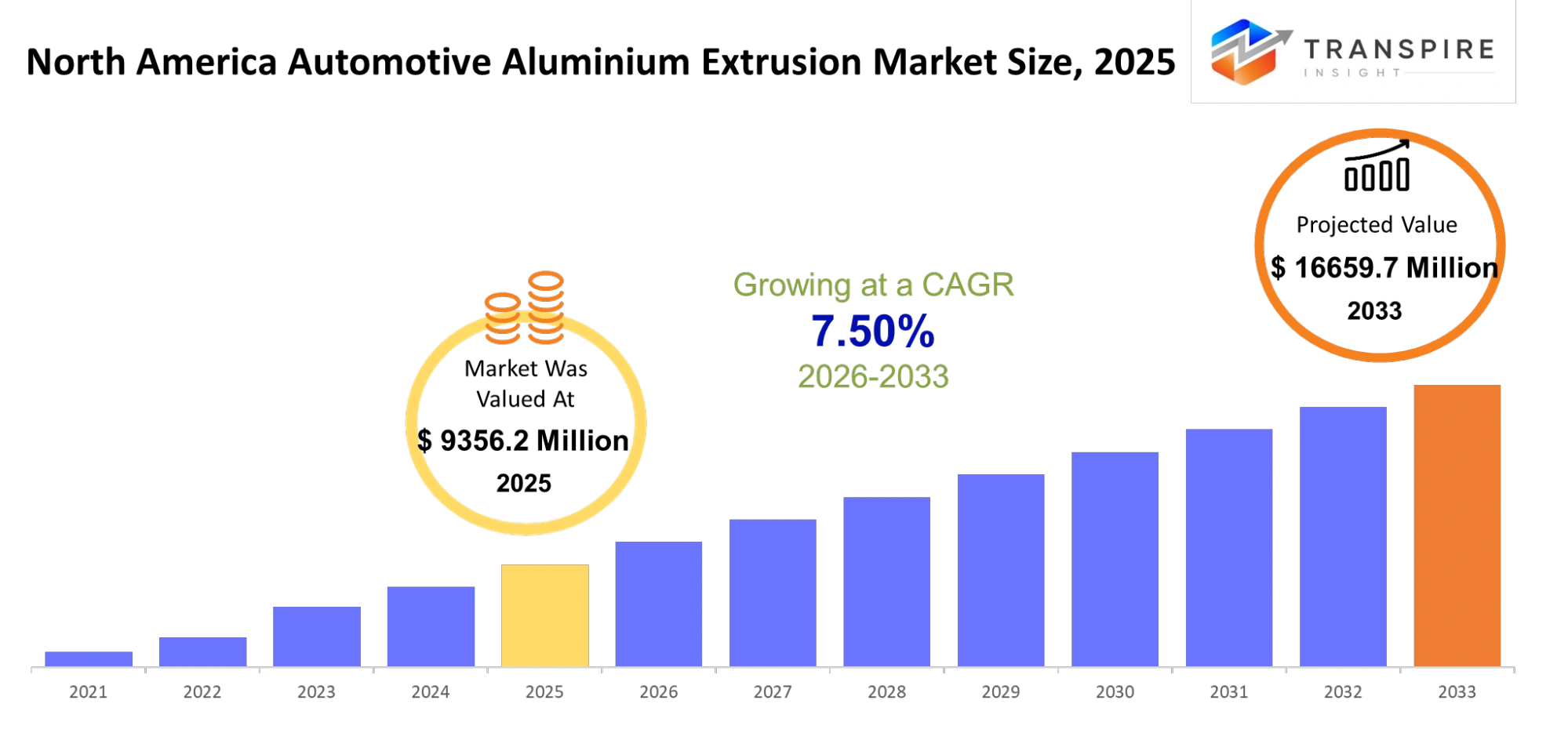
- North America Automotive Aluminium Extrusion Market Size 2025: USD 9356.2 Million
- North America Automotive Aluminium Extrusion Market Size 2033: USD 16659.7 Million
- North America Automotive Aluminium Extrusion Market CAGR: 7.50%
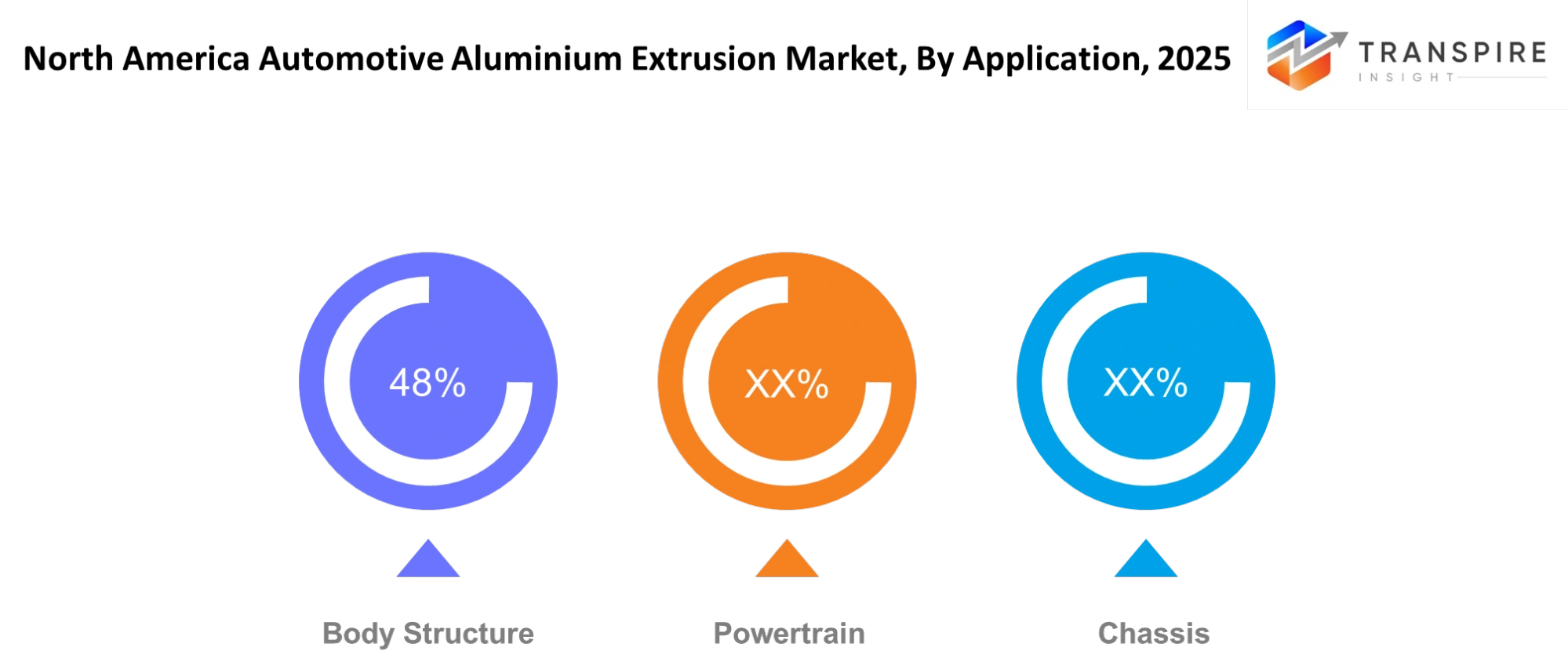
- North America Automotive Aluminium Extrusion Market Segments: By Type (6061, 6063, Others), By Application (Body Structure, Powertrain, Chassis), By End-User (Passenger Cars, Commercial Vehicles)
To learn more about this report,  Download Free Sample Report
North America Automotive Aluminium Extrusion Market Summary:
The North America Automotive Aluminium Extrusion Market size is estimated at USD 9356.2 Million in 2025 and is anticipated to reach USD 16659.7 Million by 2033, growing at a CAGR of 7.50% from 2026 to 2033. The automotive manufacturing industry in North America which includes Canada and the United States and Mexico will see its automotive aluminium extrusion market move towards the development of vehicles with lighter structures and specially designed components. Automakers will increasingly prioritize aluminum profiles to meet fuel efficiency targets and electric mobility expectations especially as battery-heavy designs demand weight reduction. The development of advanced extrusion techniques which include better alloy formulations and more precise manufacturing standards will enable the creation of intricate shapes that fulfill safety and design requirements. The need to comply with emission regulations and recycling requirements will force manufacturers to implement sustainable sourcing practices together with closed-loop production systems. The market for materials will be affected by consumer demand for products that offer both durability and resistance to corrosion which will influence how suppliers develop their business plans.
Key Market Trends & Insights:
The automotive aluminium extrusion market in North America which includes Canada and the United States and Mexico will experience a major transformation because automakers need to develop lightweight products which meet new efficiency regulations. The vehicle performance improvements will result from aluminum extrusions replacing heavier materials in structural and body components which support the development of electric and hybrid systems.
The development of new manufacturing processes through precision extrusion and advanced alloy development will enable companies to create products that have more complex and detailed designs. The producers will implement automation solutions while they create digital monitoring systems to achieve operational stability which will help them reduce waste while producing products that meet automotive quality standards throughout the region.
Sustainability requirements will determine how companies choose their materials and conduct their production operations. The environmental regulations and consumer demand make manufacturers increase their recycled aluminum usage. Companies will start using closed-loop recycling systems because this practice enables them to reduce emissions and material expenses while developing sustainability through responsible supply chain management.
The automotive industry must develop new products which meet changing consumer demands for durable and safe vehicles that use contemporary design elements. Aluminum extrusions will support innovative vehicle architectures which include modular platforms and enhanced crash management systems which remain standard in contemporary vehicle designs. The suppliers will adapt their product lines because buyers choose to purchase vehicles which offer high efficiency and long-lasting performance.
North America Automotive Aluminium Extrusion Market Segmentation
By Type
6061- The properties of 6061 aluminum extrusions provide an ideal combination of strength, corrosion resistance, and weldability which will make the material popular among users. The automotive industry will choose this aluminum grade for structural applications which require long-lasting materials with high strength capabilities. Its ability to maintain integrity under stress will support its use in frames and reinforcements which need to become lighter yet more efficient for modern vehicles.
6063- The smooth surface finish and excellent formability of 6063 aluminum extrusions will make them valuable to users. This type will suit applications where aesthetics and precision shaping are essential, such as trims and visible body elements. The manufacturing industry will select this material for intricate parts because it enables designers to create complex designs which will result in high production efficiency and superior visual appeal and consistent product quality.
Others- Specialized applications will require different alloy variants which provide specific mechanical and thermal characteristics. The automotive industry requires special high-strength and heat-resistant materials to address specific needs. The automotive industry requires advanced alloy development to meet vehicle design needs and safety requirements and performance targets while maintaining operational effectiveness.
By Application
Body Structure- Body Structure Aluminum extrusions will serve as essential components for vehicle body structures because they decrease total vehicle weight while keeping both structural integrity and passenger protection standards intact. The automotive industry will start using extruded parts for manufacturing their door systems and pillar components and vehicle frame structures. The new design approach will produce better fuel efficiency and extended battery distance while enabling automotive manufacturers to create new designs that fulfill upcoming safety requirements for crash testing.
Powertrain- Powertrain Aluminum extrusions will enhance powertrain systems by providing better thermal management and lighter weight components. The materials will function as housing and support system components which require both heat dissipation capacity and structural strength. The electric vehicle market will benefit from these materials which enhance energy efficiency and reliability for demanding propulsion systems.
Chassis- Chassis The strength-to-weight ratio and corrosion resistance of aluminum extrusions make them ideal materials for chassis components. The materials will improve both handling capabilities and stability performance and durability of the system. The use of extruded components will become more common among manufacturers because they create suspension and support systems that enable vehicles to achieve performance targets while utilizing modern lightweight efficient design methods.
To learn more about this report, Download Free Sample Report
By End-User
Passenger Cars- The public will primarily use passenger cars because drivers prefer cars which combine fuel efficiency with attractive design and long-lasting performance. Designers will use aluminum extrusions to create elegant product shapes which weigh less and produce better fuel efficiency and longer electric vehicle driving distances. Automakers will focus on integrating these materials into both structural and aesthetic elements which meet customer requirements for high performance and contemporary design.
Commercial Vehicles- Commercial vehicles will adopt aluminum extrusions to maximize their load capacity and operational effectiveness. Lighter structures will allow higher load limits without exceeding regulations which will benefit the logistics and transportation industries. The materials possess durability and wear resistance which make them appropriate for heavy-duty applications, allowing fleet operators to decrease maintenance expenses while achieving better performance over time.
Regional Insights
The United States automotive industry will increase its use of aluminum extrusions because electric vehicle manufacturing will grow. Companies will create supplier networks through their strong commitment to developing lightweight products and using domestic materials. Companies will use recycled materials because federal efficiency standards and sustainability targets require it and cutting-edge manufacturing technologies will provide them with precise production capabilities that maintain uniform vehicle performance.
Canada will develop sustainable production methods for its aluminum supply and clean energy resources. Manufacturers will align with environmental commitments by increasing recycled content and reducing carbon intensity. The automotive and materials industries will enhance their innovation capabilities through their partnership which government policies will support by creating consistent demand for high-quality extruded aluminum components needed for low-emission vehicle production.
Cost-effective manufacturing and its position near major automotive markets will establish Mexico as an important manufacturing center. Global automotive manufacturers will construct new production facilities which will create a higher need for aluminum extrusions used in their assembly processes. Trade agreements will facilitate cross-border supply chain operations while local suppliers enhance their capabilities to satisfy international requirements and adapt to new vehicle design trends.
Integrated supply chains in North America will link all stages from production to processing and distribution. The exchange of material resources and technological knowledge will benefit from regional partnerships according to regional collaboration. Manufacturers will develop strategies to achieve their performance targets while maintaining sustainability and cost efficiency because consumer preferences now favor vehicles with improved energy efficiency and longer-lasting components which include aluminum extrusion solutions for future automobile applications.
Recent Development News
Expansion of Domestic Aluminium Capacity and Supply Chain Adjustments- Recent developments in the United States highlight a push toward strengthening domestic aluminium production. A major smelter project announced in 2025 will significantly increase local output, reducing reliance on imports and supporting automotive supply chains. At the same time, manufacturers are adopting lightweight extrusion solutions more aggressively, aligning production systems with electric vehicle requirements and precision engineering demands.
Sustainability Focus and Industry-Level Strategic Shifts- Canada’s aluminium sector is responding to global uncertainty by emphasizing sustainable production and operational resilience. Companies operating across North America are adjusting forecasts and refining extrusion strategies due to fluctuating demand and recycling margin pressures. These adjustments will encourage Canadian producers to focus on energy-efficient processes and stable long-term supply partnerships with automotive manufacturers.
|
Report Metrics |
Details |
|
Market size value in 2025 |
USD 9356.2 Million |
|
Market size value in 2026 |
USD 10039.4 Million |
|
Revenue forecast in 2033 |
USD 16659.7 Million |
|
Growth rate |
CAGR of 7.50% from 2026 to 2033 |
|
Base year |
2025 |
|
Historical data |
2021 – 2024 |
|
Forecast period |
2026 – 2033 |
|
Report coverage |
Revenue forecast, competitive landscape, growth factors, and trends |
|
Regional scope |
North America (Canada, The United States, and Mexico) |
|
Key company profiled |
Hydro, Constellium, Novelis, Alcoa, Kaiser Aluminum, Norsk Hydro, Hindalco, China Zhongwang, UACJ, Gulf Extrusions, Jindal Aluminium, Arconic, Bonnell Aluminum, Taber Extrusions, ETEM |
|
Customization scope |
Free report customization (country, regional & segment scope). Avail customized purchase options to meet your exact research needs. |
|
Report Segmentation |
By Type (6061, 6063, Others), By Application (Body Structure, Powertrain, Chassis), By End-User (Passenger Cars, Commercial Vehicles) |
Key North America Automotive Aluminium Extrusion Market Company Insights
The main businesses which conduct operations in the automotive aluminium extrusion market of North America which includes Canada and the United States and Mexico will establish production facilities in local areas while developing new alloy materials and building enduring business relationships with automotive manufacturers. The companies will develop their recycling systems and automated operations to achieve better operational efficiency and environmental sustainability while they create products that meet electric vehicle needs and adapt to changing design requirements in different automotive production systems throughout various regions.
Company List
- Hydro
- Constellium
- Novelis
- Alcoa
- Kaiser Aluminum
- Norsk Hydro
- Hindalco
- China Zhongwang
- UACJ
- Gulf Extrusions
- Jindal Aluminium
- Arconic
- Bonnell Aluminum
- Taber Extrusions
- ETEM
North America Automotive Aluminium Extrusion Market Report Segmentation
By Type
- 6061
- 6063
- Others
By Application
- Body Structure
- Powertrain
- Chassis
By End-User
- Passenger Cars
- Commercial Vehicles
Frequently Asked Questions
Find quick answers to common questions.
The approximate North America Automotive Aluminium Extrusion Market size for the market will be USD 16659.7 Million in 2033.
Key segments for the North America Automotive Aluminium Extrusion Market By Type (6061, 6063, Others), By Application (Body Structure, Powertrain, Chassis), By End-User (Passenger Cars, Commercial Vehicles).
Major players in the North America Automotive Aluminium Extrusion Market are Hydro, Constellium, Novelis, Alcoa, Kaiser Aluminum, Norsk Hydro, Hindalco, China Zhongwang, UACJ, Gulf Extrusions, Jindal Aluminium, Arconic, Bonnell Aluminum, Taber Extrusions, ETEM.
The North America Automotive Aluminium Extrusion Market size is USD 9356.2 Million in 2025.
The North America Automotive Aluminium Extrusion Market CAGR is 7.50%.
- Hydro
- Constellium
- Novelis
- Alcoa
- Kaiser Aluminum
- Norsk Hydro
- Hindalco
- China Zhongwang
- UACJ
- Gulf Extrusions
- Jindal Aluminium
- Arconic
- Bonnell Aluminum
- Taber Extrusions
- ETEM
Recently Published Reports
-
Apr 2026
ATV & UTV Market
ATV & UTV Market Size, Share & Analysis Report By Type (ATV, and UTV), By Variants (Less Than 400 CC, 400 CC To 800 CC, and More Than 800 CC), and Geography (North America, Europe, Asia-Pacific, Middle East and Africa, South and Central America), 2021 - 2031
-
Apr 2026
Automotive Central Gateway Module Market
Automotive Central Gateway Module Market Size, Share & Analysis Report By Type (Ethernet Central Gateway Module, CAN Central Gateway Module, LIN Central Gateway Module, and FlexRay), By Application (Powertrain Control, Body Control, Infotainment System, Advanced Driver Assistance Systems (ADAS), and Others), By End User (Passenger Vehicles, and Commercial Vehicles), and Geography (North America, Europe, Asia-Pacific, Middle East and Africa, South and Central America), 2021 - 2031
-
Apr 2026
Automotive Engine Oil Filter Market
Automotive Engine Oil Filter Market Size, Share & Analysis Report By Filter Type (Fuel Filter, Engine Oil Filter, Hydraulic Oil Filter, and Others), By Filter Media (Cellulose, Synthetic, and Micro), By Sales Channel (OEMs, and Aftermarket), By Vehicle Type (Passenger Cars, Light Commercial Vehicles, Heavy Duty Trucks, Buses and Coaches, and Off-road Vehicles), and Geography (North America, Europe, Asia-Pacific, Middle East and Africa, South and Central America), 2021 - 2031
-
Apr 2026
Automotive Parts Aluminium Die Casting Market
Automotive Parts Aluminium Die Casting Market Size, Share & Analysis Report By Production Process (Pressure Die Casting, Vacuum Die Casting, Squeeze Die Casting, Gravity Die Casting), By Application (Body Parts, Engine Parts, Transmission Parts, Battery And Related Components, Other Application Types), and Geography (North America, Europe, Asia-Pacific, Middle East and Africa, South and Central America), 2021 - 2031
Our Clients