
Sep 15, 2026
By Transpire Insight
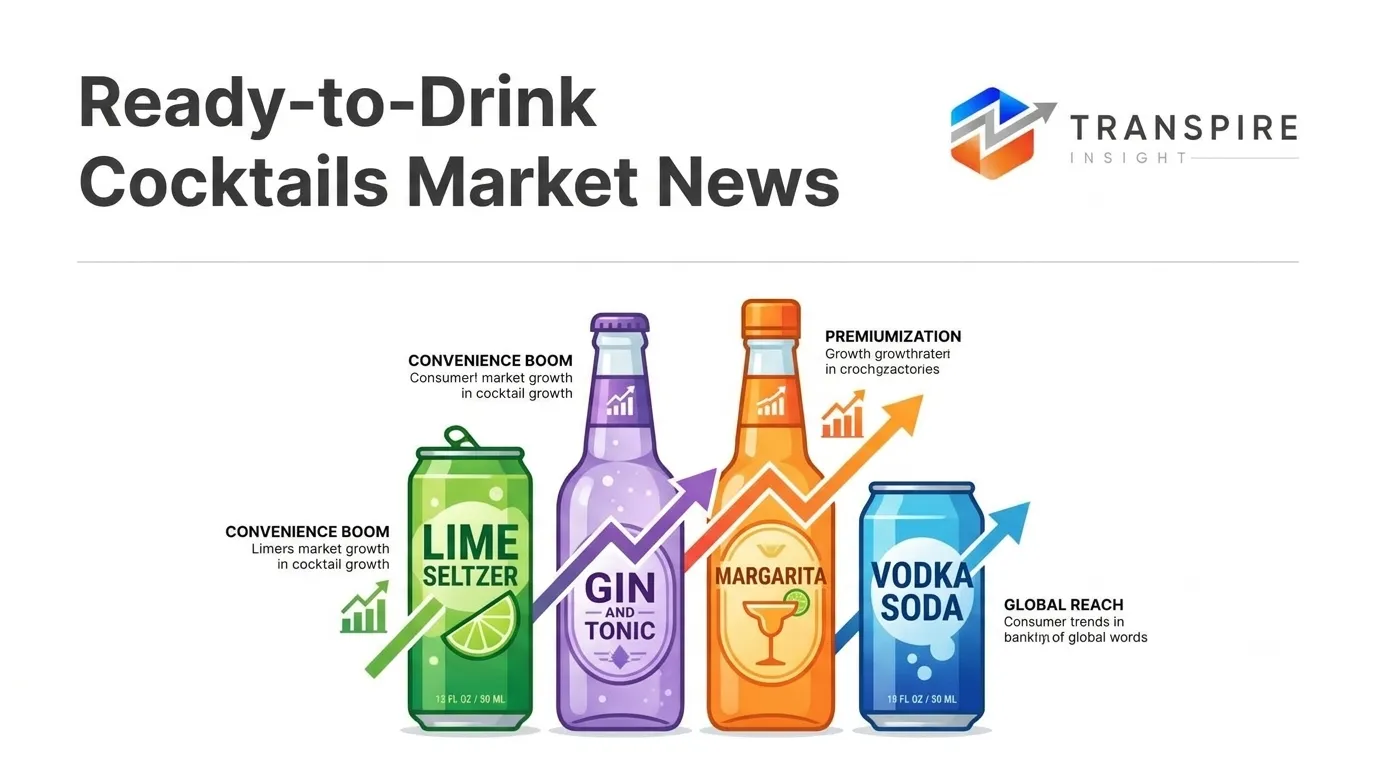
Rising demand for convenience, premium cocktail experiences, portable formats, distinctive flavors, and moderation-friendly options is accelerating the global Ready-to-Drink Cocktails Market.
Convenience and Premiumization Are Reshaping the Ready-to-Drink Cocktails Market
The global beverage alcohol industry is undergoing a significant change as consumers increasingly look for products that combine convenience with recognizable cocktail experiences. Ready-to-drink (RTD) cocktails are benefiting from this shift because they remove much of the preparation associated with traditional cocktails while providing consistent flavor, portion control, and portability.
Unlike earlier generations of canned alcoholic beverages that were often positioned primarily around convenience, today's RTD cocktail category is moving toward premium spirits, bartender-inspired recipes, sophisticated packaging, authentic ingredients, and more distinctive flavor profiles. Margaritas, mojitos, espresso martinis, palomas, spritzes, whiskey cocktails, and other recognizable serves are increasingly being translated into packaged formats.
Recent industry analysis indicates that the global RTD cocktails market was valued at several billion dollars in 2025, with double-digit growth expected through the next decade. The broader RTD and ready-to-serve category was also estimated at USD 13.9 billion at mid-year 2025, representing 12.5% of total beverage alcohol dollar sales in the United States.
The fundamental attraction is straightforward: consumers can access a cocktail-style experience without purchasing multiple ingredients, measuring spirits, preparing mixers, or relying on bartending skills.
Premium Cocktails Are Moving From Bars to Retail Shelves
The definition of a premium cocktail is changing as consumers become more familiar with high-quality packaged beverages. RTD manufacturers are increasingly using premium spirits, natural flavor systems, real fruit ingredients, botanical extracts, and established cocktail recipes to differentiate their products from conventional flavored alcoholic beverages.
This transition is particularly important because consumers are no longer evaluating RTDs only on price and convenience. Taste authenticity, ingredient quality, alcohol strength, packaging design, and brand reputation are increasingly influencing purchase decisions.
Spirit-based RTDs are therefore gaining strategic attention from major beverage companies. Recent market analysis indicates that spirit-based products are expected to be among the faster-growing areas of the category as consumers seek bar-style drinks in convenient formats.
The movement toward premiumization also creates opportunities for smaller craft producers. Independent brands can differentiate themselves through regional ingredients, bartender collaborations, unusual recipes, limited-edition releases, and culturally inspired flavors rather than competing exclusively on distribution scale.
Why Does the Ready-to-Drink Cocktails Market Matter?
The growth of RTD cocktails extends beyond convenience. The category is increasingly connected with changes in social behavior, retail consumption, entertainment, and product experimentation.
The category's appeal is particularly visible among younger adult consumers who prioritize convenience and value while also seeking products that are visually distinctive and suitable for social occasions. Recent reporting has highlighted the growing appeal of canned cocktails among younger consumers as bar prices rise and drinking occasions become more cost-conscious.
Flavor Innovation Is Becoming a Competitive Advantage
Flavor has become one of the most important tools for differentiation in the Ready-to-Drink Cocktails Market.
Traditional cocktail profiles such as margarita, mojito, Moscow mule, old fashioned, and cosmopolitan remain important because consumers immediately understand them. However, manufacturers are increasingly extending these familiar formats through fruit combinations, botanical notes, spice, smoky flavors, coffee, tea, and regionally inspired ingredients.
This evolution allows brands to target different consumer preferences without abandoning recognizable cocktail identities.
Recent product activity illustrates this direction. In July 2026, beverage-industry coverage highlighted new premium RTD launches, including bartender-created canned mezcal cocktails featuring citrus and smoky notes, alongside broader experimentation with lower-ABV and sessionable drinks.
At the same time, the development of packaged versions of classic cocktails demonstrates how brands are attempting to preserve the identity of established bar drinks while adapting them to retail formats.
Moderation Is Creating a New Product Development Opportunity
The RTD cocktail industry is growing at a time when alcohol consumption patterns are becoming more complicated. Some consumers are reducing alcohol intake, while others continue drinking but increasingly prefer controlled, occasion-specific consumption.
This is encouraging manufacturers to develop products across a wider alcohol-content spectrum.
Lower-ABV cocktails, lighter spritzes, smaller serving formats, and moderation-oriented products can attract consumers who want a cocktail experience without the intensity associated with some traditional spirits-based drinks. At the same time, premium higher-strength cocktails are attracting consumers who want a more concentrated bar-style experience.
This creates a broad product-development opportunity rather than a single standardized consumer profile.
Recent beverage launches have increasingly incorporated lower-ABV and more sessionable positioning, reflecting the wider shift toward moderation and flexible drinking occasions.
The category is therefore likely to become increasingly segmented between premium full-strength cocktails, lighter social beverages, and alcohol-free or reduced-alcohol alternatives.
Packaging Is Becoming Part of the Product Experience
Packaging is no longer simply a logistical component of the RTD cocktail business. It is becoming a major part of brand positioning.
Cans remain attractive because they are lightweight, portable, stackable, and suitable for high-volume retail distribution. Bottles can provide a more premium visual identity and may be particularly effective for products designed to imitate bar or restaurant presentation.
New packaging concepts are also emerging. In July 2026, Kocktail introduced a reusable ready-to-drink cocktail glass format featuring cocktails such as Negroni, Old Fashioned, and Margarita variants, illustrating how brands are experimenting with formats that bridge packaged convenience and cocktail presentation.
For manufacturers, packaging innovation can help solve two challenges simultaneously: differentiating the product on crowded retail shelves and communicating its intended consumption occasion.
Major Beverage Companies Are Increasing Their Focus on RTDs
The strategic importance of RTDs is becoming more visible among established beverage companies.
Traditional spirits producers historically relied heavily on bottled spirits, but changing consumer preferences are encouraging these companies to develop packaged versions of familiar brands and cocktails. The objective is not simply to create another beverage format; it is to maintain brand relevance as consumers shift between bars, homes, events, and retail environments.
Recent reporting indicates that Diageo is placing greater strategic emphasis on canned cocktails as part of its broader effort to stimulate growth. Its RTD sales reportedly increased 17% in the first half of 2026, highlighting the category's importance within the company's portfolio strategy.
This growing involvement from large beverage companies is likely to increase distribution, marketing expenditure, product innovation, and competition across the category.
Investment Opportunities in Ready-to-Drink Cocktails
The expansion of the RTD cocktail category is creating opportunities across ingredients, manufacturing, packaging, distribution, technology, and branding.
Premium spirit-based cocktails represent an important opportunity because consumers increasingly associate cocktails with recognizable spirits and sophisticated flavor profiles. Brands that can combine premium spirits with consistent taste and convenient packaging may be positioned to capture higher-value consumers.
Flavor development is becoming increasingly important as the number of RTD products expands. Companies capable of creating stable, authentic, and scalable flavor formulations can support manufacturers in developing differentiated products.
Opportunities exist around botanical blends, tropical fruits, citrus combinations, coffee flavors, spice profiles, and globally inspired ingredients.
The increasing volume of packaged beverages is placing greater attention on material efficiency and recyclability. Manufacturers and packaging suppliers can therefore explore lightweight cans, recyclable materials, reduced secondary packaging, and improved production efficiency.
Sustainable packaging can also become a brand differentiator when environmental claims are supported by measurable improvements.
Online retail is becoming increasingly relevant to beverage discovery and purchasing, particularly where local regulations permit alcohol e-commerce and delivery. Digital platforms allow consumers to compare flavors, discover new brands, read reviews, and purchase products without relying solely on physical shelf visibility.
Market analysis indicates that online channels are becoming an important distribution route for RTD cocktails, supported by consumer demand for convenience and broader product discovery.
Collaboration with bartenders, mixologists, restaurants, and hospitality groups can provide RTD manufacturers with credibility and recipe-development expertise.
Such partnerships can help brands translate established cocktail techniques into scalable packaged products while maintaining a premium image.
Government and Regulatory Considerations
The growth of RTD cocktails also increases the importance of responsible regulation.
Governments and regulators must address labeling, alcohol-content disclosure, taxation, packaging requirements, marketing restrictions, age verification, online sales, and responsible advertising. As the category expands across countries, differences in alcohol classification and taxation can significantly influence product formulation and distribution strategies.
Regulatory complexity is particularly important for products that sit between traditional spirits, malt beverages, wine-based drinks, and emerging low- or no-alcohol categories.
Manufacturers therefore need to consider regulatory requirements at the formulation stage rather than treating compliance solely as a final distribution issue.
The Market Is Becoming More Competitive and More Sophisticated
The rapid expansion of RTD cocktails is also creating challenges.
Retail shelves are becoming increasingly crowded, making it harder for new brands to gain visibility. Consumers can quickly switch between flavors and brands, creating pressure on manufacturers to maintain continuous innovation.
Product quality is another critical issue. A cocktail that tastes noticeably different from its freshly prepared equivalent may struggle to establish repeat purchases. Recent testing of canned cocktails has demonstrated the importance of flavor balance, authenticity, sweetness, carbonation, and alcohol integration when translating traditional cocktails into packaged formats.
Companies must therefore balance several competing objectives: shelf stability, cost, alcohol strength, flavor authenticity, ingredient quality, packaging performance, and consumer expectations.
Policy Direction and Industry Outlook
The future development of the Ready-to-Drink Cocktails Market is likely to be shaped by five major forces:
The result is a category moving away from the perception of being a simple convenience substitute and toward becoming an independent segment of the beverage alcohol industry.
Market Expert View
The Ready-to-Drink Cocktails Market is entering a more sophisticated phase of development. Convenience created the initial consumer proposition, but premiumization, flavor authenticity, packaging innovation, and changing social occasions are now determining the category's next stage of growth.
The strongest opportunities are likely to emerge for companies that can combine the convenience of packaged beverages with the sensory quality consumers associate with professionally prepared cocktails.
At the same time, the market should not be viewed as universally immune to the pressures affecting the wider alcohol industry. Consumers are becoming more selective about spending, alcohol intake, and product quality. RTDs must therefore deliver a compelling combination of value, taste, portability, and brand identity.
Recent market research places the global RTD cocktails market on a strong double-digit growth trajectory through the 2030s, while current 2026 industry activity shows continued investment in premium spirit-based products, lower-ABV formats, innovative packaging, and new flavor concepts.
Conclusion
Ready-to-Drink Cocktails are becoming an increasingly important part of the global beverage landscape as consumers seek convenient, portable, and professionally inspired drinking experiences.
The category is evolving rapidly from basic canned alcoholic beverages toward sophisticated products built around premium spirits, recognizable cocktails, distinctive flavors, innovative packaging, and flexible alcohol levels.
The next phase of market development will depend on how effectively manufacturers respond to changing consumer expectations. Companies that prioritize taste authenticity, responsible product positioning, sustainable packaging, and meaningful innovation may be better positioned to compete as the category matures.
With beverage companies increasing their investment in RTDs and consumers continuing to explore convenient alternatives to traditional cocktail preparation, the Ready-to-Drink Cocktails Market is positioned to remain one of the most dynamic segments of the modern beverage industry.


Send us a brief description of your challenge and we'll get back to you within 24 hours.

 inquiry@transpireinsight.com
 APAC:+91 7666513636
 Address


