
Sep 15, 2026
By Transpire Insight
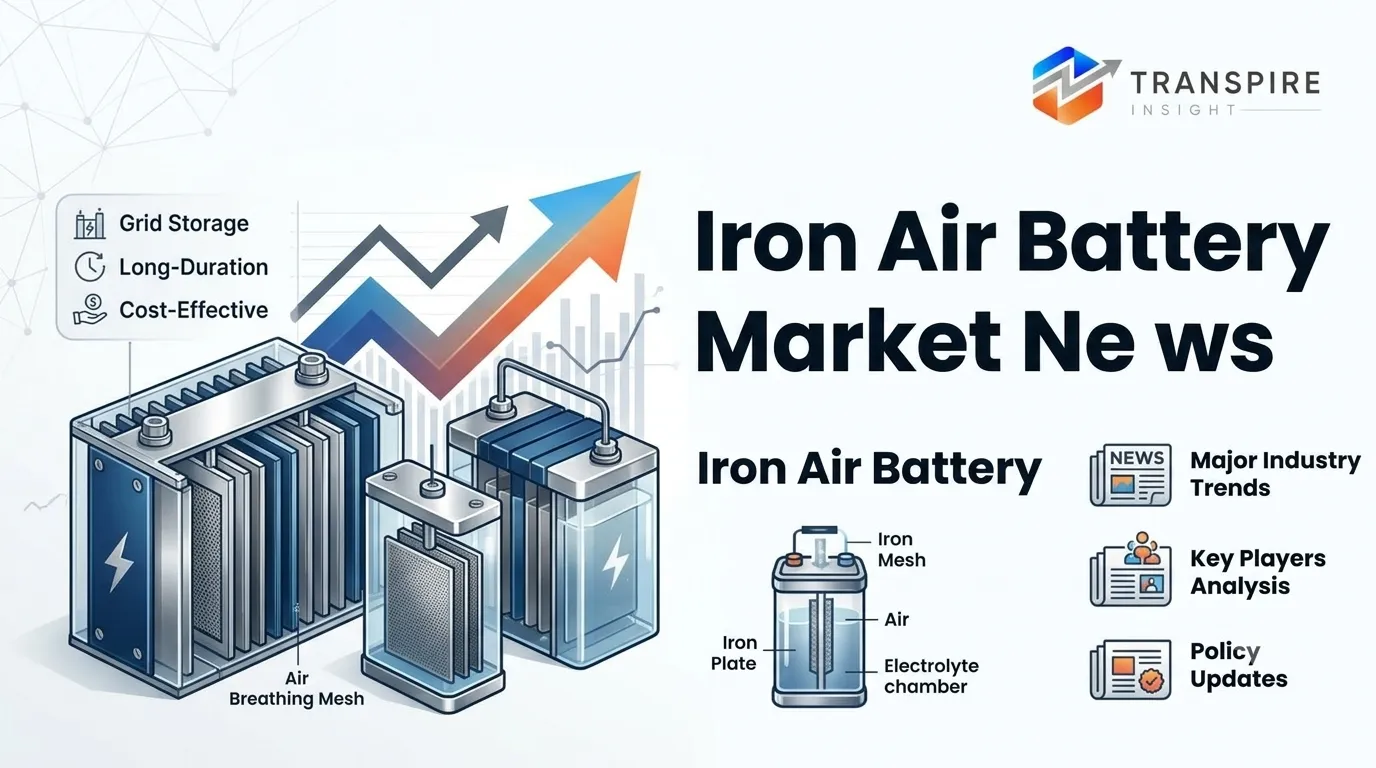
The accelerating deployment of renewable power and rising electricity demand are increasing the need for long-duration energy storage, driving attention toward iron-air batteries, grid resilience, renewable-energy firming, and lower-cost stationary storage technologies.
The growing penetration of renewable energy is creating a stronger requirement for affordable, multi-hour and multi-day energy storage solutions.
Renewable Energy Growth Is Increasing Demand for Long-Duration Storage
The rapid expansion of solar and wind power is changing the operating requirements of electricity grids worldwide. While renewable generation can significantly reduce dependence on fossil fuels, its variable output creates periods in which electricity supply does not perfectly match demand. This is increasing the importance of energy-storage systems capable of retaining electricity for substantially longer periods than conventional short-duration battery systems.
Iron-air batteries are receiving increasing attention because they are designed primarily for stationary, long-duration applications. The technology uses iron, air and water and relies on reversible electrochemical reactions involving iron oxidation and reduction. This gives iron-air systems a fundamentally different operating profile from many conventional lithium-ion batteries and positions them as a potential solution for grid applications requiring extended energy delivery.
The growing need for long-duration energy storage is also being reinforced by grid modernization, renewable-energy integration and the increasing electricity requirements of data centers. Current industry estimates indicate that the global iron-air battery market is expanding as utilities and energy developers evaluate alternatives capable of providing multi-hour and multi-day storage.
In March 2026, Form Energy and Crusoe announced an agreement covering 12 GWh of iron-air battery capacity intended to support the rapidly increasing power requirements of AI data centers, with deliveries planned to begin in 2027. The development illustrates how iron-air storage is moving beyond technology demonstrations toward large-scale commercial energy infrastructure.
Grid Reliability Creates a Growing Opportunity for Iron-Air Batteries
The increasing complexity of electricity networks is creating demand for storage technologies capable of operating during prolonged periods of grid stress. Conventional battery systems can provide valuable short-duration balancing, but longer disruptions caused by extreme weather, renewable-generation shortages or demand surges require additional storage duration.
Iron-air batteries are being developed specifically to address this gap. Their potential to deliver electricity for extended periods makes them suitable for applications where energy availability, rather than instantaneous power density, is the primary requirement. The technology can potentially complement lithium-ion systems rather than directly replace them across every application.
This distinction is becoming increasingly important as utilities seek to manage renewable intermittency, reduce dependence on fossil-fuel peaker plants and strengthen grid resilience. Industry research identifies long-duration storage, renewable integration and grid reliability as major factors supporting the development of the iron-air battery market.
Why Do Iron-Air Batteries Matter?
The importance of iron-air batteries extends beyond battery technology itself because long-duration storage can influence the reliability and economics of modern electricity systems.
Abundant Materials Strengthen the Technology's Strategic Appeal
One of the most significant factors attracting attention to iron-air batteries is the availability of their core materials. Iron is widely available and comparatively inexpensive, while the system also uses air and water as important components.
This material profile can provide potential advantages for stationary energy storage, particularly as governments and energy companies increasingly consider supply-chain security when selecting battery technologies. The global battery industry has historically been associated with supply-chain concerns surrounding certain critical minerals, creating an incentive to investigate chemistries based on more abundant materials.
Iron-air technology therefore fits into a broader movement toward diversified energy-storage chemistry. Rather than relying on a single battery technology, future power systems are increasingly expected to combine different storage solutions according to duration, cost, safety and operational requirements.
Commercialization Is Moving From Demonstration to Large-Scale Deployment
The iron-air battery industry is transitioning from laboratory and pilot-stage development toward larger commercial projects. Form Energy is one of the most prominent companies developing iron-air systems for grid-scale applications, with its technology designed to provide electricity for extended periods.
In August 2026, Form Energy announced a $750 million financing round, bringing its total capital raised to more than $2 billion. The company said the funding would support manufacturing expansion and commercial projects, while its commercial project backlog had increased substantially during 2026. One major project with Xcel Energy involves 300 MW of Form's batteries to support the grid and a planned Google data center in Minnesota.
The development is significant because it demonstrates that long-duration storage is increasingly being considered alongside conventional grid infrastructure rather than only as an experimental technology.
Government Initiatives Supporting Long-Duration Energy Storage
Governments and energy agencies are increasingly supporting technologies that can improve renewable integration, grid resilience and energy security. Long-duration storage is becoming an important part of these strategies because electricity systems with higher renewable penetration require flexible resources capable of balancing supply over longer time periods.
The United States has become a major center for iron-air battery development. Federal clean-energy policies, grid modernization programs and investments in domestic energy-storage manufacturing are creating a supportive environment for emerging battery technologies.
The country's growing electricity demand is adding another layer of urgency. AI data centers and other large-scale computing facilities are increasing pressure on electricity infrastructure, encouraging developers to consider new forms of generation and storage. Form Energy's agreements for AI-related power infrastructure illustrate how iron-air batteries are becoming connected with this emerging demand.
Europe's transition toward higher renewable-energy penetration is increasing the requirement for flexible electricity resources. Solar and wind expansion, grid modernization and decarbonization targets are encouraging energy developers to evaluate non-lithium storage technologies.
Iron-air systems may find opportunities where extended storage duration is more important than high energy density, particularly in utility-scale renewable projects and regional grid-support applications.
Asia-Pacific is becoming an important growth region for long-duration energy storage because of rapid electricity-demand growth, renewable-energy deployment and ongoing grid modernization.
Countries across the region are expanding solar and wind capacity while simultaneously seeking greater energy security and system flexibility. This combination creates opportunities for iron-air systems as utilities and developers evaluate storage technologies capable of operating for extended periods.
Canada's clean-electricity transition is increasing attention toward technologies that can support renewable generation and improve grid flexibility. Long-duration storage can become increasingly relevant in regions where renewable resources and electricity demand are separated geographically or where seasonal and weather-related variability creates additional balancing requirements.
India's rapidly expanding renewable-energy capacity is increasing the importance of grid-scale energy storage. Solar generation, in particular, creates significant differences between daytime generation and evening electricity demand.
As the country's electricity system becomes increasingly renewable, long-duration storage technologies could support grid balancing, renewable-energy firming and energy resilience. Iron-air batteries may represent one potential technology within India's broader emerging long-duration storage ecosystem.
Policy Direction Across Major Energy Markets
Major energy markets are increasingly moving toward a diversified storage strategy based on several priorities that include renewable integration, grid resilience, energy security, cost reduction and domestic manufacturing.
Iron-air batteries are particularly relevant to this transition because their primary value proposition is long-duration stationary storage rather than high-energy-density mobile applications. Their development therefore reflects a wider shift in the energy-storage industry from simply adding battery capacity toward matching storage duration with specific grid requirements.
The increasing involvement of utilities, technology companies, data-center developers and energy-storage manufacturers is also strengthening the commercial ecosystem surrounding long-duration storage.
Investment Opportunities in the Iron-Air Battery Industry
The expansion of long-duration energy-storage requirements is creating investment opportunities across the iron-air battery value chain, from battery manufacturing and system integration to renewable-energy projects and grid-management software.
Utility-scale storage represents one of the most significant opportunities for iron-air technology. Electricity providers require flexible resources capable of storing renewable electricity and delivering it when demand rises or renewable output declines.
Iron-air systems could therefore become particularly valuable in markets where utilities need multi-day storage rather than only short-duration frequency regulation.
The increasing deployment of solar and wind power is creating demand for storage systems that can smooth renewable generation.
Iron-air batteries can potentially be co-located with renewable-energy projects to store excess electricity and release it during periods of low generation. This creates opportunities for integrated renewable-plus-storage projects.
The rapid expansion of AI infrastructure is creating a new opportunity for long-duration energy storage. Data centers require highly reliable electricity, while grid constraints can make new power connections increasingly difficult.
The 12 GWh agreement between Form Energy and Crusoe demonstrates the potential connection between iron-air storage and AI infrastructure.
Remote communities, industrial facilities and critical infrastructure can benefit from storage systems that provide electricity during prolonged interruptions.
Iron-air batteries could be integrated with solar, wind and other distributed-energy resources to create resilient microgrids capable of operating with reduced dependence on diesel generation.
The development of iron-air technology is also creating opportunities in battery manufacturing and supply-chain development. The relatively abundant nature of iron creates potential for localized supply chains and reduced exposure to certain critical-material constraints.
The expansion of Form Energy's U.S. manufacturing operations demonstrates the growing emphasis on domestic production capacity for emerging energy-storage technologies.
Market Expert View
Iron-air batteries are becoming increasingly relevant as electricity systems move toward higher renewable penetration and longer-duration energy-storage requirements. Their potential to use abundant materials while delivering extended-duration storage gives the technology a distinct position within the rapidly diversifying battery industry.
The strongest opportunity is likely to emerge in stationary applications where long discharge duration, material availability and system-level economics are more important than compact size or high energy density. Grid-scale renewable integration, backup power, microgrids and data-center infrastructure are therefore expected to remain important areas of development.
At the same time, commercialization will depend on manufacturing scale, project economics, reliability, financing and successful operation of early large-scale deployments. The growing investment and commercial activity surrounding iron-air systems indicates that the technology is moving toward a more important role in the long-duration energy-storage market.
Conclusion
Iron-air batteries are emerging as a promising technology for the next phase of long-duration energy storage. The expansion of renewable power, rising electricity demand, grid congestion and the rapid growth of AI infrastructure are increasing the need for storage systems capable of delivering electricity for extended periods.
The technology's use of abundant materials and its focus on multi-day stationary storage provide a differentiated proposition within the global battery landscape. As utilities and energy developers seek alternatives to conventional short-duration storage and fossil-fuel peaker generation, iron-air batteries could become an increasingly important component of future electricity systems.
With commercial projects expanding, investment increasing and demand for long-duration storage accelerating, the iron-air battery industry is moving closer to large-scale commercialization. Continued progress in manufacturing, project deployment, system performance and energy-market integration will determine how significantly the technology contributes to the future global energy-storage economy.


Send us a brief description of your challenge and we'll get back to you within 24 hours.

 inquiry@transpireinsight.com
 APAC:+91 7666513636
 Address


