
Sep 23, 2026
By Transpire Insight
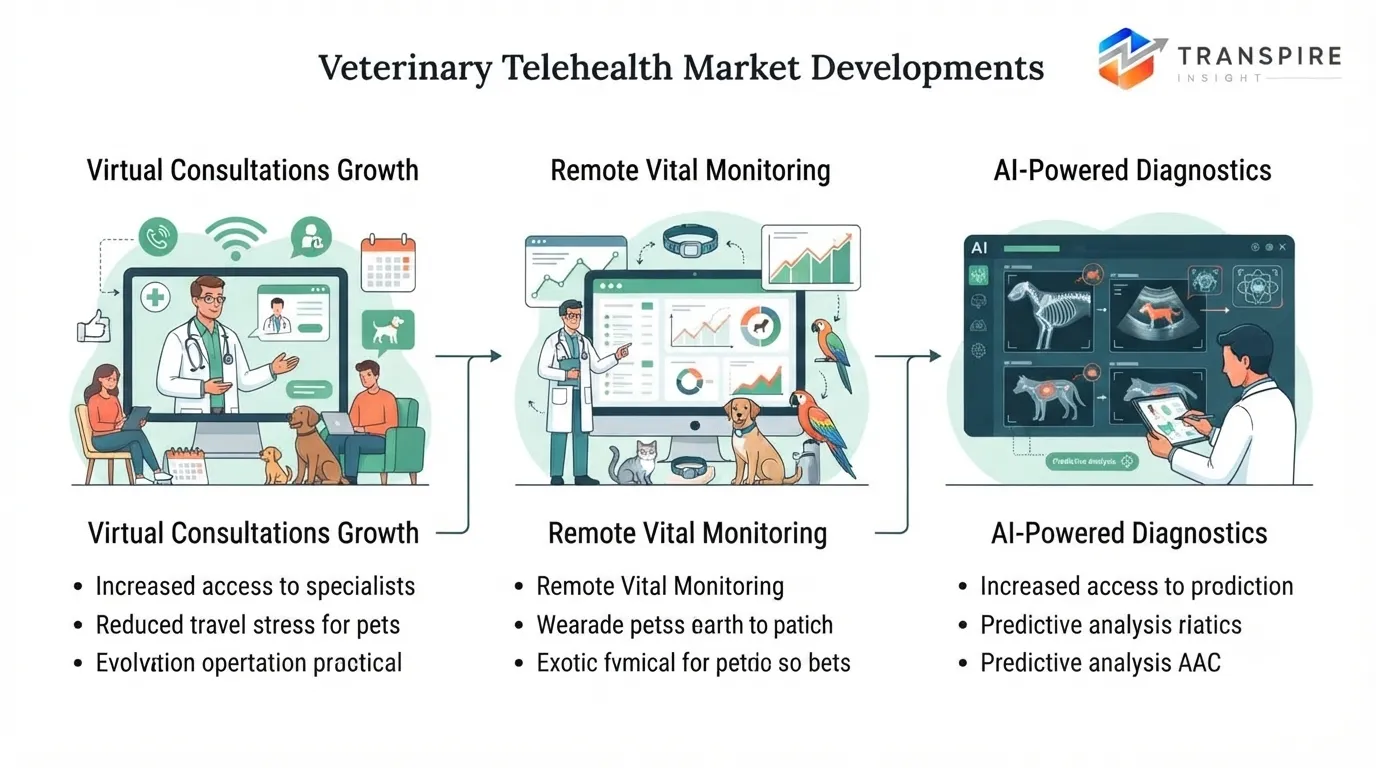
Veterinary healthcare is increasingly moving beyond traditional clinic visits as pet owners, livestock operators and veterinary professionals adopt digital communication and remote monitoring technologies.
The combination of growing pet ownership, veterinary workforce shortages, chronic animal diseases and advances in artificial intelligence is creating a strong foundation for the expansion of veterinary telehealth services.
September 2026: Veterinary telehealth is becoming an increasingly important part of the animal healthcare ecosystem. Digital platforms allow pet owners and animal caregivers to communicate with veterinarians remotely through video consultations, messaging, image sharing, remote monitoring and digital health records.
The technology can improve access to veterinary professionals, particularly for customers located far from veterinary clinics.
Telehealth can also support follow-up consultations, chronic disease management, behavioral consultations and preliminary triage.
Market Size
The global veterinary telehealth market was estimated at approximately USD 1.19 billion in 2025 and is projected to reach around USD 4.18 billion by 2035, expanding at a CAGR of approximately 13.4% during 2026–2035.
Published market estimates vary significantly because some studies define the market narrowly around telehealth platforms, while others include broader veterinary telemedicine services. For example, Grand View Research estimates the veterinary telehealth market at USD 365.2 million in 2025, while other market definitions produce substantially higher values.
Digital Access Is Becoming a Major Market Driver
One of the strongest drivers for veterinary telehealth is the increasing demand for convenient access to veterinary services.
Pet owners often face difficulties scheduling appointments, traveling to clinics and managing follow-up visits.
Telehealth platforms can provide an alternative for situations that do not necessarily require a physical examination.
This does not mean that digital veterinary services will replace conventional clinics. Instead, telehealth is increasingly being positioned as a complementary service that can improve communication between veterinarians and animal owners.
Pet Healthcare Represents a Major Opportunity
Companion animals account for a significant portion of veterinary telehealth demand.
Dogs and cats are increasingly treated as members of the household, contributing to higher spending on preventive healthcare, diagnostics, nutrition and chronic disease management.
Digital services can support routine consultations, medication follow-ups, behavioral advice and post-treatment monitoring.
The increasing prevalence of chronic conditions among older pets could further expand demand because these animals often require repeated communication with veterinary professionals.
Teleconsulting Remains an Important Service
Teleconsulting represents one of the most widely adopted veterinary telehealth services.
Veterinarians can use digital platforms to discuss symptoms, review images, assess recovery and provide general guidance.
Current market research identifies teleconsulting as one of the leading service categories in veterinary telehealth.
The growing availability of high-quality cameras and smartphones is also improving the quality of information veterinarians receive before a physical appointment.
Artificial Intelligence Could Expand Remote Veterinary Care
Artificial intelligence is becoming increasingly relevant to veterinary telehealth.
AI-powered systems can assist with symptom collection, triage, appointment routing and analysis of animal health information.
Some platforms can organize information supplied by pet owners and help veterinary teams prioritize cases.
AI is not expected to replace veterinary professionals. Instead, its role is more likely to involve administrative automation, decision support and preliminary assessment.
This could help veterinary clinics manage growing demand without proportionally increasing administrative workload.
Remote Monitoring Creates New Opportunities
Connected collars, activity trackers, cameras and other monitoring technologies are expanding the capabilities of veterinary telehealth.
These devices can provide information about activity, sleep, movement and behavioral changes.
For chronic conditions, continuous monitoring can help veterinarians identify changes between scheduled appointments.
Livestock operations can also benefit from remote monitoring because large animal populations are difficult to observe individually.
North America Leads the Market
North America remains the largest regional market for veterinary telehealth.
Grand View Research estimated that North America accounted for approximately 41.8% of global veterinary telehealth revenue in 2025.
The region benefits from high pet ownership, strong veterinary infrastructure, widespread smartphone adoption and increasing willingness among consumers to use digital healthcare services.
Europe represents another important market, while Asia Pacific is expected to experience strong growth because of expanding pet ownership, increasing veterinary infrastructure and digital-health adoption.
Veterinary Workforce Shortages Support Adoption
Veterinary workforce shortages are another important factor.
Veterinary practices are under pressure to serve growing numbers of animals while managing staffing constraints.
Telehealth can potentially improve veterinarian productivity by reducing unnecessary physical appointments and allowing professionals to communicate with multiple customers digitally.
The technology can also improve access in rural and underserved regions where veterinary clinics are less concentrated.
Competitive Landscape
The veterinary telehealth market includes specialized telehealth providers, veterinary software companies, pet-care businesses and digital-health platforms.
Competition is based on platform usability, veterinarian availability, integration with clinical systems, pricing and breadth of services.
Major companies identified in current market research include AirVet, Vetster, TeleVet, FirstVet, GuardianVets, Petriage, VitusVet and VetRad.
Top 10 Companies in Veterinary Telehealth Market
1. AirVet
Headquarters: San Diego, California, USA
AirVet provides digital veterinary services designed to connect pet owners with veterinary professionals. Its platform focuses on convenient access to veterinary guidance.
2. Vetster
Headquarters: Toronto, Canada
Vetster operates an online veterinary marketplace that connects pet owners with veterinarians through digital consultations. Its platform supports remote communication across multiple animal-health needs.
3. TeleVet
Headquarters: Austin, Texas, USA
TeleVet provides digital communication and telehealth solutions designed for veterinary practices. Its platform focuses on improving communication between veterinary teams and clients.
4. FirstVet
Headquarters: Stockholm, Sweden
FirstVet provides digital veterinary consultations through an online platform. The company has expanded its services across multiple markets.
5. GuardianVets
Headquarters: Denver, Colorado, USA
GuardianVets provides veterinary communication and telehealth services designed to improve access and support veterinary practices.
Outlook: Could Veterinary Telehealth Become a Standard Layer of Animal Healthcare?
Veterinary telehealth is likely to evolve from an optional digital service into an integrated component of veterinary care.
AI-assisted triage, connected monitoring devices, electronic health records and mobile applications could increasingly work together to create continuous animal-health ecosystems.
The technology will not eliminate the need for physical examinations, surgery or diagnostic testing. Instead, its greatest value may come from improving communication, follow-up care and early identification of health concerns.
As pet owners become more comfortable with digital healthcare, veterinary telehealth could become an increasingly important growth area within the global animal-health industry.


Send us a brief description of your challenge and we'll get back to you within 24 hours.

 inquiry@transpireinsight.com
 APAC:+91 7666513636
 Address


