
Oct 08, 2026
By Transpire Insight
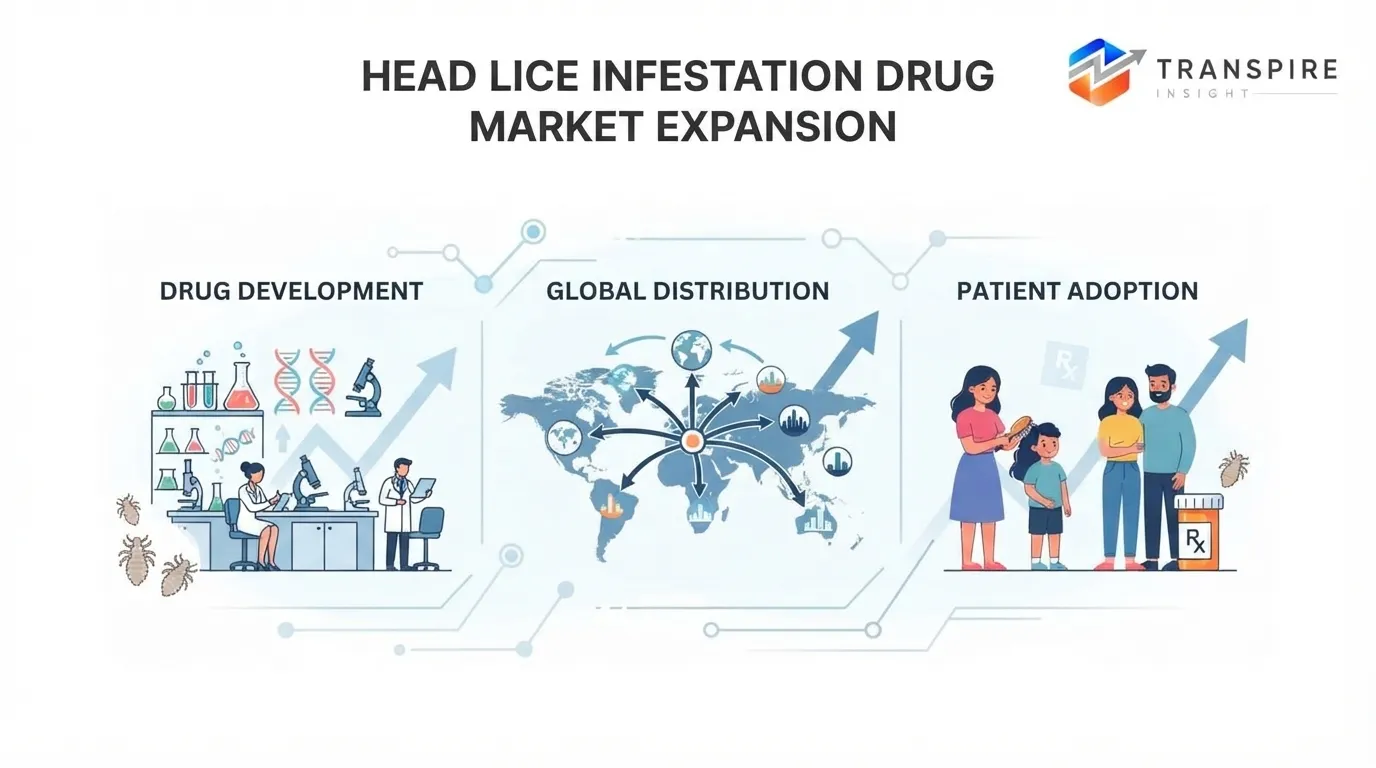
Description
According to a research report published by Transpire Insight, the head lice infestation drug market size is projected to grow from USD 1.11 billion in 2026 to USD 1.21 billion by 2035, at a CAGR of 5.72% during the forecast period 2027-2035. Market growth is propelled by rising pesticide resistance in head lice, high school-aged child infestation rates, demand for non-toxic/dimethicone formulations, and expanded retail pharmacy and e-commerce distribution networks.
Introduction
The head lice infestation drug market addresses pediculosis capitis outbreaks, primarily affecting school-aged children and household contacts. Dominated by over-the-counter (OTC) products like dimethicone, pyrethrins, and permethrin alongside prescription options such as ivermectin and spinosad, the market is undergoing a structural shift. Manufacturers are increasingly prioritizing physical-action and non-insecticidal therapies to combat rampant chemical resistance while expanding accessibility through retail and digital channels.
Recent Development News
March 2026: Cartwheel expanded the retail presence of its pesticide-free "Nit Happens" over-the-counter head lice treatment across approximately 6,000 Walgreens locations in the United States to meet growing demand for non-insecticidal alternatives.
August 2026: MAYDAY launched its new pesticide-free, dimethicone-based Lice Treatment Hair Solution aimed at addressing resistant head lice strains and nits across pharmacy and consumer channels.
Stay Ahead of Emerging Opportunities with Expert Market Insights by Transpire Insight
Transpire Insight provides comprehensive, data-driven market intelligence to support smarter business decisions. Our research is rooted in comprehensive analysis, authoritative predictions, and industry expertise, enabling organizations to make informed decisions in rapidly evolving markets. We provide in-depth analysis of market segmentation, competitive positioning, regional trends, and emerging investment opportunities in high-growth areas. We blend accuracy with actionable intelligence, helping companies uncover new growth avenues, strengthen strategic decision-making, and stay ahead in a dynamic market.
Head Lice Infestation Drug Market Size & Statistics
The Market Size for Head Lice Infestation Drug Was Estimated to be Worth USD 1.11 Billion in 2026.
The Market Size is Going to Expand at a CAGR of 5.72% between 2026 and 2035.
The Head Lice Infestation Drug Market Size is anticipated to reach USD 1.21 Billion by 2035.
North America is projected to drive the highest demand during the forecast period, accounting for 33.25% of the head lice infestation drug market.
Asia-Pacific is projected to grow the fastest during the forecast period at a CAGR of 8.22% in the head lice infestation drug market.
Regional Growth and Demand Analysis by Transpire Insight
North America's leadership stems from deep retail and pharmacy penetration, high parental awareness of head lice as a recurring school-age issue, and a well-established over-the-counter distribution network that keeps treatment access convenient and fast. A notable regional dynamic is the rise of dimethicone-based products marketed as medical devices rather than pharmaceutical drugs, letting manufacturers sidestep stricter regulatory approval timelines while still claiming clinical efficacy against resistant lice. This shift has been reinforced by the spread of pyrethroid-resistant lice populations, including kdr gene mutations documented across several U.S. states, which has pushed both established players and newer entrants toward mechanical and silicone-based formulations rather than traditional neurotoxic chemistries.
Asia-Pacific's rapid growth is being driven by dense, urbanizing populations, rising healthcare expenditure, and expanding e-commerce access that brings OTC lice treatments to households previously underserved by formal retail pharmacy networks. In several Asia-Pacific markets, modern pediculicide brands are growing alongside long-standing traditional and herbal remedies rather than replacing them outright, shaping a hybrid demand pattern that manufacturers are now tailoring product lines around. School-based hygiene and public-health awareness campaigns across the region are also widening the addressable pediatric treatment base, a key volume driver given that children remain the largest affected demographic globally.
Top 15 Trends in the Head Lice Infestation Drug Market
Shift toward pesticide-free, dimethicone-based treatments
Manufacturers are increasingly reformulating head lice treatments with dimethicone and silicone-based agents, moving away from pesticide-based pediculicides as parents seek gentler options for their children.
Rising pyrethroid resistance driving alternative therapies
Widespread pyrethroid resistance, including kdr gene mutations reported across the United States and parts of Europe, is pushing companies toward non-neurotoxic mechanical and dimethicone-based alternatives.
Growth of enzyme and essential-oil shampoos
Enzyme-based and essential-oil-based shampoo brands have posted strong double-digit growth in recent years, as consumers increasingly favor natural, plant-derived formulations over synthetic pediculicide shampoo products.
Expansion of e-commerce distribution channels
Online sales channels are capturing a growing share of head lice treatment distribution, as e-commerce platforms expand access and offer discreet purchasing options for parents.
Rise of heated-air, mechanical suffocation devices
Heated-air and mechanical suffocation-based devices are gaining traction as pesticide-free alternatives, dehydrating lice in a single treatment session and appealing to chemical-averse parents seeking solutions.
Dimethicone products reclassified as medical devices
Some dimethicone-based lice treatments are marketed as medical devices rather than drugs, allowing manufacturers to bypass stricter pharmaceutical regulatory approval processes while still claiming efficacy.
Top 25 Companies Leading the Head Lice Infestation Drug Market
Conclusion
The head lice infestation drug market is undergoing a major transition driven by pervasive pyrethroid resistance and changing consumer preferences. Key players are pivoting away from legacy neurotoxic chemicals toward non-insecticidal, dimethicone-based, and prescription solutions like ivermectin. Supported by expanded retail pharmacy partnerships and e-commerce growth, the market will continue to expand as safe, high-efficacy physical-action formulations gain dominance worldwide.


Send us a brief description of your challenge and we'll get back to you within 24 hours.

 inquiry@transpireinsight.com
 APAC:+91 7666513636
 Address


