
Oct 05, 2026
By Transpire Insight
Description
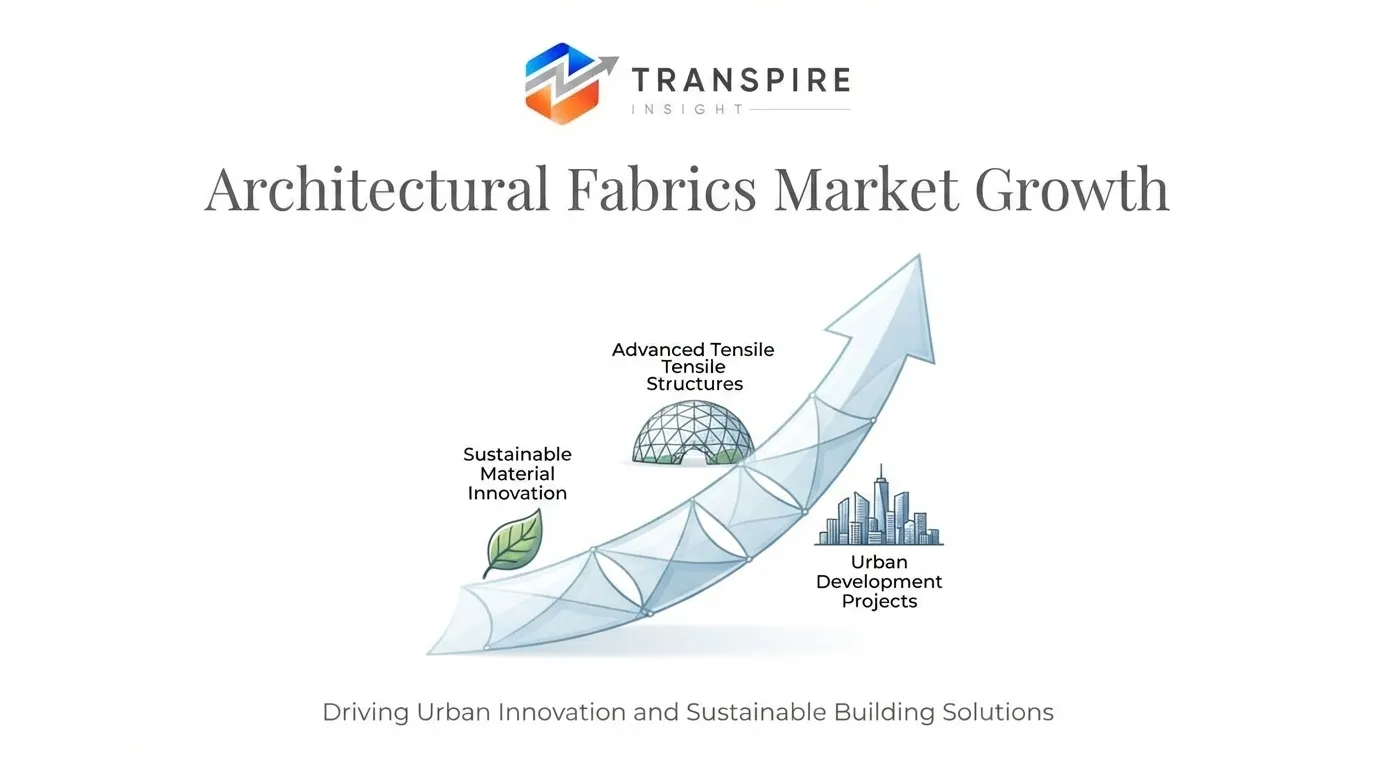
According to a research report published by Transpire Insight, the architectural fabrics market size is projected to grow from USD 6.8 billion in 2026 to USD 9.37 billion by 2035, at a CAGR of 6.27% during the forecast period 2027-2035. Market growth is driven by rapid urban infrastructure development, rising demand for lightweight energy-efficient building envelopes, strict green building mandates, and material innovations in high-durability PTFE, ETFE, and PVC membranes.
Introduction
Architectural fabrics are specialized high-performance textiles engineered to build tensile roofs, lightweight facades, skylights, and shade structures. Offering exceptional light transmission, high thermal efficiency, and design flexibility, these materials replace traditional heavy cladding like glass and steel. As modern construction increasingly emphasizes carbon footprint reduction, rapid assembly, and iconic architectural designs, architectural fabrics have emerged as essential solutions for stadiums, airports, commercial centers, and public infrastructure globally.
Recent Development News
January 2026: Major European textile composite manufacturers expanded production lines for recyclable, bio-based PVDF coatings to align with new European Union net-zero building regulations.
March 2026: Leading membrane fabricators launched next-generation ETFE foil systems featuring dynamic light-filtering solar control layers tailored for high-temperature Middle Eastern giga-projects.
Stay Ahead of Emerging Opportunities with Expert Market Insights by Transpire Insight
Transpire Insight provides comprehensive, data-driven market intelligence to support smarter business decisions. Our research is rooted in comprehensive analysis, authoritative predictions, and industry expertise, enabling organizations to make informed decisions in rapidly evolving markets. We provide in-depth analysis of market segmentation, competitive positioning, regional trends, and emerging investment opportunities in high-growth areas. We blend accuracy with actionable intelligence, helping companies uncover new growth avenues, strengthen strategic decision-making, and stay ahead in a dynamic market.
Architectural Fabrics Market Size & Statistics
The Market Size for Architectural Fabrics Was Estimated to be Worth USD 6.8 Billion in 2026.
The Market Size is Going to Expand at a CAGR of 6.27% between 2026 and 2035.
The Architectural Fabrics Market Size is anticipated to reach USD 9.37 Billion by 2035.
Asia-Pacific is projected to drive the highest demand during the forecast period, accounting for 38% of the architectural fabrics market.
Europe is projected to grow the fastest during the forecast period at a CAGR of 10.5% in the architectural fabrics market.
Regional Growth and Demand Analysis by Transpire Insight
Asia Pacific leads on the back of rapid urbanization, large infrastructure programs, and heavy investment in sports and public venues. China reported a 32% jump in the use of architectural fabrics in construction projects, and Japan recorded a 22% rise in high-performance fabrics in sustainable building designs. In Australia, fabric roofing was specified in 35% of new large-scale commercial projects, up from 20%. Stadium construction adds to demand, with the Asian Football Confederation citing a 45% increase in fabric use in stadium builds and renovations. China's textile industry is also scaling up, with 28% growth in advanced architectural textile production. Together, these factors keep the region ahead in volume and share.
Europe is the fastest-growing region because its regulations favor energy-efficient, low-carbon building envelopes and its designers favor innovative forms. Fabric installations across EU countries rose 18%, Germany saw a 25% increase in ETFE foil use, and the UK recorded 20% growth in tensile structures specified for urban regeneration. In France, 30% of new cultural and exhibition spaces now use architectural fabrics, up from 22%. Suppliers are responding with new products. Serge Ferrari launched its Texwork digital platform for selecting membranes, Sioen Industries introduced recyclable fabric solutions for façades and tensile projects, and Saint-Gobain expanded its advanced membrane offering for façades and roofing. Sustainability targets, renovation of historic structures, and product innovation are sustaining Europe's momentum.
Top 15 Trends in the Architectural Fabrics Market
Lightweight tensile membranes replace heavy conventional roofing because they span wide areas with minimal support, cut structural loads, and deliver striking curved forms architects favor.
ETFE foils transmit natural light, resist weathering, and weigh far less than glass, making them a preferred choice for stadium roofs, atriums, and energy-efficient façades.
Manufacturers are launching recyclable coated textiles and low-carbon membranes, helping developers meet stricter environmental regulations while retaining durability, fire resistance, and long service life outdoors.
Expanding sports infrastructure lifts fabric demand, as stadiums and leisure complexes adopt membrane roofs and canopies for weather protection, shade, and a distinctive architectural identity.
Environmental concerns about plasticizers in PVC-coated polyester are pushing suppliers toward alternative coatings and materials that preserve performance while reducing overall ecological impact and waste.
Digital selection platforms, such as Serge Ferrari's Texwork, help architects, specifiers, and fabricators choose membranes faster and streamline tensile project workflows from concept through installation.
List of Top 25 Companies Leading the Architectural Fabrics Market
1. Serge Ferrari Group
leader in eco-designed, lightweight composite membranes using patented Precontraint technology.
Founded: 1973 | HQ: Saint-Jean-de-Soudain, France.
Why It Ranks: Holds unmatched market share in architectural structural dynamic tensile membranes.
Regional Dominance: Europe and North America are driving strong sustainable architectural specification market presence.
Product Line: Pre-stressed membranes, Flexlight, Soltis solar protection, and Tensile Architecture series.
2. Saint-Gobain (Performance Plastics / Sheerfill)
Pioneer of Sheerfill permanent PTFE-coated fiberglass membranes for massive iconic stadiums.
Founded: 1665 | HQ: Courbevoie, France.
Why It Ranks: Industry benchmark for high-durability Class-A fire-rated permanent stadium roof structures.
Regional Dominance: North America and Europe across major transport hubs and stadium builds.
Product Line: Sheerfill PTFE architectural fiberglass, Fabrasorb acoustic membranes, and EverMend systems.
3. Taiyo Kogyo Corporation (MakMax Group)
World's largest contractor and manufacturer dedicated exclusively to tensile membrane structures.
Founded: 1922 | HQ: Tokyo, Japan.
Why It Ranks: Unrivaled engineering capabilities for complex long-span stadium and airport structures.
Regional Dominance: Asia-Pacific and North America leading high-profile infrastructure and civic installations.
Product Line: PTFE fiberglass membranes, ETFE film structures, and PVC tensioned roofs.
4. Mehler Texologies (Freudenberg Group)
Renowned German producer of technical textiles engineered specifically for heavy-duty tensile architecture.
Founded: 1837 | HQ: Hückelhoven, Germany.
Why It Ranks: High reputation for premium PVC/PVDF coated fabric durability and fire retardancy.
Regional Dominance: Europe and the Middle East across commercial facades and large event venues.
Product Line: VALMEX architectural fabrics, POLYMAR tension structures, and AIRTEX mesh covers.
5. Sioen Industries NV
Fully integrated textile giant producing specialized direct-coated fabrics for architectural applications.
Founded: 1960 | HQ: Ardooie, Belgium.
Why It Ranks: Comprehensive vertical integration allows massive production scale and custom coating solutions.
Regional Dominance: Europe and Latin America in transport hubs and commercial shade solutions.
Product Line: Fluotop T, Tensile Architecture PVC range, and high-tenacity polyester membranes.
6. Heytex Bramsche GmbH
Specialist in double-wall fabrics and heavy-duty coated textiles for structural engineering.
Founded: 1913 | HQ: Bramsche, Germany.
Why It Ranks: Known for innovative 3D textile structures and high-performance polymer coating tech.
Regional Dominance: Central Europe and North America across sports facilities and facades.
Product Line: HEYtex Tensile, HEYtex Membrane, and specialized polyurethane/PVC coated textiles.
7. Sattler AG (Sattler PRO-TEX)
Austrian manufacturer setting industry standards in textile solar protection and membrane engineering.
Founded: 1875 | HQ: Graz, Austria.
Why It Ranks: Exceptionally strong reputation for PVDF-lacquered long-life architectural textiles and membranes.
Regional Dominance: Europe and North America dominate commercial awnings and tensile structures.
Product Line: PRO-TEX architectural membranes, SATTLER Elementa, and Atlas shade fabrics.
8. Vector Foiltec
innovator that invented and commercialized the ETFE cushion system architectural technology.
Founded: 1982 | HQ: Bremen, Germany.
Why It Ranks: Undisputed world market leader in specialized transparent ETFE cladding system design.
Regional Dominance: reach with dominance in Europe, Asia-Pacific, and the Middle East.
Product Line: Texlon ETFE cladding systems, printed solar control cushions, and intelligent facades.
9. AGC Chemicals (Fluon ETFE)
World's premier manufacturer of high-transmittance ETFE fluoropolymer raw resin film membranes.
Founded: 1907 | HQ: Tokyo, Japan.
Why It Ranks: Supplies essential high-purity raw film materials powering landmark transparent roofs.
Regional Dominance: Asia-Pacific and Europe, supplying structural membrane envelope fabricators worldwide.
Product Line: Fluon ETFE film, ETFE foil membranes, and high-grade fluoropolymer resins.
10. Chukoh Chemical Industries, Ltd.
Japanese fluoropolymer expert manufacturing ultra-durable PTFE-coated fabric membranes for architecture.
Founded: 1963 | HQ: Tokyo, Japan.
Why It Ranks: Exceptional material quality delivering self-cleaning, weather-resistant structural roof membranes for decades.
Regional Dominance: Asia-Pacific leading transport hubs, public plazas, and stadium roofs.
Product Line: Skytop PTFE fiberglass architectural membranes and fluoropolymer mesh textiles.
Conclusion
The architectural fabrics market stands at the forefront of modern sustainable construction, driven by demand for lightweight, energy-efficient, and visually striking structures. Advanced materials like PTFE, ETFE, and PVDF-coated PVC enable reduced resource usage while delivering unmatched durability. As urbanization accelerates globally, key market leaders continue to innovate, ensuring architectural fabrics remain vital components in shaping future resilient urban landscapes.


Send us a brief description of your challenge and we'll get back to you within 24 hours.

 inquiry@transpireinsight.com
 APAC:+91 7666513636
 Address


