
Aug 07, 2026
By Transpire Insight
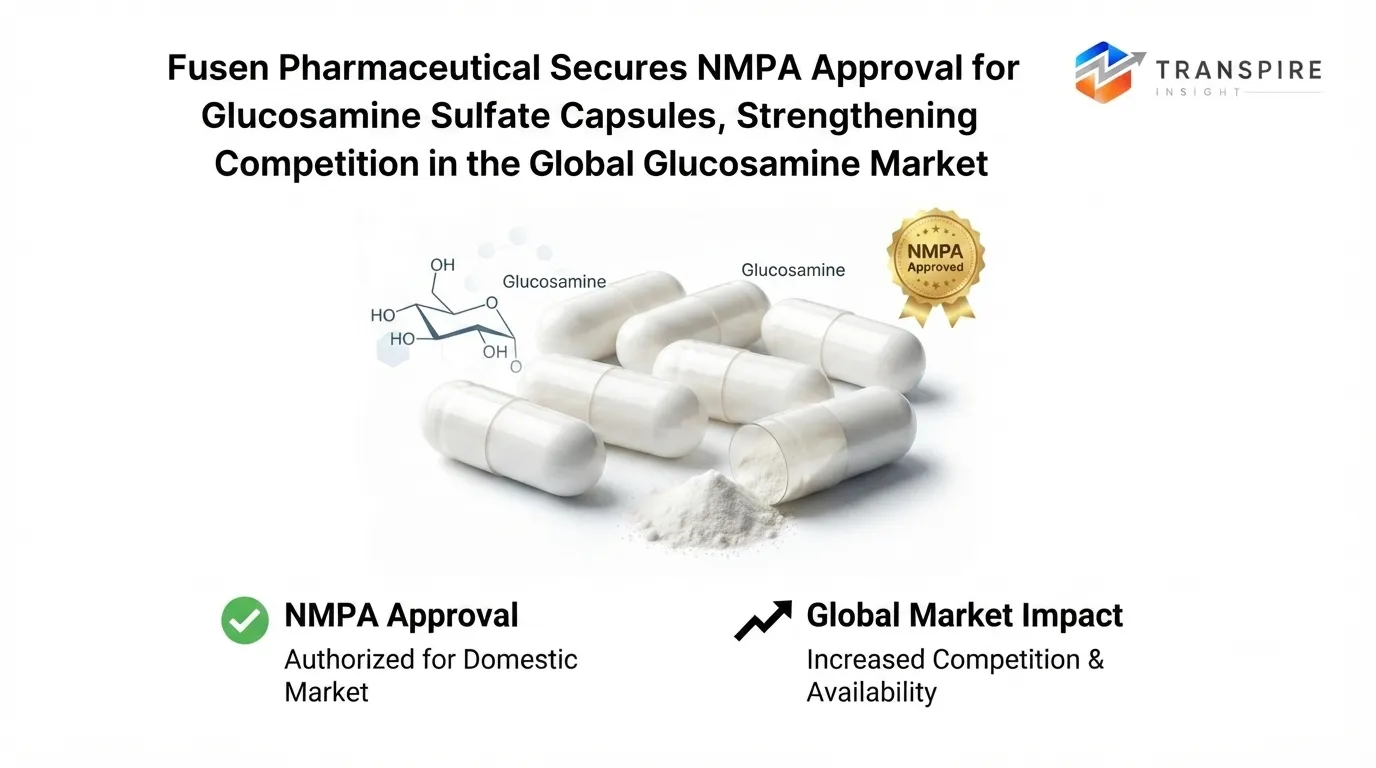
According to Transpire Insights, the global glucosamine market is entering a new phase of pharmaceutical and nutraceutical innovation as manufacturers increasingly focus on clinically validated joint-health solutions to address the growing global burden of osteoarthritis and musculoskeletal disorders. The Global Glucosamine Market was valued at approximately USD 1.04 billion in 2025 and is projected to grow to nearly USD 2.10 billion by 2034, registering a CAGR of 6.98% during the forecast period. The market continues to benefit from rising healthcare expenditure, an expanding elderly population, increasing participation in sports and fitness activities, and growing consumer preference for preventive healthcare supplements.
The global glucosamine industry witnessed another important milestone in April 2026, when Fusen Pharmaceutical Company Limited announced that its wholly owned subsidiary received marketing approval from China's National Medical Products Administration (NMPA) for Glucosamine Sulfate Capsules (Shuhuitong) indicated for the treatment of primary and secondary osteoarthritis. The approval represents a significant regulatory achievement and further strengthens Fusen Pharmaceutical's position within China's rapidly expanding musculoskeletal therapeutics market.
The approval arrives at a pivotal time for the healthcare industry. Osteoarthritis has become one of the world's fastest-growing chronic musculoskeletal diseases due to increasing life expectancy, obesity, sedentary lifestyles, and rising participation in physically demanding recreational activities. As populations continue aging, healthcare providers are placing greater emphasis on early intervention, long-term joint preservation, and non-invasive therapeutic management, creating substantial demand for glucosamine-based pharmaceutical products and dietary supplements.
The market is also benefiting from demographic trends. According to international health estimates, the global population aged 65 years and above is expected to exceed 1.5 billion by 2050, substantially increasing demand for therapies that support mobility, cartilage preservation, and healthy aging. Simultaneously, increasing awareness regarding preventive joint care among younger consumers, athletes, and fitness enthusiasts is expanding glucosamine consumption beyond the traditional elderly population.
Download the exclusive Glucosamine Market sample report today to uncover expert insights, emerging trends, and the opportunities defining the future of the industry.
Fusen Pharmaceutical Bets on the Future of Joint Health
Fusen Pharmaceutical's newly approved Glucosamine Sulfate Capsules represent this evolution. By obtaining formal marketing authorization from the National Medical Products Administration, the company has strengthened its pharmaceutical portfolio while positioning itself within one of China's fastest-growing therapeutic categories. The approval enriches the company's product pipeline and provides physicians and patients with an additional treatment option for managing osteoarthritis, a disease affecting hundreds of millions of people worldwide.
The commercial opportunity is significant. Industry research estimates that more than 595 million people globally live with osteoarthritis, making it one of the leading causes of disability worldwide. Knee osteoarthritis alone accounts for a substantial proportion of age-related mobility impairment, driving long-term demand for pharmaceutical therapies, rehabilitation services, and nutritional interventions that help preserve joint function.
Growing consumer awareness is further accelerating market expansion. Modern healthcare consumers increasingly seek preventive solutions before severe joint degeneration occurs. Consequently, glucosamine products are now widely incorporated into daily wellness routines alongside collagen, chondroitin sulfate, hyaluronic acid, omega-3 fatty acids, vitamin D, and other bone and joint health supplements.
Another important trend shaping the market is the diversification of glucosamine sources. While traditional formulations have largely been derived from shellfish, manufacturers are increasingly investing in fermentation-derived and vegan glucosamine technologies to address allergen concerns, sustainability objectives, and expanding plant-based consumer preferences. These innovations are expected to broaden product accessibility while supporting long-term market growth.
Why the Fusen Pharmaceutical Approval Matters
Fusen Pharmaceutical's regulatory approval comes at a time when musculoskeletal disorders are placing an unprecedented burden on global healthcare systems. According to the World Health Organization (WHO), approximately 1.71 billion people worldwide are living with musculoskeletal conditions, making them one of the leading causes of disability globally. Among these disorders, osteoarthritis has emerged as the most prevalent degenerative joint disease, affecting nearly 595 million people worldwide. The prevalence of osteoarthritis has increased by more than 130% over the past three decades, driven primarily by aging populations, rising obesity rates, sedentary lifestyles, and greater life expectancy. These demographic trends continue to create significant demand for therapeutic solutions capable of improving joint mobility, reducing pain, and enhancing quality of life.
Unlike conventional dietary supplements, prescription glucosamine products undergo comprehensive evaluation for manufacturing consistency, safety, efficacy, and quality assurance, thereby strengthening physician confidence while expanding treatment accessibility within formal healthcare systems. As governments continue investing in chronic disease management and healthy aging initiatives, pharmaceutical-grade glucosamine products are expected to gain increasing clinical relevance across major healthcare markets.
The timing of the approval is particularly significant within China, where demographic changes are rapidly transforming healthcare demand. The country's population aged 60 years and above exceeded 310 million in 2025, accounting for nearly 22% of the total population. This expanding elderly demographic is expected to substantially increase the incidence of osteoarthritis, osteoporosis, and other degenerative musculoskeletal disorders during the coming decade. Consequently, demand for clinically validated joint-health therapies is projected to accelerate as healthcare providers increasingly emphasize early intervention and long-term disease management rather than symptom-based treatment alone.
Market Analysis
North America continues to dominate the global glucosamine market, accounting for approximately 38% of total revenue in 2025. The region's leadership is supported by a mature dietary supplement industry valued at more than USD 60 billion annually, widespread physician awareness, and a high prevalence of osteoarthritis affecting over 32.5 million adults in the United States alone. Strong retail distribution networks, extensive product availability, favorable consumer spending patterns, and continuous investments in clinical research continue reinforcing North America's leading market position.
Europe remains the second-largest regional market, contributing nearly 29% of global revenue. The region benefits from one of the world's oldest populations, increasing healthcare expenditure, and strong consumer preference for scientifically validated nutritional supplements. Countries including Germany, France, Italy, Spain, and the United Kingdom continue experiencing rising demand for premium glucosamine products as healthcare providers increasingly promote preventive joint care to reduce long-term treatment costs associated with chronic musculoskeletal diseases.
Meanwhile, Asia-Pacific is projected to register the fastest growth throughout the forecast period, expanding at an estimated CAGR exceeding 6.8%. Rapid urbanization, increasing disposable incomes, expanding pharmaceutical manufacturing capacity, and growing healthcare awareness continue driving demand across China, India, Japan, and South Korea. China's expanding elderly population and recent regulatory approvals for pharmaceutical-grade glucosamine products are expected to significantly strengthen regional market growth during the coming decade.
From a product perspective, glucosamine sulfate continues to dominate the market, accounting for approximately 56–60% of global revenue in 2025. Its leadership is primarily attributed to extensive clinical research supporting its effectiveness in osteoarthritis management, strong physician acceptance, and broad regulatory recognition across international healthcare markets. Glucosamine hydrochloride continues gaining traction within dietary supplement formulations due to its manufacturing flexibility and cost efficiency, while N-acetyl glucosamine is gradually expanding its presence across specialized pharmaceutical and cosmetic applications.
Application trends remain heavily concentrated within osteoarthritis treatment, which represents approximately 64–67% of total market demand. Rising obesity prevalence, increasing life expectancy, expanding participation in sports and fitness activities, and earlier diagnosis of degenerative joint disorders continue strengthening the segment's long-term growth prospects. Beyond osteoarthritis, manufacturers are increasingly targeting preventive joint health, sports nutrition, healthy aging, and mobility support, thereby expanding glucosamine's addressable consumer base well beyond traditional elderly populations.
A Direct Challenge to Conventional Joint Health Solutions
The evolution of the market is being driven by changing patient expectations. Modern consumers are no longer seeking products that merely relieve joint discomfort; instead, they are increasingly looking for comprehensive solutions capable of supporting cartilage preservation, improving mobility, delaying disease progression, and maintaining an active lifestyle. As a result, companies are developing next-generation formulations that combine glucosamine with complementary ingredients such as chondroitin sulfate, methylsulfonylmethane (MSM), hyaluronic acid, collagen peptides, vitamin D3, curcumin, Boswellia serrata extract, and omega-3 fatty acids. These combination products are becoming increasingly popular as they address multiple aspects of musculoskeletal health through a single therapeutic regimen.
Another significant transformation involves product positioning. Traditionally, glucosamine supplementation was primarily recommended for elderly individuals diagnosed with osteoarthritis. Today, however, manufacturers are expanding their target audience to include athletes, physically active adults, individuals with obesity, and consumers seeking preventive healthcare solutions. This broader consumer base is substantially increasing long-term market potential while encouraging continuous innovation across product formulations and delivery systems.
Proceed to Checkout to purchase the exclusive Glucosamine Market report and gain instant access to in-depth market intelligence, strategic analysis, and future growth opportunities.
Why Competitors Should Pay Attention
Fusen Pharmaceutical's latest regulatory approval highlights the growing competitive intensity within the global glucosamine market. While multinational nutraceutical companies have traditionally dominated dietary glucosamine supplementation, pharmaceutical manufacturers are increasingly entering the market with clinically standardized products supported by regulatory approvals and physician recommendations. This shift is expected to redefine competitive dynamics across both prescription medicines and over-the-counter joint health supplements.
Several leading companies including NOW Foods, Schiff Nutrition (Reckitt), Blackmores Limited, Doctor's Best, Nature Made, Solgar, GNC Holdings, Swisse Wellness, Jamieson Laboratories, and Bioiberica continue expanding their musculoskeletal health portfolios through product innovation, scientific collaborations, and geographic expansion. Collectively, these manufacturers account for a significant proportion of global branded glucosamine sales and continue investing heavily in research, manufacturing modernization, and premium formulations to strengthen their market positions.
Competition is increasingly shifting away from pricing toward product differentiation. Consumers are becoming more selective, placing greater emphasis on ingredient quality, clinical evidence, sustainability, and manufacturing transparency. Market surveys indicate that more than 70% of dietary supplement consumers review ingredient labels before purchasing, while approximately 60% express greater confidence in products supported by scientific research or healthcare professional recommendations. These evolving purchasing behaviors are encouraging manufacturers to invest in clinical trials, third-party certifications, and pharmaceutical-grade manufacturing standards.
In addition, manufacturers are increasingly exploring alternative glucosamine production technologies. Traditional shellfish-derived glucosamine continues to dominate the market; however, growing concerns regarding allergen sensitivity, environmental sustainability, and vegan lifestyles are accelerating investment in microbial fermentation-derived glucosamine, which offers improved sustainability while expanding accessibility for vegetarian and vegan consumers.
Strategic Partnerships Accelerate Innovation
Collaboration has become one of the defining characteristics of the modern glucosamine industry. Pharmaceutical manufacturers, biotechnology companies, nutraceutical brands, academic institutions, and ingredient suppliers are increasingly forming strategic partnerships to accelerate research, improve manufacturing technologies, and expand commercial opportunities across global healthcare markets.
Research collaborations are particularly important as companies seek stronger clinical evidence supporting glucosamine's efficacy across various musculoskeletal conditions. Numerous clinical studies continue evaluating glucosamine's role in cartilage preservation, inflammatory response modulation, pain reduction, and long-term mobility improvement. These scientific initiatives are expected to strengthen regulatory confidence while supporting broader physician adoption of glucosamine-based therapies.
Ingredient innovation also remains a strategic priority. Manufacturers continue investing in higher-purity glucosamine sulfate, stabilized formulations, controlled-release delivery systems, and advanced bioavailability technologies designed to improve therapeutic effectiveness. Simultaneously, biotechnology companies are developing fermentation-based production methods capable of reducing dependence on marine-derived raw materials while improving sustainability and supply chain resilience.
Digital healthcare is emerging as another important area of collaboration. Healthcare providers increasingly utilize digital monitoring platforms, wearable technologies, and telemedicine services to support long-term management of chronic musculoskeletal diseases. These technologies create opportunities for supplement manufacturers to integrate personalized nutritional recommendations with digital patient engagement platforms, strengthening treatment adherence and improving overall healthcare outcomes.
Major Healthcare Companies Continue Expanding Their Joint Health Portfolios
Growing global demand for mobility support and healthy aging solutions has encouraged leading healthcare companies to strengthen their investments in joint health. Pharmaceutical manufacturers are expanding prescription portfolios, while nutraceutical companies continue introducing premium glucosamine formulations supported by improved ingredient quality, cleaner labels, and enhanced scientific validation.
Companies such as Reckitt, Pharmavite, Blackmores, Bioiberica, Jamieson Wellness, and GSK's former consumer healthcare business (now Haleon) continue allocating significant resources toward research, manufacturing expansion, and product diversification within bone and joint health categories. At the same time, Asian pharmaceutical manufacturers are increasing production capacity to address rapidly growing domestic demand while strengthening export capabilities across international markets.
The expansion of e-commerce has further intensified competition. Digital retail channels now represent one of the fastest-growing distribution platforms for joint health supplements, enabling manufacturers to reach broader consumer populations through direct-to-consumer business models. Increasing adoption of subscription-based healthcare services, personalized supplement recommendations, and AI-powered wellness platforms is expected to further transform how glucosamine products are marketed and consumed during the coming decade.
Market Impact: A New Era for Preventive Joint Health
The approval of pharmaceutical-grade glucosamine products signals a broader shift occurring across the musculoskeletal healthcare industry. As healthcare systems increasingly emphasize prevention, healthy aging, and long-term mobility preservation, glucosamine is evolving from a traditional dietary supplement into an integral component of comprehensive joint health management.
The implications extend well beyond pharmaceutical manufacturers. Ingredient suppliers, biotechnology companies, contract manufacturing organizations, packaging firms, digital health providers, rehabilitation centers, and healthcare distributors are all expected to benefit from expanding demand for evidence-based joint health solutions. Increasing investments in pharmaceutical manufacturing, clinical research, regulatory compliance, and sustainable ingredient production are likely to strengthen the industry's long-term growth trajectory.
According to Transpire Insights, the convergence of demographic changes, preventive healthcare, scientific innovation, and regulatory advancement is expected to redefine the global glucosamine market over the next decade. Companies capable of delivering clinically validated, high-quality, and consumer-centric joint health solutions will be best positioned to capitalize on the growing demand for mobility preservation and healthy aging across both developed and emerging economies.
Customize the exclusive Glucosamine Market report today to receive tailored insights, country-specific analysis, and business-focused market intelligence.
The Key Players Shaping the Global Glucosamine Market
The competitive landscape of the global glucosamine market is evolving rapidly as pharmaceutical companies, nutraceutical manufacturers, ingredient suppliers, and biotechnology firms continue expanding their investments in joint health innovation. Increasing prevalence of osteoarthritis, rising healthcare expenditure, growing consumer awareness regarding preventive healthcare, and continuous advances in pharmaceutical manufacturing have encouraged both multinational corporations and regional manufacturers to strengthen their market presence through product innovation, strategic partnerships, regulatory approvals, and manufacturing expansion.
According to Transpire Insights, the global glucosamine market remains moderately consolidated, with the leading manufacturers collectively accounting for approximately 45–50% of global branded glucosamine sales, while the remaining market is served by regional pharmaceutical companies, dietary supplement manufacturers, and private-label producers. Competition is increasingly centered on clinical validation, pharmaceutical-grade manufacturing, proprietary formulations, sustainable ingredient sourcing, and global distribution capabilities rather than price alone. Companies capable of integrating scientific research with regulatory compliance and consumer-centric innovation are expected to maintain stronger competitive positions as the market continues expanding.
Fusen Pharmaceutical has emerged as one of China's leading pharmaceutical manufacturers specializing in musculoskeletal therapies, traditional Chinese medicines, and prescription pharmaceutical products. The company's recent approval from the National Medical Products Administration (NMPA) for Shuhuitong Glucosamine Sulfate Capsules represents an important milestone within its orthopedic and musculoskeletal disease portfolio. The approval strengthens Fusen's competitive position within China's rapidly expanding pharmaceutical market while providing new opportunities for long-term revenue growth in osteoarthritis treatment. China's pharmaceutical market, valued at more than USD 180 billion annually, continues to offer significant commercial opportunities as healthcare reforms improve patient access to innovative therapies. By expanding its portfolio of clinically approved musculoskeletal medicines, Fusen Pharmaceutical is strategically positioned to benefit from increasing healthcare expenditure and the country's rapidly aging population.
Bioiberica is widely recognized as one of the world's leading manufacturers of pharmaceutical-grade glucosamine and other biologically derived active ingredients used in orthopedic, veterinary, and nutraceutical applications. The company supplies high-purity glucosamine ingredients to pharmaceutical manufacturers and dietary supplement brands across more than 80 countries, making it one of the most influential suppliers within the global joint health industry. The company's continuous investment in research and development, sustainable raw material sourcing, and pharmaceutical manufacturing technologies has strengthened its reputation as a preferred ingredient partner for premium glucosamine formulations. Bioiberica continues expanding its scientific collaborations with healthcare institutions and research organizations to support clinical evidence for joint health therapies while developing next-generation active pharmaceutical ingredients targeting musculoskeletal diseases.
Pharmavite remains one of North America's largest dietary supplement manufacturers through its flagship Nature Made brand. The company offers an extensive portfolio of vitamins, minerals, probiotics, bone health products, and joint health supplements distributed through pharmacies, supermarkets, warehouse clubs, and digital commerce platforms. Industry estimates indicate that Pharmavite generates annual revenues exceeding USD 1.5 billion, supported by strong consumer trust, extensive retail partnerships, and continuous investments in scientific research. Within the glucosamine market, the company continues strengthening its premium joint health portfolio through clinically supported formulations designed to improve mobility and support long-term musculoskeletal wellness.
Blackmores has established itself as one of the Asia-Pacific region's most recognized natural healthcare companies. Its glucosamine products remain among the company's best-selling joint health supplements across Australia, New Zealand, Southeast Asia, and China. The company has increasingly focused on premium formulations combining glucosamine with chondroitin sulfate, MSM, and vitamin D to address growing consumer demand for comprehensive mobility support. Following its acquisition by Kirin Holdings, Blackmores has gained access to expanded manufacturing capabilities, research infrastructure, and broader distribution channels throughout Asia-Pacific, positioning the company for continued long-term growth.
Through its Schiff brand, Reckitt has maintained a strong presence within the global joint health supplements market for many years. Schiff's Move Free product portfolio has become one of the most recognized glucosamine-based joint health brands globally, offering formulations that combine glucosamine with chondroitin, hyaluronic acid, and additional mobility-support ingredients. Reckitt generated annual revenues exceeding GBP 14 billion across its consumer healthcare portfolio. Continued investments in product innovation, digital marketing, and scientific research have enabled Schiff to maintain strong brand recognition within the highly competitive joint health category.
Transpire Insights Expert View
According to Transpire Insights, the global glucosamine market is entering a new era in which scientific validation, pharmaceutical innovation, and preventive healthcare are collectively redefining the future of joint health management. Historically, glucosamine products were primarily marketed as dietary supplements intended to alleviate occasional joint discomfort. Today, however, the industry is evolving into a sophisticated healthcare segment supported by regulatory approvals, pharmaceutical-grade manufacturing, biotechnology innovations, and increasing physician acceptance. This transformation is expected to significantly enhance the credibility and commercial potential of glucosamine-based therapies over the coming decade.
One of the strongest long-term growth drivers remains the rapidly aging global population. According to the United Nations, the number of people aged 65 years and above is projected to increase from approximately 857 million in 2025 to nearly 1.6 billion by 2050, while individuals aged 60 years and older are expected to exceed 2.1 billion during the same period. Since osteoarthritis prevalence increases substantially with age, demographic shifts alone are expected to generate sustained demand for pharmaceutical therapies, nutraceutical supplements, rehabilitation services, and preventive mobility solutions. Healthcare systems worldwide are therefore placing greater emphasis on preserving mobility and extending healthy life expectancy rather than managing disability after disease progression.
The increasing prevalence of osteoarthritis further strengthens the market outlook. Current estimates indicate that approximately 595 million people worldwide are living with osteoarthritis, and this figure is projected to exceed one billion patients by 2050 if existing demographic and lifestyle trends continue. Simultaneously, the World Health Organization estimates that 1.71 billion people suffer from musculoskeletal disorders globally, making them one of the largest contributors to disability-adjusted life years (DALYs). These statistics underscore the enormous healthcare and economic burden associated with declining joint health while reinforcing the importance of evidence-based interventions capable of delaying disease progression and improving long-term mobility.
The industry is also experiencing a noticeable shift in consumer behavior. Modern healthcare consumers are increasingly prioritizing preventive healthcare over reactive treatment, resulting in greater adoption of daily nutritional supplements that support healthy aging. Industry surveys suggest that preventive healthcare spending continues to rise steadily across developed economies, while the global dietary supplements industry has already surpassed USD 190 billion and is projected to exceed USD 300 billion during the next decade. Within this broader market, bone and joint health remains one of the most established and consistently growing application segments, supported by increasing physician recommendations and expanding consumer awareness regarding mobility preservation.
Looking ahead, Transpire Insights believes the global glucosamine market will continue transitioning from a mature dietary supplement category toward an integrated musculoskeletal healthcare ecosystem driven by pharmaceutical innovation, preventive medicine, digital healthcare, and healthy aging initiatives. Companies capable of combining scientific excellence, regulatory expertise, advanced manufacturing technologies, sustainable production methods, and consumer-focused innovation will be best positioned to capitalize on long-term market expansion through 2034 and beyond.
Schedule a meeting with our market experts to discuss the exclusive Glucosamine Market report and identify the best research solution for your organization.
Conclusion
The global glucosamine market is undergoing a significant transformation as demographic changes, increasing osteoarthritis prevalence, scientific advancements, and preventive healthcare strategies reshape the future of joint health management. The recent regulatory approval of Fusen Pharmaceutical's Glucosamine Sulfate Capsules highlights the industry's shift toward clinically validated, pharmaceutical-grade therapies capable of addressing the growing global burden of musculoskeletal disorders.


Send us a brief description of your challenge and we'll get back to you within 24 hours.

 inquiry@transpireinsight.com
 APAC:+91 7666513636
 Address


