
Jul 31, 2026
By Transpire Insight
Description
According to a research report published by Transpire Insight, The Global Stem Cell Beauty Product Market Size is projected to Grow from USD 1589.9 Million in 2025 to USD 3210.1 Million by 2035, at a CAGR of 12.8% during the forecast period 2026-2035. The market is being fuelled by consumers’ increased liking towards high-quality anti-aging products, increased knowledge about regenerative cosmetics techniques, increasing demand for beauty products with clean-labels and based on biotechnology, and constant innovations in skin care active ingredients derived from stem cells. Innovations in plant stem cells, exosome skincare, engineered peptides, and personalized beauty solutions are further propelling the development of new products. In addition, expansion in medical aesthetics, disposable income growth, and fast-growing luxury skincare market are anticipated to create substantial growth opportunities during the forecast period.
Introduction
The Stem Cell Beauty Product Market includes various beauty products that have been developed from stem cells of plants and human beings, and contain stem cell conditioned media, peptides, and other regenerative bioactive ingredients for skin regeneration and rejuvenation, anti-aging, hydration, and hair restoration. Such beauty products are used extensively in anti-aging skincare and high-end cosmetic products, dermatological treatments, medical aesthetic treatments, and personal care.
Recent Development News
Stay Ahead of Emerging Opportunities with Expert Market Insights by Transpire Insight
The insights that have been shared through this blog are based on intensive market research carried out by Transpire Insight, an advisor that works with many global organizations. Thanks to the analysis of extensive data, forecasts made by our specialists, and industry intelligence, our reports allow clients to find strategic growth opportunities in dynamically developing industries. For all those who would like to get more detailed information regarding market segmentation, competitive analysis, regional outlooks, and future investment tendencies, there is no doubt that our full report will be of great value.
Download the exclusive Stem Cell Beauty Product Market sample report today to uncover expert insights, emerging trends, and the opportunities defining the future of the industry.
Stem Cell Beauty Product Market Size & Statistics
Regional Growth and Demand Analysis by Transpire Insight:
North America is the dominant region in the Stem Cell Beauty Product Market, holding approximately 37% of the total global market share.
The leading position in the Stem Cell Beauty Product Market held by North America is attributed to its advanced cosmetics industry, high level of biotechnology activities, and consumers' higher expenditure on premium beauty and anti-aging skin-care products. The region is favored with major beauty brands, advanced dermatology research, and continuous development of skincare technologies such as plant stem cells, stem cell conditioned media, peptides, and exosomes. Consumers in the US and Canada adopt scientifically proven beauty products; and increasing popularity of personal skincare, aesthetic medicine, and clean-label products contributes to the regional growth in the market.
Fastest growing region: The fastest growth is anticipated from the Asia-Pacific region due to growing disposable incomes, increased beauty and personal care industries, rising awareness about advanced skincare technologies, and increased demand for premium anti-aging skincare products in South Korea, Japan, China, and India.
Top 15 Trends in the Stem Cell Beauty Product Market
Proceed to Checkout to purchase the exclusive Stem Cell Beauty Product Market report and gain instant access to in-depth market intelligence, strategic analysis, and future growth opportunities.
1. Growing Adoption of Plant Stem Cell-Based Skincare Products
Stem cells of plants are increasingly used in premium skin care formulations to improve the performance of skin repair and anti-aging functions due to their natural appeal to consumers looking for such products. Improved skin hydration, antioxidants, collagen support, high demand for botanical ingredients, reduced skin irritation, and greater preference for clean beauty products are some of the trends behind this development.
2. Expansion of Exosome-Based Cosmetic Formulations
Exosomes are proving to be among the most revolutionary technologies in regenerative beauty through enhanced cell signaling and skin rejuvenation. Factors contributing to their increasing popularity include high regenerative capacity, improved skin regeneration, increased anti-aging properties, fast-paced cosmetic innovation, biotechnology investments, and consumer demand for sophisticated skin care products.
3. Increasing Demand for Anti-Aging Regenerative Beauty Solutions
Customers demand scientifically proven products that aid in reducing the appearance of aging without undergoing any surgery. Aging population, increased awareness about skin care, high investment in quality cosmetics, growing inclination towards preventive skin care, higher efficacy of products, and the burgeoning medical aesthetics industry are driving the growth of the market.
4. Rising Integration of Biotechnology in Cosmetic Product Development
The cosmetics industry is making huge investments in biotechnology to come up with more advanced and safer regenerative ingredients. Some of the factors driving this trend include faster innovation in products, increased ingredient purity, better stability in formulations, more research spending, product differentiation, and cooperation between biotechnology and cosmetics firms.
5. Growth of Personalized Stem Cell-Inspired Skincare
Custom skincare regimens are increasingly being used as companies integrate biotech with skin diagnostics in order to make their cosmetic products customized. This is happening due to the use of personalized treatment advice, increased customer satisfaction, increased product efficacy, artificial intelligence skin diagnosis, growth of digital beauty platforms, and premium customer experience.
6. Development of Stem Cell Conditioned Media Formulations
Stem cell conditioned media has been gaining popularity as an advanced cosmetic ingredient due to its rich content of bioactive components that help in skin renewal and repair. Skin rejuvenation, collagen production, better healing capabilities, scientific credibility, expanding applications in premium skincare products, and consistent formulation advancements have played a significant role in the fast growth of this trend.
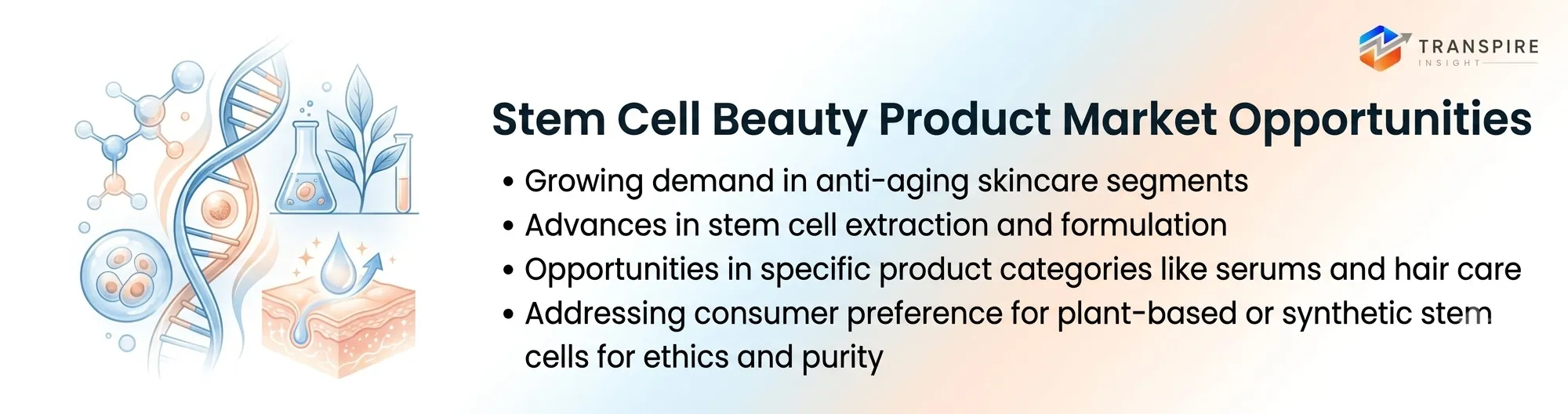
Top 25 Companies Leading the Stem Cell Beauty Product Market
Customize the exclusive Stem Cell Beauty Product Market report today to receive tailored insights, country-specific analysis, and business-focused market intelligence.
1. L'Oréal S.A.
L'Oréal S.A. is the world's largest cosmetics company, offering skincare, haircare, makeup, fragrances, and dermatological beauty products.
Founded:1909 | Headquarters: Clichy, France
Why It Ranks: Global leader in premium skincare innovation and biotechnology-based beauty products.
Regional Dominance: Strong presence across Europe, North America, Asia-Pacific, and Latin America.
Product Line: Anti-Aging Skincare, Stem Cell-Inspired Beauty Products, Haircare, Cosmetics, and Dermatological Solutions.
Recent Development: Expanded biotechnology-driven skincare research focused on regenerative cosmetic ingredients.
2. Estée Lauder Companies Inc.
Estée Lauder develops and markets prestige skincare, makeup, fragrance, and haircare products through a portfolio of luxury brands.
Founded:1946 | Headquarters: New York, USA
Why It Ranks: Strong leadership in premium anti-aging and luxury skincare.
Regional Dominance: Strong presence across North America, Europe, and Asia-Pacific.
Product Line: Luxury Skincare, Anti-Aging Creams, Serums, Cosmetics, and Dermatological Beauty Products.
Recent Development: Increased investment in advanced regenerative skincare technologies.
3. Shiseido Company, Limited
Shiseido is a multinational cosmetics company specializing in skincare, beauty, fragrance, and personal care products.
Founded:1872 | Headquarters: Tokyo, Japan
Why It Ranks: Pioneer in biotechnology and stem cell-inspired skincare innovation.
Regional Dominance: Strong presence across Asia-Pacific, Europe, and North America.
Product Line: Anti-Aging Skincare, Stem Cell Beauty Products, Cosmetics, Sunscreens, and Haircare.
Recent Development: Expanded regenerative beauty research through biotechnology partnerships.
4. Procter & Gamble Company
Procter & Gamble is a multinational consumer goods company with leading brands across beauty, personal care, healthcare, and grooming.
Founded:1837 | Headquarters: Cincinnati, Ohio, USA
Why It Ranks: Extensive global beauty portfolio supported by strong R&D capabilities.
Regional Dominance: Strong presence across North America, Europe, Asia-Pacific, and Latin America.
Product Line: Skincare, Haircare, Beauty Devices, Anti-Aging Products, and Personal Care Solutions.
Recent Development: Expanded premium skincare formulations incorporating advanced bioactive ingredients.
5. Unilever PLC
Unilever develops beauty, personal care, nutrition, and wellness products sold across more than 190 countries.
Founded:1929 | Headquarters: London, United Kingdom
Why It Ranks: Global leader in skincare and sustainable beauty innovation.
Regional Dominance: Strong presence across Europe, Asia-Pacific, North America, and Africa.
Product Line: Skincare, Beauty Products, Haircare, Personal Care, and Premium Cosmetics.
Recent Development: Increased investments in biotechnology-based skincare innovations.
6. Amorepacific Corporation
Amorepacific is a South Korean beauty company specializing in skincare, cosmetics, fragrances, and wellness products.
Founded:1945 | Headquarters: Seoul, South Korea
Why It Ranks: Leading innovator in advanced skincare and regenerative beauty technologies.
Regional Dominance: Strong presence across Asia-Pacific, North America, and Europe.
Product Line: Stem Cell Skincare, Anti-Aging Creams, Luxury Cosmetics, and Dermatological Beauty Products.
Recent Development: Expanded premium skincare products using plant stem cell technologies.
7. Johnson & Johnson
Johnson & Johnson is a global healthcare company offering pharmaceuticals, medical devices, and consumer health products, including skincare.
Founded:1886 | Headquarters: New Brunswick, New Jersey, USA
Why It Ranks: Strong expertise in dermatology and clinically proven skincare.
Regional Dominance: Strong presence across North America, Europe, and Asia-Pacific.
Product Line: Dermatological Skincare, Anti-Aging Products, Personal Care, and Consumer Health Solutions.
Recent Development: Continued investment in clinically validated regenerative skincare technologies.
8. Beiersdorf AG
Beiersdorf develops skincare and personal care products through globally recognized brands.
Founded:1882 | Headquarters: Hamburg, Germany
Why It Ranks: Global leader in dermatological and anti-aging skincare.
Regional Dominance: Strong presence across Europe, North America, and Asia-Pacific.
Product Line: Anti-Aging Skincare, Moisturizers, Dermatological Products, and Premium Personal Care.
Recent Development: Expanded biotechnology research supporting premium skincare innovation.
9. Coty Inc.
Coty Inc. is a multinational beauty company specializing in cosmetics, skincare, fragrances, and luxury beauty products.
Founded:1904 | Headquarters: New York, USA
Why It Ranks: Major global supplier of prestige and consumer beauty products.
Regional Dominance: Strong presence across North America, Europe, and Asia-Pacific.
Product Line: Skincare, Cosmetics, Fragrances, Luxury Beauty Products, and Personal Care.
Recent Development: Strengthened premium skincare portfolio with advanced cosmetic formulations.
10. Revlon, Inc.
Revlon develops cosmetics, skincare, fragrances, and beauty products for consumer and professional markets worldwide.
Founded:1932 | Headquarters: New York, USA
Why It Ranks: Well-established global beauty brand with a broad skincare portfolio.
Regional Dominance: Strong presence across North America, Europe, Asia-Pacific, and Latin America.
Product Line: Skincare, Anti-Aging Products, Cosmetics, Hair Color, and Beauty Care Products.
Recent Development: Continued expansion of premium skincare offerings with science-backed active ingredients.
Schedule a meeting with our market experts to discuss the exclusive Stem Cell Beauty Product Market report and identify the best research solution for your organization.
Conclusion
The Stem Cell Beauty Product Market is currently growing at a fast rate due to the rising need for scientific beauty products that help in the regeneration of skin cells. Increased awareness of biotechnology cosmetics, increased demand for premium and customized beauty products, as well as innovations in plant stem cells, stem cell conditioned media, exosomes, peptides, and growth factors technologies, are key drivers of competition in the market. Medical aesthetics, increased disposable income and clean label regenerative beauty product formulations are additional factors contributing to market growth. Key players operating in the market, including L'Oréal S.A., Estée Lauder Companies Inc., Shiseido Company, Limited, Procter & Gamble Company, Unilever PLC, Amorepacific Corporation, Johnson & Johnson, Beiersdorf AG, Coty Inc., and Revlon, Inc., are investing more in biotechnology studies, premium products and strategic partnerships to consolidate their positions in the market. As regenerative skincare technology innovations continue to increase and demand for high-performing cosmetic products increases, the Stem Cell Beauty Product Market is expected to continue to grow in the long term.


Send us a brief description of your challenge and we'll get back to you within 24 hours.

 inquiry@transpireinsight.com
 APAC:+91 7666513636
 Address


