
Jul 20, 2026
By Transpire Insight
Description
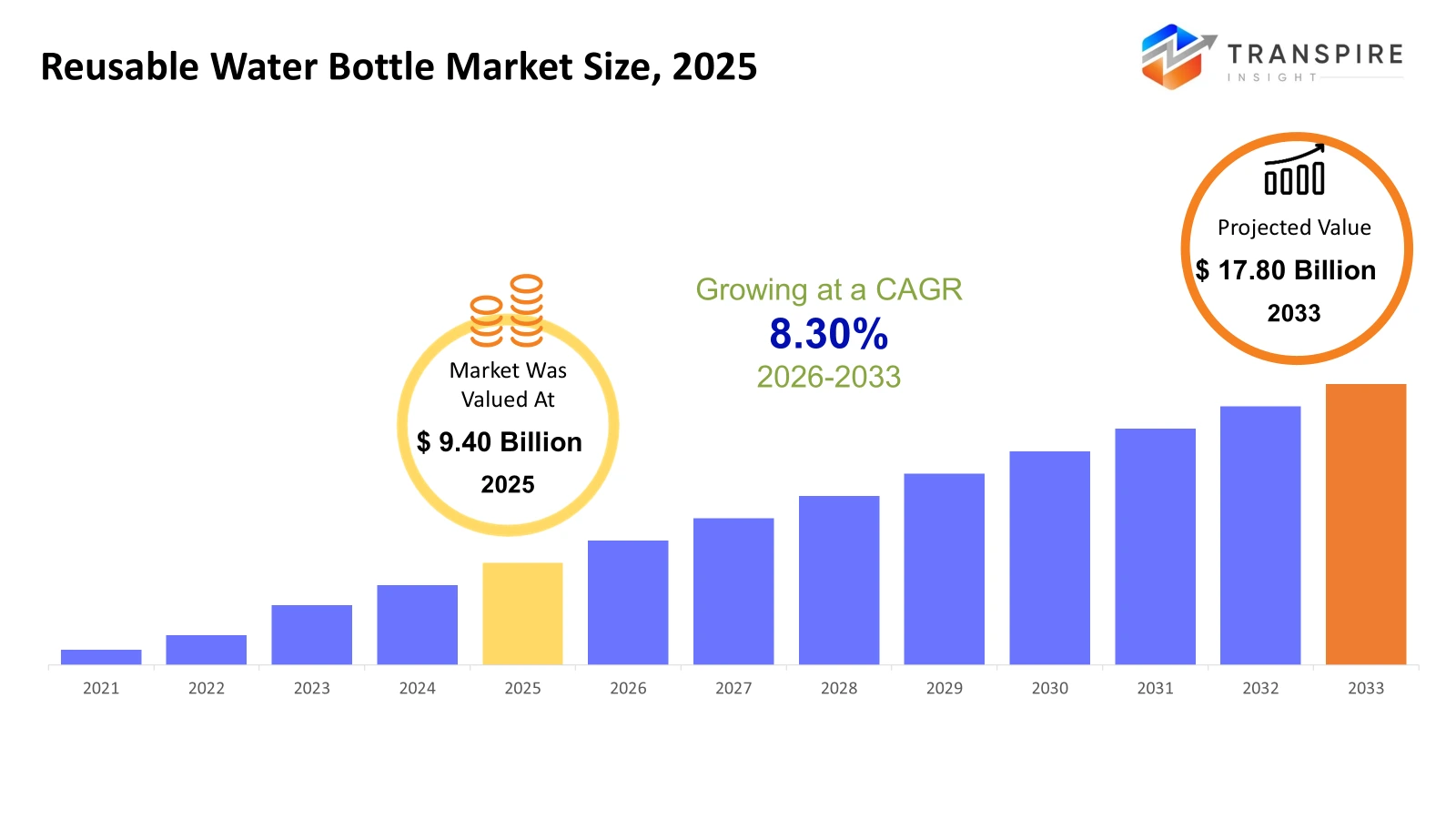
According to a research report published by Transpire Insight, the global reusable water bottle market size is projected to grow from USD 11.20 billion in 2026 to USD 19.30 billion by 2035, at a CAGR of 10.30% during the forecast period 2026-2035. A growing awareness of plastic pollution, the tougher municipal regulations against single-use plastics, and greater consumer concern about the health risks associated with consuming plastics have driven global purchasing toward highly durable, insulated, and BPA-free metal or glass hydration vessels.
Introduction
The reusable water bottle industry is growing rapidly as more and more people adopt sustainable practices in an increasingly health-conscious world. Knowledge of the environmental dangers posed by single-use plastic products has led to behavior change in millions of households, and clinical research over the past several years has shown the accumulation of toxic microplastics in people who consume such packaging. As a result, long-lasting, attractive, and extremely warm hydration products have thrived in mainstream office, school, and sports settings around the world.
Recent Development News
Stay Ahead of Emerging Opportunities with Expert Market Insights by Transpire Insight
Transpire Insight provides comprehensive, data-driven market intelligence to support smarter business decisions. Our research is rooted in comprehensive analysis, authoritative predictions, and industry expertise, enabling organizations to make informed decisions in rapidly evolving markets. In-depth analysis of market segmentation, competitive positioning, regional trends, and emerging investment opportunities in high-growth areas. We blend accuracy with actionable intelligence, empowering companies to uncover new avenues for growth, bolster strategic decision-making, and stay ahead in a dynamic global market.
Download the exclusive Reusable Water Bottle Market sample report today to uncover expert insights, emerging trends, and the opportunities defining the future of the industry.
Reusable Water Bottle Market Size & Statistics
Regional Growth and Demand Analysis by Transpire Insight:
Asia Pacific's dominance stems from significant consumer spending on travel-friendly hydration products across China, Japan, India, and Southeast Asia, where rising disposable incomes, rapid urbanization, and government-led plastic waste regulations continue to push adoption. Local manufacturing strength and affordable product availability further reinforce the region's lead, while younger, tech-savvy consumers increasingly favor bottles bought through e-commerce and direct-to-consumer channels. In April 2025, the Kerala state government introduced fully compostable water bottles under its "Hilly Aqua" brand at the Vrithi 2025 Green Kerala Conclave, an initiative spearheaded by the Kerala Irrigation Infrastructure Development Corporation to promote biodegradable alternatives to plastic.
North America's accelerated growth is fueled by a maturing wellness culture, strong demand for premium insulated stainless-steel bottles, and brand-led design innovation, even as the region already commands a substantial existing base. E-commerce is expanding rapidly alongside traditional supermarkets and specialty retail channels, enabling niche and customized offerings to reach consumers directly. In December 2025, UK-based B-Corp brand Ocean Bottle officially launched in the United States, rolling out its recycled-material, ocean-plastic-funding bottle line across REI, Nordstrom, and Goop as part of its expansion into the North American sustainability market.
Top 15 Trends in the Reusable Water Bottles Market
Proceed to Checkout to purchase the exclusive Reusable Water Bottle Market report and gain instant access to in-depth market intelligence, strategic analysis, and future growth opportunities.
Smart Hydration Tracking: Smart bottles now sync with fitness apps, tracking daily water intake through built-in sensors, appealing to health-conscious consumers seeking convenient, data-driven, personalized hydration habits overall.
UV Self-Cleaning Technology: UV-purification technology now enables bottles to self-sanitize using light, eliminating bacteria and odor buildup, addressing hygiene concerns for frequent travelers, gym-goers, and daily commuters alike.
Plastic Bans Driving Adoption: Stricter single-use plastic bans across the EU, Dubai, and various Indian states are compelling consumers and institutions toward reusable alternatives, reshaping long-term purchasing behavior overall.
Sustainable Material Innovation: Brands increasingly use sugarcane, recycled ocean-bound plastic, and bio-based polymers to craft bottles, reducing virgin plastic reliance while meeting rising consumer demand for sustainability credentials.
Retro Aesthetic Appeal: Nostalgic, retro-inspired colorways and playful prints are trending among Gen Z buyers, turning water bottles into personal style statements and shareable, collectible lifestyle accessories today.
Influencer-Driven Growth: Influencer-driven unboxings and viral social media campaigns are fueling rapid brand discovery, turning niche water bottle labels into overnight bestsellers among younger, trend-conscious global consumers.
Top 25 Companies Leading the Reusable Water Bottle Market
Customize the exclusive Reusable Water Bottle Market report today to receive tailored insights, country-specific analysis, and business-focused market intelligence.
1. Hydro Flask
This brand designs colorful premium insulated drinkware for active outdoor lifestyles.
Founded: 2009 | HQ: Bend, Oregon, USA.
Why It Ranks: Commands top-tier premium status via superior double-wall TempShield insulation.
Regional Dominance: Holds the leading market share across the North American outdoor landscape.
Product Line: Offers highly customizable, vibrant vacuum-insulated stainless steel bottles and caps.
2. CamelBak Products LLC
This company pioneers hands-free hydration gear for athletes and outdoor enthusiasts.
Founded: 1989 | HQ: Petaluma, California, USA.
Why It Ranks: Celebrated for inventing hands-free hydration packs and high-flow bite valves.
Regional Dominance: Enjoys widespread adoption across European and North American athletic sectors.
Product Line: Focuses heavily on tactical reservoirs, plastic sports bottles, and insulated vessels.
3. Nalgene
This manufacturer produces virtually indestructible plastic bottles for rugged wilderness adventures.
Founded: 1949 | HQ: Rochester, New York, USA.
Why It Ranks: Legendary for indestructible, lightweight, ultra-durable Tritan plastic outdoor vessels.
Regional Dominance: Remains an absolute staple across American backcountry camping and hiking.
Product Line: Specializes in iconic wide-mouth, narrow-mouth, and colorful BPA-free plastic bottles.
4. S'well
This fashionable firm creates sleek insulated bottles that double as style accessories.
Founded: 2010 | HQ: New York City, USA.
Why It Ranks: Pioneered the design revolution treating water bottles as high-fashion accessories.
Regional Dominance: Captures a strong retail presence across urban metropolitan centers globally.
Product Line: Promotes beautifully patterned, sleek, vacuum-insulated bottles, tumblers, and food containers.
5. Klean Kanteen
This eco-conscious business creates healthy, sustainable stainless steel solutions for consumers.
Founded: 2004 | HQ: Chico, California, USA.
Why It Ranks: Introduced the very first BPA-free, food-grade stainless steel personal bottle.
Regional Dominance: Projects a very powerful brand presence in eco-conscious Western markets.
Product Line: Engineers non-toxic, single-wall and vacuum-insulated stainless steel bottles and canisters.
6. Contigo
This innovative brand engineers spill-proof travel mugs for busy everyday commuters.
Founded: 2005 | HQ: Atlanta, Georgia, USA.
Why It Ranks: Dominates everyday commute utility with patented, leak-proof Autoseal technology features.
Regional Dominance: Ubiquitous across major big-box hypermarkets throughout the United States.
Product Line: Designs high-convenience travel mugs, spill-proof kids' bottles, and lifestyle shakers.
7. Thermos LLC
This historic giant specializes in reliable temperature-retention packaging for beverages.
Founded: 1904 | HQ: Schaumburg, Illinois, USA.
Why It Ranks: Historically pioneered and globalized the early vacuum insulation container industry.
Regional Dominance: Mainstream household penetration spanning North American, European, and Asian markets.
Product Line: Manufactures classic thermal carafes, hot-beverage travel tumblers, and insulated sports bottles.
8. YETI Holdings Inc.
This premium powerhouse builds ultra-rugged, over-engineered drinkware for harsh outdoor conditions.
Founded: 2006 | HQ: Austin, Texas, USA.
Why It Ranks: Commands immense brand loyalty through rugged, heavy-duty, over-engineered structural designs.
Regional Dominance: Massive revenue generation across North American sporting and outdoor markets.
Product Line: Distributes heavy-duty Rambler tumblers, jugs, hard coolers, and ultra-durable drinkware.
9. Stanley PMI Worldwide
This viral legacy brand dominates the modern market with insulated tumblers.
Founded: 1913 | HQ: Seattle, Washington, USA.
Why It Ranks: Triggered historic viral consumer trends using the iconic Quencher insulation tumbler.
Regional Dominance: Exploded globally, finding extreme dominance among younger demographics in America.
Product Line: Produces legendary steel vacuum flasks, insulated travel tumblers, and camping cookware.
10. SIGG Switzerland AG
This Swiss firm excels in crafting premium lightweight aluminum personal hydration flasks.
Founded: 1908 | HQ: Frauenfeld, Switzerland.
Why It Ranks: Synonymous with timeless, lightweight, single-piece extruded aluminum bottle craftsmanship.
Regional Dominance: Retains premier, deeply rooted market dominance across Western Europe.
Product Line: Offers sleek Swiss-engineered aluminum, glass, and sustainable material hydration flasks.
Schedule a meeting with our market experts to discuss the exclusive Reusable Water Bottle Market report and identify the best research solution for your organization.
Conclusion
The shift to reusable hydration vessels is continuing throughout the world, driven by a shared commitment to environmental responsibility and the use of materials that are eco-friendly and free from harmful substances. The industry always has to weigh thermal values against premium visual appearance to remain relevant on the shelf. This dynamic market will grow strongly over the next 10 years, with smart technological features and circular, proof-based manufacturing processes becoming the focus.


Send us a brief description of your challenge and we'll get back to you within 24 hours.

 [email protected]
 APAC:+91 7666513636
 Address


