
Jul 31, 2026
By Transpire Insight
Description
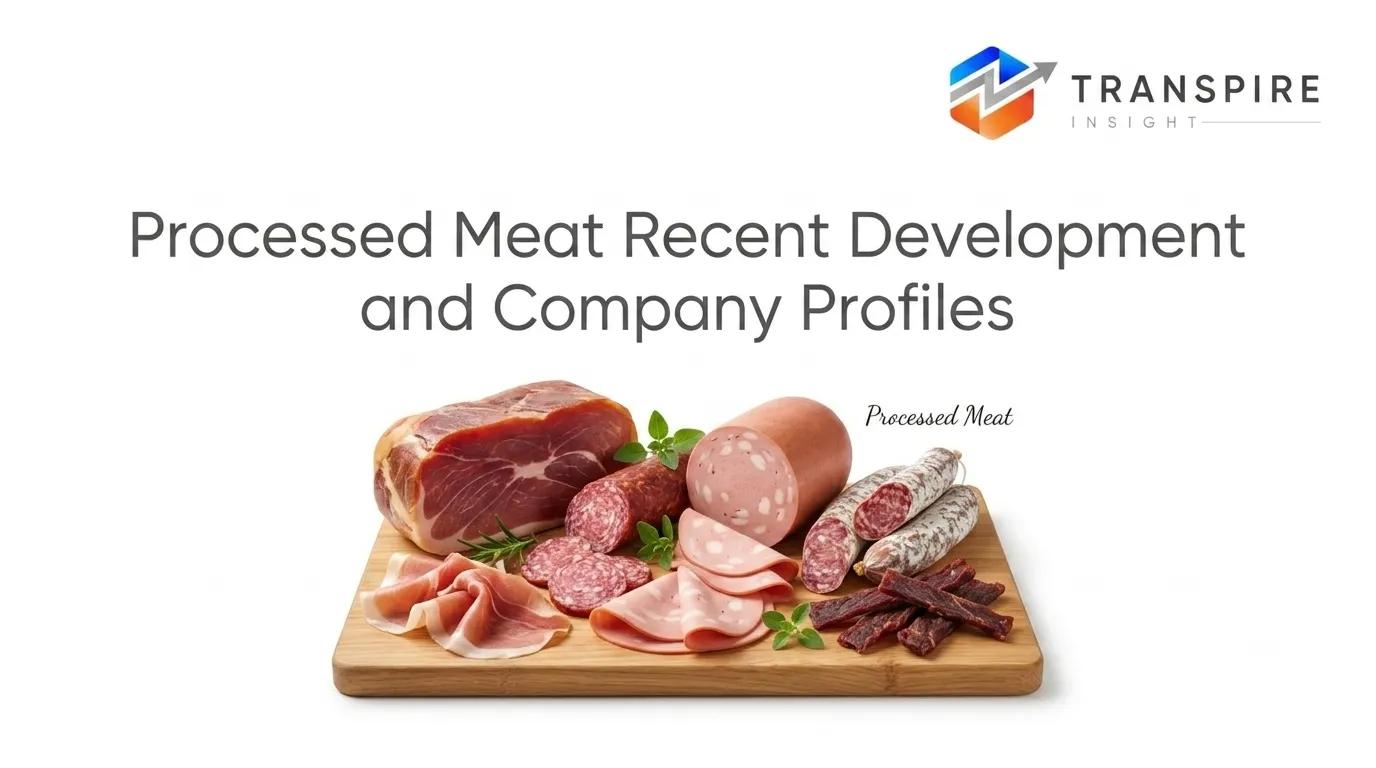
According to a research report published by Transpire Insight, the processed meat market size is projected to grow from USD 296.42 million in 2026 to USD 492.38 million by 2035, at a CAGR of 6.15% during the forecast period 2026-2035. With the growth of the urban population and their lifestyle, there is a growing demand for consuming convenience foods, which are ready-to-eat, high-protein, and low-cost. Meanwhile, ongoing developments in the cold-chain and modified atmosphere packaging systems have greatly enhanced the product shelf life.
Introduction
In recent years, the world's processed meat industry has been changing. Processed meat, which includes cured, fermented, smoked, and ready-to-eat options, provides convenience and extended shelf stability, making it suitable for hectic households. With the need for high-protein, time-saving meals on the rise and with the increased sophistication of vacuum packaging and cold-chain capabilities, processors are increasingly focusing on automated production, sustainability, and clean-label formulations to continue to grow in both developed and emerging markets.
Recent Development News
Stay Ahead of Emerging Opportunities with Expert Market Insights by Transpire Insight
Transpire Insight provides comprehensive, data-driven market intelligence to support smarter business decisions. Our research is rooted in comprehensive analysis, authoritative predictions, and industry expertise, enabling organizations to make informed decisions in rapidly evolving markets. In-depth analysis of market segmentation, competitive positioning, regional trends, and emerging investment opportunities in high-growth areas. We blend accuracy with actionable intelligence, empowering companies to uncover new avenues for growth, bolster strategic decision-making, and stay ahead in a dynamic global market.
Download the exclusive Processed Meat Market sample report today to uncover expert insights, emerging trends, and the opportunities defining the future of the industry.
Processed Meat Market Size & Statistics
Regional Growth and Demand Analysis by Transpire Insight
North America's supremacy is based on the deep-rooted fast-food and quick-service ethos that sees hamburgers and chicken nuggets becoming a staple part of daily eating. The U.S. Department of Agriculture's investment of billions of dollars in boosting domestic slaughtering power has helped to make the supply chain more efficient, and Tyson Foods' new Simple Ingredient Nuggets initiative is indicative of a trend toward cleaner product formulations without compromising convenience. JBS S.A.'s investment in the metal packaging division to expand deli meat production is a good example of how the leaders are continuing to invest in distribution and packaging capabilities to meet both retail and foodservice demand. Hormel Foods and Tyson Foods are still relying on large cold chain and logistics systems to ensure that chilled and frozen products are always available, whether in the supermarket or the restaurant.
Continued growth in the region is driven by the strength of Asia Pacific, supported by the emerging trend of shifting protein consumption in urbanizing and growing middle-class populations in China and India. While China is the world's biggest importer of pork products, WH Group has registered robust sales. India's rapidly growing KFC presence is driving chicken nugget, hamburger, and other processed chicken sales. E-commerce platforms like Alibaba are expanding market access for processed meat brands in crowded urban regions, and regional governments are also working on strengthening cold chain logistics and raising food safety regulations to facilitate their access. Otherwise, manufacturers are going local and selling teriyaki chicken slices from Japan and masala chicken slices from India.
Top 15 Trends in the Processed Meat Market
Proceed to Checkout to purchase the exclusive Processed Meat Market report and gain instant access to in-depth market intelligence, strategic analysis, and future growth opportunities.
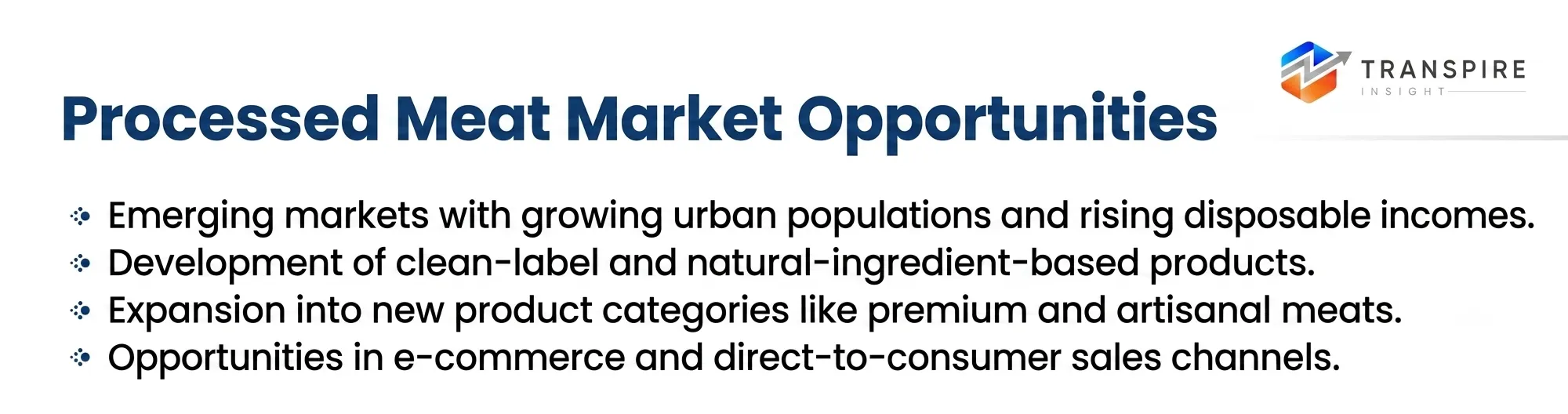
As regulations for salt and preservatives become more stringent and consumers demand more transparency and simpler ingredient lists, manufacturers are cutting down on sodium, nitrites, and synthetic preservatives while promoting natural curing techniques.
Branded charcuterie and artisanal dry-cured formats are increasingly capturing premium spending as consumers trade up, supported strongly by export momentum in pork and beef categories.
With sustainability and flexitarianism at heart, companies are combining pork and chicken with plant-based ingredients to produce hybrid products that offer consumers familiar meat taste and texture.
Online retail and click-and-collect are growing rapidly. The off-trade digital channels are the fastest-growing, and the processors are investing heavily in insulated packaging and last-mile cold delivery.
In large-scale processors, robotics and computer-vision systems are being deployed to aid in labor shortages, yield consistency, and to adhere to tighter hygiene regulations.
Poultry-based products remain steadily moving their way into volume as they continue to offer lower cost, better efficiency, and high-protein, lean processed meats that are increasingly preferred by consumers.
List of Top 25 Companies Leading the Processed Meat Market
Customize the exclusive Processed Meat Market report today to receive tailored insights, country-specific analysis, and business-focused market intelligence.
1. JBS S.A.
World’s largest meat processor with extensive global beef and pork capacity.
Founded: 1953 | HQ: São Paulo, Brazil.
Why It Ranks: Unmatched operational footprint, massive volume scale, and aggressive international market distribution.
Regional Dominance: Holds leading market share across North America, South America, and Europe.
Product Line: Processed beef, pork, poultry, sausage, and premium specialty deli meats.
2. Tyson Foods, Inc.
Primary protein supplier powering major global food service and retail sectors.
Founded: 1935 | HQ: Springdale, Arkansas, USA.
Why It Ranks: Vast distribution network and strong portfolio of iconic consumer protein brands.
Regional Dominance: Massive market share in North America with growing export channels worldwide.
Product Line: Prepared chicken cups, sausages, bacon, deli meats, and frozen snacks.
3. WH Group (Smithfield Foods)
Global leader in pork processing with an integrated farm-to-table system.
Founded: 1958 | HQ: Hong Kong, China.
Why It Ranks: Dominates the worldwide pork supply chain and packaged pork consumer products.
Regional Dominance: Commands market presence across China, North America, and Eastern Europe.
Product Line: Packaged ham, bacon, cured pork, hot dogs, and breakfast sausages.
4. Hormel Foods Corporation
Renowned for pioneering shelf-stable canned meats and iconic packaged brands.
Founded: 1891 | HQ: Austin, Minnesota, USA.
Why It Ranks: High consumer brand loyalty and continuous value-added packaged protein innovation.
Regional Dominance: Dominates North American markets with strong expansion in Asian retail networks.
Product Line: Canned meats, pepperoni, deli slices, turkey products, and prepared meals.
5. Cargill, Incorporated
Agricultural titan delivering vast wholesale meat processing and customized protein solutions.
Founded: 1865 | HQ: Minnetonka, Minnesota, USA.
Why It Ranks: Robust supply chain control, massive capital depth, and global processing capacity.
Regional Dominance: Broad supply footprint across North America, Latin America, and Asia-Pacific.
Product Line: Seasoned beef cuts, processed poultry, deli proteins, and custom formulations.
6. NH Foods Ltd. ( Nippon Ham )
Japan's top fresh and processed meat producer expanding through international partnerships.
Founded: 1942 | HQ: Osaka, Japan.
Why It Ranks: Superior product quality standards and dominance over East Asian retail shelves.
Regional Dominance: Dominates Japan with strong manufacturing hubs across Asia and Australasia.
Product Line: Premium hams, sausages, processed poultry, and Asian-style ready-to-eat meals.
7. Conagra Brands, Inc.
CPG power player with prominent shelf-stable and frozen meat snack lines.
Founded: 1919 | HQ: Chicago, Illinois, USA.
Why It Ranks: High retail shelf density and deep penetration into modern convenience stores.
Regional Dominance: Strong focus and widespread market penetration throughout North American retail.
Product Line: Meat sticks, jerky, frozen meat entrees, and processed sausage links.
8. BRF S.A.
One of the world’s largest exporters of processed poultry products.
Founded: 2009 | HQ: São Paulo, Brazil.
Why It Ranks: Unrivaled poultry export efficiency and extensive halal-certified global market outreach.
Regional Dominance: Strong leadership across Latin America, the Middle East, and North Africa.
Product Line: Frozen chicken nuggets, franks, processed turkey, and marinated meats.
9. Maple Leaf Foods
Pioneer in carbon-neutral food production and premium sustainable meat lines.
Founded: 1927 | HQ: Mississauga, Ontario, Canada.
Why It Ranks: Leadership in raised-without-antibiotics meats and clean-label consumer transparency.
Regional Dominance: Strong primary presence across Canada and expanding premium US retail.
Product Line: Raised-without-antibiotics bacon, sliced deli meats, hot dogs, and sausages.
10. Campofrio Food Group
Premier European processed meat manufacturer specializing in traditional cured meat products.
Founded: 1952 | HQ: Madrid, Spain.
Why It Ranks: Recognized brand heritage, premium charcuterie offerings, and vast European distribution.
Regional Dominance: Leading market position across Western Europe and various Mediterranean markets.
Product Line: Dry-cured ham, cooked ham, salami, chorizo, and ready pate.
Schedule a meeting with our market experts to discuss the exclusive Processed Meat Market report and identify the best research solution for your organization.
Conclusion
The processed meat industry remains a dynamic and evolving market, grappling with both opportunities and challenges as it adjusts to the changing preferences of contemporary consumers. Accessibility to high-protein foods is a priority for many consumers in fast-paced urban life, while some of the biggest food manufacturers are investing heavily in plant automation, clean-label reformulations, and environmentally friendly packaging. Moreover, developments in distribution and cold-chain facilities make it possible for global leaders to reach emerging markets efficiently. In the end, businesses that focus on sustainable sourcing, efficient processing, and clear product labelling will be best equipped to continue to secure a share of the global market.


Send us a brief description of your challenge and we'll get back to you within 24 hours.

 inquiry@transpireinsight.com
 APAC:+91 7666513636
 Address


