
Jul 28, 2026
By Transpire Insight
Description
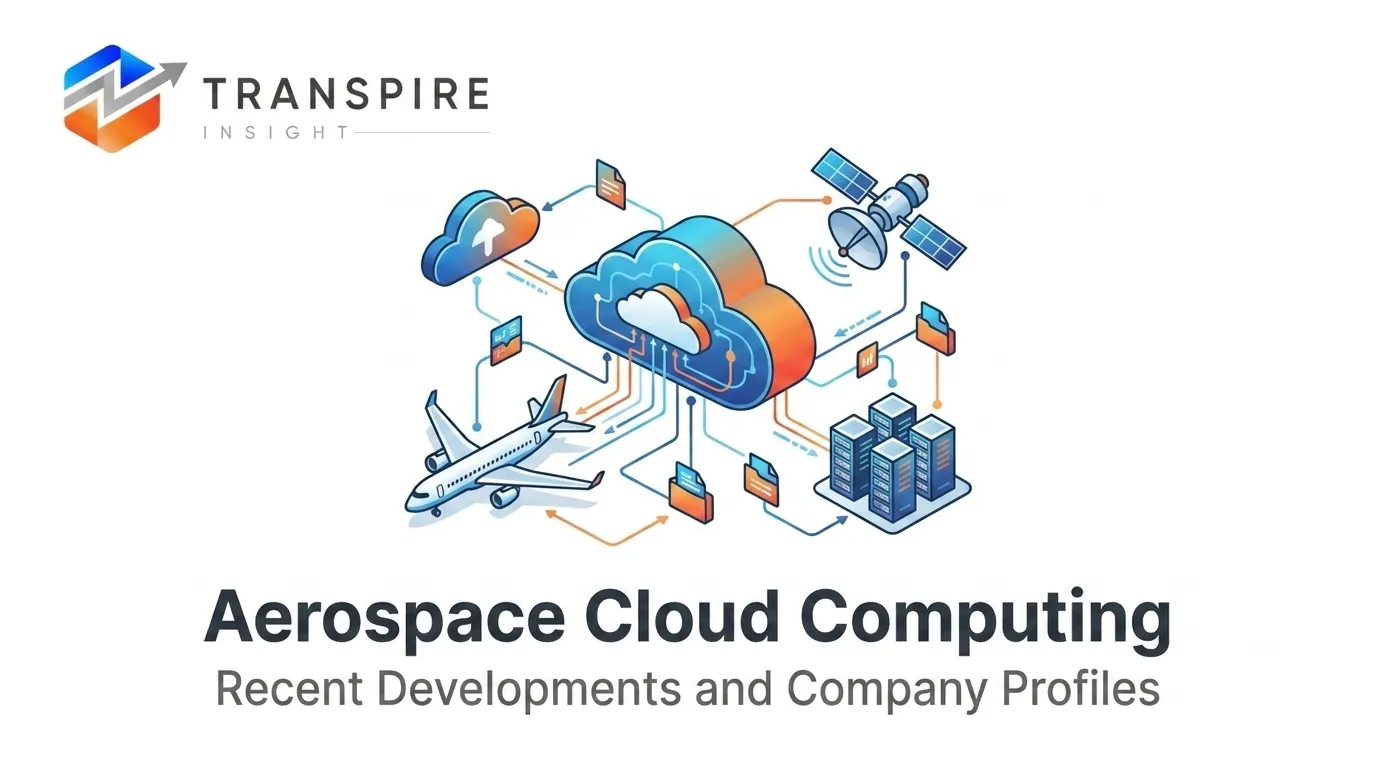
According to a research report published by Transpire Insight, The Global Aerospace Cloud Computing Market Size is projected to Grow from USD 129.35 billion in 2025 to USD 487.2 Billion by 2035, at a CAGR of 19% during the forecast period 2026-2035. The factors that fuel market growth include greater digital transformation in the aerospace sector, increasing usage of connected aircraft solutions, higher demand for AI-enabled predictive maintenance, increasing use of cloud-enabled flight operations, and rising investments in aerospace data management through the cloud. Innovations in hybrid cloud computing, edge computing, digital twin technology, IoT-enabling aviation solutions, and cloud-based cybersecurity are helping to speed up adoption in the commercial aviation, defense, and space industries. In addition, rising collaborations between aerospace players and leading cloud vendors will be a key factor behind future market growth, and cloud computing technology will be indispensable for intelligent aerospace operations.
Introduction
The Aerospace Cloud Computing Market deals with the use of cloud-based platforms, infrastructure, and software by the aerospace and aviation sector. The use of cloud computing helps the companies operating in the aerospace sector such as aircraft manufacturers, airlines, airports, maintenance service providers, defense organizations, and space firms to achieve various advantages including improved efficiency and effectiveness in their operations.
Recent Development News
Stay Ahead of Emerging Opportunities with Expert Market Insights by Transpire Insight
The insights that have been shared through this blog are based on intensive market research carried out by Transpire Insight, an advisor that works with many global organizations. Thanks to the analysis of extensive data, forecasts made by our specialists, and industry intelligence, our reports allow clients to find strategic growth opportunities in dynamically developing industries. For all those who would like to get more detailed information regarding market segmentation, competitive analysis, regional outlooks, and future investment tendencies, there is no doubt that our full report will be of great value.
Aerospace Cloud Computing Market Size & Statistics
Regional Growth and Demand Analysis by Transpire Insight:
North America is the dominant region in the Aerospace Cloud Computing Market, which comprises about 41% of the total global market share.
North America leads the Aerospace Cloud Computing Market because of its advanced aerospace industry, advanced digital transformation technology, and the presence of top companies in the aerospace sector such as Boeing, Lockheed Martin, Northrop Grumman, RTX, Honeywell Aerospace, and GE Aerospace, along with prominent cloud solutions players like Amazon Web Services (AWS), Microsoft Azure, Google Cloud, Oracle Cloud, and IBM Cloud. North America receives investments in the development of defense modernization, connected aircraft, AI-powered aviation analytics, digital twin solutions, predictive maintenance, and secure cloud technology through programs managed by the United States Department of Defense and NASA. Additionally, cybersecurity, maturity in the adoption of cloud computing by commercial airlines and airports, and constant advancements in aerospace software solutions strengthen North America's lead in the market.
Fastest-growing region: Asia-Pacific due to rapid growth of commercial aviation, adoption of cloud technology by airlines and airports, government investment in smart aviation infrastructure, development of aerospace manufacturing industries, and accelerated digital transformation initiatives in China, India, Japan, South Korea, and Singapore.
Top 15 Trends in the Aerospace Cloud Computing Market
1. Growing Adoption of AI-Powered Predictive Maintenance Platforms
Aerospace companies are now turning to AI systems that make use of the cloud technology to accurately predict the malfunctioning of their machines based on the performance and maintenance data of the planes. Such systems minimize unexpected downtimes, increase the availability of the fleet, schedule maintenance activities, reduce operating costs, increase reliability of aircrafts, and facilitate maintenance decision making.
2. Expansion of Digital Twin Technology in Aerospace Operations
Cloud Computing is facilitating the adoption of digital twin technology that allows the creation of virtual representations of aircrafts, engines, and other essential components. Digital Twins facilitate improved accuracy in design, better operational performance, faster development process, predictive maintenance, reduced cost of life cycle management, and fleet management efficiency.
3. Increasing Integration of Hybrid and Multi-Cloud Architectures
Aerospace companies have started using hybrid cloud systems for better adaptability and security of mission-critical applications across different cloud services. Such a system will help with better business continuity, availability of data, compliance with regulations, better workload optimization, and improved cybersecurity resiliency.
4. Rising Adoption of Edge Computing for Connected Aircraft
As more data is produced by connected aircraft at a significant rate, edge computing becomes a more prominent concept for quick analysis of data near the aircraft. With the use of cloud computing enabled by edge, one can ensure reduced communication delay, real-time decision making, safer flights, optimal performance tracking of the aircraft, and autonomous operation.
5. Growth of Cloud-Based Flight Operations Management
Airlines and aircraft manufacturers are increasingly adopting cloud-based solutions for the processes related to flight planning, flight scheduling, crew scheduling, and operational control. Cloud-based flight operations can result in better resource utilization, efficient operational processes, easy collaboration, reduced infrastructure expenses, increased operational visibility, and improved airline management.
6. Expansion of Real-Time Aerospace Data Analytics
Through cloud computing, advanced analytics are being made possible, which are allowing aerospace firms to analyze large amounts of flight, maintenance, weather, and operational data effectively. Real-time analytics increase situational awareness, facilitate better decision-making, reduce fuel use, improve safety management, increase prediction, and ensure performance improvement in aerospace activities.
Top 25 Companies Leading the Aerospace Cloud Computing Market
1. Amazon Web Services, Inc. (AWS)
Amazon Web Services (AWS) is the world's leading cloud computing provider, offering scalable infrastructure, AI, analytics, storage, and security solutions for aerospace, aviation, and defense organizations.
Founded:2006 | Headquarters: Seattle, Washington, USA
Why It Ranks: Market leader in cloud infrastructure supporting aerospace digital transformation.
Regional Dominance: Strong presence across North America, Europe, Asia-Pacific, the Middle East, and Latin America.
Product Line: Cloud Infrastructure, AI & Machine Learning, Data Analytics, IoT, Aerospace Cloud Solutions, and Cybersecurity Services.
Recent Development: Expanded tactical cloud solutions for aerospace and defense through collaboration with Anduril.
2. Microsoft Corporation
Microsoft provides enterprise cloud computing, artificial intelligence, cybersecurity, and digital transformation solutions through Microsoft Azure.
Founded:1975 | Headquarters: Redmond, Washington, USA
Why It Ranks: Leading provider of secure enterprise cloud platforms for aerospace and defense.
Regional Dominance: Strong presence across North America, Europe, Asia-Pacific, and the Middle East.
Product Line: Microsoft Azure, AI Services, Azure Government Cloud, Microsoft 365, Data Analytics, and Security Solutions.
Recent Development: Expanded classified cloud capabilities supporting aerospace and defense AI deployments.
3. Google LLC
Google delivers cloud computing, artificial intelligence, big data analytics, and machine learning solutions through Google Cloud Platform (GCP).
Founded:1998 | Headquarters: Mountain View, California, USA
Why It Ranks: Major innovator in AI-powered cloud technologies for aerospace operations.
Regional Dominance: Strong presence across North America, Europe, and Asia-Pacific.
Product Line: Google Cloud Platform, AI Solutions, Data Analytics, Kubernetes, Cloud Storage, and Security Services.
Recent Development: Expanded AI-enabled cloud services for aerospace and defense organizations.
4. IBM Corporation
IBM provides enterprise cloud computing, AI, hybrid cloud, cybersecurity, and consulting services for aerospace and defense industries.
Founded:1911 | Headquarters: Armonk, New York, USA
Why It Ranks: Global leader in hybrid cloud and AI-powered enterprise solutions.
Regional Dominance: Strong presence across North America, Europe, Asia-Pacific, and Latin America.
Product Line: IBM Cloud, Watson AI, Hybrid Cloud Platforms, Data Management, and Cybersecurity Solutions.
Recent Development: Expanded hybrid cloud and AI services supporting aerospace digital transformation.
5. Oracle Corporation
Oracle develops enterprise cloud infrastructure, database technologies, AI services, and mission-critical cloud applications.
Founded:1977 | Headquarters: Austin, Texas, USA
Why It Ranks: Leading provider of secure cloud infrastructure for enterprise aerospace applications.
Regional Dominance: Strong presence across North America, Europe, Asia-Pacific, and the Middle East.
Product Line: Oracle Cloud Infrastructure (OCI), Database Services, AI Applications, ERP, and Cloud Security.
Recent Development: Expanded sovereign cloud capabilities for government and aerospace customers.
6. Cisco Systems, Inc.
Cisco develops networking, cybersecurity, cloud connectivity, collaboration, and digital infrastructure technologies.
Founded:1984 | Headquarters: San Jose, California, USA
Why It Ranks: Global leader in secure aerospace networking and cloud connectivity.
Regional Dominance: Strong presence across North America, Europe, Asia-Pacific, and Latin America.
Product Line: Enterprise Networking, Cloud Security, IoT Platforms, Collaboration Solutions, and Data Center Infrastructure.
Recent Development: Enhanced secure cloud networking solutions for aerospace and defense operations.
7. SAP SE
SAP develops enterprise software, cloud ERP, analytics, and digital supply chain solutions for aerospace manufacturers and airlines.
Founded:1972 | Headquarters: Walldorf, Germany
Why It Ranks: Leading provider of cloud-based enterprise business applications.
Regional Dominance: Strong presence across Europe, North America, and Asia-Pacific.
Product Line: SAP S/4HANA Cloud, Supply Chain Management, ERP, Business Analytics, and Aviation Solutions.
Recent Development: Expanded cloud-based aerospace supply chain management capabilities.
8. Salesforce, Inc.
Salesforce provides cloud-based customer relationship management (CRM), AI, analytics, and enterprise workflow automation platforms.
Founded:1999 | Headquarters: San Francisco, California, USA
Why It Ranks: Major provider of cloud CRM and AI solutions supporting aerospace customer operations.
Regional Dominance: Strong presence across North America, Europe, and Asia-Pacific.
Product Line: Salesforce CRM, Einstein AI, Service Cloud, Sales Cloud, Marketing Cloud, and Data Cloud.
Recent Development: Expanded AI-powered customer engagement capabilities for aerospace enterprises.
9. VMware LLC
VMware specializes in cloud infrastructure, virtualization, hybrid cloud, and enterprise workload management solutions.
Founded:1998 | Headquarters: Palo Alto, California, USA
Why It Ranks: Industry leader in hybrid cloud and virtualization technologies.
Regional Dominance: Strong presence across North America, Europe, and Asia-Pacific.
Product Line: VMware Cloud Foundation, Virtualization Platforms, Hybrid Cloud Solutions, Network Virtualization, and Cloud Management Software.
Recent Development: Expanded multi-cloud management capabilities for enterprise aerospace environments.
10. Dell Technologies Inc.
Dell Technologies provides cloud infrastructure, servers, storage systems, cybersecurity, and enterprise IT solutions.
Founded:1984 | Headquarters: Round Rock, Texas, USA
Why It Ranks: Leading provider of enterprise cloud infrastructure supporting aerospace digital operations.
Regional Dominance: Strong presence across North America, Europe, Asia-Pacific, and Latin America.
Product Line: Cloud Infrastructure, Enterprise Storage, PowerEdge Servers, Data Protection Solutions, and Cybersecurity Platforms.
Recent Development: Expanded integrated cloud infrastructure solutions for aerospace and defense customers.
Conclusion
The Aerospace Cloud Computing Market has seen significant growth due to increased digitalization through cloud computing, AI analytics, digital twins, predictive maintenance, and data security in the aerospace sector. The growing need for connected aircraft, operational intelligence, hybrid clouds, and advanced cybersecurity is promoting cloud computing in commercial aviation, defense, and space sectors. Major players, including AWS, Microsoft Corporation, Google LLC, IBM Corporation, Oracle Corporation, Cisco Systems, SAP SE, Salesforce, VMware LLC, and Dell Technologies Inc., have continued to make investments in aerospace cloud computing platforms, AI, and secure multi-clouds to gain competitive advantages in the marketplace. With aerospace companies making a strong commitment towards efficiency, scalability, and data-driven ecosystem, Aerospace Cloud Computing Market will see significant long-term growth in the coming years.


Send us a brief description of your challenge and we'll get back to you within 24 hours.

 inquiry@transpireinsight.com
 APAC:+91 7666513636
 Address


