
Oct 08, 2026
By Transpire Insight
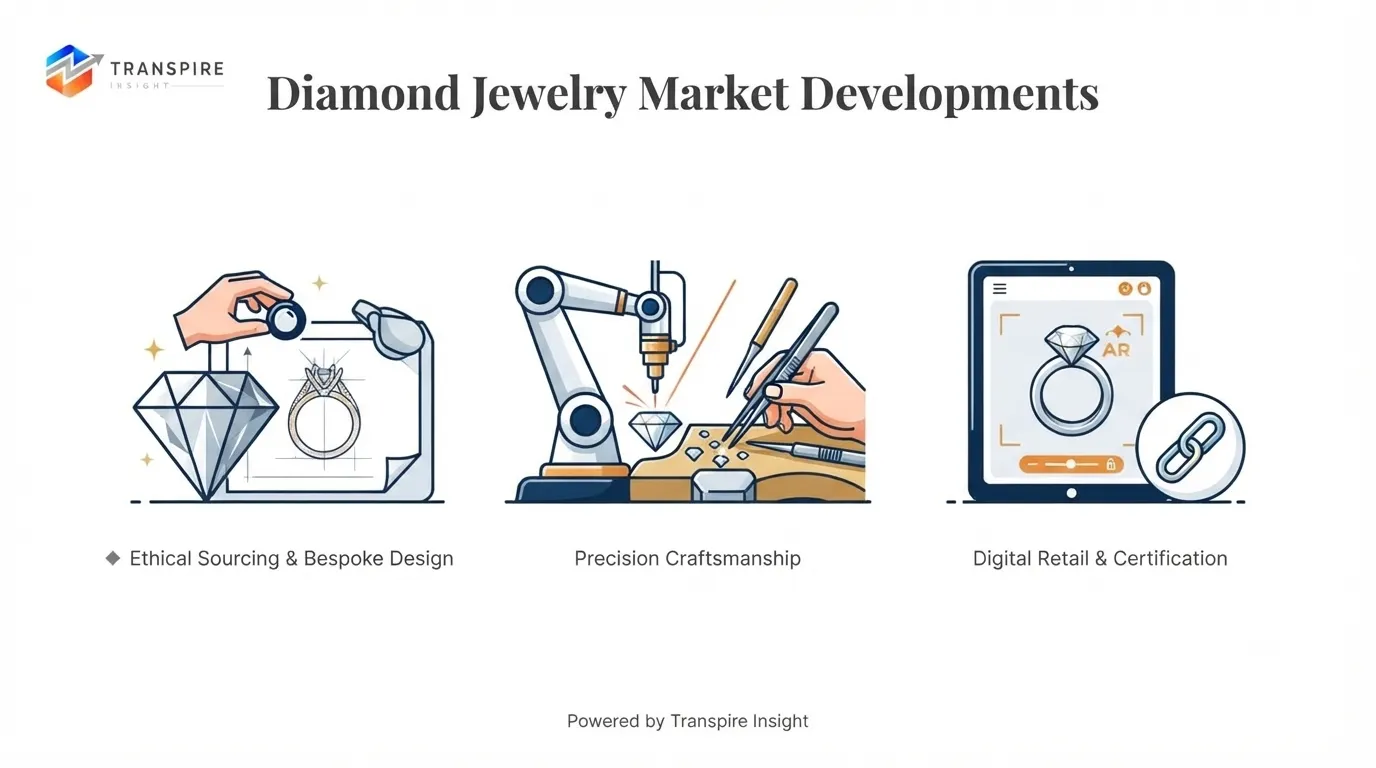
Diamond Jewelry continues to occupy an important position within the global luxury and personal adornment industry. Demand is supported by engagement and wedding traditions, luxury consumption, gifting, rising disposable incomes, premium branding, and changing preferences among younger consumers. At the same time, the emergence of lab-grown diamonds is creating a major transformation in product positioning, pricing, sourcing, and consumer choice.
Jewelry companies are increasingly combining diamonds with innovative designs, digital retail experiences, personalized products, sustainability messaging, and omnichannel distribution. The market is therefore moving beyond traditional diamond purchasing toward a broader combination of luxury, fashion, customization, technology, and consumer experience.
September 2026: The global Diamond Jewelry Market was estimated at approximately USD 88.5 billion in 2025 and is projected to reach USD 144.9 billion by 2033, expanding at a CAGR of 6.3% from 2025 to 2033.
Market Size
Diamond jewelry includes rings, necklaces, earrings, bracelets, pendants, wedding jewelry, luxury collections, and other products incorporating diamonds.
The market's projected expansion from USD 88.5 billion in 2025 to USD 144.9 billion by 2033 is supported by consumer spending on luxury goods, wedding-related purchases, gifting, product innovation, and growing demand from emerging markets.
The market is also undergoing structural changes because consumers now have greater access to information regarding diamond characteristics, origin, certification, manufacturing methods, and pricing.
Engagement and Wedding Jewelry
Engagement and wedding jewelry remains a central demand category.
Diamonds continue to be widely associated with engagement rings, wedding bands, anniversary gifts, and milestone celebrations.
Jewelry brands are increasingly offering customizable designs, different diamond shapes, alternative metals, and various price points to appeal to broader consumer segments.
Lab-Grown Diamonds
Lab-grown diamonds are one of the most significant developments in the modern diamond jewelry industry.
Unlike diamond simulants, laboratory-grown diamonds have essentially the same chemical composition and crystal structure as natural diamonds, but they are produced through technological processes rather than geological formation.
Their availability at different price points is changing consumer expectations and creating new competition between natural and laboratory-grown diamond jewelry.
Younger Consumer Preferences
Younger consumers are increasingly interested in personalization, design, transparency, digital shopping, and value.
This has encouraged jewelry companies to provide customization tools, online consultations, virtual product displays, educational content, and flexible purchasing experiences.
Digital-native jewelry brands are also using social media and influencer marketing to reach consumers who may not traditionally purchase diamond jewelry through established luxury stores.
E-Commerce and Omnichannel Retail
Online jewelry sales are expanding as consumers become more comfortable researching and purchasing high-value products digitally.
Luxury jewelry retailers are investing in high-quality photography, 3D visualization, virtual consultations, secure payment systems, digital certificates, and customer service tools.
Physical stores remain important because consumers often want to inspect diamonds and jewelry before purchasing. Consequently, omnichannel retail is becoming an important strategy.
Personalization and Custom Designs
Personalized jewelry allows customers to select diamond shape, size, setting, metal, engraving, and design characteristics.
Customization is particularly important in engagement and wedding jewelry, where buyers often want products that reflect individual preferences.
Technology can simplify customization through digital design tools and visualization platforms.
Diamond Certification
Certification continues to play an important role in consumer confidence.
Buyers increasingly seek information about diamond characteristics including cut, color, clarity, carat weight, and provenance.
Certification and traceability technologies can help retailers provide consumers with additional information about the product.
Sustainable and Ethical Sourcing
Sourcing transparency has become increasingly relevant in the diamond jewelry market.
Consumers and jewelry brands are paying greater attention to responsible sourcing, supply-chain transparency, environmental impacts, and ethical production.
Lab-grown diamonds have gained attention among some consumers because of their production model, although natural diamonds and laboratory-grown diamonds occupy different positions in the jewelry market.
Luxury Branding
Brand positioning remains a major factor in diamond jewelry.
Luxury houses use heritage, craftsmanship, design, celebrity partnerships, store experiences, and exclusive collections to differentiate products.
Brands can command significant premiums through design recognition, craftsmanship, reputation, and customer experience beyond the intrinsic value of the diamond itself.
Regional Outlook
North America remains a major diamond jewelry market due to strong engagement-ring demand, luxury spending, established jewelry retailers, and mature e-commerce channels.
Europe benefits from luxury jewelry heritage, established brands, tourism-related purchases, and demand for premium craftsmanship.
Asia-Pacific represents a major growth opportunity. Rising disposable incomes, expanding middle-class populations, urbanization, wedding traditions, and growing luxury consumption are supporting demand.
India represents an important market because of its strong jewelry culture, wedding-related demand, diamond processing capabilities, and expanding organized retail sector.
China remains an important luxury market, although consumer spending patterns and macroeconomic conditions can influence jewelry demand.
Middle East markets benefit from high luxury consumption, strong jewelry traditions, tourism, and premium retail environments.
Competitive Landscape
The diamond jewelry market contains multinational luxury groups, specialist diamond companies, jewelry retailers, regional manufacturers, online jewelry companies, and independent designers.
Competition increasingly involves more than diamond quality. Design, brand reputation, customization, sourcing transparency, customer service, digital experience, and pricing are becoming important competitive dimensions.
The rise of lab-grown diamonds is also encouraging companies to clarify product positioning and educate consumers about differences between natural and laboratory-grown products.
Top 10 Companies in Diamond Jewelry Market
Company Profiles
De Beers Group
De Beers is one of the most recognized names in the global diamond industry, with activities spanning diamond sourcing, marketing, retail, and jewelry. Its historical association with natural diamonds gives it a significant position in the premium diamond ecosystem.
Signet Jewelers
Signet Jewelers operates major jewelry retail brands and serves consumers across engagement, wedding, fashion, and diamond jewelry categories. Its retail network and digital channels give it broad consumer reach.
Chow Tai Fook Jewellery Group
Chow Tai Fook is one of Asia's major jewelry retailers, with extensive operations across Greater China and other markets. Its portfolio includes diamond jewelry, gold jewelry, gemstones, and luxury products.
Tiffany & Co.
Tiffany & Co. is a globally recognized luxury jewelry brand known for diamond engagement rings, fine jewelry, and distinctive design. Its strong brand heritage allows it to compete in the premium segment.
Richemont
Richemont owns luxury jewelry brands including Cartier and Van Cleef & Arpels. Its jewelry businesses operate across high-end markets and benefit from global luxury distribution and strong brand recognition.
Pandora
Pandora is a major global jewelry company with an extensive retail network. Its portfolio includes jewelry incorporating diamonds and other materials, while its brand strategy emphasizes accessible luxury and personalization.
Kering
Kering's luxury portfolio includes jewelry houses such as Boucheron, Pomellato, and Qeelin. Its jewelry businesses operate within the broader global luxury ecosystem.
LVMH
LVMH operates major luxury jewelry and watch brands, including Bulgari, Tiffany & Co., and Chaumet. Its global distribution, design capabilities, and luxury-brand infrastructure provide significant exposure to high-end jewelry.
Blue Nile
Blue Nile is an established online jewelry retailer specializing in engagement rings, diamonds, and fine jewelry. Its digital-first approach has contributed to the evolution of online diamond purchasing.
Malabar Gold & Diamonds
Malabar Gold & Diamonds is a major jewelry retailer with a strong presence across India, the Middle East, and international markets. Its portfolio includes diamond jewelry, gold jewelry, wedding collections, and other precious-jewelry categories.
Challenges in the Diamond Jewelry Market
The diamond jewelry industry faces several challenges, including fluctuations in consumer spending, diamond price volatility, competition from lab-grown diamonds, changing luxury preferences, and concerns regarding sourcing and sustainability.
Economic uncertainty can particularly affect discretionary purchases such as high-value jewelry.
Retailers must also manage inventory carefully because diamond jewelry represents significant working capital.
The growth of lab-grown diamonds requires traditional diamond businesses to communicate product differentiation clearly while responding to changing consumer expectations.
Future Outlook
The Diamond Jewelry Market is expected to become increasingly diversified across natural diamonds, lab-grown diamonds, personalized jewelry, luxury collections, and digitally enabled retail.
Technology will continue to influence how consumers discover, compare, customize, and purchase jewelry. Virtual try-on, 3D visualization, AI-assisted recommendations, digital certification, and online consultations can improve the customer experience.
Emerging markets will remain important sources of future demand as disposable incomes rise and organized jewelry retail expands.
The market's projected growth to USD 144.9 billion by 2033 reflects the continued relevance of diamonds within luxury, weddings, gifting, fashion, and personal expression.


Send us a brief description of your challenge and we'll get back to you within 24 hours.

 inquiry@transpireinsight.com
 APAC:+91 7666513636
 Address


