
Jul 24, 2026
By Transpire Insight
Medtronic and Apollo Hospitals Announce Strategic Partnership to Establish State-of-the-Art Advanced ICU Network, Accelerating Innovation in Critical Care Equipment
According to Transpire Insights, a market research and consulting firm with more than 7 years of experience tracking medical devices, critical care technologies, hospital infrastructure, healthcare equipment, and digital health markets, the strategic partnership between Medtronic and Apollo Hospitals comes at a pivotal moment for the global healthcare industry. The Global Critical Care Equipment Market was valued at approximately USD 42.9 billion in 2025 and is projected to reach around USD 87.4 billion by 2035, growing at a CAGR of approximately 9.30% during the forecast period from 2026 to 2035.
The collaboration aims to establish a next-generation advanced intensive care ecosystem integrating modern patient monitoring technologies, ventilators, connected care systems, and advanced ICU infrastructure. Industry observers view the initiative as a significant step toward improving critical care delivery and strengthening healthcare resilience amid growing demand for advanced patient management solutions.
The announcement reflects a broader transformation occurring across healthcare systems worldwide. Hospitals are increasingly investing in smart ICU technologies, remote patient monitoring, tele-ICU platforms, predictive analytics, and AI-enabled decision support systems to improve patient outcomes while optimizing clinical efficiency.
Healthcare experts believe the future of critical care will be driven by connected technologies capable of providing real-time patient insights, predictive risk assessment, and coordinated clinical decision-making.
Critical Care Equipment Becomes the Foundation of Modern Healthcare
Critical care equipment has evolved from traditional hospital infrastructure into one of the most strategically important segments of modern healthcare.
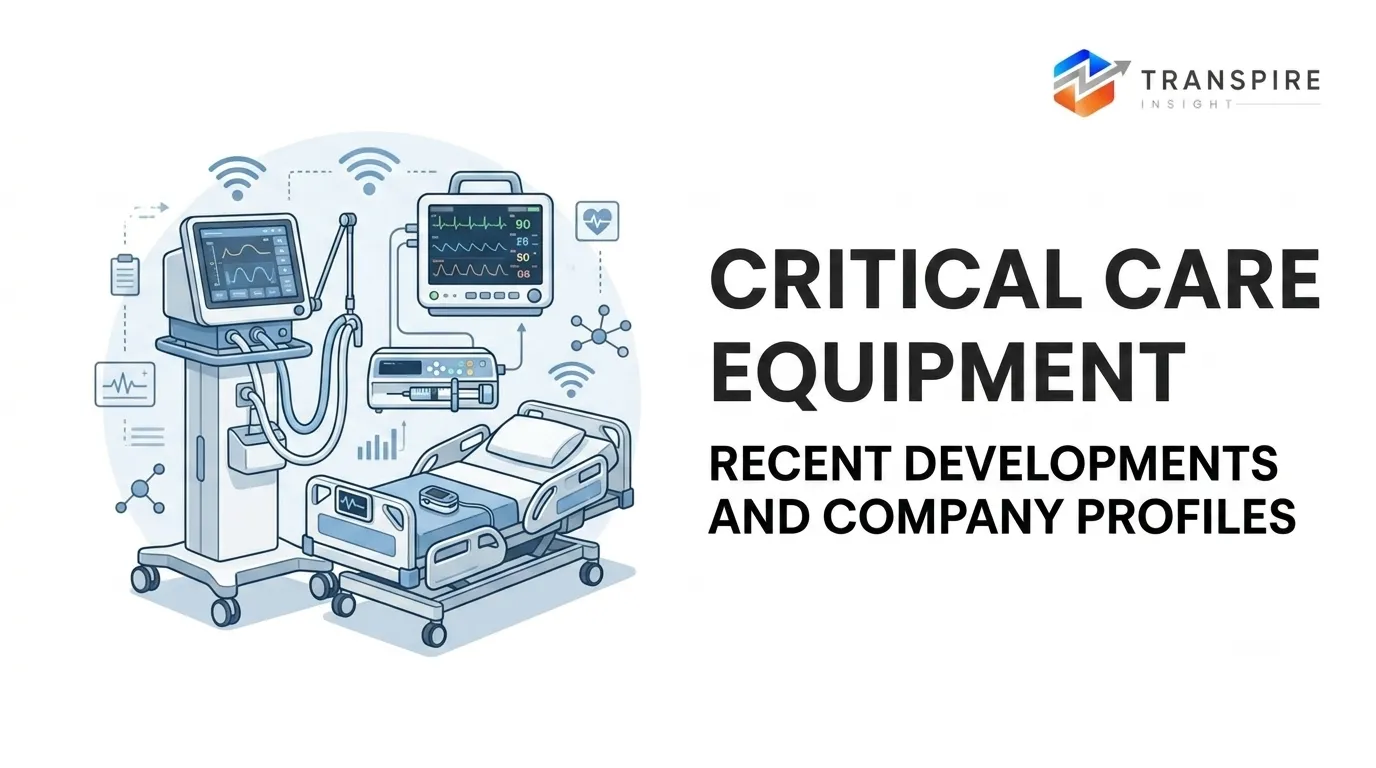
Intensive care units today rely on a complex ecosystem of technologies designed to monitor, support, and treat critically ill patients. These systems include ventilators, patient monitoring devices, infusion pumps, anesthesia systems, oxygen therapy equipment, and advanced diagnostic technologies
The growing complexity of healthcare delivery is driving demand for integrated critical care solutions capable of improving clinical outcomes while supporting increasingly sophisticated treatment protocols.
Healthcare providers are recognizing that investments in critical care infrastructure directly influence patient safety, operational efficiency, emergency preparedness, and long-term healthcare resilience.
The Medtronic-Apollo Hospitals partnership highlights how healthcare organizations are moving beyond traditional equipment procurement toward building intelligent critical care ecosystems designed for the future.
Why the Partnership Matters
The collaboration comes at a time when healthcare systems worldwide are increasing investments in critical care capabilities.
The global ICU equipment market is estimated to be valued at approximately USD 7.4 billion in 2025, reflecting growing demand for advanced technologies supporting intensive care environments. Increasing hospitalization rates, aging populations, and the rising prevalence of chronic diseases continue to drive demand for modern ICU infrastructure.
Patient monitoring devices remain one of the largest segments within the critical care equipment industry, accounting for approximately 36.3% of the market in recent years. These systems play a critical role in continuously tracking vital signs and enabling rapid clinical intervention when patient conditions deteriorate.
The growing adoption of connected healthcare technologies is further accelerating demand for advanced monitoring platforms capable of delivering real-time data to clinicians across hospital networks.
Industry analysts believe the next generation of critical care will increasingly rely on data-driven decision-making, automation, predictive analytics, and integrated monitoring systems.
The Rise of Smart Intensive Care Units
The traditional ICU is undergoing a significant technological transformation.
Healthcare providers are increasingly adopting smart ICU models that integrate patient monitoring systems, ventilators, infusion devices, imaging technologies, and electronic medical records into unified digital environments.
Artificial intelligence is emerging as a particularly important technology within critical care settings.
AI-powered systems can assist clinicians by identifying early signs of patient deterioration, analyzing physiological trends, prioritizing clinical alerts, and supporting treatment decisions.
These capabilities are helping healthcare organizations improve patient outcomes while reducing operational complexity within intensive care environments.
As a result, technology companies, medical device manufacturers, and healthcare providers are investing heavily in next-generation critical care solutions.
Competitive Analysis
According to Transpire Insights forecasts, the global critical care equipment industry is expected to witness substantial expansion throughout the forecast period.
Several factors are contributing to market growth:
North America currently represents one of the largest markets for critical care equipment, accounting for approximately 48% of global market share, supported by advanced healthcare infrastructure, strong hospital investment, and widespread adoption of medical technologies.
At the same time, Asia-Pacific is emerging as one of the fastest-growing regions due to expanding healthcare infrastructure, rising healthcare spending, and increasing government investments in hospital modernization programs.
The Medtronic-Apollo Hospitals partnership reflects a broader industry trend toward strategic collaborations designed to accelerate innovation and improve healthcare delivery.
Financial Impact
The critical care equipment industry represents one of the most important segments of the global medical device market.
Healthcare providers worldwide continue investing heavily in ICU modernization programs, emergency preparedness initiatives, and advanced patient care technologies. The opportunity extends beyond hospitals.
Growing demand for critical care equipment is creating opportunities across:
The global ventilator market alone is estimated to be valued at approximately USD 9.07 billion in 2025, highlighting the significant economic importance of respiratory care technologies within the broader critical care ecosystem.
Industry experts expect healthcare investments in connected monitoring systems, predictive analytics platforms, and intelligent ICU technologies to increase significantly throughout the coming decade.
Why Philips, GE HealthCare, and Drager Should Pay Attention
While Medtronic's partnership with Apollo Hospitals has generated significant industry attention, competition within the critical care equipment market remains intense.
Several global healthcare technology leaders continue expanding their critical care portfolios.
Philips Healthcare remains a major provider of patient monitoring systems, connected care technologies, and hospital informatics solutions.
GE HealthCare continues investing in critical care monitoring, imaging systems, and digital healthcare platforms designed to improve patient management and operational efficiency.
Drager has established a strong reputation within ventilators, anesthesia systems, and critical care technologies used by hospitals worldwide.
Industry analysts believe competition will increasingly focus on connected healthcare ecosystems rather than standalone medical devices.
Companies capable of integrating hardware, software, analytics, and AI-powered decision support systems are expected to gain competitive advantages.
AI Begins Transforming Critical Care
Artificial intelligence is becoming one of the most important technologies shaping the future of intensive care medicine.
AI-enabled platforms are being used to analyze patient data, predict adverse events, identify treatment opportunities, and improve clinical decision-making.
Healthcare organizations are increasingly exploring AI applications in:
The integration of artificial intelligence into critical care environments has the potential to improve efficiency while supporting better patient outcomes.
Industry experts view AI as a key driver of next-generation healthcare innovation.
Market Impact: The Future of Connected Critical Care
The Medtronic-Apollo Hospitals partnership highlights a broader transformation occurring throughout healthcare.
Hospitals are increasingly adopting integrated technologies capable of supporting continuous patient monitoring, remote care delivery, predictive analytics, and intelligent clinical decision-making.
The impact extends beyond healthcare providers. Medical device manufacturers, software developers, AI companies, cloud providers, and healthcare analytics firms are all expected to benefit from growing investments in critical care infrastructure.
As healthcare systems continue modernizing, critical care technologies are expected to play a central role in shaping the future of patient care.
Recent Developments in the Critical Care Equipment Market
July 2, 2025 – Medtronic announced a strategic partnership with Philips to expand advanced patient monitoring technologies, integrating pulse oximetry, capnography, and brain monitoring solutions into Philips' systems, enhancing critical care capabilities worldwide.
July 9, 2025 – Philips partnered with Drager, Hamilton Medical, Getinge, and B. Braun to improve interoperability among critical care devices, enabling connected ICU environments that support seamless data exchange and enhanced clinical decision-making.
July 1, 2025 – Medtronic received CE Mark approval for its VitalFlow ECMO System in Europe, expanding its respiratory and cardiac critical care portfolio and strengthening extracorporeal life support capabilities for critically ill patients.
August 1, 2025 – Philips expanded its partnership with Medtronic by integrating pulse oximetry, CO₂ monitoring, and BIS brain monitoring technologies into IntelliVue systems, simplifying workflows and improving patient monitoring capabilities.
The Key Players Shaping the Critical Care Equipment Market
Founded: 1949
Headquarters: Dublin, Ireland
Medtronic is one of the world's largest medical technology companies. The company provides ventilators, patient monitoring systems, respiratory care solutions, and numerous technologies supporting critical care environments.
Founded: 1891
Headquarters: Amsterdam, Netherlands
Philips Healthcare is a global leader in patient monitoring, connected care technologies, hospital informatics, and integrated healthcare solutions.
Founded: 1892
Headquarters: Chicago, Illinois, United States
GE HealthCare offers a broad portfolio of medical technologies including patient monitoring systems, diagnostic imaging equipment, and healthcare digitalization solutions.
Founded: 1889
Headquarters: Lübeck, Germany
Dräger specializes in ventilators, anesthesia systems, patient monitoring technologies, and critical care equipment used in hospitals worldwide.
Founded: 1931
Headquarters: Deerfield, Illinois, United States
Baxter provides infusion systems, critical care solutions, hospital equipment, and advanced therapies supporting intensive care environments.
Transpire Insights Expert View
According to Transpire Insights analysis, the Medtronic-Apollo Hospitals partnership represents more than a hospital collaboration; it reflects a broader transformation occurring across global healthcare systems.
Critical care equipment is no longer viewed solely as hospital infrastructure. It has become a strategic component of healthcare resilience, emergency preparedness, and patient outcome optimization.
The future ICU will be increasingly connected, data-driven, and AI-enabled, allowing clinicians to make faster and more informed treatment decisions while improving patient safety and operational efficiency.
What makes the Medtronic-Apollo Hospitals initiative particularly significant is its focus on creating an integrated critical care ecosystem rather than deploying standalone medical devices. The future of healthcare will be defined by connected technologies capable of delivering continuous patient intelligence.
The growing integration of patient monitoring, ventilators, tele-ICU services, predictive analytics, and artificial intelligence is transforming how hospitals manage critically ill patients.
Conclusion
The partnership between Medtronic and Apollo Hospitals underscores the growing importance of critical care technologies within modern healthcare systems. As hospitals increasingly invest in advanced ICU infrastructure, connected monitoring platforms, tele-ICU services, and AI-powered clinical solutions, the critical care equipment market is entering a new phase of innovation and growth.
According to Transpire Insights, the convergence of advanced medical devices, digital health technologies, artificial intelligence, and connected care platforms will play a central role in shaping the future of critical care delivery throughout the coming decade.


Send us a brief description of your challenge and we'll get back to you within 24 hours.

 inquiry@transpireinsight.com
 APAC:+91 7666513636
 Address


