
Aug 08, 2026
By Transpire Insight
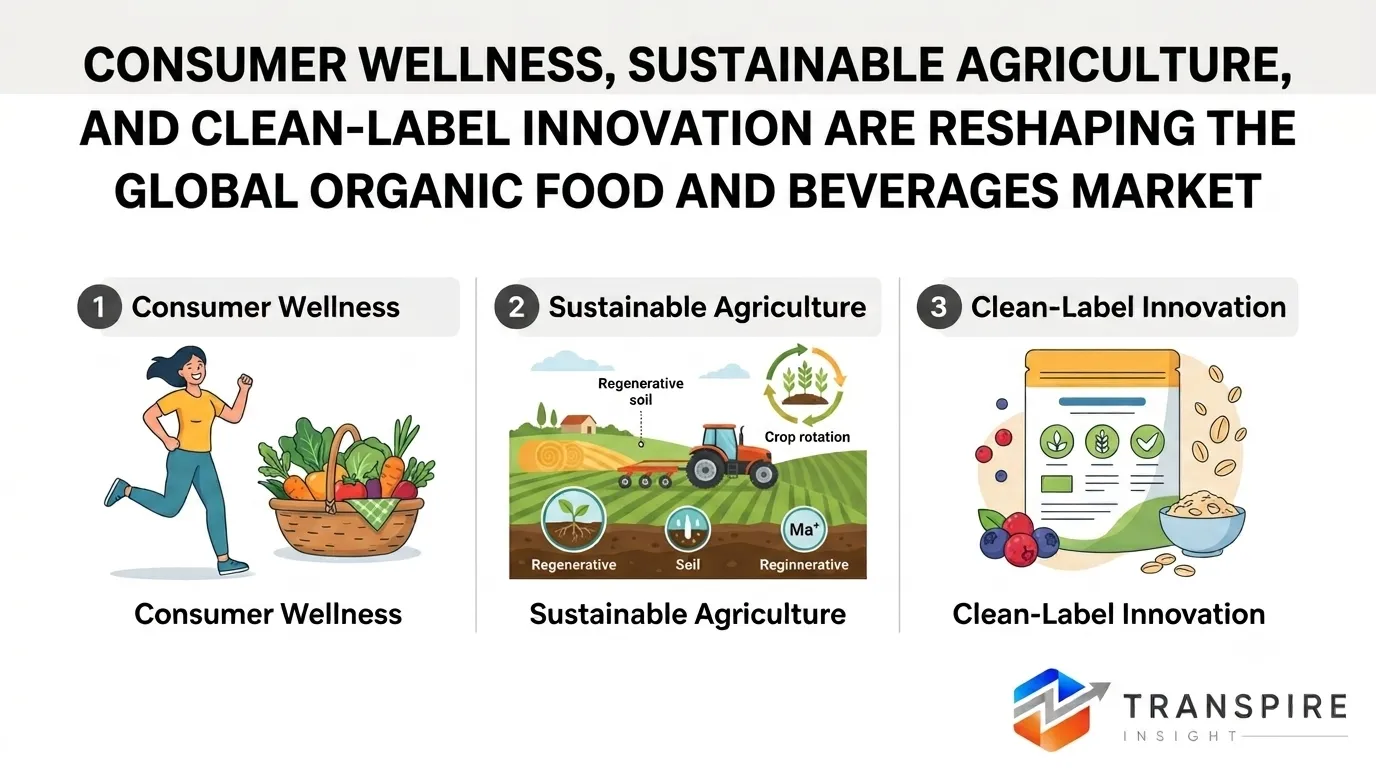
The global Organic Food and Beverages market is experiencing a structural transformation as food consumption patterns evolve beyond taste and affordability toward nutrition, sustainability, ingredient transparency, and long-term health. What was once considered a niche category serving health-conscious consumers has steadily developed into one of the fastest-growing segments of the global food industry. During 2025–2026, manufacturers, retailers, agricultural producers, and food technology companies have intensified investments in certified organic farming, regenerative agriculture, functional food innovation, premium beverages, and environmentally responsible packaging. These developments reflect a broader shift in consumer priorities, where purchasing decisions are increasingly influenced by product origin, production practices, nutritional value, and environmental impact rather than price alone.
According to Transpire Insights, the Global Organic Food and Beverages Market was valued at approximately USD 330.4 billion in 2026 and is anticipated to reach nearly USD 964.9 billion by 2034, expanding at a CAGR of approximately 12.65% during the forecast period. The market continues to benefit from rising disposable incomes, increasing health awareness, expanding organic farming acreage, stronger regulatory frameworks, and wider retail availability across both developed and emerging economies.
Organic food production follows agricultural systems that prioritize ecological balance, soil fertility, biodiversity conservation, and responsible resource management. Instead of depending heavily on synthetic fertilizers, chemical pesticides, genetically modified organisms (GMOs), or artificial growth stimulants, certified organic farming emphasizes natural cultivation methods, crop rotation, biological pest control, compost-based soil nutrition, and sustainable livestock management. As environmental concerns continue gaining global attention, these production practices are increasingly viewed not only as agricultural alternatives but also as long-term strategies for strengthening food security and improving ecosystem resilience.
One of the strongest forces supporting market expansion is the growing global emphasis on preventive healthcare. Consumers are becoming increasingly aware that everyday dietary choices significantly influence long-term wellness, encouraging greater demand for foods perceived as natural, minimally processed, and nutritionally balanced. The increasing prevalence of obesity, diabetes, cardiovascular diseases, digestive disorders, and lifestyle-related health conditions has encouraged many households to gradually replace conventional packaged foods with organic fruits, vegetables, dairy products, cereals, beverages, meat products, and plant-based alternatives. Rather than representing occasional premium purchases, organic products are becoming regular components of household grocery baskets across many regions.
The growing popularity of clean-label nutrition has further accelerated market development. Modern consumers increasingly examine ingredient declarations before making purchasing decisions, preferring products containing recognizable, naturally derived ingredients while avoiding artificial preservatives, synthetic colors, flavor enhancers, and unnecessary chemical additives. This behavioral shift has encouraged food manufacturers to reformulate existing products while introducing entirely new organic product lines emphasizing ingredient simplicity, transparency, and authenticity. As a result, clean-label product development has become one of the industry's most important innovation strategies.
Another important market catalyst is the rapid evolution of functional nutrition. Consumers no longer expect food merely to satisfy hunger; they increasingly seek products that contribute to digestive health, immune function, energy levels, cognitive performance, and overall well-being. Consequently, manufacturers are integrating naturally sourced proteins, probiotics, prebiotics, botanical extracts, ancient grains, seeds, fruits, and plant-derived antioxidants into certified organic formulations. The convergence of organic certification with functional nutrition has created premium product categories that continue attracting strong consumer interest across supermarkets, specialty stores, pharmacies, and online retail platforms.
Technological advancement is simultaneously reshaping the industry's competitive landscape. Digital agriculture, satellite monitoring, precision irrigation, artificial intelligence, drone-assisted crop assessment, and Internet of Things (IoT)-enabled farm management systems are enabling organic producers to improve productivity while maintaining strict certification standards. These technologies help farmers optimize irrigation schedules, monitor crop health, identify pest outbreaks earlier, and improve overall resource efficiency without compromising organic production principles. As digital farming technologies become increasingly accessible, they are expected to improve supply consistency while supporting the expansion of certified organic cultivation worldwide.
Download the exclusive Organic Food and Beverages Market sample report today to uncover expert insights, emerging trends, and the opportunities defining the future of the industry.
Rising Health Awareness, Expanding Organic Agriculture, and Modern Retail Networks Continue to Accelerate the Global Organic Food and Beverages Market
The Organic Food and Beverages market has evolved beyond a premium food category into one of the fastest-transforming segments of the global food industry. Consumer purchasing decisions are increasingly influenced by nutritional value, environmental sustainability, food safety, ethical sourcing, and production transparency rather than price alone. According to Transpire Insights, this transformation is creating structural demand that is less dependent on short-term economic cycles and more closely aligned with long-term lifestyle changes. As governments strengthen food quality regulations and consumers become increasingly informed about nutrition, organic products are gradually becoming an integral component of mainstream food consumption across developed as well as emerging economies.
One of the most significant growth drivers is the steady expansion of global organic agriculture. Certified organic farmland has now surpassed 100 million hectares worldwide, representing one of the highest levels ever recorded. More importantly, the number of certified organic producers has exceeded 4.5 million globally, reflecting increasing farmer participation in sustainable agricultural systems. Although organic farmland still accounts for only around 2% of total agricultural land worldwide, its annual expansion rate remains considerably higher than conventional farming in many regions. This gradual increase in production capacity is helping improve raw material availability while reducing supply constraints that historically limited market growth.
Consumer purchasing behaviour has also undergone a remarkable transformation during the past decade. Surveys conducted across major food markets indicate that nearly 70% of consumers now regularly examine ingredient labels before purchasing packaged food products, while more than 60% actively prefer foods containing recognizable natural ingredients over products formulated with artificial additives. Younger consumers, particularly Millennials and Generation Z, have emerged as the primary drivers of this trend. In several developed economies, individuals below the age of 40 years’ account for nearly half of premium organic food purchases, reflecting stronger awareness regarding nutrition, sustainability, and environmental responsibility.
Another structural factor strengthening market demand is the increasing prevalence of lifestyle-related health conditions. According to international public health estimates, more than 1 billion people worldwide are currently living with obesity, while diabetes affects over 530 million adults globally. These health concerns are encouraging consumers to adopt healthier dietary habits by reducing consumption of highly processed foods and increasing purchases of fruits, vegetables, cereals, dairy products, beverages, and snacks perceived as more natural and nutritionally balanced. Although organic certification itself is not a medical claim, many consumers associate organically produced foods with cleaner production methods, fewer synthetic agricultural inputs, and higher overall food quality, contributing to sustained demand across multiple product categories.
Market Analysis
North America remains the largest regional market, contributing approximately 39–41% of global revenue. The region benefits from one of the world's most mature organic certification systems, widespread consumer awareness, and highly developed retail infrastructure. Per-capita expenditure on organic food in several North American markets is among the highest globally, while large supermarket chains now allocate 8–15% of premium grocery shelf space to certified organic products. Organic dairy products, fresh fruits and vegetables, cereals, beverages, and baby foods continue representing the strongest-performing product categories.
Europe accounts for roughly 30–32% of the global market, supported by strong environmental policies, advanced food safety regulations, and high consumer confidence in certified products. Several European countries have already converted more than 10% of their total agricultural land to certified organic farming, while certain nations have established long-term targets of reaching 25% organic agricultural land over the coming decade. Demand remains particularly strong for locally produced organic foods, plant-based nutrition, sustainable dairy products, and premium bakery items.
Asia-Pacific is expected to register the fastest expansion, with annual growth consistently exceeding the global average. Rising disposable incomes, rapid urbanization, and increasing awareness of preventive healthcare are encouraging greater adoption of premium food products throughout China, India, Japan, South Korea, Australia, and Southeast Asia. The region is also becoming an increasingly important production hub, supported by expanding organic cultivation, improving export capabilities, and growing investment in food processing infrastructure.
From a product perspective, organic fruits and vegetables continue dominating global demand, accounting for approximately 30–35% of total market revenue. Their leadership reflects frequent household consumption, shorter purchase cycles, and stronger consumer confidence in purchasing fresh organic produce. Organic dairy products represent another important category, particularly milk, yogurt, cheese, and infant nutrition products, where consumers often prioritize production quality and traceability.
Distribution channels are also changing rapidly. Supermarkets and hypermarkets currently contribute nearly 55–60% of global organic food sales, reflecting their broad product assortment and strong consumer accessibility. However, online retail has emerged as the fastest-growing channel, accounting for approximately 15–18% of total organic product sales in advanced retail markets. Digital grocery platforms allow consumers to compare certifications, evaluate nutritional information, and purchase premium products conveniently, while subscription-based delivery services continue improving customer retention rates.
Competitive Landscape
Competition within the Organic Food and Beverages market increasingly revolves around innovation, sustainability, and supply-chain reliability rather than pricing alone. Companies are strengthening relationships with certified organic farmers, investing in regenerative agriculture, improving traceability systems, and expanding clean-label product portfolios to meet evolving consumer expectations.
Leading companies including Nestlé S.A., Danone S.A., General Mills Inc., The Hain Celestial Group, Organic Valley, Nature's Path Foods, Amy's Kitchen, Eden Foods, SunOpta Inc., and United Natural Foods Inc. (UNFI) collectively generate well over USD 300 billion in annual revenue, enabling continuous investment in product development, advanced food processing, sustainable packaging, and international distribution networks.
Strategic acquisitions continue reshaping the competitive landscape. Rather than building new organic brands from the ground up, multinational food companies increasingly acquire established organic businesses with strong consumer trust and regional market presence. Simultaneously, investment in digital traceability technologies including blockchain-enabled supply chains and QR-code product verification—is improving transparency while strengthening consumer confidence in certified organic products.
Financial Impact
The continued expansion of the Organic Food and Beverages market is generating substantial economic opportunities across the agricultural value chain. Organic farmers generally receive 15–40% price premiums compared with conventional agricultural production, encouraging additional investment in certified cultivation despite higher production costs and longer certification periods.
Food manufacturers are increasing capital expenditure on processing facilities, cold-chain logistics, quality assurance laboratories, and sustainable packaging technologies to support growing consumer demand. At the same time, retailers are expanding dedicated organic produce sections while introducing private-label organic brands that improve affordability without compromising certification standards.
Proceed to Checkout to purchase the exclusive Organic Food and Beverages Market report and gain instant access to in-depth market intelligence, strategic analysis, and future growth opportunities.
Technology Innovation, Regenerative Agriculture, and Digital Food Ecosystems Are Redefining the Future of the Organic Food and Beverages Market
The Organic Food and Beverages market is entering a new phase of technological evolution where innovation is no longer confined to product formulation alone. Across the value chain, companies are investing in precision agriculture, artificial intelligence, biotechnology, blockchain-enabled traceability, climate-smart farming, sustainable packaging, and digital retail ecosystems to improve production efficiency while preserving the core principles of organic certification.
One of the most significant technological shifts is occurring at the farm level. Organic farming traditionally relies on natural cultivation methods that require greater monitoring and field management than conventional agriculture. Today, precision farming technologies are helping organic producers improve productivity without compromising certification standards. Satellite imaging, drone surveillance, IoT-enabled soil sensors, GPS-guided equipment, and artificial intelligence-based crop monitoring allow farmers to optimize irrigation schedules, identify nutrient deficiencies, monitor pest activity, and forecast harvest periods with greater accuracy.
Industry estimates indicate that precision agriculture technologies can improve water-use efficiency by 25–35%, reduce irrigation requirements by nearly 20%, and increase crop productivity by 10–15% under favorable farming conditions. More importantly, early pest detection through AI-assisted monitoring enables farmers to minimize crop losses while maintaining organic cultivation practices that prohibit synthetic chemical pesticides. As climate variability increases, these digital farming solutions are becoming essential tools for improving agricultural resilience and ensuring stable organic food supplies.
Artificial intelligence is also transforming agricultural decision-making. AI platforms analyze weather forecasts, historical crop performance, soil composition, humidity levels, disease patterns, and satellite imagery to recommend optimal planting schedules and resource allocation strategies. These predictive systems reduce operational uncertainty while improving production planning across large organic farming operations. According to agricultural technology assessments, AI-assisted farm management can lower operational costs by approximately 15–20% while reducing unnecessary resource utilization, making organic farming more economically sustainable over the long term.
Innovation in Functional Nutrition Is Expanding Organic Product Portfolios
Consumer expectations have evolved considerably over the past decade. Rather than simply purchasing products carrying an organic certification, consumers increasingly seek foods that provide measurable nutritional benefits while supporting healthier lifestyles. This shift has encouraged manufacturers to combine organic ingredients with functional nutrition, creating premium products designed to improve digestive health, immunity, cardiovascular wellness, cognitive performance, sports recovery, and healthy aging.
Organic beverages enriched with probiotics, plant proteins, adaptogenic herbs, collagen-supporting botanicals, vitamins, minerals, dietary fiber, and naturally occurring antioxidants continue gaining market acceptance. Industry analysis indicates that nearly 35–40% of newly introduced premium organic food products now incorporate at least one functional health claim, reflecting growing consumer demand for foods delivering benefits beyond basic nutrition.
Plant-based nutrition has become another major innovation area. Organic oat milk, almond milk, soy beverages, coconut products, pea protein formulations, and fermented plant-based foods are experiencing sustained demand among consumers seeking environmentally responsible alternatives to conventional animal-based products. The increasing popularity of flexitarian diets is encouraging manufacturers to diversify product offerings while expanding investments in organic plant protein ingredients.
Manufacturers are simultaneously improving product quality through advances in food processing technologies. Cold processing, high-pressure processing (HPP), freeze drying, vacuum drying, and gentle pasteurization techniques enable companies to preserve flavor, nutritional value, and shelf life without relying heavily on artificial preservatives. These technologies support clean-label product development while maintaining food safety and regulatory compliance.
Supply Chain Digitalization and Blockchain Are Improving Consumer Trust
As organic food markets expand globally, maintaining supply chain integrity has become increasingly important. Consumers expect complete transparency regarding food origin, production practices, certification status, transportation, and environmental impact. To address these expectations, manufacturers are investing heavily in digital traceability technologies capable of monitoring products throughout the entire supply chain.
Industry studies suggest that digital traceability systems can reduce supply chain verification time by more than 70%, while significantly improving inventory visibility and reducing documentation errors. These systems also enhance food safety by enabling manufacturers to identify affected product batches rapidly in the event of quality concerns, minimizing financial losses and protecting brand reputation.
Digital transformation extends beyond traceability. Cloud-based supply chain management systems, predictive demand forecasting, warehouse automation, and AI-powered inventory optimization are helping manufacturers improve operational efficiency while reducing food waste. Industry assessments indicate that digital inventory management can lower food wastage across distribution networks by approximately 15–25%, contributing to both environmental sustainability and improved profitability.
Regenerative Agriculture Is Becoming the Next Growth Frontier
While organic farming focuses on eliminating synthetic agricultural inputs, the industry is increasingly embracing regenerative agriculture as the next stage of sustainable food production. Regenerative practices emphasize restoring soil health, increasing biodiversity, improving water retention, reducing greenhouse gas emissions, and enhancing long-term ecosystem resilience.
Agricultural companies are investing in cover cropping, crop rotation, compost application, reduced soil disturbance, agroforestry, and integrated livestock management to improve long-term farm productivity. Healthy soils naturally retain more moisture, improve nutrient availability, and reduce erosion while increasing carbon sequestration.
Research suggests that regenerative agricultural practices can improve soil organic carbon by 15–30% over several years, while reducing soil erosion by nearly 40–50% under appropriate land management conditions. Improved soil quality also enhances crop resilience during droughts and extreme weather events, supporting long-term agricultural productivity despite increasing climate variability.
Large food manufacturers are increasingly collaborating directly with farmers through long-term sourcing agreements that support regenerative farming practices. These partnerships often include technical training, sustainability incentives, digital monitoring platforms, and financial assistance during the transition from conventional to certified organic production.
Strategic Investments and Manufacturing Expansion Continue Across the Industry
Growing consumer demand has encouraged food manufacturers to expand production capacity while modernizing processing facilities through automation, robotics, artificial intelligence, and advanced quality assurance systems. Modern organic food manufacturing plants increasingly utilize automated inspection systems, machine vision technologies, intelligent packaging equipment, and digital production monitoring to improve operational efficiency while maintaining strict certification requirements.
Industry estimates indicate that automated production technologies can improve manufacturing efficiency by 20–30%, reduce product defects by approximately 15–20%, and lower overall operating costs through better resource utilization. Simultaneously, investments in renewable energy, water recycling, and energy-efficient processing equipment are helping manufacturers reduce environmental impact while meeting corporate sustainability objectives.
Packaging innovation represents another major investment area. Food companies are replacing conventional plastics with recyclable paper-based materials, compostable films, plant-derived bioplastics, and lightweight packaging solutions. Several manufacturers have established targets to ensure 100% recyclable, reusable, or compostable packaging during the coming decade, reflecting growing consumer expectations regarding environmental responsibility.
Mergers, acquisitions, and strategic partnerships continue reshaping the competitive landscape. Rather than developing entirely new organic brands internally, multinational food companies increasingly acquire specialized organic businesses possessing established customer loyalty, certified supply chains, and premium product portfolios. These acquisitions accelerate market expansion while strengthening global distribution capabilities.
The Key Players Shaping the Global Organic Food and Beverages Market
The global Organic Food and Beverages market is characterized by the presence of multinational food corporations, specialized organic food manufacturers, agricultural cooperatives, and regional premium food brands competing through innovation, sustainability, product quality, and supply-chain transparency. Unlike conventional packaged food markets, competition within the organic industry extends beyond pricing and product variety. Companies increasingly differentiate themselves through certified organic sourcing, regenerative agricultural programs, clean-label formulations, functional nutrition, environmentally responsible packaging, digital traceability, and long-term partnerships with organic farmers.
According to Transpire Insights, the leading global companies collectively account for approximately 60–68% of worldwide organic food and beverage sales, while thousands of regional manufacturers continue strengthening their market presence through locally sourced products, premium positioning, and specialized organic product categories. Collectively, the major companies operating in this industry generate well above USD 450 billion in annual revenue, allowing continuous investment in product development, sustainable farming initiatives, food technology, and global distribution infrastructure.
Over the past five years, leading manufacturers have significantly increased investments in research and development, particularly in plant-based nutrition, functional beverages, regenerative agriculture, precision farming, biodegradable packaging, and digital food traceability. Industry estimates indicate that major multinational food companies collectively invest more than USD 12 billion annually in food innovation, sustainability initiatives, and advanced manufacturing technologies. These investments are accelerating the commercialization of healthier, more sustainable organic food products while improving operational efficiency throughout the supply chain.
Innovation Is Becoming the Primary Competitive Advantage
Competition within the Organic Food and Beverages market increasingly revolves around innovation rather than production scale alone. Manufacturers are investing heavily in functional nutrition, plant-based foods, precision fermentation, alternative proteins, personalized nutrition, sustainable ingredients, and environmentally friendly packaging solutions. Industry analysis indicates that more than 40% of premium food launches introduced during recent years include organic, clean-label, or sustainability-related claims, demonstrating how rapidly consumer preferences continue evolving.
Artificial intelligence is also becoming an important competitive differentiator. Food manufacturers increasingly utilize AI for demand forecasting, production planning, quality inspection, ingredient optimization, and supply-chain management. Predictive analytics can reduce inventory shortages by approximately 20–25%, while intelligent production scheduling improves manufacturing efficiency by nearly 15–20%.
Packaging innovation remains another major investment priority. Several leading companies have committed that 100% of their packaging will be recyclable, reusable, or compostable before 2030, reflecting growing consumer expectations regarding environmental responsibility. Lightweight packaging technologies are simultaneously reducing transportation emissions while improving logistics efficiency throughout global distribution networks.
Customize the exclusive Organic Food and Beverages Market report today to receive tailored insights, country-specific analysis, and business-focused market intelligence.
The Key Players Shaping the Global Organic Food and Beverages Market
The global Organic Food and Beverages market is characterized by the presence of multinational food corporations, specialized organic food manufacturers, agricultural cooperatives, and regional premium food brands competing through innovation, sustainability, product quality, and supply-chain transparency. Unlike conventional packaged food markets, competition within the organic industry extends beyond pricing and product variety. Companies increasingly differentiate themselves through certified organic sourcing, regenerative agricultural programs, clean-label formulations, functional nutrition, environmentally responsible packaging, digital traceability, and long-term partnerships with organic farmers.
Nestlé is one of the world's largest food and beverage companies and has steadily expanded its presence in premium nutrition and organic food categories. Through continuous product innovation, the company offers a wide portfolio including organic infant nutrition, dairy products, coffee, cereals, bottled water, nutritional beverages, and plant-based food products across more than 180 countries. In 2025, Nestlé generated annual revenue exceeding CHF 91 billion (approximately USD 105 billion) while allocating nearly CHF 1.7 billion toward research and development activities. The company operates over 340 manufacturing facilities worldwide and continues investing in regenerative agriculture programs designed to support more than 500,000 farmers through sustainable sourcing initiatives. Nestlé has also announced long-term commitments to expand recyclable packaging while reducing greenhouse gas emissions across its global food supply chain.
Danone has established a strong position within the global organic food industry through its extensive portfolio of organic dairy products, plant-based beverages, infant nutrition, bottled water, and specialized nutritional foods. The company's strategy focuses heavily on health-oriented nutrition combined with sustainable agricultural development. During 2025, Danone generated approximately €28 billion (around USD 30 billion) in annual revenue while serving consumers in more than 120 countries. The company sources agricultural ingredients from thousands of farming partners and continues expanding regenerative agriculture initiatives designed to improve soil quality, biodiversity, and water conservation. Danone is also investing heavily in methane reduction programs and low-carbon dairy production technologies to strengthen its environmental sustainability strategy.
General Mills remains one of the leading participants in the organic packaged food sector through brands including Annie's, Cascadian Farm, Muir Glen, and several natural food product lines. The company has successfully integrated organic ingredients into cereals, snack foods, baking products, soups, and frozen meals while expanding investments in regenerative farming. In 2025, General Mills reported annual revenue of approximately USD 20 billion while operating manufacturing facilities across North America, Europe, Asia, and Latin America. The company has committed to advancing regenerative agriculture across more than one million acres of farmland by 2030, supporting improvements in soil health, biodiversity, and climate resilience while strengthening long-term raw material availability for organic food production.
The Hain Celestial Group is one of the world's largest companies dedicated primarily to natural and organic food products. Its portfolio includes organic tea, snacks, soups, dairy alternatives, plant-based beverages, baby food, personal care products, and nutritional supplements distributed throughout North America, Europe, and Asia. The company generated annual revenue of approximately USD 1.7 billion during 2025 and continues strengthening its product portfolio through innovation in clean-label formulations and functional nutrition. Hain Celestial has increasingly focused on simplifying ingredient formulations while eliminating artificial preservatives and unnecessary additives across many product categories.
United Natural Foods Inc. is the largest publicly traded distributor of natural and organic food products in North America. Rather than manufacturing finished consumer products, UNFI plays a critical role in connecting organic food producers with supermarkets, specialty retailers, healthcare institutions, and independent grocery stores. During 2025, the company generated approximately USD 31 billion in annual revenue while operating a logistics network consisting of more than 50 distribution centers throughout North America. Its supply chain distributes hundreds of thousands of organic and natural food products, making the company one of the most important infrastructure providers supporting the growth of the organic food industry.
Innovation Is Becoming the Primary Competitive Advantage
Competition within the Organic Food and Beverages market increasingly revolves around innovation rather than production scale alone. Manufacturers are investing heavily in functional nutrition, plant-based foods, precision fermentation, alternative proteins, personalized nutrition, sustainable ingredients, and environmentally friendly packaging solutions. Industry analysis indicates that more than 40% of premium food launches introduced during recent years include organic, clean-label, or sustainability-related claims, demonstrating how rapidly consumer preferences continue evolving.
Artificial intelligence is also becoming an important competitive differentiator. Food manufacturers increasingly utilize AI for demand forecasting, production planning, quality inspection, ingredient optimization, and supply-chain management. Predictive analytics can reduce inventory shortages by approximately 20–25%, while intelligent production scheduling improves manufacturing efficiency by nearly 15–20%.
Schedule a meeting with our market experts to discuss the exclusive Organic Food and Beverages Market report and identify the best research solution for your organization.
Conclusion
The global Organic Food and Beverages market is moving beyond its traditional position as a premium food category and is becoming a central pillar of the future food economy. Rising health awareness, expanding organic agriculture, regenerative farming, functional nutrition, digital retail, precision agriculture, and sustainability initiatives are collectively transforming how food is cultivated, processed, distributed, and consumed. Rather than competing solely through certification, future market leaders will differentiate themselves through innovation, transparency, scientific nutrition, environmental stewardship, and resilient supply chains.
Continuous investment in advanced agricultural technologies, clean-label product development, sustainable manufacturing, biodegradable packaging, and intelligent food supply chains will further strengthen the industry's long-term growth trajectory. As consumers increasingly seek healthier diets while governments continue promoting sustainable food systems, demand for certified organic products is expected to expand steadily across every major region.


Send us a brief description of your challenge and we'll get back to you within 24 hours.

 inquiry@transpireinsight.com
 APAC:+91 7666513636
 Address


