

United States Web Performance Market Size & Forecast:
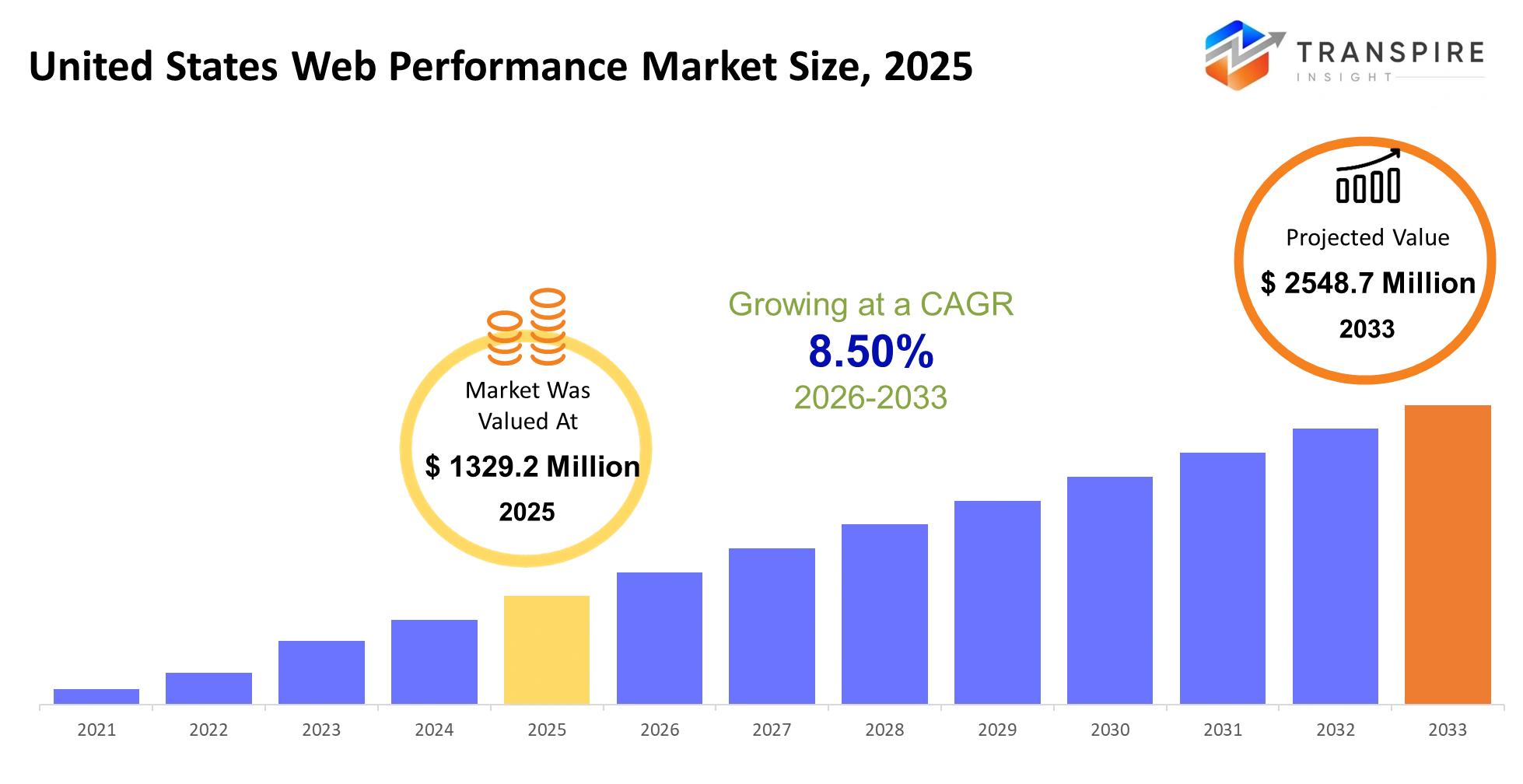
- United States Web Performance Market Size 2025: USD 1329.2 Million
- United States Web Performance Market Size 2033: USD 2548.7 Million
- United States Web Performance Market CAGR: 8.50%
- United States Web Performance Market Segments: By Component (Monitoring, Optimization, CDN, Load Balancing, Security, Analytics, Testing), By Deployment (Cloud, On-premise, Hybrid, SaaS, Edge, Multi-cloud, Private), By Application (E-commerce, Media, BFSI, Gaming, SaaS, Govt, Healthcare), By Metrics (Load Time, Latency, Uptime, Throughput, Error Rate, UX, Conversion), By End-User (Enterprises, SMEs, Devs, IT, Marketing, Agencies, Startups).
 To learn more about this report,
  Download Free Sample Report
United States Web Performance Market Summary:
The United States Web Performance Market size is estimated at USD 1329.2 Million in 2025 and is anticipated to reach USD 2548.7 Million by 2033, growing at a CAGR of 8.50% from 2026 to 2033. The United States web performance market shows continuous expansion because businesses need faster digital services which provide better user experiences for their customers. Companies are increasing their spending on sophisticated systems which help them improve website performance through better speed, dependability, and user interaction monitoring because e-commerce and cloud services continue to grow. The development of artificial intelligence monitoring systems together with edge computing technology creates new possibilities to improve performance. Companies regard web performance as an essential element for maintaining competitive advantage and customer loyalty which drives their digital success in the market because customer expectations keep increasing.
Key Market Trends & Insights:
- Businesses are now making website speed their top priority because users demand instant loading times and uninterrupted site navigation. Companies require continuous performance optimization because even minor delays can diminish their conversion rates.
- The rise of online shopping together with digital services has established a demand for websites that provide dependable and high-performing capabilities. Companies are increasing their expenditures on performance tools to create customer experiences that operate without interruptions.
- AI-based monitoring solutions enable organizations to identify and fix performance problems as they occur. The system achieves better operational results through automatic processes that minimize the need for manual work.
- Organizations use edge technologies to deliver content to their users which improves user experience. This technology decreases waiting times while it improves loading times for users across different countries.
- As mobile users now make up most of internet traffic companies developed websites that work best on smartphone devices. The industry now considers responsive design and rapid mobile loading times about mobile devices as vital requirements.
- Cloud infrastructure provides organizations with the capability to control their performance requirements throughout all organizational operations. Organizations now use cloud-based solutions to manage their website performance during peak visitor times.
- Organizations use web performance measurement together with DDoS protection to create secure online environments. The system delivers quick performance and secure protection to users without creating any usability problems.
United States Web Performance Market Segmentation
By Component
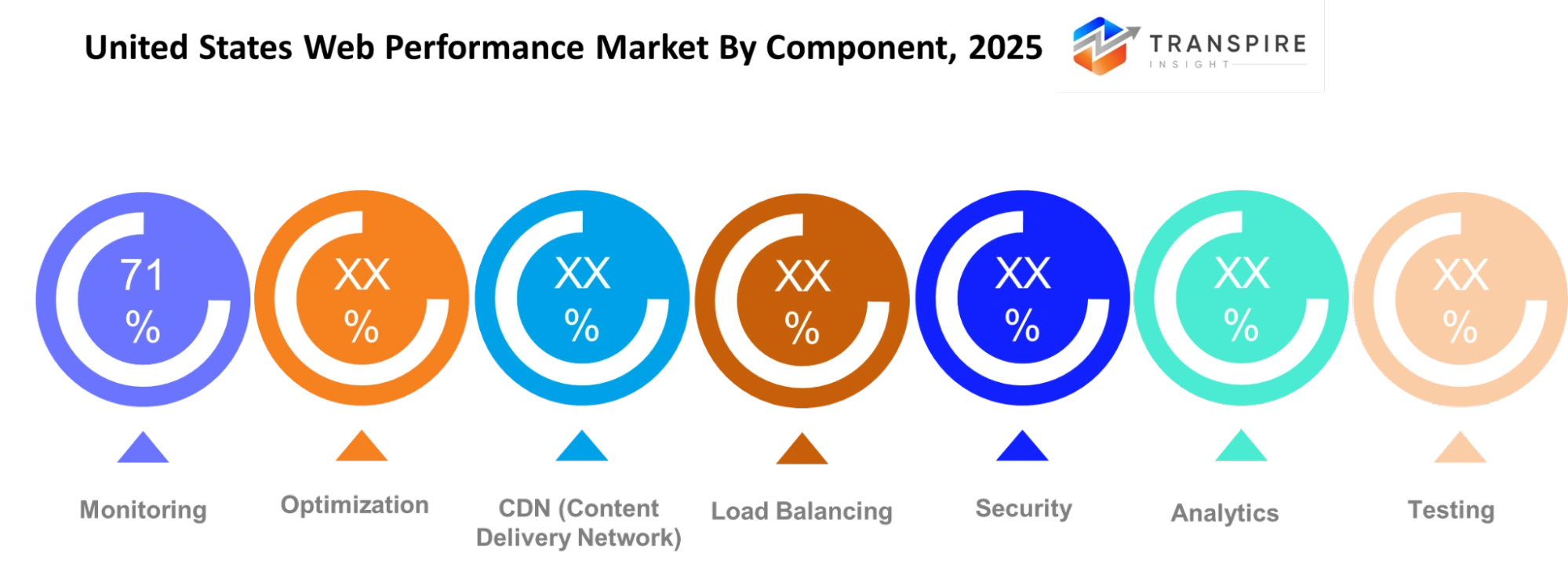
- Monitoring: The monitoring tools enable businesses to observe their website performance throughout the day which helps them detect periods of reduced speed and complete website failures and abnormal website activities. The system generates practical information which enables teams to handle urgent situations while maintaining website availability during digital platform activities.
- Optimization: Optimization solutions improve website performance through their three main functions which include file compression and code minimization and server response time optimization. The tools help achieve quicker website loading times which leads to improved user contentment.
- CDN (Content Delivery Network): CDNs (Content Delivery Network) enable websites to distribute their content through a network of worldwide servers which brings their data nearer to users. The system delivers better performance because it decreases delay times, which leads to quicker website loading times for companies that serve clients in different parts of the world.
- Load Balancing: Load balancing systems distribute incoming traffic across multiple servers to prevent overload. The system guarantees website operation during peak visitor times and unanticipated traffic surges.
- Security: The security components create protection systems which defend websites against online attacks and secure data from unauthorised access. The security system functions together with performance tools to deliver both fast performance and security protection, which builds user trust.
- Analytics: The analytics tools deliver complete user activity data and website operational data. Businesses use this data to identify bottlenecks which they need to solve while they optimise methods to deliver content and boost user engagement on their platforms.
- Testing: The testing solutions create virtual environments which enable them to measure how well websites function. The system identifies problems which must be resolved before the site goes live to provide users with a smooth experience during site operation.
To learn more about this report, Download Free Sample Report
By Deployment
- Cloud: The cloud-based deployment model enables businesses to increase system capacity while decreasing the need for costly hardware. The system enables instant system updates while effectively managing changes to user demand.
- On-premise: On-premise solutions enable organizations to control their data and all technological resources. Organizations that require strict security measures and mandatory compliance requirements prefer these systems even though they need more work to operate.
- Hybrid: Hybrid deployment enables organisations to use both cloud-based and on-premise systems, which lets them choose between flexible operations and complete system management. Organisations need this method to achieve their performance objectives while meeting their required operational and regulatory demands.
- SaaS: SaaS-based web performance tools can be installed and maintained with little initial cost because they require no physical equipment. The system delivers ongoing updates and always available services, which makes it a perfect solution for companies that experience rapid expansion.
- Edge: Edge deployment brings computing resources closer to the user, which leads to faster loading times and reduced delay times. The system operates best for systems that need to deliver immediate reaction times.
- Multi-cloud: Multi-cloud strategies enable businesses to operate multiple cloud systems because this approach improves their system reliability and operational efficiency. The system reduces the chances of service interruptions while it boosts the availability of operational services.
- Private: Private deployments provide organisations with complete access to their own dedicated technological resources. The system delivers exceptional customized solutions which provide organisations complete technological control and protect their data security.
By Application
- E-commerce: E-commerce websites need to load quickly because this factor determines whether customers complete their purchases and remain loyal to the site. The performance tools of the system create seamless browsing experiences which enable fast checkout and maintain system availability during peak shopping times.
- Media: Media platforms use web performance to deliver their top-quality streaming and content. Optimization guarantees smooth playback and shorter buffering times which results in better viewer satisfaction.
- BFSI: Financial institutions demand secure and trustworthy platforms to operate their banking services. The web performance tools enable organizations to maintain their operational speed which results in trustworthy user experiences during all their online transactions.
- Gaming: The requirements for online gaming include both low latency and high responsiveness. Performance solutions optimize gameplay experience by decreasing lag and providing stable connections.
- SaaS: SaaS applications need to deliver uninterrupted performance because this factor directly affects user productivity. The optimized platforms enable users to access data quickly while processing information without facing significant interruptions.
- Government: Government websites need to manage high traffic volumes which requires them to keep their content accessible to all users. The performance tools enable digital public services to operate with both dependable service and fast response times.
- Healthcare: Healthcare platforms need both speed and reliability because these factors support their essential operations. Web performance enables healthcare professionals to access patient data rapidly while they provide digital healthcare services.
By Metrics
- Load Time: The measurement of load time determines the speed at which a webpage shows all its elements to users. When websites load faster, users experience better interactions, which results in lower bounce rates for them.
- Latency: The term 'latency' describes the time cost which occurs when users make requests until servers send back their responses. Users experience better system performance through lower latency, which enables them to access data at higher speeds.
- Uptime: Uptime measures how often a website remains accessible to users. High uptime is essential because it helps maintain user trust and provides uninterrupted access to services.
- Throughput: Throughput measures the data capacity which a system can process during a specific time frame. Systems with higher throughput demonstrate enhanced performance when they experience high user demand.
- Error Rate: The error rate measures how often requests to the system fail or the system encounters problems. The system becomes more reliable because users can trust it when its errors decrease.
- UX (User Experience): UX determines the website usability through which users assess their ability to navigate the site and how well it reacts to their actions. Improved user experience design leads to increased user involvement and contentment.
- Conversion: The conversion metrics monitor the number of users who accomplish the specific actions which the website wants them to take. Websites that perform well create a direct relationship which leads to increased conversion rates.
By End-User
- Enterprises: Large enterprises spend significant money on web performance improvements because they need to handle their complicated business operations together with their high customer traffic. Brand reputation depends on companies achieving dependable performance standards.
- SMEs: Small and medium enterprises use affordable tools to improve their website performance. The increased speed of their systems enables them to battle against their larger competitors.
- Developers: Developers use performance assessment tools which help them run tests and observe their systems while enhancing application performance. The tools empower developers to create digital solutions which function effectively while handling substantial user demand.
- IT Teams: IT professionals control system infrastructure while they work to keep all computer systems running without interruptions. They use web performance solutions to help them keep their systems operational while they handle urgent technical problems.
- Marketing Teams: Marketing teams concentrate their efforts on getting users to interact with their content while they work to boost conversion rates. Faster websites lead to better campaign results which help businesses keep their existing customers.
- Agencies: Digital agencies use performance assessment tools to create exceptional websites which they deliver to their clients. High-performance results create better customer experiences which build stronger client relationships.
- Startups: Startups use web performance optimization to develop strong first impressions for their visitors. The platforms enable them to draw users who stay active through their service while they face competition from other businesses.
Country Insights
The United States web performance market stands as one of the most advanced and competitive markets throughout the world because its digital economy depends on its technology-orientated citizens. Businesses across all sectors from e-commerce to finance now focus on delivering web experiences which are both fast and dependable and secure after users started demanding better service. The market expansion continues to accelerate because major technology companies and their ongoing research in cloud computing and AI and edge technologies. Organisations need to invest in performance optimization because users now access digital services through their mobile devices, which have become more prevalent. Companies develop their web infrastructure because of regulatory requirements which mandate protection of customer data and security. The U.S. market demonstrates a strong combination of innovation and customer-centred business practices and technology implementation because web performance functions as an essential element for companies to achieve successful digital operations.
Recent Development News
In April 2026, SEO Industry Faces AI Search Challenges Affecting Web Traffic: The Verge reports how AI‑driven search changes are influencing SEO tactics, directly impacting how U.S. websites optimize content and performance strategies.
In April 2026, Forbes Highlights Key Website Performance Stats for 2025: A Forbes Advisor article outlines critical website statistics including performance metrics and mobile usage trends shaping how U.S. businesses build faster online experiences.
|
Report Metrics |
Details |
|
Market size value in 2025 |
USD 1329.2 Million |
|
Market size value in 2026 |
USD 1439.5 Million |
|
Revenue forecast in 2033 |
USD 2548.7 Million |
|
Growth rate |
CAGR of 8.50% from 2026 to 2033 |
|
Base year |
2025 |
|
Historical data |
2021 – 2024 |
|
Forecast period |
2026 – 2033 |
|
Report coverage |
Revenue forecast, competitive landscape, growth factors, and trends |
|
Country scope |
United States |
|
Key company profiled |
Akamai, Cloudflare, Fastly, Google, AWS, Azure, New Relic, Dynatrace, Datadog, Pingdom, Catchpoint, Radware, Imperva, SolarWinds, Riverbed. |
|
Customization scope |
Free report customization (country, regional & segment scope). Avail customized purchase options to meet your exact research needs. |
|
Report Segmentation |
By Component (Monitoring, Optimization, CDN, Load Balancing, Security, Analytics, Testing), By Deployment (Cloud, On-premise, Hybrid, SaaS, Edge, Multi-cloud, Private), By Application (E-commerce, Media, BFSI, Gaming, SaaS, Govt, Healthcare), By Metrics (Load Time, Latency, Uptime, Throughput, Error Rate, UX, Conversion), By End-User (Enterprises, SMEs, Devs, IT, Marketing, Agencies, Startups). |
Key United States Industrial Coating Company Insights
The United States web performance market exists through its combination of established technology companies and new startup businesses which work to provide faster digital services and dependable online experiences. Businesses today use artificial intelligence analytics with edge computing technology and cloud solutions to maintain their market competitiveness. The industry uses three main methods, which include strategic partnerships and product upgrades and customer-focused innovations. The companies in this market combine security measures with performance optimisation to establish customer confidence in their offerings. The business environment drives continuous innovation, which enables companies to meet changing consumer needs while sustaining their online presence.
Company List
- Akamai
- Cloudflare
- Fastly
- AWS
- Azure
- New Relic
- Dynatrace
- Datadog
- Pingdom
- Catchpoint
- Radware
- Imperva
- SolarWinds
- Riverbed
United States Web Performance Market Report Segmentation
By Component
- Monitoring
- Optimization
- CDN
- Load Balancing
- Security
- Analytics
- Testing
By Deployment
- Cloud
- On-premise
- Hybrid
- SaaS
- Edge
- Multi-cloud
- Private
By Application
- E-commerce
- Media
- BFSI
- Gaming
- SaaS
- Govt
- Healthcare
By Metrics
- Load Time
- Latency
- Uptime
- Throughput
- Error Rate
- UX
- Conversion
By End-User
- Enterprises
- SMEs
- Devs
- IT
- Marketing
- Agencies
- Startups
Frequently Asked Questions
Find quick answers to common questions.
The approximate United States Web Performance Market size for the market will be USD 2548.7 Million in 2033.
The key segments of the United States Web Performance Market are By Component (Monitoring, Optimization, CDN, Load Balancing, Security, Analytics, Testing), By Deployment (Cloud, On-premise, Hybrid, SaaS, Edge, Multi-cloud, Private), By Application (E-commerce, Media, BFSI, Gaming, SaaS, Govt, Healthcare), By Metrics (Load Time, Latency, Uptime, Throughput, Error Rate, UX, Conversion), By End-User (Enterprises, SMEs, Devs, IT, Marketing, Agencies, Startups).
Major players in the United States Web Performance Market are Akamai, Cloudflare, Fastly, Google, AWS, Azure, New Relic, Dynatrace, Datadog, Pingdom, Catchpoint, Radware, Imperva, SolarWinds, Riverbed.
The current market size of the United States Web Performance Market is USD 1329.2 Million in 2025.
The United States Web Performance Market CAGR is 8.50%.
- Akamai
- Cloudflare
- Fastly
- AWS
- Azure
- New Relic
- Dynatrace
- Datadog
- Pingdom
- Catchpoint
- Radware
- Imperva
- SolarWinds
- Riverbed
Recently Published Reports
-
Apr 2026
3D Optical Profiler Market
3D Optical Profiler Market Size, Share & Analysis Report By Type (Desktop 3D Optical Profiler, and Portable 3D Optical Profiler), By Technology (Confocal Technology, and White Light Interference), By End-Use Industry (Manufacturing, Research Institutions, Automotive, Aerospace and Defense, Medical Devices, and Other), and Geography (North America, Europe, Asia-Pacific, Middle East and Africa, South and Central America), 2021 - 2031
-
Apr 2026
Depth Sensor Market
Depth Sensor Market Size, Share & Analysis Report By Type (Infrared Depth Sensors, Time-of-Flight (ToF) Sensors, Stereo Vision Sensors, Structured Light Sensors, Ultrasonic Depth Sensors), By Application (Automotive, Robotics, Gaming, Consumer Electronics, Industrial Automation, Healthcare, Security & Surveillance, Others), By End Users (Automotive Manufacturers, Consumer Electronics Companies, Healthcare Providers, Industrial Companies, Security Agencies, Gaming Companies, Robotics Companies, Others), and Geography (North America, Europe, Asia-Pacific, Middle East and Africa, South and Central America), 2021 – 2031
-
Apr 2026
Digital Manufacturing Market
Digital Manufacturing Market Size, Share & Analysis Report By Component (Hardware, Software, and Services), By Technology (Robotics, 3D Printing, Internet of Things (IoT), and Others), By Application (Automotive and Transportation, Aerospace and Defense, Consumer Electronics, Industrial Machinery, and Others), By Process Type (Computer-Based Designing, Computer-Based Simulation, Computer 3D Visualization, Analytics, and Others), and Geography (North America, Europe, Asia-Pacific, Middle East and Africa, South and Central America), 2021 – 2031
-
Apr 2026
Digital Visa Services Market
Digital Visa Services Market Size, Share & Analysis Report By Type (Individual Travelers, Group Travelers), By Application (Tourism, Business Travel, Others), and Geography (North America, Europe, Asia-Pacific, Middle East and Africa, South and Central America), 2021 – 2031