

United States Tobacco Products Market Size & Forecast:
- United States Tobacco Products Market Size 2025: USD 74.8 Billion
- United States Tobacco Products Market Size 2033: USD 99.7 Billion
- United States Tobacco Products Market CAGR: 3.68%
- United States Tobacco Products Market Segments:By Product (Cigarettes, Cigars, Smokeless Tobacco, E-cigarettes, Heated Tobacco, Snus, Hookah), By Distribution (Retail, Online, Convenience Stores, Specialty Shops, Duty-free, Wholesale, Direct), By Application (Recreational, Premium, Low-nicotine, Herbal, Flavored, Disposable, Reusable), By End-User (Adults, Youth, Occasional Users, Regular Users, Premium Users, Casual Users, Online Buyers), By Form (Combustible, Non-combustible, Liquid, Solid, Hybrid, Disposable, Refillable).

To learn more about this report,  Download Free Sample Report
United States Tobacco Products Market Summary:
The United States tobacco products market keeps changing because of new customer preferences and tightening regulations and increasing health awareness among people. The sales of traditional cigarettes show a downward trend, but young adults now prefer e-cigarettes and smokeless tobacco products as their new smoking options. The demand for products comes from three main factors which include product innovation, flavored product options, and marketing strategies while regulatory policies control the market. The market demonstrates stable revenue performance because of brand loyalty and product range expansion which creates a complicated yet durable business environment.
Key Market Trends & Insights:
- Consumers are increasingly choosing e-cigarettes and heated tobacco products as their preferred smoking alternatives to traditional cigarettes. The growing public understanding of health dangers associated smoking together with the belief that these products have lower health risks drives this trend.
- The market continues to develop according to government regulations which create the main framework for its operations. The three main policy areas which establish product approval procedures, implement advertising restrictions, and create flavor bans, simultaneously affect how companies both develop and sell their products.
- E-cigarettes have gained significant traction, particularly among younger demographics. Their growing popularity results from their attractive designs, diverse flavor options, and the impact of social trends which people face in their daily lives.
- Public health campaigns combined with higher tax rates have successfully decreased cigarette smoking rates throughout the population. Despite this fact, the segment continues to bring in significant revenue because customers maintain their established purchasing patterns.
- To maintain their market position, companies need to develop new products together with original flavors and advanced technologies. The company offers three main product categories, which include nicotine pouches and vaping devices and premium tobacco blends that serve specific customer groups.
- The market for premium cigars and organic tobacco and specialty products has developed to serve a dedicated group of consumers. The customers who buy from this market segment place their main emphasis on product experience and product quality and brand identity while they assess product value.
- The general public now possesses more knowledge about how tobacco products affect human health than at any previous point in history. Users are responding to this information by quitting smoking or selecting tobacco alternatives which they believe to be safer than traditional products.
- Tobacco products now undergo modernisation through their marketing and selling processes, which now prioritise online platforms and regulated store environments. Businesses need to transform their operations to meet the new purchasing patterns which customers have adopted and the upcoming regulations which require them to follow.
United States Tobacco Products Market Segmentation
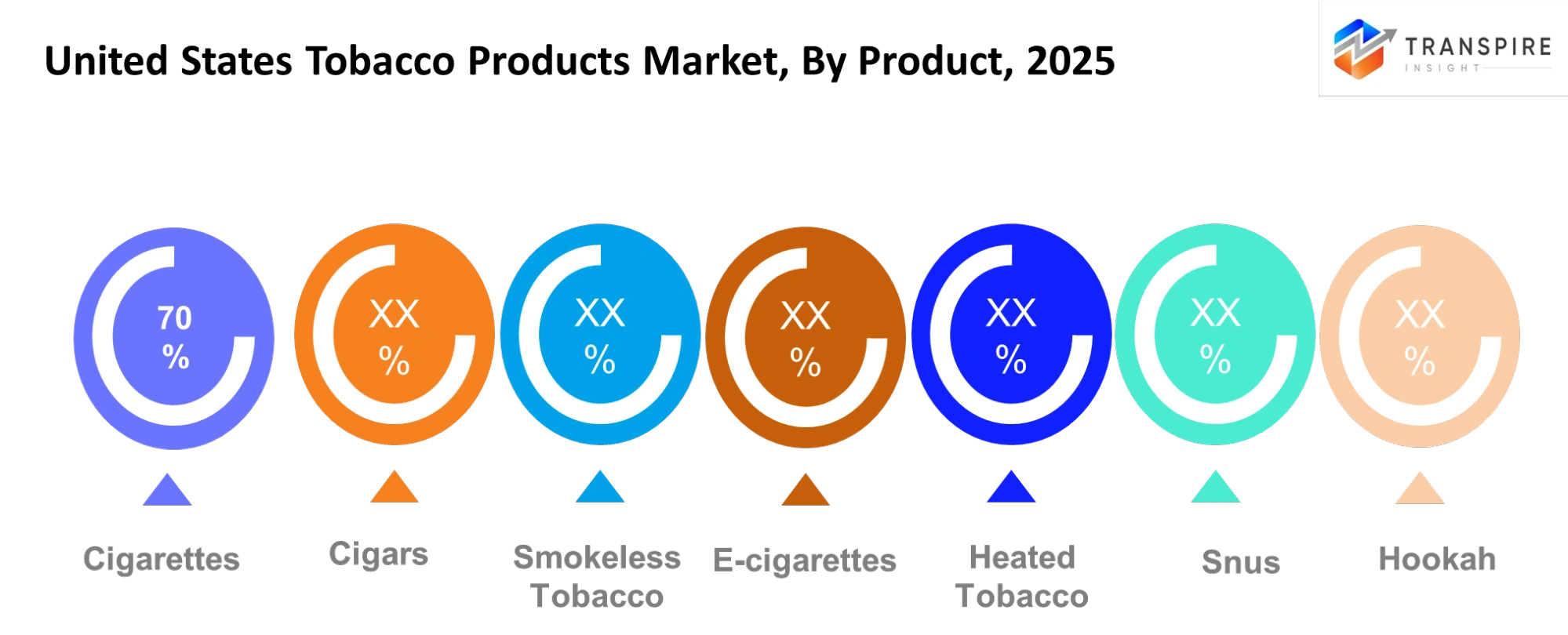
By Product
- Cigarettes: Cigarettes serve as the oldest and most recognisable tobacco product which exists in the United States. Health awareness and regulatory measures have reduced cigarette usage, yet the product continues to generate substantial market profits which depend on dedicated customers and strong product identification.
- Cigars: Cigars function as premium products which people smoke on rare occasions rather than during their daily routines. The product attracts consumers who want premium products because they perceive it to be more sophisticated than regular cigarettes.
- Smokeless Tobacco: Smokeless tobacco products which include chewing tobacco and snuff have started to receive recognition as non-smoking alternatives. Users prefer these products because they can use them without producing smoke, but health dangers remain a concern for both users and regulatory bodies.
- E-cigarettes: E-cigarettes have achieved rapid growth as a popular product through their special appeal to younger adult users. The product has become a major market category through its contemporary design multiple flavors and its belief of being safer than standard tobacco products.
- Heated Tobacco: Heated tobacco products use a method that heats tobacco without combustion to create an experience which differs from traditional cigarette smoking. The products function as reduced-risk alternatives which consumers are beginning to accept as viable smoking cessation methods.
- Snus: Snus serves as a moist tobacco product which users place below their upper lip to consume without needing to spit. The product attracts users who want to use it in public spaces because it enables them to smoke without producing any visible signs.
- Hookah: People frequently use hookah products during social events which take place in lounges and other social environments. The flavored tobacco and shared experience of hookah make it attractive to younger adults who only use it on special occasions.
To learn more about this report, Download Free Sample Report
By Distribution
- Retail: Retail stores function as major distribution points which enable customers to access various tobacco products. Local stores serve as essential product distribution points because consumers require quick access to items.
- Online: The online market experiences ongoing growth because people prefer shopping online and making private purchases. Consumers gain access to greater product variety which they can receive at home but the industry must follow strict rules and verify customer age before making sales.
- Convenience Stores: Convenience stores establish themselves as vital business centers because they operate in numerous locations while providing instant service. The stores acquire significant market power because most customers make unplanned purchases of tobacco products throughout their everyday life.
- Specialty Shops: Specialty shops provide premium cigars and hookah products alongside special blends which they sell to specific market segments. The stores deliver personalized shopping experiences which attract customers who want to find high-quality products with professional guidance.
- Duty-free: Duty-free shops exist to serve travelers who want to buy tobacco products without paying taxes. This market segment attracts travelers who want to buy international products at competitive prices and exclusive items during their trips.
- Wholesale: Wholesale distribution provides retailers and businesses with the ability to purchase items in large quantities. The system maintains a steady flow of products while providing financial savings which enable businesses to sell their items at competitive rates throughout the industry.
- Direct: Direct distribution enables manufacturers to sell their goods directly to both consumers and business clients. This method enables brands to control their product pricing and branding and their interaction with customers who buy from them.
By Application
- Recreational: The market is primarily controlled by recreational use which leads customers to use tobacco products for their social and relaxation needs. The segment is affected by lifestyle factors which create a connection between its two main uses, regular and social drinking.
- Premium: The tobacco industry offers premium applications which deliver high-quality luxury tobacco products. The consumers in this market segment choose products based on their personal experiences and the quality of craftsmanship and the status associated with brand reputation.
- Low-nicotine: The use of low-nicotine products is expanding because users want to decrease their nicotine dependence. The options attract users who want to decrease their nicotine consumption without stopping all nicotine use.
- Herbal: Herbal tobacco alternatives function as natural tobacco products which lack the presence of nicotine. Health-conscious consumers select this product because it provides them with a different experience yet its future success depends on public opinion shifts and upcoming legal changes.
- Flavored: Young users continue to choose flavoured tobacco products, which maintain their market presence. The unique tastes improve the user experience, but ongoing regulatory inspections of flavours restrict the accessibility of products.
- Disposable: Vaping users find disposable tobacco products to be easy to operate and practical. The products attract new users who want an uncomplicated experience because they need no upkeep work.
- Reusable: The reusable products attract advanced users who want to personalise their experience while saving money. The products enable customers to refill or recharge their items, which leads to a sustainable and customised product experience.
By End-User
- Adults: The personal habits and life preferences of adults, together with their individual decisions, drive their tobacco consumption, which makes them the biggest consumer group. The group consists of two types of users, who include people who have used tobacco products for a long time and people who want to discover different tobacco products.
- Youth: The e-cigarette usage among young people has created major public health concerns. The attractive flavours and modern designs of this segment make it highly appealing yet subject to strict regulatory oversight.
- Occasional Users: People who use tobacco products on rare occasions do so during social events and other uncommon times. They tend to consume tobacco products at varying rates, which depend on either special occasions or their companions.
- Regular Users: Consumers who buy products regularly create a dependable customer group that keeps buying from the same store. The brand loyalty of customers, along with their product preferences, constitutes a significant portion of market earnings.
- Premium Users: Users who belong to the premium segment of tobacco products buy expensive products because they prioritise product quality instead of product pricing. The users of this product determine their spending habits based on the brands they buy because they believe that their purchasing decisions reflect their social status and personal values.
- Casual Users: People who use tobacco products in moderation without developing strong tobacco dependencies represent casual users. People who use tobacco for both recreational and occasional purposes display that specific usage pattern.
- Online Buyers: Online buyers choose to shop through digital platforms because it gives them better shopping experience and allows them to keep their information private. The e-commerce industry expansion together with online shopping preference changes has led to steady growth in this market segment.
By Form
- Combustible: The category of combustible products includes all items which need tobacco to be burnt for consumption. Cigarettes and cigars represent traditional smoking methods which have experienced decreased use because of growing health awareness and better government regulations.
- Non-combustible: The non-combustible product category contains two products which are smokeless tobacco and heated tobacco devices. The products have gained popularity because they deliver nicotine to users while preventing tobacco-related smoke production.
- Liquid: E-cigarettes and vaping devices use liquid forms as their main operating material. The system enables users to create their own vaping experience through various flavour options and different nicotine strength selections.
- Solid: Solid tobacco products encompass traditional tobacco products which people use through chewing and snus. The products provide consumers with straightforward solutions which they can easily use and store.
- Hybrid: The hybrid products combine characteristics from both the combustible and non-combustible product categories. The market introduces this new product, which allows users to discover fresh ways of using the product.
- Disposable: The design of disposable products enables users to throw them away after one use, which makes the products easy to carry. The vaping industry embraces these products because they enable users to operate devices without effort.
- Refillable: Users can extend device life through refillable products when they insert fresh tobacco or liquid into their devices. The system allows users to save money while creating their custom experience through the product, which benefits both advanced users and permanent customers.
Country Insights
The tobacco products market in the United States displays three main elements, which include traditional practices, government regulations, and changing consumer preferences. The United States public health programs together with higher cigarette taxes have decreased smoking rates, yet the demand for e-cigarettes and smokeless tobacco products continues to grow. Urban residents adopt newer low-risk tobacco alternatives more quickly than rural residents who still prefer traditional tobacco products. The process of product development together with marketing practices and distribution methods depends on strict industry regulations. Consumers are making two health-related decisions which involve quitting smoking or using products they believe to be less harmful. The market maintains its strength because dedicated customers, multiple product options, and continuous development efforts, which meet the changing needs of various customer groups, stay active in the market.
Recent Development News
In April 2026, Vape Brands Shift to “Made in America” Strategy: Several vape companies are promoting domestic manufacturing to navigate stricter regulations and tariffs. However, investigations reveal many still rely on foreign supply chains, highlighting regulatory loopholes.
In April 2026, Walmart Enforces Strict 21+ Tobacco Sales Policy: Major retailer Walmart reaffirmed its nationwide 21+ age restriction on tobacco purchases. This move reflects growing corporate responsibility toward limiting youth access to nicotine products.
|
Report Metrics |
Details |
|
Market size value in 2025 |
USD 74.8 Billion |
|
Market size value in 2026 |
USD 77.4 Billion |
|
Revenue forecast in 2033 |
USD 99.7 Billion |
|
Growth rate |
CAGR of 3.68% from 2026 to 2033 |
|
Base year |
2025 |
|
Historical data |
2021 – 2024 |
|
Forecast period |
2026 – 2033 |
|
Report coverage |
Revenue forecast, competitive landscape, growth factors, and trends |
|
Country scope |
United States |
|
Key company profiled |
Philip Morris, British American Tobacco, Imperial Brands, Japan Tobacco, Altria, Reynolds American, ITC, Swedish Match, NJOY, Juul Labs, Turning Point Brands, Vector Group, Universal Corp, Godfrey Phillips, KT&G |
|
Customization scope |
Free report customization (country, regional & segment scope). Avail customized purchase options to meet your exact research needs. |
|
Report Segmentation |
By Product (Cigarettes, Cigars, Smokeless Tobacco, E-cigarettes, Heated Tobacco, Snus, Hookah), By Distribution (Retail, Online, Convenience Stores, Specialty Shops, Duty-free, Wholesale, Direct), By Application (Recreational, Premium, Low-nicotine, Herbal, Flavored, Disposable, Reusable), By End-User (Adults, Youth, Occasional Users, Regular Users, Premium Users, Casual Users, Online Buyers), By Form (Combustible, Non-combustible, Liquid, Solid, Hybrid, Disposable, Refillable). |
Key United States Industrial Coating Company Insights
The United States tobacco products market is led by a mix of established giants and emerging innovators who adapt to changing consumer demands. The major companies of the industry pursue market expansion by developing e-cigarettes and heated tobacco products and nicotine alternatives, which they consider non-cigarette products. The companies face two major challenges, which include following strict government regulations and dealing with growing public observation of their operations. The company's ability to develop new products through regulatory compliance and fulfillment of emerging customer requirements will determine its future market performance and position in the industry.
Company List
- Philip Morris
- British American Tobacco
- Imperial Brands
- Japan Tobacco
- Altria
- Reynolds American
- ITC
- Swedish Match
- NJOY
- Juul Labs
- Turning Point Brands
- Vector Group
- Universal Corp
- Godfrey Phillips
- KT&G
United States Tobacco Products Market Report Segmentation
By Product
- Cigarettes
- Cigars
- Smokeless Tobacco
- E-cigarettes
- Heated Tobacco
- Snus
- Hookah
By Distribution
- Retail
- Online
- Convenience Stores
- Specialty Shops
- Duty-free
- Wholesale
- Direct
By Application
- Recreational
- Premium
- Low-nicotine
- Herbal
- Flavored
- Disposable
- Reusable
By End-User
- Adults
- Youth
- Occasional Users
- Regular Users
- Premium Users
- Casual Users
- Online Buyers
By Form
- Combustible
- Non-combustible
- Liquid
- Solid
- Hybrid
- Disposable
- Refillable
Frequently Asked Questions
Find quick answers to common questions.
The approximate United States Tobacco Products Market size for the market will be USD 99.7 Billion in 2033.
The key segments of the United States Tobacco Products Market are By Product (Cigarettes, Cigars, Smokeless Tobacco, E-cigarettes, Heated Tobacco, Snus, Hookah), By Distribution (Retail, Online, Convenience Stores, Specialty Shops, Duty-free, Wholesale, Direct), By Application (Recreational, Premium, Low-nicotine, Herbal, Flavored, Disposable, Reusable), By End-User (Adults, Youth, Occasional Users, Regular Users, Premium Users, Casual Users, Online Buyers), By Form (Combustible, Non-combustible, Liquid, Solid, Hybrid, Disposable, Refillable).
Major players in the United States Tobacco Products Market are Philip Morris, British American Tobacco, Imperial Brands, Japan Tobacco, Altria, Reynolds American, ITC, Swedish Match, NJOY, Juul Labs, Turning Point Brands, Vector Group, Universal Corp, Godfrey Phillips, KT&G.
The current market size of the United States Tobacco Products Market is USD 74.8 Billion in 2025.
The United States Tobacco Products Market CAGR is 3.68%.
- Philip Morris
- British American Tobacco
- Imperial Brands
- Japan Tobacco
- Altria
- Reynolds American
- ITC
- Swedish Match
- NJOY
- Juul Labs
- Turning Point Brands
- Vector Group
- Universal Corp
- Godfrey Phillips
- KT&G
Recently Published Reports
-
Apr 2026
Baby Infant Formula Market
Baby Infant Formula Market Size, Share & Analysis Report By ype (Infant Milk, Follow On Milk, Specialty Baby Milk, Growing-Up Milk), By Ingredient (Carbohydrate, Fat, Protein, Minerals, Vitamins, and Others), By Product Form (Powder, Liquid, and Ready-to-feed), By Distribution Channels (Supermarket/Hypermarket, Specialty Store, Pharmacies, Online Retail, and Others), and Geography (North America, Europe, Asia-Pacific, Middle East and Africa, South and Central America), 2021 - 2031
-
Apr 2026
Edible Insects for Animal Feed Market
Edible Insects for Animal Feed Market Size, Share & Analysis Report By Type (Insect Powder, Insect Meal, Insect Bar, Insect Paste, Insect Oil, and Others), By Insect Type (Beetles, Cricket, Caterpillar, Hymenoptera, Orthoptera, Tree Bugs, and Others), By Application (Livestock, Pet Food, and Aquaculture), By Livestock Type (Poultry, Swine, and Others), and Geography (North America, Europe, Asia-Pacific, Middle East and Africa, South and Central America), 2021 - 2031
-
Apr 2026
Food Industry Disinfection and Bacterial Control Market
Food Industry Disinfection and Bacterial Control Market Size, Share & Analysis Report By Type (Chemical Disinfectants, Physical Disinfectants, and Biocides and Antimicrobials), By Application (Food Processing Equipment Surface Disinfection, Food Preparation Areas Surface Disinfection, Storage Areas Surface Disinfection, Anti-microbial Coatings Food Preservation, and Preservative Solutions Food Preservation), By End User (Meat and Poultry Processing, Dairy Processing, Seafood Processing, Bakery and Confectionery, Restaurants and Commercial Kitchens, and Food Service Providers), By Sales Channel (Online, Offline), and Geography (North America, Europe, Asia-Pacific, Middle East and Africa, South and Central America), 2021 - 2031
-
May 2026
Freeze Dried Food Market
Freeze Dried Food Market Size, Share & Analysis Report By Product Type (Fruits, Vegetables, Freeze-Dried Dairy Products, Freeze-Dried Meat and Seafood, Freeze-Dried Pet Food, and Prepared Meal), By Nature (Organic, and Conventional), By Form (Powdered, Granules, and Diced), By End Use (Breakfast Cereals, Dairy Products, Bakery & Confectionery, Nutritional Bars & Supplements, Powdered Beverages, Snacks, and Retail (Household)), and Geography (North America, Europe, Asia-Pacific, Middle East and Africa, South and Central America), 2021 - 2031