

United States Pour Point Depressants Market Size & Forecast:
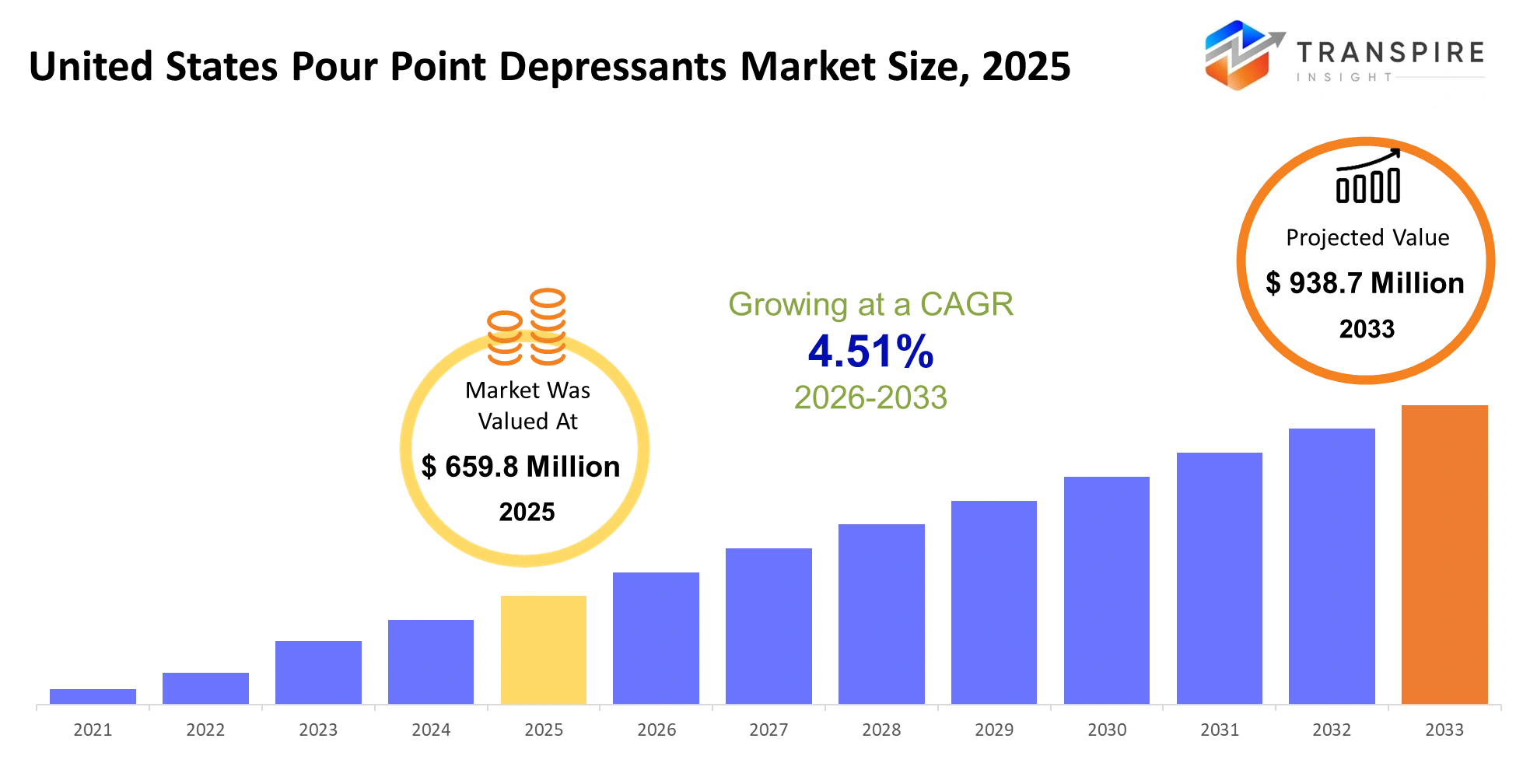
- United States Pour Point Depressants Market Size 2025: USD 659.8 Million
- United States Pour Point Depressants Market Size 2033: USD 938.7 Million
- United States Pour Point Depressants Market CAGR: 4.51%
- United States Pour Point Depressants Market Segments:By Type (PAMA, Ethylene Co-polymers, Styrene Esters, Others), By Application (Lubricants, Diesel, Crude Oil, Industrial Oils), By End-User (Oil & Gas, Automotive, Marine, Industrial), By Form (Liquid, Powder, Additives, Blends), By Distribution (Direct, Distributors, OEM, Export).
To learn more about this report,  Download Free Sample Report
United States Pour Point Depressants Market Summary:
The United States Pour Point Depressants Market size is estimated at USD 659.8 Million in 2025 and is anticipated to reach USD 938.7 Million by 2033, growing at a CAGR of 4.51% from 2026 to 2033. The United States pour point depressants market is experiencing steady growth because the automotive, industrial and energy sectors require more effective lubricants and fuels. The additives provide essential benefits because they enhance low-temperature performance and enable smooth operation during extreme weather conditions. The market expansion finds additional support through rising interest in maintaining equipment performance and operational efficiency. The market will become more competitive and innovative in future years because of two factors: new additive technology developments and increasing use of high-performance oils.
Key Market Trends & Insights:
- The rise in the production of vehicles and the ascent in demand for high-performance oils are the driving factors for seemingly pour point depressants. The additives maintain fluidity during cold weather because they enable better engine performance and longer engine life.
- People in both consumer and industrial markets are shifting to synthetic oils because these oils offer better performance. The demand for new additives that improve low-temperature performance properties has increased because of this transition.
- Organisations now make energy-efficient solutions their top priority because these solutions decrease their operational expenses. The additives enhance lubricant performance, which results in better fuel efficiency and lower equipment damage.
- Researchers create new innovations that produce better environmentally safe pour point depressants through their ongoing work. Manufacturers use this method to fulfil their growing demand for better performance standards.
- The U.S. cold regions create a steady requirement for these additives. The additives play a critical role in maintaining fuel and lubricant flow during low-temperature conditions.
- The oil and gas sector depends on pour-point depressants to enable crude oil movement through pipelines. The system needs this process because it protects against pipe blockages that happen during the winter season.
- Environmental regulations are promoting the creation of environmentally safe additives. The companies work to develop products that achieve performance objectives while decreasing their negative effects on nature.
United States Pour Point Depressants Market Segmentation
By Type
- PAMA (Poly Alkyl Methacrylate): PAMA-based pour point depressants establish themselves as the preferred solution for base oils because of their high compatibility with different base oils. Their low-temperature flow enhancement capabilities make them the preferred option for automotive and industrial lubricant applications. Their dependable performance and consistent output create ongoing demand for their use in different fields.
- Ethylene Co-polymers: Ethylene co-polymers provide an economical solution which delivers effective performance for diesel and fuel applications. The system prevents wax crystals from forming at low temperatures, which enables fuel to flow more smoothly. The system provides a practical solution for industrial operations because it can be used in various different manufacturing processes.
- Styrene Esters: Styrene esters provide balanced performance which meets the requirements of both lubricants and fuel oils during moderately low-temperature conditions. The system maintains its stability while providing fluidity improvements which do not diminish oil quality. The growing use of these products demonstrates the need for flexible yet powerful additive products.
- Others: This category includes newly developed chemical compounds which scientists created for targeted research purposes. The development of these alternatives comes about because developers want to establish their specific environmental and performance standards. The segment develops through innovation which creates special solutions to meet the changing requirements of businesses.
By Application
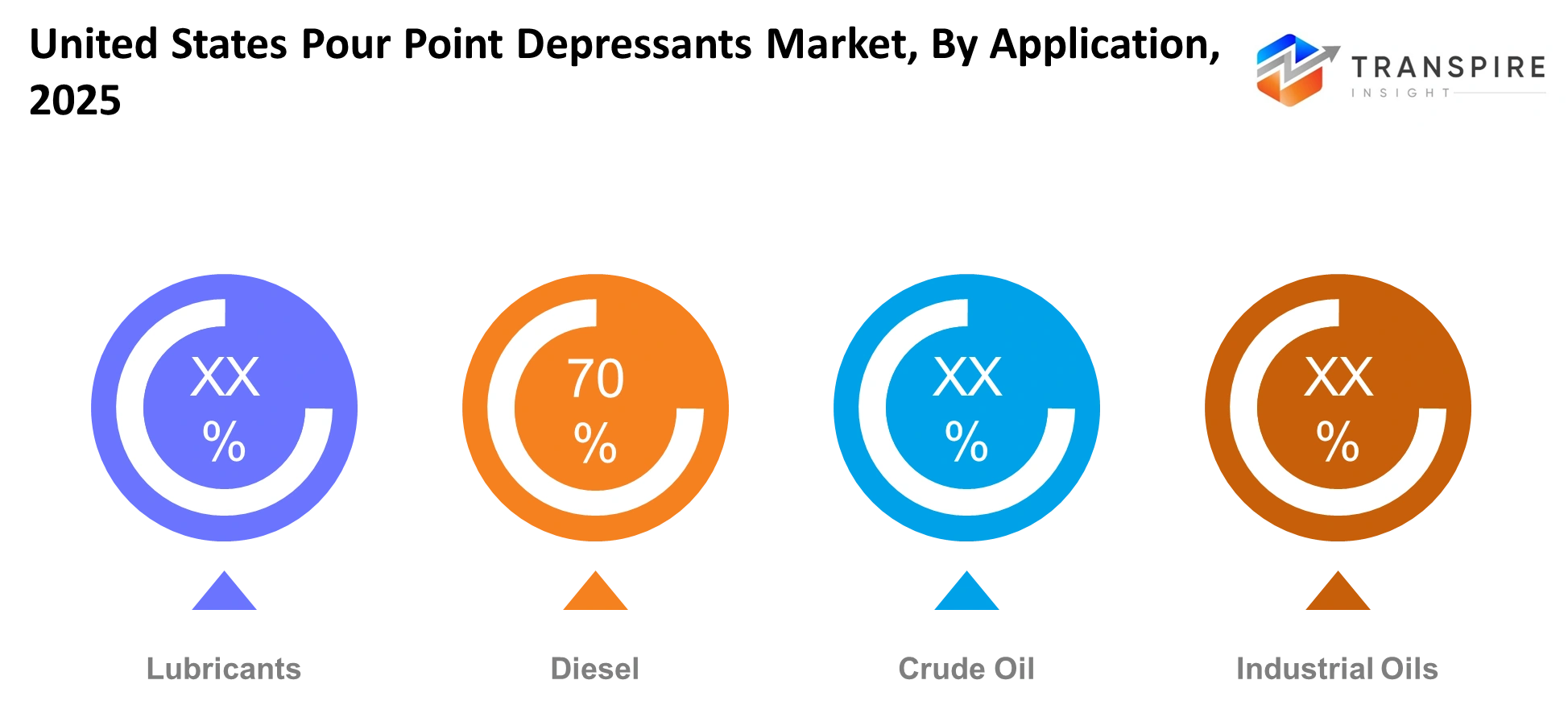
- Lubricants: Pour-point depressants serve as a primary solution for lubricants which require the maintenance of their flow when exposed to freezing temperatures. The products provide protection against engine and equipment damage. The increasing adoption of advanced lubricants drives greater demand for this market segment.
- Diesel: The additives in diesel fuels serve an essential function because they prevent fuel thickening during winter months. The additives enhance cold flow characteristics, which enable engines to start and function reliably. The segment experiences continuous demand because of increasing transportation requirements.
- Crude Oil: Pour-point depressants serve as essential materials for transporting crude oil through pipelines that operate in cold-weather conditions. The substances prevent wax accumulation, which leads to pipeline blockages, and maintain constant pipeline operation. The system maintains operational efficiency throughout the upstream and midstream portions of the business.
- Industrial Oils: The additives enable industrial oils to achieve better fluid movement and operational efficiency at different temperature levels. The solutions enable machinery to work without problems while minimising their maintenance requirements. The segment experiences growth because manufacturing and heavy industrial activities continue to expand.
To learn more about this report, Download Free Sample Report
By End-User
- Oil & Gas: The oil and gas industry depends on pour point depressants as essential materials for maintaining pipeline flow operations. The additives serve as vital materials for extraction and transportation operations since they prevent operational problems which occur during low-temperature conditions.
- Automotive: The automotive industry requires pour point depressants as essential components for engine oils and fuels which drivers use in colder weather conditions. The system guarantees vehicle performance with lasting capabilities which meet the rising demand for vehicles that offer high efficiency and long-lasting performance.
- Marine: Marine operations require stable fuel and lubricant performance under different weather conditions which develop throughout the day. The application of pour point depressants enables operators to maintain operational stability during colder water conditions, which leads to secure and efficient ship operations.
- Industrial: Industrial users use these additives to improve their machinery performance while reducing the time their operations stop. The materials find applications in multiple industries, like construction and manufacturing, which require ongoing equipment operation to achieve productivity goals and control expenses.
By Form
- Liquid: The combination of liquid pour point depressants with other materials happens easily because they provide handling and application benefits to users. The compounds deliver consistent distribution throughout oils and fuels, which makes them essential for various industrial applications.
- Powder: Storage stability and extended shelf life advantages make powder forms less common in usage. The specific formulations which they enter require exact measurement and efficient movement of materials.
- Additives: This segment includes standalone additive solutions designed for direct incorporation into oils and fuels. The system provides performance requirements which manufacturers need to develop their product formulas.
- Blends: Blended products combine multiple additives to deliver enhanced performance. The solutions develop custom operational requirements which have become popular to users who want to achieve optimal performance.
By Distribution
- Direct: Large clients benefit from direct sales channels because manufacturers establish strong connections with them. The method provides bulk buyers with improved product customisation and technical assistance and better pricing options.
- Distributors: Distributors help businesses access new markets because they deliver products to small companies and local markets. They serve as a link between manufacturers and end-users which guarantees that products stay in stock.
- OEM (Original Equipment Manufacturers): OEM partnerships serve as essential elements for manufacturing lubricants and fuels which require pour-point depressants. The channel establishes product quality and performance standards which equipment needs to meet.
- Export: U.S. manufacturers can enter international markets through export channels. The rising global demand for high-quality additives drives companies to establish operations in international markets.
Country Insights
The United States pour point depressant market shows maturity as it develops through industrial and energy sector developments. The country experiences continuous demand for additives which maintain fuel and lubricant performance because its various climates include colder regions. The automotive and oil and gas industries use these solutions to achieve operational efficiency and equipment reliability.
The U.S. market benefits from its advanced research capabilities and commitment to innovation because these lead to the development of high-performance sustainable products. The existing regulatory standards direct product development efforts toward the creation of environmentally friendly additives that demonstrate improved efficiency. The market sustains its power through ongoing infrastructure development and energy sector investments which generate domestic demand and international trade possibilities.
Recent Development News
In March 2026, Shift Toward Eco-Friendly Additives Gains Momentum: US manufacturers are focusing on developing low-toxicity and sustainable pour point depressants in response to stricter environmental regulations.
In March 2026, Pipeline Infrastructure Growth Strengthens Additive Demand: The expansion of U.S. pipeline networks is driving higher consumption of pour point depressants to prevent wax buildup and ensure uninterrupted crude flow.
|
Report Metrics |
Details |
|
Market size value in 2025 |
USD 659.8 Million |
|
Market size value in 2026 |
USD 689.5 Million |
|
Revenue forecast in 2033 |
USD 938.7 Million |
|
Growth rate |
CAGR of 4.51% from 2026 to 2033 |
|
Base year |
2025 |
|
Historical data |
2021 – 2024 |
|
Forecast period |
2026 – 2033 |
|
Report coverage |
Revenue forecast, competitive landscape, growth factors, and trends |
|
Country scope |
United States |
|
Key company profiled |
BASF, Evonik, Clariant, Croda, Lubrizol, Infineum, Afton Chemical, Chevron Oronite, Dorf Ketal, Lanxess, Arkema, ExxonMobil, TotalEnergies, SK Innovation, GS Caltex. |
|
Customization scope |
Free report customization (country, regional & segment scope). Avail customized purchase options to meet your exact research needs. |
|
Report Segmentation |
By Type (PAMA, Ethylene Co-polymers, Styrene Esters, Others), By Application (Lubricants, Diesel, Crude Oil, Industrial Oils), By End-User (Oil & Gas, Automotive, Marine, Industrial), By Form (Liquid, Powder, Additives, Blends), By Distribution (Direct, Distributors, OEM, Export). |
Key United States Pour Point Depressants Company Insights
The United States pour point depressant market is shaped by a mix of global chemical giants and specialised additive manufacturers, all competing through innovation and performance. Companies are developing new formulations which will enhance their performance at low temperatures while they comply with present and future environmental regulations. Their market presence grows because they establish strategic partnerships with lubricant manufacturers and oil companies. Many companies are investing in research and development to develop specialised solutions which will meet the requirements of different industries. The competitive environment drives companies to enhance their operations, which results in superior products and sustained growth possibilities for important business sectors.
Company List
- BASF
- Evonik
- Clariant
- Croda
- Lubrizol
- Infineum
- Afton Chemical
- Chevron Oronite
- Dorf Ketal
- Lanxess
- Arkema
- ExxonMobil
- TotalEnergies
- SK Innovation
- GS Caltex
United States Pour Point Depressants Market Report Segmentation
By Type
- PAMA
- Ethylene Co-polymers
- Styrene Esters
- Others
By Application
- Lubricants
- Diesel
- Crude Oil
- Industrial Oils
By End-User
- Oil & Gas
- Automotive
- Marine
- Industrial
By Form
- Liquid
- Powder
- Additives
- Blends
By Distribution
- Direct
- Distributors
- OEM
- Export
Frequently Asked Questions
Find quick answers to common questions.
The approximate United States Pour Point Depressants Market size for the market will be USD 938.7 Million in 2033.
The key segments of the United States Pour Point Depressants Market are By Type (PAMA, Ethylene Co-polymers, Styrene Esters, Others), By Application (Lubricants, Diesel, Crude Oil, Industrial Oils), By End-User (Oil & Gas, Automotive, Marine, Industrial), By Form (Liquid, Powder, Additives, Blends), By Distribution (Direct, Distributors, OEM, Export).
Major players in the United States Pour Point Depressants Market are BASF, Evonik, Clariant, Croda, Lubrizol, Infineum, Afton Chemical, Chevron Oronite, Dorf Ketal, Lanxess, Arkema, ExxonMobil, TotalEnergies, SK Innovation, GS Caltex.
The current market size of the United States Pour Point Depressants Market is USD 659.8 Million in 2025.
The United States Pour Point Depressants Market CAGR is 4.51%.
- BASF
- Evonik
- Clariant
- Croda
- Lubrizol
- Infineum
- Afton Chemical
- Chevron Oronite
- Dorf Ketal
- Lanxess
- Arkema
- ExxonMobil
- TotalEnergies
- SK Innovation
- GS Caltex
Recently Published Reports
-
May 2026
Healthcare Polymer Packaging Market
Healthcare Polymer Packaging Market Size, Share & Analysis Report By Packaging Type (Syringes, IV Bottles and Pouches, Clamshells, Blisters, Bottles & Jars, Containers, Tubes, IV Parental Packaging, Others), By Type (Regulated, Non-regulated), By Polymer Type (LDPE (Low-Density Polyethylene), HDPE (High-Density Polyethylene), Homo-polymer (Homo), Random Copolymer (Random), Block Copolymer (Block), PET, Polystyrene, Polyvinyl Chloride, Polyamide/EVOH, Others), and Geography (North America, Europe, Asia-Pacific, Middle East and Africa, South and Central America), 2021 - 2031
-
Apr 2026
Hydrophilic Tape (Waterstop) Market
Hydrophilic Tape (Waterstop) Market Size, Share & Analysis Report By Type (Bentonite-Based Hydrophilic Tape, Rubber-Based Hydrophilic Tape), By Application (Residential Buildings, Commercial Buildings, Infrastructure Projects), and Geography (North America, Europe, Asia-Pacific, Middle East and Africa, South and Central America), 2021 - 2031
-
Apr 2026
Metalens Market
Metalens Market Size, Share & Analysis Report By Type (Visible Light Metalens, and Infrared Metalens), By Application (Consumer Electronics, Automotive Electronics, Industrial, Medical, and Others), and Geography (North America, Europe, Asia-Pacific, Middle East and Africa, South and Central America), 2021 - 2031
-
Apr 2026
PBT Resin Market
PBT Resin Market Size, Share & Analysis Report By Type (Reinforced PBT Resin, Unreinforced PBT Resin), By Processing Method (Injection Molding, Extrusion, Blow Molding, Others), By End-User (Automotive, Electrical & Electronics, Consumer Appliances, Industrial Machinery, Medical Devices, Packaging, Others), and Geography (North America, Europe, Asia-Pacific, Middle East and Africa, South and Central America), 2021 - 2031