

United States Organic Honey Market Size & Forecast:
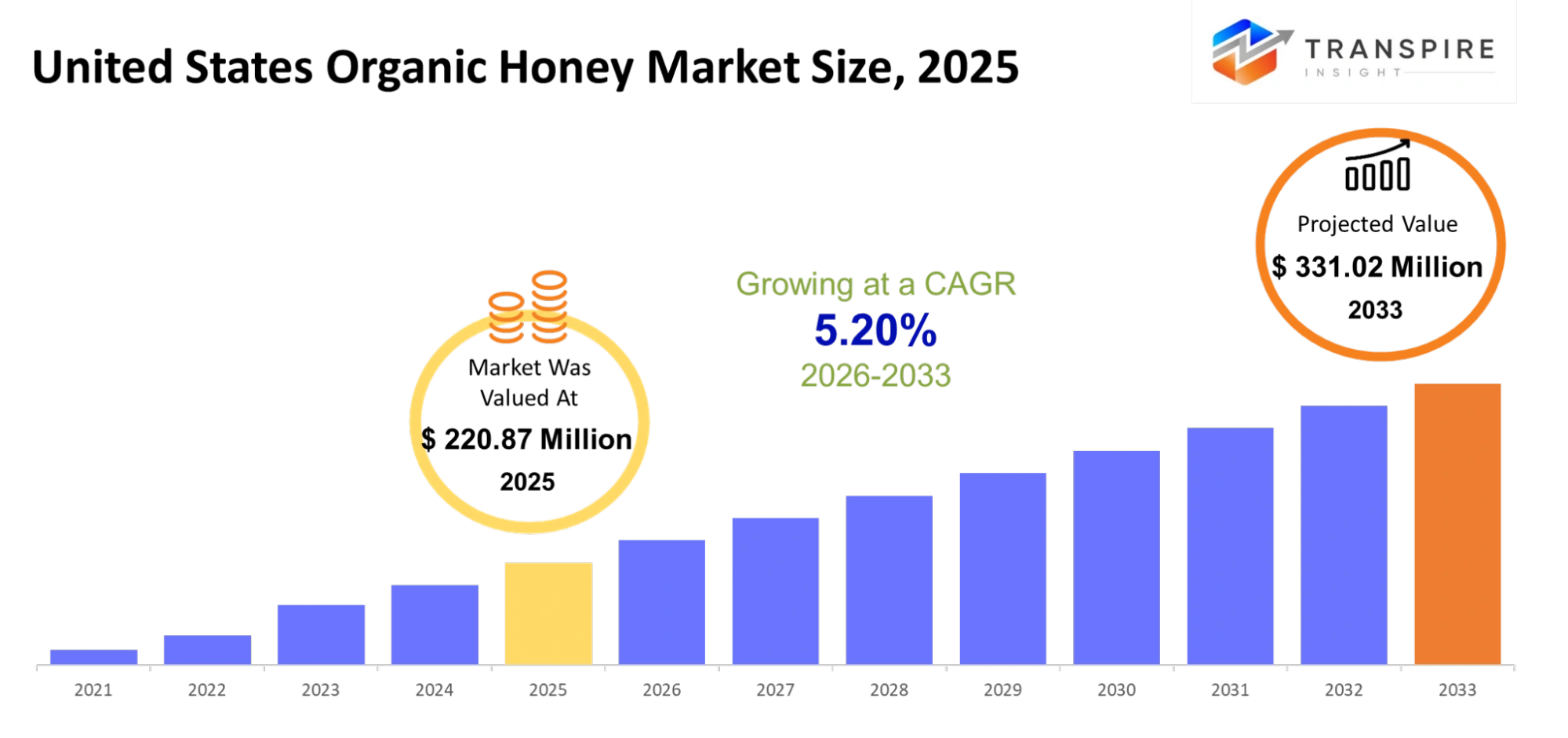
- United States Organic Honey Market Size 2025: USD 220.87 Million
- United States Organic Honey Market Size 2033: USD 331.02 Million
- United States Organic Honey Market CAGR: 5.20%
- United States Organic Honey Market Segments:By Type (Raw, Processed, Flavored, Infused), By Application (Food, Cosmetics, Pharma, Supplements), By Distribution Channel (Online, Retail, Farmers Market, Specialty Stores), By End-User (Consumers, Food Companies, Retailers, Pharma), By Packaging (Glass, Plastic, Sachets, Bulk).
To learn more about this report,  Download Free Sample Report
United States Organic Honey Market Summary:
The United States Organic Honey market size is estimated at USD 220.87 million in 2025 and is anticipated to reach USD 331.02 million by 2033, growing at a CAGR of 5.20% from 2026 to 2033. The United States organic honey market. The market expands because consumers discover natural food products which do not have chemical content. The United States population together with the food industry demands organic honey because they choose ingredients which have no artificial components and they practice healthier dietary choices. Beekeepers achieve certification through their sustainable beekeeping methods while consumers purchase products at premium prices because they believe these products offer health benefits. The market growth throughout the United States receives additional support from two major factors which are enhanced retail distribution and online shopping platforms that enable customers to purchase organic honey products.
Key Market Trends & Insights:
- People who understand their food choices better tend to choose organic honey as their main natural sweetener instead of using refined sugar. The public consumes the product more frequently because it contains antioxidants and immune-boosting properties which are considered health advantages.
- Shoppers want to buy products which show their complete sourcing information and have undergone limited production methods. The trend supports organic honey as a suitable option because it contains no additives or pesticides or artificial components.
- Online platforms enable consumers to discover different organic honey brands through improved access. The combination of product details and convenient access points leads to better customer purchasing decisions which they do more often.
- The high cost of organic honey products exists because their exceptional quality and authentic natural components. The product becomes more appealing to customers who seek special products and health-oriented items because of its premium market positioning.
- Producers use sustainable environmental practices to achieve organic certification requirements. The approach protects bee populations and sustains biodiversity which environmentally conscious consumers strongly support.
- Organic honey is becoming a popular sweetening option for baked goods and drinks and pre-packaged foods. Food manufacturers use the ingredient to satisfy their customers' requirements for healthier product components.
United States Organic Honey Market Segmentation
By Type
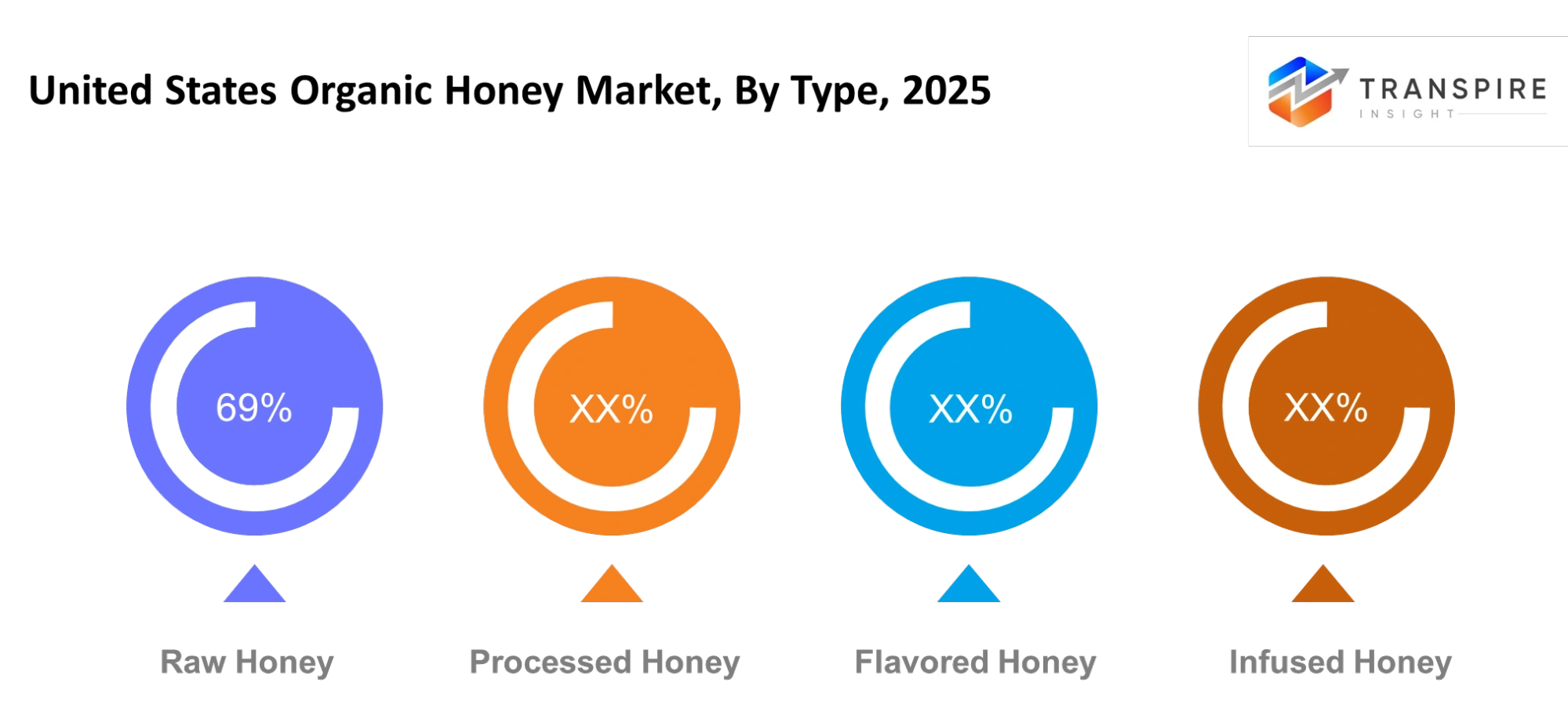
- Raw Honey: The unprocessed state of raw organic honey together with its nutritional advantages has made it a highly preferred option for consumers. Natural enzymes and pollen and antioxidants of the product provide health advantages according to consumers who value these natural components. The product attracts wellness-focused shoppers who want to buy authentic and pure food that matches their dietary needs.
- Processed Honey: Processed organic honey attracts customers who want both reliable product performance and uniform product taste and texture. The product achieves a smoother consistency through its filtration process combined with mild heating treatment which enhances usability. The product remains a popular choice for cooking and baking as well as industrial food production despite losing some nutrients during processing.
- Flavored Honey: Flavored organic honey has emerged as a gourmet product that offers creative possibilities to customers. The product contains natural flavors that include cinnamon and vanilla and berry flavors which respond to changing consumer taste patterns. The product serves as a common ingredient in desserts and beverages while functioning as a special present which provides both sweetness and exceptional flavor.
- Infused Honey: Organic honey exists in this world through its creation which merges traditional honey with various herbs and spices together with botanical elements that feature ginger and turmeric and lavender. The segment is expanding because it provides functional benefits to consumers who want to improve their health. The product attracts consumers who desire complete wellness through natural health products.
To learn more about this report, Download Free Sample Report
By Application
- Food: The food segment controls the market because organic honey serves as a natural sweetener for multiple products. The ingredient is used throughout bakery products and cereal items and beverage drinks. Consumers purchase the product for home kitchen use and commercial food production because they consider it a healthier substitute for sugar.
- Cosmetics: Organic honey is increasingly used in skincare and beauty products due to its moisturizing and antibacterial properties. The ingredient exists in face masks and creams and shampoos. The clean beauty trend is encouraging brands to adopt natural ingredients which results in increased demand for this product category.
- Pharma: The pharmaceutical industry values organic honey because it provides medicinal benefits which include treating wounds and relieving sore throat symptoms. The substance appears in both syrups and natural health products. The increasing interest in alternative medicine supports the use of the product in health-based products.
- Supplements: Dietary supplements now contain organic honey because its nutritional properties offer advantages. The product combines with herbs and vitamins to help customers build their immune system and energy levels. The segment grows because consumers seek out natural solutions which help them achieve better health results.
By Distribution Channel
- Online: Online organic honey sales experience rapid growth because customers find it easy to shop and they can select from more products. Customers can compare different brands while reading product evaluations and viewing special edition items. The e-commerce platforms help businesses to connect with health-conscious customers who live in urban areas.
- Retail: Supermarkets and hypermarkets together with other retail stores function as primary distribution channels. The store layout provides consumers with product access points which help them reach their purchasing decisions through visual product display. The organic product segment experiences sales growth because retailers now dedicate more shelf space to organic items.
- Farmers Market: Farmers markets establish direct links between beekeepers and consumers who want to know product details because they want to build trust with customers. Buyers value the local authenticity of organic honey which they obtain from nearby farms. This channel is especially popular among those who value sustainability and community support.
- Specialty Stores: Specialty stores sell organic products and high-end items which operate as their primary business model. The stores present dedicated product collections which customers can explore while receiving expert help to improve their shopping experience. The organization helps to distribute high-quality organic honey products which contain artisanal characteristics.
By End-User
- Consumers: The largest end-user segment consists of individual consumers who now buy organic honey because they understand the advantages of healthy eating. Organic honey serves as a natural sweetener and home remedy which people use in their daily lives. The escalating demand for clean-label products sustains market growth within this particular product segment.
- Food Companies: Food manufacturers are incorporating organic honey into their products because consumer preferences are now shifting. The ingredient functions as an element in snacks and beverages and packaged food items. The rising interest in natural components drives businesses to use organic honey in their product development.
- Retailers: Retailers serve as essential market influencers who drive consumer buying choices through their availability of multiple organic honey options. The organization concentrates on three main activities which include product location, marketing activities, and teaching customers about products. Their efforts help expand market reach and improve product accessibility.
- Pharma: Pharmaceutical companies use organic honey in natural and herbal formulations. The product's medicinal properties enable its use in multiple health-related products. As consumers increasingly choose natural treatments pharmaceutical companies now add organic honey to their product range.
By Packaging
- Glass: Glass packaging shows superior product value through its premium look and its ability to maintain product integrity. The material serves non-reactive purposes while protecting nature, which supports current environmental sustainability practices. Glass jars create an image of purity to consumers who believe in the excellence of natural honey.
- Plastic: Plastic packaging delivers three main benefits to users through its simple use, strong construction and affordable pricing. The product's lightweight design creates simple handling, which has made it a common choice for regular activities. The product continues to see widespread use because people find it practical and affordable despite its environmental impact.
- Sachets: Sachets are gaining popularity because they offer users two practical advantages which include easy transport and their function as single-use items. The products serve successfully to meet both portable consumption needs and requirements of food service businesses. The packaging format suits busy users who need to manage their food portions throughout the day.
- Food: Food producers and commercial buyers in the industry commonly select bulk packaging as their preferred option. The system enables both cost reduction and space-efficient storage arrangements which support operations at high volume. The segment plays a vital role in fulfilling industrial requirements, which helps to create a continuous supply network.
Country Insights
The United States organic honey market exists because consumers understand organic products and choose environmentally friendly options and their eating habits progress toward organic food. The United States market for natural sweeteners and clean-label products continues to grow because these products become popular in every part of the country. Urban consumers especially prefer health-based products which they purchase while rural areas exist as major markets due to their local beekeeping and farmers markets. States with various floral ecosystems produce exceptional honey which results in unique regional product variations. The implementation of organic farming methods together with rigorous certification requirements establishes genuine product identity which develops customer confidence. Retail chains and online platforms have expanded access making organic honey more widely available than ever before. The production process and consumer buying behavior both experience changes because companies implement bee population protection initiatives and sustainability concerns. The market develops new patterns because consumers now associate their food choices with wellness and transparency and environmental sustainability.
Recent Development News
In March 2026, U.S. Honey Prices Impacted by New Tariffs: Rising import tariffs on key supplying countries are pushing organic honey prices upward in the U.S. market. The price of retail products has increased because this development affects our sourcing methods.
In March 2026, U.S. Honey Production Declines Amid Challenges: Recent reports highlight falling honey production due to drought, bee colony losses, and rising costs. This is tightening supply and impacting organic honey availability.
|
Report Metrics |
Details |
|
Market size value in 2025 |
USD 220.87 Million |
|
Market size value in 2026 |
USD 232.17 Million |
|
Revenue forecast in 2033 |
USD 331.02 Million |
|
Growth rate |
CAGR of 5.20% from 2026 to 2033 |
|
Base year |
2025 |
|
Historical data |
2021 – 2024 |
|
Forecast period |
2026 – 2033 |
|
Report coverage |
Revenue forecast, competitive landscape, growth factors, and trends |
|
Country scope |
United States |
|
Key company profiled |
Nature Nate’s, Dutch Gold, Barkman Honey, YS Organic, GloryBee, Heavenly Organics, Little Bee, Bee Maid, Comvita, Rowse Honey, Wedderspoon, Really Raw Honey, Capilano, Dabur, Beeyond the Hive |
|
Customization scope |
Free report customization (country, regional & segment scope). Avail customized purchase options to meet your exact research needs. |
|
Report Segmentation |
By Type (Raw, Processed, Flavored, Infused), By Application (Food, Cosmetics, Pharma, Supplements), By Distribution Channel (Online, Retail, Farmers Market, Specialty Stores), By End-User (Consumers, Food Companies, Retailers, Pharma), By Packaging (Glass, Plastic, Sachets, Bulk). |
Key United States Organic Honey Company Insights
The US market for organic honey products operates because established companies and regional producers team up to create a market which offers multiple product options. Companies establish consumer trust through their dedication to product purity and traceability and sustainable sourcing practices. The company expands its product line by adding three different types of products which include raw and infused and specialty products. The company's new packaging and branding developments attract health-conscious consumers who want to purchase its products. The company establishes a stronger market position by teaming up with retail and online platforms while its product origin storytelling and beekeeping method explanations create real brand connections with customers.
Company List
- Nature Nate’s
- Dutch Gold
- Barkman Honey
- YS Organic
- GloryBee
- Heavenly Organics
- Little Bee
- Bee Maid
- Comvita
- Rowse Honey
- Wedderspoon
- Really Raw Honey
- Capilano
- Dabur
- Beyond the Hive
United States Organic Honey Market Report Segmentation
By Type
- Raw
- Processed
- Flavored
- Infused
By Application
- Food
- Cosmetics
- Pharma
- Supplements
By Distribution Channel
- Online
- Retail
- Farmers Market
- Specialty Stores
By End-User
- Consumers
- Food Companies
- Retailers
- Pharma
By Packaging
- Glass
- Plastic
- Sachets
- Bulk
Frequently Asked Questions
Find quick answers to common questions.
The approximate United States Organic Honey Market size for the market will be USD 331.02 million in 2033.
The key segments of the United States Organic Honey Market are By Type (Raw, Processed, Flavored, Infused), By Application (Food, Cosmetics, Pharma, Supplements), By Distribution Channel (Online, Retail, Farmers Market, Specialty Stores), By End-User (Consumers, Food Companies, Retailers, Pharma), By Packaging (Glass, Plastic, Sachets, Bulk).
Major players in the United States Organic Honey Market are Nature Nate’s, Dutch Gold, Barkman Honey, YS Organic, GloryBee, Heavenly Organics, Little Bee, Bee Maid, Comvita, Rowse Honey, Wedderspoon, Really Raw Honey, Capilano, Dabur, Beeyond the Hive.
The current market size of the United States Organic Honey Market is USD 220.87 million in 2025.
The United States Organic Honey Market CAGR is 5.20%.
- Nature Nate’s
- Dutch Gold
- Barkman Honey
- YS Organic
- GloryBee
- Heavenly Organics
- Little Bee
- Bee Maid
- Comvita
- Rowse Honey
- Wedderspoon
- Really Raw Honey
- Capilano
- Dabur
- Beyond the Hive
Recently Published Reports
-
Apr 2026
Baby Infant Formula Market
Baby Infant Formula Market Size, Share & Analysis Report By ype (Infant Milk, Follow On Milk, Specialty Baby Milk, Growing-Up Milk), By Ingredient (Carbohydrate, Fat, Protein, Minerals, Vitamins, and Others), By Product Form (Powder, Liquid, and Ready-to-feed), By Distribution Channels (Supermarket/Hypermarket, Specialty Store, Pharmacies, Online Retail, and Others), and Geography (North America, Europe, Asia-Pacific, Middle East and Africa, South and Central America), 2021 - 2031
-
Apr 2026
Edible Insects for Animal Feed Market
Edible Insects for Animal Feed Market Size, Share & Analysis Report By Type (Insect Powder, Insect Meal, Insect Bar, Insect Paste, Insect Oil, and Others), By Insect Type (Beetles, Cricket, Caterpillar, Hymenoptera, Orthoptera, Tree Bugs, and Others), By Application (Livestock, Pet Food, and Aquaculture), By Livestock Type (Poultry, Swine, and Others), and Geography (North America, Europe, Asia-Pacific, Middle East and Africa, South and Central America), 2021 - 2031
-
Apr 2026
Food Industry Disinfection and Bacterial Control Market
Food Industry Disinfection and Bacterial Control Market Size, Share & Analysis Report By Type (Chemical Disinfectants, Physical Disinfectants, and Biocides and Antimicrobials), By Application (Food Processing Equipment Surface Disinfection, Food Preparation Areas Surface Disinfection, Storage Areas Surface Disinfection, Anti-microbial Coatings Food Preservation, and Preservative Solutions Food Preservation), By End User (Meat and Poultry Processing, Dairy Processing, Seafood Processing, Bakery and Confectionery, Restaurants and Commercial Kitchens, and Food Service Providers), By Sales Channel (Online, Offline), and Geography (North America, Europe, Asia-Pacific, Middle East and Africa, South and Central America), 2021 - 2031
-
Apr 2026
Freeze Dried Food Market
Freeze Dried Food Market Size, Share & Analysis Report By Product Type (Fruits, Vegetables, Freeze-Dried Dairy Products, Freeze-Dried Meat and Seafood, Freeze-Dried Pet Food, and Prepared Meal), By Nature (Organic, and Conventional), By Form (Powdered, Granules, and Diced), By End Use (Breakfast Cereals, Dairy Products, Bakery & Confectionery, Nutritional Bars & Supplements, Powdered Beverages, Snacks, and Retail (Household)), and Geography (North America, Europe, Asia-Pacific, Middle East and Africa, South and Central America), 2021 - 2031