
United States Baby Apparel Market Size & Forecast:
- United States Baby Apparel Market Size 2025: USD 10890.4 Million
· United States Baby Apparel Market Size 2033: USD 16194.8 Million
· United States Baby Apparel Market CAGR: 5.10%
· United States Baby Apparel Market Segments: By Product Type (Top Wear, Bottom Wear, Outerwear, Others), By Age Group (0–12 Months, 12–24 Months, 2–3 Years), By Distribution Channel (Online Retail, Offline Retail), By Material (Cotton, Wool, Synthetic Fabrics).
To learn more about this report,  Download Free Sample Report
United States Baby Apparel Market Summary:
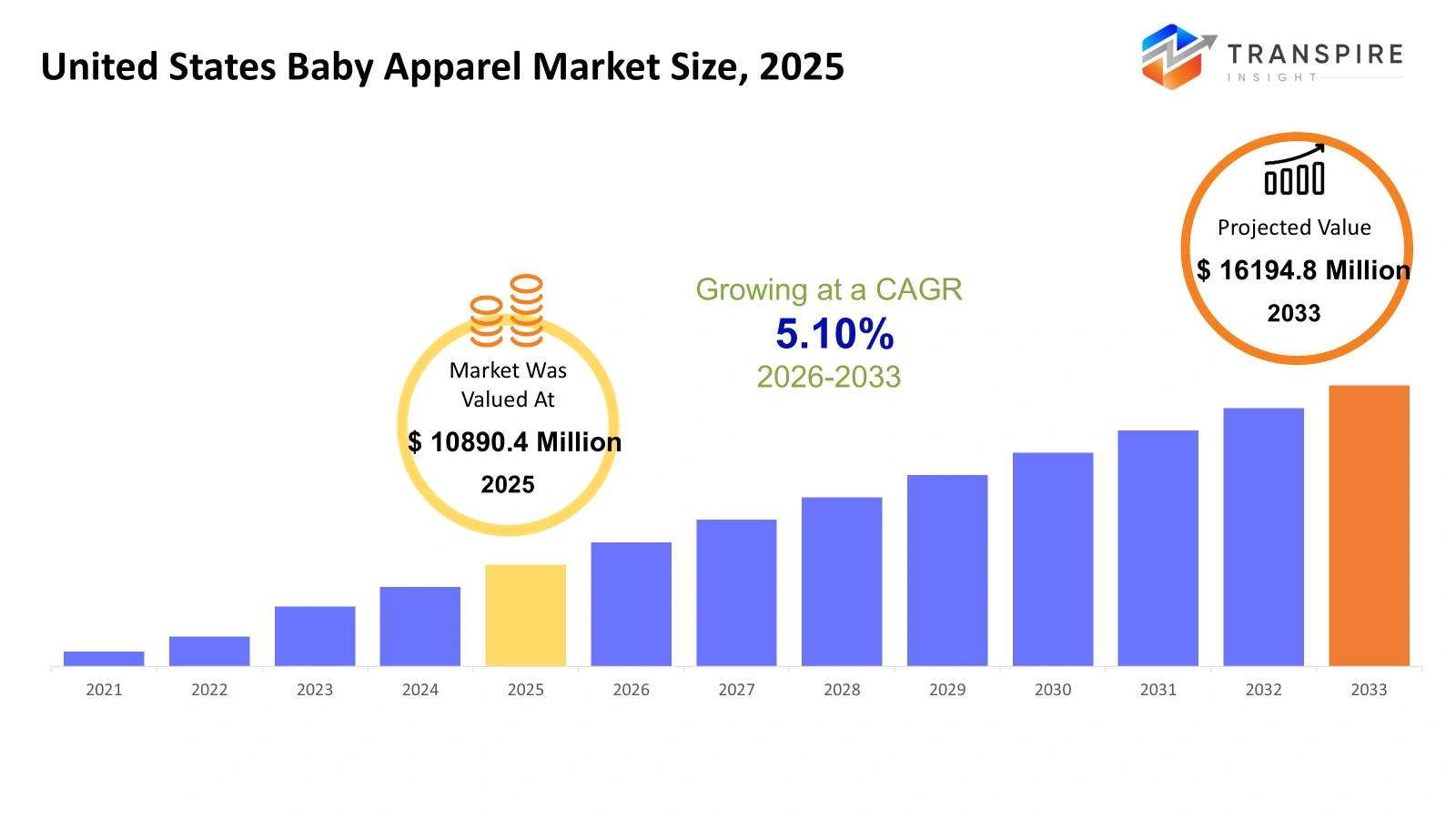
The United States Baby Apparel Market size is estimated at USD 10890.4 million in 2025 and is anticipated to reach USD 16194.8 million by 2033, growing at a CAGR of 5.10% from 2026 to 2033. The baby apparel market in the United States maintains steady growth because parents now choose to buy infant and toddler clothes which deliver comfort and safety and superior quality. Baby clothing products offer soft materials and breathable textiles and functional designs which help protect sensitive skin and support the rapid growth of infants during their first year of life. The growing understanding among parents about organic fabrics and materials that protect skin and clothing that lasts invites manufacturers to create new products while expanding their existing lines.
The United States Baby Apparel Market shows expansion because of two factors which include increasing disposable incomes and growing fashion trends that determine what children should wear. Parents in the United States prefer fashionable baby clothing which offers both visual appeal and practical use. The latest baby clothing collections present appealing color choices which include comfortable styles and seasonal pieces designed for both everyday wear and formal events. Retailers and brands now provide matching outfits and themed product lines to attract customers who seek stylish clothing options for their babies and toddlers.
The United States Baby Apparel Market expands because digital retail platforms gain more importance as a distribution method to reach customers. Parents who shop online can easily access various baby clothing selections through online shopping channels which let them compare costs and buy items from their home. E-commerce platforms enable brands to introduce new products to customers throughout the United States who can access their offerings.
Key Market Trends & Insights:
The United States Baby Apparel Market is experiencing increasing demand for organic and sustainable clothing materials as parents become more conscious about environmental impact and the safety of fabrics used in baby garments. Brands respond to this demand by creating organic cotton clothing lines which use environmentally safe production methods.
- Parents purchase baby clothing products which combine comfortable wearability with practical design elements. Products with easy closures and stretchable fabrics and temperature-appropriate designs are gaining popularity among consumers.
- The demand for premium baby clothing brands has grown steadily in the United States as consumers seek high-quality materials fashionable designs and long-lasting garments that can be used across multiple seasons.
- Online retail channels have significantly influenced purchasing behavior in the baby apparel industry. Digital platforms attract parents because they offer home delivery service and a wider selection of products and competitive prices.
- Seasonal clothing collections which include winter outerwear and summer cotton wear drive market demand because brands create clothing that matches different weather conditions.
United States Baby Apparel Market Segmentation
By Product Type
Top Wear: The United States Baby Apparel Market features Top Wear as its main product category which includes baby shirts and t-shirts, bodysuits and sweaters and daily wear tops. The clothing products use soft materials and flexible designs which allow babies to experience comfort and mobility. Many brands use breathable fabrics and basic fastening systems to create clothes which parents can easily use to dress their infants.
Bottom Wear: The category of bottom wear includes baby pants and leggings and shorts and diaper covers as its main products. The clothing items provide both comfort and flexibility while they allow babies to move freely and use their diapers. Product makers use elastic waistbands and stretchable materials and strong stitches to create products which last longer and perform better.
Outerwear: The United States Baby Apparel Market has expanded its outerwear segment because people need coats which protect them from cold weather during outdoor activities. Baby jackets and coats and hoodies and winter suits deliver insulation and warmth while staying lightweight. The increasing popularity of seasonal fashion collections has further supported growth in this category.
Others: The other category includes specialized baby clothing items such as sleepwear, rompers, and occasion-specific outfits. The products feature comfort-enhancing elements and stylish designs which attract parents who want usable yet fashionable products.
By Age Group
0–12 Months: The 0 to 12 month age group requires baby clothes which must provide maximum softness and breathability and direct access for parents to change diapers while protecting their baby's sensitive skin. The safety standards and comfort requirements serve as primary design elements for this product category.
12–24 Months: Toddlers need different clothing because their bodies have developed from infant stages to their current walking stage. The clothing for this age group supports crawling and walking and running activities because toddlers need to move their bodies freely. Active children need protective clothing because it requires flexible materials and strong stitching for extended usage during their playful activities.
2–3 Years: The 2 to 3 year age group needs toddler clothing which combines stylish elements with comfortable and practical features. Parents in this segment choose durable apparel which features attractive designs that suit their children's requirements for daily wear and social situations.
By Distribution Channel
Online Retail: The United States Baby Apparel Market has experienced growing importance from online retail. Through e-commerce platforms, parents can shop from multiple brands and product styles while choosing between different pricing options. Online stores offer product reviews and size guides together with detailed descriptions which enable parents to make informed purchasing decisions.
Offline Retail: The market maintains its strong presence through offline retail which includes department stores and baby specialty shops and large retail chains. Many parents prefer visiting physical stores to evaluate fabric quality, sizing, and comfort before purchasing baby clothing. Retail outlets also provide personalized assistance and immediate product availability.
By Material
Cotton: Cotton serves as the primary fabric for baby clothes because it provides softness and breathability, together with skin-friendly characteristics. Cotton fabrics offer optimal comfort to infants who have sensitive skin because the material adapts to different weather conditions.
Wool: Designers use wool materials to create winter baby clothing which includes sweaters and jackets and outerwear. Wool functions as a natural insulation material which provides warmth to babies in cold weather while keeping them comfortable.
Synthetic Fabrics: Designers use synthetic fabrics in baby clothing because these materials improve product durability, flexibility, and resistance against damage. Many brands combine synthetic fibers with natural materials to improve performance characteristics such as stretchability and moisture resistance.
Country Insights
The United States Baby Apparel Market exists because American consumers spend money on baby products while the country possesses an advanced retail system. United States parents base their infant and toddler clothing choices on three main factors, which results in manufacturers producing goods that meet high quality standards. The rising power of fashion trends in children's clothing has led to the creation of fashionable high-end baby clothing lines.
Established brands and retailers who operate throughout the United States create a stronger baby apparel market because their presence boosts market demand. Companies use product innovation together with new fabric technologies and design development to create products that maintain their market competitiveness. The marketing approach combines three methods which include digital advertising, parenting community outreach, and seasonal product introduction to attract consumer interest.
Sustainability has become a major factor that affects purchasing choices of numerous United States citizens. Parents are increasingly seeking baby apparel made from organic or environmentally friendly materials which is encouraging manufacturers to introduce eco-conscious clothing lines. The upcoming years will see these developments continuing to drive growth within the United States Baby Apparel Market.
Recent Development News
Major baby apparel brands in the United States are expanding their product portfolios with sustainable clothing collections made from organic cotton and recycled materials to address growing consumer interest in environmentally responsible products.
Retail companies are also strengthening their online platforms and digital marketing strategies to improve accessibility and expand their customer base across the United States.
|
Report Metrics |
Details |
|
Market size value in 2025 |
USD 10890.4 Million |
|
Market size value in 2026 |
USD 11436.7 Million |
|
Revenue forecast in 2033 |
USD 16194.8 Million |
|
Growth rate |
CAGR of 5.10% from 2026 to 2033 |
|
Base year |
2025 |
|
Historical data |
2021 - 2024 |
|
Forecast period |
2026 - 2033 |
|
Report coverage |
Revenue forecast, competitive landscape, growth factors, and trends |
|
Country scope |
United States |
|
Key company profiled |
Carter’s Inc., Nike Inc., Gap Inc., H&M Group, Inditex (Zara), Gerber Childrenswear, Ralph Lauren Corporation, The Children’s Place, Hanesbrands Inc., Under Armour Inc., Adidas AG, OshKosh B’gosh, Gymboree Group, Patagonia Inc., Burberry Group. |
|
Customization scope |
Free report customization (country, regional & segment scope). Avail customized purchase options to meet your exact research needs. |
|
Report Segmentation |
By Product Type (Top Wear, Bottom Wear, Outerwear, Others), By Age Group (0–12 Months, 12–24 Months, 2–3 Years), By Distribution Channel (Online Retail, Offline Retail), By Material (Cotton, Wool, Synthetic Fabrics). |
Key United States Baby Apparel Company Insights
The United States Baby Apparel Market is highly competitive and consists of several well-established global and domestic brands. The companies develop baby clothing products which provide parents with comfortable and enduring yet stylish clothing options. Leading brands develop safe fabric materials which they use to create innovative clothing designs that meet actual requirements of parents and infants. Companies which operate in the market conduct research and development activities to create sustainable clothing materials while they simultaneously work to enhance their production processes. Companies use strategic partnerships with retail chains and online platforms to develop their distribution systems which enable them to serve more customers. The introduction of seasonal collections and themed product lines by brands establishes a method to sustain consumer engagement which results in stronger brand loyalty.
Key United States Baby Apparel Companies
Carter’s Inc.
Nike Inc.
Gap Inc.
H&M Group
Inditex (Zara)
Gerber Childrenswear
Ralph Lauren Corporation
The Children’s Place
Hanesbrands Inc.
Under Armour Inc.
Adidas AG
OshKosh B’gosh
Gymboree Group
Patagonia Inc.
Burberry Group
United States Baby Apparel Market Report Segmentation
By Product Type
- Top Wear
- Bottom Wear
- Outerwear
- Others
By Age Group
- 0–12 Months
- 12–24 Months
- 2–3 Years
By Distribution Channel
- Online Retail
- Offline Retail
By Material
- Cotton
- Wool
- Synthetic Fabrics
Frequently Asked Questions
Find quick answers to common questions.
The approximate United States Baby Apparel market size is expected to reach USD 16194.8 Million by 2033.
The key segments include Product Type (Top Wear, Bottom Wear, Outerwear, Others), Age Group (0–12 Months, 12–24 Months, 2–3 Years), Distribution Channel (Online Retail, Offline Retail), and Material (Cotton, Wool, Synthetic Fabrics).
Major players include Carter’s Inc., Nike Inc., Gap Inc., H&M Group, Inditex (Zara), Gerber Childrenswear, Ralph Lauren Corporation, The Children’s Place, Hanesbrands Inc., Under Armour Inc., Adidas AG, OshKosh B’gosh, Gymboree Group, Patagonia Inc., and Burberry Group.
The current Market size of the United States Baby Apparel Market is USD 10890.4 Million in 2025.
The United States Baby Apparel Market is expected to grow at a CAGR of 5.10% from 2026 to 2033.
Carter’s Inc.
Nike Inc.
Gap Inc.
H&M Group
Inditex (Zara)
Gerber Childrenswear
Ralph Lauren Corporation
The Children’s Place
Hanesbrands Inc.
Under Armour Inc.
Adidas AG
OshKosh B’gosh
Gymboree Group
Patagonia Inc.
Burberry Group
Recently Published Reports
-
Apr 2026
Bottled Water Market
Bottled Water Market Size, Share & Analysis Report By Product Type (Still Bottled Water, Carbonated Bottled Water, Functional Bottled Water, and Others), By Packaging (PET, Cans, and Others), By Sales Channel (Supermarkets/Hypermarkets, Convenience Stores/Drug Stores, Grocery Stores/Club Stores, Foodservice, and Others) and Geography (North America, Europe, Asia-Pacific, Middle East and Africa, South and Central America), 2021 - 2032
-
Apr 2026
Color Cosmetic Packaging Market
Color Cosmetic Packaging Market Size, Share & Analysis Report By Application (Mascara Packaging, Liquid Packaging, and Liquid Face), By Type (Tubes & Bottles, Pens & Markers, Compacts & Containers, and Droppers & Pumps), and Geography (North America, Europe, Asia-Pacific, Middle East and Africa, South and Central America), 2021 - 2031
-
Apr 2026
External Microphone For Camera Market
External Microphone For Camera Market Size, Share & Analysis Report By Type (Shotgun Microphone, Lavalier Microphone, and Others), By Application (Digital Camera, Professional Video Camera, and Others), and Geography (North America, Europe, Asia-Pacific, Middle East and Africa, South and Central America), 2021 - 2031
-
Apr 2026
Foot Orthotic Insoles Market
Foot Orthotic Insoles Market Size, Share & Analysis Report By Type (Pre-fabricated, and Custom-made), By Material (Thermoplastic, Composite Carbon Fiber, and Others), By Distribution Channel (Drug Stores, Hospitals & Clinics, and Others), and Geography (North America, Europe, Asia-Pacific, Middle East and Africa, South and Central America), 2021 - 2031