

United Kingdom Automotive Lightweight Materials Market Size & Forecast:
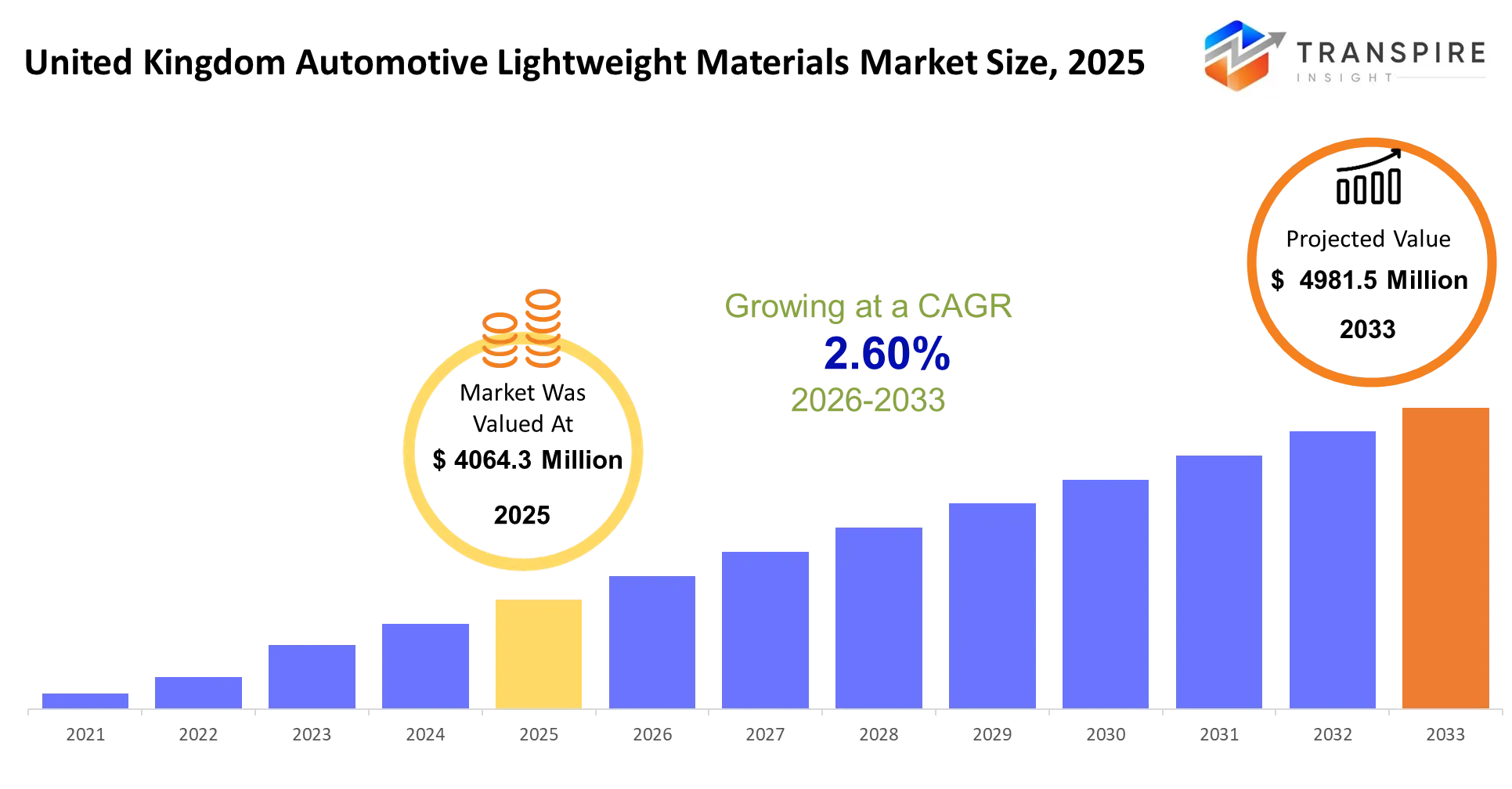
- United Kingdom Automotive Lightweight Materials Market Size 2025:USD 4064.3 Million
- United Kingdom Automotive Lightweight Materials Market Size 2033: USD 4981.5 Million
- United Kingdom Automotive Lightweight Materials Market CAGR: 2.60%
- United Kingdom Automotive Lightweight Materials Market Segments: By Material Type (Aluminum, High-Strength Steel, Magnesium, Carbon Fiber Composites), By Application (Body-in-White, Chassis & Suspension, Powertrain, Interior Components), By Vehicle Type (Passenger Cars, Commercial Vehicles).
To learn more about this report,  Download Free Sample Report
United Kingdom Automotive Lightweight Materials Market Summary:
The United Kingdom Automotive Lightweight Materials Market size is estimated at USD 4064.3 Million in 2025 and is anticipated to reach USD 4981.5 Million, growing at a CAGR of 2.60% from 2026 to 2033. The United Kingdom automotive lightweight materials market is experiencing steady growth because electric vehicles and fuel-efficient vehicles create greater demand which meets the requirements of strict emission standards. The market was valued at around USD 3.7 billion in 2022 and is projected to reach approximately USD 3.9–4.5 billion by 2030 because manufacturers will keep implementing advanced materials which will create slow market growth.
The market benefits from increasing adoption of materials which include aluminum high-strength steel magnesium and carbon fiber composites that enable manufacturers to design lighter vehicles which still meet safety and operational standards. The market develops through three main factors which include rising electric vehicle adoption and ongoing research and development activities and sustainability efforts which focus on recycling and producing goods with low carbon emissions. The market will continue to grow because companies are developing new products and governments are creating new regulations despite the existing problems of raw material price swings and supply chain interruptions.
Key Market Trends & Insights:
- The increasing demand for lightweight materials in the United Kingdom results from growing electric vehicle adoption. The vehicle's lower weight enables better battery performance which results in increased driving distance.
- The current trend exists because electric and hybrid vehicle adoption continues to increase. People are now more interested in using sustainable materials which protect the environment. Automotive manufacturers use recycled aluminum together with low-carbon steel materials in their production process.
- The solution helps the country achieve its net-zero objectives while decreasing total emissions. The industry increasingly uses advanced materials which include composites and magnesium alloys. The materials provide high strength capabilities which enable substantial weight reductions for vehicles.
- The technology is being used for both structural elements and interior components. The OEMs work together with material suppliers to achieve a strong partnership. The companies are collaborating to develop specific lightweight solutions which will enable electric vehicle platforms to achieve their design goals.
- The system provides advantages in performance and safety while enabling designers to create flexible products. Manufacturing technologies continue to advance through ongoing research and development efforts. The industry is increasingly adopting both additive manufacturing methods and advanced forming techniques. The new technologies create a cost-efficient solution for manufacturing intricate lightweight parts.
United Kingdom Automotive Lightweight Materials Market Segmentation
By Material Type
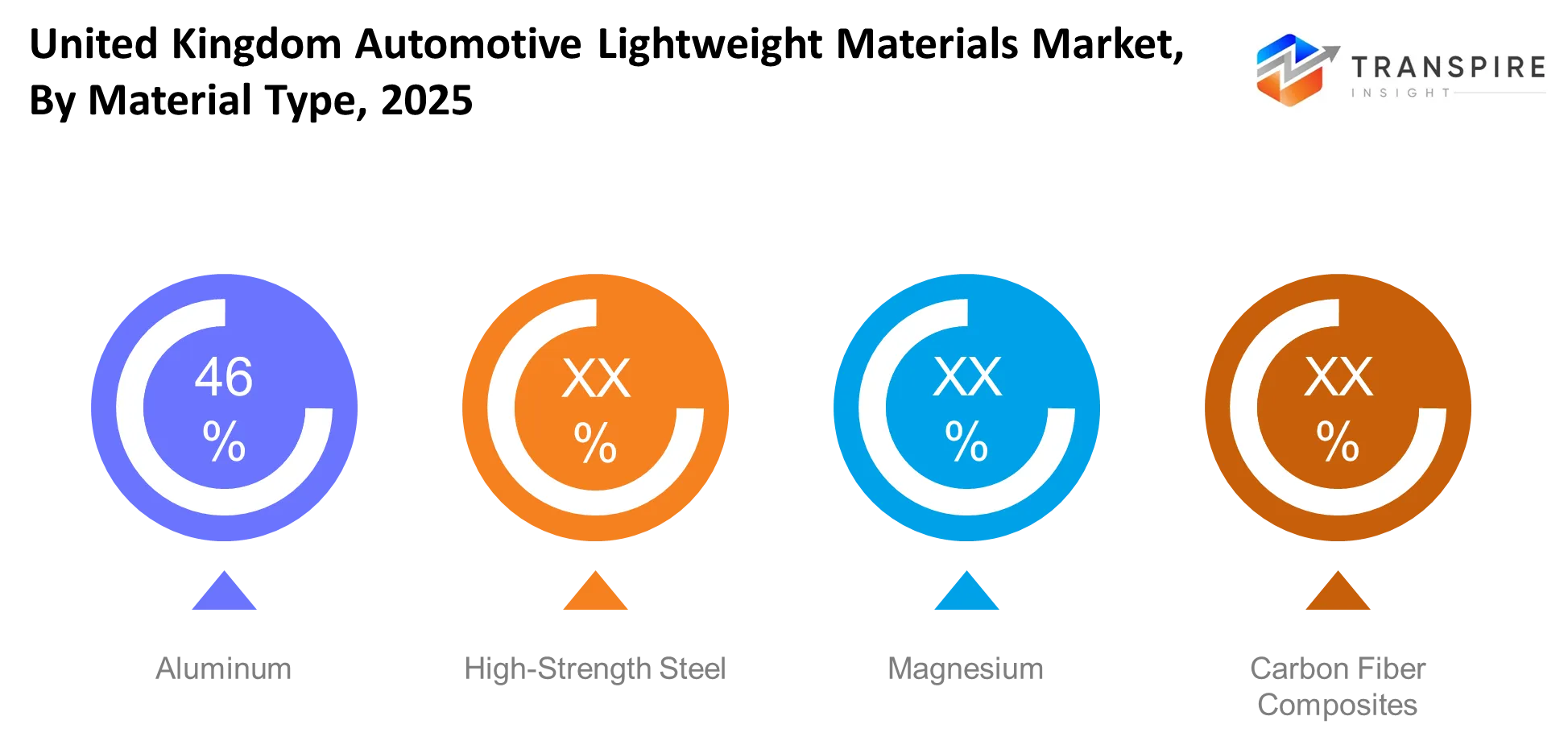
- Aluminum:The UK automotive industry uses aluminum because it provides an outstanding combination of strength and lightweight properties while resisting corrosion. The material functions as a fundamental element which decreases vehicle mass and results in better fuel efficiency and greater electric vehicle range. The material experiences increased demand because its use expands to body panels and battery enclosures and structural components.
- High-Strength Steel:High-strength steel remains essential for automotive manufacturing because it delivers three benefits which include durable performance and safety features and affordable production costs. The material allows manufacturers to decrease component thickness while they preserve the necessary strength for their designs which helps them achieve their target weight reductions. The material becomes the preferred option for passenger vehicles and commercial vehicles because of its widespread application in creating crash-resistant structures and vehicle frameworks.
- Magnesium:Magnesium is gaining traction as one of the lightest structural metals available for automotive applications. The material functions in products which include steering wheels and seat frames and transmission cases. The material faces two obstacles which include high costs and complicated processing methods. yet its ability to cut down vehicle weight has become a major reason why its use across the automotive sector keeps growing.
- Carbon Fiber Composites:Carbon fiber composites deliver outstanding strength combined with high stiffness properties while maintaining their lightweight characteristics. The material sees growing usage in electric and high-performance vehicles because it helps decrease total vehicle weight while boosting efficiency. The UK market will see wider adoption of the material because manufacturing and recycling technology advancements enable production at lower costs despite its initial expense.
To learn more about this report, Download Free Sample Report
By Application
- Body-in-White:The main part of lightweight material usage comes from body-in-white applications because structural weight reduction produces better vehicle performance. The frames and panels of vehicles use aluminum and high-strength steel as standard materials. This section plays a vital role in boosting crash protection capabilities and structural strength and power absorption efficiency.
- Chassis & Suspension:Engineers now use lightweight materials for chassis and suspension systems because these materials improve vehicle handling and fuel efficiency and passenger comfort. Vehicle dynamics benefit from aluminum and composites because these materials decrease unsprung mass. Automotive manufacturers adopt this segment because they want to improve their performance and product durability.
- Powertrain:The powertrain section uses lightweight materials to improve engine performance while decreasing harmful emissions. Aluminum and magnesium materials now make up an increasing portion of engine blocks and transmission housings and battery systems. The development of electric vehicles creates new requirements for lightweight materials used in motors and battery enclosures.
- Interior Components:Lightweight materials help decrease vehicle weight through their use in seats and dashboards and trim parts which make up interior applications. Composites and advanced plastics create better user comfort while providing design flexibility and safety protection. The segment focuses on sustainability through its rising use of recyclable materials and environment-friendly products.
By Vehicle Type
- Passenger Cars: The UK markets demand lightweight materials because passenger cars have high production numbers and electric vehicle adoption continues to increase. Automakers focus on reducing vehicle weight to meet emission standards and improve fuel efficiency. The aviation industry uses lightweight materials throughout its body designs and interior components and its battery systems.
- Commercial Vehicles: The commercial vehicle industry uses lightweight materials to decrease fuel consumption while increasing payload capacity. The process of decreasing vehicle weight enables operators to transport more cargo while spending less money on essential operational expenses. The adoption of electric commercial fleets has created a demand for advanced lightweight materials in this market segment.
Country Insights
The automotive lightweight materials market in the United Kingdom exists because the nation actively pursues electric vehicle development and carbon neutrality and advanced manufacturing technologies. Automotive manufacturers need to use lightweight materials which include aluminum and high-strength steel and composites because government zero-emission vehicle regulations and emission restrictions force them to reduce their vehicles' environmental impact. The demand for lightweight materials solutions increases because the UK automotive industry has existed for a long time and companies now invest in electric vehicle production and battery research.
The United Kingdom possesses a strong research and innovation system which automotive OEMs and material suppliers and academic institutions build through their cooperative efforts. Companies are increasingly focusing on sustainable materials, including recycled aluminum and low-carbon steel, to meet environmental targets. The industry faces two main obstacles which include changing raw material prices and problems with supply chain management. The UK market has become a central European market for automotive lightweight materials because of ongoing technological progress and government-sponsored programs.
Recent Development News
Advanced aluminum solutions experience growth and expansion:
Constellium SE has reported strong revenue growth in its automotive segment, driven by rising demand for lightweight aluminum products used in vehicle structures and EV battery enclosures. The company projects increased earnings and cash flow until 2026 because automotive businesses are starting to use lightweight materials more frequently.
The 2025 plant fire caused major production problems for Novelis Inc. which serves as a primary supplier of automotive aluminum sheets. The company accelerated repair efforts and expects to restore operations quickly, highlighting both the critical role of lightweight materials suppliers and the industry's vulnerability to supply shocks.
|
Report Metrics |
Details |
|
Market size value in 2025 |
USD 4064.3 Million |
|
Market size value in 2026 |
USD 4161.8 Million |
|
Revenue forecast in 2033 |
USD 4981.5 Million |
|
Growth rate |
CAGR of 2.60%from 2026 to 2033 |
|
Base year |
2025 |
|
Historical data |
2021 – 2024 |
|
Forecast period |
2026 – 2033 |
|
Report coverage |
Revenue forecast, competitive landscape, growth factors, and trends |
|
Country scope |
Germany |
|
Key company profiled |
Alcoa Corporation, ArcelorMittal S.A., Novelis Inc., Constellium SE, Toray Industries Inc., Thyssenkrupp AG, BASF SE, Covestro AG, Hexcel Corporation, SGL Carbon SE, UACJ Corporation, Norsk Hydro ASA, Owens Corning, Teijin Limited, Aleris Corporation. |
|
Customization scope |
Free report customization (country, regional & segment scope). Avail customized purchase options to meet your exact research needs. |
|
Report Segmentation |
By Material Type (Aluminum, High-Strength Steel, Magnesium, Carbon Fiber Composites), By Application (Body-in-White, Chassis & Suspension, Powertrain, Interior Components), By Vehicle Type (Passenger Cars, Commercial Vehicles). |
Key United Kingdom Automotive Lightweight Materials Market Company Insights
The automotive lightweight materials market in the United Kingdom benefits from global metal producers and aluminum specialists who enable automakers to achieve weight reduction and better fuel efficiency and improved performance of electric vehicles. The companies Alcoa Corporation and ArcelorMittal S.A. provide advanced aluminum and high-strength steel solutions which serve as essential materials for building body structures and chassis and battery enclosures. Their production methods for low-carbon technologies and advanced alloy materials support the United Kingdom's sustainability goals and its stricter emission control requirements.
Novelis Inc. and Constellium SE have established themselves as the top innovators in developing automotive aluminum sheet materials and structural components which both companies focus on creating for electric vehicle applications. The companies focus on recycling and circular economy practices while producing high-performance materials which enable automakers to achieve substantial weight reductions without compromising safety features and product durability. The company maintains strong ties with automotive original equipment manufacturers while dedicating resources to research and development which enhances its competitive advantage in both the United Kingdom and European lightweight materials industry.
Company List
- Alcoa Corporation
- ArcelorMittal S.A.
- Novelis Inc.
- Constellium SE
- Toray Industries Inc.
- Thyssenkrupp AG
- BASF SE
- Covestro AG
- Hexcel Corporation
- SGL Carbon SE
- UACJ Corporation
- Norsk Hydro ASA
- Owens Corning
- Teijin Limited
- Aleris Corporation.
United Kingdom Automotive Lightweight Materials Market Report Segmentation
By Material Type
- Aluminum
- High-Strength Steel
- Magnesium
- Carbon Fiber Composites
By Application
- Body-in-White
- Chassis & Suspension
- Powertrain
- Interior Components
By Vehicle Type
- Passenger Cars
- Commercial Vehicles
Frequently Asked Questions
Find quick answers to common questions.
The Approximate United Kingdom Automotive Lightweight Materials Market size for the Market will be USD 4981.5 Million in 2033.
Key Segments for the United Kingdom Automotive Lightweight Materials Market are By Material Type (Aluminum, High-Strength Steel, Magnesium, Carbon Fiber Composites), By Application (Body-in-White, Chassis & Suspension, Powertrain, Interior Components), By Vehicle Type (Passenger Cars, Commercial Vehicles).
Major United Kingdom Automotive Lightweight Materials Market players are Alcoa Corporation, ArcelorMittal S.A., Novelis Inc., Constellium SE, Toray Industries Inc., Thyssenkrupp AG, BASF SE, Covestro AG, Hexcel Corporation, SGL Carbon SE, UACJ Corporation, Norsk Hydro ASA, Owens Corning, Teijin Limited, Aleris Corporation.
The Current United Kingdom Automotive Lightweight Materials Market size is USD 4064.3 Million in 2025.
The United Kingdom Automotive Lightweight Materials Market CAGR is 2.60%.
- Alcoa Corporation
- ArcelorMittal S.A.
- Novelis Inc.
- Constellium SE
- Toray Industries Inc.
- Thyssenkrupp AG
- BASF SE
- Covestro AG
- Hexcel Corporation
- SGL Carbon SE
- UACJ Corporation
- Norsk Hydro ASA
- Owens Corning
- Teijin Limited
- Aleris Corporation
Recently Published Reports
-
Apr 2026
Healthcare Polymer Packaging Market
Healthcare Polymer Packaging Market Size, Share & Analysis Report By Packaging Type (Syringes, IV Bottles and Pouches, Clamshells, Blisters, Bottles & Jars, Containers, Tubes, IV Parental Packaging, Others), By Type (Regulated, Non-regulated), By Polymer Type (LDPE (Low-Density Polyethylene), HDPE (High-Density Polyethylene), Homo-polymer (Homo), Random Copolymer (Random), Block Copolymer (Block), PET, Polystyrene, Polyvinyl Chloride, Polyamide/EVOH, Others), and Geography (North America, Europe, Asia-Pacific, Middle East and Africa, South and Central America), 2021 - 2031
-
Apr 2026
Hydrophilic Tape (Waterstop) Market
Hydrophilic Tape (Waterstop) Market Size, Share & Analysis Report By Type (Bentonite-Based Hydrophilic Tape, Rubber-Based Hydrophilic Tape), By Application (Residential Buildings, Commercial Buildings, Infrastructure Projects), and Geography (North America, Europe, Asia-Pacific, Middle East and Africa, South and Central America), 2021 - 2031
-
Apr 2026
Metalens Market
Metalens Market Size, Share & Analysis Report By Type (Visible Light Metalens, and Infrared Metalens), By Application (Consumer Electronics, Automotive Electronics, Industrial, Medical, and Others), and Geography (North America, Europe, Asia-Pacific, Middle East and Africa, South and Central America), 2021 - 2031
-
Apr 2026
PBT Resin Market
PBT Resin Market Size, Share & Analysis Report By Type (Reinforced PBT Resin, Unreinforced PBT Resin), By Processing Method (Injection Molding, Extrusion, Blow Molding, Others), By End-User (Automotive, Electrical & Electronics, Consumer Appliances, Industrial Machinery, Medical Devices, Packaging, Others), and Geography (North America, Europe, Asia-Pacific, Middle East and Africa, South and Central America), 2021 - 2031