
South Korea Automotive Cyber Security Market Size & Forecast:
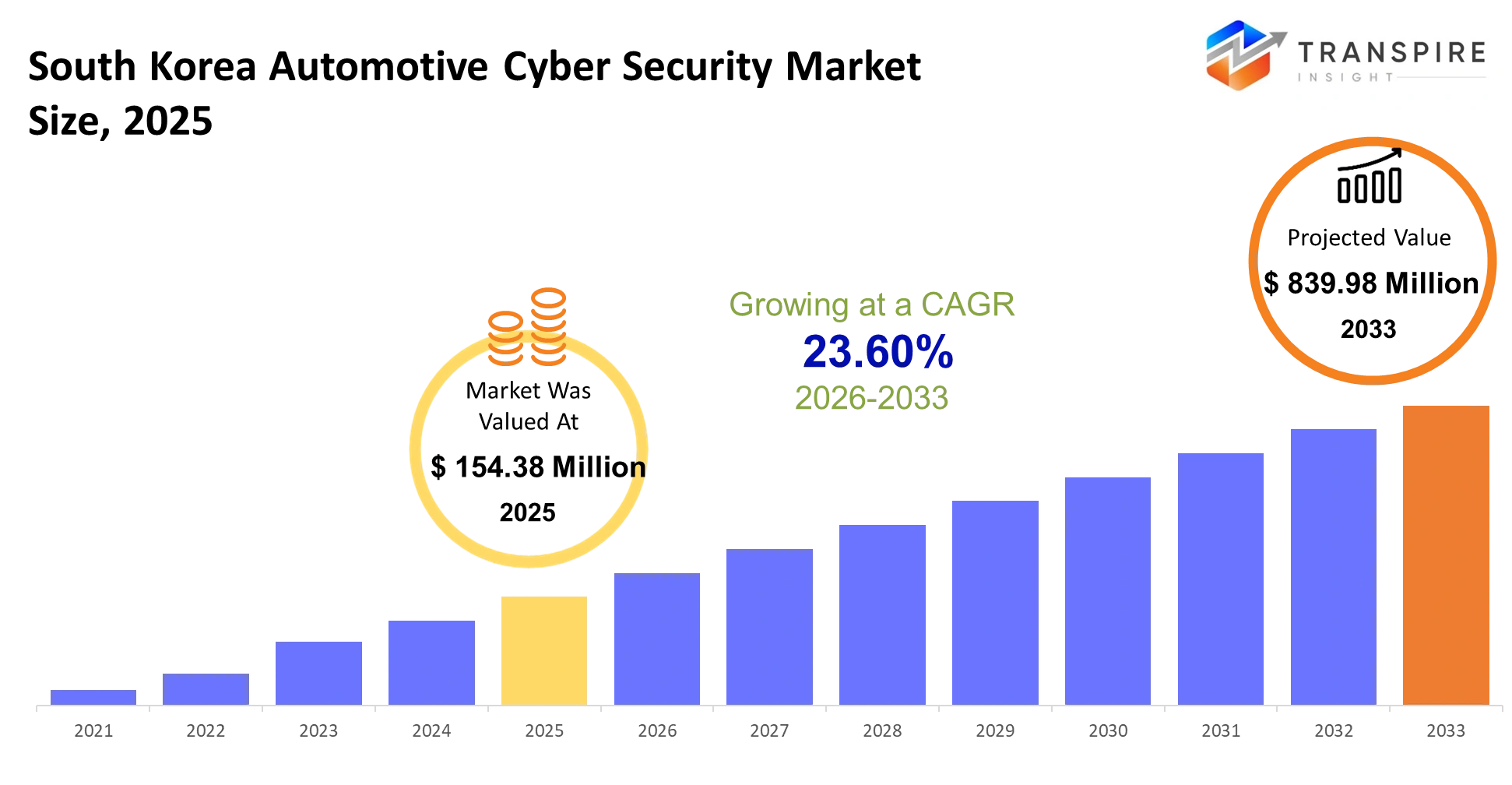
- South Korea Automotive Cyber Security Market Size 2025: USD 154.38 Million
- South Korea Automotive Cyber Security Market Size 2033: USD 839.98 Million
- South Korea Automotive Cyber Security Market CAGR: 23.60%
- South Korea Automotive Cyber Security Market Segments: By Security Type (Network Security, Endpoint Security, Application Security), By Application (Connected Vehicles, Autonomous Vehicles, Infotainment Systems), By End-User (OEMs, Tier 1 Suppliers)
To learn more about this report,  Download Free Sample Report
South Korea Automotive Cyber Security Market Summary:
South Korea Automotive Cyber Security Market size was estimated at USD 154.38 Millionin 2025 and is anticipated to reach USD 839.98 Million by 2033, growing at a CAGR of 23.60% from 2026 to 2033. The South Korean automotive cyber security market will develop through its connection between vehicle security needs and national data protection regulations for digital security. The market will evolve through the implementation of software-defined vehicles which include over-the-air updates and smart mobility platforms as standard features within the automotive ecosystem. South Korean consumers will expect their vehicles to provide digital services which include real-time navigation and app-based controls while they will develop greater awareness about potential privacy dangers. The automotive industry needs to establish security features as fundamental design elements which should operate without interruption to customer experiences.
South Korea will implement stricter regulations while its authorities seek to establish alignment with international vehicle cybersecurity standards and to introduce tougher rules for data protection and system security requirements. Local manufacturers will invest more deeply in secure architecture, not only to meet export standards but also to protect brand trust in a highly competitive domestic market. The development of vehicle-to-everything communication together with autonomous driving testing will create new risks because every connection point creates additional risk exposure. The market will shift toward predictive threat detection systems which will identify security weaknesses before they cause operational or safety problems.
Key Market Trends & Insights:
- The South Korean automotive cybersecurity market experiences continuous growth because more drivers adopt connected vehicle features. Drivers of contemporary vehicles need online systems to access navigation functions and vehicle diagnostics and entertainment options. The transition to this new system creates heightened danger from online threats which require security measures to safeguard data and communication systems and vehicle operation components against unauthorized access and operational disturbances.
- The South Korean government augments existing frameworks that govern vehicle safety standards and data protection requirements. The South Korean automotive cybersecurity market demonstrates this trend as automotive manufacturers and their partners must comply with cybersecurity standards. The regulations require organizations to implement security software development procedures and establish ongoing system surveillance for protection against security violations and safe vehicle operation.
- The South Korean automotive cybersecurity market exists primarily because electric and self-driving vehicles have become more widely adopted. The vehicles use software and sensors for their functions which creates multiple entry points for cyber attacks. Organizations will create effective cybersecurity systems that enable safe operations through their advanced manufacturing technologies and automated systems and remote access and driver assistance systems.
- The South Korea Automotive Cyber Security Market experiences increasing growth through partnerships between automotive manufacturers and technology companies. The partners work together to develop secure platforms which include their threat detection systems and real-time monitoring capabilities. The collaborative work will advance new technologies while solving difficult cybersecurity problems that secure vehicle systems against digital threats which come with new technology.
- Consumers in South Korea are becoming more aware of digital risks that modern vehicles bring to their drivers. The South Korea Automotive Cyber Security Market shows this trend because customers now prioritize security features when they assess vehicle performance and design. Manufacturers will allocate resources to better safety solutions because market demand for secure systems will drive their needs for improved protection methods which will build customer trust and sustain long-term market expansion.
South Korea Automotive Cyber Security Market Segmentation
By Security Type :
- Network Security: The South Korea Automotive Cyber Security Market needs network security solutions because vehicles now connect to networks. In-vehicle communication systems, cloud connections, and external system links need ongoing protection. Growing vehicle-to-infrastructure data transfer will drive the need for secure gateways, firewalls, and intrusion detection systems throughout contemporary automotive systems.
- Endpoint Security: The South Korea Automotive Cyber Security Market treats endpoint security as its main priority because electronic control units and onboard devices now face increased cybersecurity threats. Every connected device needs security measures to defend against both unauthorized access and malware attacks. The combination of strong authentication and firmware protection and constant monitoring will create safer vehicle operations while diminishing system vulnerabilities in automotive networks.
- Application Security: The South Korea Automotive Cyber Security Market considers application security as vital because software-driven vehicles become more common. Vehicle applications need protection against both coding errors and external security threats. Secure software development practices, regular updates, and vulnerability testing will help maintain system reliability while supporting advanced digital features within automotive environments.
By Application :
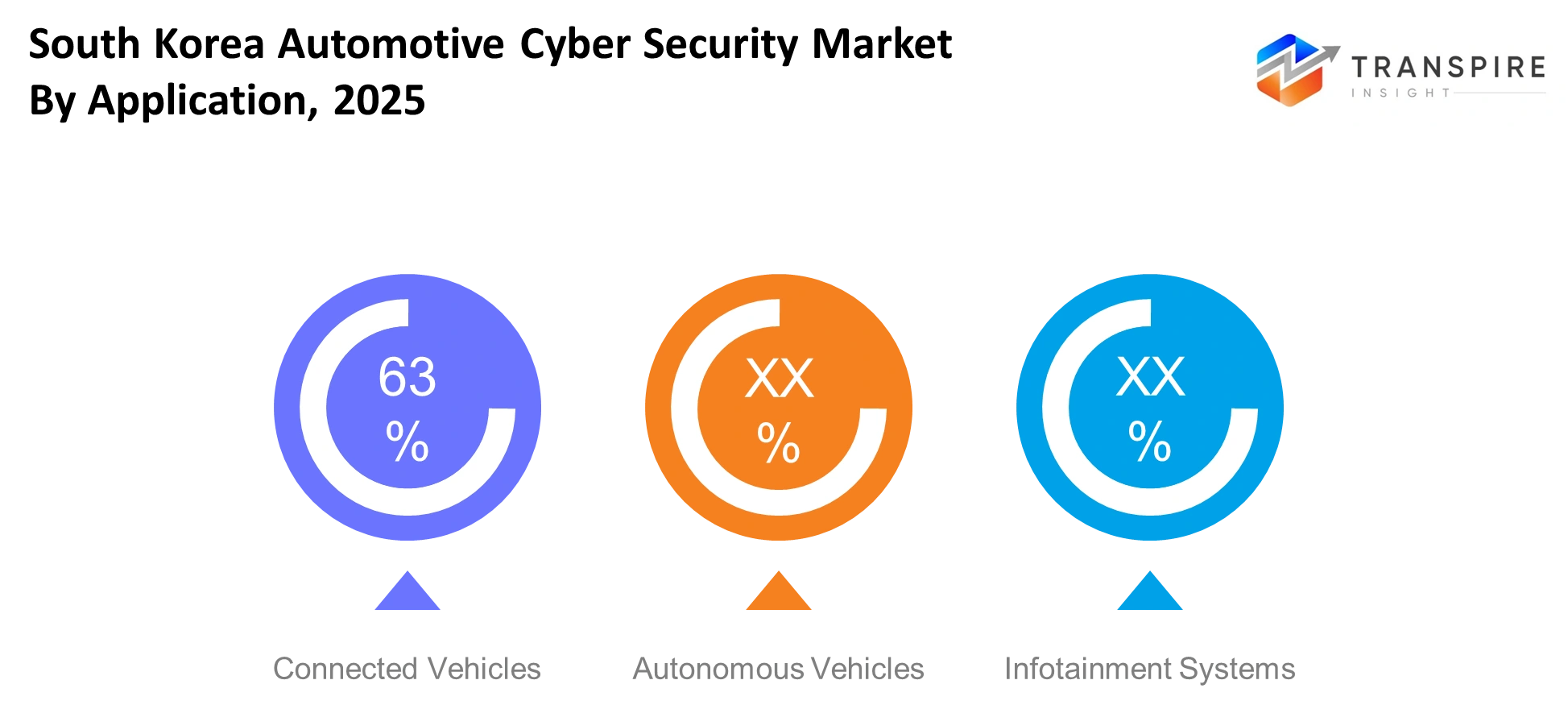
- Connected Vehicles: The South Korea Automotive Cyber Security Market experiences growth because connected vehicles need internet-based services which become more common in today's automotive industry. The process which allows vehicles and smartphones to exchange data with infrastructure systems gives hackers an opportunity to attack. Secure communication protocols and encryption methods will establish essential mechanisms which will safeguard sensitive data and enable safe network connections throughout transportation systems.
- Autonomous Vehicles: The South Korea Automotive Cyber Security Market shows increasing investment in autonomous vehicles because their operational safety depends on reliable security systems. All sensors and artificial intelligence systems and control units need protection against possible attacks. Cyber security solutions will establish dependable decision-making systems while blocking any unauthorized access that might endanger vehicle operation and passenger protection.
- Infotainment Systems: The South Korea Automotive Cyber Security Market considers infotainment systems as the primary entry point through which cyber attackers can infiltrate vehicle systems because these systems allow external connections. The system becomes more vulnerable to attacks when users combine multiple applications with navigation and entertainment functions. Modern vehicle environments will provide users with safe experiences because strong access controls and secure interfaces and regular updates will minimize security threats.
To learn more about this report, Download Free Sample Report
By End-User :
- OEMs: The South Korea Automotive Cyber Security Market research displays original equipment manufacturers who develop built-in security systems which they implement during their vehicle design process and production work. The security features which developers need to implement from their initial design stage will help them achieve their objective for long-term risk reduction. The market will experience advanced automotive development because companies will invest in secure system designs and follow safety regulations which build customer confidence.
- Tier 1 Suppliers: The South Korea Automotive Cyber Security Market shows Tier 1 Suppliers as essential partners who create secure systems and components for the market. The need for protected hardware and software solutions will grow because vehicle systems will continue to increase their operational complexity. The protection of the automotive supply chain will depend on manufacturers working together while they follow security standards.
Country Insights
- The South Korea Automotive Cyber Security Market benefits from a strong automotive production base and global technology leadership. Domestic manufacturers dedicate their efforts to establishing secure communication systems within their vehicle models. The rising export of connected vehicles has forced companies to implement global cybersecurity regulations which will produce steady growth that builds trust among consumers worldwide.
- The rising adoption of electric vehicles and self-driving vehicles in South Korea creates fresh security problems which stem from software development and connectivity needs. Vehicle systems now depend on sensors and cloud platforms and real-time data exchange, which makes them more vulnerable to cyber attacks. The situation will create a need for sophisticated security solutions such as intrusion detection systems and secure software update mechanisms.
- Korean governmental programs actively develop cyber security standards that automotive manufacturers use to protect their systems. Data privacy rules and smart mobility regulations and intelligent transport system policies create a framework that drives businesses to implement advanced security protections. The collaboration between technology companies and car manufacturers will enhance innovation while driving sustainable growth in the South Korean automotive cybersecurity market.
Recent Development News
In February 2026, hack which targeted South Korea exposed personal information of more than 165000 users who were part of a larger data breach which affected millions of people.
In January 2026, 34 million users were exposed to an expansive cyber attack, leading to the resignation of senior management and to regulatory investigations.
|
Report Metrics |
Details |
|
Market size value in 2025 |
USD 154.38 Million |
|
Market size value in 2026 |
USD 190.66 Million |
|
Revenue forecast in 2033 |
USD 839.98 Million |
|
Growth rate |
CAGR of 23.60% from 2026 to 2033 |
|
Base year |
2025 |
|
Historical data |
2021 - 2024 |
|
Forecast period |
2026 - 2033 |
|
Report coverage |
Revenue forecast, competitive landscape, growth factors, and trends |
|
Country scope |
South Korea |
|
Key company profiled |
Bosch GmbH, Continental AG, Harman International Industries Inc., Aptiv PLC, Denso Corporation, Infineon Technologies AG, NXP Semiconductors N.V., Argus Cyber Security Ltd., Karamba Security Ltd., Upstream Security Ltd., GuardKnox Cyber Technologies Ltd., BlackBerry Limited, Cisco Systems Inc., Intel Corporation, Synopsys Inc. |
|
Customization scope |
Free report customization (country, regional & segment scope). Avail customized purchase options to meet your exact research needs. |
|
Report Segmentation |
By Security Type (Network Security, Endpoint Security, Application Security), By Application (Connected Vehicles, Autonomous Vehicles, Infotainment Systems), By End-User (OEMs, Tier 1 Suppliers) |
Key South Korea Automotive Cyber Security Company Insights
- The company's operational activities in South Korea follow a dedicated focus on protecting embedded systems and ensuring safe vehicle network operations. Major corporations maintain their commitment to developing secure software systems together with advanced threat detection mechanisms and encryption solutions. The automotive manufacturing sector provides connecting vehicle platforms through which development teams can create integrated products that address rising cyber security challenges.
- The increasing popularity of connected and self-driving vehicles has prompted businesses to enhance their research facilities through partnerships with international technology companies. The evolution of regulatory standards requires businesses to develop new products while their investment in artificial intelligence-based security solutions enables them to detect threats more quickly and build stronger defenses within the South Korea Automotive Cyber Security Market.
South Korea Automotive Cyber Security Market Companies:
- Bosch GmbH
- Continental AG
- Harman International Industries Inc.
- Aptiv PLC
- Denso Corporation
- Infineon Technologies AG
- NXP Semiconductors N.V.
- Argus Cyber Security Ltd.
- Karamba Security Ltd.
- Upstream Security Ltd.
- GuardKnox Cyber Technologies Ltd.
- BlackBerry Limited
- Cisco Systems Inc
- Intel Corporation
- Synopsys Inc
South Korea Automotive Cyber Security Market Segmentation
By Security Type
- Network Security
- Endpoint Security
- Application Security
By Application
- Connected Vehicles
- Autonomous Vehicles
- Infotainment Systems
By End-User
- OEMs
- Tier 1 Suppliers
Frequently Asked Questions
Find quick answers to common questions.
The approximate South Korea Automotive Cyber Security Market size for the market will be USD 839.98 Million in 2033.
Key segments for the South Korea Automotive Cyber Security market are By Security Type (Network Security, Endpoint Security, Application Security), By Application (Connected Vehicles, Autonomous Vehicles, Infotainment Systems), By End-User (OEMs, Tier 1 Suppliers).
Major South Korea Automotive Cyber Security market players are Bosch GmbH, Continental AG, Harman International Industries Inc., Aptiv PLC, Denso Corporation, Infineon Technologies AG, NXP Semiconductors N.V., Argus Cyber Security Ltd., Karamba Security Ltd., Upstream Security Ltd., GuardKnox Cyber Technologies Ltd., BlackBerry Limited, Cisco Systems Inc., Intel Corporation, Synopsys Inc.
The South Korea Automotive Cyber Security Market size is USD 154.38 Million in 2025.
The South Korea Automotive Cyber Security market CAGR is 23.60%.
- Bosch GmbH
- Continental AG
- Harman International Industries Inc.
- Aptiv PLC
- Denso Corporation
- Infineon Technologies AG
- NXP Semiconductors N.V.
- Argus Cyber Security Ltd.
- Karamba Security Ltd.
- Upstream Security Ltd.
- GuardKnox Cyber Technologies Ltd.
- BlackBerry Limited
- Cisco Systems Inc
- Intel Corporation
- Synopsys Inc
Recently Published Reports
-
Apr 2026
3D Optical Profiler Market
3D Optical Profiler Market Size, Share & Analysis Report By Type (Desktop 3D Optical Profiler, and Portable 3D Optical Profiler), By Technology (Confocal Technology, and White Light Interference), By End-Use Industry (Manufacturing, Research Institutions, Automotive, Aerospace and Defense, Medical Devices, and Other), and Geography (North America, Europe, Asia-Pacific, Middle East and Africa, South and Central America), 2021 - 2031
-
Apr 2026
Depth Sensor Market
Depth Sensor Market Size, Share & Analysis Report By Type (Infrared Depth Sensors, Time-of-Flight (ToF) Sensors, Stereo Vision Sensors, Structured Light Sensors, Ultrasonic Depth Sensors), By Application (Automotive, Robotics, Gaming, Consumer Electronics, Industrial Automation, Healthcare, Security & Surveillance, Others), By End Users (Automotive Manufacturers, Consumer Electronics Companies, Healthcare Providers, Industrial Companies, Security Agencies, Gaming Companies, Robotics Companies, Others), and Geography (North America, Europe, Asia-Pacific, Middle East and Africa, South and Central America), 2021 – 2031
-
Apr 2026
Digital Manufacturing Market
Digital Manufacturing Market Size, Share & Analysis Report By Component (Hardware, Software, and Services), By Technology (Robotics, 3D Printing, Internet of Things (IoT), and Others), By Application (Automotive and Transportation, Aerospace and Defense, Consumer Electronics, Industrial Machinery, and Others), By Process Type (Computer-Based Designing, Computer-Based Simulation, Computer 3D Visualization, Analytics, and Others), and Geography (North America, Europe, Asia-Pacific, Middle East and Africa, South and Central America), 2021 – 2031
-
Apr 2026
Digital Visa Services Market
Digital Visa Services Market Size, Share & Analysis Report By Type (Individual Travelers, Group Travelers), By Application (Tourism, Business Travel, Others), and Geography (North America, Europe, Asia-Pacific, Middle East and Africa, South and Central America), 2021 – 2031