

Recreational And Vacation Camp Market Summary:
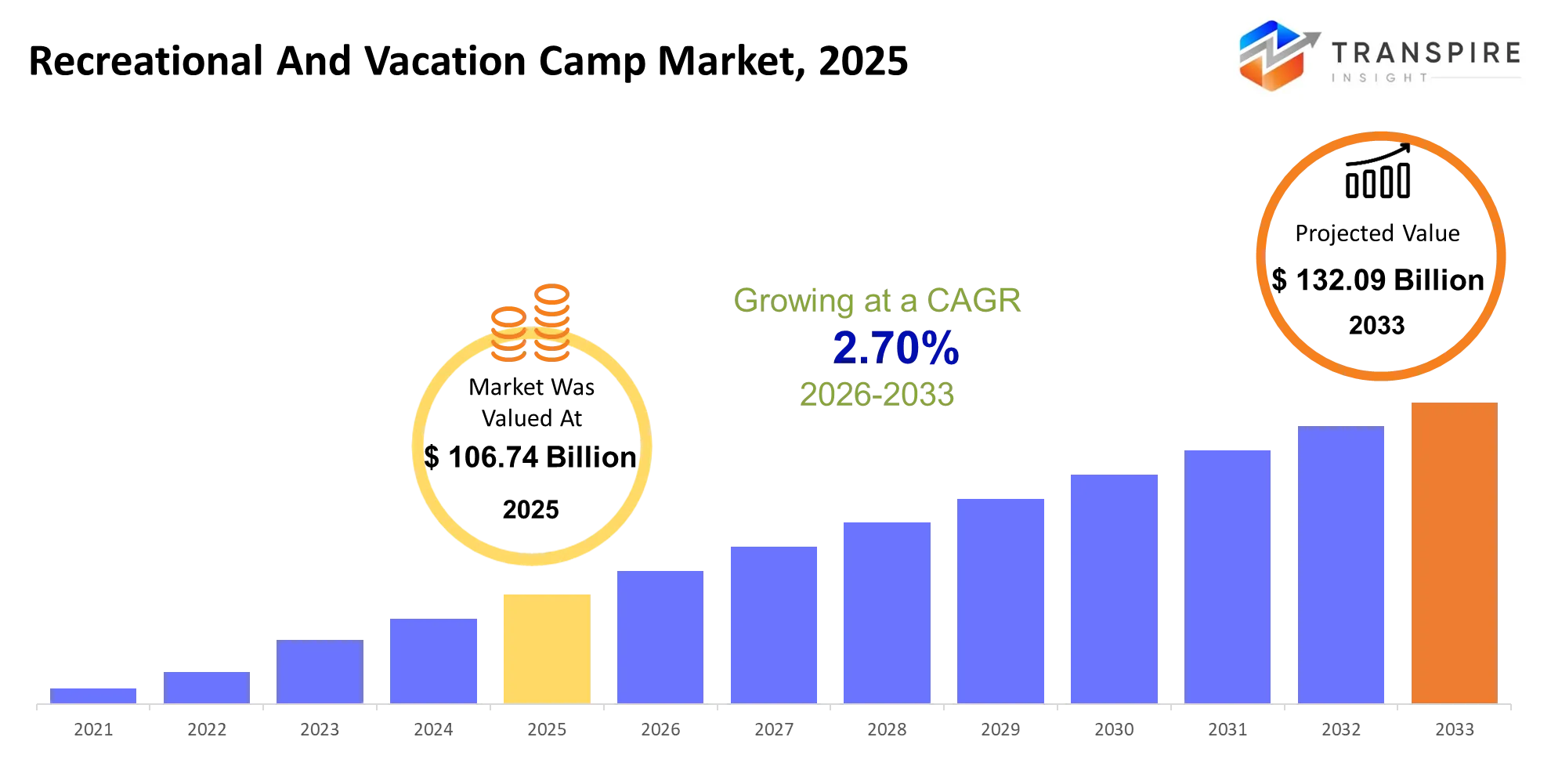
As per Transpire Insight, The Recreational and Vacation Camp Market size is estimated at USD 106.74 billion in 2025 and is anticipated to reach USD 132.09 billion by 2033, growing at a CAGR of 2.70% from 2026 to 2033.
The recreational and holiday camp market turns time off into scheduled outdoor trips, adventure skill sessions, family vacations, and group outings. In the last three to five years, this market has outgrown cheap tents and seasonal youth camps to bookable outdoor hospitality experiences such as cabins, glamping, wellness trips, and tech-enabled activity guides. This has both introduced families and young adults to domestically available outdoor getaways, while remote and flexible work arrangements have created demand for weekday and longer-term stays. A structural change that has accelerated is digital distribution; mobile booking, real-time inventory search and booking, direct payments, and AI-powered trip itineraries make it comparable to hotels and other travel experiences by reducing search friction and helping operators sell excess capacity, as well as creating loyalty through repeated targeted offers. Fulfilling the demands of low-cost nature escapes without sacrificing safety information, comfort, and user-friendliness is set to catalyse growth, increasing the share of private campgrounds and glamping resorts to 31% of nights, the highest rate ever.
Recreational And Vacation Camp Market Size & Forecast:
- Market Size 2025: USD 106.74 Billion
- Expected Market Value (2033): USD 132.09 Billion
- Forecast CAGR (2026–2033): 2.70%
- Leading Region in 2025: North America
- Fastest Growing Region: Asia Pacific
- Key Company Profiles: YMCA, Boy Scouts of America, Girl Scouts of the USA, Camp America, KOA, Thousand Trails, Hipcamp, Outward Bound, Recreation Resource Management, American Camp Association, Under Canvas, Equity Lifestyle Properties, Kampgrounds of America, Sun Communities, Good Sam.
Key Recreational And Vacation Camp Market Insights:
- The market is moving away from seasonal, low-service camping and moving towards digitally discoverable, comfort-focused outdoor experiences that bring nature, wellness, and flexible short breaks together. Operators are making money on the backs of high-quality inventory, direct booking data, and year-round programming, not just by adding more pitches.
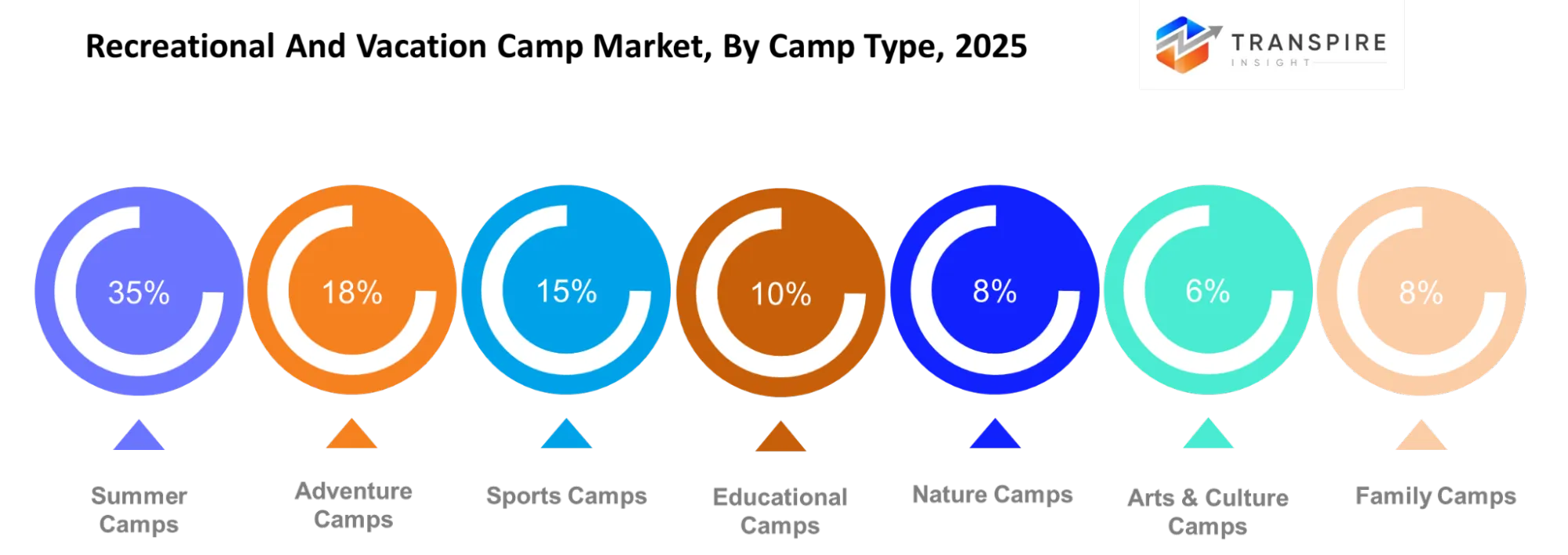
- With families seeking safer and more trackable youth experiences, Summer camps are up 34.50%, and YMCA is implementing digital registration and parent communication tools.
- Adventure camps record a CAGR of 8.40%, while Outward Bound builds on its expedition-led learning approach as younger audiences are looking for guided challenge rather than passive sightseeing.
- North America accounts for 43.00%, and 72% of campers consider camping to be a cost-effective travel option, according to KOA's research-led amenity investment.
- Europe accounts for 27.00%, and Hipcamp's UK and European inventory growth enables discovery of rural and glamping homes from a mobile-first perspective.
- Platform-led supply onboarding is making previously fragmented campsites more easily comparable and bookable in Asia Pacific.
- The region of Latin America represents 5.50%, and experience-led international guests are drawn to eco-lodges and community-based nature camps.
- The Middle East and Africa account for 4.50%, and desert glamping and conservation tourism are driving a new trend towards curated and premium outdoor experiences.
- For camping experiences, 29% were glamped, while Under Canvas spent $50 million on improved campsites and two new campsites.
- 62% of campers like to escape on the weekend, and operators are restructuring inventory to offer short-term, higher-value stays.
What are the Key Drivers, Restraints, and Opportunities in the Recreational And Vacation Camp Market?
Driver:
Digital booking and payment adoption is accelerating camp conversion. In 2025, Sawyer processed 13 million camp and activity bookings, while 71% of surveyed parents booked through a phone or tablet. This shift moves camps from office-hour administration to always-on registration, reducing booking friction and improving capacity utilisation. Early digital publishing also enables operators to forecast demand months in advance, manage waitlists, optimise session capacity, and refine pricing. Consequently, technology is becoming a direct revenue-management tool rather than simply an administrative convenience.
Restraint:
Capacity expansion remains difficult because camp development depends on suitable land, permits, utilities, insurance, seasonal staff, and local environmental rules. Youth-oriented operators also face persistent safeguarding costs: background checks, staff screening, medical records, emergency readiness, and activity-specific supervision are essential to credibility but increase operating complexity. The American Camp Association requires criminal-background screening for staff at accredited camps, while licensing requirements vary across jurisdictions.
Opportunity:
Specialised, technology-enabled programming is widening the camp market by combining outdoor recreation with sports, coding, wellness, and environmental learning. Predictive scheduling and mobile engagement help operators identify underused sessions, adjust capacity, and improve participation. Asia-Pacific and emerging tourism destinations offer strong investment opportunities as domestic tourism infrastructure improves. Developing nature-based and family-oriented facilities in these markets can create differentiated experiences, extend seasonal utilization, attract new customer groups, and generate higher revenue through premium activities and flexible accommodation options.
What Has the Impact of Artificial Intelligence Been on the Recreational And Vacation Camp Market?
AI shifts from a pilot camp technology to an operational tool. It allows camp operators to manage inquiries through AI chatbots at any hour, create end-of-day reports to handle repetitive tasks, and match historical data to better support enrollment management, weather forecasts, activity popularity, and staffing levels to improve resource allocation, counsellor assignment, and session planning. Data-driven insights, such as potential oversold activity enrollments, conversions from waitlists, equipment requirements, and low occupancy, identify when to adjust schedules and marketing to avoid capacity being reached.
Digital check-in, GPS tracking, remote alerts, automated emails, and smart inventory control connect data to health, safety, and service delivery. The American Camp Association reports that more than 70% of camps use digital technology, so the use of AI can leverage existing camp technology systems, but may not be as accessible for camps with small budgets lacking reliable data or dedicated technical professionals, or unable to provide accurate predictions, which could lead to poorly scheduled activities and understaffing.
In April 2026, Universal AI University partnered with the MIT International Science & Technology Initiatives (MISTI) – India to launch a unique AI Summer Residency program. This development successfully provides hands-on project-based engineering and non-technical AI education directly within an immersive residential camp environment.
https://impact.indiaai.gov.in/events/yuvai
Key Recreational And Vacation Camp Market Trends:
The market is evolving from traditional seasonal camping to managed outdoor hospitality, with comfort, technology, and unique programming all becoming drivers of yield. Rather than just filling up rooms, operators are increasingly looking for profitable guests, direct relationships, and flexible inventory.
- Glamping is a niche upgrade that's now a revenue lever; RoverPass saw 43.6% growth in glamping reservations.
- Intermediary dependence is being replaced by direct digital booking, with almost 60% of bookings coming from campground channels.
- Mobile planning is promoting spontaneous stays, with Hipcamp saying same-day bookings increased 33% year over year.
- Families are going back to outdoor stays and are prepared to pay for operators to provide child-friendly facilities, guided programs, and safer shared facilities.
- Beyond children's camps, there is growing demand for adult-only and solo trips, changing the program to social, wellness, and adventure.
- 80% of campers reported “blended travel” as they combine camps with hotels, resorts, or vacation homes.
- A reliable Wi-Fi connection is now an extension of the stay, facilitating remote working, education, digital maps, and on-site shopping.
- AI is now entering revenue management, where predictions and recommendations for occupancy levels and prices are replacing the traditional approach of setting seasonal rates by hand.
- Short breaks are still commercially significant, and stays of less than 21 days make up 94.2% of bookings.
- Resilient, experience-driven inventory (cabins, standout stays, wellness areas, and weather-ready facilities) is preferred over homogenised pitches.
Recreational And Vacation Camp Market Segmentation
By Age Group:
Children and Teenagers remain the core customer base because school calendars, parental supervision requirements, and structured programming support consistent enrollment. Young Adults increasingly favour adventure-oriented experiences that combine recreation, independence, and social interaction. Adults and Families support weekend and short-stay formats that fit tighter schedules. Seniors create opportunities for wellness, nature, and low-intensity recreation programs. Corporate Groups can strengthen off-season utilisation through team-building, leadership, and retreat-oriented activities, helping operators diversify revenue beyond traditional youth-focused periods.
By Activity:
Outdoor Recreation and Sports remain fundamental participation drivers, supported by structured games, fitness programs, and nature-based experiences. Hiking and Water Activities strengthen destination appeal by offering immersive experiences that can command premium pricing. Arts & Crafts and Educational Programs provide differentiation through creative and learning-oriented content, particularly for younger participants. Adventure Activities support higher-value packages through guided challenges and specialised equipment. Wellness Activities create additional shoulder-season opportunities by incorporating yoga, mindfulness, fitness, and nature-based relaxation into recreational camp programs.
By Accommodation:
Cabins and Tents remain important formats because they preserve the traditional outdoor experience while allowing operators to accommodate participants at scale. Lodges and Cottages provide greater comfort and privacy, making them suitable for families and premium customers. RVs benefit from flexible road-based travel and appeal to independent campers seeking extended stays. Hostels provide affordable accommodation for younger travellers and group participants. Resorts support premium positioning by combining recreation with hospitality amenities, enabling operators to attract families and higher-spending customers seeking convenient, experience-rich vacations.
By Booking Channel:
Direct Booking and Camp Websites remain strategically important because operators retain greater control over customer relationships, pricing, and margins. Online Travel Agencies and Travel Agents expand visibility by connecting camps with broader travel audiences. Mobile Apps improve convenience through instant reservations, digital payments, reminders, and real-time communication. Group Booking supports schools, corporations, and youth organisations by simplifying high-volume reservations. Membership Organizations encourage repeat participation through discounts, community engagement, and loyalty benefits, strengthening customer retention and improving occupancy across seasonal operating periods.
By Customer Type:
Families and Individuals form the broadest customer base, supported by leisure travel, recreation, and short vacation requirements. Schools and Youth Organisations generate predictable group volumes through educational trips, structured activities, and seasonal programs. Corporates create demand for retreats, leadership development, and team-building experiences, particularly during traditional off-peak periods. Tour Operators expand packaged travel distribution by combining camps with transportation and destination activities. Government Organisations can support community recreation, youth development, and publicly funded outdoor programs, creating additional institutional demand alongside commercial customers.
By Duration:
Day Camps maximise accessibility by serving local families without accommodation requirements, improving facility utilisation and lowering participation barriers. Weekend Camps and 1-week programs balance convenience with meaningful engagement, fitting family schedules and short leisure breaks. 2-week and 3–4-week camps encourage deeper participation through progressive activities, skill development, and stronger social connections. Long-Term Camps can support specialised training and extended experiences, while Seasonal Camps maximise annual utilisation by aligning programming with school holidays, tourism cycles, and favourable weather conditions across different destinations.
What are the Key Use Cases Driving the Recreational And Vacation Camp Market?
Core use cases centre on Summer Camps, which represent 34.50% of the market and monetise supervised recreation through programs for youth. Sports, arts, educational, and outdoor activities create repeat enrollment while accommodation and meals raise revenue per participant.
Expanding applications include Adventure Camps, representing 18.00%, where hiking, water activities, and challenges support pricing and tourism. Family, wellness, and nature programs extend camp utilisation beyond youth seasons, while corporate and school groups fill off-season capacity.
Emerging use cases combine recreation with technology and learning, including coding, environmental learning, team-building, and digital-free retreats. Mobile registration, communication, and predictive scheduling allow operators to package experiences efficiently, test programs, and adjust capacity around demand.
|
Report Metrics |
Details |
|
Market size value in 2025 |
USD106.74 Billion |
|
Market size value in 2026 |
USD 109.62 Billion |
|
Revenue forecast in 2033 |
USD 132.09 Billion |
|
Growth rate |
CAGR of 2.70% from 2026 to 2033 |
|
Base year |
2025 |
|
Historical data |
2021 - 2024 |
|
Forecast period |
2026 - 2033 |
|
Report coverage |
Revenue forecast, competitive landscape, growth factors, and trends |
|
Regional scope |
United States; Canada; Mexico; United Kingdom; Germany; France; Italy; Spain; Denmark; Sweden; Norway; China; Japan; India; Australia; South Korea; Thailand; Brazil; Argentina; South Africa; Saudi Arabia; United Arab Emirates |
|
Key companies profiled |
YMCA, Boy Scouts of America, Girl Scouts of the USA, Camp America, KOA, Thousand Trails, Hipcamp, Outward Bound, Recreation Resource Management, American Camp Association, Under Canvas, Equity Lifestyle Properties, Kampgrounds of America, Sun Communities, Good Sam. |
|
Customization scope |
Free report customization (country, regional & segment scope). Available customized purchase options to meet your exact research needs. |
|
Report Segmentation |
Camp Type (Summer Camps, Adventure Camps, Sports Camps, Educational Camps, Nature Camps, Arts & Culture Camps, Family Camps, Wellness Camps); Age Group (Children, Teenagers, Young Adults, Adults, Families, Seniors, Corporate Groups); Activity (Outdoor Recreation, Sports, Hiking, Water Activities, Arts & Crafts, Educational Programs, Adventure Activities, Wellness Activities); Accommodation (Cabins, Tents, Lodges, RVs, Cottages, Hostels, Resorts); Booking Channel (Direct Booking, Online Travel Agencies, Camp Websites, Travel Agents, Group Booking, Mobile Apps, Membership Organizations); Customer Type (Individuals, Families, Schools, Corporates, Youth Organizations, Tour Operators, Government Organizations); Duration (Day Camps, Weekend Camps, 1 Week, 2 Weeks, 3–4 Weeks, Long-Term Camps, Seasonal Camps). |
Which Regions are Driving the Recreational And Vacation Camp Market Growth?
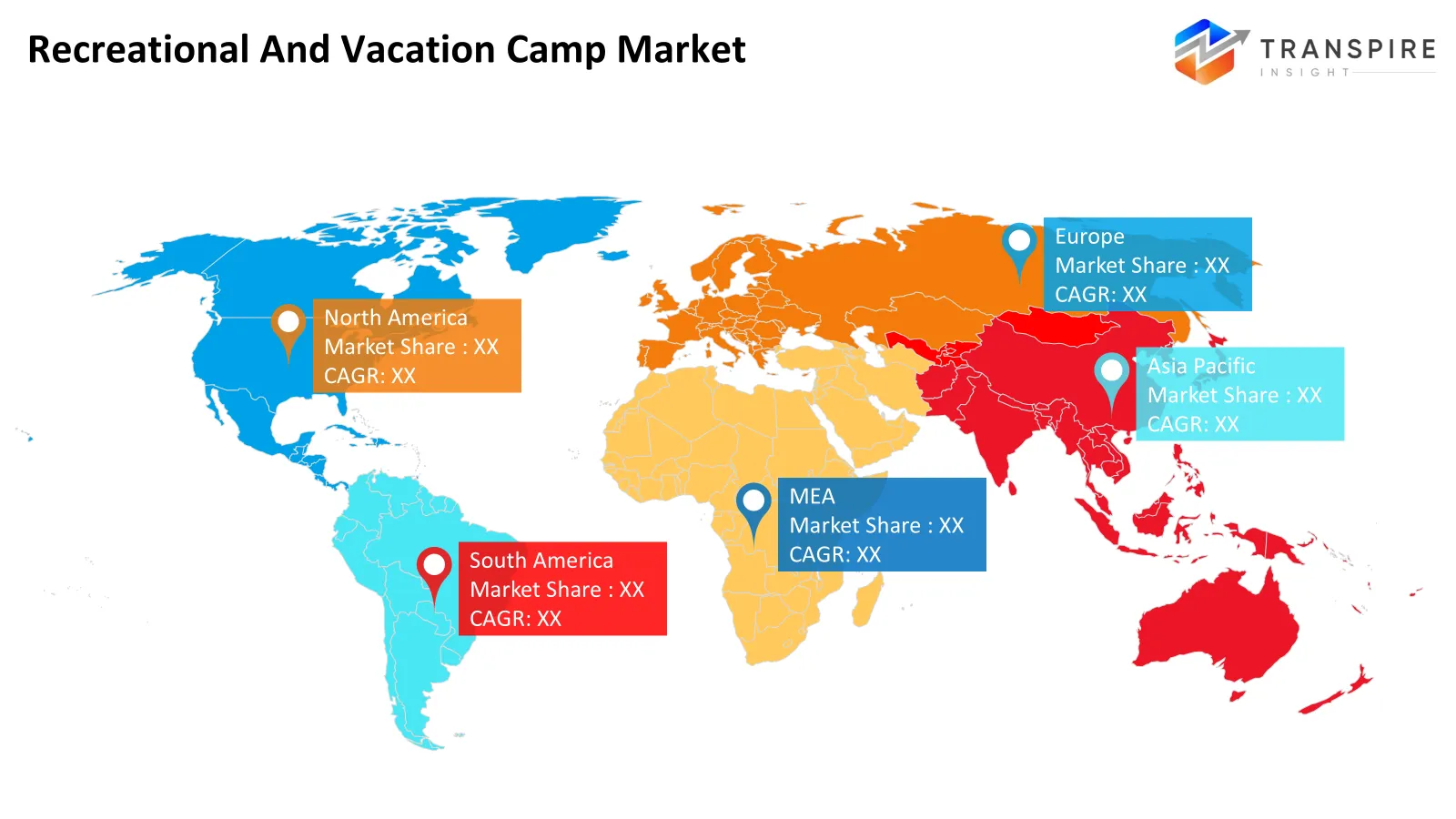
North America currently commands the largest market share, at 43.00%, supported by existing campground infrastructure, high RV ownership, proximity to national parks, and the history of well-established youth camps. North America has the critical mass of organisations across the market, including private operators, franchisers, membership organisations, equipment suppliers and online booking systems. North America has more than 52 million households who camp, and participation continues to be well above pre-pandemic levels, creating a healthy pipeline of repeat demand; at the same time, economic conditions continue to bring more campers into the sector, as 72% recognise the value of an outdoor overnight.
In August 2026, digital outdoor booking platform Hipcamp acquired BookOutdoors, an online travel reservation platform for campgrounds, RV parks, cabins, and glamping resorts.
https://www.hipcamp.com/journal/company-news/hipcamp-acquires-bookoutdoors
Europe holds a 27.00% share, driven by high volumes of cross-border tourism, rail and road connectivity, and a high proportion of existing holiday parks. This market relies on domestic and regional leisure trips, rather than heavy reliance on RV-led operations; although increased land protection and tougher environmental controls present development challenges, they also help protect destination quality and benefit eco-certified operators. Younger, short-distance travellers are driving demand for camping, cycling, hiking and family holiday formats, especially in the absence of US-style long-haul international trips.
In January 2026, European Camping Group (ECG) certified 64 of its campsites under prominent eco-label frameworks like Green Key and the EU Ecolabel. This action directly boosts its competitive edge by attracting high-spending travellers who prioritise strong environmental credentials and sustainable destination management.
https://www.ecg.camp/en/ecg-hits-the-mark-64-eco-certified-campsites-for-the-2026-season/
Asia Pacific accounts for 20.00% of the market and is projected to be the fastest-growing market at a CAGR of 9.20%, mainly due to increasing disposable income and a rising number of middle-class travellers and online travel penetration. The camp supply in the region was highly scattered until recently, when mobile booking platforms and discovery on social media made rural, coastal, and mountain accommodations more commercially visible. The ongoing recovery of domestic tourism has driven the development of high-end cabins, adventure programs, and resort-style camping in the region. In the coming years, there are opportunities in India, Southeast Asia, Australia, Japan, and South Korea with increased interest among middle-class urban consumers in close-to-home wellness retreats and professionally operated outdoor getaways.
In February 2026, Visama Tented Camps celebrated the official product launch of its new luxury eco-retreat, Visama Explorer Nan, in the lush highlands of northern Thailand. This strategic rollout directly responds to the regional boom in premium outdoor lodging across the Asia Pacific.
https://www.travelifemagazine.com/luxury-glamping-in-asia/
Who are the Key Players in the Recreational And Vacation Camp Market, and how do they compete?
Competition includes mission-based youth organisations, a network of private and public campgrounds, membership-based operators, and digital marketplaces. Competitive differentiation focuses on safety credentials, property access, experience design, and booking ease. YMCA, Boy Scouts of America, Girl Scouts of the USA, Camp America and Outward Bound compete in mission-based youth programming, staff training and specific youth-education or adventure programming formats. American Camp Association maintains standards for the 13,000+ camps and outdoor adventure programs.
Kampgrounds of America and KOA compete based on site consistency, national franchise strength, and data-enabled outdoor hospitality services. Thousand Trails and Equity Life Style Properties compete based on recurring RV site subscriptions and membership; Thousand Trails had about 108,700 yearly subscriptions and a 5.1% increase in annual dues-based memberships. Sun Communities and Good Sam compete based on the strength of their RV resorts, loyalty program benefits, and travel-related services. Hipcamp grows based on marketplace size, private-land inventory, and mobile discovery; it doubled its private camp inventory to 565,000 campsites. Under Canvas targets high-end travellers with destination glamping, and Recreation Resource Management runs public land parks.
Key Players are:
- YMCA
- Boy Scouts of America
- Girl Scouts of the USA
- Camp America
- KOA
- Thousand Trails
- Hipcamp
- Outward Bound
- Recreation Resource Management
- American Camp Association
- Under Canvas
- Equity Lifestyle Properties
- Kampgrounds of America
- Sun Communities
- Good Sam
Recent Development News
- In March 2026, Kampgrounds of America, Inc. (KOA) formed a technology partnership with AdventureGenie, an AI-powered trip-planning platform. This development enhances the consumer booking experience by introducing specialised route-mapping tools, starting with a collaborative Route 66 Centennial itinerary series, to integrate interactive travel planning directly with physical campground lodging. https://www.koapressroom.com/press-releases/
- In July 2026, The Walt Disney Company partnered with the American Camp Association and American Camp Foundation to fund hundreds of summer-camp scholarships for underserved children across the United States. The partnership lowers affordability barriers, supports utilisation at accredited camps, and strengthens the market’s social-access proposition alongside commercial recreational travel. https://www.acacamps.org/news/press-release/walt-disney-company-american-camp-association-american-camp-foundation-partner-expand-access-summer-camp
What Strategic Insights Define the Future of the Recreational And Vacation Camp Market?
The market will evolve to a barbell model where low-cost self-serve camping is complemented by premium, managed outdoor experiences with cabins, glamping, wellness, activity guides, and booking solutions. The hidden risk is climate disruption – high temperatures, wildfires, floods, water restrictions and insurance inflation may decimate seasonal capacity at high-traffic nature destinations. They also add to the costs of resilient utilities, emergency planning and guest messaging. The opportunity is enhanced yield management for outdoor inventory where weather, a calendar of events, booking trends, dynamic prices and activity recommendations enable camps to maximise shoulder-season capacity without diminishing brand integrity, especially considering 26% of camping trips are already booked in September and October. From a strategic perspective, operators should invest in weather-proofed accommodation options, direct digital booking solutions, safety compliance, and versatile experiences for families, solos, corporate cohorts and ageing demographics. The strategy for success is to build on year-round guest relationships, not just seasonal occupancy.
Key Segmentations are:
Camp Type
- Summer Camps
- Adventure Camps
- Sports Camps
- Educational Camps
- Nature Camps
- Arts & Culture Camps
- Family Camps
- Wellness Camps
Age Group
- Children
- Teenagers
- Young Adults
- Adults
- Families
- Seniors
- Corporate Groups
- Activity
Outdoor Recreation
- Sports
- Hiking
- Water Activities
- Arts & Crafts
- Educational Programs
- Adventure Activities
- Wellness Activities
Accommodation
- Cabins
- Tents
- Lodges
- RVs
- Cottages
- Hostels
- Resorts
Booking Channel
- Direct Booking
- Online Travel Agencies
- Camp Websites
- Travel Agents
- Group Booking
- Mobile Apps
- Membership Organisations
Customer Type
- Individuals
- Families
- Schools
- Corporates
- Youth Organizations
- Tour Operators
- Government Organizations
Duration
- Day Camps
- Weekend Camps
- 1 Week
- 2 Weeks
- 3–4 Weeks
- Long-Term Camps
- Seasonal Camps
By Regional Analysis
North America
- US
- Canada
- Mexico
Europe
- Germany
- UK
- France
- Italy
- Spain
- Russia
- Rest of Europe
Asia Pacific
- China
- Japan
- India
- South Korea
- Australia
- Rest of Asia Pacific
South America
- Brazil
- Argentina
- Rest of South America
Middle East & Africa
- UAE
- Saudi Arabia
- Qatar
- South Africa
- Rest of the Middle East & Africa
Frequently Asked Questions
Find quick answers to common questions.
The recreational and vacation camp market size was valued at USD 106.74 billion in 2025 and is poised to reach USD 132.09 billion by 2033, expanding at a 2.70% CAGR.
Key segments for the recreational and vacation camp market are Camp Type (Summer Camps, Adventure Camps, Sports Camps, Educational Camps, Nature Camps, Arts & Culture Camps, Family Camps, Wellness Camps); Age Group (Children, Teenagers, Young Adults, Adults, Families, Seniors, Corporate Groups); Activity (Outdoor Recreation, Sports, Hiking, Water Activities, Arts & Crafts, Educational Programs, Adventure Activities, Wellness Activities); Accommodation (Cabins, Tents, Lodges, RVs, Cottages, Hostels, Resorts); Booking Channel (Direct Booking, Online Travel Agencies, Camp Websites, Travel Agents, Group Booking, Mobile Apps, Membership Organizations); Customer Type (Individuals, Families, Schools, Corporates, Youth Organizations, Tour Operators, Government Organizations); Duration (Day Camps, Weekend Camps, 1 Week, 2 Weeks, 3–4 Weeks, Long-Term Camps, Seasonal Camps).
Growth is primarily driven by digital booking adoption, specialized outdoor experiences, family-oriented recreation, premium adventure programs, wellness tourism, and investment in nature-based camp infrastructure.
The recreational and vacation camp market is led by major manufacturers, including YMCA, Boy Scouts of America, Girl Scouts of the USA, Camp America, KOA, Thousand Trails, Hipcamp, Outward Bound, Recreation Resource Management, American Camp Association, Under Canvas, Equity Lifestyle Properties, Kampgrounds of America, Sun Communities, Good Sam.
North America holds 43.00% of the market, supported by mature campground infrastructure, established outdoor recreation culture, strong private investment, digital booking systems, and diversified RV, family, adventure, and premium camping formats.
Commercial opportunities include technology-enabled booking, premium adventure and wellness camps, nature-based facilities in Asia Pacific, specialized educational programs, flexible accommodation, and off-season corporate and family experiences.
- YMCA
- Boy Scouts of America
- Girl Scouts of the USA
- Camp America
- KOA
- Thousand Trails
- Hipcamp
- Outward Bound
- Recreation Resource Management
- American Camp Association
- Under Canvas
- Equity Lifestyle Properties
- Kampgrounds of America
- Sun Communities
- Good Sam
About the Authors

Mayur Shinde
I am Mayur Shinde, a Senior Research Analyst at Transpire Insight, specializing in the Automotive & Transportation and Information & Communication Technology (ICT) Industry. My work focuses on analyzing emerging market trends, technological advancements, competitive landscapes, and industry developments to deliver accurate, data-driven insights. I am passionate about transforming complex market information into clear, actionable content that helps businesses, professionals, and decision-makers stay informed and make confident strategic decisions.

Chakradhar Khansole
Chakradhar serves as the Research Director at Transpire Insight, bringing over 8 years of experience in technology, innovation, and strategic market intelligence. He specializes in transforming complex market data into actionable business insights that enable organizations to make informed, growth-oriented decisions. Recognized for his strategic vision and analytical expertise, Chakradhar leads high-impact research initiatives, delivering comprehensive market assessments, competitive intelligence, and forward-looking industry analysis.
Recently Published Reports
-
Apr 2026
3D Optical Profiler Market
3D Optical Profiler Market Size, Share & Analysis Report By Type (Desktop 3D Optical Profiler, and Portable 3D Optical Profiler), By Technology (Confocal Technology, and White Light Interference), By End-Use Industry (Manufacturing, Research Institutions, Automotive, Aerospace and Defense, Medical Devices, and Other), and Geography (North America, Europe, Asia-Pacific, Middle East and Africa, South and Central America), 2021 - 2031
-
Apr 2026
Depth Sensor Market
Depth Sensor Market Size, Share & Analysis Report By Type (Infrared Depth Sensors, Time-of-Flight (ToF) Sensors, Stereo Vision Sensors, Structured Light Sensors, Ultrasonic Depth Sensors), By Application (Automotive, Robotics, Gaming, Consumer Electronics, Industrial Automation, Healthcare, Security & Surveillance, Others), By End Users (Automotive Manufacturers, Consumer Electronics Companies, Healthcare Providers, Industrial Companies, Security Agencies, Gaming Companies, Robotics Companies, Others), and Geography (North America, Europe, Asia-Pacific, Middle East and Africa, South and Central America), 2021 – 2031
-
Apr 2026
Digital Manufacturing Market
Digital Manufacturing Market Size, Share & Analysis Report By Component (Hardware, Software, and Services), By Technology (Robotics, 3D Printing, Internet of Things (IoT), and Others), By Application (Automotive and Transportation, Aerospace and Defense, Consumer Electronics, Industrial Machinery, and Others), By Process Type (Computer-Based Designing, Computer-Based Simulation, Computer 3D Visualization, Analytics, and Others), and Geography (North America, Europe, Asia-Pacific, Middle East and Africa, South and Central America), 2021 – 2031
-
Apr 2026
Digital Visa Services Market
Digital Visa Services Market Size, Share & Analysis Report By Type (Individual Travelers, Group Travelers), By Application (Tourism, Business Travel, Others), and Geography (North America, Europe, Asia-Pacific, Middle East and Africa, South and Central America), 2021 – 2031