Market Summary
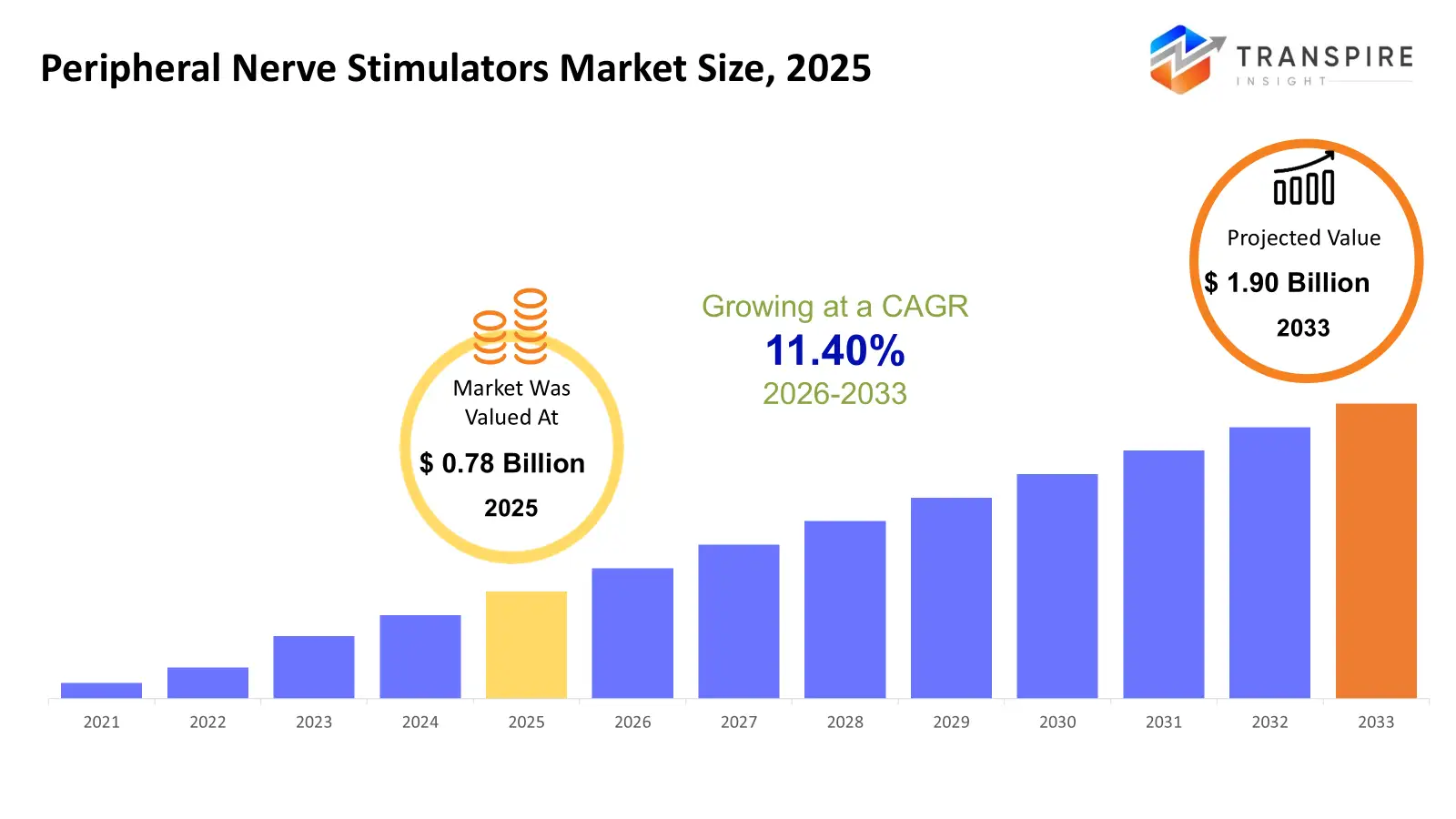
The global Peripheral Nerve Stimulators market size was valued at USD 0.78 billion in 2025 and is projected to reach USD 1.90 billion by 2033, growing at a CAGR of 11.40% from 2026 to 2033. The growing incidence of chronic and neuropathic pain disorders worldwide is driving the demand for minimally invasive and durable pain management therapies, thus fueling the adoption of peripheral nerve stimulation technologies. Advances in the field of peripheral nerve stimulation technologies, such as the development of miniaturized implantable devices, longer battery life, and programmable stimulation parameters, are improving clinical efficacy and patient compliance, thus driving the acceptance of these technologies among physicians.
Market Size & Forecast
- 2025 Market Size: USD 0.78 Billion
- 2033 Projected Market Size: USD 1.90 Billion
- CAGR (2026-2033): 11.40%
- North America: Largest Market in 2026
- Asia Pacific: Fastest Growing Market
To learn more about this report,  Download Free Sample Report
Key Market Trends Analysis
- North America sustains market dominance because of its advanced reimbursement systems, high prevalence of chronic pain, and active clinical research, and the United States fuels procedural advancements and the Asia Pacific region reports the fastest growth due to improvements in healthcare infrastructure and an increasing awareness of neuromodulation.
- The United States sustains steady growth due to early adoption of technology, supportive payer policies, and an increasing trend of incorporating neuromodulation into opioid-sparing pain management strategies, solidifying its position as the key revenue-generating region in the global peripheral nerve stimulators market.
- The Asia Pacific region reports the fastest growth rate because of increasing healthcare spending, growing diagnosis of neuropathic diseases, and increasing availability of minimally invasive pain treatments, especially in Japan, China, South Korea, and India, where there is an increasing availability of specialists.
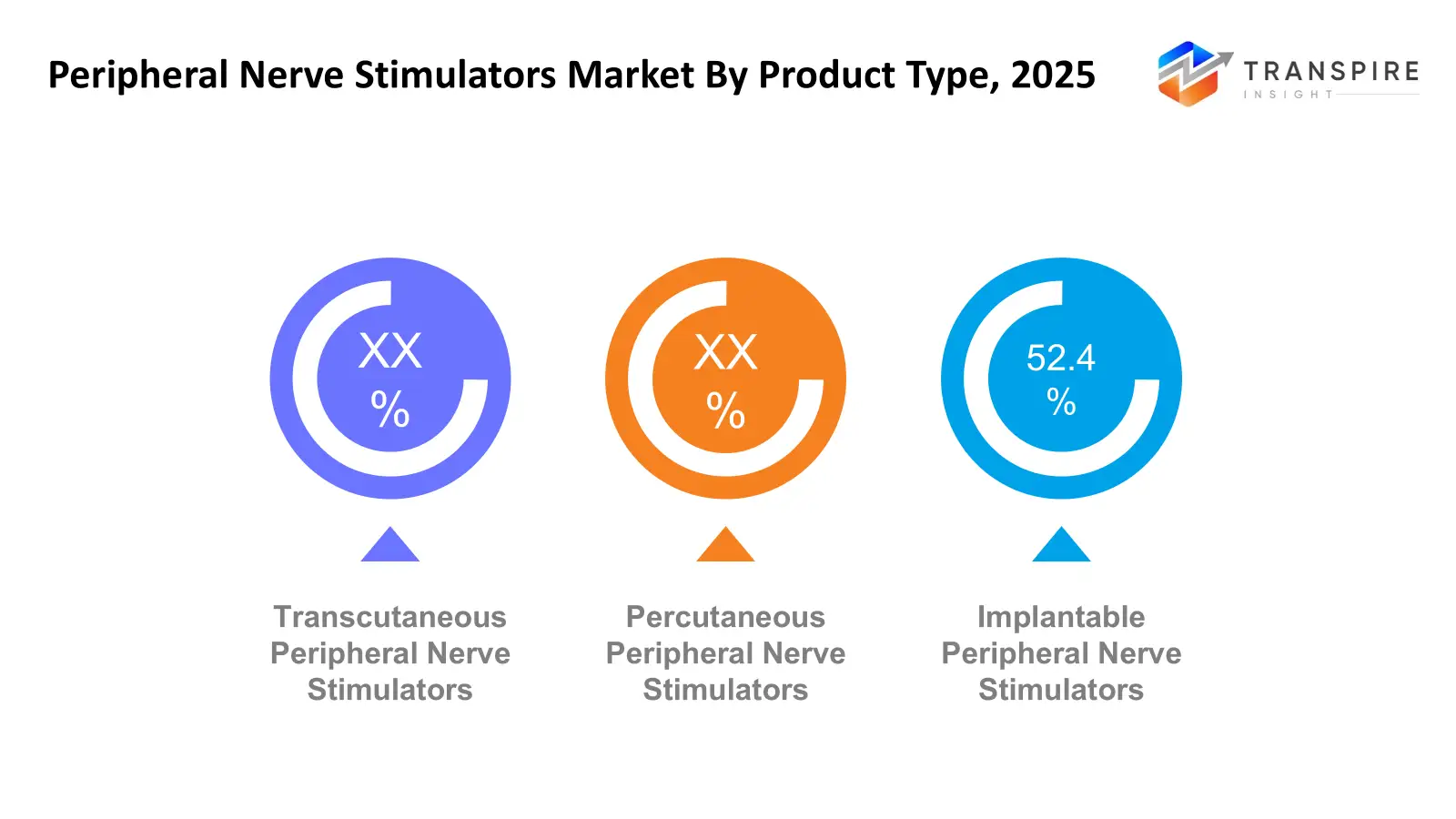
- Implantable peripheral nerve stimulators are the key product segment because of their long-term therapeutic efficacy, technological advancements in miniaturization, improved battery life, and increasing acceptance in the treatment of chronic and refractory pain conditions requiring sustained neuromodulation therapy
- Chronic pain management continues to be the most prominent application area due to the growing burden of degenerative, neuropathic, and musculoskeletal diseases, as well as the rising preference of physicians for device-based therapies that minimize reliance on pharmacological and opioid-based treatments.
- The hospital segment continues to hold the largest end-use market share due to the growing number of procedures, integrated pain management programs, availability of surgical expertise, and better reimbursement paradigms, while the ambulatory surgical center segment grows steadily with the adoption of minimally invasive percutaneous systems.
So, The peripheral nerve stimulators market includes medical devices that are used to provide controlled electrical impulses to peripheral nerves to modulate pain signals. These devices are widely used for managing chronic, neuropathic, and post-surgical pain conditions where conventional pharmacological therapies have shown limited efficacy or undesirable side effects. The market has shown significant growth as healthcare systems have increasingly focused on non-opioid and minimally invasive treatment options. The market is driven by the increasing incidence of chronic pain disorders, innovation in neuromodulation devices, and increasing physician knowledge about long-term pain management options. Innovation in implantable and percutaneous devices has improved procedural efficiency and patient comfort, allowing for widespread adoption in hospitals and pain management centers. Furthermore, the growing body of clinical research continues to provide support for broader therapeutic applications. The market is also driven by the shift in healthcare delivery systems toward outpatient and home-based therapy options. The growing healthcare expenditure in emerging markets, combined with the improvement in diagnostic capabilities and access to advanced medical devices, is expected to drive adoption. Collaborations between device manufacturers and healthcare providers also help to drive market development and innovation.
Peripheral Nerve Stimulators Market Segmentation
By Product Type
- Transcutaneous Peripheral Nerve Stimulators
These devices are non-invasive and use surface electrodes to stimulate the peripheral nerves with electrical impulses. They are commonly used for short-term pain management and are preferred due to their ease of use, low invasiveness, and cost-effectiveness. Demand for these devices is fueled by the increasing preference for home-care and opioid-free pain management solutions.
- Percutaneous Peripheral Nerve Stimulators
These devices are minimally invasive and use lead placement around the target nerves for intermediate-term pain management. They are more precise and effective than transcutaneous devices and are preferred for post-surgical and neuropathic pain. Increasing outpatient procedures and advancements in image-guided lead placement are fueling the demand for these devices.
- Implantable Peripheral Nerve Stimulators
These devices are surgically implanted for long-term pain management. They are more effective and convenient to use, with programmable parameters and improved patient compliance. The market for these devices is fueled by the increasing prevalence of chronic pain, advancements in miniaturization, and expanding reimbursement coverage in developed countries.
To learn more about this report, Download Free Sample Report
By Application
- Chronic Pain Management
This segment is the most prominent application area, due to the worldwide prevalence of conditions such as diabetic neuropathy and lower back pain. Peripheral nerve stimulators are increasingly being used as part of a multimodal pain management approach. Clinical data supporting the long-term effectiveness of the technology is continually increasing usage.
- Post-Surgical Pain
Peripheral nerve stimulation is increasingly being adopted as a non-opioid alternative for the management of acute and subacute post-operative pain. Temporary percutaneous devices are most commonly used in orthopedic and abdominal surgeries. This is being driven by the adoption of enhanced recovery programs and hospital cost-saving strategies.
- Migraine & Headache Disorders
Targeted nerve stimulation, including occipital nerve stimulation, is being increasingly recognized as a treatment approach for intractable migraine. While this remains a niche application, technological advancements and the development of better patient selection criteria are increasingly making it more relevant. Approval from major regulatory authorities is fueling growth.
- Neuropathic Pain
Indications for neuropathic pain management, such as peripheral nerve injury and complex regional pain syndrome, are important drivers of market use. Precise stimulation provides better symptomatic relief in cases where pharmacologic therapies have been shown to have limited efficacy. Rising incidence and awareness drive the growth of this market.
- Musculoskeletal Pain
This market includes the management of shoulder, knee, and other musculoskeletal pain. Peripheral nerve stimulation provides focused pain relief without compromising motor strength. Rising sports injuries and an aging population with degenerative joint disease drive the market.
- Others
Other indications include pain associated with peripheral vascular disease and certain inflammatory conditions. Although relatively niche, clinical trials are currently underway to explore new therapeutic applications. Waveform modulation technology innovation may provide new therapeutic applications in the coming years.
By End User
- Hospitals
The largest market share is occupied by hospitals because of the higher number of surgeries and the availability of pain management specialists. The support for adoption comes from the care pathways and the availability of implantation infrastructure. The reimbursement coverage in developed countries further adds to the strength of this market.
- Ambulatory Surgical Centers
The ambulatory surgical centers are gradually adopting percutaneous and minimally invasive stimulation devices. The factors that drive the adoption are cost-effectiveness, shorter hospital stays, and the increasing number of outpatient procedures. The shift towards value-based healthcare further adds to the growth potential of this market.
- Specialty Clinics
Pain management and neurology clinics are an emerging end-user community, especially for chronic and neuropathic pain patients. Such environments can leverage specialized knowledge and optimized patient follow-up. Development of private specialty networks in emerging markets drives demand.
- Home Care Settings
Homecare use is mainly linked to transcutaneous devices for chronic pain management. Ease of use, mobility, and patient-controlled therapy drive adoption. Demand is driven by telehealth integration and the trend toward decentralized healthcare delivery.
Regional Insights
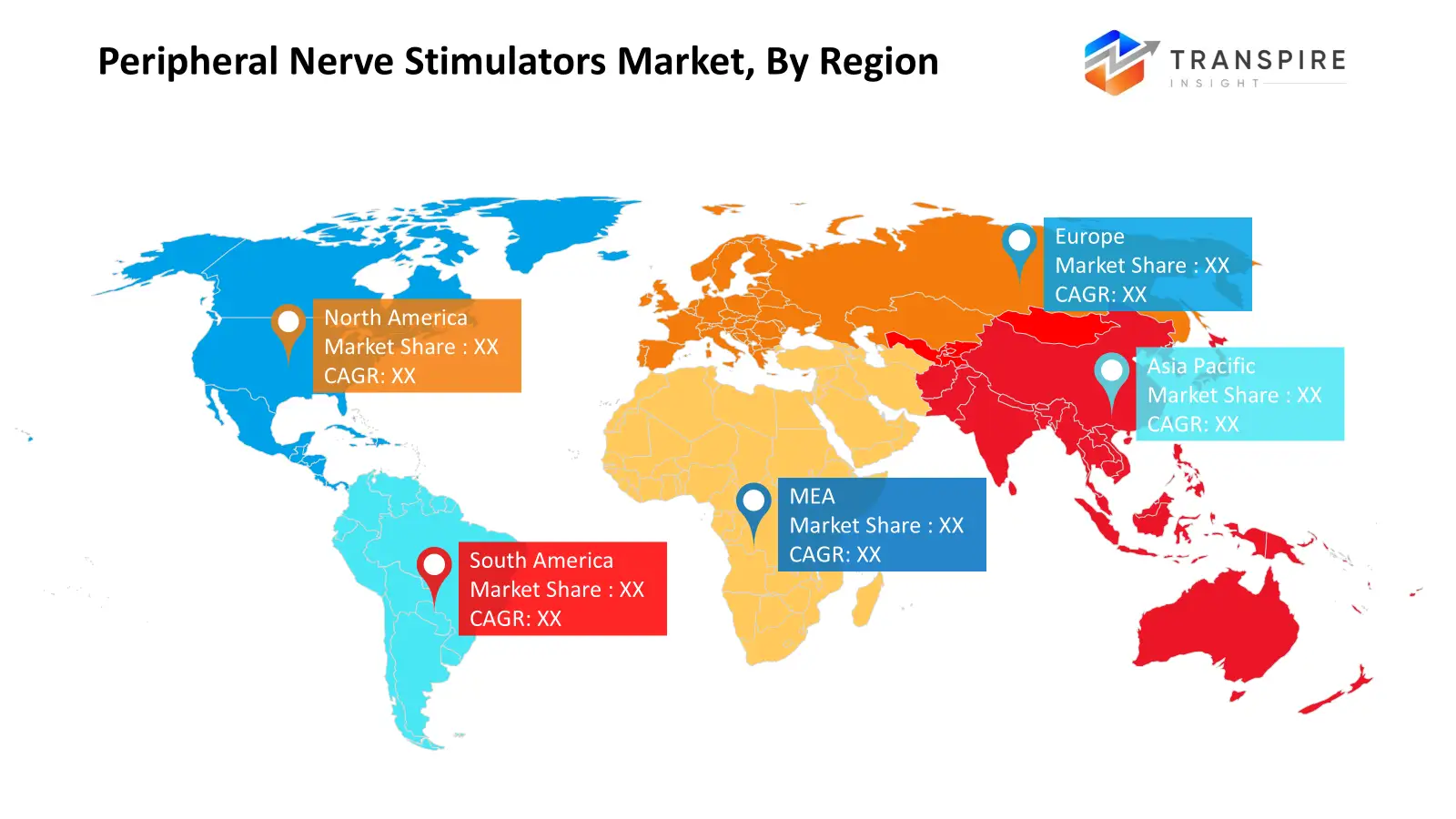
North America continues to be the leading regional market, driven by the adoption of neuromodulation technologies in the United States which has a favorable reimbursement environment and active research in the field. Canada is growing steadily with the expansion of pain management initiatives, and Mexico is experiencing a gradual adoption phase with the improvement of healthcare infrastructure. Europe is a mature market with well-established regulatory structures and a growing acceptance of advanced pain management technologies. Germany, the United Kingdom, France, Spain and Italy are key contributors to the demand due to their well-developed healthcare infrastructure, and the remaining regions are experiencing a gradual growth phase due to improved access to specialized care and the aging population. The Asia Pacific market is the fastest-growing, driven by increasing healthcare expenditure and the rising awareness of neuromodulation therapies in Japan, China, South Korea, India and Australia & New Zealand. The growing healthcare infrastructure and patient base drive the long-term market potential in the remaining Asia Pacific. The South America market, fueled by Brazil and Argentina, shows moderate growth due to the expansion of private healthcare, while the Middle East & Africa market, represented by Saudi Arabia, the United Arab Emirates, and South Africa shows emerging adoption due to the modernization of the healthcare sector.
To learn more about this report, Download Free Sample Report
Recent Development News
- October 2025, Boston Scientific Corporation has publicly announced that it has entered into a definitive agreement to acquire Nalu Medical, Inc. This acquisition will further enhance the company’s offerings in the neuromodulation and chronic pain treatment market, including the Nalu Neurostimulation System for the treatment of peripheral nerve pain. The acquisition is expected to be completed in the first half of 2026.
- In January 2025, Nalu Medical received FDA clearance for the expanded whole-body MRI-conditional indication of its Peripheral Nerve Stimulation (PNS) System, enabling wider clinical use without MRI restrictions. This approval improves treatment options for chronic pain patients who may need future diagnostic imaging studies.
|
Report Metrics |
Details |
|
Market size value in 2025 |
USD 0.78 Billion |
|
Market size value in 2026 |
USD 0.90 Billion |
|
Revenue forecast in 2033 |
USD 1.90 Billion |
|
Growth rate |
CAGR of 11.40% from 2026 to 2033 |
|
Base year |
2025 |
|
Historical data |
2021 – 2024 |
|
Forecast period |
2026 – 2033 |
|
Report coverage |
Revenue forecast, competitive landscape, growth factors, and trends |
|
Regional scope |
North America; Europe; Asia Pacific; Latin America; Middle East & Africa |
|
Country scope |
United States; Canada; Mexico; United Kingdom; Germany; France; Italy; Spain; Denmark; Sweden; Norway; China; Japan; India; Australia; South Korea; Thailand; Brazil; Argentina; South Africa; Saudi Arabia; United Arab Emirates |
|
Key company profiled |
Abbott Laboratories, Medtronic plc, Boston Scientific Corporation, B. Braun Melsungen AG, SPR Therapeutics, Inc., Nalu Medical, Inc., Bioventus Inc., Avanos Medical, Inc., NeuroSigma, Inc., Neuspera Medical, Inc., Stimwave Technologies Incorporated, Nevro Corp., Axonics Modulation Technologies, Inc., Bioness Inc., and Vygon SA |
|
Customization scope |
Free report customization (country, regional & segment scope). Avail customized purchase options to meet your exact research needs. |
|
Report Segmentation |
By Product Type (Transcutaneous Peripheral Nerve Stimulators, Percutaneous Peripheral Nerve Stimulators, Implantable Peripheral Nerve Stimulators), By Application (Chronic Pain Management, Post-Surgical Pain, Migraine & Headache Disorders, Neuropathic Pain, Musculoskeletal Pain, Others) and By End User (Hospitals, Ambulatory Surgical Centers, Specialty Clinics, Home Care Settings) |
Key Peripheral Nerve Stimulators Company Insights
Medtronic plc has a leadership position in the peripheral nerve stimulators market because of its broad neuromodulation product offering, strong clinical presence across the globe, and high adoption rates among physicians for pain management applications. The company has strong R&D investments and distribution channels in North America, Europe and Asia Pacific. The company’s implantable stimulation products offer chronic pain management through sophisticated programming and patient-specific modulation strategies, which improve clinical outcomes. Medtronic’s size enables it to integrate digital health solutions and long-term therapy management capabilities, which enhance partnerships with hospitals and solidify recurring revenue streams. Innovations in minimally invasive stimulation products and technologies further reinforce its market position in this dynamic neuromodulation market.
Key Peripheral Nerve Stimulators Companies:
- Abbott Laboratories
- Medtronic plc
- Boston Scientific Corporation
- Braun Melsungen AG
- SPR Therapeutics, Inc.
- Nalu Medical, Inc.
- Bioventus Inc.
- Avanos Medical, Inc.
- NeuroSigma, Inc.
- Neuspera Medical, Inc.
- Stimwave Technologies Incorporated
- Nevro Corp.
- Axonics Modulation Technologies, Inc.
- Bioness Inc.
- Vygon SA
Global Peripheral Nerve Stimulators Market Report Segmentation
By Product Type
- Pure/Organic Peripheral Nerve Stimulators
- Refined Peripheral Nerve Stimulators
- Blended Peripheral Nerve Stimulators
By Application
- Cosmetic & Personal Care
- Food & Beverages
- Pharmaceuticals
By End User
- Online Retail
- Supermarkets & Hypermarkets
- Specialty Stores
- Pharmacies & Drugstores
Regional Outlook
- North America
- United States
- Canada
- Mexico
- Europe
- Germany
- United Kingdom
- France
- Spain
- Italy
- Rest of Europe
- Asia Pacific
- Japan
- China
- Australia & New Zealand
- South Korea
- India
- Rest of Asia Pacific
- South America
- Brazil
- Argentina
- Rest of South America
- Middle East & Africa
- Saudi Arabia
- United Arab Emirates
- South Africa
- Rest of the Middle East & Africa
Frequently Asked Questions
Find quick answers to common questions.
The approximate Peripheral Nerve Stimulators Market size for the market will be USD 1.90 billion in 2033.
Key segments for the Peripheral Nerve Stimulators Market By Product Type (Transcutaneous Peripheral Nerve Stimulators, Percutaneous Peripheral Nerve Stimulators, Implantable Peripheral Nerve Stimulators), By Application (Chronic Pain Management, Post-Surgical Pain, Migraine & Headache Disorders, Neuropathic Pain, Musculoskeletal Pain, Others) and By End User (Hospitals, Ambulatory Surgical Centers, Specialty Clinics, Home Care Settings).
Major Peripheral Nerve Stimulators Market players are Medtronic plc, Abbott Laboratories, Boston Scientific Corporation, SPR Therapeutics, Inc., Nalu Medical, Inc.
The North America region is leading the Peripheral Nerve Stimulators Market.
The CAGR of the Peripheral Nerve Stimulators Market is 11.40%.
- Abbott Laboratories
- Medtronic plc
- Boston Scientific Corporation
- Braun Melsungen AG
- SPR Therapeutics, Inc.
- Nalu Medical, Inc.
- Bioventus Inc.
- Avanos Medical, Inc.
- NeuroSigma, Inc.
- Neuspera Medical, Inc.
- Stimwave Technologies Incorporated
- Nevro Corp.
- Axonics Modulation Technologies, Inc.
- Bioness Inc.
- Vygon SA
Recently Published Reports
-
Apr 2026
AI in Diabetic Retinopathy Market
AI in Diabetic Retinopathy Market Size, Share & Analysis Report By Type (Screening AI Systems, Diagnostic AI Systems, and Predictive AI Models), By Application Segment (Hospitals, Ophthalmology Clinics, Diagnostic Centers, and Research and Development), and Geography (North America, Europe, Asia-Pacific, Middle East and Africa, South and Central America), 2021 - 2031
-
Apr 2026
Psychometric Tests Market
Psychometric Tests Market Size, Share & Analysis Report By Type (Personality Tests, Ability/Aptitude Tests, Skill/Knowledge Tests, and Others), By Application (Talent Acquisition and Talent Management), and Geography (North America, Europe, Asia-Pacific, Middle East and Africa, South and Central America), 2021 – 2031
-
Apr 2026
Rare Biological Sample Collection Market
Rare Biological Sample Collection Market Size, Share & Analysis Report By Type (Isolation Kits & Reagent, Blood Collection Tubes, and Others), By Application (Oncology, Transcriptomics, Pharmacogenomics, and Others), and Geography (North America, Europe, Asia-Pacific, Middle East and Africa, South and Central America), 2021 – 2031
-
Apr 2026
Patient Lift Pendant Market
Patient Lift Pendant Market By Product Type (Wired Pendants, Wireless, Programmable), By Operation Type(Manual, Electric), By End-Users (Healthcare Professionals, Patients), By Application (Hospitals, Homecare, Rehabilitation Centers, Others), By Industry Analysis, Size, Share, Growth, Trends, and Forecasts 2021-2033
Our Clients
.jpg)