

North America Social Commerce Market Size & Forecast:
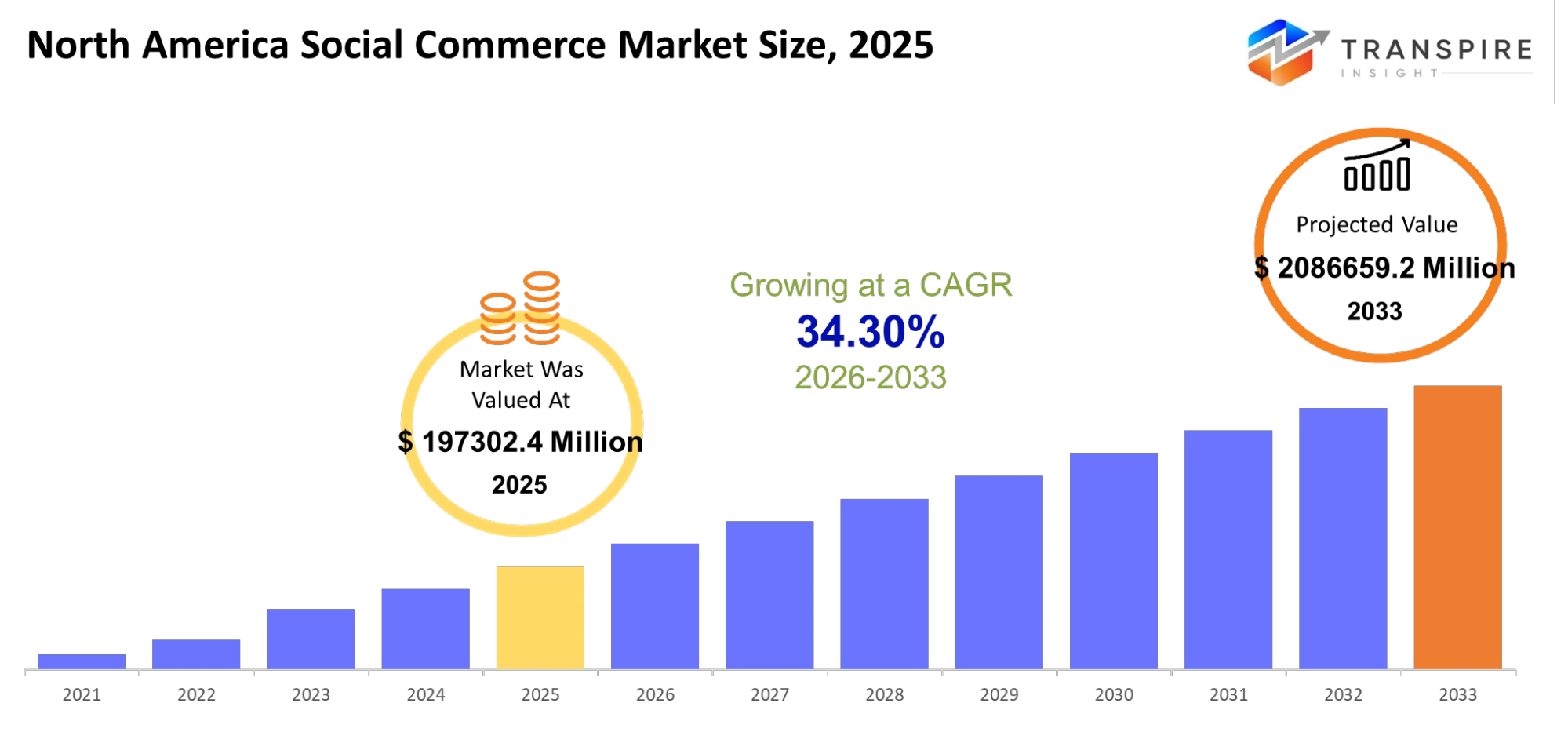
- North America Social Commerce Market Size 2025: USD 197302.4 Million
- North America Social Commerce Market Size 2033: USD 2086659.2 Million
- North America Social Commerce Market CAGR: 34.30%
- North America Social Commerce Market Segments: By Platform (Facebook, Instagram, TikTok, Others, Pinterest, YouTube), By Device (Mobile, Desktop, Tablet, Others, Apps, Web), By Product (Fashion, Electronics, Beauty, Others, Home, Food), By End-User (Consumers, SMEs, Enterprises, Others, Retailers, Influencers).
To learn more about this report,  Download Free Sample Report
North America Social Commerce Market Summary:
The North America Social Commerce Market size is estimated at USD 197302.4 Million in 2025 and is anticipated to reach USD 2086659.2 Million by 2033, growing at a CAGR of 34.30% from 2026 to 2033. The North America Social Commerce Market is expanding rapidly because consumers now use social media to shop online.
Social media platforms Instagram TikTok and Facebook became effective sales platforms which enable brands to interact with their customers through dynamic and customized content. The North America Social Commerce Market operates successfully because of its advanced digital systems and high smartphone usage and its population which prefers fast and convenient online shopping. Influencer marketing and live shopping events are two channels which influence consumer purchasing decisions through their ability to generate spontaneous buying and create customer loyalty.
The North America Social Commerce Market experiences growth because businesses use cutting-edge technologies which include AI-based recommendation systems and efficient payment processing solutions. Companies use data analysis to create customized shopping solutions which enable customers to transition from product discovery to buying products with greater efficiency. Social platforms serve as inexpensive store-fronts which enable small and medium-sized enterprises to establish their online presence. The North America Social Commerce Market will continue to grow as social platforms gain user trust and new platform features become available.
What Has the Impact of Artificial Intelligence Been on the North America Social Commerce Market?
The social commerce market in North America undergoes rapid transformation through artificial intelligence which alters brand strategies for consumer understanding and engagement with their target audience. The social commerce market in North America uses AI technology to improve market research capabilities by processing data through its advanced analytical tools which let businesses monitor customer activities and emotional responses and buying behaviors during the customer journey.
Businesses use machine learning models and predictive analytics to uncover new market trends while their product demand forecasts become more precise which helps them create better marketing campaigns. Artificial intelligence systems in the North American social commerce market enable brands to create precise marketing messages which lead to higher customer acquisition and increased customer loyalty.
AI systems create intelligent automation which boosts operational efficiency throughout the North American social commerce industry. The automated chatbots and personalized recommendation engines and dynamic pricing systems create better customer experience through their ability to handle customer interactions without requiring human workers to intervene.
AI supports supply chain optimization by using inventory predictions to match actual demand which helps reduce costs and enhances delivery speed. These capabilities give businesses a competitive advantage which enables them to achieve rapid product development and expansion that can reach larger markets. The North American social commerce market will progress toward a smarter data-driven system which will continue to develop through ongoing artificial intelligence advancements.
Key Market Trends & Insights:
- The United States controls more than three-quarters of the North American social commerce industry because it has developed strong digital infrastructure which will enable 75% of the market to be its share by 2025.
- The Canadian market stands as the most rapidly expanding area because it will achieve more than 18% annual growth between 2025 and 2030 which results from increasing mobile commerce usage.
- North America social commerce market operates through social media platforms which maintain over 60% market share because their users engage with shopping features that are built into the platforms.
- Influencer-driven commerce represents the second-largest segment, contributing nearly 25% market share due to trust-based purchasing behavior.
- The live-stream shopping industry shows the most rapid expansion because it will achieve more than 22% annual growth through 2030 which demonstrates new market requirements.
- The North American social commerce industry sees fashion and apparel as its most popular application because customers make purchasing decisions based on visual content.
- Beauty and personal care is the fastest-growing application, expanding rapidly with influencer marketing and product demonstration trends.
- North American social commerce market operates through millennial consumers who control approximately 40% of market share because they frequently use social media platforms and make online purchases.
- Generation Z will experience the most rapid development because they follow mobile-first consumption patterns which will continue until 2030.
North America Social Commerce Market Segmentation
By Platform
The process of platform segmentation demonstrates how social media ecosystems and their respective user interaction patterns determine sales performance. Facebook enables community-driven sales through its group feature and marketplace functionality while Instagram creates a platform for visual content and product discovery. TikTok uses its short video format to create customer engagement while Pinterest enables customers to shop based on specific ideas because they display strong buying signals. YouTube provides content through its extended video reviews and tutorial videos which establish customer trust before they decide to make a purchase.
The different platforms provide businesses with multiple marketing stages to use their content according to how customers interact with their websites. The group includes platforms that are currently developing into mainstream status and the smaller platforms which have grown popular among young users. The growth of these channels will rely on the quality of content which content creators produce and the effectiveness of their checkout process. The use of multiple platforms enables brands to connect with more customers because it provides them with different ways to interact with their business.
By Device
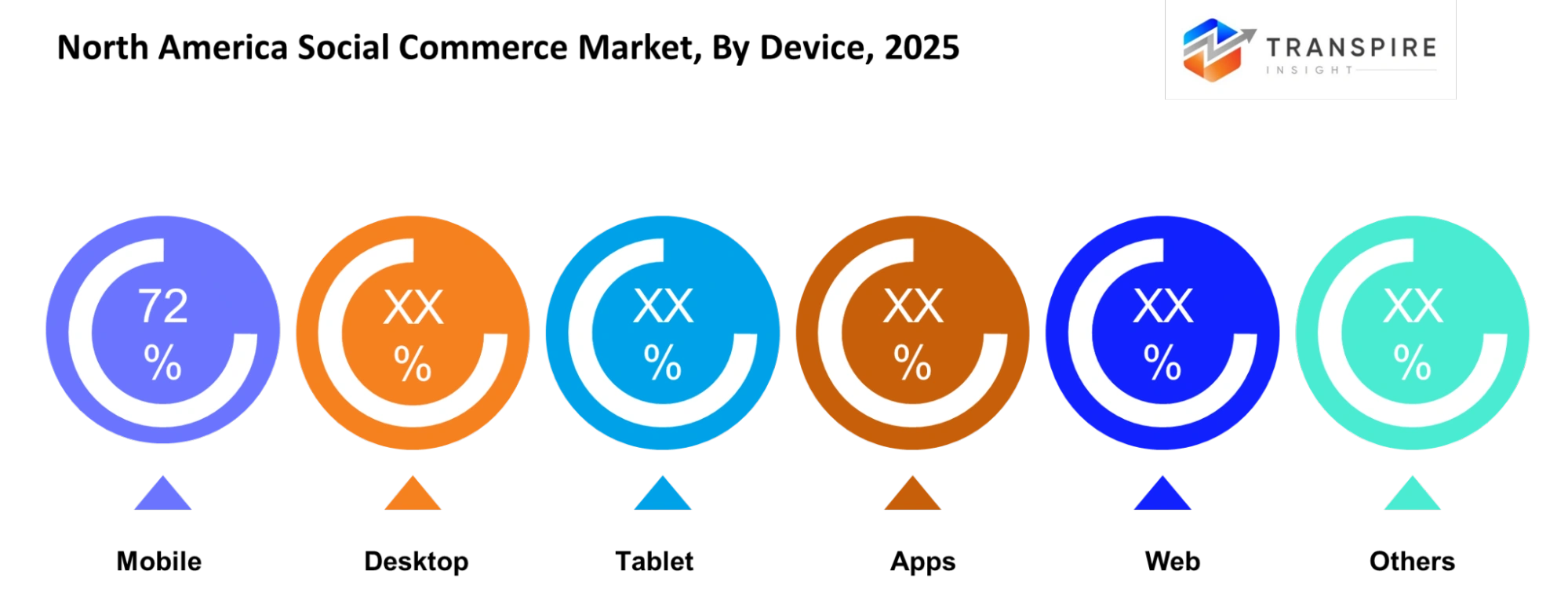
The process of device segmentation demonstrates how users access social commerce platforms and finalize their purchases. Mobile leads because people use smartphones more than other devices which enables them to access applications easily. People use desktops to conduct extensive product research and make high-value purchases while they choose tablets because those devices provide optimal screen size and portability. Users prefer apps because they enable quick site navigation together with customized content delivery whereas web platforms deliver essential content without requiring users to install software.
People use different devices to make purchases according to their needs and what they want to accomplish because mobile apps lead to unplanned buying while users make scheduled purchases through desktop computers. The shopping environment of the future will be enhanced by smart devices and various connected technologies. The companies aim to improve their application and web platform performance by optimizing their systems for better speed and efficient operation. The ability to use different devices enables users to stay connected throughout the day which helps businesses reach multiple customer segments.
To learn more about this report, Download Free Sample Report
By Product
The process of product segmentation establishes which types of products people tend to buy through social media platforms. The fashion industry maintains its top position because of its visual attractiveness and ongoing trend changes that drive consumer buying behavior. Beauty products succeed in the market because tutorials and influencer endorsements create consumer trust while showing product benefits. Detailed product reviews together with comparison information drive consumer interest in electronic products, while home and food products increase sales through promotions that highlight lifestyle benefits.
Different product types rely on different content strategies to attract attention and drive conversions. Other products can be defined as niche or specialty items which meet the specific interests of particular customer groups. Personalization and product visibility together with user-generated content will determine the growth potential of these categories. The process of strong product presentation enables brands to create a direct link which connects product discovery with product purchase.
By End User
The process of end-user segmentation demonstrates how various groups take part in the buying and selling processes. The largest group of consumers exists because they prefer shopping methods that offer convenience and customized experiences. Small and medium enterprises use social media platforms for inexpensive methods to connect with specific customer segments while large companies use their resources for extensive advertising and brand recognition initiatives. Retailers use online and offline marketing methods to create continuous customer connections.
Influencers create trustworthy relationships which help customers make purchase choices because they share authentic content that showcases products. Others include new or hybrid participants who enter the market with their different business approaches. Digital adoption together with content strategies that succeed in meeting audience expectations will determine user base expansion across all end user segments. All groups work together to create market expansion through their individual contributions to business operations.
What are the Main Challenges for the North America Social Commerce Market Growth?
The north america social commerce market faces substantial technological problems which lead to operational difficulties that prevent the market from achieving steady expansion. The system experiences disruptions because of platform integration challenges and data security vulnerabilities and performance constraints which create obstacles for users to interact with the system while losing efficiency during transactions. The process of handling multiple streaming data sources for user-specific content delivery becomes complex as platform operations grow rapidly. The north american social commerce market needs better infrastructure and dependable system performance because growing user traffic exceeds current capacity.
The north american social commerce market faces manufacturing and commercialization obstacles which impact brands that need to control their stock and delivery operations. The combination of high operational expenses and complicated distribution systems and regional compliance requirements results in product delivery and market entry timing issues. Organizations need to control their expenses while preserving product excellence and customer support, which leads to operational hindrances that prevent them from expanding their business. Smaller businesses face ongoing difficulties that prevent them from competing with established brands due to market limitations.
The digital adoption process faces major obstacles between businesses with minimal digital knowledge and organisations experiencing funding difficulties. The north america social commerce market requires advanced AI and analytics tools for operation, but most companies do not possess the necessary expertise to implement these systems. The existing system suffers from infrastructure deficiencies which include payment security vulnerabilities and insufficient cross-platform compatibility. The market penetration process is delayed because strong consumer demand creates obstacles to business expansion.
Country Insights
The North American Social Commerce Market experiences strong differences between regions because of digital access and consumer behavior and platform usage throughout the market. The United States leads the market because it has superior infrastructure and high social media usage and active participation from brands. Canadian markets experience consistent development through increased mobile commerce and secure payment system implementation. Mexican markets are expanding as internet access improves and younger customers increasingly adopt smartphones.
Economic development patterns show varying growth rates because of different economic conditions and technology usage and consumer confidence in digital payment systems. Urban areas with their superior internet links and public knowledge show better user participation than all other regions, but semi-urban areas now show greater user base growth because they can access better internet links and their citizens receive targeted public information content. Businesses will use customized marketing strategies and regional business partnerships and platform improvements to enhance their market presence and optimize customer demand in different geographic markets.
Recent Development News
In April 2026, Meta Expands In-App Affiliate Shopping Across Platforms: Meta Platforms introduced new affiliate shopping features on Instagram and Facebook, allowing creators to tag products directly within posts and short videos. This move strengthens in-app purchasing and reduces reliance on third-party tools, enhancing monetization for influencers and brands.
Source: https://www.theverge.com
In April 2026, TikTok's former North America ads lead joined Google: TikTok saw a major leadership change as its former North America ads head moved to Google, highlighting increased competition for commerce advertising talent. The shift reflects growing focus on mid-market commerce clients and evolving ad-driven social commerce strategies in the U.S.
Source: https://www.businessinsider.com
|
Report Metrics |
Details |
|
Market size value in 2025 |
USD 197302.4 Million |
|
Market size value in 2026 |
USD 264781.6 Million |
|
Revenue forecast in 2033 |
USD 2086659.2 Million |
|
Growth rate |
CAGR of 34.30% from 2026 to 2033 |
|
Base year |
2025 |
|
Historical data |
2021 – 2024 |
|
Forecast period |
2026 – 2033 |
|
Report coverage |
Revenue forecast, competitive landscape, growth factors, and trends |
|
Country scope |
North America (Canada, The United States, and Mexico) |
|
Key company profiled |
Meta, TikTok, Pinterest, YouTube, Amazon, Shopify, Walmart, eBay, Snap, Google, PayPal, Stripe, Square, BigCommerce, WooCommerce |
|
Customization scope |
Free report customization (country, regional & segment scope). Avail customized purchase options to meet your exact research needs. |
|
Report Segmentation |
By Platform (Facebook, Instagram, TikTok, Others, Pinterest, YouTube), By Device (Mobile, Desktop, Tablet, Others, Apps, Web), By Product (Fashion, Electronics, Beauty, Others, Home, Food), By End-User (Consumers, SMEs, Enterprises, Others, Retailers, Influencers). |
How Can New Companies Establish a Strong Foothold in the North America Social Commerce Market?
Businesses that enter the North American social commerce market should establish their market position through two methods, which include serving defined niche markets and addressing customer demand which currently goes unmet. Startups can achieve market differentiation through sustainable fashion and local food products and health-focused goods as their target categories.
The North American social commerce market requires businesses to develop innovative technology solutions which enable them to differentiate their products. The user experience will improve through AI-driven personalization and interactive shopping formats and seamless checkout solutions which companies should invest in. Startups like Flip use short-form video reviews to connect users with products while Whatnot builds its business through live-stream commerce. The innovation strategies businesses follow today reveal the main industry trends which shape their competitive advantage.
The North American social commerce market requires strategic partnerships which become essential for business expansion purposes. The brand visibility and operational efficiency of businesses increase through their collaborations with influencers and logistics providers and payment platform networks. New companies can also address sector-specific pain points, such as improving supply chain transparency or enabling faster delivery in urban environments. Businesses can achieve better market entry success through partnership development and expansion target identification which helps them develop stronger market entry paths and accelerate their business growth rate.
Key North America Social Commerce Market Company Insights
The North American Social Commerce Market experiences intense competition because platforms control the market while creating new content and maintaining user engagement. The major companies use integrated shopping systems together with creator partnerships and data analytics to retain their market position. Companies need to create new content frequently because algorithm and content format changes will determine their visibility, which impacts their ability to compete and grow.
The market competition demonstrates how new companies enter the market with unique products and customer experiences that differ from existing options. The smaller brands will compete through their ability to create personalized experiences and their capacity to quickly adapt to new trends and their use of community-based marketing methods. The establishment of strategic partnerships together with technology implementation and brand identity development will enable companies to achieve sustained market presence while gaining visibility in fast-changing competitive markets.
Company List
- Meta
- TikTok
- YouTube
- Amazon
- Shopify
- Walmart
- eBay
- Snap
- PayPal
- Stripe
- Square
- BigCommerce
- WooCommerce
What are the Key Use-Cases Driving the Growth of the North America Social Commerce Market?
Social media platforms enable brands to conduct product research and make immediate purchases which results in strong growth for the North American social commerce market. Fashion and beauty sectors lead with influencer-led campaigns, live product demos, and user-generated content that drive quick buying decisions. The use cases provide better customer interactions which help businesses achieve direct sales through their websites.
Retail and consumer goods companies are using the north america social commerce market to create personalized shopping journeys through AI-driven recommendations and targeted ads. User behavior analysis enables businesses to present suitable products which leads to better customer retention and increases customer lifetime value. Social storefronts help small and medium enterprises connect with niche markets at reduced expenses which drives their business growth across multiple sectors.
Healthcare and wellness brands use the north america social commerce market to market their products which include supplements and fitness programs and personal care solutions. Educational content and expert-led sessions and community discussions establish trust which affects consumer buying choices. The approach enables consumers to make knowledgeable purchases while health-focused companies expand their online presence.
Automotive and electronics sectors use interactive content together with live Q&A sessions and product showcases to educate their customers about products which helps customers make better purchasing decisions. The use cases display product specifications and operational capabilities throughout the entire process which helps customers make better decisions. The north america social commerce market will expand through digital shopping experiences and personalized services which enable users to shop directly through social media platforms.
North America Social Commerce Market Report Segmentation
By Platform
- TikTok
- Others
- YouTube
By Device
- Mobile
- Desktop
- Tablet
- Others
- Apps
- Web
By Product
- Fashion
- Electronics
- Beauty
- Others
- Home
- Food
By End-User
- Consumers
- SMEs
- Enterprises
- Others
- Retailers
- Influencers
Frequently Asked Questions
Find quick answers to common questions.
The approximate North America Social Commerce Market size for the market will be USD 2086659.2 Million in 2033.
The key segments of the North America Social Commerce Market are By Platform (Facebook, Instagram, TikTok, Others, Pinterest, YouTube), By Device (Mobile, Desktop, Tablet, Others, Apps, Web), By Product (Fashion, Electronics, Beauty, Others, Home, Food), By End-User (Consumers, SMEs, Enterprises, Others, Retailers, Influencers).
Major players in the North America Social Commerce Market are Meta, TikTok, Pinterest, YouTube, Amazon, Shopify, Walmart, eBay, Snap, Google, PayPal, Stripe, Square, BigCommerce, WooCommerce.
The current market size of the North America Social Commerce Market is USD 197302.4 Million in 2025.
The North America Social Commerce Market CAGR is 34.30%.
- Meta
- TikTok
- YouTube
- Amazon
- Shopify
- Walmart
- eBay
- Snap
- PayPal
- Stripe
- Square
- BigCommerce
- WooCommerce
Recently Published Reports
-
Apr 2026
3D Optical Profiler Market
3D Optical Profiler Market Size, Share & Analysis Report By Type (Desktop 3D Optical Profiler, and Portable 3D Optical Profiler), By Technology (Confocal Technology, and White Light Interference), By End-Use Industry (Manufacturing, Research Institutions, Automotive, Aerospace and Defense, Medical Devices, and Other), and Geography (North America, Europe, Asia-Pacific, Middle East and Africa, South and Central America), 2021 - 2031
-
Apr 2026
Depth Sensor Market
Depth Sensor Market Size, Share & Analysis Report By Type (Infrared Depth Sensors, Time-of-Flight (ToF) Sensors, Stereo Vision Sensors, Structured Light Sensors, Ultrasonic Depth Sensors), By Application (Automotive, Robotics, Gaming, Consumer Electronics, Industrial Automation, Healthcare, Security & Surveillance, Others), By End Users (Automotive Manufacturers, Consumer Electronics Companies, Healthcare Providers, Industrial Companies, Security Agencies, Gaming Companies, Robotics Companies, Others), and Geography (North America, Europe, Asia-Pacific, Middle East and Africa, South and Central America), 2021 – 2031
-
Apr 2026
Digital Manufacturing Market
Digital Manufacturing Market Size, Share & Analysis Report By Component (Hardware, Software, and Services), By Technology (Robotics, 3D Printing, Internet of Things (IoT), and Others), By Application (Automotive and Transportation, Aerospace and Defense, Consumer Electronics, Industrial Machinery, and Others), By Process Type (Computer-Based Designing, Computer-Based Simulation, Computer 3D Visualization, Analytics, and Others), and Geography (North America, Europe, Asia-Pacific, Middle East and Africa, South and Central America), 2021 – 2031
-
Apr 2026
Digital Visa Services Market
Digital Visa Services Market Size, Share & Analysis Report By Type (Individual Travelers, Group Travelers), By Application (Tourism, Business Travel, Others), and Geography (North America, Europe, Asia-Pacific, Middle East and Africa, South and Central America), 2021 – 2031