

North America Home Organizers and Storage Market Size & Forecast:
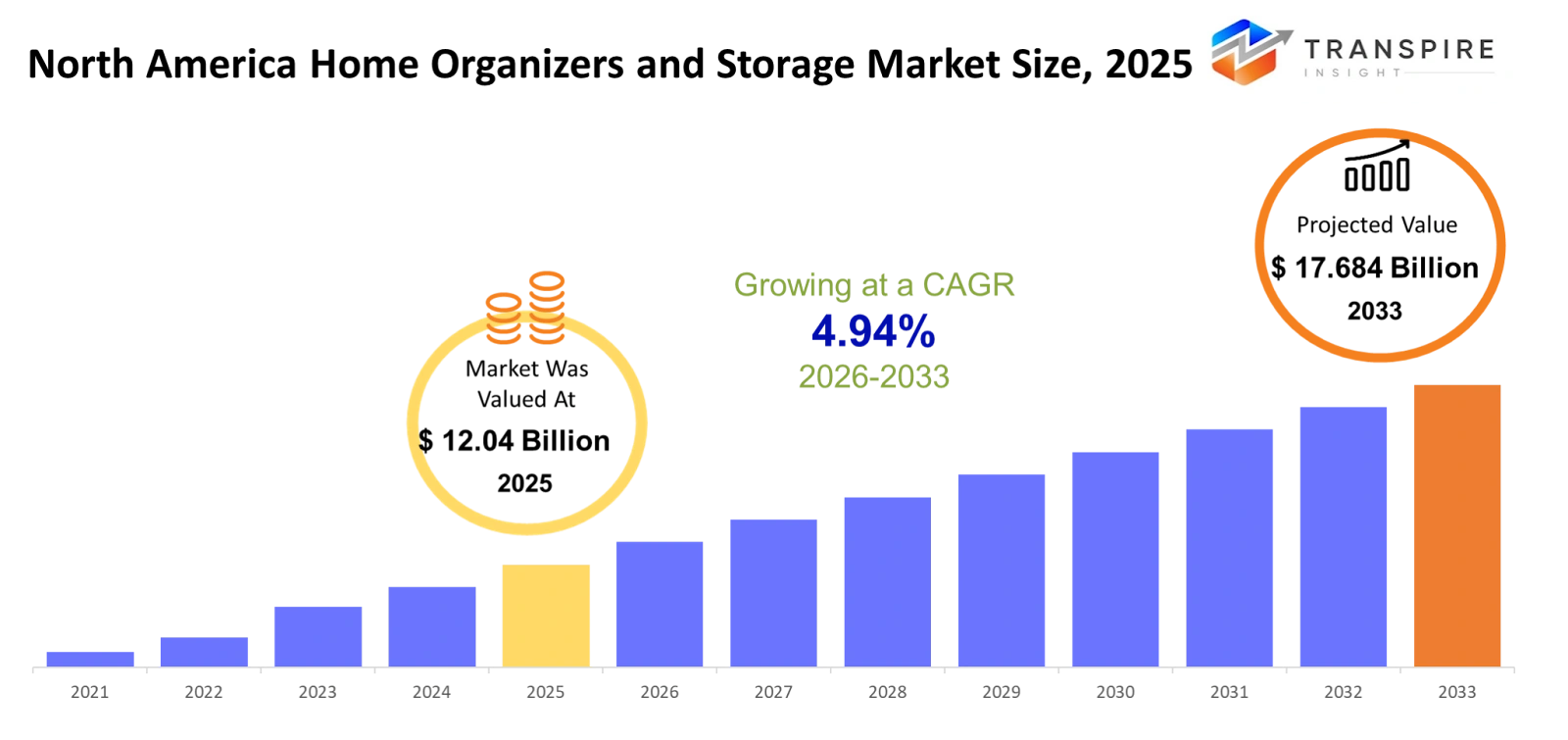
- North America Home Organizers and Storage Market Size 2025: USD 12.04 Billion
- North America Home Organizers and Storage Market Size 2033: USD 17.684 Billion
- North America Home Organizers and Storage Market CAGR: 4.94%
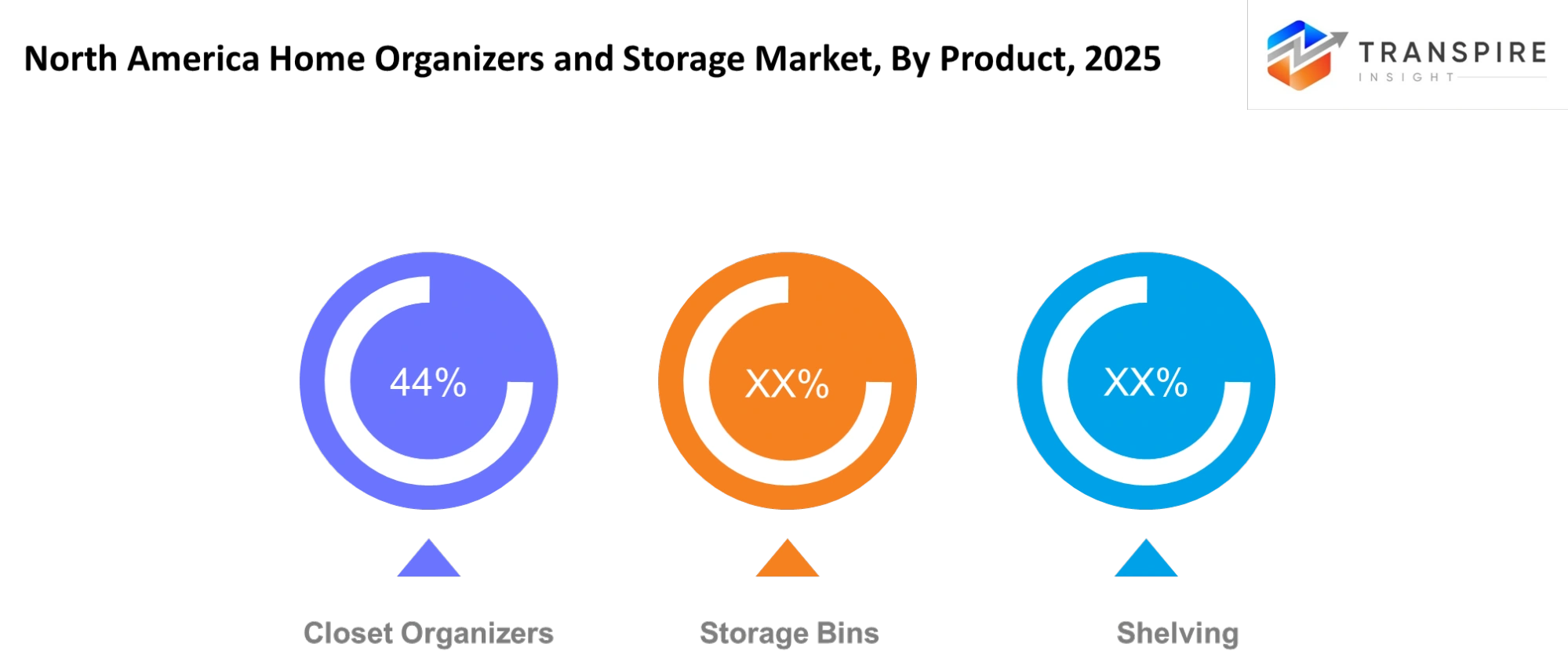
- North America Home Organizers and Storage Market Segments: By Product (Closet Organizers, Storage Bins, Shelving), By Distribution (Online, Offline), By End-User (Residential, Commercial)
To learn more about this report,  Download Free Sample Report
North America Home Organizers and Storage Market Summary:
The North America Home Organizers And Storage Market size is estimated at USD 12.04 Billion in 2025 and is anticipated to reach USD 17.684 Billion by 2033, growing at a CAGR of 4.94% from 2026 to 2033. The household goods and lifestyle solutions sector will include the North American home organizing and storage market which serves customers in Canada, the United States, and Mexico. Customers will want designs that offer both modularity and aesthetic appeal while utilizing space efficiently to suit their compact residential areas and their need for multiple room functions. The adoption of smart storage solutions will increase because digital tracking systems enable better organizational control while sustainability regulations will compel manufacturers to use recyclable materials. The retail channels will combine online product customization with physical store shopping experiences because customers want both convenient solutions and personalized control over their daily home organization.
Key Market Trends & Insights:
Your training data extends until the month of October in the year 2023. The North American population will adopt minimalistic living patterns which will lead to people choosing uncluttered spaces that provide them with adaptable home environments. Customers want storage solutions which can function as practical items while serving their decorative purpose, which creates a market need for storage systems that offer both modern designs and concealed storage spaces. The design of compact organizing systems which combine stacking abilities with multiple functions will continue to evolve because of urban residences that have space limitations.
The purchasing process will change because e-commerce platforms enable customers to create their own design which they can quickly compare with other options. Augmented visualization will help shoppers preview installations at home. The digital transition will force brands to improve their delivery systems and packaging methods and their distribution operations which handle large or modular goods.
The role of sustainability expectations will be more significant in the development of products, with consumers preferring products made from materials such as bamboo, recycled plastics, etc. Environmental regulations will be made stringent by government authorities, which will force manufacturers to adopt new ways of acquiring their materials and manufacturing their products. Consumers will increasingly make their purchasing decisions based on information about products, which will include environmental standards.
Home storage solutions will gradually adopt advanced technology through the rising demand for smart closets and inventory systems among users who understand technology. The system provides users with two convenient features: voice-assisted organization and app-connected systems. Brands will develop relationships with home automation systems to establish their storage products as components of a connected home experience.
North America Home Organizers and Storage Market Segmentation
By Product
Closet Organizers- The future of closet organizers will develop into more sophisticated systems which offer users multiple customization options to match their unique daily needs. The system will provide better access through its combination of adjustable shelving and pull-out drawers and built-in light fixtures. Urban residents will choose designs which use vertical space efficiently while creating attractive displays because they need more effective wardrobe systems.
Storage Bins- People will continue to use storage bins because these containers offer them a practical method to organize their belongings and handle their seasonal and bulk storage needs. Customers will choose transparent storage solutions that come with stackable features and labeled components to help them locate items more easily. Buyers who care about environmental protection will increasingly select storage bins which use recycled materials or biodegradable materials because they want to practice responsible consumption.
Shelving- People will start to use shelving solutions as both functional storage options and decorative elements which enhance their homes and workplaces. The system will use floating shelves and modular units together with wall-mounted systems to turn empty areas into functional space. Consumers need storage solutions which include stylish designs that can carry heavy loads while matching current interior design trends and changing storage requirements.
To learn more about this report, Download Free Sample Report
By Distribution
Online- The digital platforms will provide new methods for customers to discover and buy storage products which will deliver both accessible shopping options and tailored shopping experiences. The interactive tools enable buyers to create their own virtual spaces by selecting customized dimension elements. Customers will consider fast delivery and simple returns as essential requirements while digital reviews and ratings will determine their purchasing choices across various consumer segments.
Offline- The Offline retail environment will give customers the chance to touch products which enables them to evaluate both material quality and functional performance. The showrooms will display complete storage solutions which provide customers with practical examples of how these products work. Retailers will increasingly combine physical displays with digital assistance, creating a hybrid shopping journey that balances tactile interaction with modern convenience.
By End-User
Residential- The demand for residential spaces will continue because people are moving into smaller apartments which have multi-purpose rooms. Homeowners will seek flexible storage solutions which enable them to organize their belongings while maintaining their home design aesthetic. Families will select products which can adapt to their changing requirements by providing storage solutions for their children's items and seasonal things and their home office needs.
Commercial- Commercial users will prioritize storage systems which provide three specific benefits: operational efficiency and product durability and system upgradability. Offices and retail locations and storage facilities will need systems which enhance their operating procedures while making their facilities more accessible to users. Businesses will increasingly adopt modular designs which enable them to change their space requirements through different design modifications that better meet their needs.
Regional Insights
The United States market will see consumer trends evolve toward customized storage solutions which match their personal needs and available living space. The demand for adaptable design solutions will occur because both urban apartments and suburban homes require such products. Retailers will expand their customization options while brands must meet sustainability requirements through environmentally friendly material usage and transparent supply chain operations for all their products and packaging items.
The increasing population in Canadian cities will force the residents to look for space-saving options. The customers who purchase products will choose items that not only have good build quality, but also good design, as they like minimalistic fashion. Climate change has necessitated a change from summer to winter clothing storage. Climate change has influenced consumer buying patterns. The environmental regulations in the region will help the manufacturer to choose green products and develop methods to reduce power consumption while producing the products.
The need for renovating homes and the organizational needs of the middle class will lead to an increase in demand for Mexican products. People living in urban areas and having smaller living spaces will be able to utilize the space-saving options, which will be available in the products. The informal and online retailing options will develop simultaneously, providing ease to the customers. The products will be designed in a way to cater to the needs of the people, as the culture prefers multi-functional furniture while providing economical options for storage.
The United States and Canada will need to maintain their trade relationships because these ties create economic benefits which support growth in various sectors. Businesses will need to establish production facilities closer to their target markets to decrease transportation costs while meeting customer demands. The region will see businesses adopt technology and sustainability standards which will create standardized methods for designing products and delivering storage solutions to customers.
Recent Development News
United States: Shift Toward Smart and Intentional Organization- Recent developments in the United States highlight a clear transition toward intentional living and digitally supported organization. Trends such as digital wardrobe tracking and integrated labeling systems are gaining popularity, reflecting how consumers want smarter ways to manage belongings. Storage is no longer just functional but increasingly aligned with lifestyle, wellness, and daily routines.
Canada: Rising Demand for Sustainable and Aesthetic Storage- In Canada, recent movements show a growing emphasis on sustainability and visually pleasing storage designs. Consumers are leaning toward natural materials and durable products instead of disposable options. This shift is also influenced by environmental awareness and regulatory encouragement, pushing brands to rethink product lifecycles while maintaining aesthetic appeal and long-term usability.
Mexico: Expansion of Affordable and Practical Storage Solutions- Mexico is witnessing increased availability of affordable and versatile storage products through expanding retail and online channels. Recent launches of compact, stackable organizers and budget-friendly systems are helping households manage limited space more efficiently. These developments reflect a broader trend toward accessibility, where functionality and cost-effectiveness remain key decision factors for consumers.
|
Report Metrics |
Details |
|
Market size value in 2025 |
USD 12.04 Billion |
|
Market size value in 2026 |
USD 12.615 Billion |
|
Revenue forecast in 2033 |
USD 17.684 Billion |
|
Growth rate |
CAGR of 4.94% from 2026 to 2033 |
|
Base year |
2025 |
|
Historical data |
2021 – 2024 |
|
Forecast period |
2026 – 2033 |
|
Report coverage |
Revenue forecast, competitive landscape, growth factors, and trends |
|
Country scope |
North America (Canada, The United States, and Mexico) |
|
Key company profiled |
IKEA, Home Depot, Lowe’s, Rubbermaid, ClosetMaid, Wayfair, Walmart, Target, Amazon, Sterilite, InterDesign, Simplehuman, Honey-Can-Do, Whitmor, Elfa |
|
Customization scope |
Free report customization (country, regional & segment scope). Avail customized purchase options to meet your exact research needs. |
|
Report Segmentation |
By Product (Closet Organizers, Storage Bins, Shelving), By Distribution (Online, Offline), By End-User (Residential, Commercial) |
Key North America Home Organizers and Storage Market Company Insights
Companies operating in the North America (Canada, the United States, and Mexico) home organizers and storage market will increasingly focus on design innovation and localized manufacturing to stay competitive. The firms will allocate their resources to develop modular systems which use sustainable materials and enable digital customization. The companies will enhance their distribution capabilities through strategic partnerships with retail and e-commerce platforms while their branding efforts will concentrate on demonstrating product functionality and durability and matching customer lifestyle needs.
Company List
- IKEA
- Home Depot
- Lowe’s
- Rubbermaid
- ClosetMaid
- Wayfair
- Walmart
- Target
- Amazon
- Sterilite
- InterDesign
- Simplehuman
- Honey-Can-Do
- Whitmor
- Elfa
North America Home Organizers and Storage Market Report Segmentation
By Product
- Closet Organizers
- Storage Bins
- Shelving
By Distribution
- Online
- Offline
By End-User
- Residential
- Commercial
Frequently Asked Questions
Find quick answers to common questions.
The approximate North America Home Organizers And Storage Market size for the market will be USD 17.684 Billion in 2033.
Key segments for the North America Home Organizers And Storage Market By Product (Closet Organizers, Storage Bins, Shelving), By Distribution (Online, Offline), By End-User (Residential, Commercial).
Major players in the North America Home Organizers And Storage Market are IKEA, Home Depot, Lowe’s, Rubbermaid, ClosetMaid, Wayfair, Walmart, Target, Amazon, Sterilite, InterDesign, Simplehuman, Honey-Can-Do, Whitmor, Elfa.
The North America Home Organizers And Storage Market size is USD 12.04 Billion in 2025.
The North America Home Organizers And Storage Market CAGR is 4.94%.
- IKEA
- Home Depot
- Lowe’s
- Rubbermaid
- ClosetMaid
- Wayfair
- Walmart
- Target
- Amazon
- Sterilite
- InterDesign
- Simplehuman
- Honey-Can-Do
- Whitmor
- Elfa
Recently Published Reports
-
Apr 2026
Handling and Lifting Equipment Market
Handling and Lifting Equipment Market Size, Share & Analysis Report By Product (Cranes and Hoists, Forklifts, Conveyor Systems, Aerial Work Platforms, Others), By Application (E-Commerce, Automotive and Railway, Food and Beverages, Aviation, Others), and Geography (North America, Europe, Asia-Pacific, Middle East and Africa, South and Central America), 2021 - 2031
-
Apr 2026
HVAC Equipment Market
HVAC Equipment Market Size, Share & Analysis Report By Heating Equipment Type (Boilers and Furnaces, Heat Pumps, and Unitary Heaters), By Ventilation Equipment (Air Handling Units, Humidifiers and Dehumidifiers, Air Filters, and Fan Coiling Units), By Air Conditioning Equipment (Unitary Air Conditioners, Room Air Conditioners, Packaged Terminal Air Conditioners, and Chillers), By End User (Commercial, Residential, Industrial, and others), and Geography (North America, Europe, Asia-Pacific, Middle East and Africa, South and Central America), 2021 – 2031
-
Apr 2026
Refrigeration Valves Market
Refrigeration Valves Market Size, Share & Analysis Report By Type (Solenoid Valves, Expansion Valves, Check Valves, Service Valves, Others), By Application (Commercial Refrigeration, Industrial Refrigeration, Transport Refrigeration, Residential Refrigeration, Air Conditioning Systems), By End User (Food and Beverage Industry, Pharmaceutical Industry, HVAC Industry, Chemical Industry, Others), and Geography (North America, Europe, Asia-Pacific, Middle East and Africa, South and Central America), 2021 – 2031
-
Apr 2026
E-Commerce Packaging Materials Market
E-Commerce Packaging Materials Market By Material Type (Corrugated Boxes, Paper & Paperboard, Foam & Cushioning Materials, Plastic Packaging, Flexible Packaging, Protective Packaging, Others), By Product(Primary Packaging, Secondary Packaging, Tertiary Packaging), By Packaging Function (Protective Packaging, Branding & Presentation Packaging, Transit & Logistic Packaging, Sustainable Packaging, Tamper Evidence Packaging), By End-User (Retail & Consumer Goods, Electronic Appliances, Food & Beverages, Healthcare & Pharmaceutical, Fashion & Apparel, Home & Furnishing, Others); By Industry Analysis, Size, Share, Growth, Trends, and Forecasts 2021-2033