
Middle East and Africa Iris Recognition Market Size & Forecast:
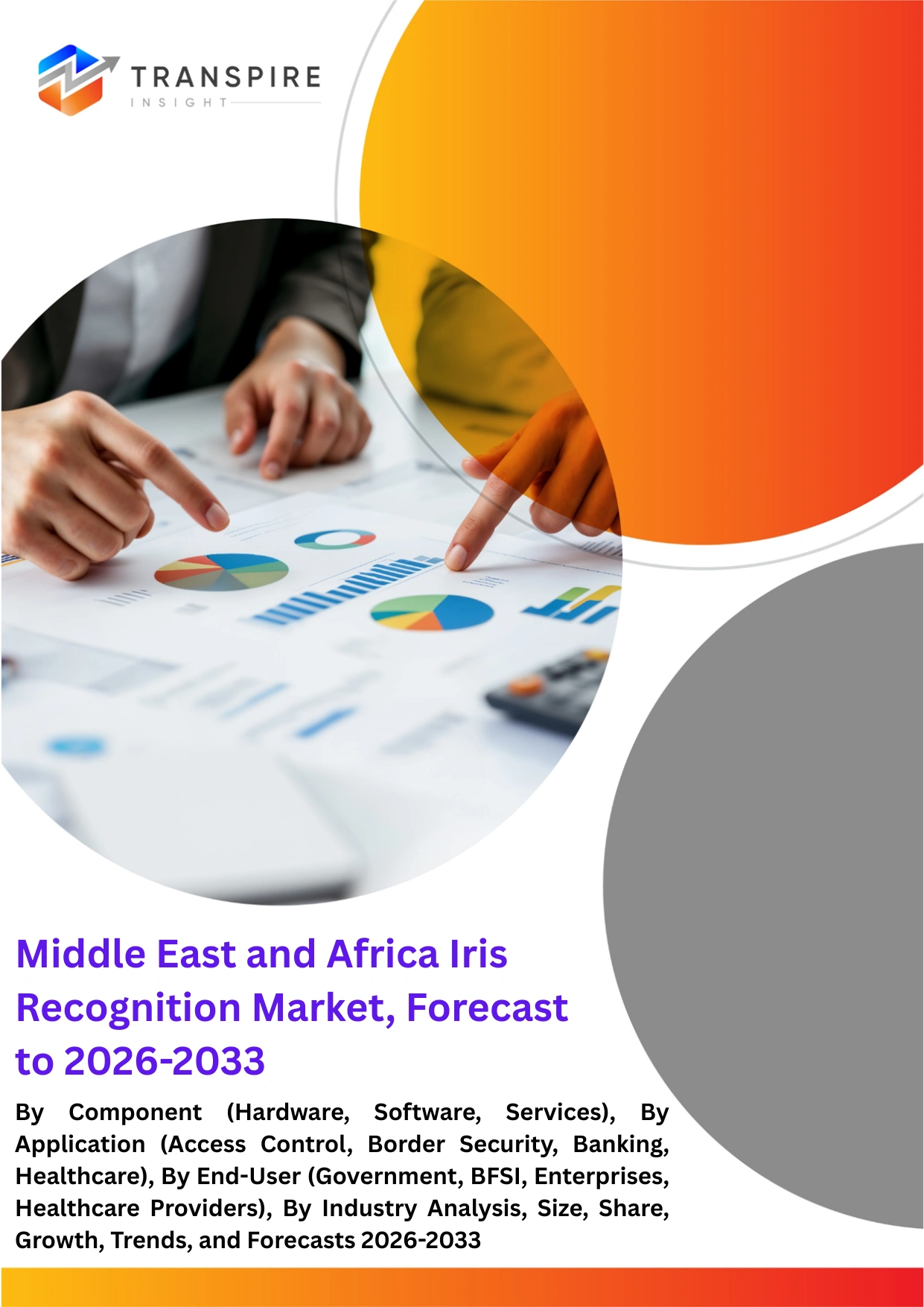
- Middle East and Africa Iris Recognition Market Size 2025: USD 1001.92 Million
- Middle East and Africa Iris Recognition Market Size 2033: USD 5519.9 Million
- Middle East and Africa Iris Recognition Market CAGR: 23.80%
- Middle East and Africa Iris Recognition Market Segments: By Component (Hardware, Software, Services), By Application (Access Control, Border Security, Banking, Healthcare), By End-User (Government, BFSI, Enterprises, Healthcare Providers)
To learn more about this report,  Download Free Sample Report
Middle East and Africa Iris Recognition Market Summary:
The Middle East and Africa Iris Recognition Market size is estimated at USD 1001.92 Million in 2025 and is anticipated to reach USD 5519.9 Million by 2033, growing at a CAGR of 23.80% from 2026 to 2033. Iris recognition in Saudi Arabian, United Arab Emirates, South African, and other Middle Eastern and African countries will grow due to the more precise outcomes achieved by using non-contact identification techniques compared to biometric systems. Governments will pay attention to safe border controls and digital IDs, while businesses will use sophisticated authentication methods to solve issues with fraud. Consumers will demand quick and non-invasive identification in banks, travel, and other public services. Current laws will set higher standards for data privacy that will influence the implementation of cybersecurity. Current technologies will advance in terms of increased accuracy and AI recognition, thus changing how people authenticate themselves both virtually and physically.
Key Market Trends & Insights:
The contactless form of verifying identity will become more prominent than the touch-based approach since the individuals living in this particular region prefer contactless devices for offering superior hygiene and accessibility. The iris scanning checkpoints will become common in the airports and financial firms since it facilitates quick processing and no longer requires any physical examination by personnel. People will desire fast and easy processes whereby individuals will not have to undergo physical examination for authentication. It will make organizations deploy such solutions in their premises as they operate.
The use of artificial intelligence in enhancing the system will improve the image capturing process and facilitate accurate matching regardless of any poor lighting or movement conditions. There will be modifications of the system for identifying individuals irrespective of how far they are from the scanner. Artificial intelligence will play an important role in enhancing algorithms for efficient operation, and thus, the processing will become quicker. The solution will facilitate expansion of the organization's operations for facilitating faster service provision.
The region's governments will implement stricter data governance regulations which will determine the methods for storing and processing biometric data. Organizations must meet new compliance standards which will require them to use secure encryption methods and store their data within specific geographic regions. People will gain greater understanding about privacy issues which will lead service providers to implement clear methods for handling customer data. Authorities and enterprises will select vendors based on their ability to provide solutions which meet both national regulations and international security standards.
The iris recognition system will develop into a primary path for its users because it connects with both mobile identity platforms and smart city systems. The banking sector and healthcare providers and telecom companies will use biometric authentication technology to secure their digital platforms which will enable users to access their identities. The system allows users to verify their identity Online while requiring fewer physical documents for authentication. Organizations will use biometric authentication systems to support their digital transformation initiatives which will result in dependable secure user access methods.
Middle East and Africa Iris Recognition Market Segmentation
By Component
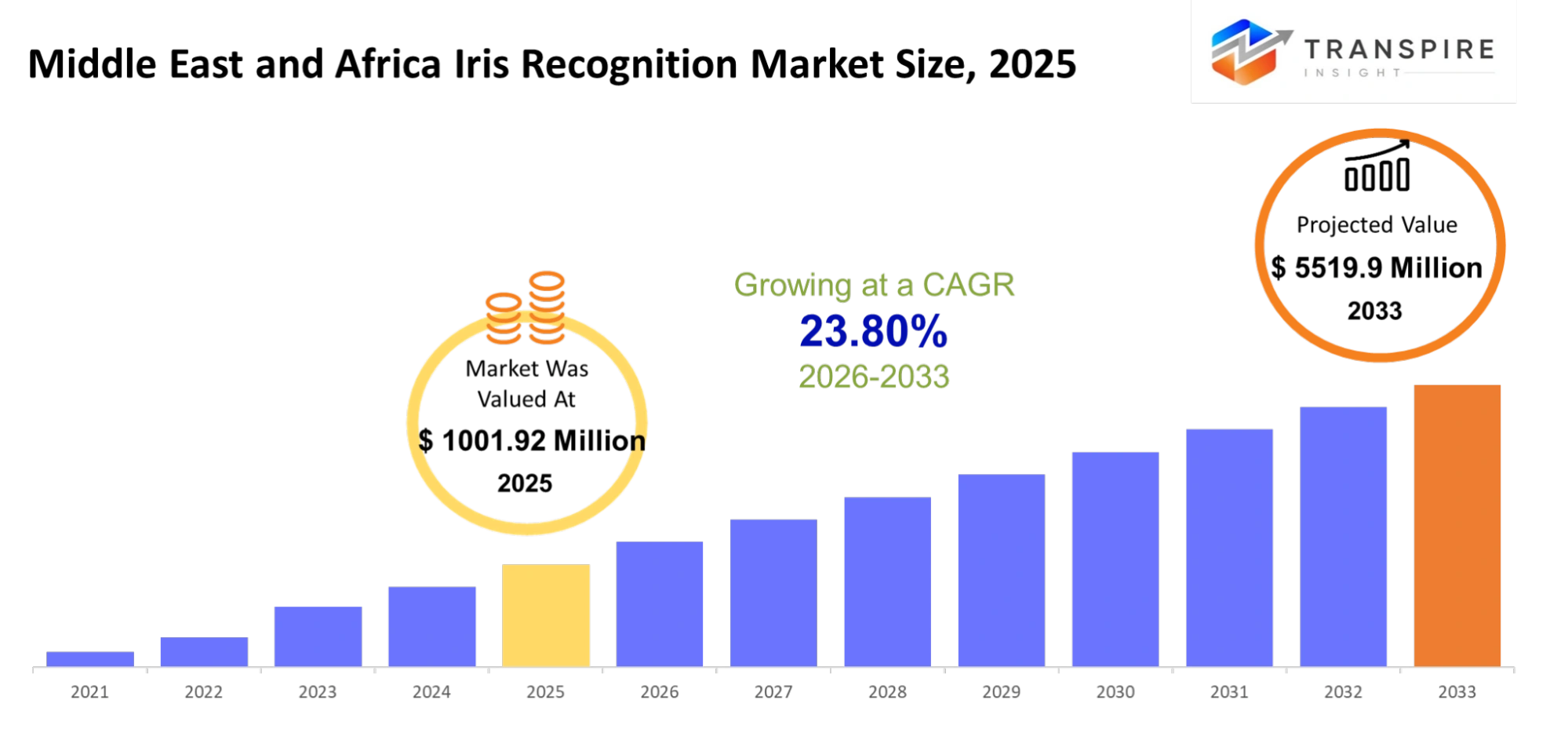
Hardware- The physical infrastructure of iris-based systems will depend on hardware which includes high-resolution cameras and infrared sensors and integrated scanning terminals. The devices will advance their capabilities to accurately record iris patterns which show movement or operate in low-light environments. The manufacturing industry will produce airport and office and outdoor setups with its compact and sturdy design. Hardware will become cheaper over time which will enable mid-sized companies and public infrastructure projects to implement it more widely.
Software- The recognition system operates through software which executes image processing and pattern matching and identity verification tasks. Advanced algorithms will improve accuracy while reducing false matches, even when users wear glasses or move quickly. The cloud-based system enables users to manage their operations from a central location while accessing updates in real time. Developers will focus their attention on cybersecurity features which protect biometric data from unauthorized access, while permitting organizations to connect their systems with current IT technologies and digital identity solutions.
Services- Services will support the deployment, maintenance, and optimization of iris recognition solutions. The system operators will receive technical training through system integration services, which will help them maintain operational efficiency throughout their training and system implementation. Organizations that expand their biometric systems will find managed services beneficial because they enable outside specialists to conduct system updates and monitor system performance. Consulting services will assist organizations in complying with regional data regulations by advising them on the proper implementation of secure biometric identification methods.
To learn more about this report, Download Free Sample Report
By Application
Access Control- The primary application of access control will use iris recognition technology to protect entry points of offices and data centers and secure areas. Organizations will use this technology to eliminate their need for physical keys and access cards. The systems will provide rapid authentication capability which operates under high security requirements. Companies will use iris-based access systems to track employee movements in hybrid workplaces while restricting access to authorized personnel in sensitive areas.
Border Security- Iris recognition will be used in border security applications to improve identity verification at airport terminals and border checkpoints. Authorities will use automated gates to scan travelers rapidly which helps decrease both crowding and the need for manual checks. The approach improves national security because it detects identity fraud more effectively. Systems will operate passenger processing efficiently while handling increased travel demand which allows for simultaneous convenience and strict security measures.
Banking- Iris recognition will enable secure customer authentication in banking for transactions and account access and ATM operations. Financial institutions will use biometric identification systems to decrease fraudulent activities while building customer confidence. Customers will experience quicker access to services which does not require them to use passwords for both online and offline services. The technology will enable digital banking to work with mobile platforms because it provides easy verification methods while protecting against unauthorized access.
Healthcare- Healthcare facilities will use iris recognition technology to identify patients accurately while they manage their medical records. The system will decrease treatment errors which result from duplicated or incorrect patient identities. Hospitals will use biome
By End-User
Government- The government agencies will lead the implementation of iris recognition technology through its use in national identification programs and public service operations and law enforcement. The systems will simplify the process of verifying citizen identities which will lead to faster processing times and better protection against identity theft. The implementation of these systems will enable governments to distribute welfare benefits, manage voting operations, and control border security. The government agencies will work to develop technologies that comply with existing regulations which will protect user data and secure information throughout the system implementation process.
BFSI- The banking sector and financial industry and insurance market will use iris recognition technology to enhance security measures throughout their operations. Organizations will use biometric identification to verify customers during the onboarding process and when they approve transactions and when they need to identify fraudulent activities. The system will decrease the need for users to use passwords and PINs which have known security weaknesses. Iris-based authentication provides a trustworthy solution for financial institutions which need to authenticate users throughout their digital banking operations.
Enterprises- Organizations will use iris recognition technology to control employee access to work areas and to safeguard confidential data and to improve security throughout their business operations. Organizations will install biometric systems in their corporate offices and industrial sites to manage employee access and prevent unauthorized entry. The integration of employee management systems with the system will enable organizations to monitor employee movements and verify their identities. The technology will enable businesses to maintain secure communications during remote work and on-site work as they transition to modern workplace environments.
Healthcare Providers- Healthcare providers will use iris recognition technology to enhance their patient management system and protect their facility security operations. Clinics and hospitals will use biometric systems to achieve precise patient identification while decreasing administrative mistakes. The organization will establish strict access controls for areas such as operating rooms and drug storage areas. The providers will develop secure and efficient systems through the integration of these systems with electronic health records system.
Regional Insights
Saudi Arabia will enhance biometric implementation through its national identity programs and its smart government programs. Public sector projects will increasingly integrate iris-based verification into e-services, supporting secure citizen authentication. Automated systems will be installed at airports and border checkpoints to handle increasing travel volumes with better operational efficiency. The development of biometric operational methods will follow data protection regulations which will establish biometric technology use for national security defense and upcoming privacy requirements.
The United Arab Emirates will maintain its status as a smart infrastructure innovator through the installation of biometric systems at its airports and banking facilities and public service locations. The integration of iris recognition will create seamless travel experiences which allow passengers to pass through checkpoints with speed. Financial institutions will also expand their use of biometric authentication beyond digital banking to enhance customer verification processes. Strong regulatory frameworks will determine data handling procedures because they require secure implementation which simultaneously protects user convenience and supports innovation.
The dual necessity for secure identification to serve public needs and private business needs will boost adoption rates in South Africa. Financial institutions and enterprises will use iris recognition technology to decrease fraud and enhance customer verification methods. Healthcare providers will also explore biometric systems to achieve precise patient identification. The use of biometric systems will advance through digital transformation projects which currently face infrastructure issues in certain regions of the country.
The Middle East and Africa regions will show different adoption patterns which depend on national economic progress and digital infrastructure development. Emerging markets will explore biometric systems for government services, border management, and financial inclusion. International partnerships and technological collaborations will provide support for implementation throughout these areas. Organizations will work to achieve a balance between security requirements and user accessibility needs as they develop biometric systems that can function in different business environments.
Recent Development News
In January 2026, the United Arab Emirates introduced a regional biometric payment pilot which enables users to make payments through facial recognition and palm recognition. The project demonstrates a growing trend of contactless identity verification which financial institutions use to verify customer identities. The system includes more than iris technology because it demonstrates a major increase in advanced biometric systems in the area. The implementation will determine how banks and fintech companies begin to use iris authentication for their secure areas.
In January 2026, at Intersec Dubai 2026, leading biometric firms presented integrated systems combining iris and facial recognition for high-security environments. The solutions demonstrated better spoof detection capabilities together with encrypted data management and smooth access control functions. The exhibition demonstrated how governments and enterprises in the region are prioritizing multi-layered biometric systems. Iris technology served as the essential element for establishing identity verification in border control operations, infrastructure security measures, and enterprise security systems.
|
Report Metrics |
Details |
|
Market size value in 2025 |
USD 1001.92 Million |
|
Market size value in 2026 |
USD 1238.3 Million |
|
Revenue forecast in 2033 |
USD 5519.9 Million |
|
Growth rate |
CAGR of 23.80% from 2026 to 2033 |
|
Base year |
2025 |
|
Historical data |
2021 – 2024 |
|
Forecast period |
2026 – 2033 |
|
Report coverage |
Revenue forecast, competitive landscape, growth factors, and trends |
|
Country scope |
Middle East and Africa (Saudi Arabia, United Arab Emirates, South Africa, Rest of Middle East and Africa) |
|
Key company profiled |
Iris ID, NEC, HID Global, Thales, IDEMIA, EyeLock, Fujitsu, Suprema, BioEnable, Smartmatic, Aware, IriTech, Princeton Identity, Crossmatch, CMITech |
|
Customization scope |
Free report customization (country, regional & segment scope). Avail customized purchase options to meet your exact research needs. |
|
Report Segmentation |
By Component (Hardware, Software, Services), By Application (Access Control, Border Security, Banking, Healthcare), By End-User (Government, BFSI, Enterprises, Healthcare Providers) |
Key Middle East and Africa Iris Recognition Market Company Insights
Middle eastern and African companies that operate in Saudi Arabia and United Arab Emirates and South Africa and other Middle Eastern and African countries (Rest of Middle East and Africa) will develop precise biometric solutions which can be expanded to meet local security requirements. Global technology providers will collaborate with local partners to align systems with regulatory expectations and infrastructure realities. The companies will use artificial intelligence to develop new capabilities while building cloud systems and establishing data protection standards. The industry will focus on delivering solutions that work with current digital systems to provide reliable operation and strong data security because customers want to use technology that functions with their existing digital environments.
Company List
- Iris ID
- NEC
- HID Global
- Thales
- IDEMIA
- EyeLock
- Fujitsu
- Suprema
- BioEnable
- Smartmatic
- Aware
- IriTech
- Princeton Identity
- Crossmatch
- CMITech
Middle East and Africa Iris Recognition Market Report Segmentation
By Component
- Hardware
- Software
- Services
By Application
- Access Control
- Border Security
- Banking
- Healthcare
By End-User
- Government
- BFSI
- Enterprises
- Healthcare Providers
Frequently Asked Questions
Find quick answers to common questions.
The approximate Middle East and Africa Iris Recognition Market size for the market will be USD 5519.9 Million in 2033.
Key segments for the Middle East and Africa Iris Recognition Market By Component (Hardware, Software, Services), By Application (Access Control, Border Security, Banking, Healthcare), By End-User (Government, BFSI, Enterprises, Healthcare Providers).
Major players in the Middle East and Africa Iris Recognition Market are Iris ID, NEC, HID Global, Thales, IDEMIA, EyeLock, Fujitsu, Suprema, BioEnable, Smartmatic, Aware, IriTech, Princeton Identity, Crossmatch, CMITech.
The Middle East and Africa Iris Recognition Market size is USD 1001.92 Million in 2025.
The Middle East and Africa Iris Recognition Market CAGR is 23.80%.
- Iris ID
- NEC
- HID Global
- Thales
- IDEMIA
- EyeLock
- Fujitsu
- Suprema
- BioEnable
- Smartmatic
- Aware
- IriTech
- Princeton Identity
- Crossmatch
- CMITech
Recently Published Reports
-
Apr 2026
3D Optical Profiler Market
3D Optical Profiler Market Size, Share & Analysis Report By Type (Desktop 3D Optical Profiler, and Portable 3D Optical Profiler), By Technology (Confocal Technology, and White Light Interference), By End-Use Industry (Manufacturing, Research Institutions, Automotive, Aerospace and Defense, Medical Devices, and Other), and Geography (North America, Europe, Asia-Pacific, Middle East and Africa, South and Central America), 2021 - 2031
-
Apr 2026
Depth Sensor Market
Depth Sensor Market Size, Share & Analysis Report By Type (Infrared Depth Sensors, Time-of-Flight (ToF) Sensors, Stereo Vision Sensors, Structured Light Sensors, Ultrasonic Depth Sensors), By Application (Automotive, Robotics, Gaming, Consumer Electronics, Industrial Automation, Healthcare, Security & Surveillance, Others), By End Users (Automotive Manufacturers, Consumer Electronics Companies, Healthcare Providers, Industrial Companies, Security Agencies, Gaming Companies, Robotics Companies, Others), and Geography (North America, Europe, Asia-Pacific, Middle East and Africa, South and Central America), 2021 – 2031
-
Apr 2026
Digital Manufacturing Market
Digital Manufacturing Market Size, Share & Analysis Report By Component (Hardware, Software, and Services), By Technology (Robotics, 3D Printing, Internet of Things (IoT), and Others), By Application (Automotive and Transportation, Aerospace and Defense, Consumer Electronics, Industrial Machinery, and Others), By Process Type (Computer-Based Designing, Computer-Based Simulation, Computer 3D Visualization, Analytics, and Others), and Geography (North America, Europe, Asia-Pacific, Middle East and Africa, South and Central America), 2021 – 2031
-
Apr 2026
Digital Visa Services Market
Digital Visa Services Market Size, Share & Analysis Report By Type (Individual Travelers, Group Travelers), By Application (Tourism, Business Travel, Others), and Geography (North America, Europe, Asia-Pacific, Middle East and Africa, South and Central America), 2021 – 2031