

Japan Shiitake Mushroom Market Summary:
According to Transpire Insights, a detailed research report on the market reflects that the Fresh Shiitake segment dominates the Japan Shiitake Mushroom Market, accounting for approximately 61% of the total market share in 2025. Major Japanese shiitake mushroom producers and suppliers contribute to Japan market development, innovation, advanced cultivation technologies, premium shiitake mushroom production, expanding processing capabilities, sustainable farming practices, and growth dynamics.
Market Snapshot
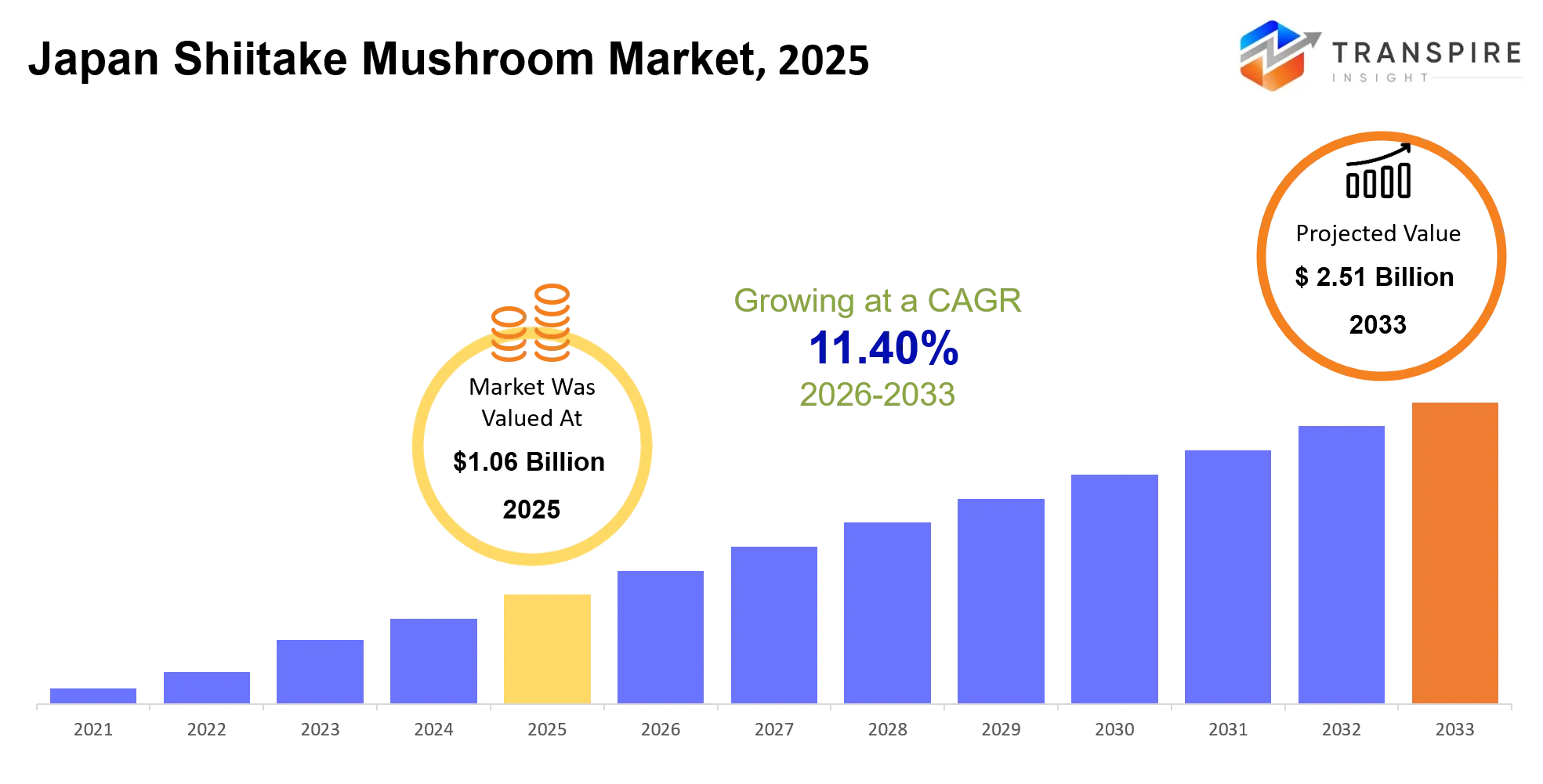
- Market Value (2025): USD 1.06 Billion.
- Expected Market Value (2026): USD 1.18 Billion.
- Estimated Market Value (2033): USD 2.51 Billion.
- Forecast CAGR (2026–2033): 11.40%
Introduction
A market is a form of economic system where there is a coming together of consumers and producers for the exchange of goods, services, or information. In the case of agriculture and industries, a particular market, such as Shiitake Mushroom Industry, refers to the measurement of monetary value, quantity of sales, demand, and logistical operations related to that particular good. Functional Mushrooms: Fungi such as shiitake (Lentinula edodes) that have medicinal uses apart from nutritional values because of their bioactive components such as polysaccharides and beta-glucans. Japanese shiitake mushrooms offer significant nutritional and functional benefits, supporting their strong position in the Japan Shiitake Mushroom Market. They are naturally low in calories and fat while providing dietary fiber, essential minerals, and B-complex vitamins. Bioactive compounds such as lentinan contribute to the growing interest in shiitake for immune and wellness applications. Traditional forest-grown shiitake are particularly valued for their distinctive, savory umami flavor, making them desirable in premium culinary markets worldwide. Furthermore, Japan’s stringent food safety standards, comprehensive quality controls, and contaminant testing frameworks strengthen consumer confidence and reinforce the country’s reputation for high-quality, safe, and premium shiitake mushroom products.
Key Market Highlights: -
- By product type, the Fresh Shiitake segment dominated the market and holds nearly 61% share in 2025 and is projected to grow at a substantial CAGR during the forecast period.
- 2. By application, the Food Processing segment dominated the market and holds nearly 35% share in 2025 and is projected to grow at a substantial CAGR during the forecast period.
- By end user, the Restaurants segment dominated the market and holds nearly 55% share in 2025 and is projected to grow at a substantial CAGR during the forecast period.
- Japan-India Agricultural Collaboration: Bilateral cooperation between Japan and India is an example of agricultural collaboration that facilitates technology transfer, sustainable agriculture, and the cultivation of specialty mushrooms. Japan has made contributions in the development of shiitake cultivation through its knowledge and experience in conjunction with the efforts of JICA. This partnership has resulted in growth prospects in the Japan Shiitake Mushroom Market.
How is Technology Driving Growth in the Japan Shiitake Mushroom Market?
The Japan Shiitake Mushroom Market is using more sophisticated cultivation and processing technologies to increase their efficiency, stability, and the quality of products. Controlled Environment Agriculture makes it possible to manage temperatures and humidity levels in order to provide year-round productivity. The use of automation and robotics, bottle and bag substrate systems can be mentioned in relation to increasing efficiency and solving labor shortage problems. Such technologies as IoT sensors and data analysis will help farmers keep track of mycelium development and create the best conditions for fruiting. Hot-air and freeze-drying technologies allow preserving the unique taste of shiitake mushrooms along with the extension of their shelf life. Also, government subsidies are contributing to the development of smart agriculture and exporting of shiitake mushrooms.
Market Drivers
The Shiitake Mushroom Market is fueled by growing health consciousness, as people increasingly prefer nutrient-dense foods that provide proteins, fibers, vitamins, and other bioactive compounds. Heightened understanding about the functional properties of shiitake mushrooms and their positive impact on immunity and gut health will help boost the market for functional foods and nutraceuticals. With the rise in the number of people switching to plant-based and vegetarian diets, shiitake will serve as an umami-rich substitute for meat. In addition to this, innovation in farming methods, such as improved log farming, vertical farming, and smart farming, is enhancing the production process. The Japan’s Shiitake Mushroom Market is advantaged by the cultivation of the product using the traditional practice of hardwood substrate forest logs that includes trees like oak and chestnut, giving a unique flavor and texture in the product. Strict food safety and agriculture standards have increased the trust among consumers and improved Japan’s image as a producer of high-quality mushrooms. The medicinal and functional properties of the shiitake mushroom, especially in terms of the bioactive components in the mushroom like lentinan, are helping in increasing the application scope in supplements, functional foods, and pharmaceutical studies. In addition, Japan’s high-quality exports are boosting the demand for forest shiitake and flower-shaped cracked cap shiitake.
Restrain
Problems in the Japan Shiitake Mushroom Market include the expensive production and labor costs that accompany the use of conventional wood cultivation and manual harvesting methods. Climate and weather changes may impact production. Supply chain pressure such as the cost of packaging and distribution may cut into profitability. Also, tight certification regulations, supply reliance, and low consumer awareness of functional mushrooms may inhibit market growth.
Analysis of Prices and Consumer Behaviour
Shiitake products account for the major part of the shiitake market (36.04% of total Japan mushroom market revenue in 2025), mainly because of the demand for shiitake mushrooms in household consumption, restaurants, food processing, retail and food service industries. The price for premium-quality shiitake will be higher than the price of standard products due to the use of controlled production, certified quality and grading process of production. The amount of fresh shiitake mushrooms in Japan was 69,620 metric tons in 2022. The sales volume is determined by the versatility of shiitake in the Japanese cuisine, soups, sauces, hot pot, processed and ready meals. Food processing and restaurant industries are the main sources of demand in these sectors. The buying behavior of consumers shows that consumers value freshness, quality, taste, nutrition and safety of food products. One more group of buyers prefers bulk purchase or long term agreement because of the desire to decrease their expenses in order to acquire products and guarantee the constant supply for their customers in different parts of Japan.
Top Companies in the Japan Shiitake Mushroom Market
- Hokuto Corporation
- HOKUTO
- Yukiguni Maitake
- House Foods
- Maruha Nichiro
- Nissui
- Kyokuyo
- S&B Foods
- Mizkan
- Kikkoman
- Takara Shuzo
- JA Group
- Oisix ra daichi
- Kagome
- Hikari Miso
Japan Shiitake Mushroom Market Segmentation
The Japan Shiitake Mushroom Market share is divided into six categories: By product type, cultivation method, form, application, distributed channel and end user.
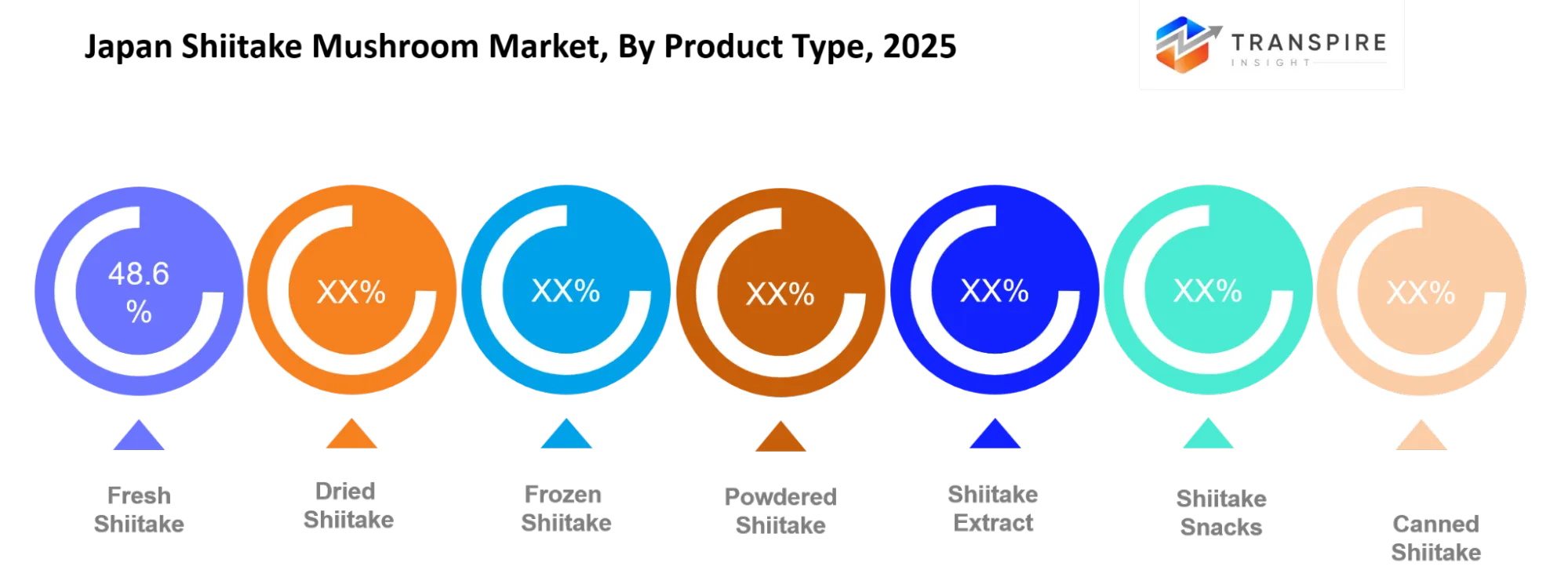
The Fresh Shiitake dominated the market, accounting for nearly 61% in 2025 and is expected to rise at a significant CAGR during the forecast period.
The Japan Shiitake Mushroom Market is segmented by product types into, Fresh Shiitake, Dried Shiitake, Frozen Shiitake, Powdered Shiitake, Shiitake Extract, Shiitake Snacks, Canned Shiitake, Processed Shiitake. Among these, the Fresh Shiitake segment dominated the market, accounting for nearly 61% in 2025 and expected to increase at a significant CAGR during the forecast period. The “Fresh Shiitake” was the most successful segment in the Japanese Shiitake Mushroom Market in 2025, as it took up almost 61% share due to high consumer preference for superior flavor, texture, nutrition, and usage. The “Fresh Shiitake” has been able to capitalize on its position in the domestic food culture of Japan, its retail presence, and catering industries.
The Food Processing dominated the market, accounting for nearly 35% in 2025, and is expected to rise at a significant CAGR during the forecast period.
The Japan Shiitake Mushroom Market is segmented by application into, Food Processing, Retail Food, Restaurants, Soups & Broths, Sauces, Seasonings, Nutraceuticals, Functional Foods. Among these, the Food Processing segment dominated the market, accounting for nearly 35% in 2025 and expected to increase at a significant CAGR during the forecast period. Food Processing dominated the Japan Shiitake Mushroom Market share in 2025, having more than 35% of the market share. This was because of the extensive usage of shiitake mushrooms in soups, sauces, seasonings, ready-to-eat meals, and processed food items. The increasing demand for convenient, healthy, and umami-rich ingredients is likely to drive the segment growth in the forecast period.
The Restaurants dominated the market, accounting for nearly 55% in 2025 and is expected to rise at a significant CAGR during the forecast period.
The Japan Shiitake Mushroom Market is segmented by end user into Households, Restaurants, Hotels, Food Manufacturers, Catering Companies, Foodservice Operators, Nutraceutical Companies, Exporters. Among these, the Restaurants segment dominated the market, accounting for nearly 55% in 2025 and expected to increase at a significant CAGR during the forecast period. Restaurants was the dominant category in the Japan Shiitake Mushroom Market during 2025, making up close to 55% market share, due to high demand for the mushroom in Japanese cuisine, soups, hot pot, sauces, and specialty dishes. Higher restaurant traffic and consumers' preference for fresher ingredients are expected to contribute to strong segment growth going forward.
Future Market Trends for the Japan Shiitake Mushroom Market: -
- Advances in Cultivation Methods: The industry is leaning towards climate-controlled greenhouses and advanced substrates to ensure consistent production throughout the year.
- Functional Foods and Health Products: The increased consumption of health benefits, such as immunity-enhancing beta-glucans like lentinan, contributes to the development of functional foods and health supplements.
- Sustainable & Organic Agriculture: The growers are using sustainable farming practices to cater to green consumers.
- Exports: Japan remains active in exporting the product to more than 29 countries, prioritizing the quality of fresh and dried products.
Recent Development
- In September 2026: Publication of research on Japan Functional Mushrooms Market showed the further development of the market, increasing awareness about health issues and increasing uses of functional mushroom products. These results can be useful for the Japan Shiitake Mushroom Market, since there are many possibilities for application of shiitake in functional food, dietary supplement, nutraceuticals, etc.
- In August 2026: Use of advanced technologies such as digital farm management and automated climatic controls have helped to improve the process of indoor shiitake mushroom farming in controlled environment conditions in Japan. The use of technology ensures that temperature and moisture levels are regulated for effective year-round indoor cultivation.
Market Segment
This study forecasts revenue at Japan, regional and country levels from 2020 to 2033. Transpire Insights has segmented the Japan Shiitake Mushroom Market based on the below-mentioned segments:
Japan Shiitake Mushroom Market, By Product Type
- Fresh Shiitake
- Dried Shiitake
- Frozen Shiitake
- Powdered Shiitake
- Shiitake Extract
- Shiitake Snacks
- Canned Shiitake
- Processed Shiitake
Japan Shiitake Mushroom Market, By Cultivation Method
- Log Cultivation
- Sawdust Cultivation
- Indoor Cultivation
- Outdoor Cultivation
- Greenhouse Cultivation
- Organic Cultivation
- Controlled-Environment Cultivation
- Traditional Cultivation
Japan Shiitake Mushroom Market, By Form
- Whole
- Sliced
- Caps
- Stems
- Powder
- Granules
- Extract
- Paste
Japan Shiitake Mushroom Market, By Application
- Food Processing
- Retail Food
- Restaurants
- Soups & Broths
- Sauces
- Seasonings
- Nutraceuticals
- Functional Foods
Japan Shiitake Mushroom Market, By Distribution channel
- Supermarkets
- Hypermarkets
- Convenience Stores
- Specialty Stores
- Traditional Markets
- Online Retail
- Foodservice Distributors
- Wholesale Markets
Japan Shiitake Mushroom Market, By End User
- Households
- Restaurants
- Hotels
- Food Manufacturers
- Catering Companies
- Foodservice Operators
- Nutraceutical Companies
- Exporters
Frequently Asked Questions
Find quick answers to common questions.
Growing health consciousness, traditional culinary demand, functional-food applications, sustainable cultivation, and advanced farming technologies are driving Japan’s shiitake market growth.
Fresh Shiitake dominates the market, supported by consumer preference for freshness, superior flavor, nutritional value, and widespread culinary applications.
Food processing demand is driven by shiitake use in soups, sauces, seasonings, ready-to-eat meals, and convenient umami-rich food products.
IoT sensors, automation, controlled environments, advanced substrates, and climate management technologies improve productivity, consistency, quality, and year-round shiitake cultivation.
Key trends include controlled cultivation, functional foods, organic production, sustainable agriculture, advanced processing technologies, and expanding international shiitake exports.
- Hokuto Corporation
- HOKUTO
- Yukiguni Maitake
- House Foods
- Maruha Nichiro
- Nissui
- Kyokuyo
- S&B Foods
- Mizkan
- Kikkoman
- Takara Shuzo
- JA Group
- Oisix ra daichi
- Kagome
- Hikari Miso
About the Authors

Chetan Dhatrak
I’m Chetan Dhatrak, a Senior Research Analyst at Transpire Insight, specializing in the Consumer Goods, Foods and Beverages industry. I focus on analyzing market trends, consumer behavior, competitive landscapes, and industry developments to deliver accurate, data-driven insights. My research at Transpire Insight is built on credible sources and in-depth analysis, helping businesses and readers better understand market dynamics, emerging opportunities, and evolving consumer preferences. I’m committed to creating reliable, well-researched content that supports informed decision-making and reflects the latest developments in the consumer goods and food & beverage sectors.

Chakradhar Khansole
Chakradhar serves as the Research Director at Transpire Insight, bringing over 8 years of experience in technology, innovation, and strategic market intelligence. He specializes in transforming complex market data into actionable business insights that enable organizations to make informed, growth-oriented decisions. Recognized for his strategic vision and analytical expertise, Chakradhar leads high-impact research initiatives, delivering comprehensive market assessments, competitive intelligence, and forward-looking industry analysis.
Recently Published Reports
-
Apr 2026
Baby Infant Formula Market
Baby Infant Formula Market Size, Share & Analysis Report By ype (Infant Milk, Follow On Milk, Specialty Baby Milk, Growing-Up Milk), By Ingredient (Carbohydrate, Fat, Protein, Minerals, Vitamins, and Others), By Product Form (Powder, Liquid, and Ready-to-feed), By Distribution Channels (Supermarket/Hypermarket, Specialty Store, Pharmacies, Online Retail, and Others), and Geography (North America, Europe, Asia-Pacific, Middle East and Africa, South and Central America), 2021 - 2031
-
Apr 2026
Edible Insects for Animal Feed Market
Edible Insects for Animal Feed Market Size, Share & Analysis Report By Type (Insect Powder, Insect Meal, Insect Bar, Insect Paste, Insect Oil, and Others), By Insect Type (Beetles, Cricket, Caterpillar, Hymenoptera, Orthoptera, Tree Bugs, and Others), By Application (Livestock, Pet Food, and Aquaculture), By Livestock Type (Poultry, Swine, and Others), and Geography (North America, Europe, Asia-Pacific, Middle East and Africa, South and Central America), 2021 - 2031
-
Apr 2026
Food Industry Disinfection and Bacterial Control Market
Food Industry Disinfection and Bacterial Control Market Size, Share & Analysis Report By Type (Chemical Disinfectants, Physical Disinfectants, and Biocides and Antimicrobials), By Application (Food Processing Equipment Surface Disinfection, Food Preparation Areas Surface Disinfection, Storage Areas Surface Disinfection, Anti-microbial Coatings Food Preservation, and Preservative Solutions Food Preservation), By End User (Meat and Poultry Processing, Dairy Processing, Seafood Processing, Bakery and Confectionery, Restaurants and Commercial Kitchens, and Food Service Providers), By Sales Channel (Online, Offline), and Geography (North America, Europe, Asia-Pacific, Middle East and Africa, South and Central America), 2021 - 2031
-
May 2026
Freeze Dried Food Market
Freeze Dried Food Market Size, Share & Analysis Report By Product Type (Fruits, Vegetables, Freeze-Dried Dairy Products, Freeze-Dried Meat and Seafood, Freeze-Dried Pet Food, and Prepared Meal), By Nature (Organic, and Conventional), By Form (Powdered, Granules, and Diced), By End Use (Breakfast Cereals, Dairy Products, Bakery & Confectionery, Nutritional Bars & Supplements, Powdered Beverages, Snacks, and Retail (Household)), and Geography (North America, Europe, Asia-Pacific, Middle East and Africa, South and Central America), 2021 - 2031