

Japan Sezary Syndrome Treatment Market Summary:
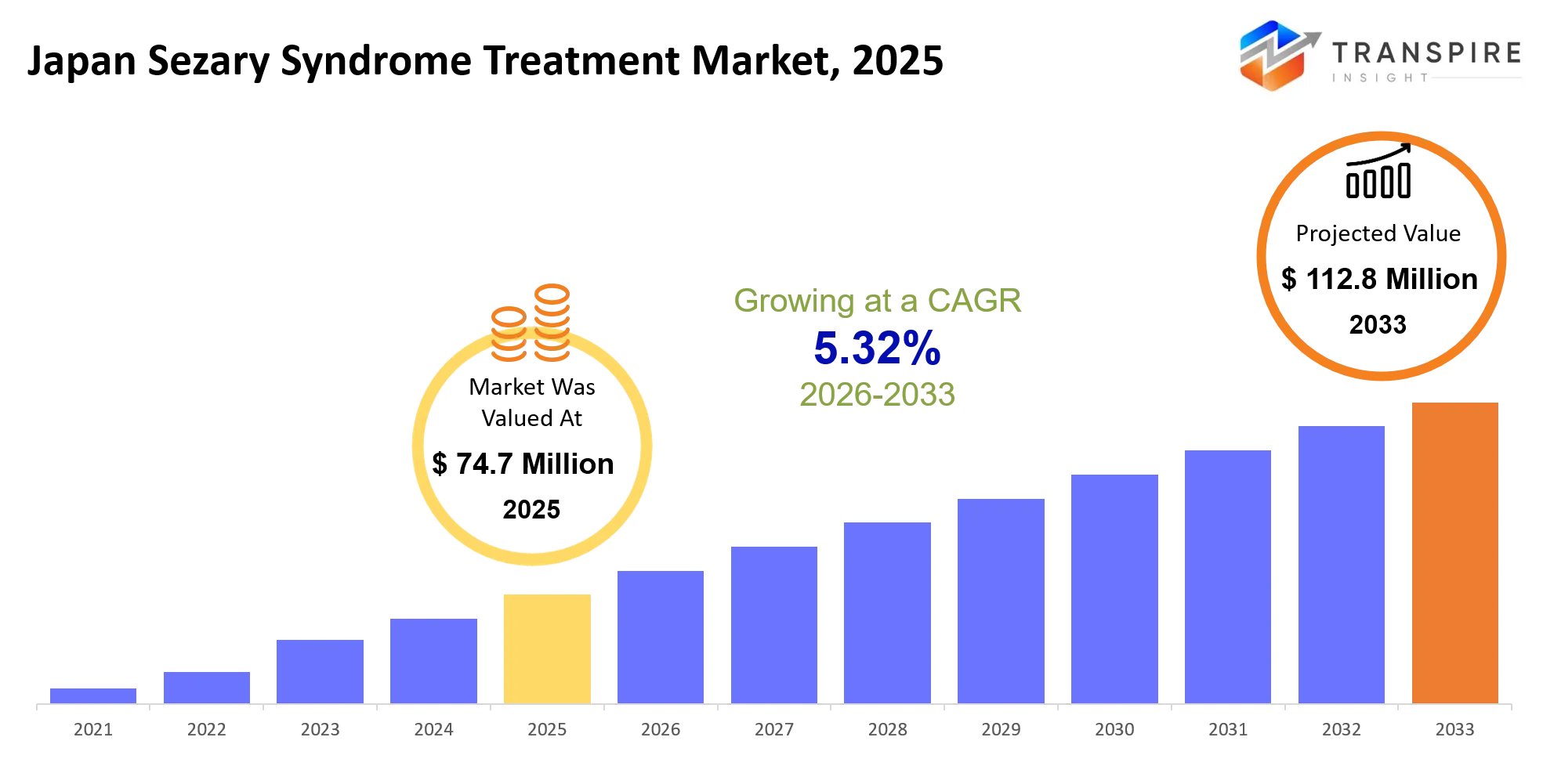
According to Transpire Insights, a detailed research report on the market reflects that the Japan Sézary Syndrome Treatment Market was valued at approximately USD 74.7 million in 2025, is expected to reach USD 78.5 million in 2026, and is estimated to reach USD 112.8 million by 2033, expanding at a CAGR of 5.32% during 2026–2033. These market dynamics highlight the increasing focus on advanced Sézary syndrome treatment approaches, targeted therapies, treatment innovation, expanding clinical capabilities, and the evolving healthcare landscape supporting market development and growth in Japan.
Market Snapshot
- Market Value (2025): USD 74.7 Million.
- Expected Market Value (2026): USD 78.5 Million.
- Estimated Market Value (2033): USD 112.8 Million.
- Forecast CAGR (2026–2033): 5.32%
Introduction
Japan Sézary Syndrome Treatment Market is a comprehensive treatment approach that includes a variety of therapeutic modalities and specialized treatment strategies for managing Sézary syndrome, an aggressive leukemic variant of cutaneous T-cell lymphoma (CTCL). Treatment includes targeted treatments, immunotherapy, skin-directed therapies, and other systemic therapies for systemic disease, extensive skin involvement, malignant circulating T-cells, and complications. The market is supported by Japan’s advanced oncology infrastructure, specialized cancer centers, well-established pharmaceutical capabilities and growing focus on precision medicine. Targeted biologics, especially CCR4-directed therapies such as mogamulizumab, have a major role in the changing treatment landscape. Growing clinical research, improved disease identification and evolving specialized treatment protocols are shaping the Japan Sézary Syndrome Treatment Market, further boosting the opportunities.
Key Market Highlights: -
- By Diagnosis, the Immunophenotyping dominated the market and holds approximately 40% share in 2025 and is projected to grow at a substantial CAGR during the forecast period.
- By Treatment Type, the Targeted Therapydominated the market and holds approximately 55% share in 2025 and is projected to grow at a substantial CAGR during the forecast period.
- By Drug, the Chemotherapy AgentsManufacturers segment dominated the market and holds approximately 40% share in 2025 and is projected to grow at a substantial CAGR during the forecast period.
- Japan’s Sézary Syndrome Treatment Market is driven by universal healthcare coverage, specialized oncology infrastructure, adoption of targeted therapy, initiatives in the area of precision-medicine, and pharmaceutical innovation for improved access to cutting-edge treatments.
How is Technology Driving Growth in the Japan Sezary Syndrome Treatment Market?
Technology Empowering Japan Sézary Syndrome Treatment Market Innovation in diagnostics, precision medicine and targeted therapeutic development Enhanced flow cytometry and molecular testing improves identification of malignant T-cells, disease classification and assessment of blood involvement. Genomic and biomarker-based approaches allow for more personalized selection and monitoring of treatment, and digital pathology and integrated clinical data platforms have the potential to improve diagnostic consistency and treatment planning. Biomarker-driven treatment strategies are changing the therapeutic landscape, exemplified by targeted treatments such as CCR4-directed mogamulizumab (Poteligeo). Together, these technologies are improving clinical decision-making, enabling earlier disease characterization, and supporting more individualized management of Sézary syndrome throughout Japan’s network of specialized oncology care.
Market Drivers
Market Dynamics Increasing Adoption of Precision Oncology The adoption of biomarker testing, sophisticated flow cytometry, and targeted treatment approaches is fueling the evolution of the Japan Sézary Syndrome Treatment Market. Further characterization of malignant T-cells allows clinicians to evaluate disease involvement and select appropriate systemic or targeted therapy. The increased clinical focus on personalized treatment, coupled with Japan’s robust oncology infrastructure and established reimbursement landscape, eases access to specialized therapies. Ongoing research into immunotherapies, monoclonal antibodies, and innovative treatment combinations is also spurring therapeutic innovation and opening avenues for market growth across specialized cancer centers.
Restrain
Japan Sézary Syndrome Treatment Market restrains by factors like limited patient population, high cost of advanced targeted treatments and stringent regulatory requirements. The rarity of Sézary syndrome limits treatment volumes and commercial incentives to develop specialized therapies. Moreover, complex clinical evaluation and safety requirements may extend development timelines, and treatment-related adverse events can influence therapy continuity and clinical management. These factors, combined with manufacturing and compliance requirements for biologic therapies, can increase development costs and limit broader market penetration.
Analysis of Prices and Consumer Behaviour
The Japan Sézary Syndrome Treatment Market was valued at around USD 74.7 million in 2025 and is expected to reach USD 78.5 million in 2026. The Japan Sézary Syndrome Treatment Market is projected to grow at a CAGR of 5.32% during 2026-2033 to reach around USD 112.8 million by 2033. Demand for advanced targeted treatments, systemic therapies, specialized oncology care, and precision-medicine approaches to manage Sézary syndrome is driving the market. Pricing of treatments is based on variables such as the complexity of the therapy, the costs of biologic development, clinical monitoring needs, and reimbursement issues. Key factors driving purchasing and treatment decisions include clinical efficacy, safety, disease response, treatment accessibility and physician recommendations. Additionally, healthcare providers are increasingly emphasizing therapies with targeted mechanisms and enhanced patient management outcomes.
Top Companies in the Japan Sezary Syndrome Treatment Market
- Roche
- Novartis
- Bristol Myers Squibb
- Merck
- Pfizer
- AstraZeneca
- GSK
- Sanofi
- Takeda
- AbbVie
- Amgen
- Eli Lilly
- Johnson & Johnson
- Bayer
- Teva
Japan Sezary Syndrome Treatment Market Segmentation
The Japan Sezary Syndrome Treatment Market share is divided into six categories: By Diagnosis, By Treatment Type, By Drug, By Route, By End User, By Distribution Channel.
The Immunophenotyping dominated the market, accounting for nearly 40% in 2025 and is expected to rise at a significant CAGR during the forecast period.
The Japan Sezary Syndrome Treatment Market is segmented by diagnosis into immunophenotyping, t-cell receptor gene rearrangement, blood tests, skin biopsy, flow cytometry, molecular testing, imaging, other diagnostics. Among these, the Immunophenotyping segment dominated the market, accounting for nearly 40% in 2025 and expected to increase at a significant CAGR during the forecast period. Immunophenotyping is expected to be the leading segment in the Japan Sézary Syndrome Treatment Market with a share of almost 40% in 2025, due to its importance in accurate diagnosis, disease classification, and treatment planning.
The Targeted Therapy dominated the market, accounting for nearly 55% in 2025, and is expected to rise at a significant CAGR during the forecast period.
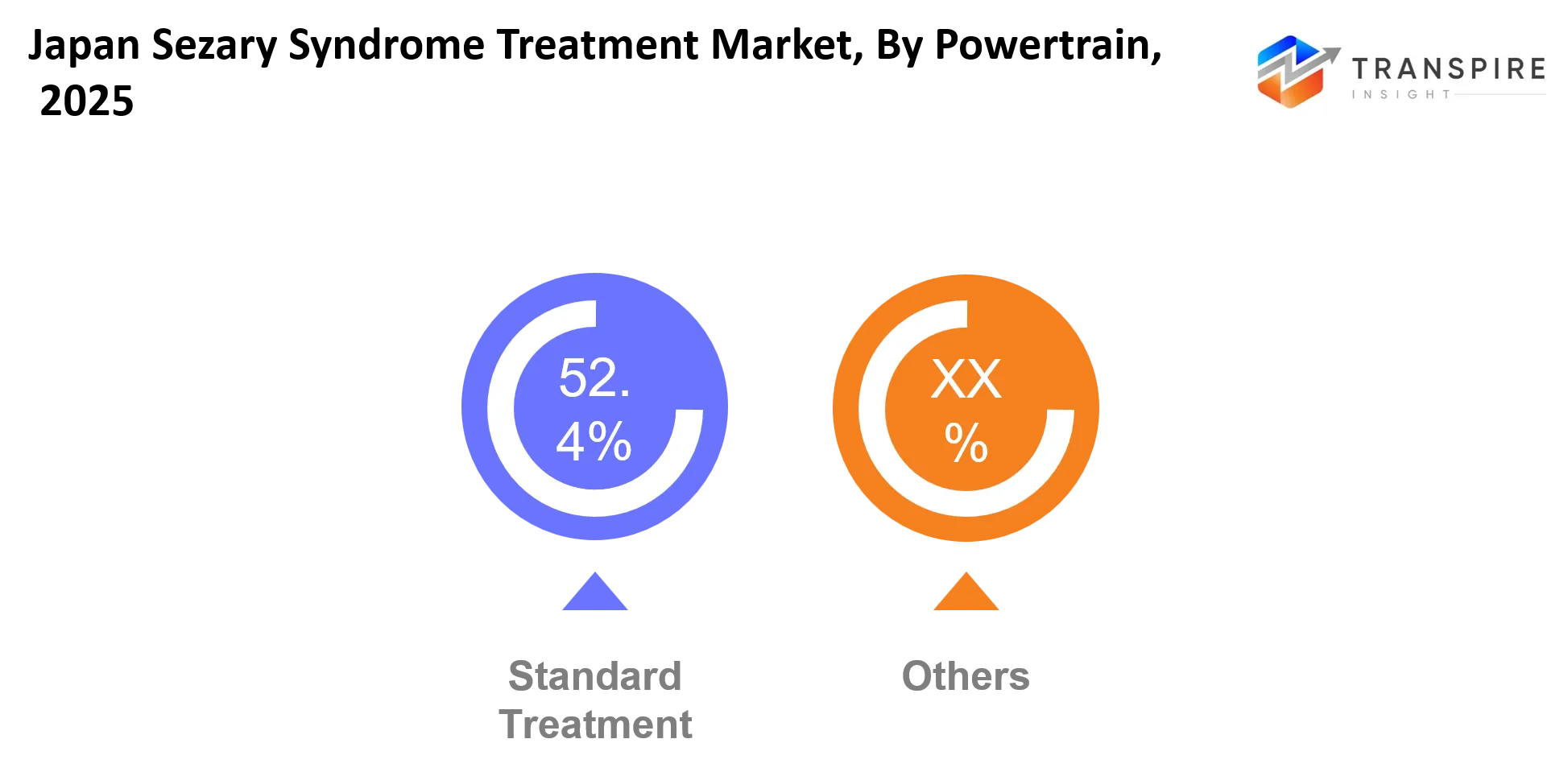
The Japan Sezary Syndrome Treatment Market is segmented by treatment type into standard treatment, advanced treatment, chemotherapy, immunotherapy, targeted therapy, extracorporeal photopheresis, radiation therapy, supportive therapy. Among these, the Targeted Therapydominated the market, accounting for nearly 55% in 2025 and expected to increase at a significant CAGR during the forecast period. Targeted therapy segment held the largest share of Japan Sézary Syndrome Treatment Market owing to biomarker-driven treatment, clinical efficacy and rising adoption of personalized oncology approaches.
The Chemotherapy Agents dominated the market, accounting for nearly 40% in 2025 and is expected to rise at a significant CAGR during the forecast period.
The Japan Sezary Syndrome Treatment Market is segmented by drug into vorinostat, mogamulizumab, corticosteroids, interferon, chemotherapy agents, monoclonal antibodies, retinoids, other drugs. Among these, the Chemotherapy Agentsdominated the market, accounting for nearly 40% in 2025 and expected to increase at a ANCA significant CAGR during the forecast period. Chemotherapy agents continued to be widely used because of their established role in systemic disease management, ease of treatment, and familiarity in the clinic.
Future Market Trends for the Japan Sezary Syndrome Treatment Market: -
Adoption of Precision Oncology: Increasingly, biomarker-based diagnostics and targeted treatments are being utilized to support personalized treatment strategies and improve therapeutic decision-making for patients with Sézary syndrome.
Advanced Diagnostic Integration: Increased use of flow cytometry, molecular testing and digital pathology is better characterizing, monitoring and differentiating Sézary syndrome from other CTCL subtypes.
Targeted Therapy Expansion: Japan's Sézary syndrome treatment landscape may be shaped by ongoing clinical research into monoclonal antibodies, immunotherapies, and combination regimens, which may boost treatment options and spur innovation.
Recent Development
In March 2026: Japan strengthened its rare-disease clinical development infrastructure to enable faster evaluation pathways and stimulate pharmaceutical innovation for advanced Sézary syndrome therapies.
In June 2026: Precision-diagnostic capabilities were enhanced in Japanese oncology centers, strengthening biomarker-guided treatment selection and facilitating targeted therapy adoption in Sézary syndrome.
Market Segmentation
This study forecasts revenue at Japan, regional and country levels from 2020 to 2033. Transpire Insights has segmented the Japan Sezary Syndrome Treatment Market based on the below-mentioned segments:
Japan Sezary Syndrome Treatment Market, By Diagnosis
- Immunophenotyping
- T-Cell Receptor Gene Rearrangement
- Blood Tests
- Skin Biopsy
- Flow Cytometry
- Molecular Testing
- Imaging
- Other Diagnostics
Japan Sezary Syndrome Treatment Market, By Treatment Type
- Standard Treatment
- Advanced Treatment
- Chemotherapy
- Immunotherapy
- Targeted Therapy
- Extracorporeal Photopheresis
- Radiation Therapy
- Supportive Therapy
Japan Sezary Syndrome Treatment Market, By Drug
- Vorinostat
- Mogamulizumab
- Corticosteroids
- Interferon
- Chemotherapy Agents
- Monoclonal Antibodies
- Retinoids
- Other Drugs
Japan Sezary Syndrome Treatment Market, By Route
- Oral
- Parenteral
- Intravenous
- Subcutaneous
- Topical
- Phototherapy
- Infusion
- Other Routes
Japan Sezary Syndrome Treatment Market, By End User
- Hospitals
- Cancer Centers
- Specialty Clinics
- Dermatology Clinics
- Oncology Centers
- Research Institutes
- Homecare
- Academic Medical Centers
Japan Sezary Syndrome Treatment Market, By Distribution Channel
- Hospital Pharmacy
- Retail Pharmacy
- Specialty Pharmacy
- Online Pharmacy
- Direct Procurement
- Wholesalers
- Specialty Distributors
- Other Channels
Frequently Asked Questions
Find quick answers to common questions.
Growth is driven by precision diagnostics, targeted therapies, specialized oncology infrastructure, and clinical adoption of personalized treatment strategies in Japan.
Immunophenotyping leads the diagnosis segment because it supports accurate disease characterization, classification, and treatment planning for Sézary syndrome patients locally.
Targeted therapy leads treatment adoption due to biomarker specificity, therapeutic efficacy, personalized care strategies, and clinical emphasis on precision oncology.
Limited patient numbers, high treatment costs, regulatory complexity, safety considerations, and specialized care requirements can constrain market expansion in Japan.
Precision oncology, advanced diagnostics, targeted therapy expansion, and biomarker-based treatment selection are expected to shape Japan’s Sézary syndrome treatment landscape.
- Roche
- Novartis
- Bristol Myers Squibb
- Merck
- Pfizer
- AstraZeneca
- GSK
- Sanofi
- Takeda
- AbbVie
- Amgen
- Eli Lilly
- Johnson & Johnson
- Bayer
- Teva
About the Authors

Pankaj Ghogare Patil
I am Pankaj Ghogare Patil, a Senior Research Analyst at Transpire Insight, specializing in the Pharmaceutical, Chemicals & Materials, Healthcare IT, and Biotechnology industry. My expertise lies in conducting comprehensive market research, analyzing industry trends, evaluating competitive landscapes, and translating complex data into actionable insights. At Transpire Insight, I closely follow emerging technologies, regulatory developments, and market innovations to create accurate, well-researched, and informative content that helps businesses and professionals make informed decisions. I am committed to producing credible, evidence-based articles that reflect industry best practices while making technical topics accessible and valuable for a broad audience.

Chakradhar Khansole
Chakradhar serves as the Research Director at Transpire Insight, bringing over 8 years of experience in technology, innovation, and strategic market intelligence. He specializes in transforming complex market data into actionable business insights that enable organizations to make informed, growth-oriented decisions. Recognized for his strategic vision and analytical expertise, Chakradhar leads high-impact research initiatives, delivering comprehensive market assessments, competitive intelligence, and forward-looking industry analysis.
Recently Published Reports
-
Apr 2026
AI in Diabetic Retinopathy Market
AI in Diabetic Retinopathy Market Size, Share & Analysis Report By Type (Screening AI Systems, Diagnostic AI Systems, and Predictive AI Models), By Application Segment (Hospitals, Ophthalmology Clinics, Diagnostic Centers, and Research and Development), and Geography (North America, Europe, Asia-Pacific, Middle East and Africa, South and Central America), 2021 - 2031
-
Apr 2026
Psychometric Tests Market
Psychometric Tests Market Size, Share & Analysis Report By Type (Personality Tests, Ability/Aptitude Tests, Skill/Knowledge Tests, and Others), By Application (Talent Acquisition and Talent Management), and Geography (North America, Europe, Asia-Pacific, Middle East and Africa, South and Central America), 2021 – 2031
-
Apr 2026
Rare Biological Sample Collection Market
Rare Biological Sample Collection Market Size, Share & Analysis Report By Type (Isolation Kits & Reagent, Blood Collection Tubes, and Others), By Application (Oncology, Transcriptomics, Pharmacogenomics, and Others), and Geography (North America, Europe, Asia-Pacific, Middle East and Africa, South and Central America), 2021 – 2031
-
Jul 2026
Diabetic Retinopathy Market
Diabetic Retinopathy Market Size, Share & Analysis Report By Type (Proliferative Diabetic Retinopathy, and Diabetic Macular Edema (DME)), By Treatment Type (Anti VEGF Drug, Steroid Implants, Laser Surgeries, and Vitrectomy), and Geography (North America, Europe, Asia-Pacific, Middle East and Africa, South and Central America), 2021 – 2031
Our Clients







