

Japan Parabens Market Size & Forecast:
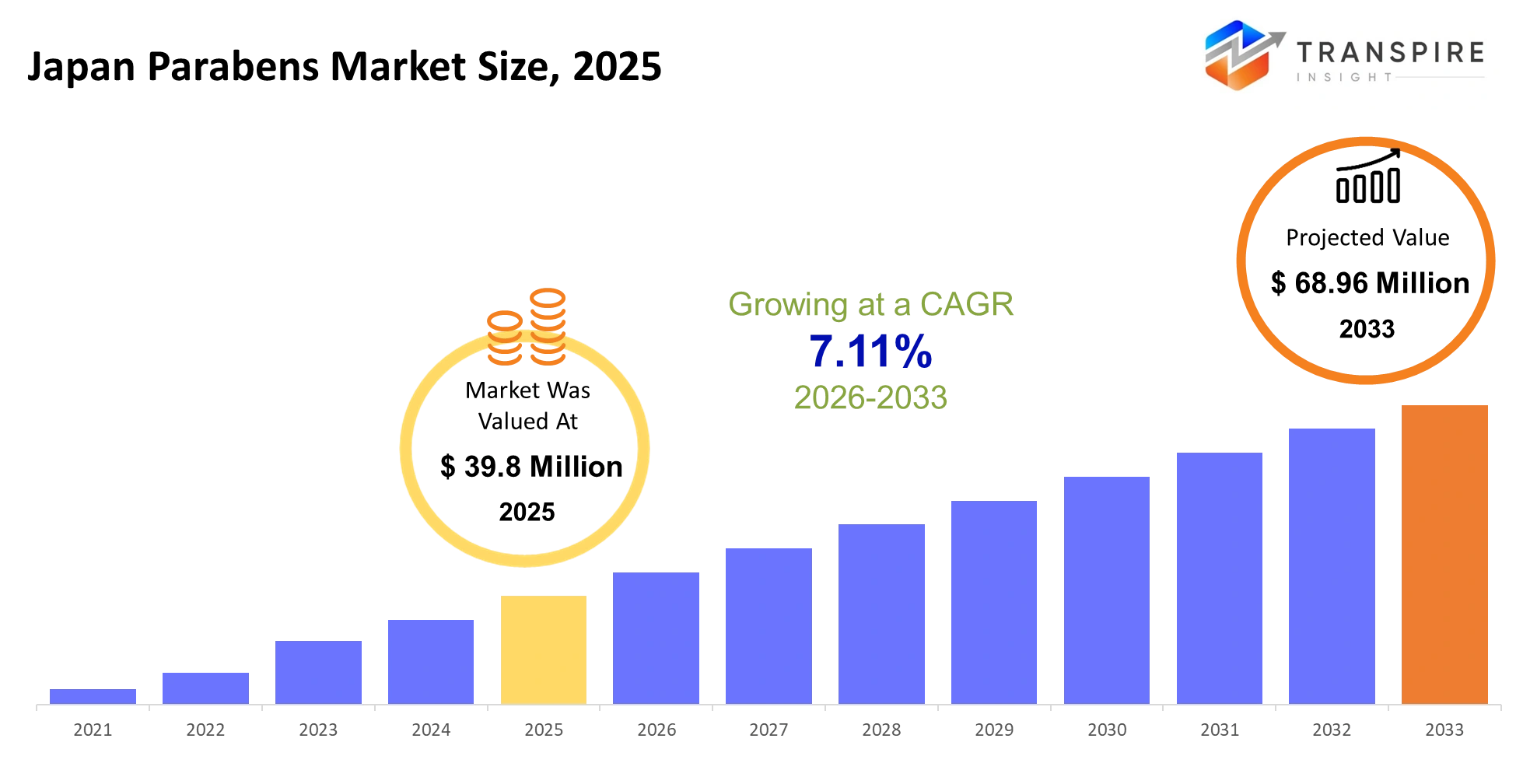
- Japan Parabens Market Size 2025: USD 39.8 Million
- Japan Parabens Market Size 2033: USD 68.96 Million
- Japan Parabens Market CAGR: 7.11%
- Japan Parabens Market Segments: By Type (Methylparaben, Ethylparaben, Propylparaben, Butylparaben), By Application (Cosmetics, Pharmaceuticals, Food, Personal Care), By End-User (Cosmetic Companies, Pharma Firms, Food Industry, Consumers).
To learn more about this report,  Download Free Sample Report
Japan Parabens Market Summary:
The Japan Parabens Market size is estimated at USD 39.8 Million in 2025 and is anticipated to reach USD 68.96 Million by 2033, growing at a CAGR of 7.11% from 2026 to 2033. The Japan parabens market is experiencing constant growth because the cosmetics and pharmaceuticals and food preservation industries require more parabens. The common preservatives used in cosmetics include parabens which contain methylparaben and propylparaben and butylparaben because these substances successfully stop microbes from growing and maintain product freshness. The beauty and personal care industry in Japan drives market growth because consumers display high product safety and hygiene awareness. The pharmaceutical industry uses parabens to maintain product stability and this practice creates ongoing market requirements.
The market experiences a steady transformation because customers now show increased worries about the health dangers that parabens present through their suspected connection to endocrine disruption. This situation has created higher customer needs for products without parabens which has pushed companies to create new preservative methods while they make changes to their current products. The industry continues to use parabens because they provide a cost-effective solution which delivers reliable results. The Japanese regulatory system controls safe usage limits which helps the market function steadily while it responds to shifting consumer demands and worldwide clean-label movement.
Key Market Trends & Insights:
- The Japanese cosmetics and personal care market shows continuous demand for parabens because these preservatives are vital to maintaining product safety and extending shelf life. Manufacturers choose to use parabens because they work effectively and are cheaper than other options despite the growing popularity of clean beauty products.
- The Japanese market shows a major trend toward creating products that use natural ingredients and do not contain parabens. Companies need to invest in new preservative solutions because consumers now prefer product labels that show safety details and organic content.
- Parabens maintain their demand through the pharmaceutical industry which depends on these compounds for creating both topical and oral medicines. The compounds provide antimicrobial benefits and work well with various pharmaceutical formulations, which makes them safe options to use in products that need to maintain their integrity while protecting users.
- The Japanese regulatory system allows controlled use of parabens because it guarantees safe standards while enabling businesses to maintain their credibility. Manufacturers achieve product trustworthiness through their adherence to international standards and local regulations, but they must adapt their safety practices to changing customer views which influence both product development and advertising methods.
- Manufacturers are creating new preservative systems through technological progress, which enables them to develop hybrid systems that combine parabens with other substances for better performance. This method enables products to maintain their effectiveness through extended storage periods while minimizing required ingredient amounts and alleviating customer worries about parabens, which remain in the products.
Japan Parabens Market Segmentation
By Type
- Methylparaben: Methylparaben functions as the most commonly utilized preservative in Japan because of its strong ability to kill microorganisms and its safe use in water-based products. The substance exists in cosmetics and pharmaceuticals and food items because it provides products with extended shelf life and product stability and cost-saving advantages while meeting safety standards required by regulations.
- Ethylparaben: Manufacturers use Ethylparaben in moderate amounts because they mix it with other parabens to achieve improved preservation results. The product delivers effective antimicrobial defense to customers who need it for both cosmetic and pharmaceutical products. The industry uses less of this product than methylparaben because consumers now choose different formulation methods.
- Propylparaben: Manufacturers use Propylparaben in oil-based products and emulsified products because it effectively kills mold and fungal organisms. The substance is usually mixed with methylparaben to achieve greater efficiency in killing microorganisms. This category of products serves as essential components in cosmetics and personal care items which need to maintain their quality throughout different storage conditions.
- Butylparaben: Butylparaben serves as the main ingredient in products which need to deliver powerful antifungal effects especially when used in oil-based formulas. The ingredient provides extended product protection even though it sees less frequent use than other parabens. The increasing regulatory scrutiny and safety concerns have restricted its use while manufacturers continue to implement it following safety guidelines.
By Application
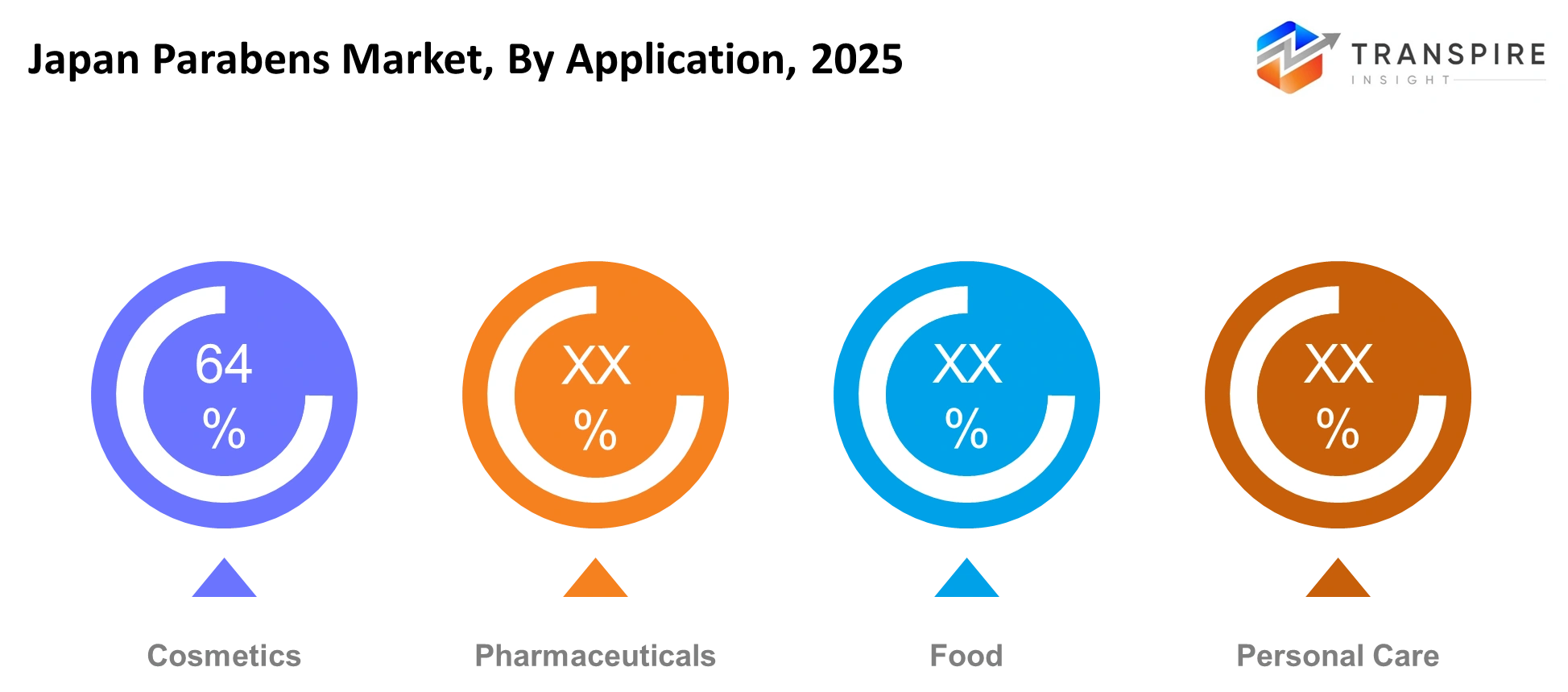
- Cosmetics: The Japanese parabens market shows its highest sales volume through the cosmetics sector because of the nation's developed beauty and skincare market. Parabens serve as necessary components which help products maintain their integrity while protecting against microbial contamination and extending the product shelf life of daily consumer use cream and lotion and makeup products.
- Pharmaceuticals: Pharmaceutical companies use parabens as preservatives which they add to syrups and ointments and creams and injectable products. The antimicrobial properties of these substances protect drugs from contamination while preserving their original stability. The segment maintains its current level because businesses need to follow strict quality standards while they search for safe and affordable ways to preserve their products.
- Food: The food industry uses parabens as preservatives for specific processed foods to help prevent spoilage while extending their shelf life. Japan imposes strict limits on their use because Japanese consumers show a growing preference for products made with natural ingredients and clean-label products that contain minimal synthetic components.
- Personal Care: Parabens serve as essential preservatives for personal care products which include shampoos and deodorants and hygiene products. Japanese consumers now have more access to hygiene products which has increased demand for this market segment although more people now choose to use products that do not contain parabens.
To learn more about this report, Download Free Sample Report
By End-User
- Cosmetic Companies: The Japanese market sees cosmetic companies as its main users who apply parabens to maintain product safety and extended shelf life and to meet established quality requirements. The companies develop products through ingredient choices which meet consumer requirements for affordable products that deliver effective results.
- Pharma Firms: Pharmaceutical companies require parabens to preserve their products through effective antimicrobial defense against harmful bacteria. The formula maintains its application due to the need for operational requirements together with the demand for effective protective solutions. The segment experiences less impact from consumer perception changes which affect cosmetics and personal care markets.
- Food Industry: Food producers utilize parabens as a preservative within allowed limits to extend product shelf life and prevent food deterioration. The increasing consumer preference for natural preservatives together with clean-label products has restrained their use, which drives food manufacturers towards investigating new preservation techniques and more transparent ingredient disclosure.
- Consumers: The buying habits and knowledge of consumers create an indirect effect on the parabens market. The growing health risk concerns drive consumers to prefer paraben-free products in cosmetics and personal care items which leads manufacturers to create new product formulas.
Country Insights
The Japanese parabens market depends on its established cosmetics and personal care sector which international markets recognize for its innovative and high-quality and safe product standards. Consumer knowledge about product hygiene and shelf life drives ongoing usage of parabens as an effective protective preservative. The aging population of the country creates ongoing demand for pharmaceutical products which leads to continued use of parabens in drug development.
Japanese consumers increasingly prefer clean-label products and paraben-free options because global beauty standards and health awareness among consumers continue to shape their purchasing behavior. Regulatory authorities maintain strict guidelines to ensure safe usage levels, allowing parabens to remain widely accepted while encouraging transparency. The market exists as a system which maintains equilibrium between traditional preservative methods and current customer demand for safer natural ingredient options.
Recent Development News
- The parabens market shows steady growth which will continue until 2030 and beyond. The industry maintains constant demand from cosmetics and pharmaceuticals which include Japan as a market because parabens provide cost-effective and tested preservative abilities.
- The Japanese personal care ingredients market shows strong growth which results from product safety awareness among consumers and ongoing product developments. The parabans market is experiencing growth because manufacturers are developing better products through their research into hybrid preservatives and safer ingredient combinations which meet current consumer demands.
|
Report Metrics |
Details |
|
Market size value in 2025 |
USD 39.8 Million |
|
Market size value in 2026 |
USD 42.63 Million |
|
Revenue forecast in 2033 |
USD 68.96 Million |
|
Growth rate |
CAGR of 7.11% from 2026 to 2033 |
|
Base year |
2025 |
|
Historical data |
2021 – 2024 |
|
Forecast period |
2026 – 2033 |
|
Report coverage |
Revenue forecast, competitive landscape, growth factors, and trends |
|
Country scope |
Japan |
|
Key company profiled |
BASF, Dow, Clariant, Lonza, Evonik, Ashland, Akzo Nobel, Solvay, Croda, Stepan, Lanxess, Eastman, Mitsubishi Chemical, Kao, Sumitomo Chemical. |
|
Customization scope |
Free report customization (country, regional & segment scope). Avail customized purchase options to meet your exact research needs. |
|
Report Segmentation |
By Type (Methylparaben, Ethylparaben, Propylparaben, Butylparaben), By Application (Cosmetics, Pharmaceuticals, Food, Personal Care), By End-User (Cosmetic Companies, Pharma Firms, Food Industry, Consumers). |
Key Japan Parabens Market Company Insights
The Japan parabens market operates as a highly competitive market which shows moderate consolidation because international specialty chemical firms control the market through their research and development capabilities and their ability to distribute products and their established partnerships with cosmetic and pharmaceutical companies. The companies BASF, Dow, Clariant, and Lonza lead the market through their development of advanced preservative products, which they create through their research initiatives and their ability to manage production costs and their knowledge of regulatory requirements. The companies operate through vertically integrated systems which include extensive product lines that allow them to support multiple industry needs including cosmetics and pharmaceuticals and food preservation.
The firms Evonik, Ashland, Solvay, Croda, and Lanxess allocate financial resources toward developing advanced preservative technologies, eco-friendly raw materials, and combined product solutions to meet the increasing demand for safer, cleaner ingredients. Japanese companies Mitsubishi Chemical, Kao and Sumitomo Chemical establish their market position through their combination of regional knowledge and their development of new products for the personal care and chemical manufacturing industry. The market operates through continuous product development which requires companies to adapt to regulations and develop product lines that meet the needs who prefer products without parabens.
Company List
- BASF
- Dow
- Clariant
- Lonza
- Evonik
- Ashland
- Akzo Nobel
- Solvay
- Croda
- Stepan
- Lanxess
- Eastman
- Mitsubishi Chemical
- Kao
- Sumitomo Chemical
Japan Parabens Market Report Segmentation
By Type
- Methylparaben
- Ethylparaben
- Propylparaben
- Butylparaben
By Application
- Cosmetics
- Pharmaceuticals
- Food
- Personal Care
By End-User
- Cosmetic Companies
- Pharma Firms
- Food Industry
- Consumers
Frequently Asked Questions
Find quick answers to common questions.
The approximate Japan Parabens Market size for the market will be USD 68.96 Million in 2033.
Key segments for the Japan Parabens Market are By Type (Methylparaben, Ethylparaben, Propylparaben, Butylparaben), By Application (Cosmetics, Pharmaceuticals, Food, Personal Care), By End-User (Cosmetic Companies, Pharma Firms, Food Industry, Consumers).
Major Japan Parabens Market players are BASF, Dow, Clariant, Lonza, Evonik, Ashland, Akzo Nobel, Solvay, Croda, Stepan, Lanxess, Eastman, Mitsubishi Chemical, Kao, Sumitomo Chemical.
The Japan Parabens Market size is USD 39.8 Million in 2025.
The Japan Parabens Market CAGR is 7.11%.
- BASF
- Dow
- Clariant
- Lonza
- Evonik
- Ashland
- Akzo Nobel
- Solvay
- Croda
- Stepan
- Lanxess
- Eastman
- Mitsubishi Chemical
- Kao
- Sumitomo Chemical
Recently Published Reports
-
May 2026
Healthcare Polymer Packaging Market
Healthcare Polymer Packaging Market Size, Share & Analysis Report By Packaging Type (Syringes, IV Bottles and Pouches, Clamshells, Blisters, Bottles & Jars, Containers, Tubes, IV Parental Packaging, Others), By Type (Regulated, Non-regulated), By Polymer Type (LDPE (Low-Density Polyethylene), HDPE (High-Density Polyethylene), Homo-polymer (Homo), Random Copolymer (Random), Block Copolymer (Block), PET, Polystyrene, Polyvinyl Chloride, Polyamide/EVOH, Others), and Geography (North America, Europe, Asia-Pacific, Middle East and Africa, South and Central America), 2021 - 2031
-
Apr 2026
Hydrophilic Tape (Waterstop) Market
Hydrophilic Tape (Waterstop) Market Size, Share & Analysis Report By Type (Bentonite-Based Hydrophilic Tape, Rubber-Based Hydrophilic Tape), By Application (Residential Buildings, Commercial Buildings, Infrastructure Projects), and Geography (North America, Europe, Asia-Pacific, Middle East and Africa, South and Central America), 2021 - 2031
-
Apr 2026
Metalens Market
Metalens Market Size, Share & Analysis Report By Type (Visible Light Metalens, and Infrared Metalens), By Application (Consumer Electronics, Automotive Electronics, Industrial, Medical, and Others), and Geography (North America, Europe, Asia-Pacific, Middle East and Africa, South and Central America), 2021 - 2031
-
Apr 2026
PBT Resin Market
PBT Resin Market Size, Share & Analysis Report By Type (Reinforced PBT Resin, Unreinforced PBT Resin), By Processing Method (Injection Molding, Extrusion, Blow Molding, Others), By End-User (Automotive, Electrical & Electronics, Consumer Appliances, Industrial Machinery, Medical Devices, Packaging, Others), and Geography (North America, Europe, Asia-Pacific, Middle East and Africa, South and Central America), 2021 - 2031