

Japan Laboratory Information Systems (LIS) Market Summary:
According to Transpire Insight, a detailed research report on the market reflects that the Integrated LIS product segment dominates the Japan Laboratory Information Systems (LIS) Market, accounting for approximately USD 37.27 million in 2024. Hospital Laboratories lead the end-user segment with approximately USD 31.56 million in 2024, making them a leading contributor to Japan market development, healthcare digitalization, laboratory workflow integration, diagnostic efficiency, and growth dynamics.
Market Snapshot
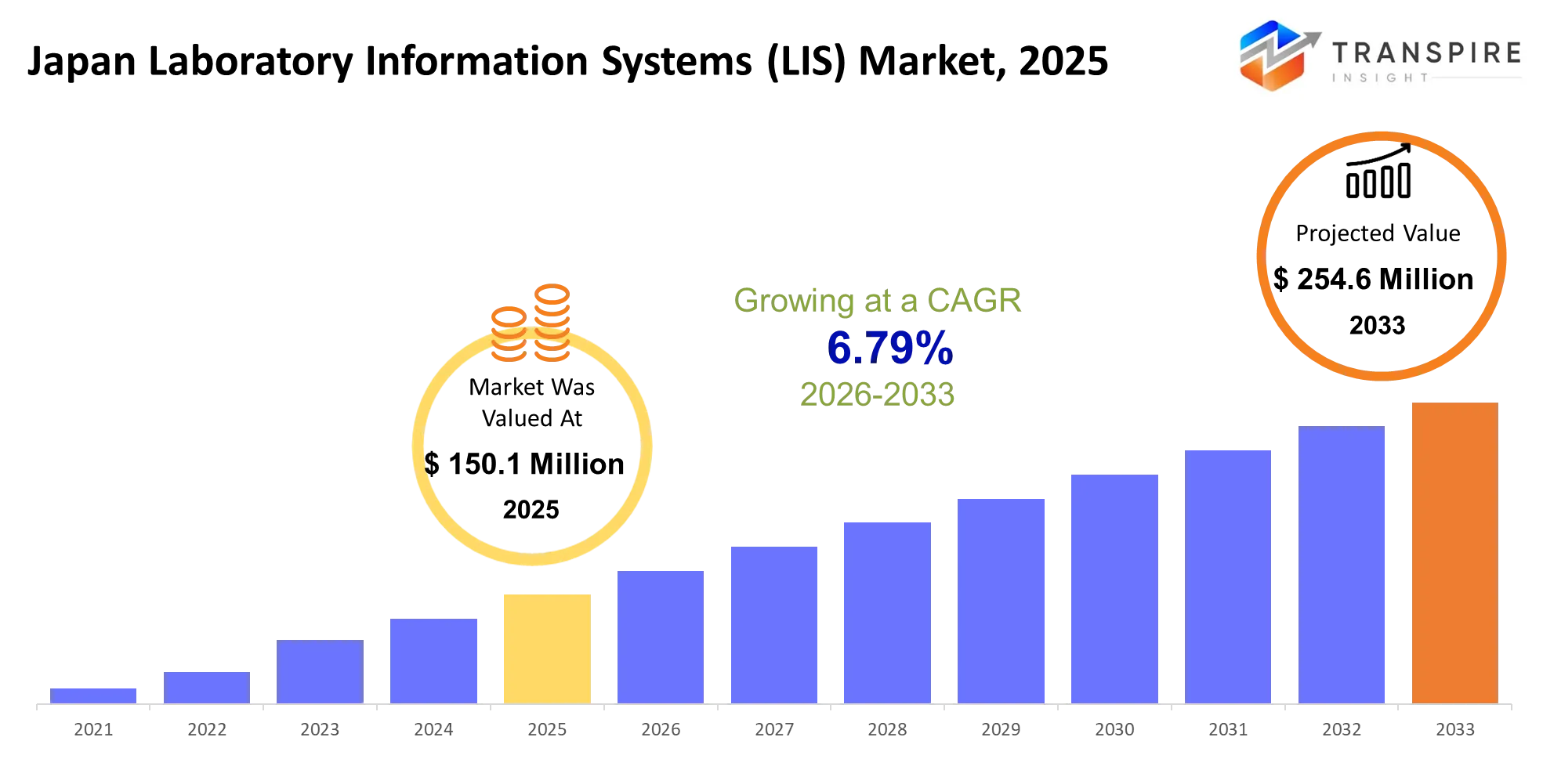
- Market Value (2025): USD 150.1 Million.
- Expected Market Value (2026): USD 160.7 Million.
- Estimated Market Value (2033): USD 254.6 Million.
- Forecast CAGR (2026–2033): 6.79%
Introduction
A laboratory information system (LIS) is a kind of software application that assists in processing, storing, and managing various laboratories and clinical workflows. All the revenues generated from the software utilized for laboratory information systems. The services provided by laboratory information systems encompass ordering of test samples, tracking of samples, validation of results, preparation of reports, and safe exchange of data in laboratory & clinical pathology settings. Laboratory Information Systems, also called LIS, contributes to the overall performance of laboratories through enhanced accuracy, efficiency, and quality, as well as shortened turnaround time in diagnostic cases. The use of automated order entry, barcode integration, instrument interfacing makes it possible to minimize manual inputting and transferring of information. LIS systems improve the process of sample tracking, testing, results processing, and reporting, which help laboratories increase their efficiency. It has excellent quality control and traceability features that satisfy domestic and international standards on operating laboratories as well as ensure that data are correct. In addition, centralized access to laboratory results helps doctors get the necessary diagnostic information faster and thus make decisions quicker.
Key Market Highlights: -
- By product type, the Clinical LIS segment dominated the market and holds nearly 35% share in 2025 and is projected to grow at a substantial CAGR during the forecast period.
- By function, the Sample Management segment dominated the market and holds nearly 40% share in 2025 and is projected to grow at a substantial CAGR during the forecast period.
- By end user, the Hospitals segment dominated the market and holds nearly 50% share in 2025 and is projected to grow at a substantial CAGR during the forecast period.
- The Healthcare DX plan of Japan, which is supported by the Ministry of Health, Labour and Welfare and Digital Agency, promotes standardization of health data, interoperability and provision of digital infrastructure. This initiative supports the Marketplace of Japan Laboratory Information System by enabling safe data exchange, combination of electronic data, automation of laboratories and modernization of healthcare IT systems.
How is Technology Driving Growth in the Japan Laboratory Information Systems (LIS) Market?
The Japanese Laboratory Information Systems (LIS) market is undergoing transformations through cloud technology, process automation, modernization of digital infrastructure, and advanced data tracking. Cloud-based LIS offerings have become popular due to flexible remote administration, reduced needs for upfront infrastructure investment, and scalability. Automation of processes and integration of systems allow efficient tracking, testing, and reporting of samples and results, improving laboratory efficiency and productivity in the era of the growing demand for diagnostics. The government is promoting the transition from outdated IT infrastructures to better digital practices in laboratories. Advanced LIS solutions also provide increased data tracking, audit readiness, control over quality, and compliance with regulations. All these technologies lead to faster lab automation, improved performance and efficiency, re-engineered diagnostic processes, and support for healthcare and life sciences digital transformation in Japan.
Market Drivers
Several factors characterize the market trends of the Japan Laboratory Information Systems (LIS): an aging population, healthcare digitalization, laboratory automation, and cloud adoption. The increase in the number of elderly people in Japan results in an increase in diagnostic tests. Digitalization initiated by the government helps hospitals and laboratories to innovate and develop their IT infrastructure. Automation, robotics, and integrated workflows lead to improvements in performance, decrease in the number of errors, and shorten the testing time. Cloud technology allows for secure sharing of the data and interoperability with healthcare networks. High-level requirements for data traceability, quality control, cybersecurity, and protection of patients’ information promote continuous upgrades of laboratory systems in Japan. The aging population, government-led stimulus of digital transformation, use of precision medicine, and high regulatory standards are some factors propelling the growth of the Japan Laboratory Information Systems (LIS) Market. The desire for diagnostic testing and efficient management of patient information is due to the aging population of Japan. The various initiatives of digitalization of the healthcare industry assist in the automation of laboratory processes and upgrading of IT systems. The rise of investments in the precision medicine sector also requires highly technological systems to spread data analytics, interoperability, and information security. Moreover, the high standards and requirements make lab workers and representatives of drug producers introduce reliable, transparent, and compliant laboratory information systems into their practices.
Restrain
The key challenges confronting the Japan Laboratory Information Systems (LIS) Market include the substantial expenses associated with implementation and maintenance. The presence of operational issues in smaller labs, difficulties integrating with older systems, and lack of trained staff further magnifies the issue of implementing LIS systems. Major investments and consistent maintenance work are leading to restrictions on adoption.
Analysis of Prices and Consumer Behaviour
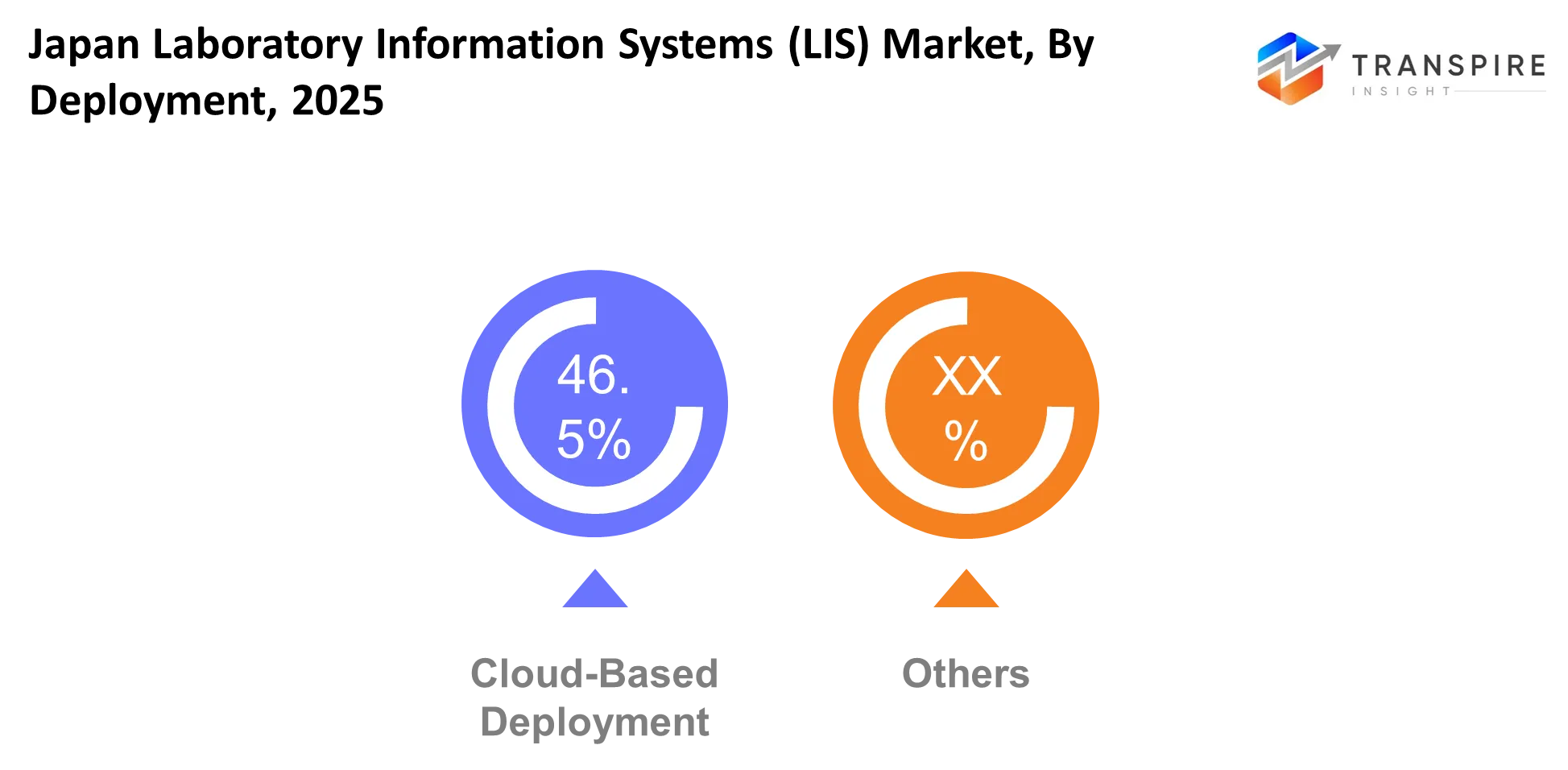
There are a lot of cloud-based options within Japan's Laboratory Information Systems (LIS) market (with this type of system expected to account for 46.5% of the market revenue in 2025 due to the increase in demand for scalable and flexible laboratory data management). The revenue generated by laboratory information management systems in Japan is forecasted to be around 150.1 million USD in 2025, bolstered by advancements in laboratory digitalization and automation, as well as regulatory compliance efforts. It is estimated that cloud-based LIMS accounting for 46.5% of the market revenue in 2025 is connected with wider usage of secure and scalable laboratory information systems. The market demand for efficient laboratory workflow management, interoperability, data management, and regulatory compliance drives this kind of change in the industry. Separately, it should be noted that because of the digitization process taking place in Japan, the laboratory informatics market will develop through the implementation of laboratory information management systems with LIMS amounting to 57.85% in this sector. In this case, purchasing decisions are influenced by several key factors such as interoperability, data security, workflow automation, scalability, and regulatory compliance.
Top Companies in the Japan Laboratory Information Systems (LIS) Market
- Thermo Fisher Scientific
- LabWare
- Abbott
- Roche Diagnostics
- Siemens Healthineers
- Abbott Informatics
- Sunquest
- STARLIMS
- Agilent Technologies
- bioMérieux
- Sysmex
- Fujitsu
- NEC
- NTT DATA
- Nippon Control System
Japan Laboratory Information Systems (LIS) Market Segmentation
The Japan Laboratory Information Systems (LIS) Market share is divided into six categories: By product type, deployment, component, function, laboratory and end user.
The Clinical LIS dominated the market, accounting for nearly 35% in 2025 and is expected to rise at a significant CAGR during the forecast period.
The Japan Laboratory Information Systems (LIS) Market is segmented by product type into Laboratory Information Management Systems, Clinical LIS, Anatomical Pathology LIS, Molecular Diagnostics LIS, Blood Bank LIS, Microbiology LIS, Genetic Testing LIS, Specialty LIS. Among these, the Clinical LIS segment dominated the market, accounting for nearly 35% in 2025 and expected to increase at a significant CAGR during the forecast period. There are various factors contributing to the growth of the Clinical LIS segment, including increased volumes of diagnostic testing, the need for integrated systems for patient data management, and the rise in laboratory automation. Clinical labs need to efficiently track samples, deliver accurate test results, integrate with electronic health records, and ensure compliance with government regulations. All these elements lead to improved operating efficiency, faster diagnostic processes, better accuracy of information, and better decisions in the patient care process.
The Sample Management dominated the market, accounting for nearly 40% in 2025, and is expected to rise at a significant CAGR during the forecast period.
The Japan Laboratory Information Systems (LIS) Market is segmented by function into Sample Management, Patient Management, Result Management, Workflow Management, Reporting, Billing, Quality Management, Inventory Management. Among these, the Sample Management segment dominated the market, accounting for nearly 40% in 2025 and expected to increase at a significant CAGR during the forecast period. The Sample Management section is based on rising volume of laboratory testing, increasing need for correct identification of sample specimens and efficient tracking of samples. If a sample management system is based on LIS application, it can enhance the performance of tracking processes with the help of barcodes, supply chain monitoring and streamlining of processes. The efficient sample management technology results in the decrease of processing errors and improvement of traceability, enhancement of turnaround times and effective lab management, which is pivotal for successful development of the market.
The Hospitals dominated the market, accounting for nearly 50% in 2025 and is expected to rise at a significant CAGR during the forecast period.
The Japan Laboratory Information Systems (LIS) Market is segmented by end user into Hospitals, Diagnostic Laboratories, Pharmaceutical Companies, Biotechnology Companies, CROs, Academic Institutions, Research Institutes, Government Laboratories. Among these, the Hospitals segment dominated the market, accounting for nearly 50% in 2025 and expected to increase at a significant CAGR during the forecast period. The Hospitals segment experiences growth due to increased utilization of diagnostic tests, the rise in patient admissions, and the need for consolidated laboratory data management systems in hospitals. Hospitals are making more use of laboratory information systems in order to automate processes, track specimens more effectively, speed up reporting, and integrate laboratory results into patient health records.
Future Market Trends for the Japan Laboratory Information Systems (LIS) Market: -
- Shift to Cloud-Based Solutions: Cloud deployments are the fastest-growing delivery segment (growing at over 13.5% CAGR) as labs are searching for cost-effective, adaptable, and scalable infrastructures without much heavy on-premise hardware costs.
- Adoption of Integrated LIS: Integrated Platforms platforms that communicate with others and connect easily with the wider healthcare IT ecosystem, diagnostic equipment, and Electronic Health Records (EHR) own the biggest market share since they are the platforms that made the workflows easier and helped avoid mistakes in diagnoses.
- AI & Advanced Analytics Integration: Artificial Intelligence and Machine Learning become more common as a feature in platforms, as they are being used to assist with predictive diagnostics, data interpretation, and processing huge amounts of data brought by next-generation sequencing.
- Demographic & Regulatory Drivers: It is worth mentioning that Japan has a rapidly growing aging population, a large burden of chronic diseases, and a number of national regulatory requirements that require laboratories to get rid of outdated software and use modernized compliant systems.
Recent Development
- In March 2026: Teikyo University Hospital cooperated with Fujitsu Japan to conduct a joint proof of concept aimed at analysis of clinical data and patient management. This collaboration will utilize EHR connectivity, healthcare data interoperability as well as digital workflow and contribute to modernization of healthcare IT in the country.
- In April 2026: Lab Thread's Unified Lab Software Platform debuts, uniting LIMS, electronic laboratory notebooks, and molecular biology components in one cloud application. This innovation is indicative of the rise in popularity of integrated laboratory information technologies, digitalization of laboratories, and the use of cloud-based data management.
Market Segment
This study forecasts revenue at Japan, regional and country levels from 2020 to 2033. Transpire Insight has segmented the Japan Laboratory Information Systems (LIS) Market based on the below-mentioned segments:
Japan Laboratory Information Systems (LIS) Market, By Product Type
- Laboratory Information Management Systems
- Clinical LIS
- Anatomical Pathology LIS
- Molecular Diagnostics LIS
- Blood Bank LIS
- Microbiology LIS
- Genetic Testing LIS
- Specialty LIS
Japan Laboratory Information Systems (LIS) Market, By Deployment
- Cloud-Based
- On-Premise
- Web-Hosted
- Hybrid
- SaaS
- Private Cloud
- Public Cloud
- Hosted
Japan Laboratory Information Systems (LIS) Market, By Component
- Software
- Hardware
- Services
- Implementation
- Integration
- Maintenance
- Support
- Consulting
Japan Laboratory Information Systems (LIS) Market, By Function
- Sample Management
- Patient Management
- Result Management
- Workflow Management
- Reporting, Billing
- Quality Management
- Inventory Management
Japan Laboratory Information Systems (LIS) Market, By Laboratory Type
- Hospital Laboratories
- Independent Laboratories
- Research Laboratories
- Pharmaceutical Laboratories
- Academic Laboratories
- Diagnostic Centers
- Reference Laboratories
- Specialty Laboratories
Japan Laboratory Information Systems (LIS) Market, By End User
- Hospitals
- Diagnostic Laboratories
- Pharmaceutical Companies
- Biotechnology Companies
- CROs
- Academic Institutions
- Research Institutes
- Government Laboratories
Frequently Asked Questions
Find quick answers to common questions.
The market is projected to reach USD 254.6 million by 2033, growing at a 6.79% CAGR during 2026–2033.
Clinical LIS dominates with nearly 35% share in 2025, supported by diagnostic testing, patient data management, and laboratory automation.
Sample Management leads with nearly 40% share in 2025, driven by rising testing volumes, specimen tracking, and workflow automation.
Hospitals account for nearly 50% share in 2025, driven by diagnostic testing, laboratory automation, specimen tracking, faster reporting, and EHR integration.
Key trends include cloud-based solutions, integrated LIS platforms, AI analytics, laboratory automation, EHR interoperability, and regulatory modernization.
- Thermo Fisher Scientific
- LabWare
- Abbott
- Roche Diagnostics
- Siemens Healthineers
- Abbott Informatics
- Sunquest
- STARLIMS
- Agilent Technologies
- bioMérieux
- Sysmex
- Fujitsu
- NEC
- NTT DATA
- Nippon Control System
About the Authors

Mayur Shinde
I am Mayur Shinde, a Senior Research Analyst at Transpire Insight, specializing in the Automotive & Transportation and Information & Communication Technology (ICT) Industry. My work focuses on analyzing emerging market trends, technological advancements, competitive landscapes, and industry developments to deliver accurate, data-driven insights. I am passionate about transforming complex market information into clear, actionable content that helps businesses, professionals, and decision-makers stay informed and make confident strategic decisions.

Chakradhar Khansole
Chakradhar serves as the Research Director at Transpire Insight, bringing over 8 years of experience in technology, innovation, and strategic market intelligence. He specializes in transforming complex market data into actionable business insights that enable organizations to make informed, growth-oriented decisions. Recognized for his strategic vision and analytical expertise, Chakradhar leads high-impact research initiatives, delivering comprehensive market assessments, competitive intelligence, and forward-looking industry analysis.
Recently Published Reports
-
Apr 2026
3D Optical Profiler Market
3D Optical Profiler Market Size, Share & Analysis Report By Type (Desktop 3D Optical Profiler, and Portable 3D Optical Profiler), By Technology (Confocal Technology, and White Light Interference), By End-Use Industry (Manufacturing, Research Institutions, Automotive, Aerospace and Defense, Medical Devices, and Other), and Geography (North America, Europe, Asia-Pacific, Middle East and Africa, South and Central America), 2021 - 2031
-
Apr 2026
Depth Sensor Market
Depth Sensor Market Size, Share & Analysis Report By Type (Infrared Depth Sensors, Time-of-Flight (ToF) Sensors, Stereo Vision Sensors, Structured Light Sensors, Ultrasonic Depth Sensors), By Application (Automotive, Robotics, Gaming, Consumer Electronics, Industrial Automation, Healthcare, Security & Surveillance, Others), By End Users (Automotive Manufacturers, Consumer Electronics Companies, Healthcare Providers, Industrial Companies, Security Agencies, Gaming Companies, Robotics Companies, Others), and Geography (North America, Europe, Asia-Pacific, Middle East and Africa, South and Central America), 2021 – 2031
-
Apr 2026
Digital Manufacturing Market
Digital Manufacturing Market Size, Share & Analysis Report By Component (Hardware, Software, and Services), By Technology (Robotics, 3D Printing, Internet of Things (IoT), and Others), By Application (Automotive and Transportation, Aerospace and Defense, Consumer Electronics, Industrial Machinery, and Others), By Process Type (Computer-Based Designing, Computer-Based Simulation, Computer 3D Visualization, Analytics, and Others), and Geography (North America, Europe, Asia-Pacific, Middle East and Africa, South and Central America), 2021 – 2031
-
Apr 2026
Digital Visa Services Market
Digital Visa Services Market Size, Share & Analysis Report By Type (Individual Travelers, Group Travelers), By Application (Tourism, Business Travel, Others), and Geography (North America, Europe, Asia-Pacific, Middle East and Africa, South and Central America), 2021 – 2031